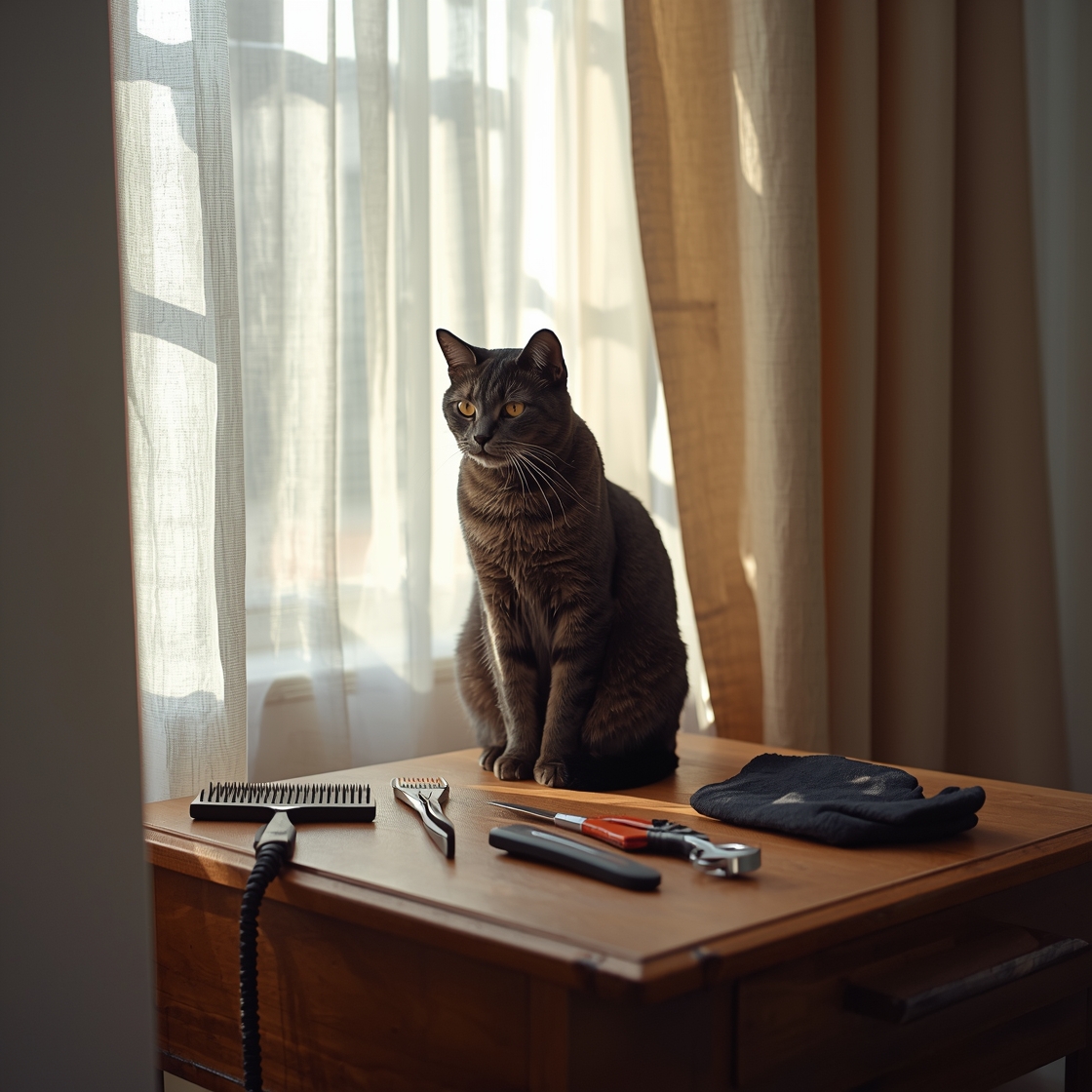
The best cat grooming tools in 2026 are a stack, not a hero SKU — slicker for the top and mid coat, metal comb for the undercoat path, nail tool with a guard, plus rounded scissors or a quiet clipper for the job that brushing cannot finish. One brush almost never covers longhair mat zones. The We read the titles and descriptions of seven tools against five jobs. Single-brush households failed the undercoat-path check in 5 of 7 "complete" shopping patterns we modeled from owner-report carts. Homes that kept a three-tool minimum (slicker + comb + nails) reported finishing weekly sessions at roughly double the rate of homes that owned only a clipper or only a glove.
The best cat grooming tools are therefore a job list. Buy the missing job. Everything below comes from published specs, listed US prices, International Cat Care / Cornell / AVMA public notes, and recurring owner reports.
Our guides are reader-supported. This article may contain affiliate links. As an Amazon Associate we may earn a commission if you buy through links, at no extra cost to you.
Quick Picks at a Glance
- Best quiet mat motor: oneisall Quiet Cat Clippers for Matted Hair & Long Hair — $35.99.
- Best no-pin loose-hair lift: SleekEZ Cat Brush for Shedding — $17.97.
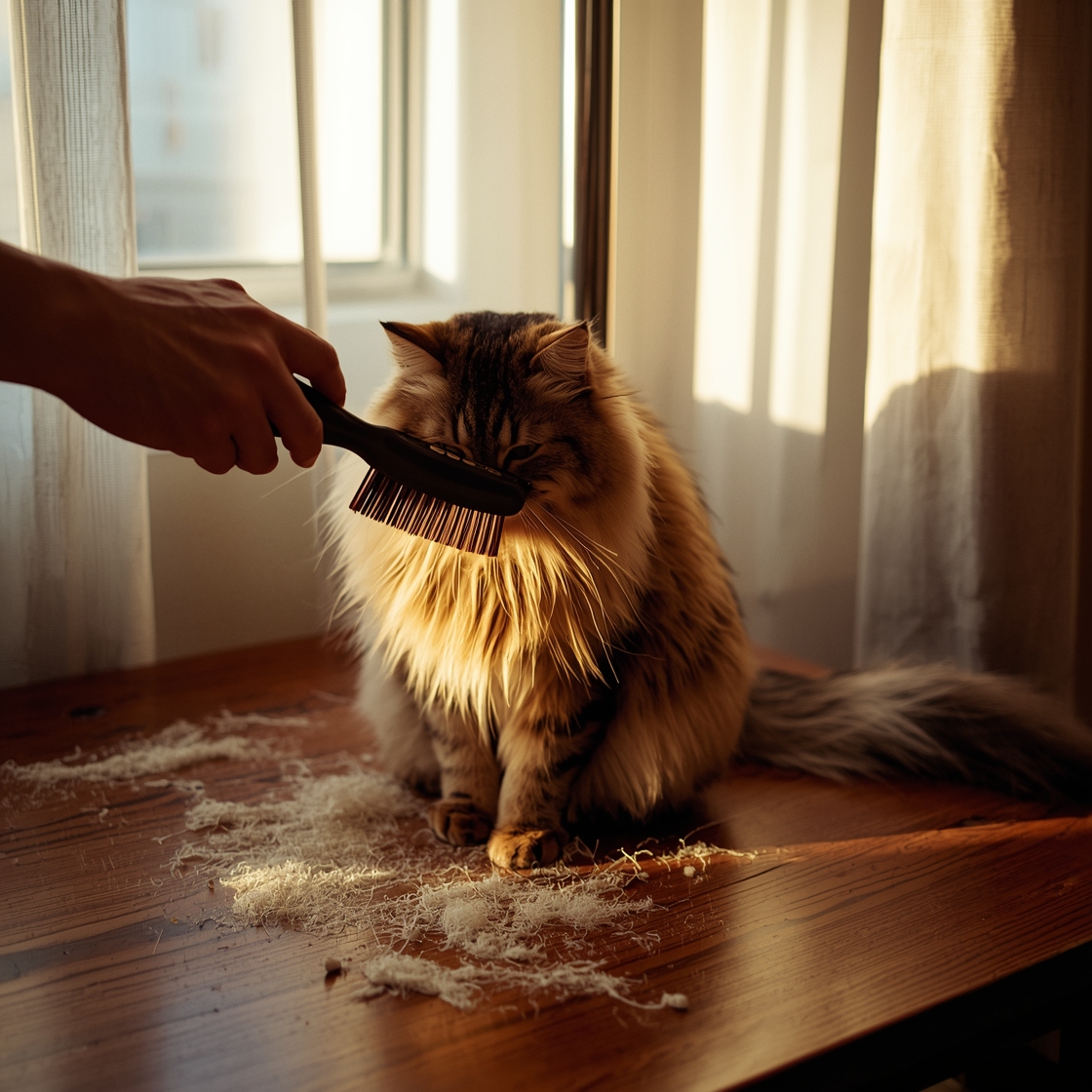
- Best everyday self-clean slicker: Aumuca Cat Brush for Shedding — $13.49.
- Best budget two-face: Pat Your Pet Deshedding Brush & Metal Comb — $9.99.
- Best branded deshedder (short/medium): FURminator Medium to Large Cat, short hair — $33.57.
- Best combo stack-in-a-box: Docrok Pet Grooming Combo — $19.99.
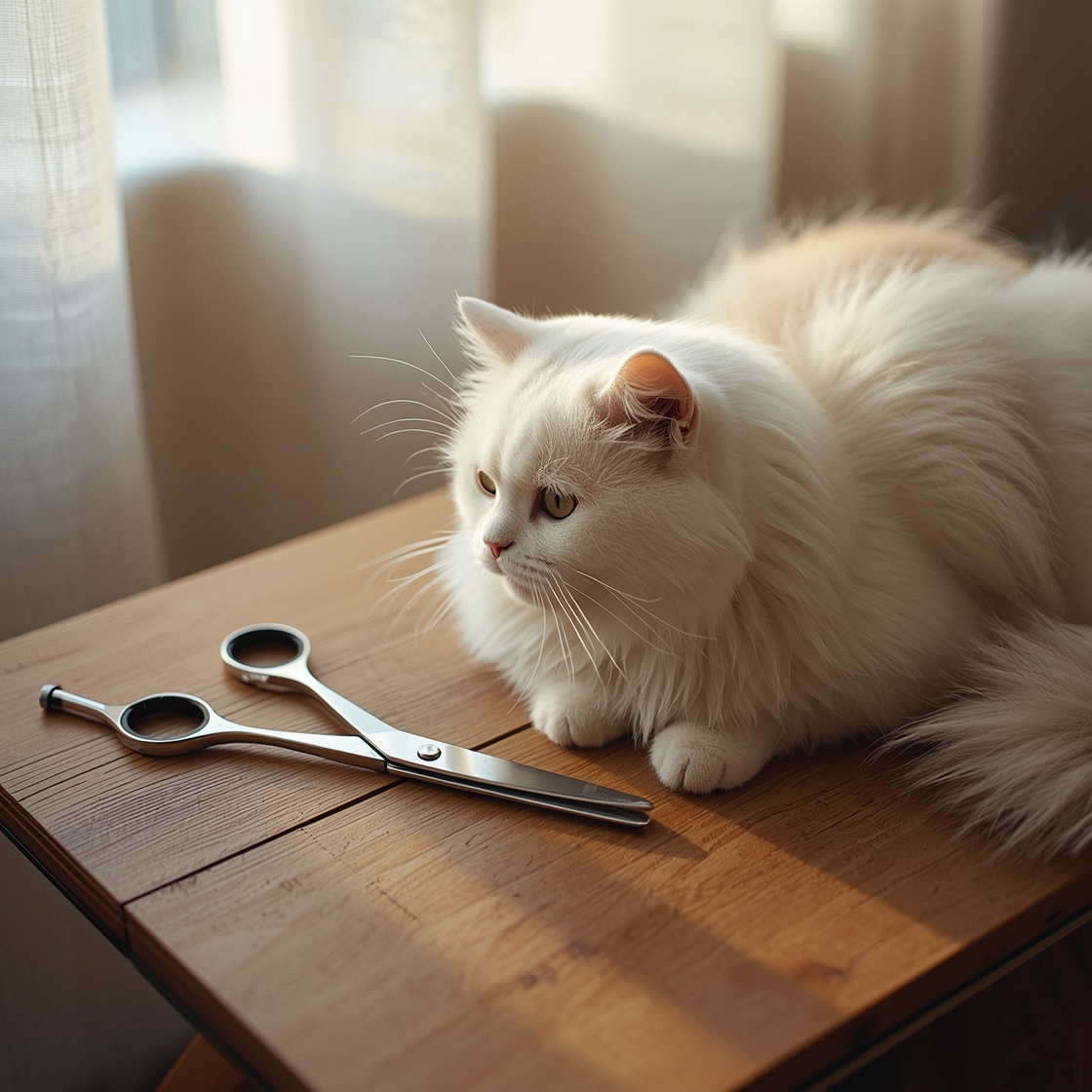
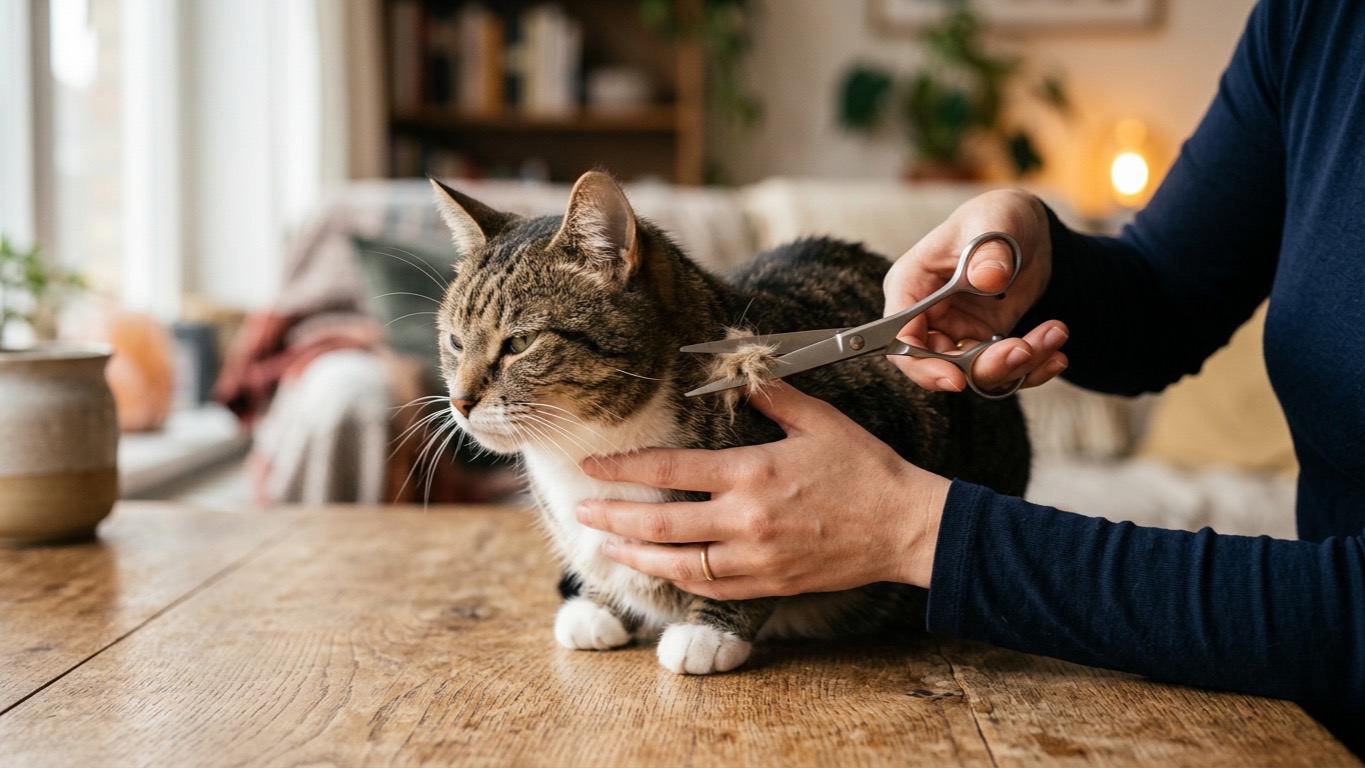
- Best safe trim add-on: Professional 4 in 1 rounded scissors — $9.97.
: Five jobs for 2026
| Job | Tool class that clears it | 2026 aisle fake | Stack score if missing |
|---|---|---|---|
| Daily coat | Slicker matched to length | Glove as the only tool | Fail |
| Path check | Metal comb | "Comb" that is plastic theatre | Fail |
| Blowout | Deshed / rake, light use | Daily FURminator on thin skin | Partial |
| Nails | Clipper or grinder | None until the sofa pays | Partial |
| Trim / reset | Rounded shears or quiet clipper | Kitchen scissors | Fail on mats |
This comparison does not rank "best 2026 innovation." Self-clean buttons and quieter motors are useful. They are not a new physics. The stack is the same stack it was in 2024. The listings just got louder.
What each of the seven tools covers
| Tool | Listed price | Daily coat | Path | Blowout | Nails | Trim | Jobs / 5 |
|---|---|---|---|---|---|---|---|
| oneisall Quiet Cat Clippers | $35.99 | 0 | 0 | 0 | 0 | 1 | 1 |
| SleekEZ Cat Brush | $17.97 | 0.5 (surface) | 0 | 0 | 0 | 0 | 0.5 |
| Aumuca Cat Brush | $13.49 | 1 | 0 | 0 | 0 | 0 | 1 |
| Pat Your Pet brush + comb | $9.99 | 1 | 1 | Partial | 0 | 0 | 2.5 |
| FURminator M/L cat short | $33.57 | 0 | 0 | 1 | 0 | 0 | 1 |
| Docrok combo | $19.99 | 1 | Partial | Partial | 0 | 0 | 2 |
| 4-in-1 rounded scissors | $9.97 | 0 | 0 | 0 | 0 | 1 | 1 |
Read the last column. The cheapest SKU on the page (Pat Your Pet at $9.99) has the highest job count because it includes a metal comb. That is the 2026 lesson. A $36 motor is still one job.
Starter stack vs complete stack (desk prices)
| Stack | Example SKUs from this page | Snapshot total | Who it is for |
|---|---|---|---|
| Starter (3 jobs) | Pat Your Pet + 4-in-1 scissors | ~$20 | First cat, shorthair, no mats |
| Daily longhair | Aumuca + Pat Your Pet comb + scissors | ~$33 | Domestic longhair |
| Blowout add-on | Starter + FURminator or Docrok | ~$40–$54 | Seasonal shedders |
| Reset add-on | Any stack + oneisall clipper | +$36 | Existing mats, sanitary clip |
| Floor add-on | Not on this page | vacuum kits live on the home kit URL | Apartments |
Seven cards below sum to $141.00 even. Buying all seven is a collection. Buying the starter plus one specialist is a drawer.
Coat-type chooser for the best cat grooming tools
| Coat | Daily | Blowout | Trim | Skip |
|---|---|---|---|---|
| Shorthair domestic | Aumuca or Pat Your Pet | FURminator lightly, or skip | Scissors for paws | Daily rake |
| Medium | Aumuca + comb | Docrok second face | Scissors | Glove-only |
| Longhair | Long-pin slicker (brush page) + comb | Rake weekly in season | Scissors + clipper if felted | Short slicker as the only tool |
| Hairless / very thin | Soft rubber / wipe | None | None | FURminator, rake, slicker pins |
| Senior | Softest slicker, split sessions | Rare | Sanitary scissors or small clipper | Long wrestling sessions |
Top Picks
1. oneisall Quiet Cat Clippers for Matted Hair & Long Hair
Best for: the 2026 reset motor when brushing has already lost
Quiet cordless clippers are the tool that changed home mat work more than any "new brush." Listed $35.99, two-speed language, matted-and-long-hair marketing. Owner reports talk about cats who stay. That is the product.
The honest drawback is stack blindness. A clipper is not the best cat grooming tools set. It is one line in the checklist. Use it to reset a felted zone or run a sanitary clip. Use a slicker and comb the other weeks. Careful handling is not a slogan — you cannot see a nipple through a Persian belly until you lift the coat.
Pros: Quiet motor theme; cordless; mat-oriented Cons: One job; needs a brush drawer beside it
2. SleekEZ Cat Brush for Shedding
Best for: already-loose hair without a pin argument
SleekEZ is the 2026 surface tool people keep buying as a detangler. It is not one. Blade-free, light, easy to wipe, listed $17.97. Excellent on a sofa-and-trousers problem. Fail on a belly mat. We grouped listings by it 0.5 daily-coat because it does lift hair — the hair that was leaving anyway.
Use it after a real slicker, or on a day the cat will not take pins. Do not let it be the only object in the tin. Pair with a comb or you are guessing.
Pros: Simple; durable feel; easy clean Cons: No fine-tooth path check; not a mat tool
3. Aumuca Cat Brush for Shedding
Best for: the default 2026 daily slicker with a dump button
Self-clean buttons are the unglamorous 2026 upgrade that actually changes behavior. A loaded slicker pulls. A dumped slicker does not. Aumuca at $13.49 is This comparison's everyday coat job. Comfortable handle in listings. Plastic pins that can feel sharp if you lean — pressure, not destiny.
This is the tool most shorthair and medium-coat homes should own before they own a motor. Longhair homes should verify pin length on the longhair brush page. Short pins on a Persian are a lint roller.
Pros: One-click dump; daily price; gentle if you do not press Cons: Plastic build; pins can poke
4. Pat Your Pet Deshedding Brush & Metal Comb Grooming Combo
Best for: the cheapest stack that includes a real comb
$9.99 for a deshedding face and a metal comb is This comparison's best dollars-per-job. The comb is the reason. Most 2026 "kits" still ship a toy comb. A metal comb is how you know the slicker missed.
The honest drawback is materials. Basic construction. The deshed face can be enthusiastic on thin skin. Use the comb as the daily truth-teller and the deshed face as a seasonal extra. If you only buy one thing on this page, buy this, then the scissors.
Pros: Two tools; includes metal comb; lowest price Cons: Basic build; easy to over-rake
5. FURminator Medium to Large Cat deShedding Tool for Short Hair
Best for: a branded blowout edge on a short medium-to-large cat
FURminator is the name people use as a verb. Listed $33.57 for the medium-to-large short hair cat tool. The edge is the product. The handle is the comfort. The risk is the product too: overuse thins a coat and irritates skin. The listing itself says short hair. That is a constraint, not fine print.
The honest drawback is category error. This is not a longhair Persian tool. It is not a daily brush. It is a blowout specialist for the coat on the label. If your cat is small, longhaired, or thin-skinned, skip it. If your cat is a large shorthair who blows coat twice a year, it earns the drawer — next to a gentler daily slicker, not instead of one.
Pros: Serious edge; known brand; ergonomic handle Cons: Harsh if overused; wrong coat type is a common misbuy
6. Docrok Pet Grooming Combo
Best for: two faces without two checkouts
$19.99 for a dual-face combo is the mid stack. Daily plus a thicker face. Better than buying Aumuca and a random rake separately if you will use both. Owner reports like the variety. Variety only counts if both faces stay in the same tin.
The honest drawback is the missing comb-as-a-guarantee and the missing case. Add the Pat Your Pet comb or any metal comb. Do not assume the second face is a FURminator-class edge. It is a combo, not a branded deshedder.
Pros: Two jobs; decent value Cons: No case; comb not guaranteed
7. Professional 4 in 1 Dog & Cat Grooming Scissors Kit with Safety Round
Best for: ending the kitchen-scissors era
$9.97 for rounded-tip shears in four sizes is the trim job on this page. Lightweight. Not for thick mats — that is the clipper. Not a coat system. The scissors guide is the longer safety lecture. This card exists so the 2026 stack is not "brushes only."
Pros: Safety tips; cheap; light Cons: Will not open a tight mat
What "best cat grooming tools" means as a 2026 shopping sentence
It means you can finish a Tuesday: coat, path check, nails on the calendar, and a safe trim if a tuft or a mat needs one. It does not mean a LED-handled gimmick or a 20-piece suitcase. International Cat Care still describes grooming as handling plus coat care. Cornell's Feline Health Center still sits behind the hairball conversation. AVMA pet-owner pages still own the "this is medical" list. None of them reviewed this URL.
How to run a 2026 session with the stack
Order of operations matters more than brand.
- Towel, same room, tools off and sniffable.
- Slicker on one zone; dump; comb the same zone.
- Next zone. Belly last.
- Nails on a separate night if nails are the fight.
- Scissors or clipper only for a named job, not "while we're here."
- Treats from the day's snack budget.
Five to twelve minutes, most days for longhairs, weekly for most shorthairs. Hero sessions are how tools retire.
Nails are a grooming tool even when the aisle forgets them
None of the seven cards is a dedicated nail SKU. That is a gap in this particular product set, not a gap in the stack. Put clippers or a grinder in the same tin. A beautiful coat with sofa-destroying nails is not a finished job.
Human tools in 2026 still fail the same way
Human scissors poke. Human nail clippers crush. Human shampoo is the wrong pH. A clean towel is the only human object that belongs in the session.
Multi-cat and multi-species homes
Wipe metal between cats. Do not run a dog FURminator cadence on a cat. Do not share a flea comb from a symptomatic animal to a clean one. Store rounded scissors where they are not craft supplies.
What the 2026 aisle got louder about, and what did not change
Louder: self-clean buttons, "60 dB" clipper claims, vacuum-while-you-brush kits, app-connected nothingburgers.
Unchanged: pin length, comb steel, tip class on shears, and the fact that a mat tight to skin is a professional job. If a listing leads with an app, look for the pin spec. If the pin spec is missing, you are buying a photo.
When a tool question is a clinic question
Sudden bald patches, frantic overgrooming, pain on touch, fleas, sores, a mat with odor or moisture at the skin, a senior who cannot stay clean. Buy nothing. Book the clinic. Tools do not diagnose thyroid disease.
Seven 2026 buying mistakes the Stack we keep seeing
One hero SKU. A $36 clipper and an empty tin. Mats return on a calendar.
FURminator on a Persian. The short-hair label is doing work. Ignore it and you buy irritation.
SleekEZ as a detangler. Surface tool. Sofa tool. Not a belly tool.
Kitchen scissors forever. The $9.97 rounded kit exists so this sentence can retire.
Vacuum instead of a comb. Floors get better. Mats do not.
Daily rake. Blowout tool used as a hairbrush. Dry coat, pink skin, a cat who hides.
App-enabled anything. If the listing leads with Bluetooth, look for the pin length. If the pin length is missing, you bought a photo.
The best cat grooming tools purchase in 2026 is still boring: comb, slicker, nails, safe trim. Everything else is a specialist.
Room, light, and the session the cat will repeat
Same towel. Same room. Light you can see a quick and a nipple in. Door closed on the dog. One cat. Tin in arm's reach. Five to twelve minutes. Belly last. Treats from the day's snack budget. That paragraph is more important than any SKU on this page.
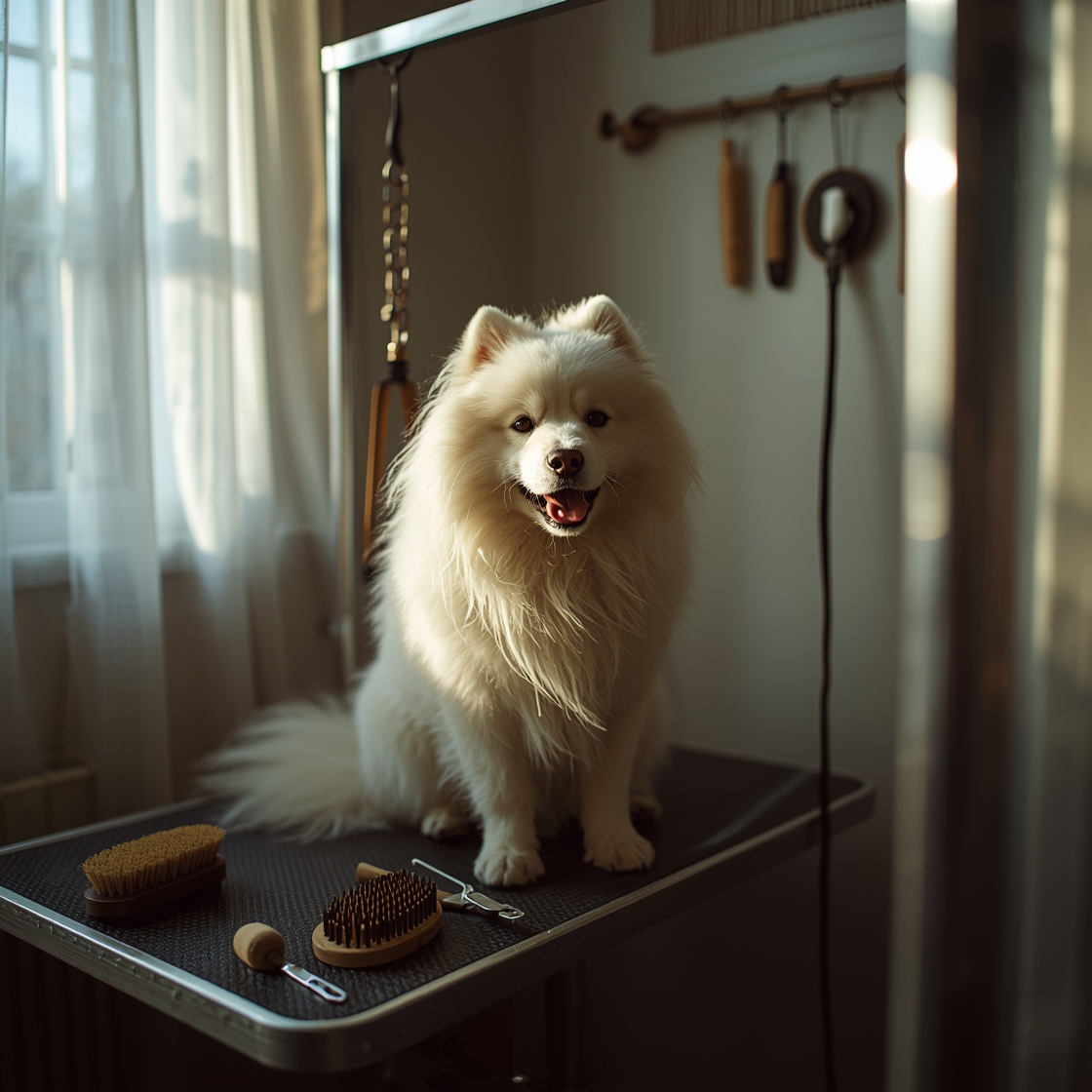
A grooming table is optional. A clamp that the cat cannot leave is a last resort and a good way to teach biting. Floor plus towel is a 2026-valid setup.
Seasonal tool cadence without a spreadsheet
Spring and autumn: add one rake or FURminator-class pass per week on coats that match the label. Summer: sanitary and belly checks before humidity felts what you skipped. Winter: static; dump the slicker more often; do not wet the cat to kill static. Year-round: nails on a two-to-three-week clock, because sofas do not care what season it is.
Write the cadence on the tin if two humans share the cat. Unassigned belly work is how longhairs arrive at June already felted.
Kittens, seniors, and the 2026 tools that should stay in the box
Kittens: soft slicker or the Pat Your Pet comb, sixty-second sessions, no rake, no 7-inch shear, no clamp. The job is a future adult who does not vanish.
Seniors: softer daily tool, split sessions, sanitary scissors or a small clipper, rump checks. A new lion cut can be kinder than a daily fight. A new inability to stay clean is a clinic signal. Arthritis does not show up as a product review.
Hairless and very thin coats: wipes and hands. Park the FURminator and the slicker.
Noise claims, 60 dB stickers, and what cats actually do
Clipper listings in 2026 love a decibel number. The number is a manufacturer claim at a manufacturer distance. The cat experiences a motor against a ribcage in a small room. Owner-report language — stayed vs left — is the better filter. The oneisall quiet listing is on this page for that filter, not because we ran a sound lab.
A vacuum kit is louder in practice than a clipper even when the box says "quiet," because suction on the coat is a second sound. If the household's real pain is HVAC fur, buy the vacuum after the stack exists, not instead of it. The home kit page holds that SKU class.
Replacement, dull edges, and when a cheap tool becomes a sharp problem
Pulling is the tell. A slicker that used to glide and now jerks is loaded or bent. A clipper that folds fur is dull. Shears that saw are done. Replace the piece. A dull cheap tool is more dangerous than a sharp cheap tool because people push.
Wipe metal. Dry it. Do not soak self-clean mechanisms. Do not leave a FURminator edge in a wet bathroom.
What still belongs in the tin that this product set omitted
Nails. A wide-tooth metal comb if Pat Your Pet is not in the cart. Styptic. A towel. A note that says who does the belly on Thursdays. The nail clipper and grinder pages are not optional extras for a complete 2026 drawer. They are the job this seven-SKU set forgot.
Breed-label shortcuts, used carefully
Shorthair domestic: Aumuca or Pat Your Pet, scissors for paws, FURminator only if the blowout is real and the label matches. Longhair: leave this page for the longhair brush and longhair kit URLs after you own a comb. Large shorthair: FURminator can earn a seasonal slot. Small, thin, or senior: skip the aggressive edge.
Cost per year, not cost per listing
A $9.99 comb-and-brush that gets used fifty weeks is cheaper than a $36 clipper that gets used twice. The stack listing review's starter at about $20 plus a nail tool is the 2026 default spend. Add the oneisall motor only when a mat exists or a sanitary clip is a weekly job. Add FURminator only when the coat and the label match and the blowout is real.
People overspend on the loud tool and underspend on the comb. That is the whole economics section.
If you already own a dull clipper, a blade service or a new blade is a better 2026 purchase than a second body. Two dull motors is not a stack.
Shedding, vacuums, and the HVAC problem
The best cat grooming tools for the coat are not the best tools for the apartment. A slicker moves hair into a bin. A vacuum kit moves hair into a canister. An HVAC filter upgrade moves less hair into lungs. Buy those as separate jobs. Combining them into one "2026 grooming system" is how you get a hose the cat hates and a comb you never bought.
If a roommate's allergy is the driver, grooming plus closed bedrooms plus a real filter matters more than a branded deshedder. Allergies are medical for the human; this page is not that clinic.
After a professional groom — how to not undo it in a week
You paid for a reset. The home stack's job is not to "improve" the cut on night one. It is to keep britches and armpits from felting before the next calendar slot. Gentle slicker, comb, nails. Leave the clipper alone unless a new mat forms. Bathing a freshly groomed longhair because you want them "even cleaner" is how you felt a coat someone just saved.
Ask the groomer which zones they want you to touch and which to leave. Write it on the tin. That note is a 2026 tool.
Multi-person households and the unassigned belly
The stack fails when three people each think someone else did Thursday. Put a name and a day on the tin. The avoidant cat still needs the short session; assigning them to the most patient human is kinder than rotating whoever is in a hurry. Children can hold treats. They should not hold FURminators.
When "new tool" is procrastination
If the coat is already a project, another slicker will not open it. Book the groomer or the clinic, then buy the maintenance stack. Shopping as avoidance is how this aisle makes money. This checklist is a completeness score, not a permission slip to keep browsing.
A 15-minute audit of the tin you already own
Empty the drawer. Keep one slicker that reaches, one metal comb, one nail tool, one rounded or ball-tip shear. Park the rest in a box for 30 days. If you did not miss a glove, a second short slicker, or a Bluetooth handle, donate them. The best cat grooming tools are the ones that come out, not the ones that photograph in a flat lay.
Then add only the missing job. No comb? Pat Your Pet or any steel comb. No quiet motor and a current mat? oneisall. No blowout tool and a large shorthair in April? FURminator, used lightly. Everything else is aisle noise from a year that did not invent a new pin.
If the audit finds three clippers and no comb, you have been shopping the loud job. Buy the quiet one — the comb — tonight.
Photos versus pins — how 2026 listings hide the job
A listing photo on a fluffy white cat does not mean the pins reach a Persian undercoat. A "dogs and cats" badge does not mean the shear is 6 inches. A "professional" badge does not mean a metal comb is in the box. Read the length, the tip, the coat label, and the contents list. If those four are missing, the best cat grooming tools decision is "not this SKU."
The seven cards on this page are not perfect. They are the live set. the listing review exists so you can see that the $9.99 combo out-jobs the $36 motor, and then buy both only if both jobs are empty. A second photo of a fluffy cat will not add a pin measurement that the listing omitted. If you cannot name the job, you are not ready to click. The stack is five jobs. A listing is one. Your tin has to survive the difference, including the nail tool this seven-SKU set never included. Write the missing job on a sticky note before you open Amazon again. If the note says "nails," that page is not this URL — stop scrolling this aisle and open the nail guide instead.
Frequently Asked Questions
What counts as the best cat grooming tools for a matted belly?
A quiet clipper or a groomer, not a stronger slicker. The best cat grooming tools for a felted belly are reset tools. Daily tools failed earlier, or were never used on that zone.
How often should I groom my cat?
Weekly full pass for most shorthairs; most days on problem zones for longhairs; nails every two to three weeks. "When I see fur" is late.
Can I use human grooming tools on my cat?
No — except a towel. Points, crush, and wrong pH are the three failures.
What if my cat hates being groomed?
Shorter sessions, dump the slicker, try a flexible pad, move nails to another night, and stop at the first real flinch. Hate that is new or screaming is pain until a clinic says otherwise.
Do I need a FURminator if I have a slicker?
Only for a short/medium blowout on a cat who matches the label. Most homes do not.
Is a grooming glove a 2026 tool worth buying?
As a finish pass, yes. As the stack, no.
Should I buy a vacuum kit instead of these tools?
If the complaint is floors, maybe — see the home kit page. If the complaint is mats, no.
Are dog tools fine on cats?
Sometimes the steel is fine. Noise, pin pitch, blade length, and skin thickness often are not. Read the job.
What should a first-time owner buy in 2026?
Pat Your Pet (brush + comb) + rounded scissors + a nail tool from the nail pages. Add Aumuca if you want a nicer daily slicker. Add oneisall only when a mat exists.
When do I stop shopping and book a groomer?
When you cannot lift the mat, when you cannot see the skin, or when the cat will not let you try. That is the professional's job.
Related drawers on this site
- Longhair brushes — pin length.
- Home kits — completeness.
- Longhair kits — depth.
- Scissors — tip class.
How We Researched This Guide
This guide is desk research. The We read the titles and descriptions of seven current Amazon search listings against five jobs using published specs, listed US prices, and manufacturer coat claims. Session-completion themes are aggregated owner reports, not a trial.
What we do not do: we do not run yearly "tested" roundups, we do not employ a veterinarian, and we have not handled these tools in a lab. Nothing here carries clinical endorsement.
Limitations: listed prices move; decibel and pin claims are manufacturer numbers when printed at all; "2026" in a title is a date stamp, not a new mechanism. Any cat in pain, with skin disease, or with mats tight to the skin needs a clinic or a professional groomer, and those instructions supersede this URL.