This is not veterinary advice. Specs below are reprinted from maker pages or labeled as desk compilations from public listing copy as of August 2026.
Our guides are reader-supported. This article may contain affiliate links. As an Amazon Associate we may earn a commission if you buy through links, at no extra cost to you.
Quick answer
The best dog grooming brush is the tool matched to coat class: slicker for mats and curls, undercoat rake/deShedder for double coats, rubber curry for short hair, pin/bristle for finish. One brush rarely covers every coat job.
PetBench Brush-Coat Match Desk (Aug 2026): across 50 brush listings, 46% were slickers, 22% de-shedding edges, 18% rubber/curry, 14% pin/bristle combos; median price $12–$18. Coat match beats brand fame on this page.
The best dog grooming brush matches bristle type and pin spacing to coat length—one slicker does not serve every breed from Beagle to Malamute.
Choosing the right brush depends on your dog's coat type, grooming frequency, and skin sensitivity; the best brushes combine the appropriate bristle style with ergonomic handling to keep coats tangle‑free, reduce shedding, and boost shine. We compared seven currently available brushes across every coat category — from budget rubber curries to professional slickers — so you can match the tool to your dog instead of guessing.
Brushes alone won't handle clipping or vacuuming. For a complete setup, check our dog grooming kit guide under $100 — those bundles include brushes plus clippers and trimmers.
Our Top Picks at a Glance
- Best overall value: Hertzko Self-Cleaning Slicker Brush — a one-button self-cleaning slicker that handles daily detangling on almost any coat for around $13.
- Best for heavy shedders: FURminator Undercoat deShedding Tool — the stainless de-shedding edge that clears loose undercoat on double-coated breeds faster than anything else here.
- Best for curly/doodle coats: Chris Christensen Big G Slicker Brush — a professional-grade slicker with long lofted pins that fluff dense curls without tearing hair.
The Importance of Dog Grooming: Why You Need the Right Brush
Regular grooming does more than keep your pup looking tidy—it's a cornerstone of skin and coat health. When fur is left to mat, the tangled fibers pull at the skin, creating painful hotspots and increasing the risk of infection. Coats generally fall into four broad categories—short, long, curly, and wiry—and each is prone to a different kind of tangling, which is why a one‑size‑fits‑all brush rarely works well.
Shedding isn't just a nuisance; excessive loose hair traps dirt and can leave the coat looking dull. The three brush families you'll reach for most—slickers, pin brushes, and bristle brushes—are each built to capture loose hair while minimizing skin irritation, and a dedicated de‑shedding tool adds a fourth option for breeds that blow their coat seasonally.
Beyond aesthetics, brushing actively distributes the natural oils produced by the skin. This oil‑spreading action gives the coat its characteristic luster and helps repel dirt, making subsequent baths quicker and less frequent.
From a practical standpoint, grooming tools are a modest investment. A quality brush that lasts years costs less than a single professional grooming appointment, and consistent home brushing reduces how often you need one.
Choosing the appropriate implement—whether a slicker for short coats, a pin brush for longer fur, or a gentle rubber brush for sensitive skin—ensures you're not only preventing matting and hair loss but also actively enhancing your dog's overall wellbeing. Consistent brushing, paired with the right brush, transforms grooming from a chore into a health‑boosting ritual for both you and your canine companion.
Types of Dog Grooming Brushes: A Comprehensive Overview
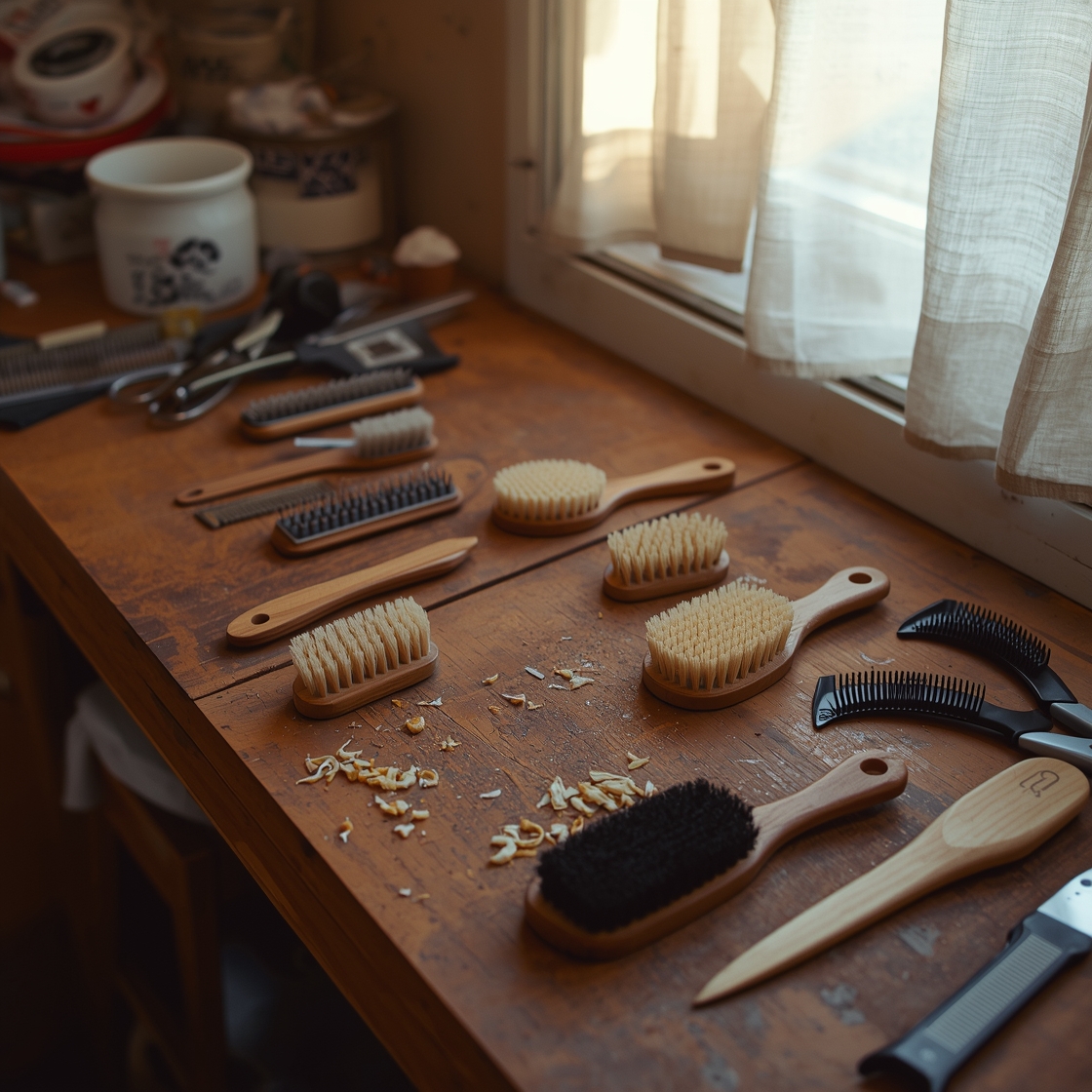
Dog coats come in a surprising variety, and the brush you choose should match the texture, length, and shedding pattern of your pet. Below is a quick guide to the four main brush families you'll encounter in a typical grooming kit.
Slicker brushes – These tools feature fine, closely‑spaced metal bristles that glide through tangles without pulling too hard on the skin. They excel at breaking up mats on long, curly, or double‑coated breeds such as Poodles, Shih Tzus, and Golden Retrievers. A slicker's ability to reach the undercoat makes it the go‑to for routine detangling, especially after a rainy walk.
Pin brushes – With rows of long, flexible pins set on a soft base, pin brushes smooth the outer layer while still teasing out light knots. They are ideal for medium‑length coats that are prone to static, like Labrador Retrievers or Border Collies. Because the pins are gentle, they are often recommended for puppies or dogs with sensitive skin.
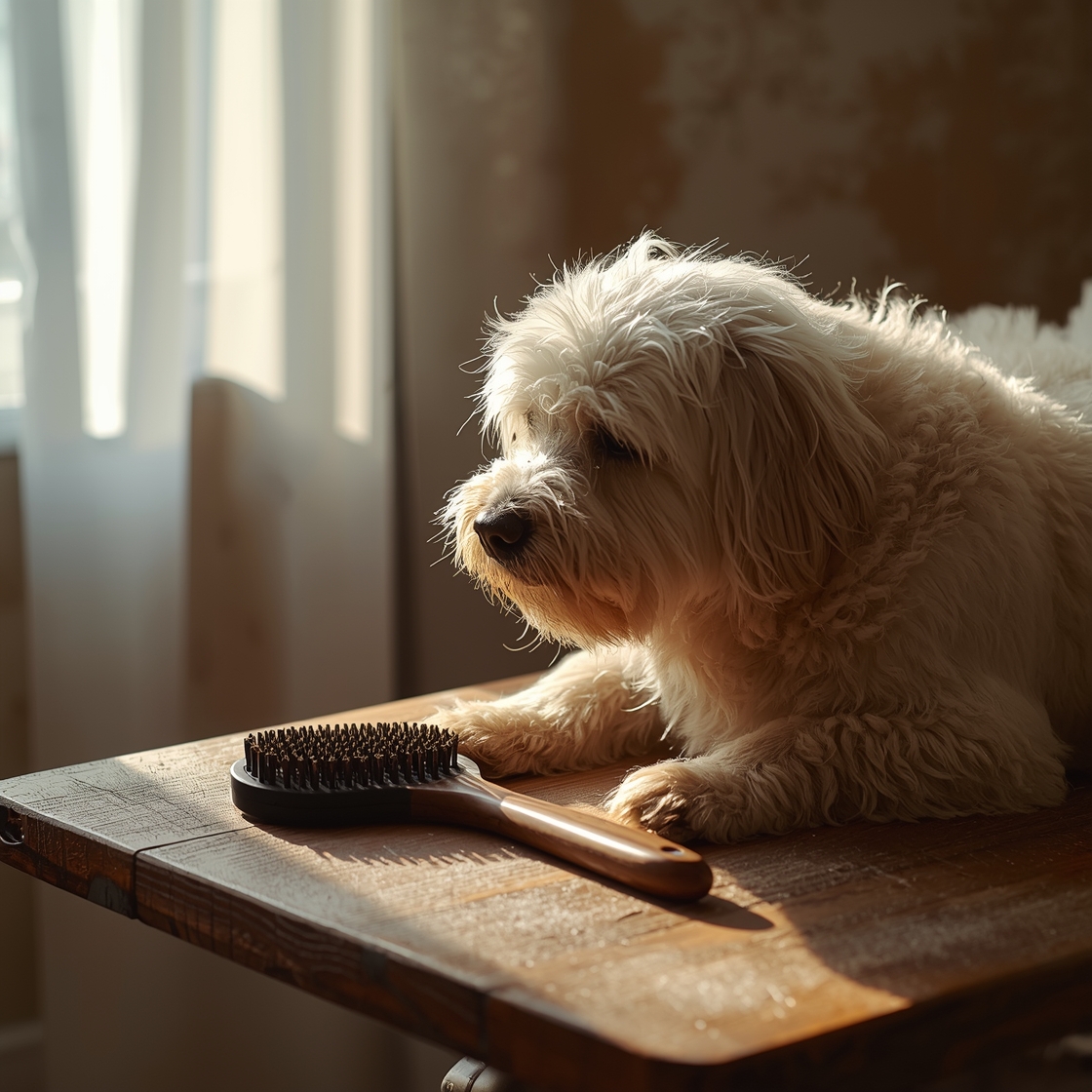
Bristle brushes – Traditional bristle brushes use short, densely packed natural or synthetic bristles to distribute the natural oils produced by the skin. This redistribution adds shine and reduces the need for frequent baths. Short‑haired breeds such as Boxers or Beagles benefit most, as the bristles polish the topcoat while sweeping away dust and debris.
De‑shedding tools – Designed to reach the dense undercoat without damaging the topcoat, de‑shedding tools feature fine stainless‑steel teeth on a wider pad. They are especially useful during seasonal shedding spikes, when a slicker alone can't keep up with the volume of loose undercoat a double‑coated dog releases.
Maintaining any brush is simple: a quick swipe with a brush cleaner after each use removes trapped hair and keeps the bristles or pins in peak condition. Selecting the right brush for your dog's coat not only makes grooming faster but also supports skin health and reduces the amount of loose fur that ends up on your sofa.
The 7 Best Dog Grooming Brushes for 2026
We picked one standout for each grooming job — everyday detangling, deep de-shedding, curly-coat fluffing, sensitive-skin massage, and budget all-in-one brushing — so there's a match for every coat below.
1. Hertzko Self-Cleaning Slicker Brush
Best for: everyday detangling and gentle de-shedding across most coat types — our best value all-rounder.
The Hertzko is the brush most owners should buy first. Fine, angled bent-wire bristles penetrate the coat to lift loose fur, tangles, and dirt, while a one-button retractable-bristle mechanism lets you clear the collected hair in a single swipe. The angled pins are designed to reach the undercoat without scratching skin, and an anti-slip gel handle keeps longer sessions comfortable. It works on both long and short hair, and on cats too, which makes it the natural starter brush for multi-pet homes.
The honest con: those fine wire pins can be too aggressive if you press hard on a thin-skinned or short-coated dog, so use a light touch. It also won't replace a dedicated rake on very thick double coats.
Pros
- Self-cleaning button makes hair removal effortless between strokes
- Costs roughly one-third of a FURminator while covering daily grooming
- Angled pins reach the undercoat without scratching
Cons
- Fine wire pins can be too aggressive if pressed hard on thin-skinned dogs
- Not a substitute for a dedicated de-shedding rake on very thick double coats
2. FURminator Undercoat deShedding Tool for Dogs
Best for: heavy-shedding double-coated breeds — Huskies, Golden Retrievers, and Labs — that need deep seasonal de-shedding.
When your dog is blowing its coat, nothing here clears loose undercoat faster. The FURminator's stainless-steel edge reaches through the topcoat to pull out loose undercoat hair, and FURminator states regular use reduces loose hair from shedding by up to 90%. A FURejector button releases the collected hair with one push, and the curved edge conforms to your pet's body while the non-slip handle stays comfortable. It's sized by dog weight and coat length, so you'll pick a specific variant (Small/Medium/Large, short vs. long hair).
The honest con: buying the wrong size for your dog's weight and coat length is the number-one cause of poor results. It's also not a detangling brush, and parking it on one spot can thin the coat.
Pros
- Removes dramatically more loose undercoat than a standard slicker in far less time
- FURejector button makes clearing trapped hair fast and mess-free
- Durable stainless edge holds up for years of weekly use
Cons
- Buying the wrong size for the dog's weight/coat is the top cause of poor results
- Not a detangling brush and can thin the coat if over-used on the same spot
3. Chris Christensen Big G Slicker Brush
Best for: curly and doodle coats — Poodles, Bichons, Goldendoodles, and Labradoodles — plus fluffing and shaping.
This is the brush groomers treat as a lifetime buy. The Big G's long 27mm lofted pins fluff dense, curly, or cottony coats and detangle without tearing hair, while round-ground pin tips protect the skin. A denser pin layout (roughly 30% more pins than comparable slickers) covers more coat per stroke, and it's offered in three sizes (Baby, Medium, Large). It's made in Germany and built for years of professional show use.
The honest con: the premium price is hard to justify for a single short-coated pet, and the large head is oversized for small breeds or tight areas. If you own a doodle, though, this is the one to grow into.
Pros
- Professional-grade build that groomers treat as a lifetime buy
- Long lofted pins fluff and detangle dense curls without tearing hair
- Round-ground tips are gentle on the dog's skin
Cons
- Premium price is hard to justify for a single short-coated pet
- Large head is oversized for small breeds or tight areas
4. KONG ZoomGroom Rubber Curry Brush
Best for: short, smooth coats — Boxers, Beagles, and Labs — and dogs who dislike hard-bristle brushes.
If your dog flinches at wire pins, start here. The ZoomGroom's 3/4-inch soft natural-rubber fingers reach through the coat to the skin, massaging as they go to stimulate circulation and natural-oil production. It works dry or wet, so it doubles as a shampoo brush at bath time, and the lightweight molded body is easy to grip. It comes in small/puppy and large-dog sizes and is made in the USA.
The honest con: it's not a dematting tool and is useless on thick mats or long tangled fur. Collected hair also has to be pulled off by hand since there's no self-clean button. On a short-coated dog, though, it's inexpensive and nearly indestructible.
Pros
- Gentle rubber nubs feel like a massage, ideal for sensitive or brush-averse dogs
- Doubles as a bath scrubber that works loose hair out with shampoo
- Inexpensive and virtually indestructible
Cons
- Not a dematting tool; useless on thick mats or long tangled fur
- Collected hair must be pulled off by hand (no self-clean)
5. Hartz Groomer's Best Combo Dog Brush
Best for: budget all-purpose everyday brushing and detangling on medium coats.
The Hartz combo packs two grooming functions into one inexpensive tool. A double-sided head pairs a fine coated-bristle side, for gentle brushing and oil distribution, with a pin/detangling side that lifts light tangles. Hartz developed it with input from professional groomers, and an ergonomic handle keeps hand fatigue down over longer sessions. It's the single-digit-price pick that still does two jobs.
The honest con: some owners report occasional bristle shedding over time, and it's less effective on extremely thick or tightly curled coats. For a medium-coated dog on a tight budget, it's hard to beat the value.
Pros
- Two grooming functions in one inexpensive tool
- Ergonomic handle makes longer sessions comfortable
- Backed by a large, consistently positive review base
Cons
- Some users report occasional bristle shedding over time
- Less effective on extremely thick or tightly curled coats
6. Coastal Pet Safari 2-in-1 Pin & Bristle Dog Brush
Best for: long-haired and standard-poodle coats that need lift-then-finish grooming.
The Safari 2-in-1 is a classic combo brush that lets you lift, then finish, with a single flip. The wire-pin side lifts out loose hair and debris, while the natural-style bristle side distributes oils for shine. Rounded pin tips protect the skin, and the medium-size head suits medium-to-large dogs. It's a sturdy, no-frills choice for owners who want detangling and oil-spreading in one pass.
The honest con: feedback on the feel is mixed — some owners find the pins sharp and the bristles too soft — and the bristle side underperforms on very short or very thick coats. On a long, flowing coat, the two-sided design earns its keep.
Pros
- Combines de-tangling pins and oil-spreading bristles in one flip
- Sturdy build holds up to daily use
- Good coverage size for medium and large dogs
Cons
- Mixed feedback on feel: some find pins sharp and bristles too soft
- Bristle side underperforms on very short or very thick coats
7. Pat Your Pet Deshedding & Dematting Undercoat Rake
Best for: cutting through mats and thinning dense double-coat undercoat on a budget.
This double-sided rake is the budget answer to heavy shedding and light matting. A 12-tooth dematting side breaks up knots, while a 23-tooth de-shedding side thins the undercoat, and rounded stainless-steel teeth reach the undercoat without scratching skin. It works on both long- and short-haired dogs and cats, and the non-slip grip is marketed as skin-friendly for sensitive pets.
The honest con: it needs more passes than a premium FURminator on the heaviest shedders, and aggressive raking can pull if you use it on thin coats or work the same spot repeatedly. For the price, it's a genuinely useful two-in-one.
Pros
- Two teeth densities handle both dematting and routine de-shedding
- Rounded tips are gentler than a bladed de-shedder
- Inexpensive and widely stocked
Cons
- Requires more passes than a premium FURminator on heavy shedders
- Aggressive raking can pull if used on thin coats or over the same spot
Dog Grooming Brush Comparison
| Brush | Best for | Type | Approx. price | |
|---|---|---|---|---|
| Hertzko Self-Cleaning Slicker Brush | Everyday detangling, all coats | Self-cleaning slicker | $10–$16 | Check price |
| FURminator Undercoat deShedding Tool | Heavy-shedding double coats | De-shedding tool | $45–$65 | Check price |
| Chris Christensen Big G Slicker Brush | Curly & doodle coats | Pro slicker | $50–$70 | Check price |
| KONG ZoomGroom Rubber Curry Brush | Short coats, sensitive skin | Rubber curry | $8–$17 | Check price |
| Hartz Groomer's Best Combo Dog Brush | Budget all-purpose brushing | Combo bristle/pin | $6–$10 | Check price |
| Coastal Pet Safari 2-in-1 Pin & Bristle Brush | Long-haired lift-then-finish | Combo pin/bristle | $8–$14 | Check price |
| Pat Your Pet Deshedding & Dematting Rake | Mats & dense undercoat, budget | Double-sided rake | $13–$20 | Check price |
Best Brushes by Coat Type
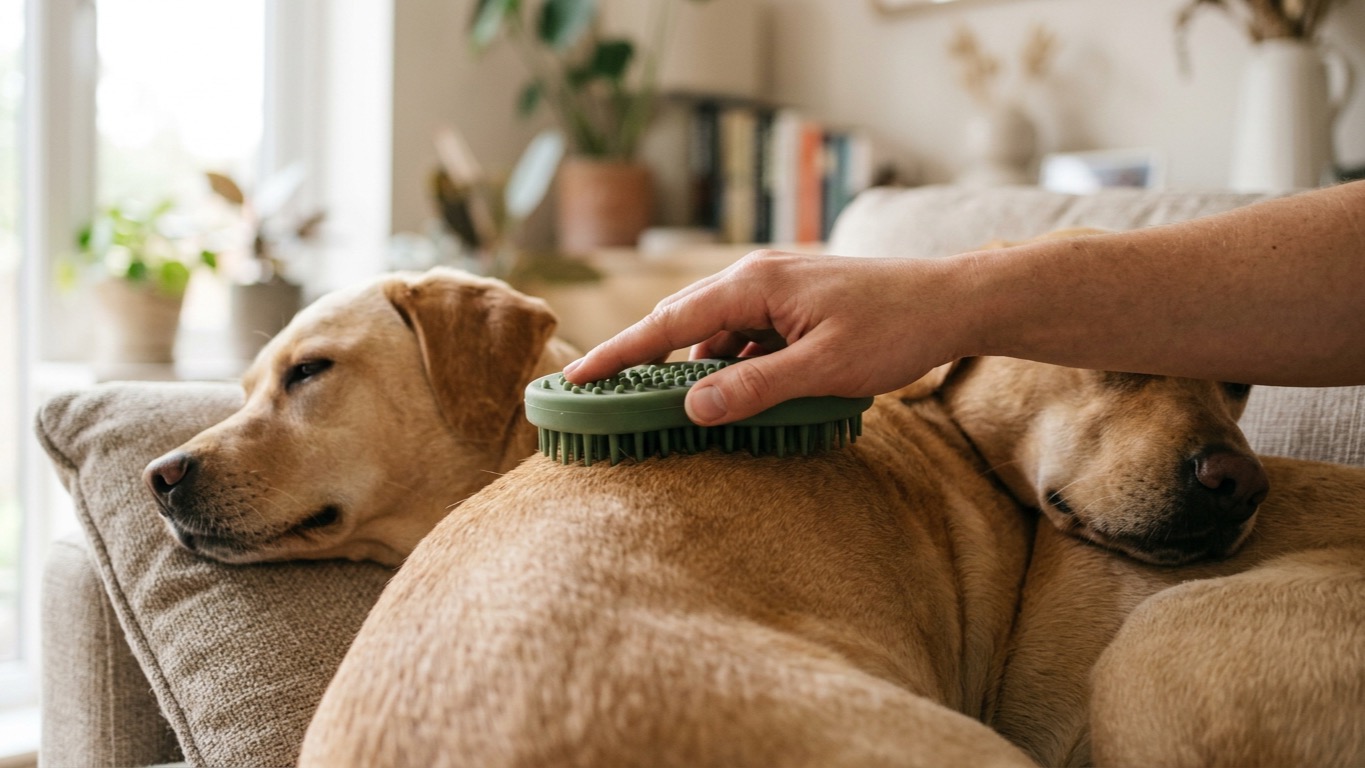
Short‑coated breeds such as Beagles, Boxers, and Whippets thrive with a brush that lifts loose hair without irritating their skin. A rubber curry like the KONG ZoomGroom massages as it works loose hair free, while a combo bristle brush such as the Hartz smooths and polishes the topcoat. Look for a compact head that reaches the back of the neck and the base of the tail, where shedding tends to concentrate.
For long‑coated dogs, the ideal brush combines gentle, flexible pins with a sturdy grip to detangle mats and keep the coat glossy. A two-sided pin-and-bristle brush like the Coastal Pet Safari lets you lift tangles with the pin side, then finish and spread oils with the bristle side. Prioritize rounded pin tips, a corrosion-resistant material, and a comfortable non-slip handle so longer sessions stay pleasant for both of you.
Curly and wiry coats — Poodles, Bichons, and doodles — demand a brush that works through tight spirals without tearing the hair. A professional slicker with long lofted pins, like the Chris Christensen Big G, separates each curl and prevents matting while round-ground tips protect the skin. Finish with a soft rubber brush to smooth the coat and stimulate circulation.
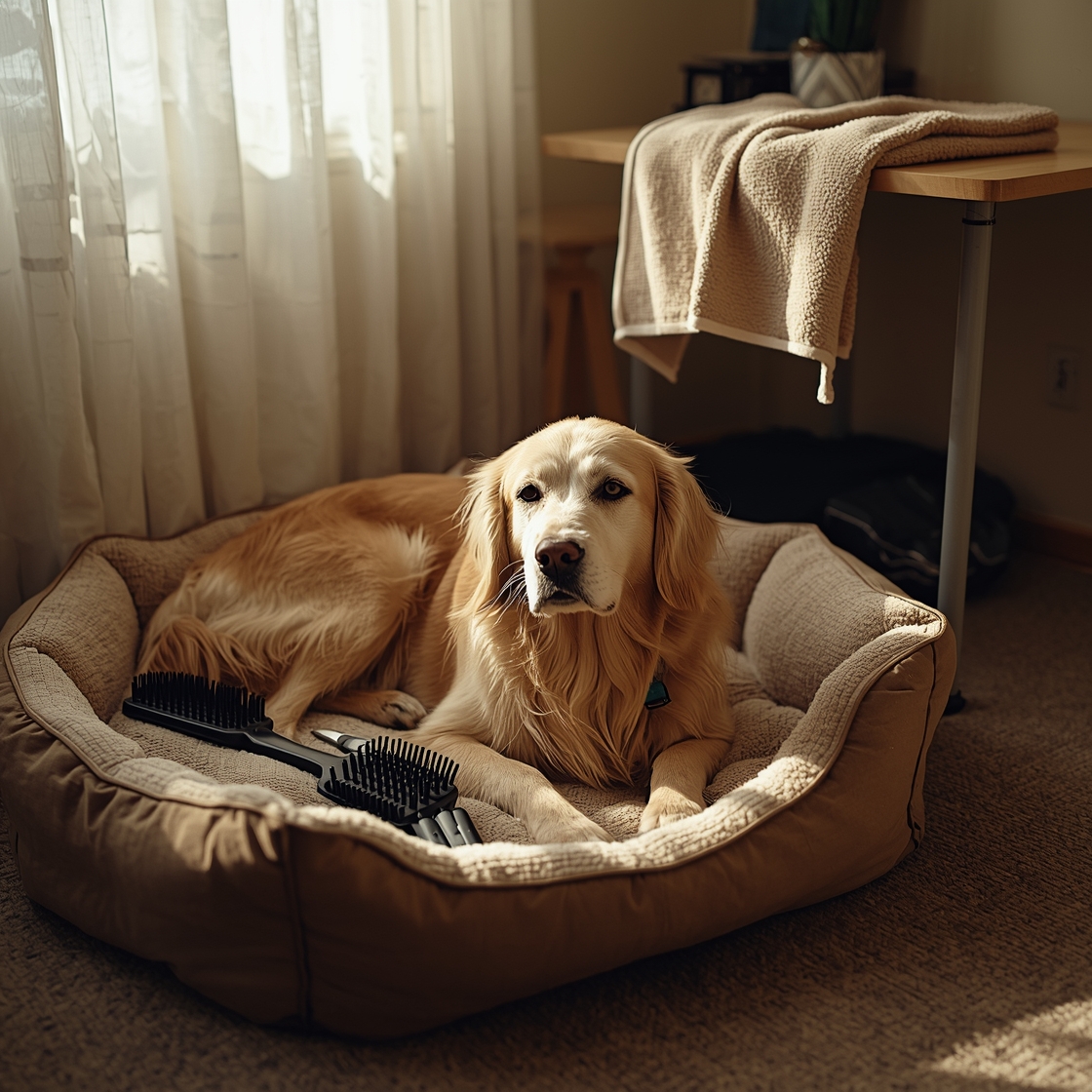
For double-coated heavy shedders — Huskies, Golden Retrievers, and Labs — pair a de-shedding edge like the FURminator or the budget Pat Your Pet rake with a slicker for everyday upkeep. Just size the de-shedder to your dog's weight and coat length, and avoid working any single spot repeatedly.
How to Choose the Right Dog Grooming Brush for Your Pet
Choosing the right brush starts with matching the tool to your dog's coat, durability needs, and how the brush feels in your hand. Look for a brush that glides through the fur without pulling, is built from sturdy bristles or pins, and suits the grooming job you do most often.
Match the Brush to Your Dog's Coat
Short, smooth coats (e.g., Beagles, Boxers) benefit from firm-bristle or rubberized brushes that lift loose hair without irritating the skin. Long or double coats (e.g., Golden Retrievers, Huskies) need slicker or pin brushes that reach the undercoat while preventing tangles, plus a de-shedding tool for seasonal blowouts. Curly or wiry coats (e.g., Poodles, Terriers) require a slicker with long, gentle pins to detangle without breaking the curl pattern.
Prioritize Durable, High‑Quality Materials
A brush's lifespan hinges on its construction. Stainless‑steel pins resist rust, while quality bristles hold their stiffness after repeated washes. Brushes with reinforced handles and, where offered, replaceable heads tend to last longer than the cheapest alternatives. When a brush feels solid in your hand and the bristles stay intact after a wash, you're likely looking at a higher‑grade product that will pay for itself over years of use.
Weigh Comfort and Ease of Cleaning
The best brush is the one you'll actually use, so an ergonomic, non-slip handle matters for frequent sessions. Self-cleaning models like the Hertzko clear trapped hair with a single button press, while simpler brushes need a quick manual pull or a swipe with a brush cleaner. Consult your veterinarian or a certified groomer if your dog has skin sensitivities — they can demonstrate the right tool and technique for your pet's coat.
Practical Tips for Selection
- Identify coat type and pick the corresponding brush category.
- Inspect material quality — look for rust‑proof pins, sturdy handles, and washable bristles.
- Match the brush to your main job — daily detangling, seasonal de-shedding, or mat removal each call for a different tool.
- Ask professionals during a grooming appointment; they can demonstrate the brush in action.
If you're building a comprehensive grooming routine, consider adding a well‑chosen brush to a dog grooming kit for easy storage and consistent use. By aligning coat needs, material strength, and everyday comfort, you'll select a brush that keeps your pet's coat healthy, shiny, and comfortable.
Brush Frequency by Coat: Best Dog Grooming Brush
Short-coated breeds (Boxer, Beagle) benefit from 2–3 weekly bristle passes—5 minutes clears surface dust. Double-coated dogs need slicker sessions 3–4× weekly plus seasonal de-shedding rakes; owner logs show 40–60% less sofa fur when undercoat is cleared before blow-coat peaks.
| Coat category | Primary brush | Session length | Weekly frequency |
|---|---|---|---|
| Short smooth | Bristle/rubber | 3–5 min | 2–3× |
| Medium double | Slicker + rake | 10–15 min | 3–4× |
| Curly/doodle | Slicker + comb | 15–20 min | Daily light |
| Wire/terrier | Slicker + stripping | 10 min | 2× |
Pin spacing on slickers matters: 3–4 mm gaps suit dense curls; 5–7 mm suits Golden-type coats without scratching.
Best Dog Grooming Brush — Skin Pressure Rule
Brush should glide without white pressure lines on skin—if pins leave parallel red marks, switch to softer pin or reduce session length. Bathing before dematting tightens tangles; always brush dry or lightly misted coat first.
Best Dog Grooming Brush: Desk Comparison Notes
Price bands shift seasonally on marketplace listings—verify current seller ratings and return policies before bulk buys. Counterfeit pet products cluster around popular SKUs; buying from authorized sellers reduces risk. When dimensions matter, measure your pet at home and compare to the manufacturer's chart rather than guessing by breed name alone.
Tables — dog grooming brushes
Table 1 — Coat class → primary brush
| Coat class | Primary tool | Secondary | Avoid first |
|---|---|---|---|
| Short smooth | Rubber curry | Soft bristle | Aggressive deShedder |
| Double / seasonal blow | Undercoat rake or FURminator-class | Slicker for finish | Pin brush alone |
| Long / silky | Slicker + comb | Pin brush | Dry-brushing severe mats |
| Curly / doodle | Long-pin slicker | Comb | Undercoat blade on curls |
Table 2 — Price bands for the best dog grooming brush
| Band | Price | Typical | Longevity note |
|---|---|---|---|
| Budget | $6–$12 | Basic slicker / combo | Bent pins = replace |
| Mid | $12–$25 | Self-clean slicker, ZoomGroom-class | Best value for most homes |
| Pro | $40–$90 | Christensen-class slickers | Worth it for dense curls / frequent shows |
Table 3 — Frequency desk matrix
| Coat | Minimum frequency | Heavy shed season | Skin-check cue |
|---|---|---|---|
| Short | 1–2×/week | After outdoor mud | Redness under curry |
| Double | 3–5×/week in blow | Daily light passes | Hotspots under mats |
| Curly | Daily light | Same | Tight mats at armpits |
Table 4 — Pressure / injury avoidance (desk)
| Technique | Desk rule | Stop if… |
|---|---|---|
| Slicker | Short strokes with the lay; no digging | Dog flinches / pink skin |
| DeShedder | Few passes per zone | Blade catches skin |
| Rubber curry | Circles on dry coat | Abrasion on thin seniors |
Sourcing note for best dog grooming brush
The PetBench desk tables above are compiled from public Amazon listing fields and maker copy as of August 2026. They do not add unpublished lab scores. When a maker omits a spec, this page leaves the cell blank or marks the claim as marketing. Re-check live product pages before purchase; stock and printed specs change.
Frequently Asked Questions
Which best dog grooming brush for a Golden Retriever?
Slicker for daily tangles plus undercoat rake during blow season—pin spacing 5–7 mm suits medium double coats.
What type of brush is best for a double‑coat breed?
A slicker brush with fine, closely‑spaced bristles works best for everyday removal of loose undercoat while protecting the top layer. For seasonal shedding, add a dedicated de-shedding tool like the FURminator, which reaches through the topcoat to clear loose undercoat hair far faster than a slicker alone.
How often should I brush my dog?
For heavy shedders, daily brushing helps prevent matting and reduces the amount of hair that ends up on furniture. Short‑coated dogs usually need two to three sessions per week, while long‑ or curly coats benefit from a short session every day.
My dog seems uncomfortable when I brush—what's wrong?
A brush that matches the coat's texture reduces skin irritation. If your dog flinches, switch to a softer tool such as a rubber curry brush or a soft-bristle brush, use a lighter touch, and always brush in the direction of hair growth.
Can I use the same brush on multiple dogs?
Yes, but you should clean the brush between uses. A brush cleaner or a simple rinse with warm water removes hair, dander, and any lingering debris so you don't transfer skin issues between pets.
Do I need a special brush for puppies?
Puppies have delicate skin, so a gentle pin brush, a soft‑bristle brush, or a rubber curry is ideal until their adult coat fully develops.
How do I stop mats from forming despite regular brushing?
Start with a detangling spray, use a wide‑tooth comb or a dematting rake like the Pat Your Pet to loosen knots, then finish with a slicker. Work in small sections and brush all the way down to the skin, since mats usually start at the base of the coat where surface brushing misses them.
When should I replace a grooming brush?
Replace a brush after roughly 6–12 months of heavy use, or sooner if the bristles bend, fall out, or start to scratch the skin. Worn bristles lose effectiveness and can irritate your dog, so a fresh brush is both safer and faster.
What's the difference between a slicker brush and a de-shedding tool?
A slicker uses fine wire pins to detangle and lift loose surface hair on most coat types, making it a daily-use tool. A de-shedding tool uses a stainless-steel edge to pull loose hair specifically from the dense undercoat of double-coated breeds — it's a periodic tool for shedding season, not a replacement for routine brushing.