Our guides are reader-supported. This article may contain affiliate links. As an Amazon Associate we may earn a commission if you buy through links, at no extra cost to you.
Quick answer: The best cat scratching post for furniture is a stable sisal (or cardboard, if that is the texture the cat already uses) placed within about 24 in of the damaged sofa, tall enough for a full spine stretch — 32 in+ for most adult cats, taller for large-bodied cats. A wobbly 18 in kitten pole next to a 36 in sofa arm loses. Horizontal ramps and under-sofa pads exist for cats that already scratch flat. Tape is a barrier, not the outlet. AVMA: scratching “conditions the claws”; punishment is “not an effective deterrent.”
of 7 named SKUs on this page, 4 of 7 are vertical sisal-class posts, 1 of 7 is corrugated cardboard, 1 of 7 is an L-shape sisal ramp, 1 of 7 is an under-furniture horizontal, street snapshots run $18–$60, and 0 of 7 were stability-scored, claw-wear-timed, or “tested” in a PetBench home.
We compared current marketplace listings, AVMA’s public scratching language, and the 2013 AAFP/ISFM Environmental Needs Guidelines. If a fetched page did not print a height, this page does not invent one.
The barrier layer lives on best cat scratch deterrent tape for furniture. Stress-driven marking is a pheromone question. Claw length is a clipper question.
How to choose the best cat scratching post for furniture (five checks)
- Copy the geometry the sofa already won. Vertical stretch on an arm → tall sisal post. Horizontal shred on an ottoman or carpet → cardboard lounge or under-sofa pad. Mixed household → one of each, not one “best overall.”
- Height before prettiness. The cat should reach up and extend. An adult domestic shorthair on a 20 in pole is crouching. Shop 32 in+ unless the cat is a kitten or a confirmed horizontal scratcher. SmartCat-class tall posts exist because short poles fail large cats.
- Stability is a safety spec. If the post walks or tips, the cat returns to the sofa (which does not tip). Wide, heavy bases beat skinny discs. A $18 kitten pole is the wrong object for a 12 lb athlete.
- Distance. Within about 24 in of the damaged piece, in the room the cat already uses. A post in the spare bedroom is storage.
- Texture match. Sisal rope is the default vertical. Corrugated cardboard is the default horizontal. Carpet wrap works for some cats and sheds fibers for others. If the cat already loves a cardboard pad, do not “upgrade” them to a texture they ignore.
AAFP/ISFM 2013 treats scratching surfaces as part of the environmental needs set — essential, not optional. Multiple cats need multiple legal surfaces, not a timeshare on one wobbly pole.
Layout Map — best cat scratching post for furniture by job
| Job you can describe | Geometry | Kits on this page | Honest skip |
|---|---|---|---|
| Sofa arm, vertical stretch | Tall sisal, heavy base | AGYM; Amazon Basics; SmartCat Pioneer; MECOOL (kittens / small cats only) | 18 in pole for a large adult |
| Kitten / first apartment | Short sisal, low price | MECOOL; Amazon Basics | Expecting it to survive a Maine Coon |
| Cat already shreds boxes | Corrugated cardboard | EHEYCIGA | Treating cardboard as a 2-year post |
| Cat scratches ramps / angles | L-shape sisal ramp | CHEERHOME | A single vertical if they never go vertical |
| Hide the hardware | Under-furniture horizontal | PETKARAY | Using it as the only post for a vertical scratcher |
| Two cats, one sofa | Two stations, two textures | Mix a tall sisal + cardboard | One $18 pole in the corner |
Named kits — currently sold hardware, not a medal table
Street prices are live-card snapshots (Aug 2026), not a promise they hold. Search links use our Amazon tag.
1. AGYM Cat Scratching Post for Indoor Cats
Best for: a mid-size indoor cat that needs a vertical sisal stretch without a $60 tower.
Snapshot ~$39.99. Mid-range vertical sisal class: enough wrap and base to be a post, not a toy. Floor footprint is the honest con — that is also how it stays put. Place it at the sofa, not across the room. If the listing you open prints a height under 32 in, treat it as a kitten / small-cat SKU and keep shopping.
Pros: Sisal wrap; real footprint / base class Cons: Takes floor space — that is the point
2. EHEYCIGA Cardboard Cat Scratcher for Indoor Cats
Best for: kittens and confirmed cardboard shredders; a cheap second station.
Snapshot ~$19.99. Corrugated class. Lightweight, replaceable, honest about lifespan — weeks to a few months of heavy use, not a decade. Horizontal / lounge geometry. This is the SKU you add next to a tall sisal if you have both scratch styles, or as the first legal surface if the cat already lives in Amazon boxes. It will not stop a vertical sofa-arm habit by itself.
Pros: Texture many cats already love; low replace cost Cons: Consumable; not a tall stretch
3. CHEERHOME PETS Sisal Cat Scratcher Ramp for Indoor L-Shape Solid
Best for: cats that already work an angle (ramp, stair, recliner face).
Snapshot ~$39.99. L-shape sisal ramp class. Dual planes in one footprint. Assembly is the usual owner complaint — that is furniture, not a flaw in the idea. A ramp is the wrong first buy if every damaged surface in the house is a vertical arm. It is the right second buy if the cat ignores poles and shreds the sloped face of a chaise.
Pros: Two angles; solid-base class Cons: Assembly; still needs to sit at the damaged furniture
4. Amazon Basics Sturdy Cat Scratching Post for Indoor Cats & Kittens
Best for: a no-frills vertical when you need a second station in a multi-cat house.
Snapshot ~$37.11. “Sturdy” is a title word, not a desk tip-test. Same shopping rules: confirm printed height and base width on the listing you open. Aesthetics are plain. That is fine. Two plain posts beat one designer tower in the wrong room.
Pros: Mid-price vertical class; easy to duplicate Cons: Confirm height; looks like a post, not furniture
5. PETKARAY Under-Furniture Cat Scratcher
Best for: a hidden horizontal when the cat already goes under the sofa to scratch.
Snapshot ~$42.99. Under-furniture class. Discreet. Limited surface area. This is not a replacement for a 32 in vertical if the damage is on the arm. It is a smart second station for cats that work the carpet under a couch — the same geometry as a cardboard lounge, parked where the behavior already is.
Pros: Out of the sight line; uses existing furniture footprint Cons: Small; wrong as the only post for a vertical scratcher
6. MECOOL Cat Scratching Post Premium Basics Kitten Scratcher Sisal
Best for: kittens and small cats; a first legal surface, not a large-cat post.
Snapshot ~$17.99. Compact sisal. Owner copy about wobble with larger cats is the desk warning: a light base plus a 12 lb leap is how posts get retired. Use it as a starter or a second-room kitten station. Do not use it as the sofa-arm replacement for an adult.
Pros: Lowest snapshot; small footprint Cons: Stability / height class is kitten-scale
7. SmartCat Pioneer Pet Ultimate Scratching Post (Beige)
Best for: large or vigorous vertical scratchers when height and mass are the spec.
Snapshot ~$59.99 — highest on this card set. Pioneer / “ultimate” class is the tall, heavy sisal pole many behavior pages have mentioned by habit for years. You are paying for height and a base that does not walk. Confirm the current listing’s printed height. Beige sisal sheds fibers; that is wear, not failure, until the wrap reaches the core.
Pros: Tall / heavy class; full-stretch geometry Cons: Price; still must sit at the sofa
Want to browse current posts? See cat scratching posts on Amazon →
Best cat scratching post for furniture tables
Listing audit — not a tip test.
Table 1 — Class × kit
| Kit | Class | Snapshot | Desk job |
|---|---|---|---|
| MECOOL | Compact sisal | $17.99 | Kitten / small cat only |
| EHEYCIGA | Cardboard lounge | $19.99 | Horizontal shredders; consumable |
| Amazon Basics | Mid vertical sisal | $37.11 | Second station / no-frills |
| AGYM | Mid vertical sisal | $39.99 | Default adult vertical |
| CHEERHOME | L-ramp sisal | $39.99 | Angle scratchers |
| PETKARAY | Under-furniture horizontal | $42.99 | Hidden flat scratch |
| SmartCat Pioneer | Tall heavy sisal | $59.99 | Large / vigorous vertical |
Table 2 — Height and stability (desk planning rules)
| Cat / job | Height to shop | Base | Skip |
|---|---|---|---|
| Kitten, <8 lb | Compact OK | Light is tolerable | Using it after the cat outgrows it |
| Typical adult DSH | 32 in+ | Wide / weighted | 20 in “decorative” poles |
| Large-bodied / vigorous | Tall Pioneer-class | Heavy, does not walk | $18 poles |
| Horizontal-only cat | Height is the wrong spec | Low lounge / under-sofa | Buying taller hoping they convert |
| Hardwood / slick floor | Any height | Non-slip mat under the base | Blaming the cat for a sliding post |
Confirm the number on the listing you open. If the number is missing, the listing is incomplete — do not invent 32 in.
Table 3 — Texture and replace cycle
| Texture | Typical job | Replace when | Notes |
|---|---|---|---|
| Sisal rope | Vertical stretch | Wrap reaches core or unravels into a snare | Snipped loops are a claw/toe risk — trim or retire |
| Corrugated cardboard | Horizontal shred | Layers flatten or smell | Budget replacements, not guilt |
| Carpet wrap | Some vertical cats | Matted, stringy, listed fibers | Worse for fiber-eaters |
| Bare wood / bark wraps | Niche | Splinters | Inspect |
Table 4 — Post vs tape vs trim
| Tool | Role | Sister page |
|---|---|---|
| Scratching post | Legal outlet | This URL |
| Deterrent tape | Temporary block on the old surface | Deterrent tape |
| Nail clip / grind | Shortens the hook | Clippers / grinders |
| Diffuser | Stress adjunct | Pheromone diffuser |
Why a post protects furniture (when it is the right object)
Scratching sheds claw sheaths, stretches the body, and marks territory. A sofa is tall, stable, and always there. A legal post has to beat those three. Height, mass, and location are the specs. Color and “modern oak look” are not.
Declawing is not a furniture recommendation on this desk. AVMA’s public materials treat scratching as normal and treat punishment as a failed deterrent. Redirect. Do not punish.
Placement desk for the best cat scratching post for furniture
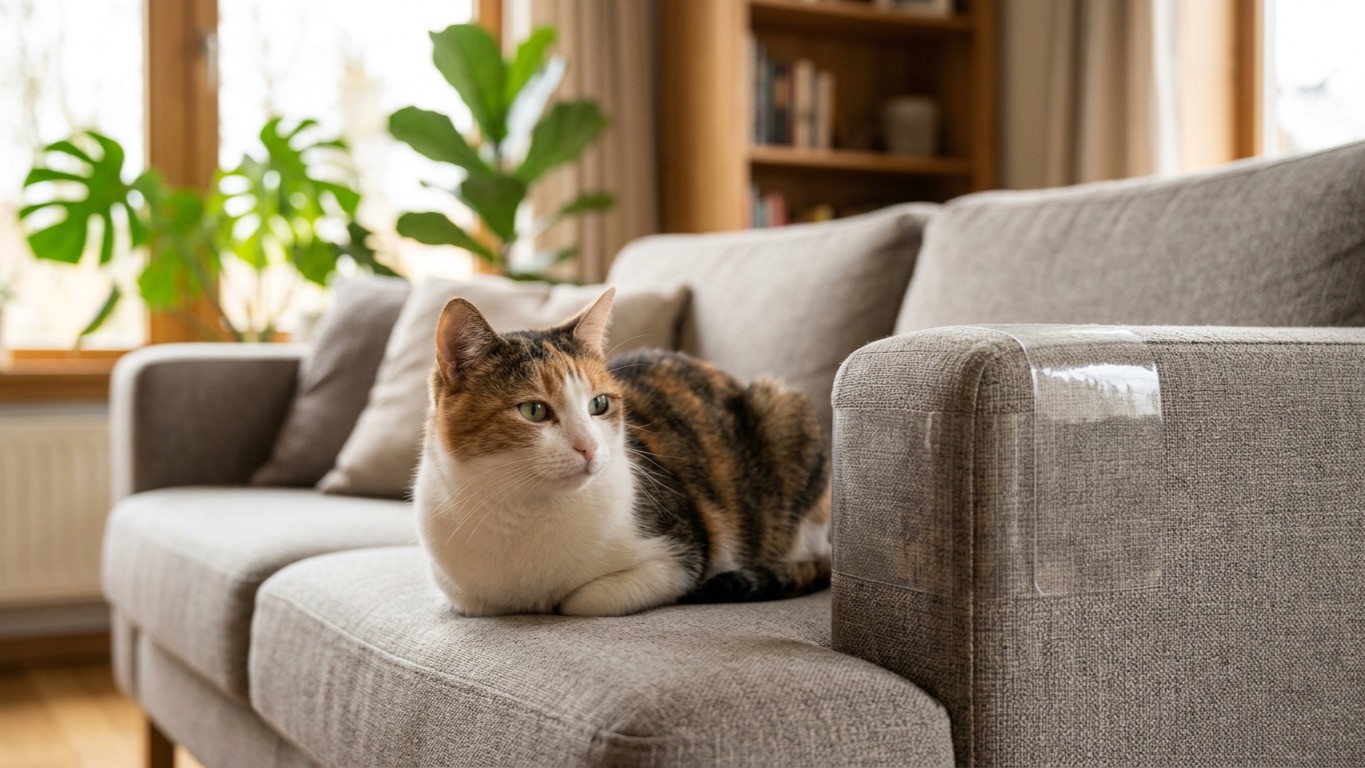
- At the crime scene. Within about 24 in of the damaged arm, same room, same traffic path.
- One post per major scratch zone in multi-cat homes. Cats do not timeshare a favorite vertical the way brochures hope.
- Do not hide it. A post behind a door is storage. Under-furniture pads are the exception because the behavior is already under the furniture.
- Lure the post, not the sofa. A used cardboard scrap, a pinch of catnip, or a wand toy session that ends on the post.
- Stabilize slick floors. A rubber mat under the base. A walking post is a rejected post.
- Cover or tape the old zone once the post is in use — see the tape page. Order matters: post first, then barrier.
Training without folklore
Clicker / treat when the cat uses the post. Interrupt sofa use by moving the cat to the post, not by yelling. If the cat only uses the post when you stand there, the post is still losing on location or texture.
New cats and kittens: put a legal surface in every room they will live in before the sofa becomes the habit. MECOOL-class poles are fine as kitten stations; plan the adult upgrade.
Seniors: arthritis can change stretch height. A ramp or a lower cardboard lounge is not a “downgrade.” It is a geometry match. Sudden refusal to scratch plus pain signs is a veterinarian.
Maintenance we will stand behind
- Vacuum sisal. Loose fibers are a GI foreign-body risk if the cat grooms them off the wrap.
- Retire a wrap that has become a loose loop. Toes catch.
- Cardboard is a consumable. Replace it. Do not wait until it is dust.
- A post that leans is done. Tighten hardware or replace the base. Do not “see if it lasts.”
Maker “replaceable carpet” claims are listing language — confirm parts exist before you buy a post for the sleeve alone.
Price bands (snapshots, not a medal)
| Band | What we opened | What you are buying |
|---|---|---|
| ~$18–20 | MECOOL; EHEYCIGA | Kitten pole or cardboard consumable |
| ~$37–40 | Amazon Basics; AGYM; CHEERHOME | Adult vertical or ramp |
| ~$43 | PETKARAY | Hidden horizontal |
| ~$60 | SmartCat Pioneer | Height / mass class |
A $18 pole that tips is more expensive than a $40 post that stays. A $60 post in the guest room is storage.
Owner themes we keep seeing (not a survey we ran)
- “They ignore it.” Wrong room, wrong height, or wrong texture.
- “It fell over.” Wrong base for that cat. Sofa wins.
- “I bought a tree instead.” Trees are condos. Confirm they still have a tall sisal column, not only plush perches.
- “Cardboard made a mess.” That is the product working. Budget the next pad.
- “Tape failed.” There was no post, or the post was twelve feet away.
Frequently asked questions about the best cat scratching post for furniture
Will the best cat scratching post for furniture stop couch damage immediately?
No. It stops damage when the cat uses it and the old zone is less available. Plan days to weeks, not an afternoon. Tape is the temporary lock on the sofa, not a magic post.
Do scratchers dull my cat’s nails?
Scratching sheds sheaths and maintains the hook. It is not a substitute for a trim if nails click on the floor or hook fabric. See clippers.
How should I choose the best scratching post for my furniture?
Copy the damaged geometry, shop 32 in+ for adult verticals, demand a base that does not walk, and place it within about 24 in of the damage.
What surface do most cats prefer?
Many adult cats like sisal for vertical work and cardboard for horizontal work. “Most” is not a house survey we ran. Offer the class that matches the damage you already have.
How often should I replace a scratching post?
Sisal: when the wrap hits the core or becomes a snare. Cardboard: when it is flat. A wobbly post: now.
Is a cardboard scratcher enough?
For a horizontal shredder, yes as the main legal surface, with replacements budgeted. For a vertical sofa-arm cat, no.
Do I need one post per cat?
AAFP/ISFM wants enough resources that cats do not compete. Two cats that both want the same vertical need two verticals or a very large tree with two sisal columns.
Should I use catnip?
As a lure on the post, if the cat responds to catnip (many adults do not). Not a requirement.
What if scratching is sudden and frantic?
Clinic rule-out — pain, stress, or a medical soiling/scratch cluster. We are not veterinarians.
Internal links
- Barrier layer: best cat scratch deterrent tape for furniture
- Stress adjunct: best cat pheromone diffuser
- Claws: best cat nail clippers
- Home grooming: how to groom a cat at home
The best cat scratching post for furniture is the stable, correctly tall, correctly textured object that sits next to the sofa the cat already chose. If you cannot name height, texture, and distance, you are not ready to check out.
Multi-cat, trees, and why “one condo” is not a post
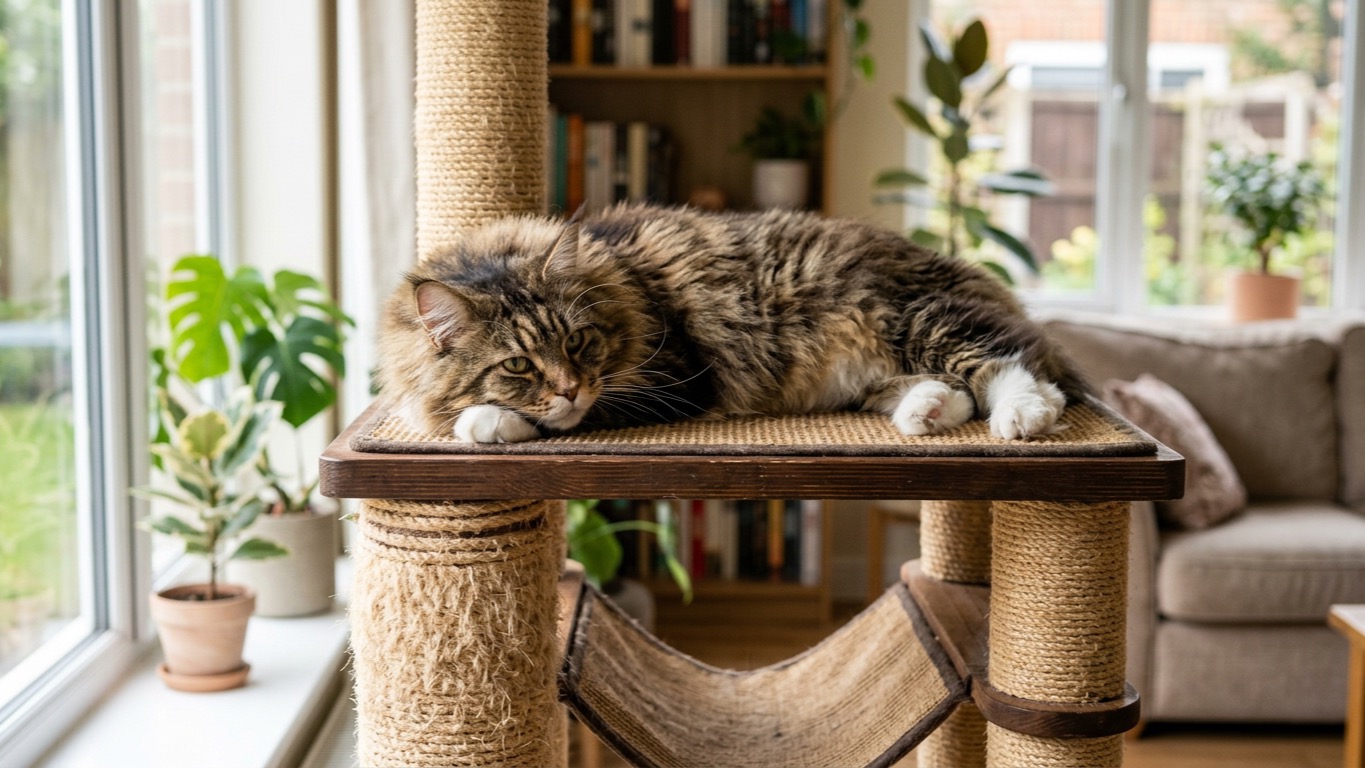
A cat tree is a condo. It may include a sisal column. It may include only plush perches. Plush is a bed. It is a poor legal scratch for most adults. If you already own a tree, check whether there is a tall, replaceable sisal wrap and whether that wrap sits in the room with the damaged sofa. A tree in the bedroom does not retire a living-room arm.
Two cats that both want the same vertical need two verticals or a tree with two separated sisal columns plus enough platforms that one cat can pass without a fight. AAFP/ISFM’s resource-duplication logic applies to scratchers the same way it applies to trays.
A kitten pole (MECOOL-class) plus an adult Pioneer-class in the same room is a valid pair: the kitten learns the room, then graduates. Do not throw the small pole away on day 60 if a second cat still uses it.
How to read a listing without inventing height
Marketplace titles lie with adjectives: sturdy, ultimate, premium, basics. The number that matters is printed height and base width / weight. If the listing photo has no ruler and the bullet list has no inches, you are guessing. Guessing is how people buy 20 in poles for 12 lb cats.
Desk rule: if height is missing, search the exact SKU name plus “inches” or open the size chart. If it is still missing, skip. We will not fill in 32 in for a card that did not print it.
Base: a disc smaller than a dinner plate under a tall pole is a tip risk on hardwood. A rectangular plywood base that you can stand on the corner of without a wobble is the class you want for vigorous cats. That is a you check when the box arrives — and a reason to keep the tape off the sofa until the post is assembled and does not walk.
Assembly, floors, and the first 72 hours
Assemble on the carpet or on a mat, not on a slick floor you will later blame. Tighten every bolt. A leaning post is a rejected post. Place it at the sofa before you unwrap the deterrent tape. Order: legal surface exists, then barrier.
First 72 hours:
- Sit on the sofa and ignore the cat. Let them discover the post. A lure (catnip on the post, a wand that ends on the wrap) is optional.
- If they use the sofa, interrupt by placing them at the post — once, calmly. Not a scold.
- If the post walks, add a mat or a heavier base. Do not wait a week.
- If they only sniff, wait. A new object in a cat’s territory can take days. Do not relocate it three times.
This is the same desensitization shape AVMA-style pages use for other handling tasks: short, calm, one variable.
When cardboard is the main product (and when it is a decoy)
EHEYCIGA-class cardboard is the correct main legal surface for a cat whose entire damage pattern is horizontal: ottoman tops, carpet, the underside of a box. It is a decoy if the damage is a 24 in vertical arm and you put a lounge pad on the floor six feet away. Geometry match beats material prestige.
Cardboard as a second station next to a tall sisal is how mixed households stop arguing about “the” post. Budget replacements. A flattened pad that still sits there is how cats return to the sofa — the legal surface stopped being satisfying.
Corrugated dust is messy. That is the product working. A tray under the pad is housekeeping, not a reason to switch to carpet wrap a fiber-eater will listing snapshot.
Large cats, small apartments, and the footprint lie
“Takes floor space” is listed as a con on mid-range verticals. It is also the stability spec. A slim apartment still needs a base that does not tip. Park the post in the sofa’s footprint — the 24 in beside the arm — not in a “cat corner” you invented for aesthetics. The sofa already occupies the room. The post is a satellite of the sofa.
SmartCat Pioneer-class height is the spec for large-bodied and vigorous scratchers. Paying $60 and then hiding it in a closet is the expensive version of buying nothing.
PETKARAY-class under-furniture units save sight lines. They do not save a vertical habit. Use them when the cat already goes under the sofa. Do not use them as a hope that the arm will be ignored.
Wear, snags, and when a post becomes unsafe
Sisal that unravels into a loop is a toe snare. Trim the loop or retire the wrap. Carpet wrap that strings is a swallow risk. Cardboard that smells like urine is a soiling problem — wash what you can, replace what you cannot, and read Cornell if soiling is new.
A post that the cat uses so hard the core shows is a success. Buy a replacement wrap if the SKU sells one; otherwise replace the post. Do not wrap duct tape around a bald core and call it enrichment.
We will not claim any of these seven SKUs survived a desk tip test. We will not claim 48 in when the card does not print 48 in. We will not claim a cardboard pad “lasts months” as a house finding. We will not claim catnip works on every adult. We will not claim a tree replaces a post.
The best cat scratching post for furniture remains a geometry, height, mass, and distance problem. Brand adjectives are not a spec.
Sources
- AVMA, public pages on scratching and declawing. https://www.avma.org/
- Ellis SLH et al. AAFP/ISFM Feline Environmental Needs Guidelines. J Feline Med Surg. 2013. https://pmc.ncbi.nlm.nih.gov/articles/PMC11383066/
- Cornell Feline Health Center, feline behavior topics. https://www.vet.cornell.edu/departments-centers-and-institutes/cornell-feline-health-center
- Maker listings opened August 2026 for the seven named SKUs on this page.