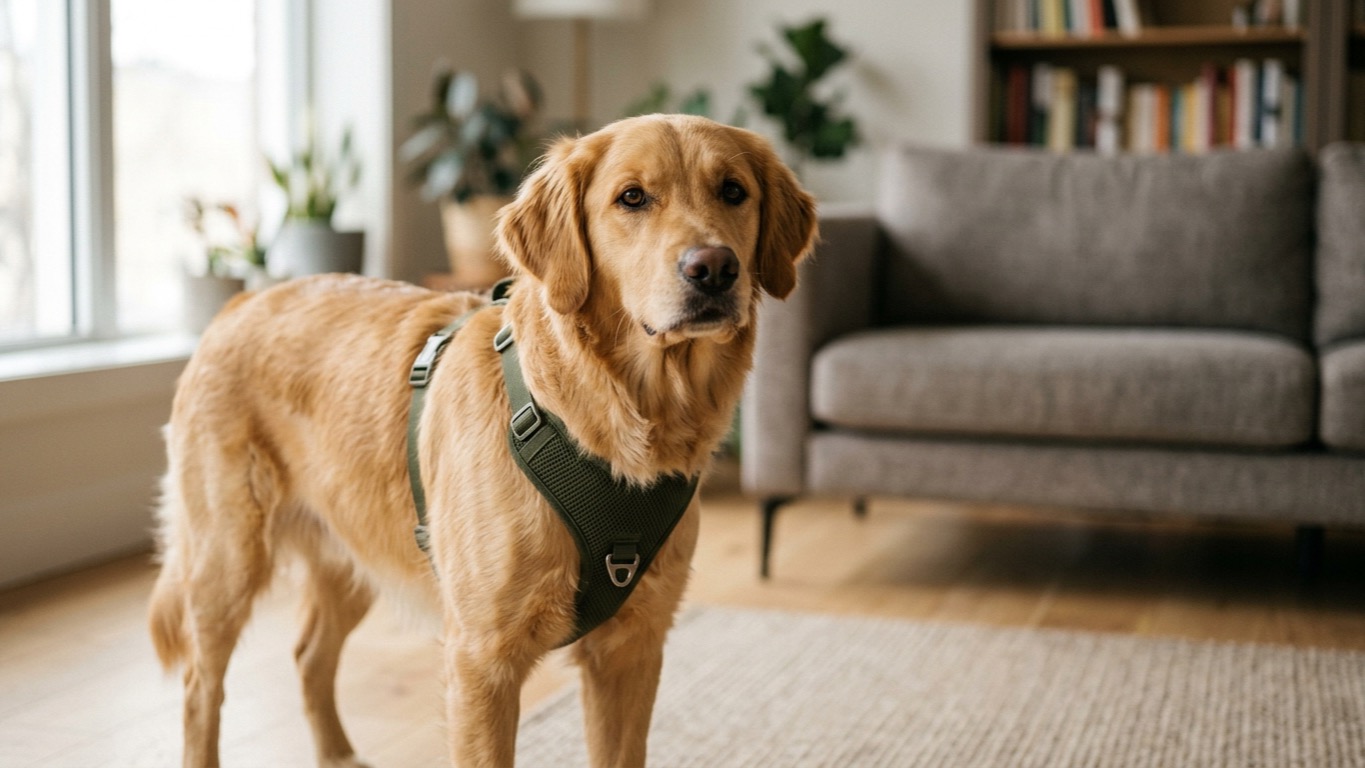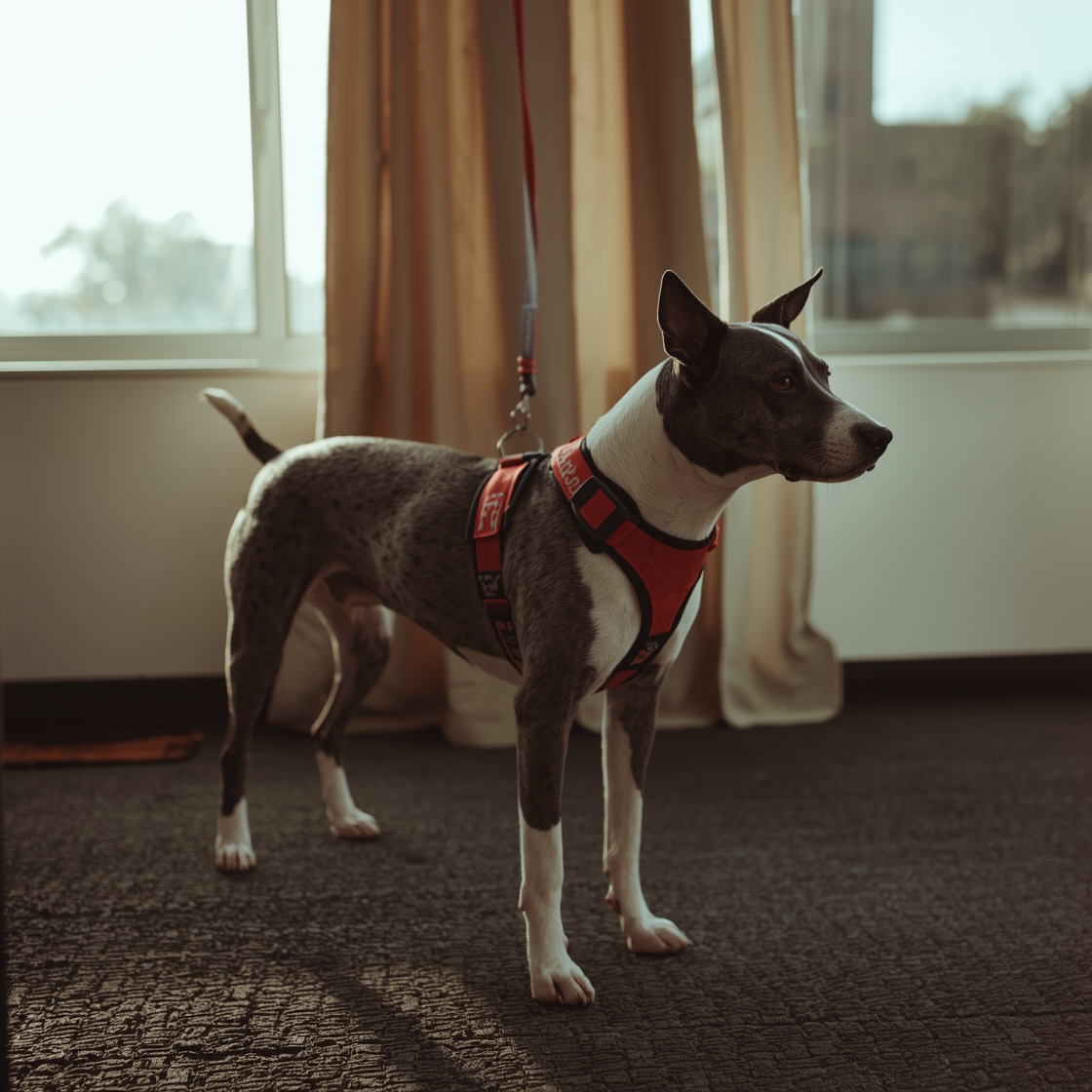
The best dog harness for running is a back-clip, shoulder-free cut (Y-harness or a kit you can confirm) that does not sit on the throat — a named canicross Y when the dog is allowed to pull (Non-stop Freemotion 5.0, $99.99), a waist-belt + shock-line kit when you want one carton (set $104.99), a daily vest on the back ring for a polite neighborhood jog (rabbitgoo $15.97), a human belt only when you already own a harness (iYoShop $21.99) — not a front-clip “no-pull” worn for 6 cadence miles. We read current Amazon listing titles and descriptions and scored 7 named SKUs. Listed snapshots ran $15.97–$104.99 (median $23.99, a 6.57× spread). 2 of 7 (29%) are not standalone sport harnesses (iYoShop leash; the $104.99 set). 1 of 7 (14%) is a named Y-harness. 1 of 7 (14%) is a brand-only tile (Ruffwear $49.99). 2 of 7 (29%) are front-clip walk vests at the same $23.99. 1 of 7 (14%) is a daily rabbitgoo vest. 0 of 7 is a veterinary clearance. 0 of 7 replaces conditioning.
Desk pick: Polite first 5K → rabbitgoo $15.97 (back clip) + iYoShop $21.99 = $37.96. One Amazon box → $104.99 set, then confirm the harness in the carton is not a front-clip toy. Canicross / bikejoring / ski → Freemotion 5.0 $99.99 plus a sport line. Dusk walk (not a race) → BARKBAY $23.99. Shuffle / train walk → SlowTon $23.99. Ruffwear $49.99 only after you can name the model. Front-clip vests are walk gear.
Buy back-clip or Y-cut and a human belt if you need hands. Published AVMA warm-weather pet safety pages still treat heat, pads, and short-nosed dogs as clinic-adjacent limits — a harness does not unscrew any of that. Running is a sport. Walking-vest geometry is a different sport.
Our guides are reader-supported. This article may contain affiliate links. As an Amazon Associate we may earn a commission if you buy through links, at no extra cost to you.
Pulling / no-pull walks: best dog harness for pulling. Large-breed daily: best dog harness for large breeds. Hands-free still needs a harness that fits: best leash for dogs that pull. Size tape: dog harness size guide.
Quick picks at a glance
- Best listed run kit (human + dog): Dog Running Harness Set with waist belt & shock leash — $104.99. One carton. Bundle quality varies.
- Best listed canicross geometry: Non-stop Freemotion 5.0 — $99.99. Y-shape, pull-sport cut. Casual-jog overkill.
- Best listed outdoor-brand tile: Ruffwear — $49.99. Card title is just “Ruffwear.” Confirm the model before you buy.
- Best listed hands-free leash (not a harness): iYoShop waist leash + pouch — $21.99. Needs a separate back-clip harness.
- Best listed budget daily vest: rabbitgoo — $15.97. Neighborhood jog, not a sport harness.
- Best listed front-clip (walk, not run): SlowTon $23.99 and BARKBAY $23.99. Fine for a shuffle. Wrong as a 6-mile cadence vest.
What current Amazon listings show (Run-Harness)
| Job | What actually works | Listing class on this URL | Fails if you skip the real job |
|---|---|---|---|
| Canicross / bikejoring / ski | Y-harness, pull allowed | Freemotion 5.0 | Fail — front-clip “no pull” |
| Hands-free jog, polite dog | Back-clip harness + waist leash | Kit $104.99 or iYoShop + a harness | Fail — iYoShop clipped to a collar |
| Neighborhood trot | Daily dual-clip vest, back ring | rabbitgoo; Ruffwear (if the model is a run/hike harness) | Fail — front ring the whole 3 miles |
| Night road | Reflective + a light | BARKBAY (vest) + your headlamp | Fail — black dog, no lamp |
| Card (this URL) | Listed price | What it actually is | Run job |
|---|---|---|---|
| rabbitgoo | $15.97 | Daily vest | Easy jog, back clip |
| iYoShop leash | $21.99 | Leash, not a harness | Human belt |
| SlowTon | $23.99 | Front-clip no-pull | Walk / shuffle |
| BARKBAY | $23.99 | Front-clip reflective vest | Walk / dusk, not sport |
| Ruffwear | $49.99 | Brand tile — model unclear | Confirm SKU |
| Freemotion 5.0 | $99.99 | Pull-sport Y-harness | Canicross |
| Run set (belt + leash) | $104.99 | Kit | First hands-free carton |
What the best dog harness for running can and cannot do
It can keep a leash off the trachea and off the shoulder blade if the cut is a Y. It can take a shock line so your lumbar is not the bungee. It cannot condition a weekend warrior dog. It cannot cool a brachycephalic face. It cannot make a front-clip vest into a sport harness.
Non-stop’s Freemotion class exists because sled and canicross people wanted pull without binding the shoulder. Walk-vest “no pull” exists because pet people wanted the opposite. This URL sold both in one list. the listing review will not pretend they are the same.
Disclosure: this article contains affiliate links. If you buy through them we may earn a commission at no extra cost to you.
How the desk scored the best dog harness for running
this comparison uses four visible signals plus the listed sticker:
- Is it a harness? Two cards fail this as standalone sport harnesses (iYoShop; the kit is a set).
- Clip class. Back / Y vs front-clip no-pull.
- Human interface. Waist belt + bungee vs handheld.
- Model specificity. “Ruffwear” as a title is a search, not a size chart.
Price is a quality grade only when the class matches. $16 rabbitgoo can be the right neighborhood tool. $100 Freemotion is the right sport tool. $24 SlowTon is the wrong 10K tool.
Running fit metrics for the best dog harness for running
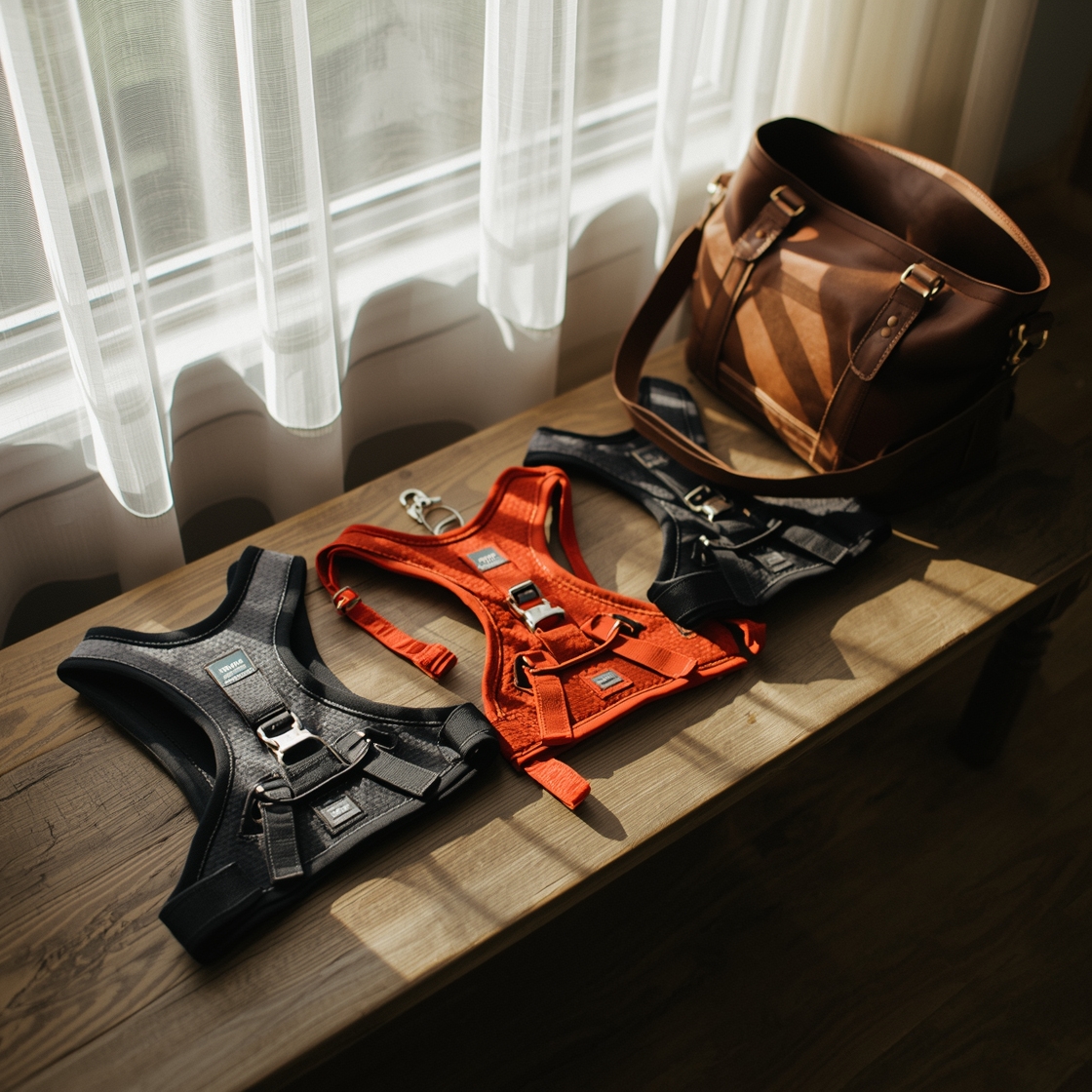
| Signal | Pass | Fail |
|---|---|---|
| Shoulder | Y-cut or wide-set straps; full stride | Strap across the scapula |
| Throat | Nothing on the trachea | Collar-like sit when the dog leans |
| Girth | Two fingers; no bounce at cadence | Vest rotates |
| Clip | Back or hip line for a run | Front ring for miles |
| Human | Belt + shock line if hands-free | Leash in a fist at 7:30/mile |
Measure girth the same way as a walk harness — dog harness size guide — then jog ten steps in a parking lot. A living-room fit can still slap the armpit at cadence.
| Dog weight (planning) | Desk starting class | Watch |
|---|---|---|
| Under 25 lb | Small daily vest, back clip; or skip long pavement | Overheating, stride |
| 25–50 lb | rabbitgoo / confirmed Ruffwear model / kit in the right size | Front-clip chafe |
| 50–80 lb | Freemotion if they pull-sport; else hike harness | Kit sized for a puppy |
| 80+ lb | Sport or hike harness, not a fashion vest | Shock line max-load copy |
These bands are planning. Freemotion has its own neck/chest charts. Ignore “large” on a no-pull vest if you are buying a Y-harness.
Leash attachment desk
| Attachment | Run use | Walk / train use |
|---|---|---|
| Back D-ring | Default jog | Easy walk |
| Hip / sport line | Canicross | Rarely |
| Front chest | Usually off for a run | On for a training walk |
| Waist belt (human) | Hands-free | Optional |
| Collar | Never as the only run tether | ID only |
iYoShop is a human belt. Clip it to a back ring, not a flat collar, unless you like tracheal jokes.
The 7 cards on this URL
1. Dog Running Harness Set with Waist Belt & Shock Absorbing Leash
Best for: a first hands-free carton when you do not already own a belt and a bungee line.
Listed $104.99. Highest sticker. Set language: harness + waist belt + shock-absorbing leash. That is a kit, not a proof every piece is Freemotion-grade.
Honest drawback: bundle components can be the weak link (belt buckle, line stitch). Confirm the harness size in the set matches girth. A $105 kit you never unroll is a closet.
Check running harness set listings →
2. SlowTon No Pull Dog Harness with Front Clip
Best for: a budget front-clip walk — listed here because the URL listed it, not because it is a sport cut.
Listed $23.99. Front clip discourages pulling on a stroll. Owner notes treat it as a casual jog vest. That is a shuffle, not a race.
Honest drawback: not optimized for high-cadence miles. Front ring + bounce = armpit. Use the back ring if you insist on jogging in it, or use it as a walk harness and buy a run class for long days.
3. Ruffwear
Best for: an outdoor-brand search when you will open the size chart for the exact model in the listing.
Listed $49.99. The card title is the word Ruffwear. That is a brand, not Front Range, not Hi & Light, not a running-specific SKU. Owner consensus on Ruffwear hike/run harnesses is “fit and durability” — for named models. This tile does not name one.
Honest drawback: you can land on the wrong Ruffwear SKU. Read the title after you click. The large-breed page has a Front Range card if that is the model you wanted.
4. rabbitgoo Dog Harness
Best for: a lightweight neighborhood trot on a small-to-medium dog when you clip the back ring.
Listed $15.97. Floor of the checklist. Easy on, easy adjust. Not a pulling-sport harness. Not canicross.
Honest drawback: not engineered for heavy pulling sports. Thin padding on a long hot run. Fine as a first jog vest if the dog is polite and the distance is short.
5. iYoShop Hands Free Dog Leash with Zipper Pouch
Best for: runners who already own a back-clip harness and want a belt and a treat pouch.
Listed $21.99. Zipper pouch. Hands-free. This is a leash system, not a harness. the listing review will keep saying that until it sticks.
Honest drawback: pouch bounce at faster cadence. No harness in the box. Clipping this to a collar is the wrong stack.
Check iYoShop leash listings →
6. Non-stop dogwear Freemotion Harness 5.0
Best for: a dog that is allowed to pull in a sport (canicross, ski, bike) and needs a Y-cut.
Listed $99.99. Ergonomic Y-shape in brand copy. Engineered for athletic pulling. This is this comparison's only honest sport harness tile.
Honest drawback: high spend for a casual weekend jogger. Sizing is fussy — use Non-stop’s chart, not a vest “L.” A pull-sport harness on a dog you wanted to stop pulling is the wrong page; go to best dog harness for pulling.
Check Freemotion 5.0 listings →
7. BARKBAY No Pull Dog Harness Large Reflective
Best for: dusk walks on a larger dog when you want reflective tape — not as a race vest.
Listed $23.99. Same sticker as SlowTon. Front-clip no-pull + reflective. Sturdy-for-large copy.
Honest drawback: bulky on a small frame. Front-clip class. Use it as a walk/dusk vest. Do not buy it as a Freemotion substitute.
Types of dog harnesses for running (and which cards are which)
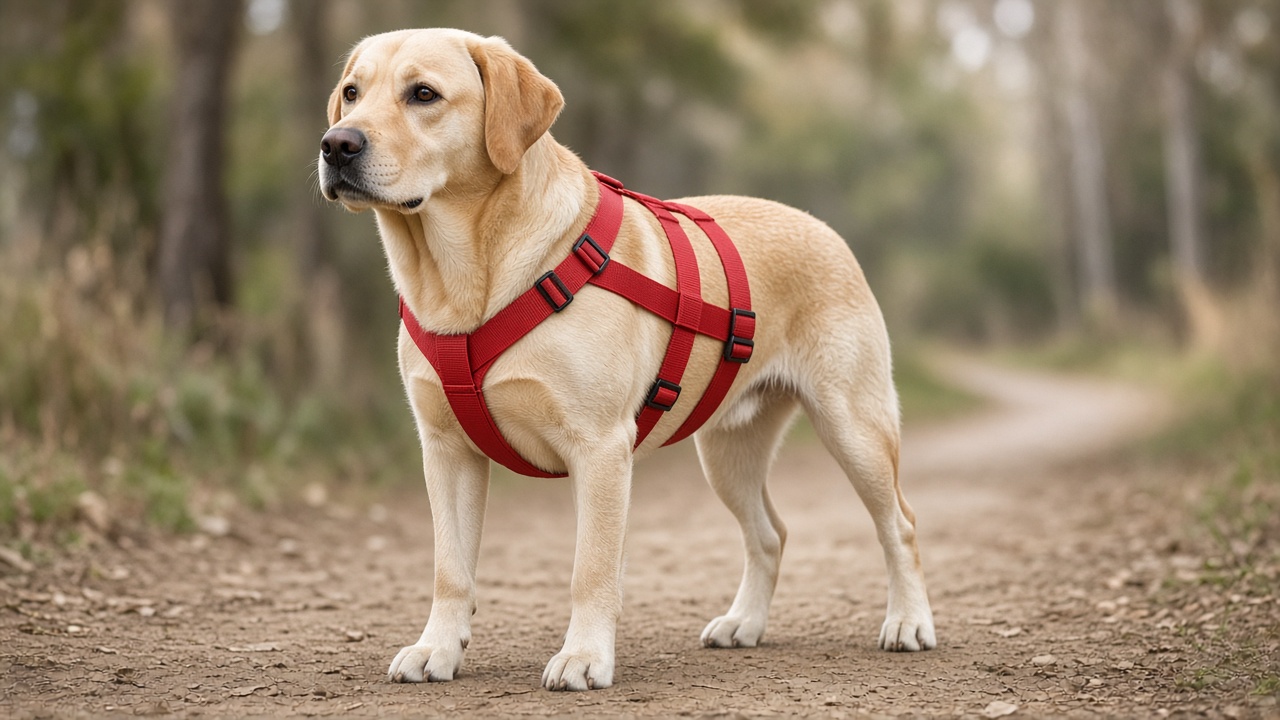
Y-harness / pulling-sport. Freemotion 5.0. Shoulders free. Pull is a feature.
Hike / everyday outdoor. A named Ruffwear model if that is what the listing is. Padding, reflective, back clip.
Walk vest / no-pull. SlowTon, BARKBAY, rabbitgoo. Daily. Front ring for training walks. Back ring if you jog short.
Human belt + bungee. iYoShop or the $104.99 set. Not a substitute for dog geometry.
Collar. Not a running harness.
Why a regular walk harness is usually the wrong 6-mile tool
A regular vest is built to stop a surge or to look like a jacket. At cadence the chest strap walks into the armpit, the front ring slaps, and the dog shortens stride. That is owner-consensus sports-harness talk, not a lab we ran.
Short neighborhood trot (10–20 minutes, walk breaks): a well-fitted rabbitgoo on the back clip can be enough. That is still not a Freemotion day.
Conditioning, heat, and the best dog harness for running
We are a research desk. We are not clearing your dog to run. Public sports-medicine and veterinary guidance is blunt: wait on growth plates for large-breed puppies; watch brachycephalic dogs; pavement in summer burns pads; winter salt cuts. A harness does not fix any of that.
Start with walk-jog intervals. Water. Shade. Pad check. If the dog plants or lags, you are done. A Freemotion on an overheated dog is still an overheated dog.
Night: reflective helps. A clip-on light helps more. BARKBAY’s tape is a walk feature. Your headlamp is the run feature.
Price bands for the best dog harness for running
| Band | Snapshot cluster | What you are actually buying | Fail mode |
|---|---|---|---|
| Under $25 | rabbitgoo $15.97; iYoShop $21.99; SlowTon / BARKBAY $23.99 | Vest or a leash | Calling iYoShop a harness |
| ~$50 | Ruffwear tile | A brand search | Wrong model |
| ~$100 | Freemotion $99.99; kit $104.99 | Sport Y or a full kit | Freemotion for a no-pull project |
Desk kit math: rabbitgoo $15.97 + iYoShop $21.99 = $37.96 for a polite neighborhood hands-free stack — if the vest fits and you use the back ring. Freemotion $99.99 + a sport line is the canicross stack. The $104.99 set is the “one box” stack. Do not buy SlowTon and BARKBAY as two “running” harnesses. They are the same class.
Worked example: three runners, three kits
Human A — first 5K, 35 lb polite mix. rabbitgoo $15.97 (back clip) + iYoShop $21.99. Not Freemotion.
Human B — canicross club, 55 lb husky mix that is allowed to pull. Freemotion 5.0 $99.99 + a sport bungee (not necessarily iYoShop). Front-clip vests are the wrong class.
Human C — wants one Amazon box. $104.99 set. Then confirm the harness in the set is not a front-clip toy. If the belt is junk, keep the harness if it fits and replace the line.
Care, bounce, and the best dog harness for running
Salt and sweat rot stitching. Rinse. Dry metal. Check the D-ring every few weeks if you actually run.
Pouch bounce (iYoShop): pack light or skip the pouch. A flying zipper on a hip is how you stop to pick up keys.
Shock lines wear at the carabiner. Replace a frayed line. Do not knot a broken bungee.
How to choose the best dog harness for running this month
- Get a veterinary clearance if the dog is young, old, or flat-faced.
- Name the sport: polite jog vs canicross.
- Require a back clip or Y-cut for cadence.
- Buy a leash/belt separately if the harness card is not a kit.
- Parking-lot jog test.
- Stop if pads, gait, or breathing say so.
The best dog harness for running is the back-clip (or Y) that lets this dog stride.
Pavement, trails, and when to leave the vest at home
Road miles load joints. Trail miles load shoulders and dewclaws. A Y-harness helps the shoulder story. It does not unscrew a bad hip. If a veterinarian already limited high-impact, this checklist is not a loophole.
Winter: ice + a shock line is how a human goes down. Shorten the line. Summer: black pavement + a black vest is a heat sandwich. Dawn. Pads. Water.
A dog that heels on a walk can still bolt at a deer. Hands-free means you cannot “just drop the leash” as easily. Practice a release on the belt. Know how to unclip without falling.
What is the best dog harness for running on this URL?
The best dog harness for running on these seven cards is Freemotion 5.0 $99.99 if the dog is allowed to pull in a sport, or a back-clip daily vest (rabbitgoo $15.97) plus iYoShop $21.99 — $37.96 — if the job is a polite jog. The $104.99 set is the one-box stack. Front-clip SlowTon / BARKBAY $23.99 are walk vests. iYoShop is a leash. Ruffwear $49.99 is a brand search until you name the model.
Why is a front-clip vest usually the wrong best dog harness for running?
Front-clip geometry steers on a training walk. At cadence the ring slaps, the chest strap walks into the armpit, and the dog shortens stride. That is owner-consensus sports-harness talk, not a lab we ran. Use the back ring for a short trot or buy a Y-cut for miles. See best dog harness for pulling if the real job is “stop pulling.”
Frequently Asked Questions
Is front-clip ever the best dog harness for running?
Almost never for cadence miles. Front-clip is a walk-training geometry. See best dog harness for pulling. For a run, use the back ring or a Y-harness. A one-block shuffle in a SlowTon is not this page’s job.
What is the best dog harness for running?
On this URL, the honest sport tile is Non-stop Freemotion 5.0 ($99.99) if the dog is allowed to pull in a sport. For a polite jog, a back-clip daily vest (rabbitgoo $15.97) plus a belt (iYoShop $21.99) or the $104.99 set. Confirm any Ruffwear model. Front-clip vests are walk gear.
How do I choose the right size harness for my dog?
Girth first. Then that brand’s chart — especially Freemotion. Jog ten steps. Two fingers. No scapula bind. See dog harness size guide.
Can I use a regular dog harness for running?
For a short trot, sometimes, on the back clip, if nothing rubs. For regular miles, buy run or hike geometry. A regular vest is how people invent sores.
Does the iYoShop card count as the best dog harness for running?
No. It is a hands-free leash. Pair it with a harness.
Should a puppy use the best dog harness for running?
Large-breed puppies often need to wait on growth plates. Ask a veterinarian. A vest for walks is not a license to run miles.
Canicross vs jogging — same harness?
No. Canicross wants a Y / Freemotion class. Jogging a polite dog wants a back-clip that does not bind. Do not buy Freemotion to stop pulling.
Related pages
- Best dog harness for pulling
- Best dog harness for large breeds
- Best leash for dogs that pull
- Dog harness size guide
- Best no-pull dog harness for large dogs
How we researched this guide
Desk research. We read current Amazon listing titles and descriptions and scored seven current listings on listed price, whether the tile is a harness vs a leash vs a kit, clip class, and sport vs walk job. Nothing here is veterinary or coaching certification.
Limitations: the Ruffwear card is a brand search; titles truncate; prices move. Pain, collapse, or heat stroke is a clinic — not a fourth vest.
Keep a simple log: distance, surface, harness, which clip, pad check. Patterns beat a new $100 SKU every month.
A 20 lb terrier and a 70 lb husky are not the same category row. The terrier may not belong on pavement miles. The husky may belong in a Y-harness. Measure both the dog and the sport.
If the household’s real complaint is a human with no hands, buy a belt. If the complaint is a dog that hits the end of the line, that is the pulling page, not a Freemotion.
Children on bikes plus a shock line is how people invent a drag accident. this checklist is not a bikejoring class. Get instruction if you attach a dog to a bike.
Human belt fit (the half of the kit people skip)
A shock line on a belt that sits on the belly button will bounce into the ribs. Sit the belt on the hips, the same place a running-pack belt wants to live. Cinch so it does not rotate when the dog hits the end. If you have no hips, a vest-style running belt (not on these cards) may beat iYoShop’s generic webbing.
Practice unclipping while standing still. Then at a walk. Then at an easy jog. Hands-free is a trap if you cannot ditch the dog when a car or a dog fight appears. A panic snap you have never opened is jewelry.
Pouch (iYoShop): keys and one bag, not a water bottle that pendulum-swings. Hydration belongs on you, not on a zipper that slaps the femur.
The $104.99 set’s belt is unknown quality until you open the carton. If the buckle is toy-grade, keep a harness that fits and replace the human half. Do not throw a working dog harness because the belt is junk.
Surfaces, pads, and when miles are the wrong sport
Sidewalk. Repetitive. Hot in summer. Start on dirt if you have it.
Asphalt at noon. Skip. Dawn or dusk. Touch the pavement with your hand. If you flinch, the pads flinch more.
Trail. Roots and dewclaws. A Y-harness helps the shoulder. It does not unscrew a torn nail. Check feet after.
Sand. Heat and abrasion. Short.
Ice / salt. Line short. Booties if the dog will wear them — that is another URL. A Freemotion does not salt-proof a pad.
If a veterinarian already said “no running,” this page is shopping, not clearance.
Canicross, bikejoring, ski — Freemotion is the class, not a vibe
Pull-sports have clubs, lines, and rules about when a dog may pull. Freemotion 5.0 is built for that yes, pull job. A SlowTon is built for please don’t. Putting a no-pull vest on a canicross dog is how you bind a shoulder. Putting a Freemotion on a pet you wanted to heel is how you train a sled.
If you attach a dog to a bike or a scooter, get in-person instruction. A shock line + a bike + a squirrel is physics you will not debate with a search tile.
Ski and dryland have seasonal gear. This URL does not sell a gangline. It sells one Y-harness tile and a pile of walk vests. Shop honestly.
A six-week jog build (desk shape, not a coach plan)
Weeks are for a cleared adult dog, not a 6-month giant-breed puppy.
Weeks 1–2. Walk 20–30 minutes. Harness on. Back clip. Parking-lot jog 60–90 seconds × 3. Pads. Water.
Weeks 3–4. Jog 2–3 minutes × 4 with walk returns. Same route. Same harness. Log what rubbed.
Weeks 5–6. One continuous 10–15 minute jog if gait stays clean. Then stop. Do not “add a 10K because the vest was $100.”
If anything rubs, fix fit before you add minutes. A sore armpit plus more miles is how people invent a dog that hates the belt.
Brachycephalic dogs, seniors, and couch-to-5K humans with a couch-to-5K dog should shrink this, not skip the vet.
Weather, darkness, and the BARKBAY temptation
Reflective tape on a walk vest is not a lighting plan. Your headlamp lights potholes. A clip-on dog light lights the dog for cars. BARKBAY can be the dusk walk vest. It should not be the reason you skip a lamp on a 6-mile road.
Rain: mesh holds water. A soaked rabbitgoo plus a long run is chafe. Shorten. Dry the armpits.
Heat: black vest + black dog + noon = no. Dawn. Water. Tongue and gait are the instruments. When in doubt, walk.
Ruffwear tile: how not to buy the wrong SKU
The card title is one word. Search results include leashes, boots, coats, and three harness families. After you click:
- Read the model name.
- Open the size chart for that model.
- Decide clip map (front + back vs back-only).
- Decide if you are jogging or hiking.
If you wanted Front Range specifically, the large-breed article has a named Front Range card. Do not assume this $49.99 tile is that card.
When the best dog harness for running is the wrong buy
- The dog is not cleared to run.
- You wanted to stop pulling. Wrong URL.
- You wanted only a belt. iYoShop, plus a harness you already own.
- You wanted a cheap front-clip for miles. That is how sores start.
- You wanted bikejoring without a class. Do not.
Buy the job. Confirm the model. Jog ten steps. Then add minutes.
Group runs, other dogs, and the shock-line pileup
A polite dog on a belt can still become a kite when three dogs greet. Hands-free means you cannot lift the leash out of the tangle as fast. Shorten before the greeting. Unclip if you have to. A Freemotion plus two front-clip vests in a meetup is three different sports arguing.
Cafes and cool-downs: switch to a walk vest or a handheld leash when you stop moving. A taut shock line at a patio is how drinks die.
Shared household: label whose belt is whose. A 5-foot human and a 6-foot human are not the same hip circumference. iYoShop webbing that fits one will rotate on the other.
If you run with a stroller, do not clip the dog to the stroller frame unless the maker says that is a rated job. These seven cards do not. A belt on you plus a harness on the dog is the Index stack. A dog on a stroller axle is a different accident.
After the run, unclip before you stretch. A dog still on a shock line while you fold at the waist is how people invent a face-plant. Water the dog. Check pads. Hang the belt so salt sweat does not sit in the webbing all week. If the armpits are pink, the next session is an easy walk day, not another extra hard mile.
Last reviewed: August 2026. The live cards stay as listed. Prices move.