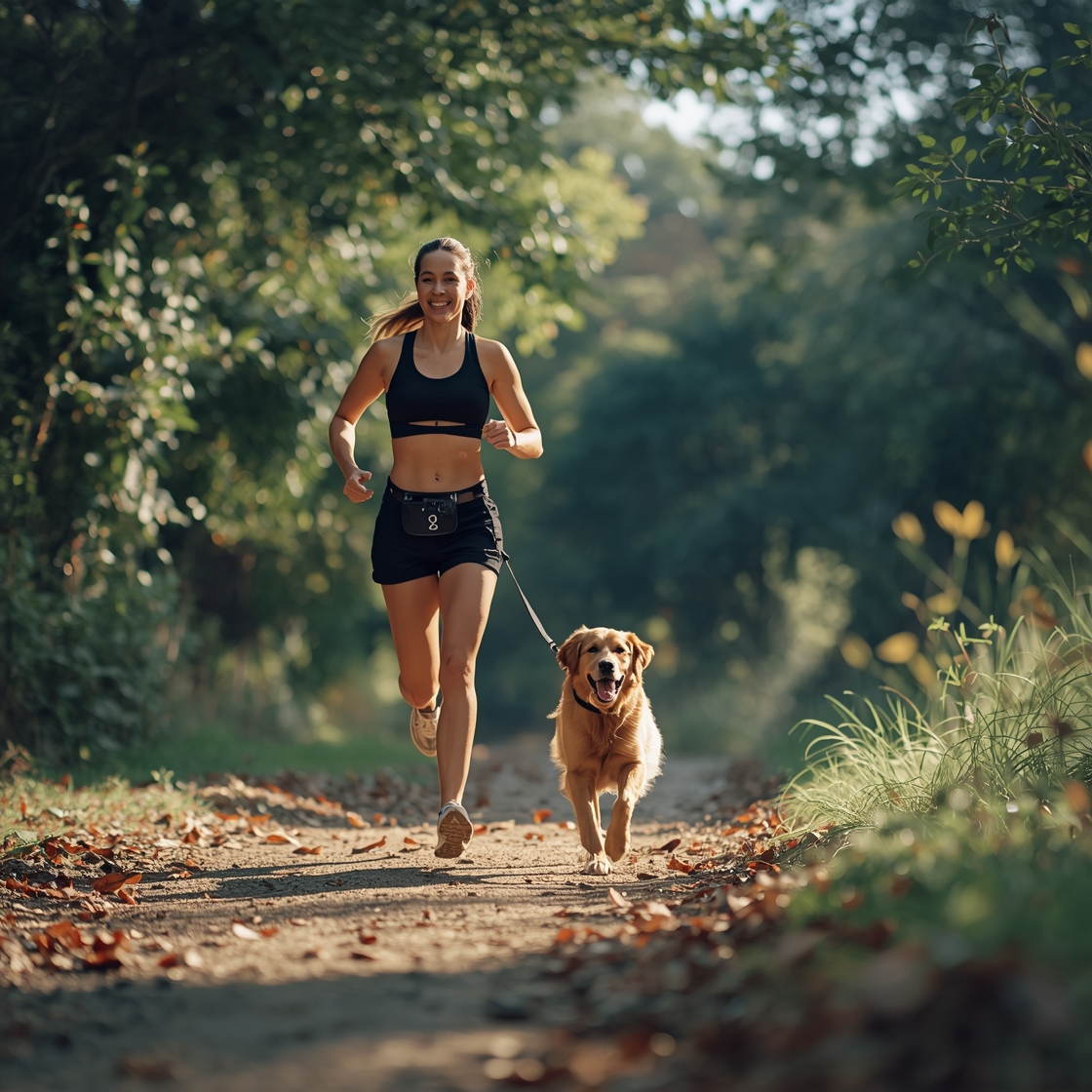
The best hands free dog leash for running is a waist belt that stays put, a lead you chose on purpose (bungee vs solid), and a close-control handle — clipped to a back-clip harness, not a collar, on a dog that already jogs without dragging you into traffic. The We read the titles and descriptions of 5 SKUs. Listed snapshots ran $20–$55. 3 of 5 are bungee-class (Tuff Mutt $25–27; Ruffwear Roamer $49–55; SparklyPets $20–30). 2 of 5 are solid-line (Caldwell’s $25–35; Stunt Puppy $40–50). 1 of 5 is convertible hand-held / waist (Roamer). 0 of 5 replace loose-leash training. 0 of 5 are a vet clearance for a dog that cannot trot a mile.
A waist leash on a puller is a sled belt. Train first, or use a walk tool: best dog lead for pulling and how to stop a dog from pulling on leash. The harness that belongs under a run leash is best dog harness for running. .
Our guides are reader-supported. This article may contain affiliate links. As an Amazon Associate we may earn a commission if you buy through links, at no extra cost to you.
Quick picks at a glance
- Best listed budget bungee: Tuff Mutt — $25–27. 48 in that stretches toward ~60 in. Dual padded handles. Maker language often starts around 30 lb dogs.
- Best listed convertible premium: Ruffwear Roamer — $49–55. Hand-held or waist. Aluminum hardware. Belt is less padded than a marathon belt.
- Best listed solid-line value: Caldwell’s Original — $25–35. 35–58 in adjustable. Seatbelt-style webbing. No spring-back.
- Best listed lightweight solid: Stunt Puppy Stunt Runner — $40–50. Movable D-ring. Maker tensile copy is 4,000+ lb webbing. Minimal padding.
- Best listed long bungee + pocket: SparklyPets — $20–30. Up to 68 in. Dual D-rings. Bulkier belt; plastic buckle.
How run leash listings compare on labels
Four jobs. A $50 convertible leash on a dog that has never trotted is a costume. A $20 bungee on a 90 lb lunger at a crosswalk is a physics problem.
| Job | What actually works | Category | Fail if you skip it |
|---|---|---|---|
| Neighborhood jog, polite dog | Belt + mid bungee + back-clip harness | Tuff Mutt / SparklyPets | Collar-only clip |
| Predictable connection at speed | Solid line, no spring-back | Caldwell’s / Stunt Puppy | Max bungee on a hard puller in traffic |
| Trail + sidewalk in one kit | Convertible hand / waist | Roamer | 11 ft roam on a bike path |
| Heavy dog, force spread | Dual D-ring or dual handle | SparklyPets / Tuff Mutt | Single plastic clip as the only load path |
Before you shop: (1) the dog already trots beside you on a short leash, (2) the belt sits on the hips, not the floating ribs, (3) you have a traffic-side rule (dog away from cars), (4) collapse, heatstroke signs, or a limp is a clinic, not a longer bungee. Fail gate 4 and this checklist is how you shop past an emergency.
Why a hands-free leash is a different object
A hand-held leash puts the jerk in your shoulder. A waist leash puts the jerk in your pelvis and lumbar. That is useful when the dog is polite. It is how people get yanked off a curb when the dog is not.
Bungee exists to spread a spike. It also stores energy and can throw you on the rebound. Solid line exists to tell the truth immediately. Neither is “better.” Match the dog and the road.
Reflective stitching is visibility, not a headlamp. Night road still wants a light on you and something bright on the dog.
Treat pouches and second belts fight each other. If you already run a treat pouch, pick one waist system.
How this desk scored the best hands free dog leash for running
this comparison uses five visible signals plus the listed sticker:
- Attachment class. Dedicated run belt vs convertible webbing loop.
- Lead class. Bungee vs solid, and whether length is fixed or adjustable.
- Control hardware. Close handle, dual D-ring, movable ring.
- Belt honesty. Published waist range and padding language.
- Clip target. These cards are leashes. A harness is a second SKU.
Price is not a quality grade. A $25 Tuff Mutt that fits and stays on the hips is more leash than a $55 Roamer you never cinched.
How to fit a waist leash before the first jog
- Measure your waist over the clothes you run in. Cold-morning tights ≠ July shorts.
- Seat the belt on the iliac crest, snug enough that a hard stop does not ride up to the ribs.
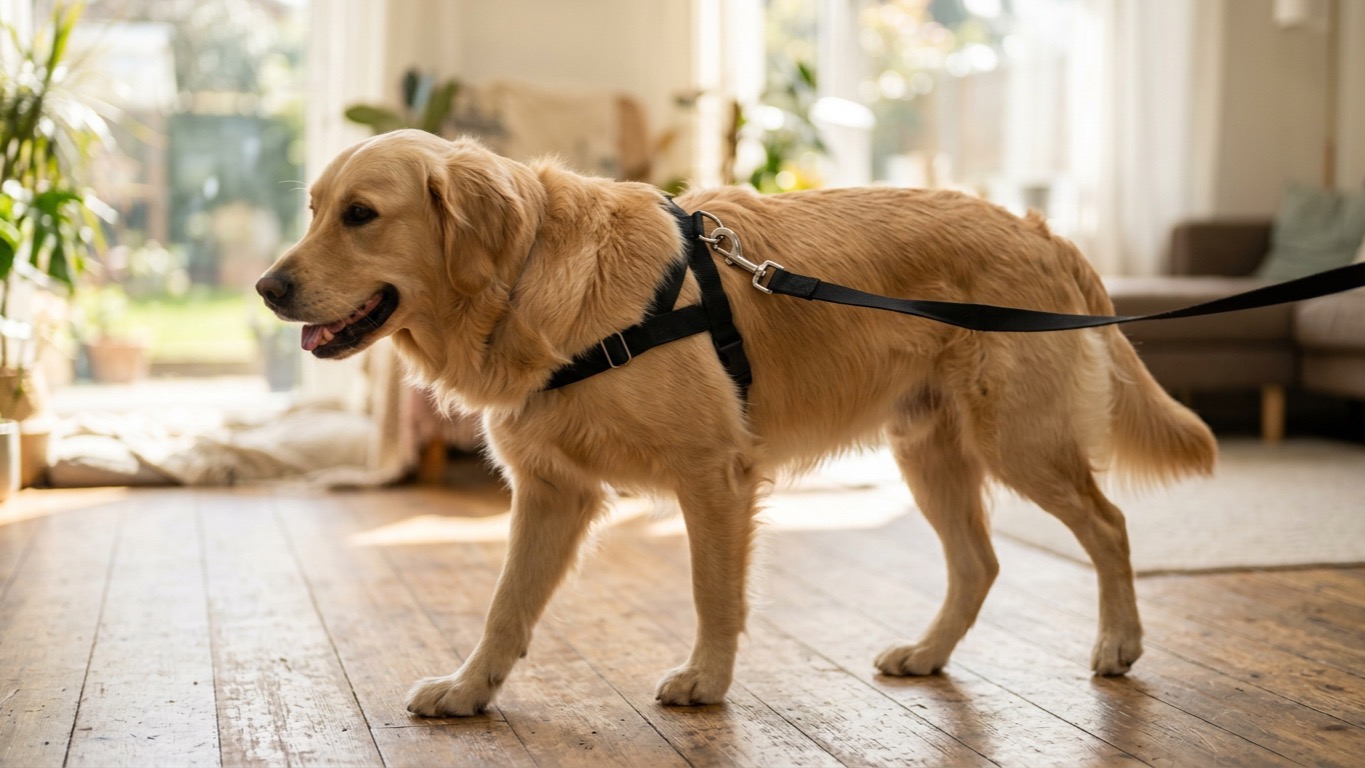
- Clip to a back-clip harness, not a flat collar, not a front-clip no-pull ring you will fight for three miles.
- Two-finger check under the belt. Walk, then a short trot in a parking lot. If the buckle walks to 3 o’clock, retighten or the belt is the wrong shape.
- Practice the close handle until it is boring. The first squirrel should not be the first time you grab it.
Rehearse walk-to-jog transitions. Sudden lunges test the buckle, not your playlist.
The five cards on this URL
1. Tuff Mutt Hands-Free Bungee Dog Leash
Best for: a simple bungee belt at the lowest mid sticker when the dog is already mid-size and polite enough to jog.
Listed $25–27. Maker language: ~48 in lead that stretches toward ~60 in; dual padded handles; reflective seams. Brand pages often talk about dogs from about 30 lb up — a 12 lb terrier will not load the bungee the way the design assumes.
Honest drawback: fixed lead length. You cannot shorten the roam for a crowded path the way Caldwell’s adjusts 35–58 in.
2. Ruffwear Roamer Bungee Dog Leash
Best for: one leash that is hand-held on the sidewalk and waist-worn on the trail.
Listed $49–55. Stretch-webbing bungee; common sizes in listing language are about 5.5–7 ft (and a longer 7.3–11 ft option — that longer size is a roam tool, not a road-race tool). Aluminum uniloop / side-release story is why people pay double the Tuff Mutt.
Honest drawback: the waist section is a convertible leash, not a padded running belt. Long miles can rub. Confirm you bought a Roamer, not another Ruffwear SKU.
Check Ruffwear Roamer listings →
3. Caldwell's Original Running Leash
Best for: a solid, adjustable line when you do not want spring-back at speed.
Listed $25–35. Detachable lead 35–58 in; belt about 26.5–47.8 in in maker copy; seatbelt-style nylon/polyester; reflective rows. Direct connection. A surge goes to your hips immediately.
Honest drawback: no shock section. A hard, late lunge is a lumbar event. If the dog is still in pull training, this is the wrong first run tool.
4. Stunt Puppy Stunt Runner Hands-Free Dog Leash
Best for: a minimal, high-tensile belt when you want the dog in a set slot, not a fashion pouch.
Listed $40–50. Belt about 28–49 in (71–124 cm); repositionable D-ring; tubular nylon; anodized hardware and Duraflex-class buckles in brand copy. Maker tensile language is 4,000+ lb — that is webbing rating, not a dog we pulled.
Honest drawback: less padding than a cushioned run belt. Price sits above Tuff Mutt for fewer “comfort” features. That is the point of a race-light tool.
5. SparklyPets Hands-Free Dog Leash
Best for: a longer bungee and dual D-ring load path on a medium-to-large dog when the belt pocket matters.
Listed $20–30. Lead up to about 68 in; belt 28–47 in; weather-resistant nylon; dual D-rings; reflective stitching; pocket + bag in many listings.
Honest drawback: bulkier waistband and a plastic quick-release vs aluminum. 68 in of roam on a bike path is a lot of dog. Shorten your route, not just your playlist.
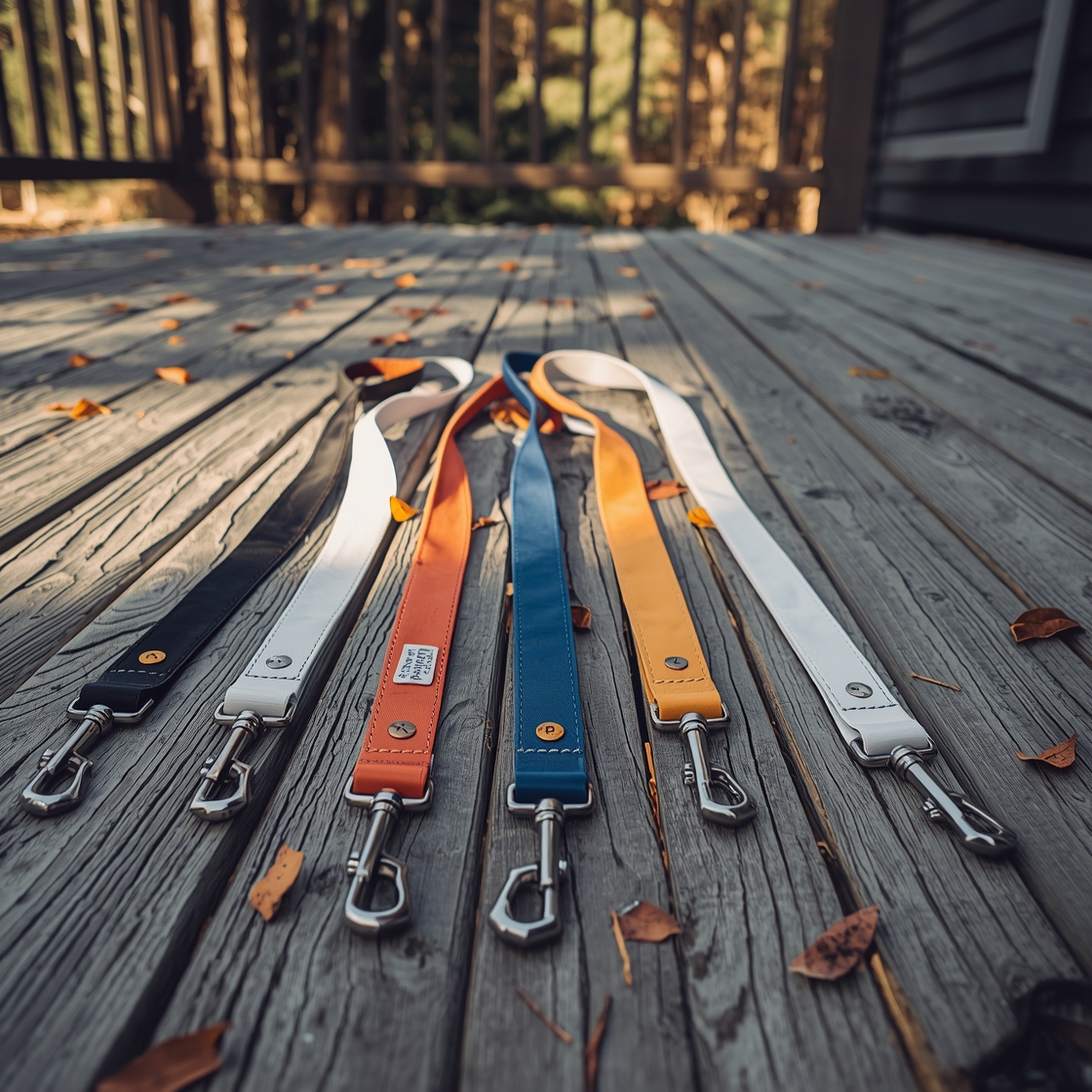
Comparison of the five cards
| Card | Listed band | Lead (listing) | Shock | Belt (listing) | Stand-out |
|---|---|---|---|---|---|
| Tuff Mutt | $25–27 | 48 in → ~60 in | Bungee | Over-clothes adjustable | Dual padded handles |
| Ruffwear Roamer | $49–55 | 5.5–7 ft (long option exists) | Stretch webbing | Up to ~48 in convertible | Hand or waist |
| Caldwell’s | $25–35 | 35–58 in | None (solid) | 26.5–47.8 in | Adjustable roam |
| Stunt Puppy | $40–50 | Adjustable extension | None (tubular) | 28–49 in | Sliding D-ring |
| SparklyPets | $20–30 | Up to 68 in | Elastic bungee | 28–47 in | Dual D-ring + pocket |
Belt and bungee specs: best hands free dog leash for running
| Runner job | Lead class | Belt width (typical listing) | Dog side |
|---|---|---|---|
| Easy jog ~10:00/mile | 12–18 in of useful stretch, or a short solid | ~2 in | Left hip if you are a right-lane road runner in the US — dog away from traffic |
| Faster continuous run | Solid or a short bungee | ~2–2.5 in | Same traffic rule |
| Trail singletrack | Convertible or movable D-ring | Whatever stays put | Single-file, you first on sketchy downhill |
Traffic-side rule beats brand loyalty. A reflective stitch does not move the dog out of a mirror blind spot.
Weight and manners match (desk planning, not a lab rating)
| Dog | Lead class this URL | Extra rule |
|---|---|---|
| Under ~25–30 lb | Caldwell’s short setting; skip Tuff Mutt if the bungee never loads | Tiny dogs on a waist leash still trip you — watch cadence |
| 30–50 lb polite | Tuff Mutt or SparklyPets | Dual handle for curbs |
| 50+ lb polite | Dual D-ring or dual handle (SparklyPets / Tuff Mutt); Stunt Puppy if you want solid | Dry rehearsal of a hard stop |
| Any weight, still pulling | Not this URL yet | Pull lead + training page |
Maker “max pull” numbers on competitor boxes are theirs.
Heat, joints, and who should not run
AVMA and general sports-medicine writing treat hot pavement, brachycephalic dogs, and unconditioned weekend warriors as risk classes. This desk will not write you a training plan. If the dog is panting hard at a walk, skip the leash upgrade. Water, shade, and a vet for collapse — not a longer bungee.
Puppies with open growth plates: many vets want you to wait on repetitive road work. Ask the clinic that knows this dog. We will not invent an age cutoff.
Road, path, and trail notes
| Surface | extra listing review rule | Skip |
|---|---|---|
| Neighborhood sidewalk | Short lead setting if you have one; close handle at driveways | Headphones at 11 + 68 in roam |
| Multi-use path | Dog on the inside, you as the bumper | Bike-lane slalom |
| Open trail | Roamer convertible or Stunt Puppy slot | 11 ft roam in a switchback |
| Night road | Reflective and a light | Black dog, no lamp |
| Ice / rain | Solid line, shorter stride | Max bungee + slick asphalt |
Retractable-style roam (the long Roamer size, SparklyPets at 68 in) is a space tool. It is not a control tool at a crosswalk.
Troubleshooting table
| What you see | Likely cause | Desk move |
|---|---|---|
| Belt rides to the ribs | Too loose / wrong height | Cinch on the hips; different belt shape |
| Buckle walks to the side | Single-point load | Dual D-ring class; retighten mid-run |
| You get thrown after a lunge | Bungee rebound | Caldwell’s / Stunt Puppy, or a shorter bungee |
| Dog still forges | Manners, not hardware | Training URL; walk tool |
| Rub at the hip | Minimalist belt + long miles | Padding, shirt layer, or Tuff Mutt-class belt |
| Clip on a collar, cough | Wrong attachment | Back-clip run harness |
A leash that needs a second person to stay on your waist is the wrong size. Returns exist.
Worked examples (desk, not a coaching log)
Runner A — 40 lb mix, already jogs a polite mile, budget belt. Tuff Mutt $25–27. Parking-lot rehearsal. Back-clip harness. Skip the 68 in SparklyPets until the dog’s default is “beside,” not “explore.”
Runner B — 70 lb retriever, trails on Saturday, sidewalks on Tuesday. Roamer $49–55. Hand-held in town, waist on the fire road. Do not buy the 11 ft size for the Tuesday sidewalk.
Runner C — mid-distance road, hates spring-back. Caldwell’s $25–35 or Stunt Puppy $40–50. Solid line. Condition the dog before you add miles.
Runner D — two belts already (hydration + pouch). One waist system. SparklyPets pocket only if it replaces the pouch belt. Two belts that rotate opposite directions are how people quit.
Runner E — dog still yanks at squirrels. This page is the wrong first buy. Pulling lead and the training sequence. Come back when a short hand leash is boring.
Care and replacement
Rinse salt and mud out of the bungee sleeve. Dry in shade. UV-baked elastic goes dead — if the Tuff Mutt no longer stretches, retire it. Inspect stitching at the handle junctions. A frayed load path is a return-to-store or a bin, not “one more 10K.”
Off-season: hang it. Do not compress a bungee under a crate of kettlebells.
We will not invent a 5K time. We will not invent a 250 lb “safe pull.” We will not put a fake running-coach byline on this URL. Maker charts, a hip-seated belt, a back-clip harness, and a dog that can already trot are the method.
If a listing says “vet approved” or “tested by our athletes,” that is their sentence. Screenshot it if you care. It is not our trial.
FAQ
What is the best hands free dog leash for running for most people on this URL?
The Tuff Mutt card ($25–27) is the listed budget bungee with dual handles. It is the default if the dog is mid-size and already polite. It is not the default for a hard puller or a 12 lb dog.
Is a bungee the best hands free dog leash for running if my dog pulls?
Usually no. Bungee stores energy. A puller plus a spring is how you get launched. Use a walk/training tool first. If you run anyway, a solid line (Caldwell’s / Stunt Puppy) tells the truth sooner — and still will not train the dog for you.
What is the best hands-free dog leash for large dogs on these cards?
SparklyPets (dual D-ring, longer lead) or Tuff Mutt (dual handles) for bungee; Stunt Puppy if you want solid high-tensile webbing. Confirm the belt fits your waist over winter layers. A 90 lb dog on a collar is the wrong clip regardless of brand.
Bungee or non-bungee — which is better for running?
Bungee cushions a spike and can rebound. Solid line is predictable at speed and harsher on a lunge. Match the dog and the road. the listing review table above is the decision, not a medal.
Can I use a hands-free running leash for everyday walking?
You can. A 68 in roam in a parking lot is still a roam. For pullers, a dedicated walk lead is the honest object.
How do I get the waist-belt fit right?
Measure over run clothes. Seat on the hips. Two fingers. Trotting rehearsal. If it walks, cinch or change shape — Roamer convertible vs Tuff Mutt padded belt are different geometries.
Are hands-free leashes safe near traffic?
Only if the dog’s default is beside you and the lead is short enough that a lunge cannot put a nose in a lane. Close handle at every driveway. Headphones down. The gear does not replace attention.
How do I clean and maintain a hands-free leash?
Rinse grit out of webbing and bungee. Air-dry. Check stitches and the buckle every few weeks of regular use. Dead elastic and cracked plastic are retirement, not “character.”
Internal links again, because the objects split
Running harness geometry: best dog harness for running. Pulling on walks: best dog lead for pulling. Training sequence: how to stop a dog from pulling on leash. Treats on the belt: best dog treat pouch for training.
If you came here from a “Top 5 Expert Tested” draft, the five cards are the same. The marathon-lab voice is not.
Two dogs, canicross, and what this URL is not
Two waist leashes at once is a tangling class unless you already run a trained pair on a coupler designed for that job. These five cards are one dog tools. A second SparklyPets does not make a sled team.
Canicross (the dog is allowed to pull you forward in a sport harness) is a different geometry. The sister page is best dog harness for running (Y-harness / Freemotion class). A waist bungee on a back-clip vest is a jog beside tool. Do not buy Tuff Mutt to invent a canicross hobby on a dog that has never pulled into a sport harness.
Bikejoring and scootering are also not these cards. A bicycle + 68 in of SparklyPets on a squirrel dog is an ER story.
Conditioning weeks (desk, not a coach plan)
Week 0: walk the belt in the house. Treats for the click of the buckle.
Week 1: parking-lot trots, close handle at every painted line.
Week 2: one familiar loop, same direction, dog on the traffic-away hip.
Add minutes before you add speed. Heat weeks: subtract. A dog that was fine at 50°F is not automatically fine at 85°F with humidity. Pavement that burns your palm burns pads.
We will not print a 10% rule as if we invented sports science. We will say: sore the next morning is information. A limp is a clinic.
Night, rain, and ice (longer note)
Reflective stitching on all five cards is a listing theme. It is not a headlamp. You still want a light on you. A dark road plus a dark dog plus a 7–11 ft Roamer option is how drivers see you late.
Rain: wet webbing saws. A shirt layer under a Stunt Puppy belt helps. Bungee sleeves hold grit — rinse.
Ice: shorten the lead if you can (Caldwell’s 35 in end). Solid line. Short stride. The dog’s nails and your shoes are the traction system. The leash is not.
Cities, bylaws, and retractable cousins
Some cities want dogs leashed and “under control.” A 68 in roam plus a surge can fail that sentence even if a belt is attached. Shorten. These cards are not retractable-handle reels, but a long bungee is still a long radius.
Sidewalk dining and farmers’ markets: hand-held Roamer mode or a short solid setting. Waist + coffee + dog at a pastry stall is how leashes become stories.
Shoulder, back, and who should not wear a belt
A waist leash moves load to the lumbar and hips. If you already manage disc issues, a hand-held leash (or not running with a dog) may be the honest product. We are not your PT. We will not tell you a bungee “protects the spine.”
Pregnancy, recent abdominal surgery, and similar: ask the clinician who knows you. A belt across an incision is not a product review.
FAQ additions
Can I clip a hands-free running leash to a front-clip harness?
You can. Many people then fight the harness for three miles. Back-clip is The usual pick for cadence. Front-clip is a walk/training object.
What if my waist is outside the printed belt ranges?
Caldwell’s lists about 26.5–47.8 in; others cluster ~28–49 in. Measure over a winter layer. If you are outside the range, the card is the wrong chassis — do not add a rope.
Does Tuff Mutt’s ~30 lb guidance mean a 28 lb dog cannot use it?
It means the bungee may never load. A light dog can still trip you. Caldwell’s short solid line may be the better class.
Should I buy the long Roamer (7.3–11 ft class) as a first running leash?
No. That size is a roam / hike tool. A first running leash wants a short, boring radius. Buy the 5.5–7 ft class if you want a Roamer at all.
Last Index pass before you click
- Dog already trots on a short leash.
- Belt measurement written down.
- Bungee vs solid decided on this dog, not a review-site average.
- Back-clip harness in the same order.
- Traffic-side rule.
- Heat plan.
The best hands free dog leash for running is still the belt that stays on your hips on a dog that already knows the job. A $25 Tuff Mutt that you rehearsed beats a $55 Roamer that never left the drawer.
Last reviewed: August 2026. If something is stale, contact us.