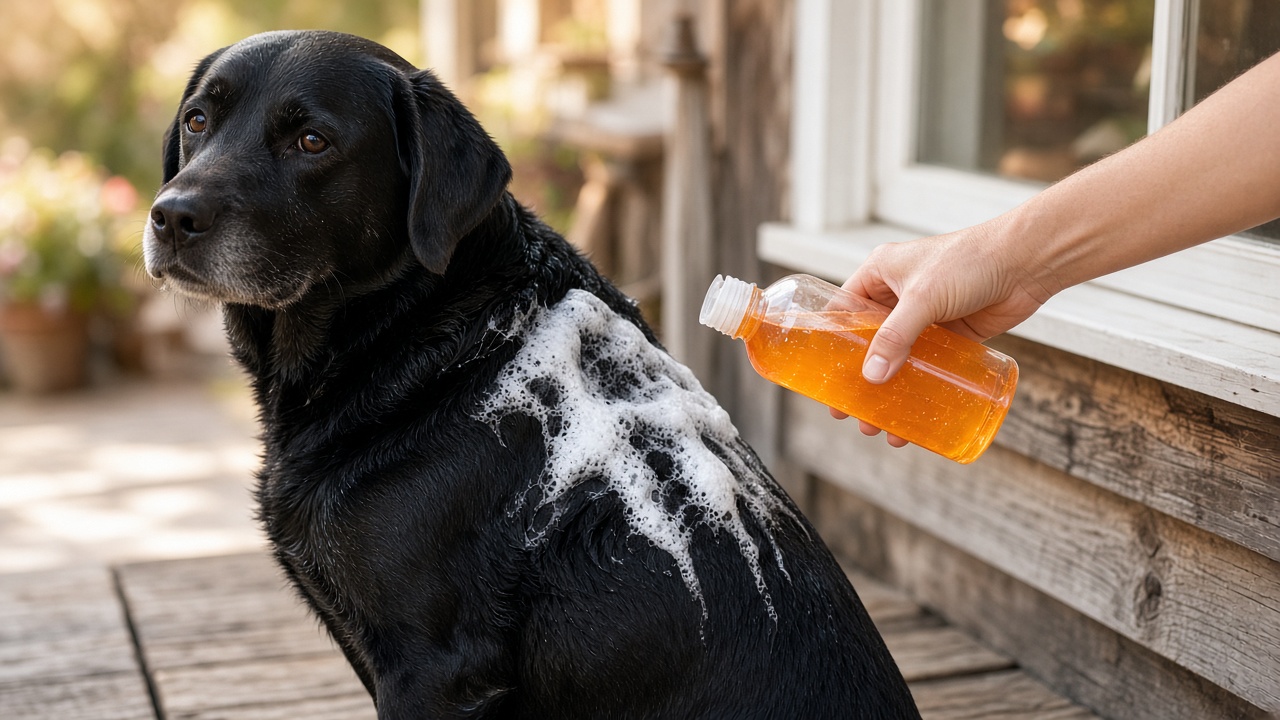
The best dog shampoo for itchy skin is the wash whose active matches the cause — colloidal oatmeal for dry, flaky coats; chlorhexidine or a veterinarian-named antifungal for microbial jobs; not a fragrance bomb. The We read the titles and descriptions of the seven catalog SKUs on this page on four buyer-visible signals: listed active class (oatmeal vs antiseptic vs ketoconazole), card price, dual-species wording, and whether the listing is a dog-labeled wash vs a human ketoconazole tile. Card snapshots on this URL sum to $126.84. 3 of 7 are oatmeal-class comfort washes. 4 of 7 lean medicated or antiseptic. 1 of 7 is a Nizoral ketoconazole listing that is not a substitute for a prescription plan.
A bottle is an adjunct. VCA’s pages on allergies, fleas, and hot spots treat bathing as load reduction after the cause is named — not as a diagnosis. Human shampoo sits near pH 5.5; canine skin sits closer to neutral. That mismatch strips sebum and can rebound itch. Do not start a ketoconazole or chlorhexidine cadence because a tile said “clinical.”
Our guides are reader-supported. This article may contain affiliate links. As an Amazon Associate we may earn a commission if you buy through links, at no extra cost to you.
Related desk pages: hot-spot spray, waterless dog shampoo, grooming wipes, skin-and-coat food, allergy dog food.
Quick picks at a glance
- Budget oatmeal-class wash: Wahl USA Dry Skin & Itch Relief — $7.97.
- Chlorhexidine seasonal listing: Pet Honesty Chlorhexidine Itch Relief — $22.99.
- Antiseptic / antifungal drugstore staple: Veterinary Formula Clinical Care — $9.92.
- Oatmeal + aloe, fragrance-sensitive households: earthbath Oatmeal & Aloe — $18.99.
- Ketoconazole-class listing (clinic-directed): Nizoral Ketoconazole Pet Shampoo — $27.99.
What the best dog shampoo for itchy skin actually means
The aisle sells “itch relief” on every oatmeal cartoon. The desk sells four different jobs. Mixing them is how a $8 comfort wash becomes a six-month yeast story.
- A named cause, or an honest “we do not know yet.” Fleas, food, pollen, yeast, bacteria, contact irritant, endocrine disease. The bottle does not pick.
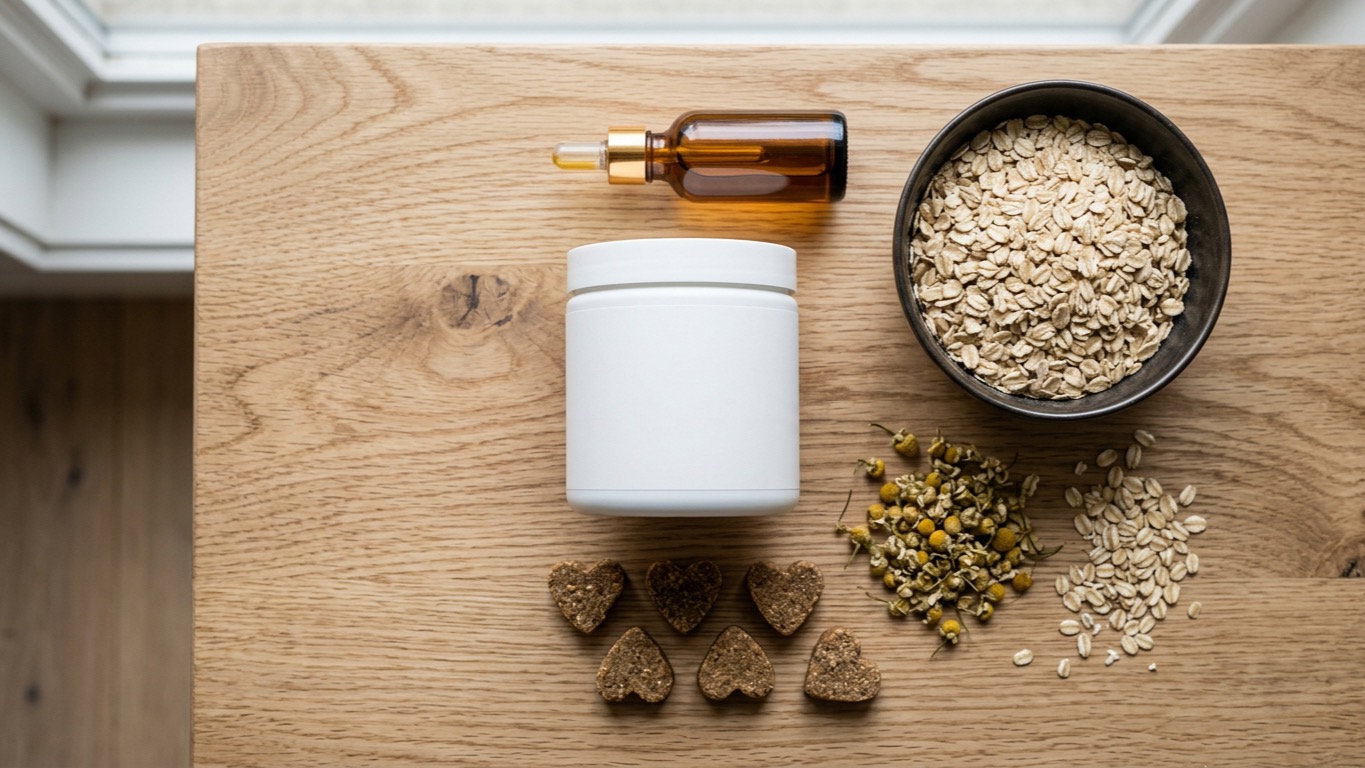
- An active that matches that cause. Oatmeal soothes dry skin. Chlorhexidine is an antiseptic. Ketoconazole is an antifungal class. Fragrance is not an active.
- A contact time and a rinse. Medicated labels print minutes. Skipping them is buying water.
- A stop rule. Worse after two baths, open sores, ear smell, or face swelling is a veterinarian — not a second bottle.
Four facts belong in the first screen of any best dog shampoo for itchy skin decision:
- Itch is a symptom. VCA’s allergy and hot-spot pages list fleas, allergies, and infection among common drivers. A shampoo does not replace a skin scrape or a flea plan.
- pH is not a marketing adjective. Canine skin is typically near 6.2–7.5 in published veterinary-dermatology ranges; human bars sit more acidic. Soap-heavy human shampoo strips the lipid barrier. Stick to a dog-labeled wash unless a veterinarian named a human SKU on purpose.
- Over-bathing is a cause. Sebum is a barrier. Weekly-plus comfort baths without a medical reason can dry the coat and increase scratch.
- “Vet formula” on a carton is a brand name. It is not a prescription and not a Thepetbench credential.
What
How itch wash listings compare on labels
These tables are desk compilations from listed prices, panel language on the cards, and the August 2026 snapshots on this URL. Prices move. Heuristics, not lab output.
Table 1 — Card price, active class, and job
| Product | Card price | Desk class | Job |
|---|---|---|---|
| Wahl Dry Skin & Itch Relief | $7.97 | Oatmeal / dry-skin comfort | Mild dryness, frequent gentle baths |
| Pet Honesty Chlorhexidine | $22.99 | Chlorhexidine antiseptic | Seasonal itch if the carton matches; dual-species listing |
| Veterinary Formula Clinical Care | $9.92 | Antiseptic + antifungal | Yeast / hot-spot adjunct — still not a diagnosis |
| TropiClean Oatmeal | $13.99 | Oatmeal comfort + scent | Surface dryness, not allergy workup |
| Miracle Vet Medicated | $24.99 | Medicated itch listing | Persistent itch — confirm actives on this bottle |
| earthbath Oatmeal & Aloe | $18.99 | Oatmeal + aloe, cleaner panel | Sensitive-skin comfort, extra rinse |
| Nizoral Ketoconazole | $27.99 | Ketoconazole class | Yeast-class listing — veterinarian should name the bottle |
Desk stat: Across the seven cards, 43% (3 of 7) are oatmeal-class comfort washes. 57% lean antiseptic or medicated. If your search is best dog shampoo for itchy skin and you only sort by “oatmeal,” you will miss the microbial aisle — and if you only sort by “medicated,” you will strip a dry coat.
Table 2 — Cause vs bottle (do not skip the first column)
| If the likely driver is… | Bottle class on this page | Do not start with… |
|---|---|---|
| Dry, flaky, no odor | Wahl, TropiClean, earthbath | Ketoconazole “just in case” |
| Flea dirt / seasonal jump | Flea control first, then oatmeal comfort | Shampoo as the only flea plan |
| Greasy odor, yeast-look skin | Vet Formula or a clinic-named antifungal | A tropical-scent oatmeal as the fix |
| Hot spot (wet, painful patch) | Clinic first; hot-spot spray page | Shaving at home with scissors |
| Food / environmental allergy | Comfort wash + allergy-food page | A third shampoo brand this month |
| Open wounds, face, ears deep | Veterinarian | Any OTC medicated bath |
Table 3 — Wash protocol (desk heuristic, not a prescription)
| Step | Time | Water | Why it matters |
|---|---|---|---|
| Wet to the skin | 2 min | Lukewarm | Coat looks wet; skin may still be dry |
| Contact time | Label minutes (often 5–10 for medicated) | Still | Actives need minutes, not a rinse-through |
| Rinse | 5+ min | Cool finish | Residue is an irritant |
| Dry | Towel, no blast heat | — | Damp folds grow yeast |
| Interval | Comfort: 7–14 days; medicated: label / clinic | — | Daily baths strip sebum |
Leave-in conditioners that never rinse can trap pollen. Fully rinse or skip on allergic dogs.
Table 4 — Card math (August 2026 snapshots)
| Stack | Example SKUs | Snapshot total | Who it is for |
|---|---|---|---|
| Comfort only | Wahl | $7.97 | Mild dryness, tight budget |
| Oatmeal step-up | TropiClean or earthbath | $13.99–$18.99 | Sensitive household, nicer panel |
| Drugstore antiseptic | Veterinary Formula | $9.92 | Yeast-adjacent after a clinic hint |
| Chlorhexidine listing | Pet Honesty | $22.99 | Seasonal tile — read the percent |
| Ketoconazole listing | Nizoral | $27.99 | Only if a veterinarian named this class |
| All seven | Collection | $126.84 | A shelf, not a plan |
Desk stat: The comfort aisle on this URL tops out at $18.99 (earthbath). The ketoconazole listing is 3.5× Wahl. Price is not potency. It is a class change.
Table 5 — What the label must show before you buy
| Signal | Pass | Fail |
|---|---|---|
| Species | Dog (or dog+cat printed) | Human bar used as a default |
| Active | Named (oatmeal, chlorhexidine %, ketoconazole %) | “Clinical blend” with no INCI |
| Contact time | Printed minutes | “Lather and go” on a medicated claim |
| Fragrance | Low / none if the dog is reactive | Perfume as the hero |
| Stop rule | “See a veterinarian if…” | “Cures allergies” |
How the desk scores the best dog shampoo for itchy skin
We do not culture skin and we do not score “vet energy.” Four checks:
1. Can you name the active? Oatmeal, chlorhexidine, ketoconazole, or a clinic drug. If you cannot name it, you bought scent.
2. Does the job match the skin in front of you? Dry flake ≠ greasy yeast. Smell is a clue. Diagnosis is a clinic.
3. Will you run the contact time? A 10-minute chlorhexidine wash rinsed at 30 seconds is expensive water.
4. Do you have a stop date? Two baths, worse itch, or broken skin → veterinarian. Not a third SKU.
Top picks — seven catalog washes
Cards below are the catalog lines for this URL. Panels change. Read the bottle you hold.
1. Wahl USA Dry Skin & Itch Relief Pet Shampoo for Dogs
Best for: budget oatmeal-class comfort on mild dryness.
Wahl is $7.97 — the floor on this URL. Listing language is soap-free dry-skin / itch relief. That is a comfort wash. Recurring owner theme: light residue, usable more often than a medicinal bottle. Honest limit: it will not settle a hot spot or a yeast odor. If the dog is red, wet, or smelly, skip the bargain aisle and call the clinic.
2. Pet Honesty Chlorhexidine Cat & Dog Seasonal Itch Relief Shampoo
Best for: a chlorhexidine listing when the carton percent matches what a veterinarian already discussed.
Pet Honesty is $22.99 and prints chlorhexidine plus dual-species wording. Antiseptic class. Seasonal-itch marketing. Medicinal scent is the recurring complaint. Chlorhexidine is not oatmeal. It is a microbial-load tool. Open wounds and “just because it is itchy” are not the same job. Confirm the percent on this lot. Dual-pet formulas still need a dog-safe rinse around eyes.
3. Veterinary Formula Clinical Care Antiseptic & Antifungal Shampoo
Best for: a widely sold antiseptic / antifungal adjunct at drugstore money.
Veterinary Formula at $9.92 is the value medicated card. Listing language: antiseptic and antifungal. Low-foam / slick rinse is a recurring owner note — not a failure of the active, a handling quirk. “Veterinary Formula” is a brand. It is not a Thepetbench exam and not a substitute for a skin cytology. Use it when a veterinarian has already pointed at yeast or bacteria, or as a short bridge while you wait for the appointment — not as a six-month subscription.
4. TropiClean Oatmeal Dog Shampoo
Best for: oatmeal comfort with a tropical scent — surface dryness, not a workup.
TropiClean is $13.99. Oatmeal class. Pleasant scent is the listing hero. That scent is a risk on a fragrance-reactive dog. The wash moisturizes the coat story; it does not close an allergy workup. If the itch is ears, paws, and belly on a calendar, read the allergy-food page and book the clinic. Keep TropiClean for the “dry, dull, not infected” coat.
5. Miracle Vet Medicated Dog Shampoo for Itchy Skin Relief
Best for: a higher-priced medicated listing when you can name the actives on this bottle.
Miracle Vet is $24.99. The title says medicated itch relief. That is a class, not a molecule until you read the INCI. Confirm chlorhexidine, ketoconazole, hydrocortisone, or whatever this lot actually prints. “Clinically recommended” on a marketplace tile is advertising. Overkill for a one-time mud bath. Underkill for a dog that needs oral meds. Match the panel to the veterinarian’s sentence.
6. earthbath Oatmeal & Aloe Dog Shampoo
Best for: sensitive-skin comfort when you want oatmeal plus aloe and a cleaner additive story.
earthbath is $18.99. Maker language on the oatmeal-and-aloe line typically stresses no parabens, sulfates, or soap — confirm the SKU you hold (fragrance-free vs vanilla-almond). Thicker consistency and extra rinse time are the recurring handling notes. This is still a shampoo, not a diagnosis. Red, wet, or smelly skin stays a veterinarian question. Between baths, a waterless wash or wipe is a different object.
7. Nizoral Ketoconazole Pet Shampoo
Best for: a ketoconazole-class listing after a veterinarian names that class — not a first bottle for “kind of itchy.”
Nizoral at $27.99 is the ceiling on this URL. Ketoconazole is an antifungal. Many Nizoral SKUs in the wider market are human 1% washes; some marketplace tiles say “pet.” Read the label in your hand. Do not assume “vet-approved” from a product title. A veterinarian may name ketoconazole for Malassezia-type jobs. Price limits casual weekly use — which is fine, because antifungal baths are usually a protocol, not a lifestyle scent.
Comparison: dog shampoo for itchy skin at a glance
| Product | Best for | Card price | Where to buy |
|---|---|---|---|
| Wahl | Budget dry-skin comfort | $7.97 | Check price |
| Pet Honesty | Chlorhexidine listing | $22.99 | Check price |
| Veterinary Formula | Drugstore antiseptic / antifungal | $9.92 | Check price |
| TropiClean | Oatmeal + scent | $13.99 | Check price |
| Miracle Vet | Medicated listing | $24.99 | Check price |
| earthbath | Oatmeal + aloe | $18.99 | Check price |
| Nizoral | Ketoconazole class | $27.99 | Check price |
Want to browse the aisle? See itchy-skin shampoo listings on Amazon →
How to choose the best dog shampoo for itchy skin without a ranking trophy
Match the skin, not the cartoon oat.
Mild dry flake, no odor, dog otherwise well. Wahl, TropiClean, or earthbath. Fragrance-free earthbath if perfume is the suspect.
Greasy odor, elephant-skin look, ear smell. Microbial class — Veterinary Formula or a clinic-named ketoconazole / chlorhexidine. Book the appointment anyway.
Seasonal jump with flea risk. Flea control is the first product. Shampoo is second. A comfort wash after the fleas are gone.
Hot spot. Clip (often a clinic job if it hurts), clean, treat the cause. See the hot-spot spray page. Do not scissor a painful lesion because a forum said so.
Diet already in play. The skin-and-coat food page and the limited-ingredient page are adjacent doors. A new kibble plus a new shampoo in the same week hides the cause.
Bath frequency, diet, and the house
Comfort oatmeal: often every 7–14 days unless the coat is filthy. Medicated: the label or the veterinarian — sometimes twice weekly for a short course, then stretch. Daily “because itchy” is how you remove the barrier.
Diet: omega-3-rich food is a food conversation, not a shampoo. Coconut oil in the bowl is a calorie and GI variable; introduce it only if your veterinarian is fine with the fat load. Environment: wash bedding in fragrance-free detergent, rinse paws after pollen walks, keep humidity out of the desert zone. Grooming: a soft brush moves oil; a rake on an inflamed coat is a weapon.
Between full baths, a waterless shampoo or wipe is a spot tool. It is not a chlorhexidine course.
Seven buying mistakes the Itch-Wash we keep seeing
- Human shampoo as the default. pH and surfactants are wrong.
- Medicated bottle for dry flake. You will strip and rebound.
- Oatmeal for greasy yeast. You will perfume the problem.
- Skipping contact time. The active never sat.
- Tea-tree hero oils. Some essential-oil stories are a toxicity story, especially around cats. Not on this catalog — keep it that way.
- Three brands in three weeks. One variable.
- No flea control on a summer itch. The bottle cannot out-shampoo a flea.
When an itch question is a clinic question
Face swelling, hives, trouble breathing: emergency. Open, wet, painful skin: same week, not “after this bottle.” Ear canal smell and head tilt: ears are not a shampoo job. Puppies, seniors, and dogs on other drugs: ask before stacking actives. We compile panels. We do not examine your dog.
What this seven-card catalog is not
It is not a dermatology formulary. It is not “vet-approved Thepetbench.” It is not five bottles we bathed on a trial pack. The catalog is seven purchasable washes, priced $7.97–$27.99, compiled in August 2026.
How we researched this guide
We opened the seven live cards, summed the printed prices, classed each SKU by listed active language, and cross-checked public VCA itch / hot-spot framing plus standard canine-vs-human pH ranges in veterinary-dermatology teaching texts. ”
Cost per year, not cost per listing
Wahl at $7.97 for a dry-coat winter is a cheap stack. Veterinary Formula at $9.92 plus a clinic visit is the honest microbial stack. Seven bottles at $126.84 is a shower caddy. Buy the class.
Frequently asked questions
How often should I bathe with the best dog shampoo for itchy skin?
Comfort oatmeal: often every 7–14 days. Medicated: the label or the veterinarian — sometimes more often for a short course. Daily baths without a medical reason remove sebum and can worsen itch. Pair seasonal itch with flea control.
Can I use human shampoo on my dog?
Default no. Human products sit more acidic (often ~5.5) than typical canine skin. They strip oils. Use a dog-labeled wash unless a veterinarian named a specific human SKU (some ketoconazole protocols do). That naming is theirs, not this page’s.
What is the best dog shampoo for itchy skin if I do not have a diagnosis yet?
Start with a gentle oatmeal-class wash (Wahl or earthbath) and book the clinic if itch lasts more than a few days, the skin breaks, or you smell yeast. Do not start ketoconazole “to be safe.”
Are there side effects from medicated shampoos?
Labels warn of dryness, redness, or irritation if contact time is ignored or baths are too frequent. Chlorhexidine and ketoconazole are actives, not lotions. Stop and call the clinic if the dog is worse after a wash.
Does oatmeal shampoo treat allergies?
It soothes dry, itchy skin for some dogs. It does not retire a food trial or a pollen workup. See the allergy-food guide.
Can I use the best dog shampoo for itchy skin on a puppy?
Only if the label says the age. Puppies have thinner skin. Medicated actives are a veterinarian question.
Is Nizoral safe for dogs?
Ketoconazole can be part of a veterinary plan. The card is a marketplace listing. Confirm species, percent, and that a veterinarian wants this class. Do not treat a title as a prescription.
Should I add coconut oil or a supplement instead of shampoo?
Food and topical are different levers. Change one variable. Skin-and-coat food is a separate page.
Do I need a conditioner?
Rinse-out conditioners can help a dry coat. Leave-ins that trap dirt are a miss on allergic dogs. Fully rinse.
Will a waterless shampoo replace a medicated bath?
No. Waterless is a spot clean. Medicated baths need water, contact time, and a rinse.
Related pages
- Best hot spot spray for dogs
- Best waterless dog shampoo
- Best dog grooming wipes
- Best dog food for skin and coat
- Best dog food for allergies
- Best dog grooming spray for coat shine
Sources
- VCA — Hot spots in dogs: https://vcahospitals.com/know-your-pet/hot-spots-in-dogs
- VCA — Allergy (atopy) overview pages on vcahospitals.com
- Manufacturer and marketplace listings for the seven cards on this URL (confirm the panel at purchase)
Last reviewed: August 2026. If something is stale, contact us.