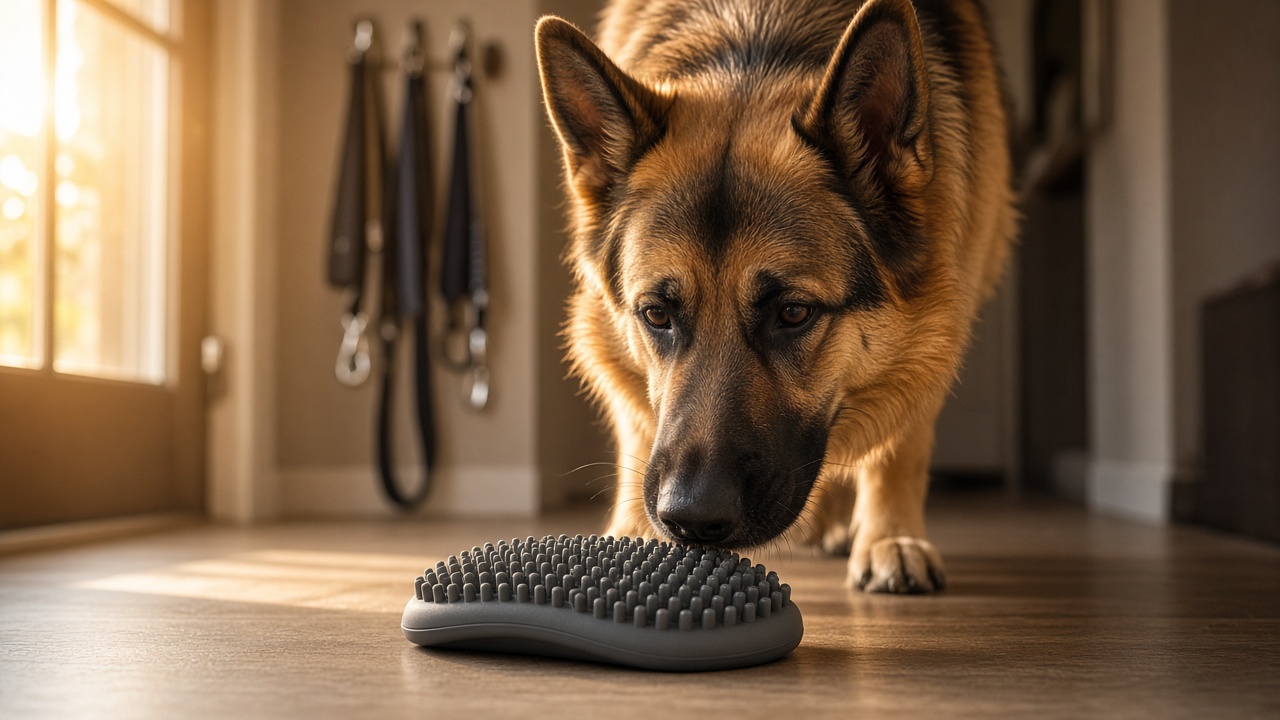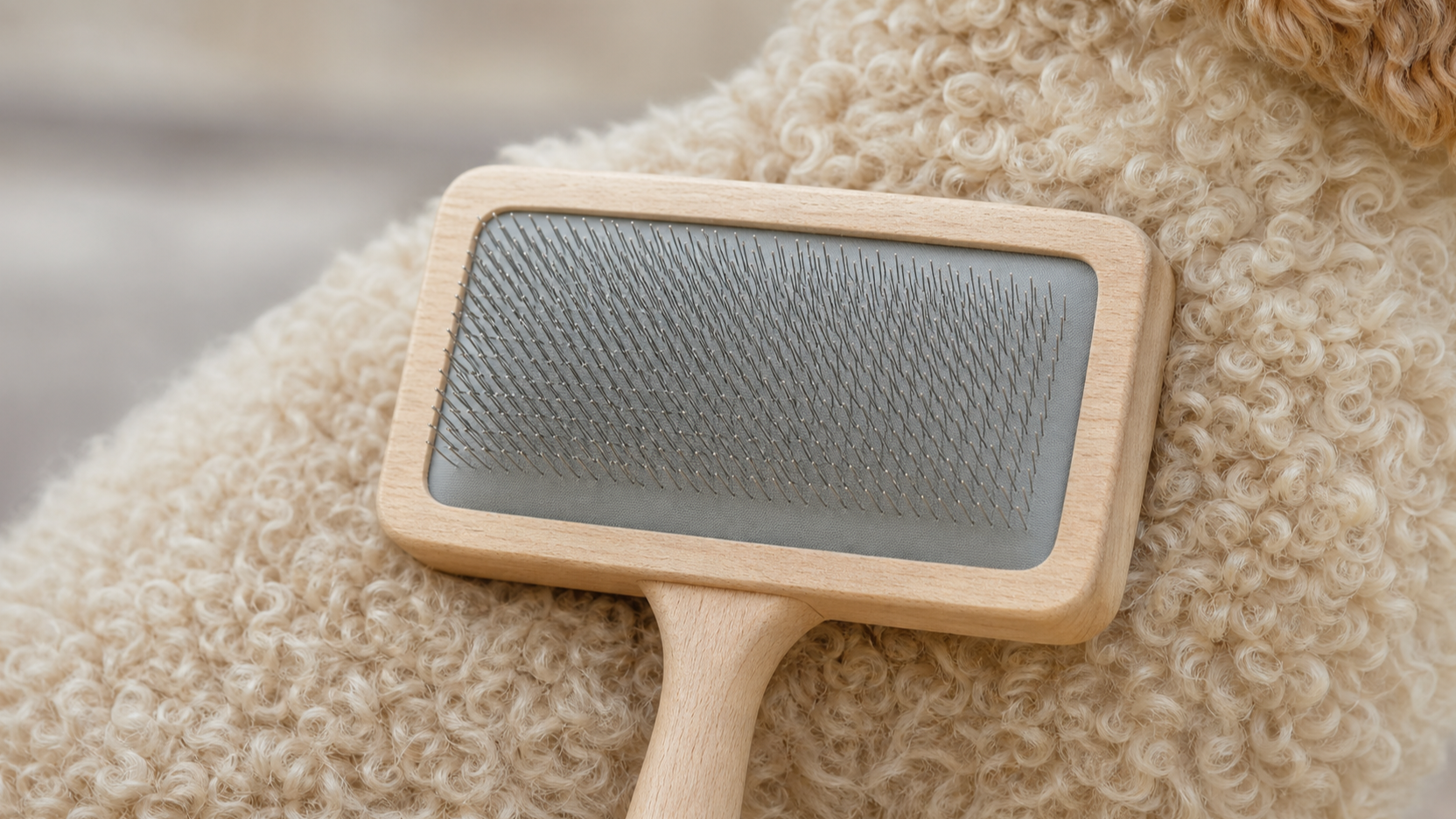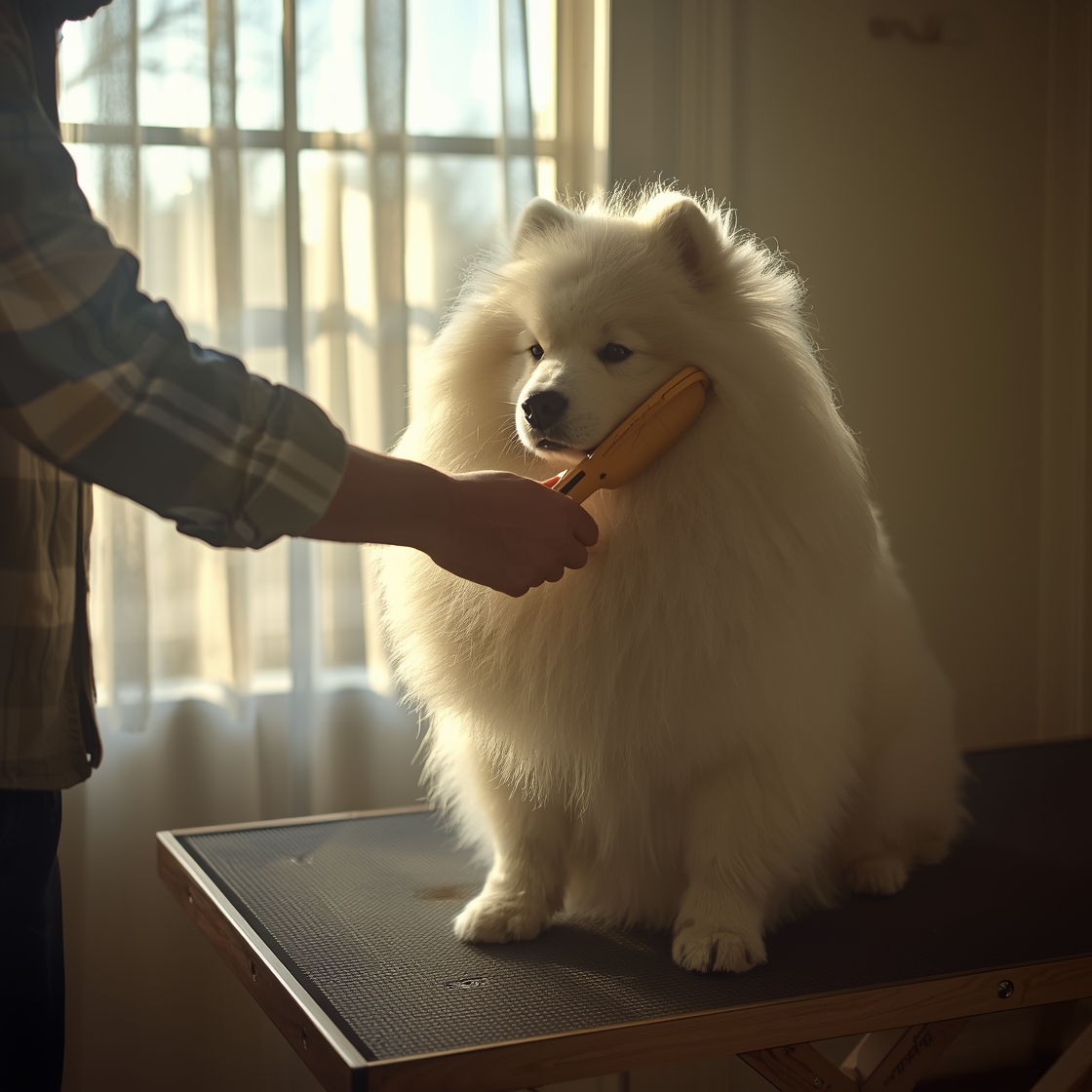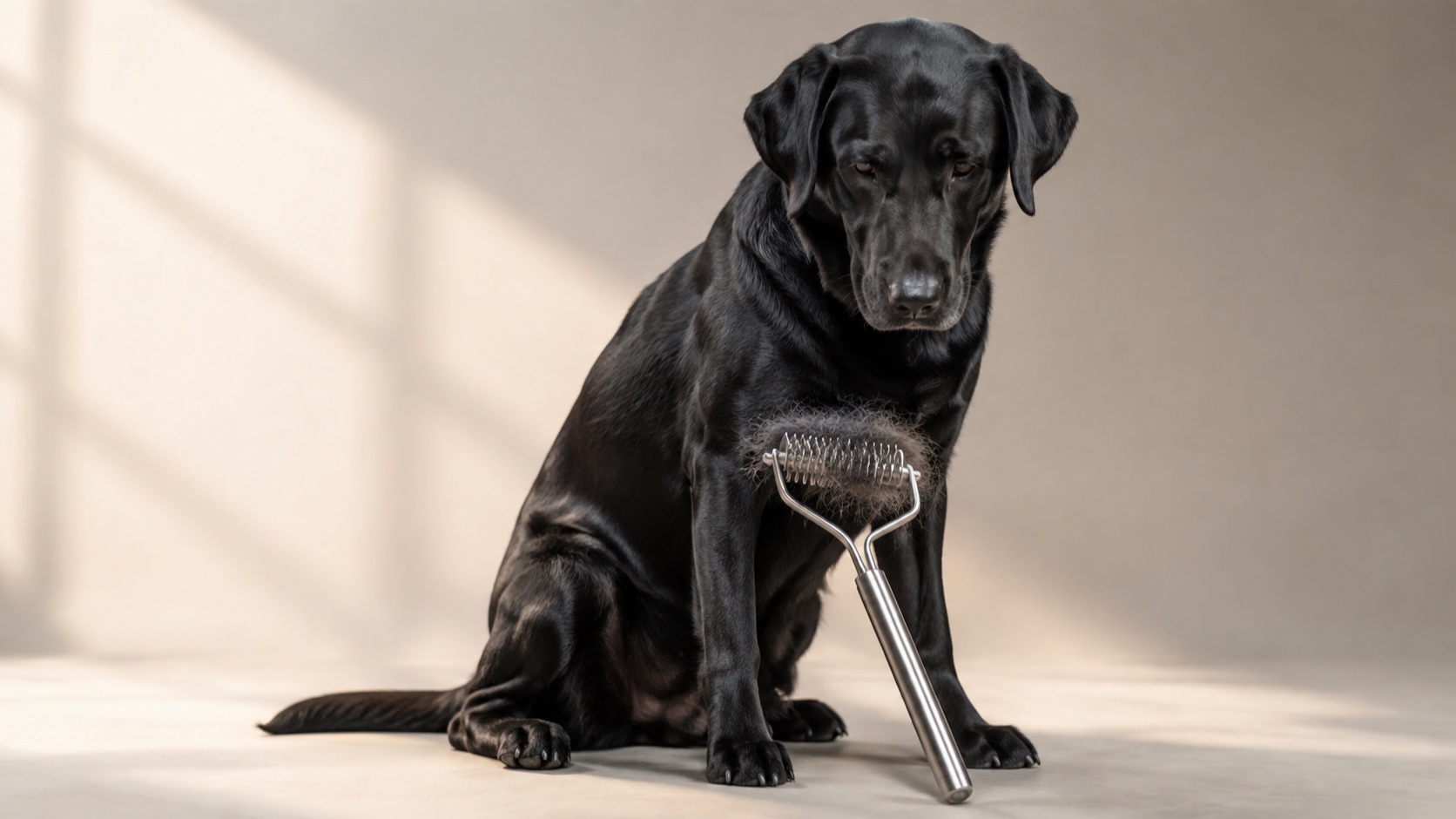
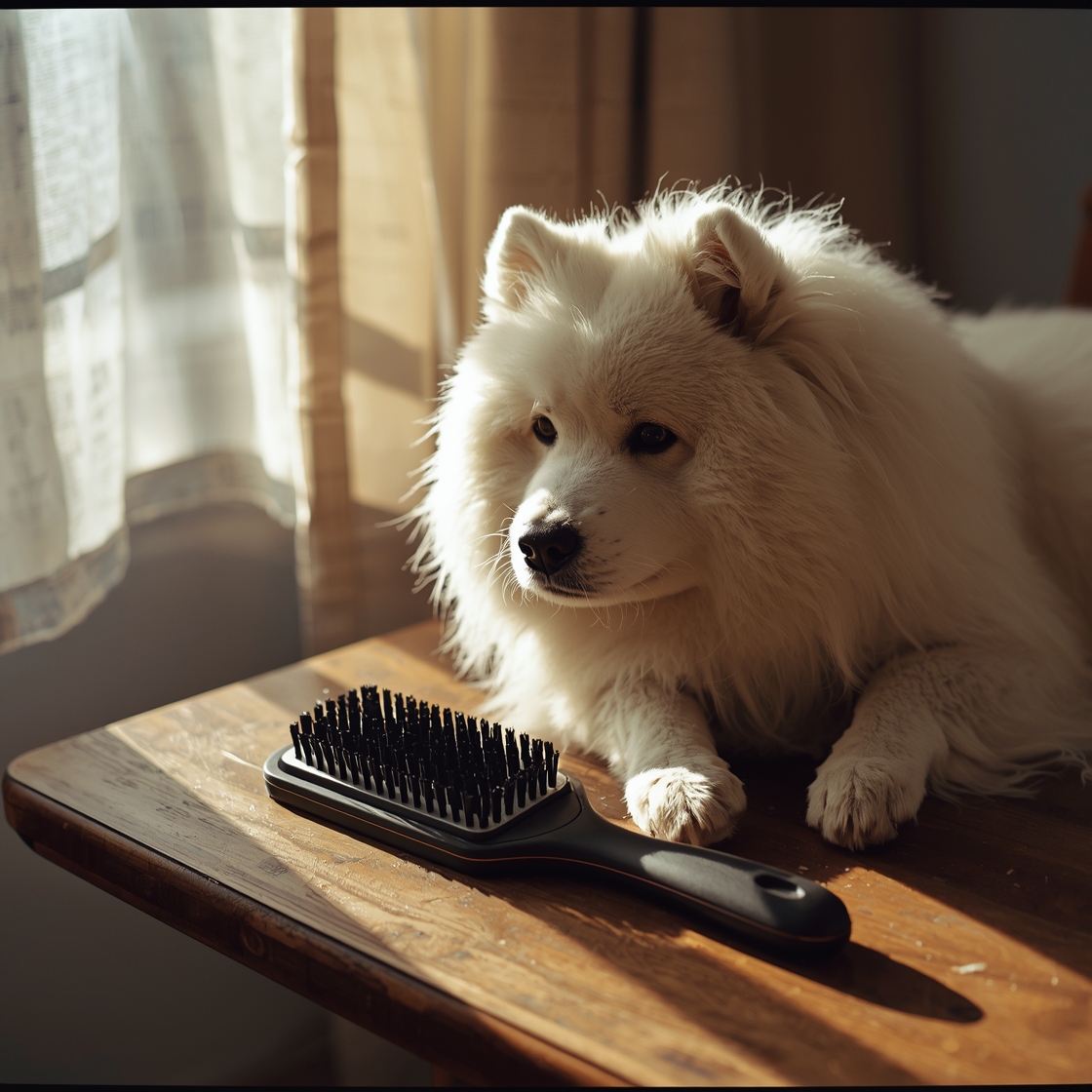
A surface-only pass on a Husky, Malamute, German Shepherd, or Golden leaves the undercoat to felt at the skin. That is the job this URL can actually sell.
Our guides are reader-supported. This article may contain affiliate links. As an Amazon Associate we may earn a commission if you buy through links, at no extra cost to you.
Related: double-coat deshed, double-coat brushes, thick-coat brush, double-coat tool kit, home-clip safety, home step-by-step. A Poodle lock is the wrong job — see Poodle slicker.
What is the best dog shedding brush for heavy coats?
A rake or shedding blade for the undercoat, plus a slicker for the guard layer, used on a dry coat in short panels. On this URL: SleekEZ ($19.97) is the named handle-free blade class. Staltwo and DOGI ($9.99 each) are the cheap deshed titles. Swihauk ($16.98) is the named self-cleaning slicker. Docrok ($19.99) is a kit. BOTH WINNERS ($9.99) is a dual blade. The unnamed self-cleaner ($11.99) is a convenience title, not a brand story.
Browse heavy-coat shedding tools →
Quick picks from this best dog shedding brush for heavy coats set
- Best named blade-class title: SleekEZ — listed $19.97. Handle-free listing language. Manual hair wipe. Not a button ejector.
- Best named self-cleaning slicker: Swihauk — listed $16.98. Angled-pin slicker class. Pins can scratch if you lean.
- Best named cheap deshed pair: DOGI and Staltwo — both listed $9.99. Same sticker. Different titles. Neither is a kit.
- Best named dual blade: BOTH WINNERS — listed $9.99. Two tooth spacings. Blade, not a slicker.
- Best named kit leftover: Docrok combo — listed $19.99. Highest sticker. Multiple heads. Storage is the tax.
- Honest leftover (no brand in title): Self-Cleaning Deshedding Dog Cat Brush — $11.99. Median tile. Dog-and-cat title. Plastic-class listing language.
What current Amazon listings show (Heavy-Coat Brush, August 2026)
| Job | What clears it | 2026 aisle fake | Fails if missing |
|---|---|---|---|
| Undercoat reach | Rake, blade, or long-pin tool that the listing names as deshed | A glove sold as a “deshedder” | Fail |
| Guard-layer finish | Slicker or comb after the rake | One swipe as the whole plan | Partial |
| Hair leave the tool | Button eject or an honest wipe | “Self-cleaning” with no mechanism on the title | Partial |
| Coat match | Heavy / double coat, not a Poodle lock | A slicker on a felted ruff with no demat first | Fail |
| Tool | Listed $ | Class | Index job |
|---|---|---|---|
| SleekEZ | $19.97 | Handle-free blade | Named blade-class deshed |
| Self-Cleaning Deshedding (unnamed) | $11.99 | Button slicker / deshed | Median convenience |
| Swihauk | $16.98 | Self-cleaning slicker | Named slicker |
| DOGI | $9.99 | Deshed brush | Cheap deshed title |
| Docrok | $19.99 | Combo kit | Kit leftover |
| Staltwo | $9.99 | Deshed brush | Cheap deshed title |
| BOTH WINNERS | $9.99 | Dual shedding blade | Blade leftover |
Before you shop: (1) you can name rake/blade vs slicker vs kit before you name a brand, (2) the $9.99 trio is not one product, (3) Docrok is not a single brush, (4) BOTH WINNERS is not a pin slicker, (5) a raw patch or a scream is a clinic, not a firmer stroke. Fail gate 5 and this checklist is how you shop past an emergency.
The generic Rank-1-through-7 type table that invented a grooming glove and a carbon-steel premium is gone. Those leftovers were theater.
Why the best dog shedding brush for heavy coats is a two-tool job
- Heavy coat means two layers. Guard hair on top. Wool undercoat at the skin. A slicker that only skims the top leaves the blow in the dog. A rake that only rakes leaves the surface looking rough. Public double-coat pages keep saying both.
- Seasonal blow is a volume job. Huskies, Malamutes, Shepherds, and many retrievers dump undercoat in late spring and late fall. Daily five-minute panels beat a Sunday marathon. Sister: double-coat deshed.
- Wet mats tighten. Brush dry. Bath after the rake, not before, unless a groomer already dematted. Sister: home step-by-step.
- Self-cleaning is a cleanup feature. It does not make a short pin reach a deep undercoat. Swihauk and the unnamed $11.99 tile sell the button. SleekEZ sells the tooth pattern and accepts a wipe.
- A kit is a drawer. Docrok at $19.99 is the highest sticker because it is several heads. If you lose the rake head, you own a box.
- A blade is a blade. BOTH WINNERS prints Dual-Sided Shedding Blade. Do not call it a slicker in your cart title.
- Skin is the stop rule. Pink, scabs, or a flinch means stop.
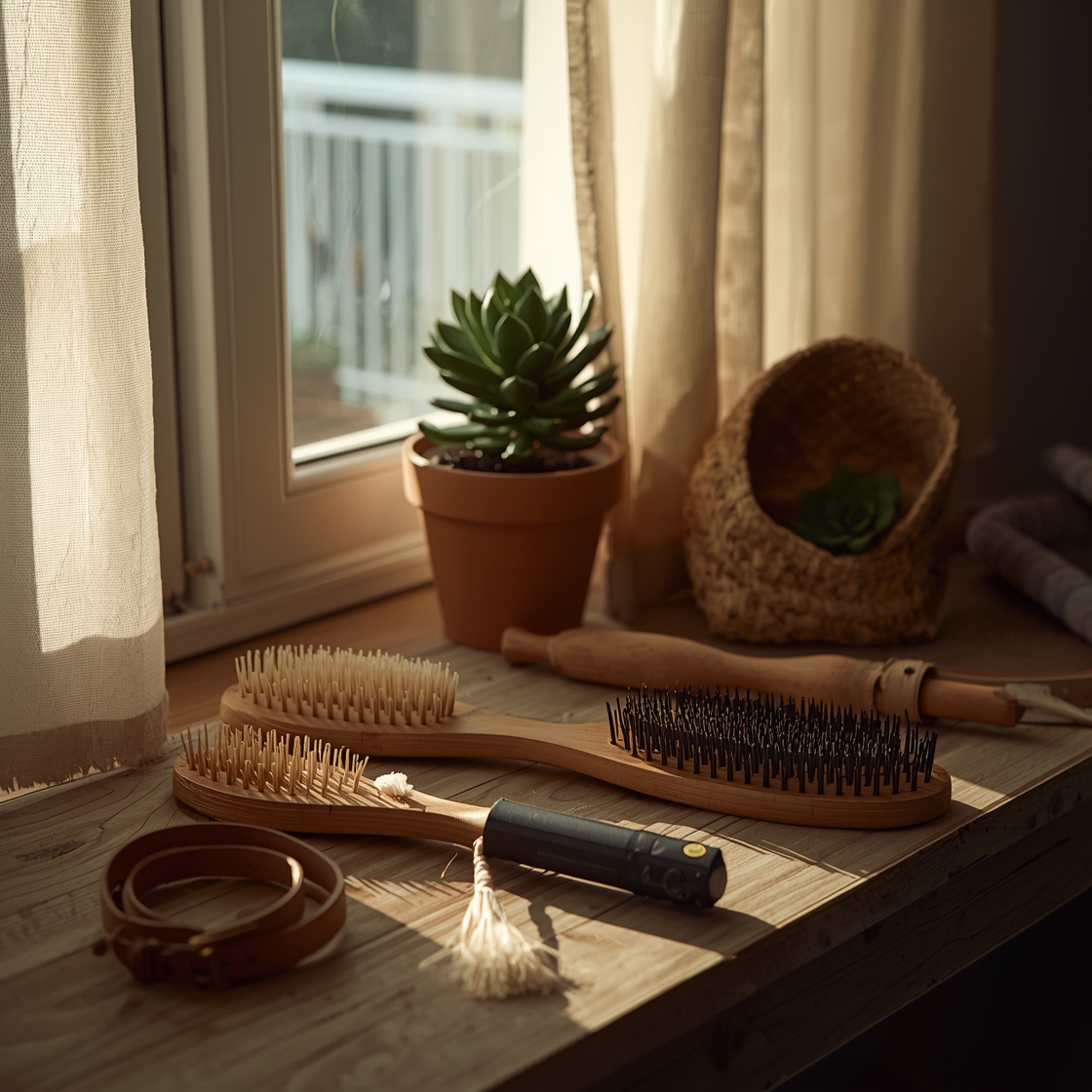
The 7 cards on this URL
1. SleekEZ Dog Brush for Shedding | Patented Deshedding Dog Brush | Pet
Best for: the named blade-class title when you want a handle-free listing and you will wipe hair yourself.
Listing language: patented tooth pattern; deshed; handle-free / simple grip class. Listed $19.97 — second-highest sticker, $0.02 under Docrok.
Honest drawback: no collection bin on the title. Hair stays on the teeth until you pull it. Not a button tool. ”
2. Self-Cleaning Deshedding Dog Cat Brush
Best for: the median convenience tile when you want a button-eject title and you accept a no-brand listing.
Listed $11.99. Dog-and-cat in the same title. Plastic / lightweight class in the old owner-theme copy —
Honest drawback: no maker name on the card. Search results will wander. A dual-species title is a compromise nub, not a Husky protocol.
Check self-cleaning deshed listings →
3. Swihauk Self Cleaning Slicker Brush
Best for: the named slicker when the job is surface + small tangle after a rake, and you want a one-press clean.
Listed $16.98. 1.70× the $9.99 floor. Angled-wire slicker class.
Honest drawback: fine pins on a thin-skinned dog are a scratch if you press. This is not the first tool on a felted blow. Demat or section first.
4. DOGI Deshedding Brush
Best for: the cheap named deshed title when the budget is $10 and you will replace it if the teeth bend.
Listed $9.99. Tied with Staltwo and BOTH WINNERS. Same sticker is not the same object.
5. Docrok Pet Grooming Combo
Best for: the kit leftover when you want several heads in one box and you will store the extras.
Listed $19.99. Highest sticker. 2.00× a $9.99 tile. Combo, not a brush.
Honest drawback: you are buying a drawer. A lost rake head turns this into a leftover slicker. Compare to buying SleekEZ ($19.97) as one named blade — $0.02 cheaper on the snapshot.
6. Staltwo Deshedding Dog Brush for Shedding
Best for: the other $9.99 named deshed title when you want stainless-tooth language and a rubberized-grip theme.
Listed $9.99. Same money as DOGI. Different search string.
Honest drawback: “not ideal for sensitive skin” is owner-theme language we will not convert into a trial. If the skin is pink, stop. Same $9.99 as the blade card — pick the class, not the tie.
7. BOTH WINNERS Dual-Sided Shedding Blade with Stainless Steel Blade
Best for: the blade leftover when you want two tooth spacings in one steel tool and you will keep the edge off thin skin.
Listed $9.99. Same floor as DOGI and Staltwo. Title says blade, twice.
Honest drawback: bulky two-sided steel is a different motion than a slicker. Multi-dog households with mixed coats is the listing theme — not a desk trial. Do not use a shedding blade as a dematting knife on a lock.
Comparison (no rank column)
| Tool | Listed $ | Class | Honest job |
|---|---|---|---|
| SleekEZ | $19.97 | Handle-free blade | Named blade-class deshed |
| Unnamed self-cleaner | $11.99 | Button deshed | Median convenience; no brand |
| Swihauk | $16.98 | Self-cleaning slicker | Named slicker |
| DOGI | $9.99 | Deshed brush | Cheap deshed title |
| Docrok | $19.99 | Combo | Kit leftover |
| Staltwo | $9.99 | Deshed brush | Cheap deshed title |
| BOTH WINNERS | $9.99 | Dual blade | Blade leftover |
Match the row to the coat. The “top” pick for a blowing Husky (SleekEZ or a rake-class $9.99) is the wrong pick for a daily petting session on a thin-skinned spaniel (slicker, light hand).
Coat-to-tool matrix (desk, not a cup chart)
| Coat example | Primary on this set | Finish | Skip |
|---|---|---|---|
| Husky / Malamute blow | SleekEZ or Staltwo / DOGI | Swihauk | Glove-as-only-tool (not on these cards) |
| Golden / Shepherd | Rake-class $9.99 or SleekEZ | Swihauk | One 10-minute attack |
| Short dense shedder | Slicker (Swihauk) + light rake | Comb | Aggressive blade on thin skin |
| Poodle / doodle lock | Wrong URL | Sister slicker page | These seven as a clip-prep myth |
| Multi-dog mixed coats | Docrok kit or blade + slicker bought apart | — | One head for every dog |
Pin-length and pressure desk
| Undercoat depth | Tool class on this URL | Risk if you mash |
|---|---|---|
| Deep wool (Husky blow) | Blade / rake (SleekEZ, Staltwo, DOGI, BOTH WINNERS) | Slicker-only; felt at skin |
| Medium double | Rake then Swihauk | Skipping the comb check |
| Short dense | Swihauk or unnamed self-cleaner | Blade used like a currycomb |
| Thin / senior skin | Light slicker, fewer passes | Any $9.99 used as a scraper |
Line-brush: lift a section, work from skin out, two passes minimum per panel. That is groomer-public method language.
Price bands on these seven tiles
| Band | Cards | What you are paying for |
|---|---|---|
| $9.99 | DOGI, Staltwo, BOTH WINNERS | Three different objects at one sticker |
| $11.99 | Unnamed self-cleaner | Median; button title; no brand |
| $16.98 | Swihauk | Named slicker |
| $19.97–$19.99 | SleekEZ, Docrok | Named blade vs kit; $0.02 |
Street prices move. Treat $9.99 / $11.99 / $16.98 / $19.97 / $19.99 as stored snapshots.
What this best dog shedding brush for heavy coats page will not claim
We will not say a $9.99 rake “removes 90% of loose hair.” We will not invent a our research brand-count as proof these seven work. We will not rank a glove that is not on the card file. We will not call Docrok a brush. We will not call BOTH WINNERS a slicker. We will not say we compared static brushes in a lab.
How often should I use the best dog shedding brush for heavy coats?
In a blow: short panels most days, not a two-hour Sunday. In maintenance: two to three sessions a week for a typical double coat. After a bath: only if the coat is fully dry and already dematted.
One tool or several for the best dog shedding brush for heavy coats?
Several, if the coat is actually heavy. Rake/blade + slicker + comb. On this card set that is SleekEZ or a $9.99 deshed plus Swihauk — about $19.97 + $16.98 = $36.95, or $9.99 + $16.98 = $26.97. Docrok at $19.99 is the cheaper box if the heads match those jobs.
Will brushing cut household hair?
It removes loose hair before it hits the sofa. It does not stop a seasonal blow. Vacuum and a lint roller still exist. Short-haired dense coats can shed a lot of fine hair; that is a different visibility problem, not a reason to skip the rake on a Husky.
What type of brush works best for a thick undercoat?
An undercoat rake or shedding blade first. Then a slicker. Then a metal comb as the honesty check — if the comb snags, you are not done. Swihauk is the slicker card. SleekEZ / Staltwo / DOGI / BOTH WINNERS are the reach cards.
How does winter change the best dog shedding brush for heavy coats routine?
Undercoat can densify. Mats form where the harness rubs and behind the ears. More frequent short sessions beat one aggressive rake. Moisture trapped in a mat is a skin problem.
Is a grooming glove the best dog shedding brush for heavy coats?
Not on this card file. 0 of 7 are gloves. A glove is a bonding pass. It is not a wool-layer tool. The old Rank-7 glove row was invented.
Can I use these on a cat?
The unnamed $11.99 title says Dog Cat. A heavy-coat dog rake on a cat is often too much tooth. Sister: cat shedding brush.
Safety protocol this desk will actually write
- Coat dry. Mats identified with a comb before you lean on a blade.
- Short panels. Stop if the dog says so.
- Skin check every panel — pink is a stop.
- Clean the tool so the next pass is not dragging a felt wad.
- No shedding blade on a lock or a mat you have not split.
- Puppies and thin-skinned seniors get fewer, lighter passes.
Cost-per-year sketch (household arithmetic)
| Tool | Listed | Desk use assumption | Sketch $/year over 3 years |
|---|---|---|---|
| $9.99 tile | $9.99 | Replace yearly | ~$10 |
| Unnamed self-cleaner | $11.99 | Replace yearly | ~$12 |
| Swihauk | $16.98 | Two years | ~$8.50 |
| SleekEZ | $19.97 | Two years | ~$10 |
| Docrok | $19.99 | Two years if heads survive | ~$10 |
A salon deshed can clear a $19.97 blade in one visit. That is household math, not an ROI study. It does not prove SleekEZ lasts two years.
When not to buy from this best dog shedding brush for heavy coats set
- The dog is a typical Poodle or tightly curled doodle. Wrong aisle.
- The coat is a mat from skin to tip. That is a clip or a groomer, not a $9.99 rake.
- The skin is already raw. Clinic.
- You wanted a vacuum system. Sister: grooming vacuum.
- You wanted clippers. Sister: clippers.
How to use the best dog shedding brush for heavy coats without inventing a trial
Stand or table. Grooming table buying guide if the dog is large and you have a back. Start at the shoulder, work a hand-width panel, comb-check, next panel. Treats are training, not data. Ten calm minutes beat thirty of a fight.
If the dog mouth-warns, you are done for the day. A bitten wrist is not a “tool failure.”
Frequently asked questions
Is there one best dog shedding brush for heavy coats?
No. There are seven cards and four jobs. Name the job first.
Does the $19.99 Docrok beat the $9.99 trio?
Only if you need a kit. On sticker it is 2.00× one cheap tile. Three cheap tiles would be $29.97 — more money, three separate objects.
Why are three tools $9.99?
Because the snapshot tied. DOGI and Staltwo are deshed-brush titles. BOTH WINNERS is a blade. The tie is a price fact, not a quality trophy.
Should I buy FURminator as the best dog shedding brush for heavy coats?
It is a famous class. It is not on this URL’s seven cards. We will not add it to look complete.
Can a slicker replace a rake on a heavy coat?
As the only tool, usually no. Swihauk is the finish and the small-tangle card.