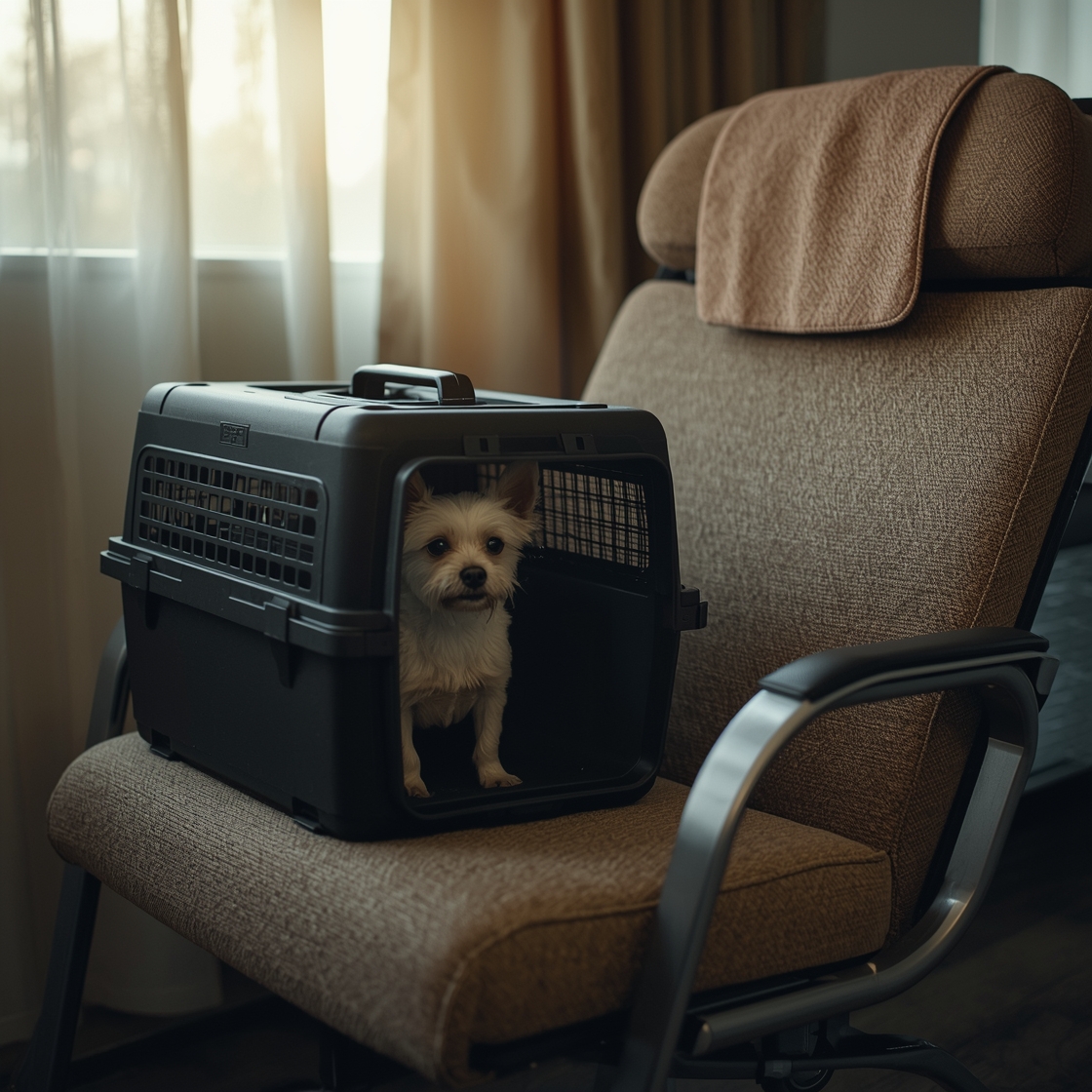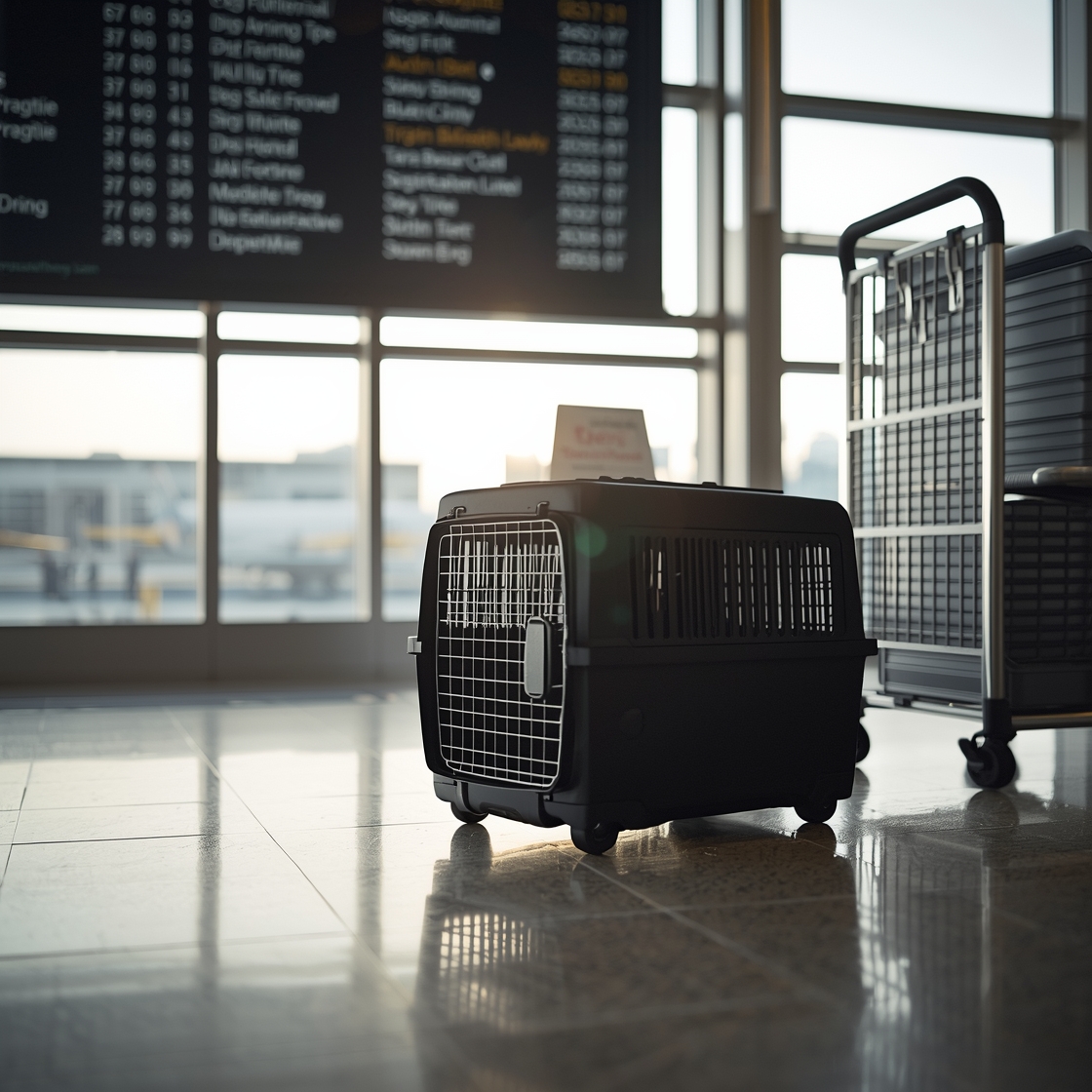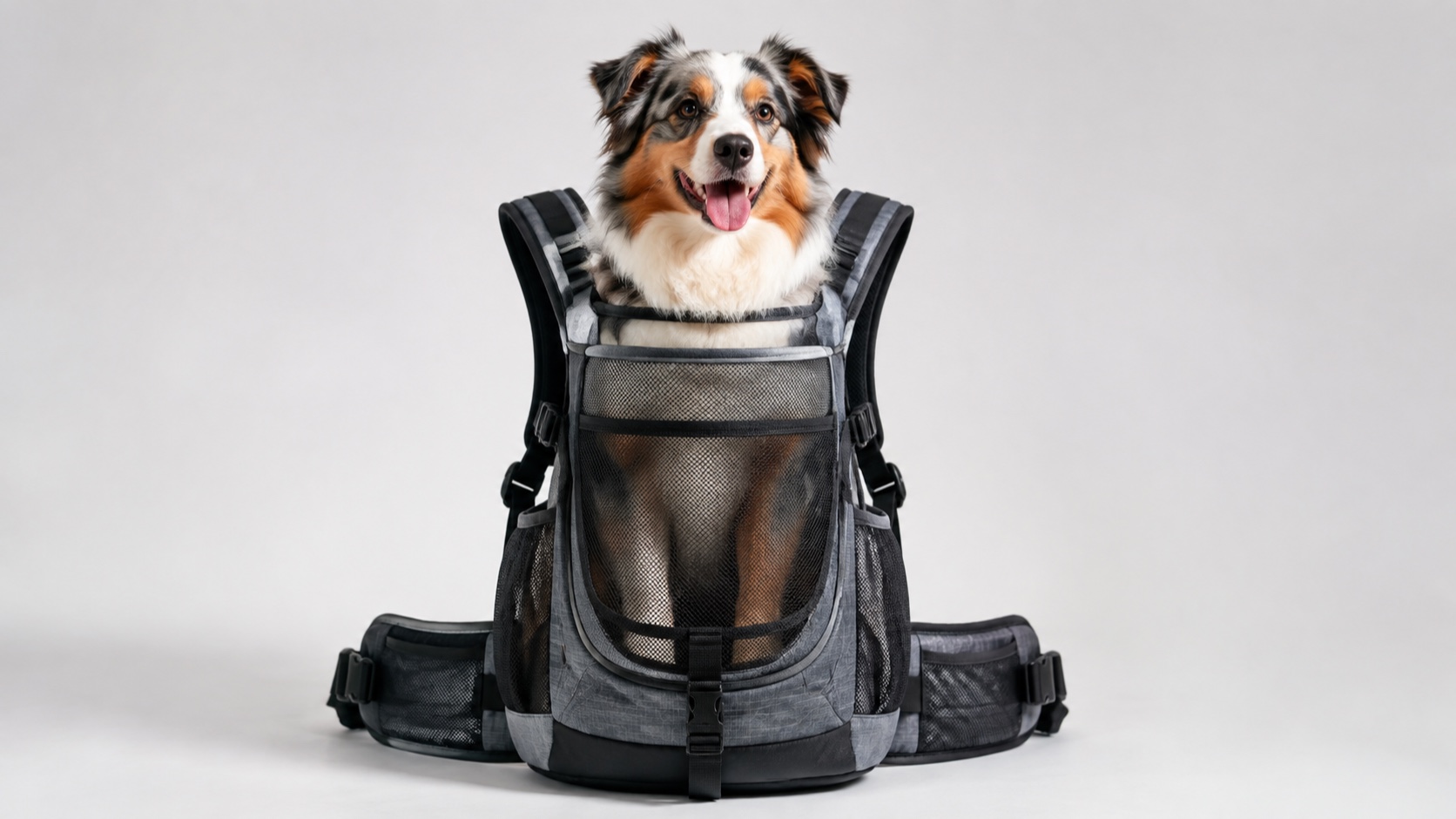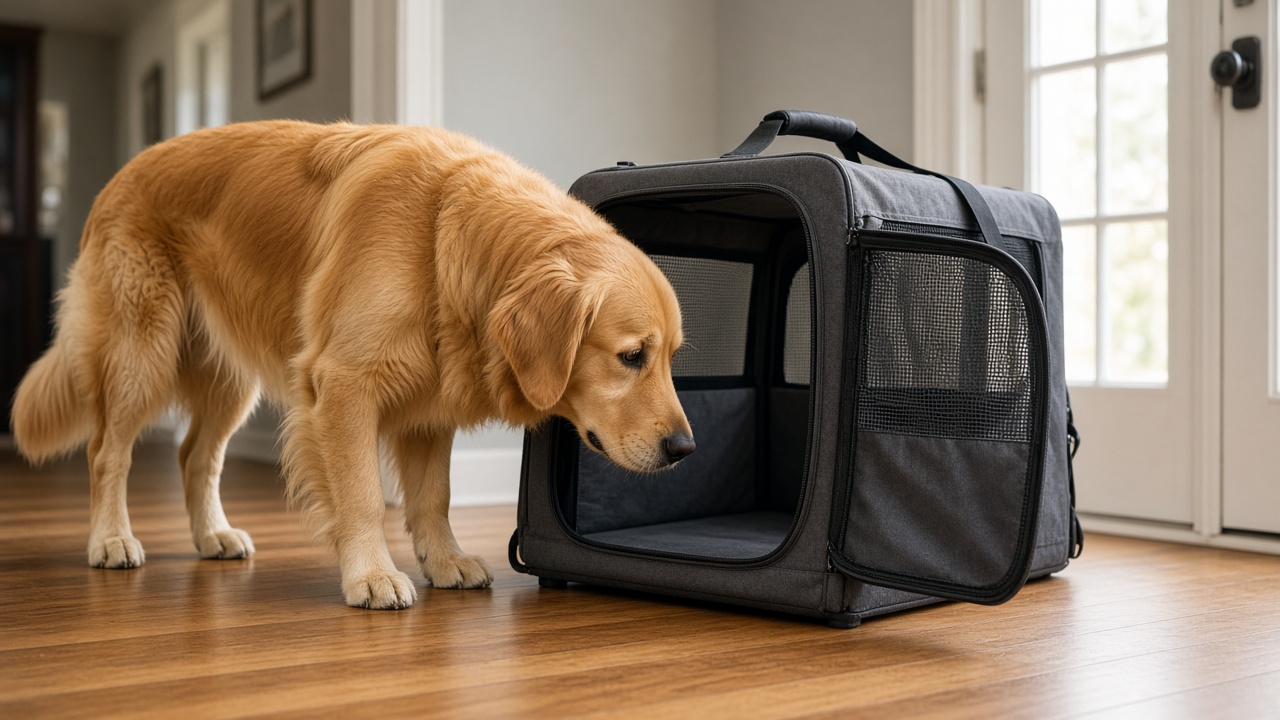
This is not veterinary advice. This is a research-desk explainer. " Airlines approve a booking — a pet slot on a specific flight, on a specific aircraft — not a brand name on a product page.
If a hangtag says a bag is "IATA approved" or "United / Delta / American approved," treat that as marketing. IATA’s own passenger guidance says it does not certify, approve, sell, or endorse any commercial dog or cat travel container. The FAA lets each airline decide whether cabin pets are allowed at all. Read the current policy, book the slot, then buy a container that fits the space you will actually be assigned.
Start here: the decision framework
- Read your airline’s current pet policy and book the pet slot. Cabin pets are capped. Some airlines refuse them on certain routes, aircraft, or seats. IATA’s operational guidelines for in-cabin pet transport (Edition 1, released 15 July 2026) tell airlines to book pets as an advance special service (SSR code PETC) and to warn that many travel agencies cannot add it. Book on the airline’s own site or by phone. IATA’s Traveler’s Pet Corner says to reconfirm at least 48 hours before departure.
- Treat the container as carry-on baggage. If the airline allows cabin pets, the FAA says the container is carry-on and must follow carry-on rules, including 14 CFR 121.589. The FAA’s "Flying with Pets" page (last updated 4 December 2025) is explicit: the container must fit under the seat without blocking anyone’s path to the main aisle; it must be stowed before the last passenger door closes; and it must stay stowed while the airplane is moving on the ground and for takeoff and landing. Follow the flight attendant.
- Measure the actual under-seat space and the carrier. Published airline inches are a starting point, not a tape-measure substitute. Soft bags bulge. Seats differ by aircraft and row. Measure the bag you will fly — length, width, height, including zippers, wheels, and feet — then compare it to the well under the seat in front of you.
- The pet must be able to sit, stand, lie, and turn. IATA’s cabin passenger guidance, which supplements Container Requirement 1 (CR1) in the Live Animals Regulations, asks whether the dog or cat can sit erect, stand erect, turn around, and lie down in a natural position. A bag that slides under the seat but pins the animal in a crouch is the wrong bag.
- Cabin and cargo are different rule sets. Do not mix them. A rigid IATA-style hold kennel is built for cargo handling, labeling, and ventilation. A 42-inch soft crate is a crate, not a cabin bag. If the animal cannot travel in the cabin, you are in cargo / kennel territory — a different booking, a different container, and often different temperature and breed rules.
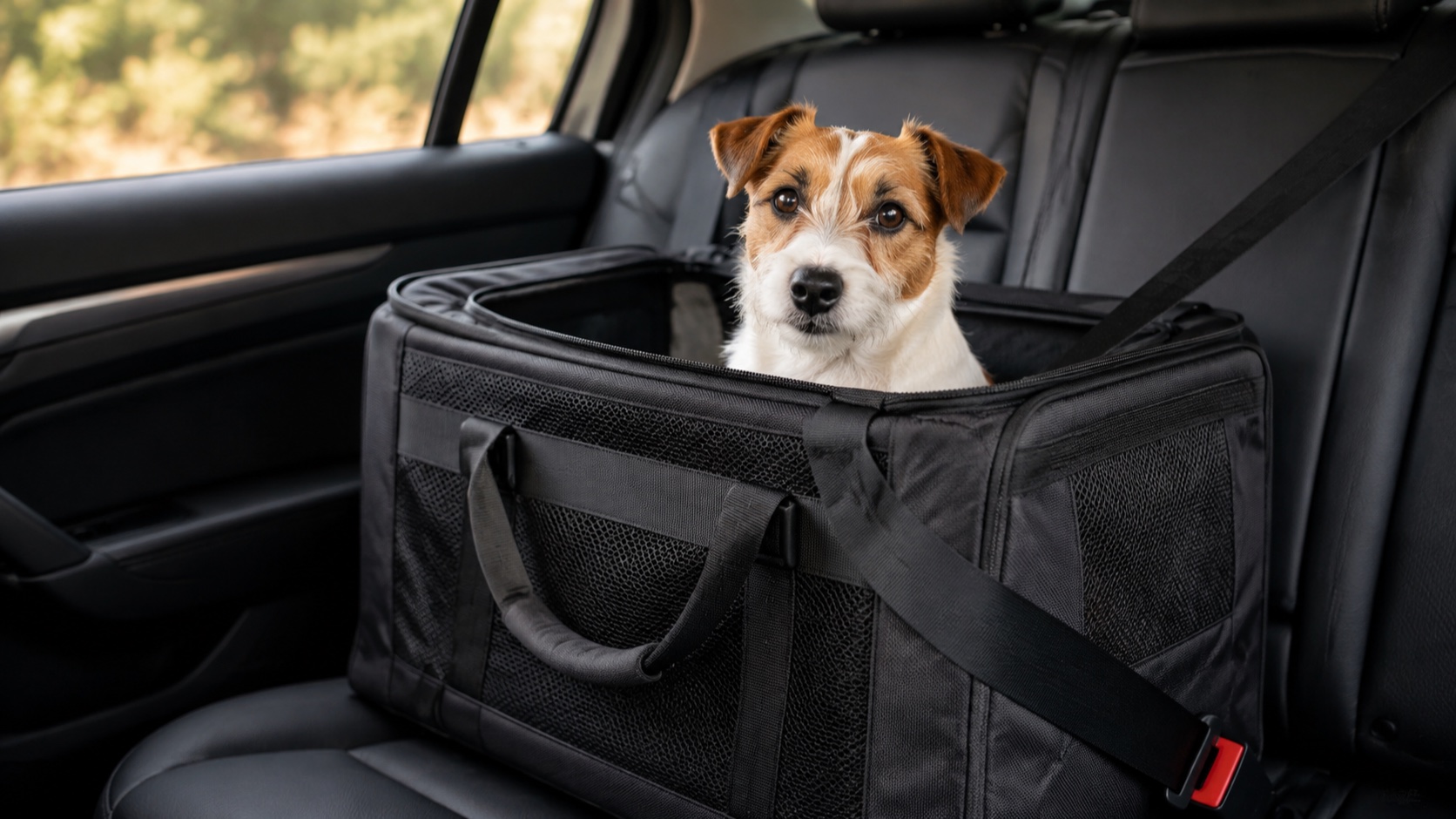
- Then, and only then, pick a bag. After the booking and the measurements exist, look for secure closures, ventilation that still works under a seat, a leak-proof base, and a size your pet can actually use.
Top 7 Pet carrier for airline travel
The picks below are the 7 pet carriers for airline travel on sale right now, listed with what each suits best and an honest drawback. Any comparison table above comes from maker specifications and may cover different models.
1. Airline Approved Pet Carrier
Best for: budget‑friendly cabin travel
We compared this carrier against other mid‑range options and found it hits the sweet spot between price and durability. Owners report it fits comfortably under most seats and holds their pets securely.
Pros: Meets most airline size limits; Affordable yet sturdy Cons: Limited ventilation openings
2. Henkelion Cat Carriers Dog Carrier Pet Carrier for Small / Medium
Best for: small‑to‑medium pets on a budget
Owners report this Henkelion carrier is a go‑to for budget‑conscious travelers with small pets. We compared it to similar low‑cost models and noted its lightweight design makes it easy to lift.
Pros: Very low price; Lightweight and easy to carry Cons: Thin padding may lack comfort
3. Sherpa Original Deluxe Travel Pet Carrier
Best for: durability and comfort seekers
We compared the Sherpa Original Deluxe to other premium soft‑sided carriers and found its hard bottom and mesh windows stand out. Owners say the extra padding keeps their pets calm during flights.
Pros: Durable hard‑bottom; Mesh panels for airflow Cons: Slightly heavier than ultra‑light options
4. LEHNI Soft-Sided Cat/Dog/Pet Carrier
Best for: occasional trips for tiny pets
Owners report the LEHNI carrier works well for quick trips with kittens or tiny dogs. We compared its price and collapsibility to other entry‑level carriers and found it hard to meet tighter airline specs.
Pros: Budget price; Collapsible for storage Cons: May not meet stricter airline dimensions
5. Cat Dog Carriers Soft-Sided Pet Carrier Large Cats for Medium Big Cat
Best for: larger cats or small dogs
We compared this larger soft‑sided carrier to standard models and noted the extra interior space for medium cats or small dogs. Owners appreciate the roomy feel, though some mention it can be a tight fit under the seat.
Pros: Spacious interior; Soft side for comfort Cons: Bulkier shape can be hard to fit under seat
6. Sherpa Delta Airlines Travel Pet Carrier
Best for: Delta flyers needing exact compliance
We compared the Sherpa Delta version to the standard Sherpa and found the Delta‑specific dimensions eliminate guesswork for that airline. Owners report smooth boarding experiences when flying with Delta.
Pros: Delta‑approved dimensions; Ventilated top and side Cons: Only fits pets under 18 lbs
7. SportPet Airline Compliant LARGE 31.5" Travel Dog Kennel- Durable
Best for: large breeds traveling in cabin
We compared the SportPet large kennel to other hard‑case options and found its rigid build offers maximum protection for big breeds. Owners say the weight adds a handling challenge, but the durability is worth it for longer trips.
Pros: Rigid construction protects pet; Spacious for bigger dogs Cons: Heavy and costly
Comparison: Pet carrier for airline travel at a Glance
| Product | Best for | Approx. price | Where to buy |
|---|---|---|---|
| Airline Approved Pet Carrier | budget‑friendly cabin travel | $59.99 | Check price |
| Henkelion Cat Carriers Dog Carrier Pet Carrier for Small / Medium | small‑to‑medium pets on a budget | $25.18 | Check price |
| Sherpa Original Deluxe Travel Pet Carrier | durability and comfort seekers | $49.88 | Check price |
| LEHNI Soft-Sided Cat/Dog/Pet Carrier | occasional trips for tiny pets | $17.99 | Check price |
| Cat Dog Carriers Soft-Sided Pet Carrier Large Cats for Medium Big Cat | larger cats or small dogs | $17.98 | Check price |
| Sherpa Delta Airlines Travel Pet Carrier | Delta flyers needing exact compliance | $49.99 | Check price |
| SportPet Airline Compliant LARGE 31.5" Travel Dog Kennel- Durable | large breeds traveling in cabin | $168.70 | Check price |
Want to browse every option? See the full range of pet carrier for airline travel on Amazon →
What the FAA and IATA actually say
The FAA does not publish a universal cabin-pet inch chart and does not bless brands. From the FAA page, fetched 20 August 2026: if an airline allows cabin pets, the container is carry-on. It must fit under the seat without blocking the aisle; it must be stowed before the last passenger door closes, or the airplane cannot leave the gate; it must stay stowed while the airplane is moving on the airport surface and for takeoff and landing; and you follow crew instructions. Airlines commonly add their own rules on species, cabin counts, a closed-container rule for the entire flight, and a health certificate. Service animals are not pets. Under DOT rules (14 CFR part 382), U.S. airlines must allow service animals in the cabin; they are not required to ride in a container. If the airline does not allow cabin pets, buying a "cabin" bag does not create a cabin slot.
IATA writes standards. It does not run a product-approval shop. The passenger PDF, "Guidance for Passengers Traveling with their Dog or Cat in the Cabin," states this in plain language: IATA does not certify, approve, sell, or otherwise endorse any commercial dog or cat travel or shipping container as compliant with the Live Animals Regulations. It publishes Container Requirement 1. Airlines may reject a container that fails those standards or their own, stricter, policy.
That guidance is cabin-specific. Soft-sided bags may compress to go under a seat — and IATA warns that compressing ventilation openings can reduce airflow and trap heat. The container still needs to be escape-proof and leak-proof, with absorbent bedding. IATA asks whether at least 16 percent of the area on the four vertical sides is set up as ventilation. Dogs and cats must not be taken out during the flight. The container should not be opened in flight. IATA advises against sedation or tranquilization for cabin travel; if a veterinarian directs otherwise, tell the airline. The airline may still refuse the animal. Unweaned animals and animals under 8 weeks must not travel under this guidance; destination governments and airlines may set a higher age. A health certificate is required for international travel and may be time-sensitive.
The IATA Live Animals Regulations 2026 edition is in effect as of 1 January 2026. CR1 is a paid LAR chapter; use IATA’s public passenger PDFs, then the airline’s page. IATA’s CR1 sizing formula is for shipping kennels, not cabin under-seat space. Do not buy a hold kennel and expect it to slide under seat 14C.
One airline, as of today — not a universal table
Airline inch charts on blogs go stale, and they get invented. We are not republishing a seven-airline table. Here is one major U.S. carrier, quoted as an example of how specific and changeable the real rules are.
American Airlines pets page, fetched 20 August 2026 (aa.com traveling with pets): carry-on pets are limited to cats and dogs that meet size, age, and destination rules. The pet stays in the carrier, under the seat, for the entire flight. Soft-sided collapsible kennels are recommended. On that date American published 18 x 11 x 11 inches (46 x 28 x 28 cm) for soft-sided bags on all flights; hard-sided was listed as 19 x 13 x 9 inches on mainline aircraft and 16 x 12 x 8 inches on American Eagle. American also says a soft kennel can be slightly larger but must still fit under the seat without being "excessively" collapsed, and it wants ventilation on three or more sides.
Those numbers are not a world standard, and they are not even a single American standard. Premium cabins on several widebodies have no under-seat storage. Bulkhead and exit-row seats are off limits. As of that fetch, American also bans carry-on pets on some routes (including Hawaii and trans-oceanic trips). The carry-on pet fee listed that day was $150 per kennel, each way, on specified Western Hemisphere itineraries — check the page before you book, and check any "Operated by…" partner separately.
Measure the pet, the bag, and the seat
Measure the pet and the bag on the same day you intend to trust them. IATA’s public CR1 helper measurements are still useful for a cabin bag: length from the tip of the nose to the base of the tail; height from the floor to the top of the head or ear tip, whichever is higher, while standing naturally; width across the shoulders. The animal has to sit, stand, turn, and lie in the closed bag.
Measure the bag’s external length, width, and height empty, then again with the pet inside. Include zipper pulls, rubber feet, and wheels. If the bag is sold as "compressible," compress it the way you will at the seat and check that the mesh is not sealed shut. You will not know the exact seat well until you know the aircraft. When a seat is assigned, look up that family. Do not pick a bulkhead "for extra room"; American, for one, bans cabin pets from bulkheads and exit rows because there is no under-seat stowage. If the animal is too large to sit, stand, turn, and lie in a bag that still fits under the seat, this is not a cabin trip.
Soft, hard, and wheels — honest trade-offs, not a ranking
There is no ranking.
Soft-sided cabin bags are the usual cabin choice because fabric can give a little under a seat. The trade-off is the one IATA flags: that same give can collapse vents. Look for a frame that stays off the animal and mesh that still has an air path when the bag is pushed back. Locking zipper sliders or clips are a feature, not decoration.
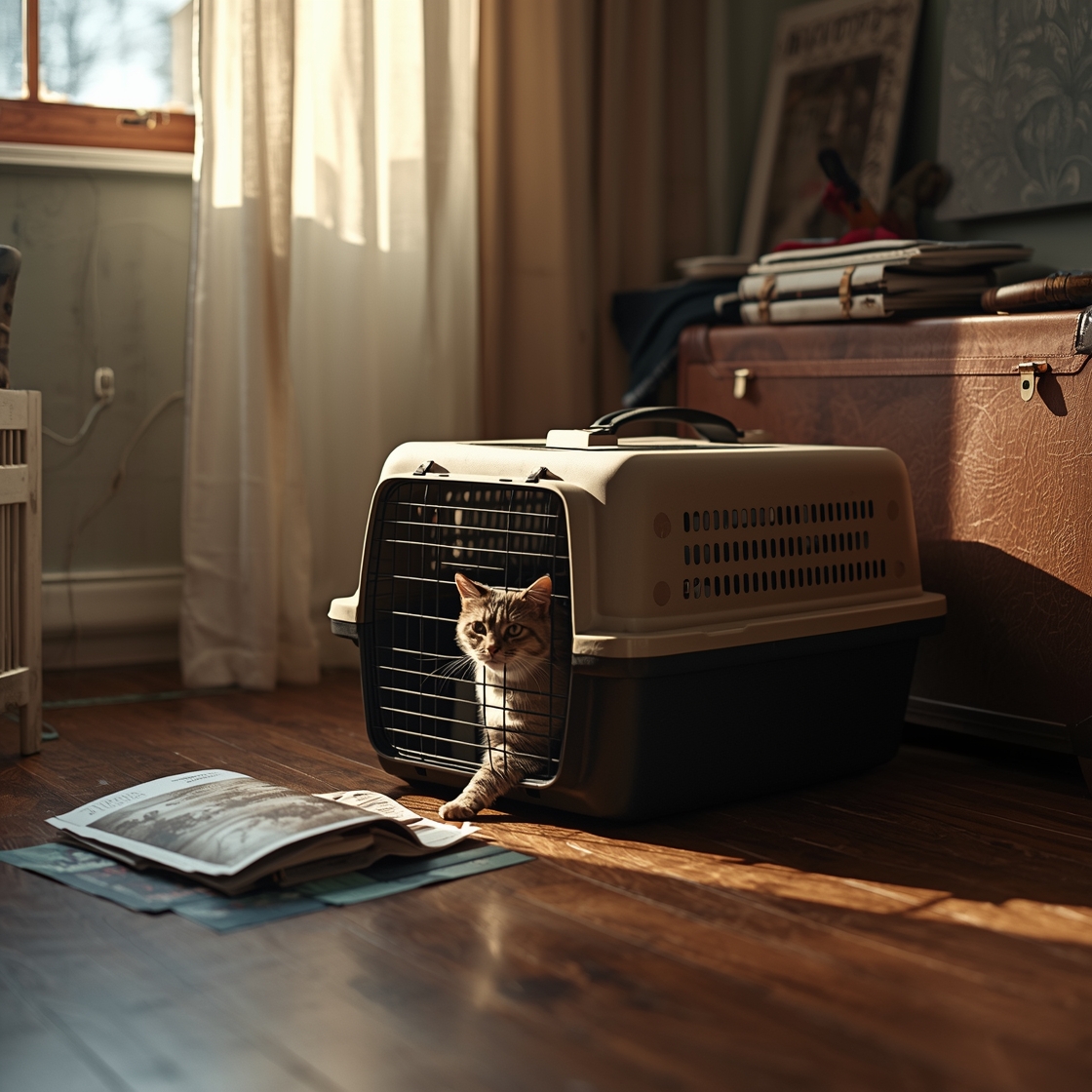
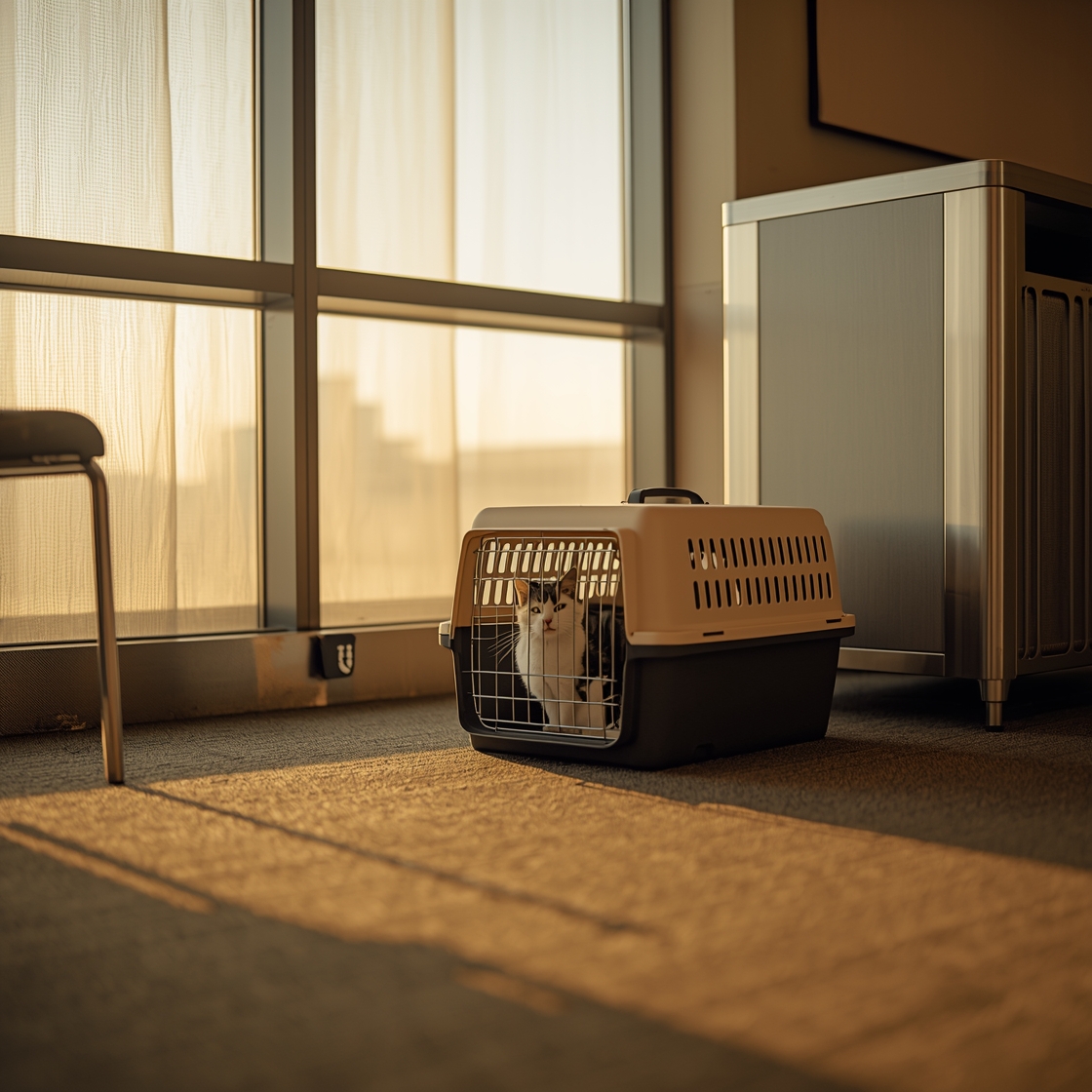
Hard-sided carriers hold shape and are the typical cargo kennel. In the cabin they are less forgiving. If a hard carrier cannot go under the seat without being forced, it is not a cabin carrier on that flight.
Wheels help in the terminal and get in the way at the seat. Assume you may need to lock them or lift the bag off the wheelbase. Cargo-style IATA kennels are a different product. AVMA’s travel brochure describes hold crates as strong hard shells with no wheels, a leak-proof floor, and "Live Animals" labels. Do not buy a rolling suitcase crate and call it a cabin bag. A 42-inch soft-sided crate does not belong in a cabin under-seat list. That is hold-or-home sizing.
Three currently sold cabin bags — manufacturer claims, not airline stickers
These are examples of bags sold as cabin products. Figures below are what the manufacturer published when we fetched the page on 20 August 2026. They are not a finding that the bag "meets United / Delta / American." Confirm the current product page, measure the unit you receive, and compare it to your booked airline and aircraft.
Sleepypod Air (sleepypod.com). Sleepypod describes a crash-tested carrier (Center for Pet Safety — a car-safety claim, not an airline certificate) that compresses under a seat and then expands. The official page we fetched did not print a locked inch set. Sleepypod’s FAQ language says the Air does not hold a reduced shape when free-standing; it springs back unless the seat well holds it. Ask the airline how it treats expandable bags.
Sherpa Original Deluxe (sherpapet.com). Sherpa describes a quilted soft bag with a spring-wire frame that lets the rear be pushed down "several inches," plus mesh, locking zippers, a waterproof base, and a washable liner. Size from the pet’s measurements first, then weight. Its "Guaranteed On Board" program (Sherpa’s GOB page) is a manufacturer refund for domestic USA and Canada flights if boarding is denied because of carrier size, with a long list of voids. Sherpa itself says each airline has its own sizing and that not every GOB size is guaranteed on every airline.
SturdiBag Pro 3.0 (sturdiproducts.com; size chart fetched the same day). Sturdi publishes a flex-height rod design. Manufacturer figures as of 20 August 2026: Small 18 in deep × 10 in wide × 9.25 in high (25 lb chart limit); Medium 15 × 12 × 11.75 in (25 lb); Large 18 × 11.5 × 11.5 in (30 lb). Sturdi’s own copy says the bag is intended for in-cabin travel on most major airlines excluding XL and XXL. Those inches are manufacturer numbers, not a gate measurement.
Related reading on this site (treat any "airline-approved" language the same way you treat it here): the small-dog cabin-carrier guide, the carriers-with-wheels guide after you know the bag still fits under the seat, and the large-breed backpack piece as ground travel, not as a cabin loophole.
Papers, health, and sedation — check the destination
There is no universal "vet visit 48 hours before the flight" rule that we can source as a single requirement. Timing depends on the destination, the airline, and whether you are exporting from the United States.
Leaving the U.S. USDA APHIS is the federal path for pet export paperwork. Contact a USDA-accredited veterinarian as soon as you decide to travel. Destination countries set their own vaccinations, tests, and forms; there is not one global health certificate. If the destination requires USDA endorsement, an accredited veterinarian issues the certificate and APHIS endorses it, often through VEHCS. Start at APHIS Pet Travel.
Bringing a dog into the United States. CDC sets the rules. Requirements depend on where the dog was vaccinated and which countries it visited in the six months before entry. Use CDC’s Dog Importation Navigator (framework dated 1 August 2024; page fetched 20 August 2026). Unvaccinated dogs that have been in a high-risk rabies country in that window are not allowed to enter. Check CDC: Bringing a Dog into the U.S..
Interstate or general air-travel paperwork. AVMA’s travel page and 2023 client brochure say a Certificate of Veterinary Inspection for air travel is typically issued within 10 days before the flight, signed by a federally accredited veterinarian. That is AVMA’s published timing, not a 48-hour rule. AVMA also flags brachycephalic (short-nosed) pets as higher risk for overheating and breathing problems in air travel.
Sedation. Do not dose a pet "to keep them quiet on the plane." AVMA: consult your veterinarian before giving tranquilizers or sedatives; they can increase the risk of heart or respiratory problems and generally are not allowed by airlines. IATA says the same — loss of righting reflex, airway risk, and no reliable way to monitor in flight. American Airlines, citing AVMA, says it does not accept pets that have been sedated or tranquilized.
Pack what AVMA actually lists: proof of rabies vaccination, copies of records, identification, a recent photo, a leash, and a small first-aid kit you already know how to use. IATA suggests a light meal about two hours before crating, water, and a walk before you zip the bag.
TSA’s FAQ, fetched 20 August 2026: take the pet out of the carrier and send the empty carrier through the X-ray. Keep control of the pet on a leash. Never put the pet through the X-ray tunnel. IATA adds that pets stay in the container during taxi, takeoff, landing, and turbulence. If your pet cannot do the flight without being taken out, this is not a cabin-pet itinerary.
Checklist
- Airline policy read on the airline’s site the week you book, and again the week you fly.
- Pet slot confirmed (PETC / "add carry-on pet") on every segment and every operating carrier.
- Seat that actually has an under-seat well — not a bulkhead, not an exit row, not a premium cabin the airline has already banned.
- Bag measured with the pet inside; vents still open when the bag is under a chair.
- Destination rules checked (APHIS out; CDC in, if a dog is entering the U.S.).
- No routine sedation. Ask a veterinarian about fitness to fly, not about a "calm pill for the plane," unless they raise it.
- TSA plan: leash, empty bag on the belt, pet in your hands or on the lead.
Buy the bag last. If the booking or the measurements fail, hire a sitter.
Cabin bags you can actually buy (not an airline-approved ranking)
” Airlines approve a booking, not a brand. IATA does not certify commercial containers. Measure the under-seat well and the bag. Brand names stay plain text.
Sleepypod Air
A rigid-frame cabin bag whose manufacturer page is built around under-seat travel. Use it when you want structure that still compresses a little at the gate.
Sherpa Original Deluxe
The long-running soft-sided tote Sherpa still sells. Use it when you want a fabric bag that can squeeze under a tight seat — then tape-measure it anyway.
SturdiBag Pro 3.0
Sturdi’s current Pro 3.0 soft bag, sold in published sizes on the brand size chart. Use it when you need a named size, not a one-size hangtag.
SOURCES:
- Sleepypod Air — https://sleepypod.com/products/sleepypod-air
- Sherpa Original Deluxe — https://sherpapet.com/products/sherpa-original-deluxe-travel-bag-pet-carrier
- SturdiBag Pro 3.0 — https://sturdiproducts.com/products/sturdibag-pro-luxe
- Sturdi size chart — https://sturdiproducts.com/pages/size-chart
Frequently asked questions
Is there an IATA-approved or FAA-approved pet carrier brand?
No. IATA says it does not certify or endorse commercial containers. The FAA regulates how a cabin pet container is stowed (as carry-on, under 14 CFR 121.589) and leaves cabin-pet acceptance to the airline. "Airline approved" on a hangtag means the brand hopes its published size is close to a policy it read once.
Can I use one bag for cabin and cargo?
Not as a default. Cabin bags compress into a footwell. Hold kennels follow IATA CR1-style rigid, labeled, leak-proof shipping rules. Mixing them is how people arrive with a 42-inch crate at a cabin gate.
What if the gate agent says the bag does not fit?
The agent is applying the airline’s rule and the FAA stowage rule, not your product page. If the bag does not go under the seat without blocking the aisle, it does not go. Manufacturer "guaranteed on board" programs are refund schemes with conditions — not boarding rights.
Do I need a health certificate 48 hours before departure?
Not as a universal rule we can cite. AVMA commonly cites a CVI within 10 days before air travel. APHIS and the destination country set export timing. CDC sets the rules for dogs entering the United States.
SOURCES:
- FAA, Flying with Pets — https://www.faa.gov/travelers/fly_pets
- IATA, Guidance for Passengers Traveling with their Dog or Cat in the Cabin — https://www.iata.org/contentassets/78c1f1c145024ec088aaf10abdd4dd6a/guidance_for_passengers_traveling_with_their_dog_or_cat_in_the_cabin_final.pdf
- IATA, Operational Guidelines for In-Cabin Pet Transport (Edition 1, 15 July 2026) — https://www.iata.org/contentassets/d7c512eb9a704ba2a8056e3186a31921/operational_guidelines_for_in_cabin_pet_transport.pdf
- IATA, Traveler’s Pet Corner — https://www.iata.org/en/programs/cargo/live-animals/pets/
- IATA, Live Animals programme (LAR 2026 effective 1 January 2026) — https://www.iata.org/en/programs/cargo/live-animals/
- American Airlines, Traveling with pets (fetched 20 August 2026) — https://www.aa.com/i18n/travel-info/special-assistance/pets.jsp
- TSA, Can I take my pet through the security checkpoint? — https://www.tsa.gov/travel/frequently-asked-questions/can-i-take-my-pet-through-security-checkpoint
- AVMA, Traveling with your dog or cat — https://www.avma.org/resources-tools/pet-owners/petcare/animal-travel-certificates-regulations-requirements/traveling-your-dog-cat
- AVMA, Traveling With Your Pet client brochure (2023) — https://ebusiness.avma.org/files/ProductDownloads/mcm-client-brochures-travel-with-pet-2023.pdf
- CDC, Bringing a Dog into the U.S. — https://www.cdc.gov/importation/dogs/
- USDA APHIS, Pet Travel — https://www.aphis.usda.gov/pet-travel
- USDA APHIS, Pet Travel Process Overview — https://www.aphis.usda.gov/pet-travel/pet-travel-process-overview
- Sleepypod Air product page — https://sleepypod.com/products/sleepypod-air
- Sherpa Original Deluxe product page — https://sherpapet.com/products/sherpa-original-deluxe-travel-bag-pet-carrier
- Sherpa Guaranteed On-Board programme — https://sherpapet.com/guaranteed-on-board
- SturdiBag Pro 3.0 product page — https://sturdiproducts.com/products/sturdibag-pro-luxe
- Sturdi Products size chart — https://sturdiproducts.com/pages/size-chart
Airline Dimension Desk: Best Pet Carrier for Airline Travel
| Carrier type | Typical max | Weight cap | Vent rule |
|---|---|---|---|
| Soft under-seat | 18×11×11 in | 15–20 lb pet | 3 mesh sides |
| Hard cabin | 17×10×10 in | 15–20 lb | Vent holes |
| Cargo hold | IATA CR82 large | Airline specific | Metal door |
Always verify your operating carrier's pet addendum—United/Delta/American dims differ by aircraft bin.
Best Pet Carrier for Airline Travel — Prep Timeline
| Before flight | Task | Document | Fail at gate |
|---|---|---|---|
| 30 days | Vet health cert | USDA if intl | Expired cert |
| 7 days | Acclimate in carrier | — | Panic vocalize |
| 24 hr | Light meal | Absorbent pad | Soiled liner |
| 2 hr | Exercise + potty | — | Accidents |
Sedation discouraged by IATA themes—exercise and familiar shirt in liner beat pharma for most cabin pets.
Additional Guidance on Best Pet Carrier For Airline Travel
Our research desk compiled this section from manufacturer specifications, published welfare guidance, and recurring owner themes or veterinary endorsement. Adjust any routine to your individual pet's health history with professional guidance when symptoms appear.
Practical monitoring beats guesswork: note appetite, stool quality, energy level, and behavior changes whenever you adjust food, housing, or care tools. Reversible trials with one variable at a time make cause and effect clearer than changing multiple products simultaneously.