The best pet hair remover is the surface class that matches the fabric in front of you — reusable roller on upholstery, lint sheets on clothes, mini tool in a car, carpet rake on pile, handheld vac in crevices — not one hero SKU, and not a grooming glove you use as a sofa brush. The We read the titles and descriptions of 7 SKUs. Listed snapshots ran $7.99–$25.19 (median $13.88, a 3.2× spread). 1 of 7 is a reusable chamber roller (ChomChom $24.99). 1 of 7 is a 450-sheet lint set (PetLovers $9.98). 1 of 7 is an on-pet glove (Pet Hair Removal Glove $14.44) — wrong object for furniture. 1 of 7 is a handheld vac (BLACK+DECKER $13.88). 1 of 7 is a car mini (Analan $12.74). 1 of 7 is a carpet rake ($25.19). 1 of 7 is a 3-pack mini (Qbily 2nd Gen $7.99). Carpet rake $25.19 is $0.20 above ChomChom $24.99 — different surfaces. That SKU is not on these cards.
Buy the surface. A $8 three-pack in the car beats a $25 rake you leave in the hall closet. A $14 glove on a microfiber sofa is how people pill fabric.
Our guides are reader-supported. This article may contain affiliate links. As an Amazon Associate we may earn a commission if you buy through links, at no extra cost to you.
Related: grooming vacuums, short-hair gloves, couch covers, double-coat brushes, grooming wipes.
Quick picks at a glance
- Best listed cheapest 3-pack mini: Qbily Pet Hair Remover 2nd Gen (3 Pack) — $7.99. Car / drawer. Small head.
- Best listed cheapest sheet pack: PetLovers Extra Sticky Lint Roller Mega Value Set 450 Sheets — $9.98. Clothes. Consumable.
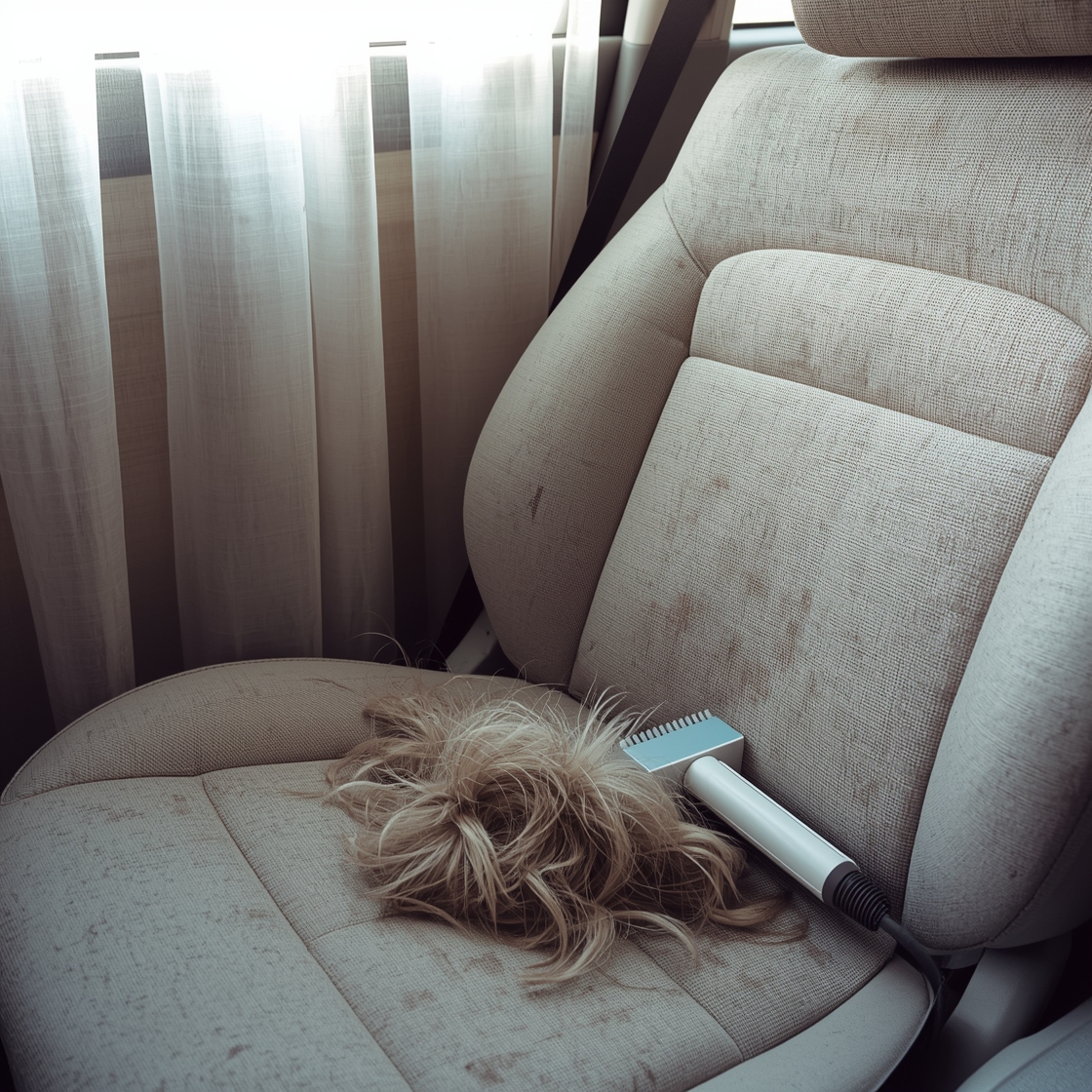
- Best listed car mini: Analan Mini Pet Hair Remover for Car Detailing — $12.74. Auto fabric. Not a room rake.
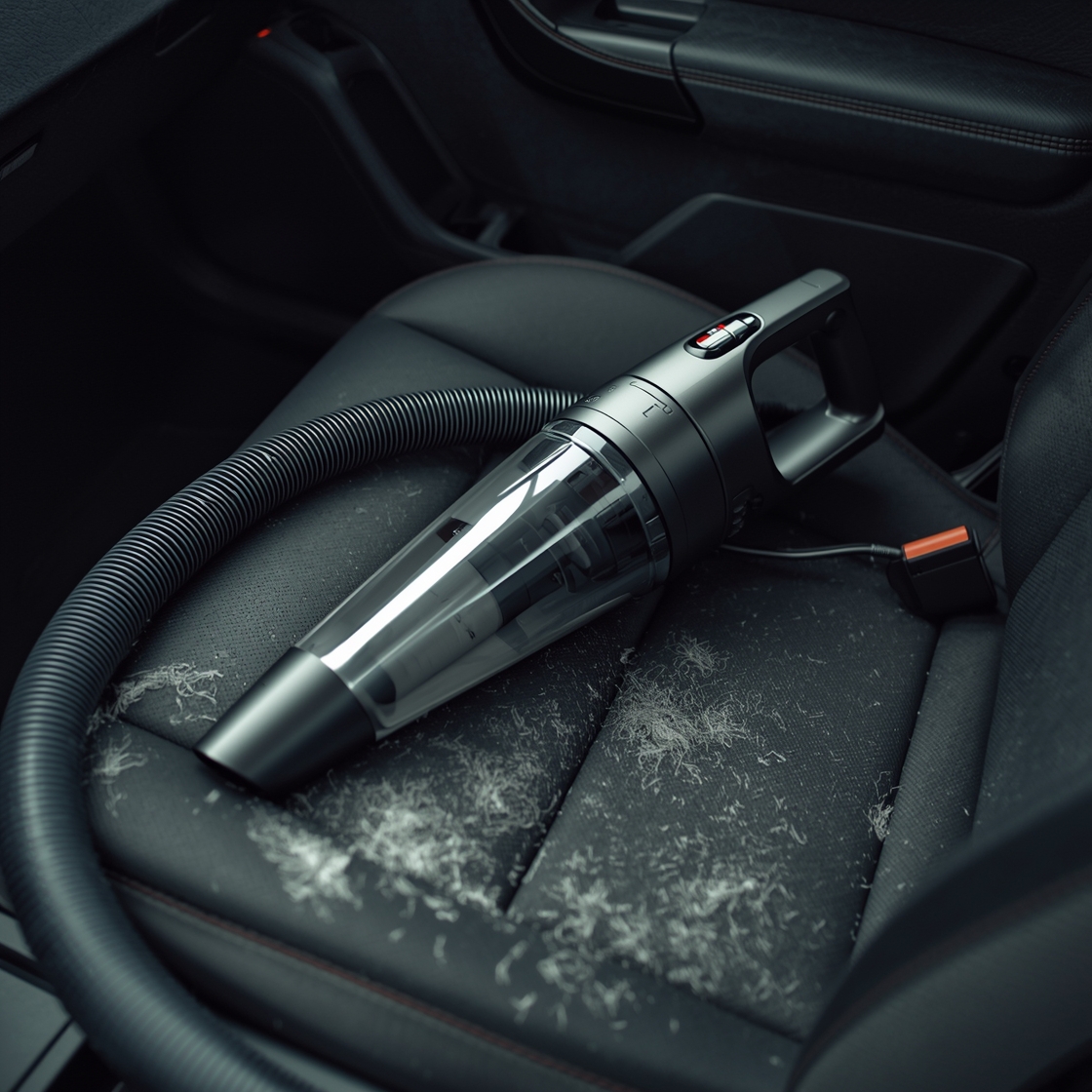
- Best listed handheld vac: BLACK+DECKER Pet Hair Remover — $13.88. Crevices. Batteries / charge are the tax.
- Wrong object for sofas: Pet Hair Removal Glove Cat & Dog — $14.44. On-pet class. Use it on the animal.
- Best listed reusable roller: ChomChom Roller Pet Hair Remover — $24.99. Furniture chamber. Not wet hair.
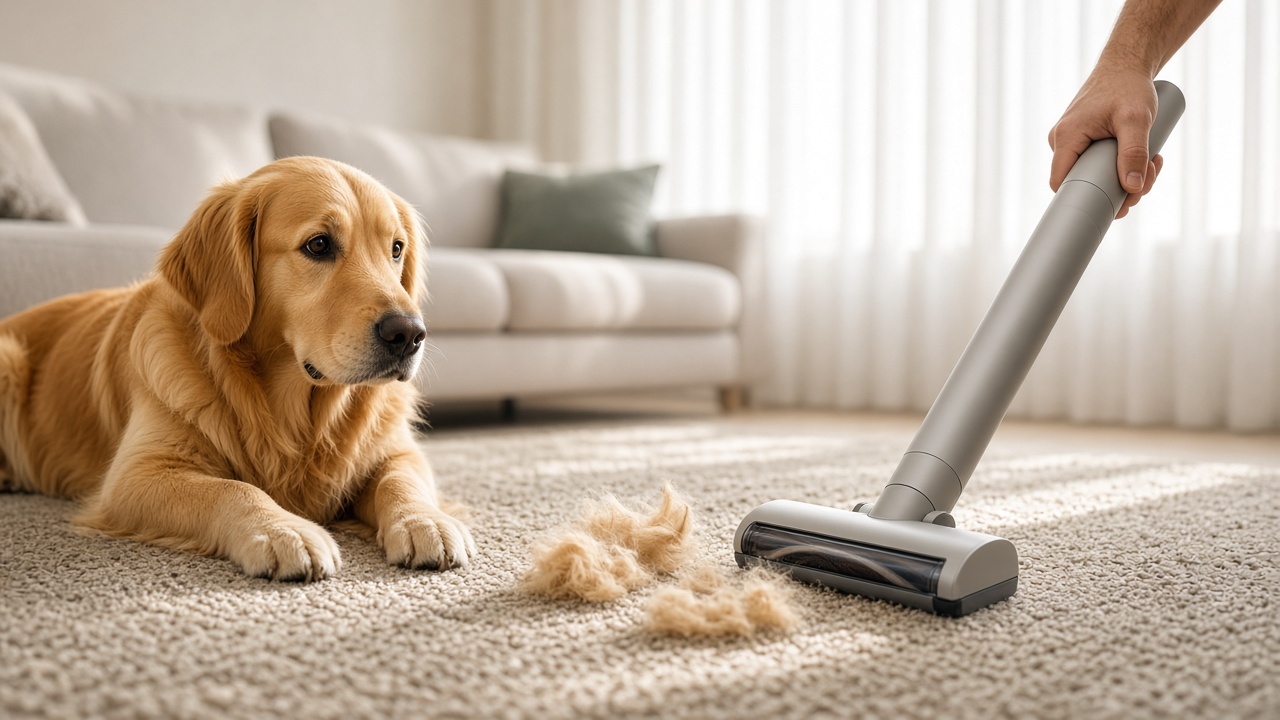
- Best listed carpet rake: Carpet Rake for Pet Hair Removal Tool — $25.19. Pile. Highest sticker. $0.20 over ChomChom.
How surface job listings compare on labels
Four jobs. A $25 rake on a silk pillow is a snag. A $10 lint roller on a shag rug is a week of sheets.
| Job | What actually works | Category | Fail if you skip it |
|---|---|---|---|
| Couch / car seats (dry hair) | Reusable chamber or rubber-style mini | ChomChom $24.99; Qbily $7.99; Analan $12.74 | Wet hair; delicate weave at full pressure |
| Clothes / lint | Sticky sheets | PetLovers $9.98 | Using the last sheet on a carpet |
| Carpet / rug pile | Carpet rake, then a floor vac | Rake $25.19 | Raking a loop rug you love |
| Crevice / crumbs + hair | Handheld vac | BLACK+DECKER $13.88 | Expecting it to replace a canister |
| Loose hair on the pet | Glove | Glove $14.44 | Using the glove as a sofa tool |
Before you shop: (1) you can name the surface (upholstery, clothes, carpet, car, pet) before you name the SKU, (2) wet hair waits until it is dry — sticky rollers gum, (3) a fabric you cannot replace (silk, some velvets, loop wool) gets a test pass in a hidden corner, (4) the glove stays on the animal. Fail gate 1 and this checklist is how you shop past a return.
Fur‑Zoff is not in the seven cards. Handheld-vac “motorized brush head” language in the old FAQ described a class these cards do not prove. BLACK+DECKER $13.88 is a compact remover — confirm the current listing for a motorized head. We will not invent one.
What the best pet hair remover can and cannot do
A good remover lifts dry, loose hair from one class of surface. It does not stop shedding. It does not replace a grooming vacuum on the dog. It does not make ChomChom $24.99 safe on every delicate weave. It does not make PetLovers $9.98 cheaper than a reusable roller if you throw sheets at a sofa every night.
Shedding is a coat-and-season problem. The furniture tool is the last mile. A couch cover is how some houses skip a daily roller. That is a different URL.
We only recommend matching class to the room. We are not saying we raked seven carpets.
Disclosure: this article contains affiliate links. If you buy through them we may earn a commission at no extra cost to you.
How the desk scored the best pet hair remover
this comparison uses four visible signals plus the listed sticker:
- Class. Reusable roller / lint sheets / glove / handheld vac / car mini / carpet rake / 3-pack mini.
- Consumable vs keep. PetLovers $9.98 is sheets. ChomChom $24.99 is a chamber.
- Wrong-object honesty. $14.44 glove is on-pet.
- $0.20 pair. Rake $25.19 vs ChomChom $24.99 is a surface choice, not a quality trophy.
Price is not a “actually works” grade. Qbily $7.99 you keep in the cup holder beats ChomChom $24.99 you leave upstairs.
Want current listings? See pet hair removers on Amazon →
How these products compare on labels and price
| Tool (this URL) | Listed price | Class | Honest limit |
|---|---|---|---|
| Qbily 2nd Gen 3-pack | $7.99 | Mini reusable (3) | Small head; car / drawer |
| PetLovers 450-sheet set | $9.98 | Sticky lint sheets | Consumable; clothes-first |
| Analan mini car tool | $12.74 | Car detailing mini | Auto fabric; not a room rake |
| BLACK+DECKER remover | $13.88 | Handheld vac class | Crevice; power tax |
| Pet Hair Removal Glove | $14.44 | On-pet glove | Wrong object for sofas |
| ChomChom roller | $24.99 | Reusable chamber | Furniture; not wet hair |
| Carpet rake | $25.19 | Carpet / pile | Highest; loops can snag |
Desk surface math: Qbily $7.99 + PetLovers $9.98 + Analan $12.74 = $30.71 — $5.72 over ChomChom $24.99, and you have three places (drawer, clothes, car) instead of one furniture roller. ChomChom $24.99 + rake $25.19 = $50.18 — sofa class plus carpet class. Glove $14.44 + BLACK+DECKER $13.88 = $28.32 — pet plus crevice, still no carpet rake. Do not buy the glove as the sofa tool.
The 7 cards on this URL
1. ChomChom Roller Pet Hair Remover
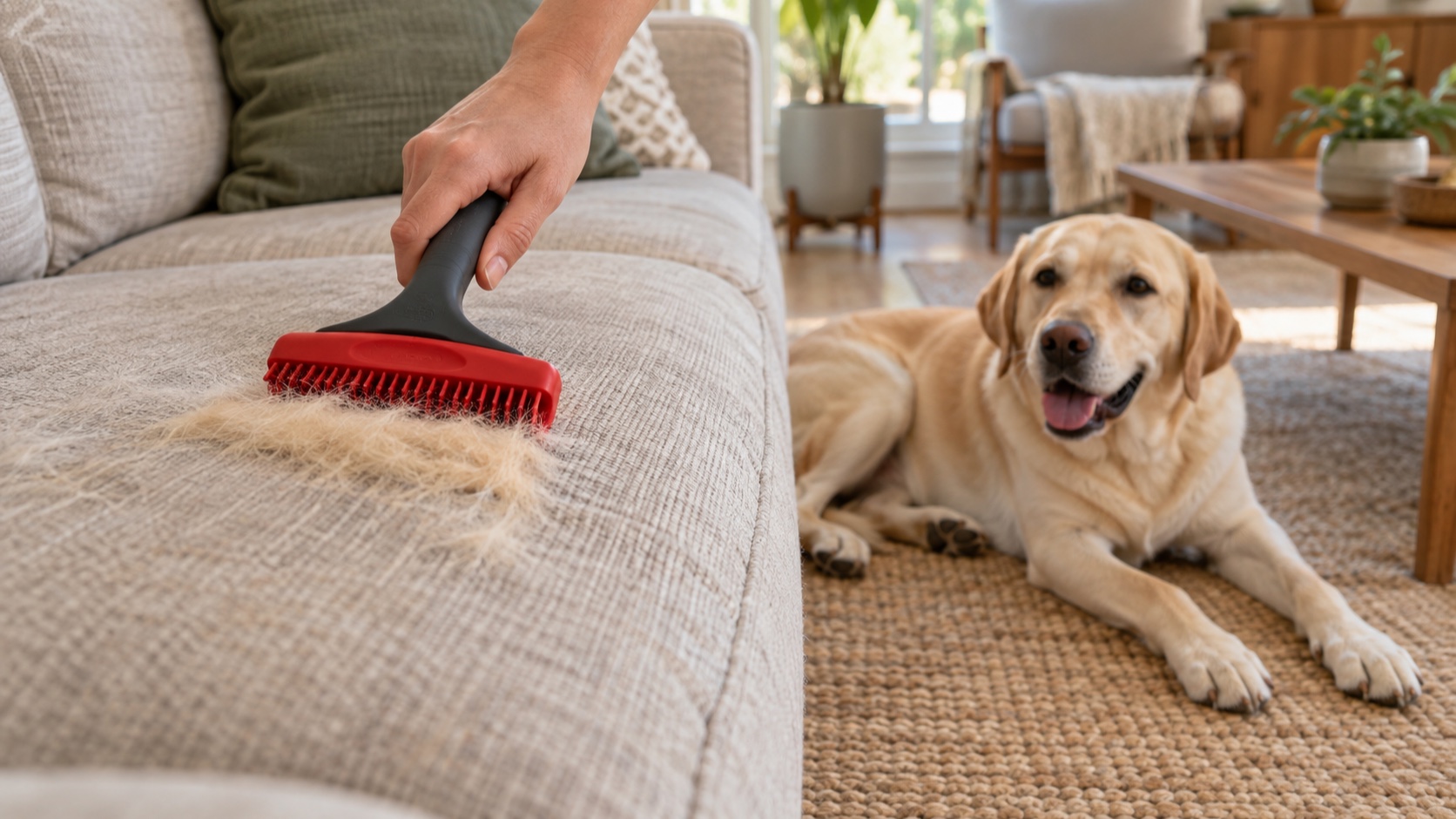
Best for: a reusable chamber roller on dry upholstery and car seats when you do not want to buy sheets every month.
Listed $24.99. Chamber class. Back-and-forth motion is the listing story. No tape is the owner cluster.
Honest drawback: not a wet-hair tool. Not a delicate-silk default. Empty the chamber or you paint hair back on. $0.20 cheaper than the carpet rake — different job. If your only problem is a rug, the rake $25.19 is the listing pick.
2. Pet Hair Removal Glove Cat & Dog
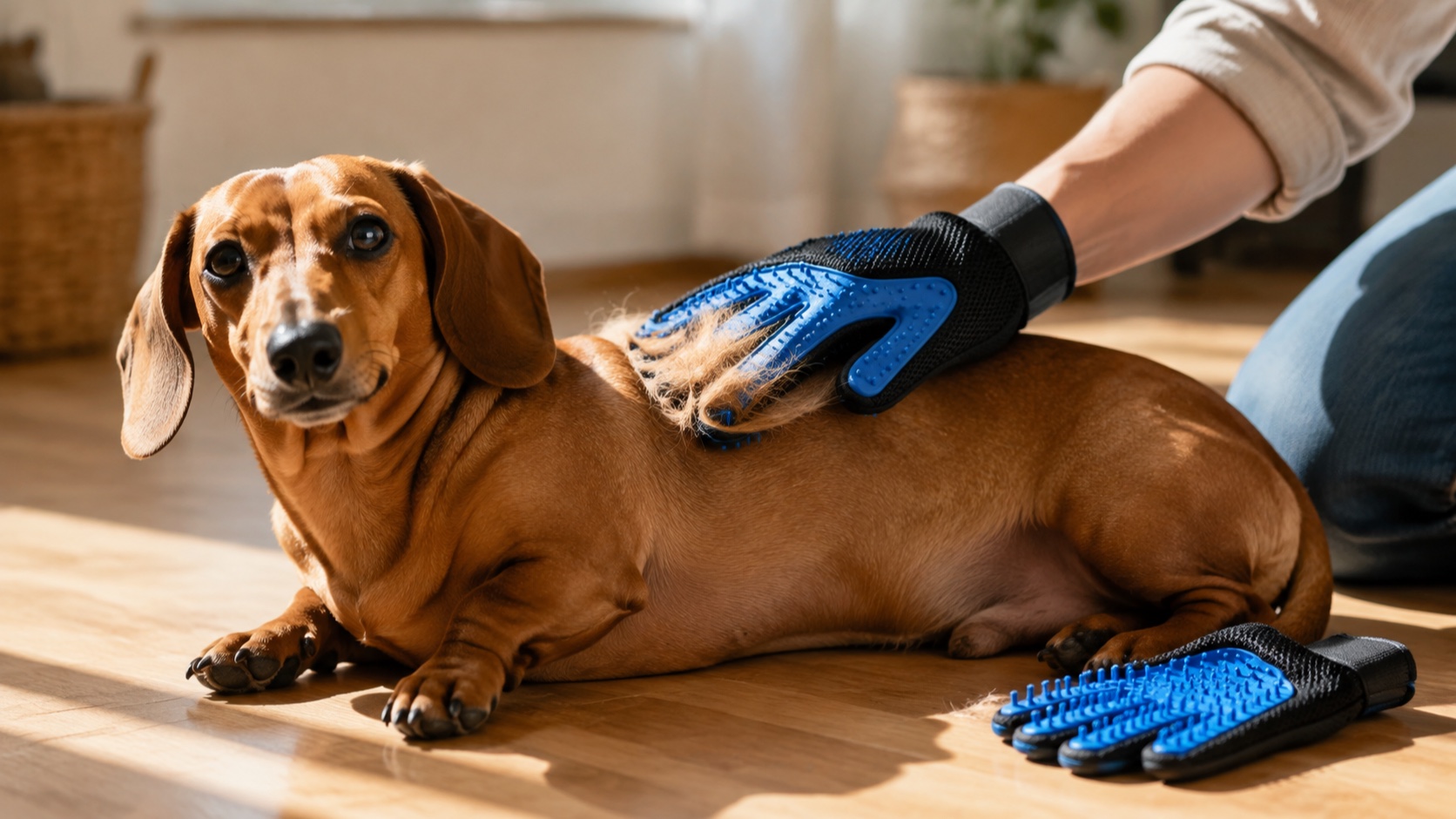
Best for: lifting loose hair on the pet as a daily mitt — not as a furniture brush.
Listed $14.44. On-pet class. Dual-sided language is a listing cluster. Same object family as short-hair gloves.
Honest drawback: hair on the nubs is a peel job. Using this on a sofa is how microfiber pills. If the keyword that brought you here is furniture, skip this card. If the keyword is the dog, this is the only on-animal tool on this URL.
3. BLACK+DECKER Pet Hair Remover
Best for: crumbs-plus-hair in crevices, car tracks, and stairs when a compact vac is the object you will actually grab.
Listed $13.88. Handheld vac class. Portability is the owner cluster. Battery or cord — confirm the current listing.
Honest drawback: compact cups fill fast. This is not a canister on a golden retriever’s living room. Motorized-head language from the old FAQ is not a spec we will assert. If the listing shows a motorized brush, that is the listing. If it does not, it does not.
4. PetLovers Extra Sticky Lint Roller Mega Value Set 450 Sheets for Pet
Best for: clothes, backpacks, and a quick furniture touch when you want a consumable sheet count in the title.
Listed $9.98. 450 sheets in the title. Mega Value is marketing. Extra Sticky is a title.
Honest drawback: sheets are a budget you refill. If you roller the sofa every night, ChomChom $24.99 is the Index math. If you roller a black sweater twice a week, 450 sheets is a long runway — we will not invent a weeks-to-empty number because we do not know your sheet size or how many you burn per pass.
5. Analan Mini Pet Hair Remover for Car Detailing Dog Hair Tool
Best for: car seats, consoles, and the gap the household rake will not fit.
Listed $12.74. Car class. Detailing is the title story.
Honest drawback: a mini head on a living-room sectional is a long afternoon. Keep it in the car. Qbily $7.99 is the cheaper multi-pack cousin — pick one mini class unless you have two vehicles.
6. Carpet Rake for Pet Hair Removal Tool
Best for: pile carpet and rugs when you will rake then vacuum the windrows.
Listed $25.19. Highest sticker. Rake class.
Honest drawback: loop rugs and delicate weaves can snag. A hidden-corner test is free. This is not ChomChom $24.99 with a longer handle. Hair you rake still needs a floor vac. If you will not vacuum after, you have arranged hair.
7. Qbily Pet Hair Remover 2nd Gen (3 Pack)
Best for: three small reusable heads — car, desk, guest room — at the lowest sticker.
Listed $7.99. 3-pack. “2nd Gen” is a name.
Honest drawback: small heads. A sectional is a lot of $7.99 passes. That is why ChomChom $24.99 exists. Use Qbily where a large roller does not live. Three packs in one room is still one job.
Consumable vs keep for the best pet hair remover
| Pattern | SKUs | Listed sum | When it wins |
|---|---|---|---|
| Clothes-only | PetLovers $9.98 | $9.98 | Sweaters, not sofas |
| Car-only | Analan $12.74 or Qbily $7.99 | $7.99–$12.74 | One vehicle |
| Sofa-only | ChomChom $24.99 | $24.99 | Daily dry upholstery |
| Carpet-only | Rake $25.19 | $25.19 | Then a floor vac |
| Crevice-only | BLACK+DECKER $13.88 | $13.88 | Stairs / tracks |
| Pet-only | Glove $14.44 | $14.44 | On the animal |
| House split | ChomChom $24.99 + rake $25.19 | $50.18 | Sofa + carpet |
| Travel split | Qbily $7.99 + PetLovers $9.98 | $17.97 | Bag + car |
Before you shop: if you are on your third PetLovers $9.98 set this quarter for the sofa, you are using a clothes tool as a furniture tool. Switch the sofa to ChomChom $24.99. Keep sheets for fabric you wear.
Surfaces vs these seven cards
Microfiber sofa. ChomChom $24.99, light. Test a corner. Glove $14.44 stays off.
Leather. Rubber-style minis (Qbily $7.99, Analan $12.74) or a barely-damp cloth your furniture maker allows. Sticky sheets can leave residue — check PetLovers $9.98 on a hidden patch.
Clothes. PetLovers $9.98.
Cut-pile carpet. Rake $25.19, then vac.
Loop / shag you love. Hidden-corner test or skip the rake. BLACK+DECKER $13.88 on top, not a violent rake.
Car cloth seats. Analan $12.74 or Qbily $7.99. ChomChom $24.99 if you will carry it out.
The pet. Glove $14.44. Then a brush if the coat needs it.
Home sequence (desk, not a lesson)
- Dry hair only for rollers and sheets.
- Pet first (glove $14.44) if the dog is in the room — less hair lands later.
- Sofa (ChomChom $24.99). Empty the chamber.
- Carpet (rake $25.19) then floor vac.
- Stairs / crumbs (BLACK+DECKER $13.88).
- Clothes (PetLovers $9.98) last so you do not wear the sofa.
- Car (Analan $12.74 or Qbily $7.99) before the next ride.
A couch cover changes how often you need step 3.
Label math examples (desk arithmetic)
ChomChom $24.99 − Qbily $7.99 = $17.00. Seventeen dollars is the larger furniture head.
Rake $25.19 − ChomChom $24.99 = $0.20. Twenty cents is not a quality grade. It is pile vs upholstery.
PetLovers $9.98 × 3 = $29.94. Three sheet sets pass one ChomChom. If that happens in a few months on the sofa, you bought the wrong class.
Glove $14.44 + ChomChom $24.99 = $39.43. Pet plus sofa. That pair matches how hair actually moves.
BLACK+DECKER $13.88 + Analan $12.74 = $26.62. Crevice plus car — still no carpet rake.
Wet hair, laundry, and why rollers fail
Wet hair binds. ChomChom $24.99 and PetLovers $9.98 gum. Towel the dog. Wait. Then the checklist. A wipe on paws at the door cuts the next sofa load. It is not a hair remover.
Laundry: hair in the washer is a different machine. These seven cards are dry-surface tools.
When to stop and change the house, not the SKU
- You are buying PetLovers $9.98 monthly for the couch.
- The rake $25.19 is snagging a rug you cannot replace.
- The dog lives on the sofa and you refuse a cover.
- Shedding is sudden, clumpy, or paired with skin changes — that is a clinic, not a firmer rake.
A remover does not treat Cushing’s or allergy. Qbily $7.99 does not diagnose.
Frequently asked questions about the best pet hair remover
Does the best pet hair remover work on wet hair?
Not these classes. Wait until dry. ChomChom $24.99 and PetLovers $9.98 gum. BLACK+DECKER $13.88 on wet hair is a mess in a small cup. Towel first.
What is the best pet hair remover for furniture?
Name the fabric. Dry microfiber / cloth: ChomChom $24.99. Leather: a mini (Qbily $7.99 or Analan $12.74) after a hidden-patch test. Delicate silk: maybe none of these — a cover or a professional cleaner. The glove $14.44 is not a furniture answer. Fur‑Zoff is not on this card set.
How often should I use a pet hair remover on furniture?
When you see hair you will sit in. Daily in shed season is common. A cover cuts frequency. ” Carpet rake $25.19 is a weekly-or-when-you-vacuum tool, not a 6 a.m. ritual unless you like windrows.
Can the same remover be used on both upholstery and carpet?
Poorly. ChomChom $24.99 is furniture-scale. The rake $25.19 is pile. Qbily $7.99 can dab both in a pinch and will take forever. Buy the $0.20 pair if you have both surfaces.
Are sticky rollers safe for delicate fabrics like silk or velvet?
Default: test a hidden corner or skip. PetLovers $9.98 can pull fibers or leave adhesive. Velvet direction matters. If the fabric is irreplaceable, a cover or a pro is cheaper than a pulled loop.
Do pet hair removers work on car interiors as well?
Yes — that is Analan $12.74 and Qbily $7.99. ChomChom $24.99 works if you will carry it. BLACK+DECKER $13.88 helps tracks. Do not rake a headliner with the $25.19 carpet rake.
Should I use the grooming glove on the couch?
No. Glove $14.44 is on-pet. Nubs plus sofa weave is a pill story. Use ChomChom $24.99 on the couch.
Aftercare once the pass is done
Empty ChomChom $24.99 into a bin, not the wind. Empty BLACK+DECKER $13.88 before the cup packs. Peel PetLovers $9.98 sheets into the trash, not the recycling if they are plastic-backed — check your local rules. Rinse a rubber mini (Qbily / Analan) if the listing allows; dry before the next pass.
What “2nd Gen” and “Mega Value” on a $8–$10 card mean
Copywriters typed them. Qbily $7.99 and PetLovers $9.98 share the adjective energy. Believe the class and the surface, not the generation number.
Inventory calendar (desk method, not a lab)
January: restock PetLovers $9.98 after holiday black clothes. June: check rake $25.19 teeth before shed season — a bent tooth snags. October: put Qbily $7.99 back in the car before muddy season. Photograph the drawer. That is the only “trial” this desk will endorse — a camera and a date.
Multi-pet homes and the $50 pair
Two shedders: ChomChom $24.99 on the sofa plus rake $25.19 on the rug = $50.18. Add glove $14.44 on the animals so less hair lands. That is $64.62 — still less than a flagship grooming vac if your job is furniture, not on-dog capture.
Two cars: Qbily $7.99 (three heads) can split. Analan $12.74 in the one you drive daily.
Kids, sitters, and the note on the fridge
A sitter should know: ChomChom $24.99 is the sofa, PetLovers $9.98 is clothes, the glove $14.44 is the dog, and the rake $25.19 is not a toy sword. A photo of the two furniture tools on their phone is the backup.
Rescue coats and the first 72 hours
A new dog who is blowing coat is a brush-and-clinic question more often than a $25 rake project. You do not know the skin. Furniture tools wait until the dog is settled enough that you are not chasing hair and a hiding animal.
Breed-adjacent honesty (not a textile standard)
Husky / Malamute. Rake $25.19 plus a floor vac. ChomChom $24.99 daily on the sofa. Glove $14.44 does not replace an undercoat rake on the dog.
Poodle mix. Less flying hair, more furniture grease. Wipes and covers may matter more than Qbily $7.99.
Cat (longhair). Same surface classes. Glove $14.44 if the cat accepts it. Barbs on a carpet rake vs a cat on the rug is a timing problem — rake when the cat is elsewhere.
Short coat / pit / beagle. Less volume. PetLovers $9.98 and Qbily $7.99 may be enough. Skip the $50 pair until you see the need.
Rentals, deposits, and the $25 rake
A carpet rake $25.19 plus a real vacuum is how people leave a deposit conversation. It is not a steam-cleaner. If the lease forbids certain tools, believe the lease.
Stairs, runners, and the rake that does not fit a tread
Carpet rake $25.19 on a narrow stair runner is a fight. BLACK+DECKER $13.88 or Qbily $7.99 on the tread, rake on the landing. A runner you love may be a loop — hidden-corner test or skip the rake.
ChomChom $24.99 on stair fabric works if the head fits. If it does not, Analan $12.74 is the smaller cousin. Do not invent a stair-certified rake. None of these seven cards print one.
Office chairs, mesh, and the $10 sheet
Mesh task chairs catch hair in a grid. PetLovers $9.98 can stick to mesh and lift a weave. Qbily $7.99 or a vacuum crevice (BLACK+DECKER $13.88) is the calmer class. Test a corner.
A leather office chair is the same leather rule as the sofa: residue from sticky sheets, rubber mini after a patch test.
Theater seats, Airbnbs, and the tool you pack
Qbily $7.99 three-pack: one in the bag, one in the car, one at home. PetLovers $9.98 for the black dress. You will not pack ChomChom $24.99 plus rake $25.19 for a weekend. A host’s white couch is a cover conversation, not a $50 pair you ship.
If you are the host, a visible ChomChom $24.99 on the coffee table is how guests help. A rake $25.19 in a closet helps nobody at checkout.
Static, winter, and why hair jumps back
Dry winter air puts hair back on the pant leg you just rolled. PetLovers $9.98 is a second pass, not a failure of the first. A humidifier is a house tool, not a SKU on this URL. ChomChom $24.99 on a charged sofa still needs a second pass.
Dark clothes, lint, and the sheet you waste on a sofa
Black wool is why PetLovers $9.98 exists. Using those sheets on the sectional because the ChomChom $24.99 is upstairs is how 450 sheets disappear. Walk upstairs. Or keep Qbily $7.99 on the sofa table as the emergency head.
Bedding, crates, and the tool that is not a washer
Crate pads and dog beds are laundry first. ChomChom $24.99 on a fuzzy bed is a long afternoon. Shake outside. Wash. The rake $25.19 is for your carpet, not a stuffed orthopedic bed you will wreck.
BLACK+DECKER $13.88 on a crate tray helps kibble-plus-hair. Empty the cup. Food in a hair chamber is how tools smell.
PetLovers $9.98 on a fleece throw you wash weekly is wasted sheets. Wash the throw.
Patios, outdoor fabric, and rain
Outdoor cushions hold hair in a different weave. Qbily $7.99 after the cushion is dry. A wet outdoor sofa plus ChomChom $24.99 is the wet-hair rule again. Rain then sun then a pass. The carpet rake $25.19 on outdoor carpet: hidden-corner test — UV-aged fibers snap.
Analan $12.74 is still a car mini. A patio is not a car. Use Qbily if you need a small head outdoors.
Closets, wool coats, and the sheet you save
PetLovers $9.98 belongs on the wool coat, not on the hallway runner. A lint roller in the front closet is how people leave the house clean. ChomChom $24.99 does not live in a coat closet — it is too big and it is a sofa tool. Qbily $7.99 can hide on a closet shelf for a last-second hat.
Moths and hair are different problems. These seven cards do not treat moths. Cedar and cleaning are a different aisle.
Garage workshops and the magnet that is not on this URL
Sawdust plus dog hair is a BLACK+DECKER $13.88 cup you will hate. Empty it outside. The carpet rake $25.19 is not a shop broom. A real broom plus a shop vac (not a pet grooming vac) is the garage job. Do not drag FurMe-class hoses from the other URL into sawdust — different article, same clog physics.
What this URL is not
It is not a ranking of “5 removers that actually work” with Fur‑Zoff invented in the lead. It is not a 90% capture paper. It is not a claim that we emptied seven chambers. It is seven cards, five furniture/car/clothes classes, one on-pet glove, and a gate that says name the surface.
The useful best pet hair remover is still ChomChom $24.99 for dry sofas, PetLovers $9.98 for clothes, Analan $12.74 or Qbily $7.99 for the car, BLACK+DECKER $13.88 for crevices, the carpet rake $25.19 for pile, and the glove $14.44 only on the pet. Then dry hair only. Then stop when the fabric is wrong.
Weight on the card, not in your head
Write nothing about the pet’s weight on a lint roller — that joke is for kits. Do write the fabric on a sticky note on the rake $25.19 handle (“not the loop rug”). Tools fail when you guess. That is free and it is not on any of these seven stickers.
Last reviewed: August 2026. If something is stale, contact us.