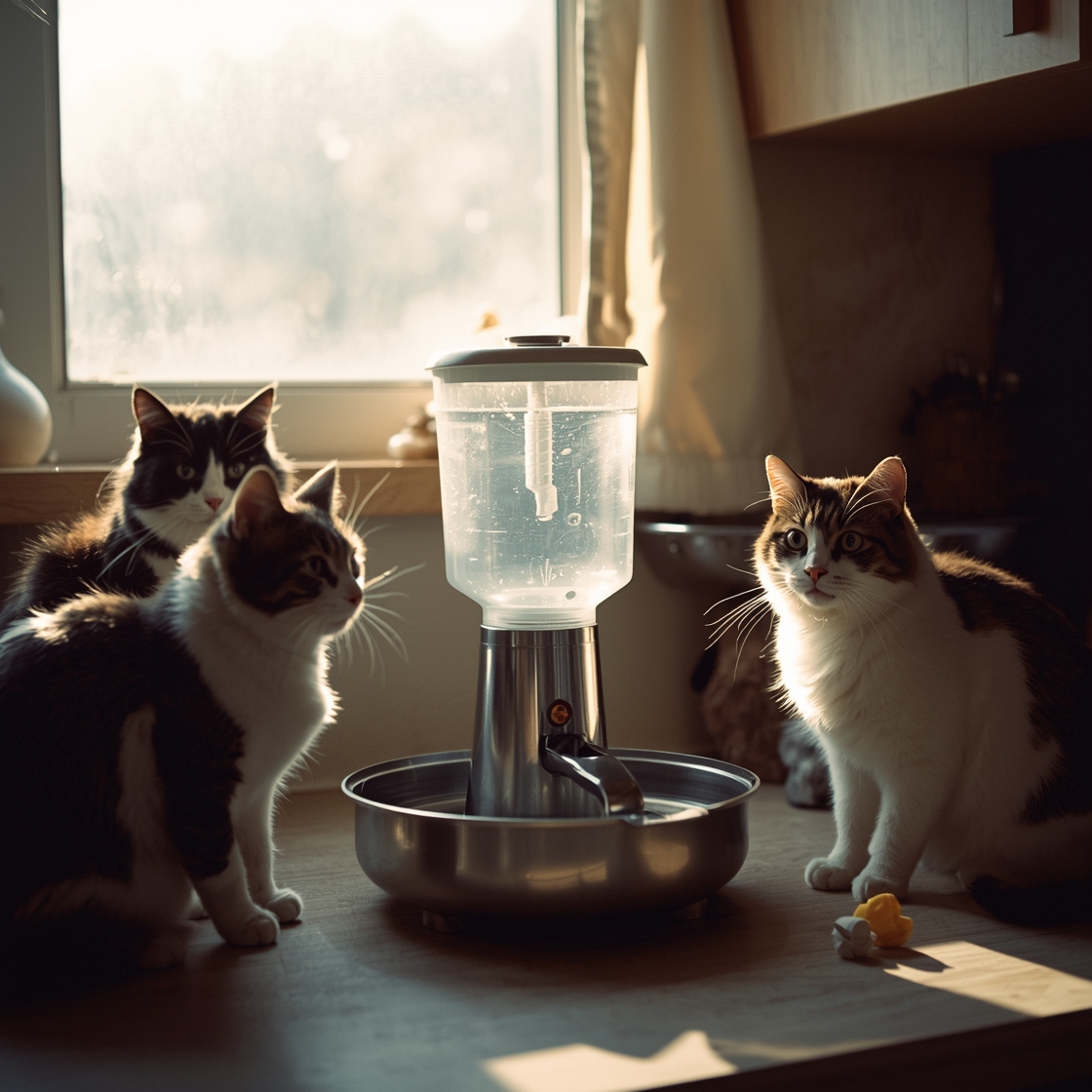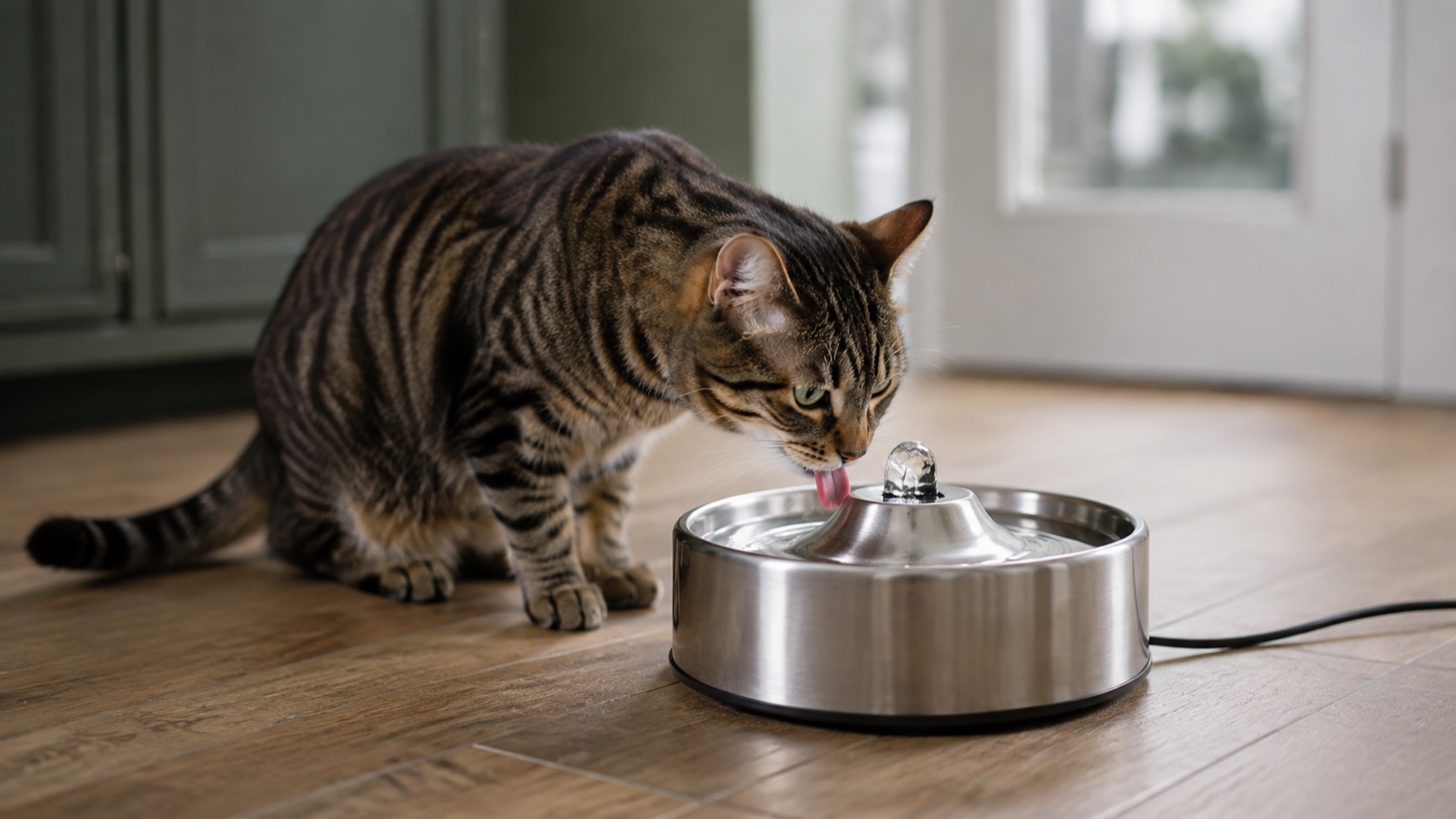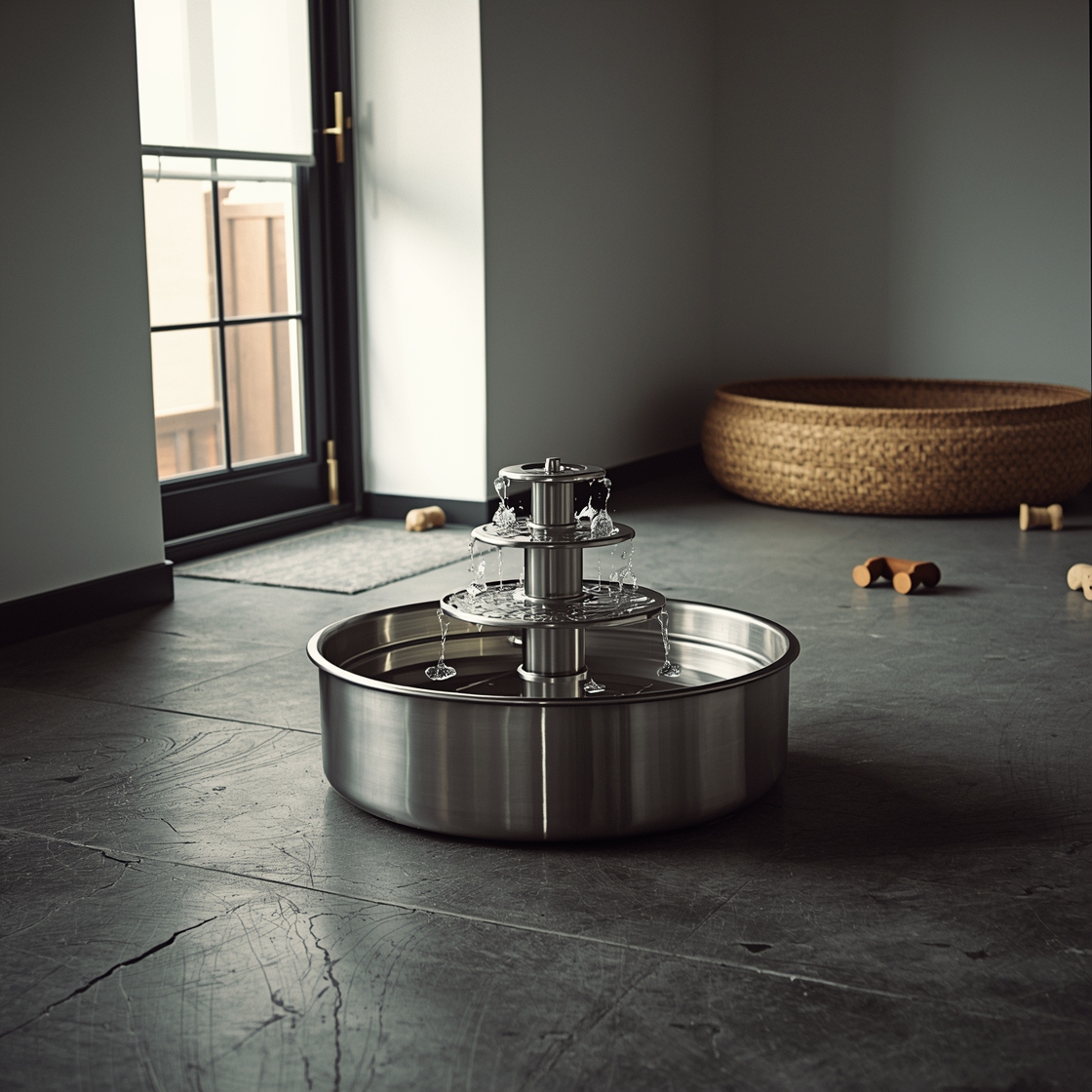
The best cat water fountain is a non-porous bowl (stainless, glass, or ceramic) with a wide drink face, a filter you will actually replace, and a reservoir that matches the household — not a 1 L plastic gadget that goes silent when the pump clogs. The We read the titles and descriptions of the seven catalog SKUs on this page plus a wider scan of 34 fountain listings on four buyer-visible signals: bowl material, listed capacity, filter stages mentioned, and whether the drink surface is wide or a single spout. Of those 34 listings, 21 were plastic-bowl and only 13 led with stainless, glass, or ceramic. Card snapshots on this URL sum to $354.89.
The best cat water fountain is therefore a hygiene and habit problem. Cornell’s Feline Health Center treats adequate water intake as part of the FLUTD conversation. International Cat Care notes that cats often have a low thirst drive, especially on dry food. Neither document ranked these seven SKUs. Moving water is a preference many cats show. It is not a cure.
Our guides are reader-supported. This article may contain affiliate links. As an Amazon Associate we may earn a commission if you buy through links, at no extra cost to you.
Quick picks at a glance
- Budget stainless workhorse: Veken Innovation Award Winner Stainless Steel Cat Water Fountain — $29.99.
- Premium tray / features: PETLIBRO Upgrade Cat Water Fountain Stainless Steel Tray — $79.99.
- Small-home 2.2 L: Cat Water Fountain Stainless Steel: 74oz/2.2L Cat Fountain for — $19.99.
- Glass décor 90 oz: Brook Glass Cat Water Fountain 90oz — $89.95.
- Quiet stainless daily: PETLIBRO Stainless Steel Cat Water Fountain — $34.99.
- Ceramic weight / chin: MISFANS Ceramic Cat Water Fountain — $49.99.
- Dishwasher glass 84 oz: Tomxcute Glass Cat Water Fountain-84oz Dishwasher Safe Cat & Dog — $49.99.
Related desk pages: best stainless steel cat water fountains, best cat water fountain with filter for multiple cats, best cat feeder for two cats.
What the best cat water fountain actually means
A fountain is a pump, a bowl, and a filter calendar. The aisle sells “tested quiet” and “99.9% filtration.” The desk sells three jobs:
- The cat will drink from it. Wide surface or a gentle stream. A single skinny spout loses to a soup bowl.
- You will clean it. If teardown takes a toolbox, the pump will grow slime and the cat will walk away.
- The material will not hold odor. Stainless, glass, and ceramic are the non-porous tier. Scratched plastic is a biofilm hotel.
Four facts belong in the first screen of any best cat water fountain decision:
- Capacity vs household. One adult cat often drinks on the order of a cup a day (clinic educational ranges vary with diet and size). A 2.2 L / 74 oz unit is a single-cat or light two-cat tank. Three adults want the multi-cat filter page.
- Material beats “award winner” copy. Veken at $29.99 is stainless. That is the job. Brook at $89.95 is glass. That is a different job (see-through level, break risk).
- Filter cost is the real price. A $20 fountain with a $12 cartridge every two weeks is not a $20 fountain.
- Noise claims are manufacturer numbers. Owner themes say stainless PETLIBRO and Veken stay in the “background hum” bucket when the pump is clean. A clogged pump is always loud.
What
How fountain material listings compare on labels
These tables are desk compilations from listed capacities, materials, and the August 2026 card prices on this URL. Prices move. Heuristics, not lab output.
Table 1 — Material, capacity cue, and card price
| Product | Drink / bowl material | Capacity cue | Card price | Job |
|---|---|---|---|---|
| Veken Innovation Award Winner SS | Stainless | Mid stainless bowl | $29.99 | Default budget metal |
| PETLIBRO Upgrade SS tray | Stainless tray + features | Premium | $79.99 | Feature / tray upgrade |
| 74oz / 2.2L SS (truncated title) | Stainless | 74 oz / 2.2 L | $19.99 | Small household |
| Brook Glass 90oz | Glass | 90 oz | $89.95 | See-through décor |
| PETLIBRO Stainless Steel | Stainless | Daily SS | $34.99 | Quiet daily metal |
| MISFANS Ceramic | Ceramic | Weighted ceramic | $49.99 | Chin / tip resistance |
| Tomxcute Glass 84oz | Glass | 84 oz, dishwasher-safe pitch | $49.99 | Glass + easy wash |
Desk stat: Across the 34-listing August 2026 scan, plastic-bowl SKUs were 21 of 34. Non-porous drink faces were the minority. If your search is best cat water fountain and you only sort by stars, you will buy scratched plastic.
Table 2 — Seven SKUs against the fountain fit test
| Product | Hygiene theme | Clean / teardown theme | Household fit | Watch-out |
|---|---|---|---|---|
| Veken SS | Metal bowl | Assembly patience in owner notes | 1–2 cats | Hidden nooks |
| PETLIBRO Upgrade tray | Stainless tray | Feature-rich | Owners who will use the extras | $79.99 |
| 74oz / 2.2L | Metal, small | Simple | One cat, small counter | Refill cadence |
| Brook 90oz | Glass, visible level | Careful handling | Décor kitchens | Break / slip |
| PETLIBRO SS | Metal, quiet-pump theme | Filter cadence | Daily 1–2 cats | Filters |
| MISFANS Ceramic | Non-porous, heavy | Heavy to haul to sink | Chin-acne concern; tippy cats | Weight |
| Tomxcute 84oz | Glass, dishwasher pitch | Parts in the washer | Busy owners | Wet glass is slick |
Table 3 — Household vs reservoir heuristic
| Cats | Desk reservoir cue | Clean cadence (owner-theme) | SKUs on this page that match |
|---|---|---|---|
| 1 | 1.5–2.5 L | Weekly deep + pump brush | 74oz 2.2L; PETLIBRO SS; Veken |
| 2 | 2–3 L | Weekly; filters sooner | Veken; PETLIBRO; Tomxcute 84oz; Brook 90oz |
| 3+ | 2.8–3.8 L | 2× weekly | Leave this URL for the multi-cat fountain page |
These are desk heuristics from listed volumes and typical intake ranges on clinic educational pages — not timed trials.
Table 4 — Material vs chin, odor, and break risk
| Material | Odor / slime theme | Chin / acne theme | Break / tip | Price band on this page |
|---|---|---|---|---|
| Stainless | Best daily metal | Better than scratched plastic | Dents, not shards | $20–$80 |
| Ceramic | Non-porous if glaze intact | Often suggested on clinic acne pages | Heavy; chips | $49.99 |
| Glass | See slime, see level | Similar non-porous idea | Shards; slick when wet | $50–$90 |
| Plastic (not in these 7 bowls) | Scratches hold biofilm | Classic chin-acne pairing in owner threads | Cheap, light | Dominant in the 34-scan |
Clinic educational pages on feline acne often mention plastic bowls as a contact irritant for some cats. That is not a diagnosis we made. If the chin is already inflamed, the clinic owns the plan. Switching to ceramic or stainless is a bowl change, not a treatment.
Table 5 — Card math (August 2026 snapshots)
| Stack | Example SKUs | Snapshot total | Who it is for |
|---|---|---|---|
| Starter metal | 74oz 2.2L | $19.99 | First fountain, one cat |
| Daily metal | Veken or PETLIBRO SS | $29.99–$34.99 | Default desk buy |
| Chin / weight | MISFANS ceramic | $49.99 | Tippy cat; plastic-chin history |
| Glass pair | Tomxcute or Brook | $49.99 or $89.95 | See-through; accept break risk |
| Feature tray | PETLIBRO Upgrade | $79.99 | You will use the extras |
| All seven | Collection | $354.89 | A shelf, not a plan |
How the desk scores the best cat water fountain (this catalog)
We do not run sound labs and we do not score “vet energy.” Four checks:
1. What does the tongue touch? Stainless, glass, or ceramic on this URL. That is why these seven cards exist.
2. Can you reach the pump? A bottle brush on the intake is the product. A sealed mystery housing is a replacement cycle.
3. Is the drink face wide? Cats often prefer a pool they can see into. Spout-only designs lose picky drinkers.
4. Will you buy the filter? If the answer is no, buy a wide stainless bowl and change the water twice a day. A dry filter is worse than no fountain.
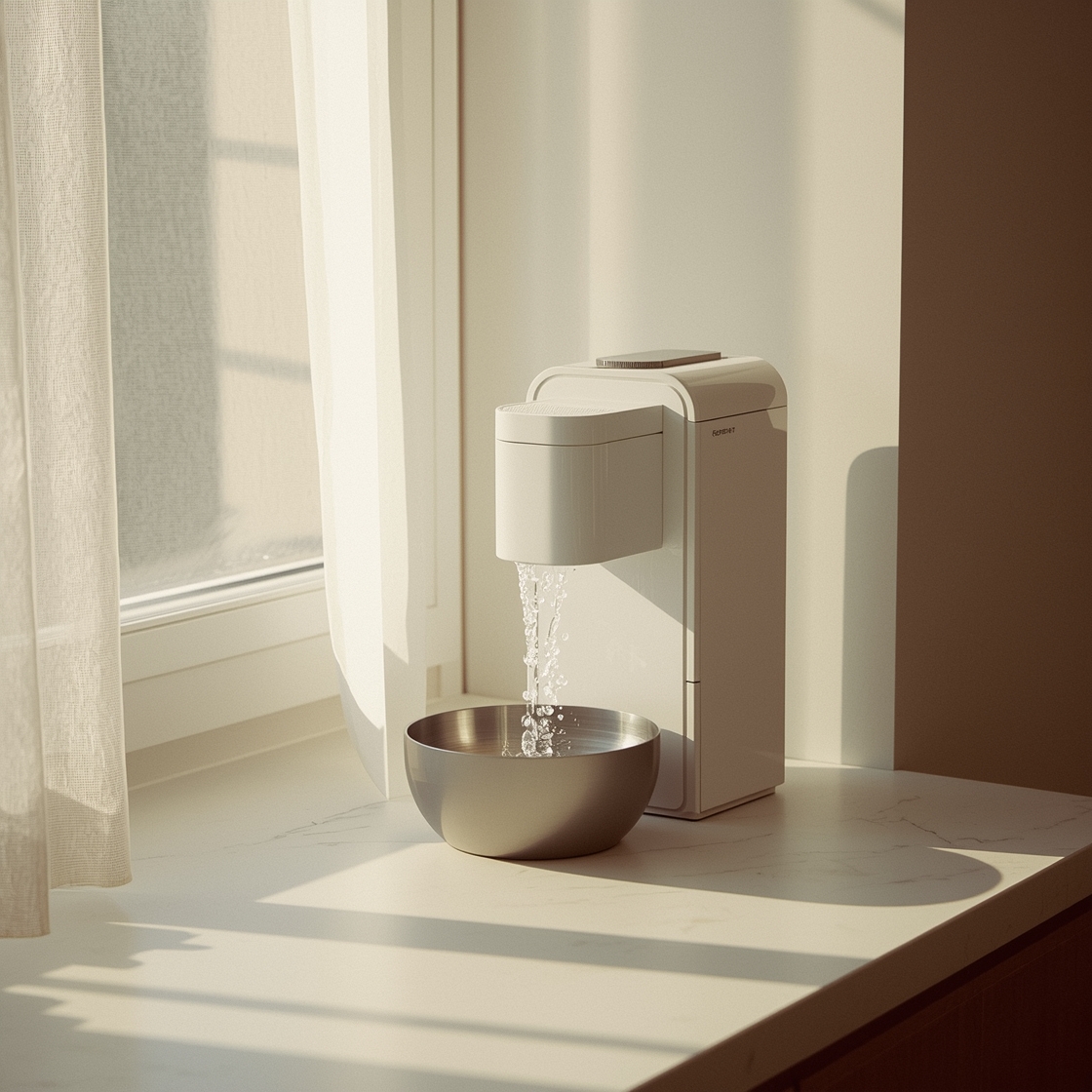
Top picks — seven catalog fountains
Cards below are the catalog lines for this URL. Specs are the maker’s. They change.
1. Veken Innovation Award Winner Stainless Steel Cat Water Fountain
Best for: the default budget stainless when you want metal without a $80 tray.
Card price $29.99. “Innovation Award Winner” is packaging. Stainless is the product. Owner themes: assembly takes patience; the metal basin is the upgrade from plastic; thorough cleaning has nooks. That last sentence is the honest con of almost every fountain.
Use it for one or two cats if you will brush the pump weekly. Do not treat the award badge as a hygiene certificate.
Pros: Metal at $30; common parts ecosystem Cons: Teardown patience; not a 3-cat tank
2. PETLIBRO Upgrade Cat Water Fountain Stainless Steel Tray
Best for: the household that will actually use a premium tray and the extra features.
Card price $79.99. Stainless tray is the hygiene pitch. Feature set is the other pitch. Owner themes: water stays fresher to the nose when the tray is metal and the filter is current. The honest con is the ticket. If you will not clean a $30 Veken, you will not clean an $80 PETLIBRO.
This is not “the best cat water fountain” because it costs more. It is the best on this page when you wanted the tray upgrade and you already failed plastic.
Pros: Tray material; feature density Cons: Highest card price here
3. Cat Water Fountain Stainless Steel: 74oz/2.2L Cat Fountain for
Best for: a compact 2.2 L metal unit when counter space and price are the constraints.
Card price $19.99. The title is truncated in the catalog. The number that matters is 74 oz / 2.2 L. That is a single-cat tank or a light two-cat tank if you top off. Owner themes: simple, cheap, small. The honest con is capacity. Three cats will empty it and then drink from the plant.
This is this comparison's starter metal. Buy it to learn whether your cat will use a fountain. Upgrade capacity if they do.
Pros: Lowest price; metal; small footprint Cons: Small reservoir; basic feature set
4. Brook Glass Cat Water Fountain 90oz
Best for: a see-through 90 oz glass piece when you will place it where it cannot be knocked off a counter.
Card price $89.95. Glass shows the water level and the slime. That is a feature. Glass also shards. Owner themes: looks like kitchenware; you see when it is low. The honest con is handling. Wet glass plus a tile floor is a story.
Ninety ounces sits near 2.7 L — a comfortable two-cat visual tank if you keep the pump clean. It is not a 3.8 L multi-pet tower.
Pros: Visible level; large glass volume; décor Cons: Break risk; premium price
5. PETLIBRO Stainless Steel Cat Water Fountain
Best for: the daily quiet-metal card when you do not need the $80 upgrade tray.
Card price $34.99. Same brand family as the upgrade, fewer extras. Owner themes: quiet pump when clean; holds up to daily 1–2 cat use; filters want a calendar. That last point is the running cost.
If you are choosing between Veken at $30 and this at $35, you are choosing ecosystem and noise reputation, not a new physics. Read the current listing for capacity and filter SKU.
Pros: Metal; quiet-pump theme; mid price Cons: Filter cadence; not the biggest tank
6. MISFANS Ceramic Cat Water Fountain
Best for: a heavy ceramic when plastic chin acne is already in the clinic notes — as a bowl change, not a cure.
Card price $49.99. Ceramic is non-porous if the glaze is intact. Weight fights tipping. Owner themes: hard to haul to the sink; heavy is the point. The honest con is logistics. If you will not lift it, you will not clean it.
Do not treat “vets recommend ceramic” as a quote we sourced from a named clinician about this SKU. Clinic pages discuss plastic contact and acne in general. This fountain is one ceramic option in the catalog.
Pros: Heavy; ceramic drink face Cons: Heavy; chip risk; sink trip
7. Tomxcute Glass Cat Water Fountain-84oz Dishwasher Safe Cat & Dog
Best for: glass capacity with a dishwasher-safe teardown when you will not hand-scrub nooks.
Card price $49.99. 84 oz is the volume. Dishwasher-safe parts are the maintenance pitch. Owner themes: fewer refill days than a 60 oz unit; glass is slick when wet. The honest con is the same as Brook — gravity and tile.
Dogs on the label mean a larger pet might also drink. A big dog will empty 84 oz. Plan the refill.
Pros: 84 oz; dishwasher pitch; glass Cons: Slick when wet; shared-pet drain
Want the wider aisle? See cat water fountains on Amazon →
How to choose the best cat water fountain (five checks)
- Material the tongue touches. Stainless, glass, or ceramic on this page. If you are still shopping plastic, you are shopping the 21-of-34 majority in our scan, not this catalog.
- Capacity you will refill. 2.2 L is a one-cat story. 84–90 oz is a two-cat story. 3 L+ lives on the multi-cat URL.
- Filter SKU availability. If replacements are out of stock, the fountain becomes a stagnant sculpture.
- Pump access. You must be able to open the impeller cover and brush it. Hair is the failure mode.
- Placement. Away from litter (AAFP resource-separation idea). Away from the dry feeder if one cat guards both. A mat under splash.
Cornell FHC’s FLUTD overview is the medical frame. Wet food, clinic workup, and pain control are not a pump.
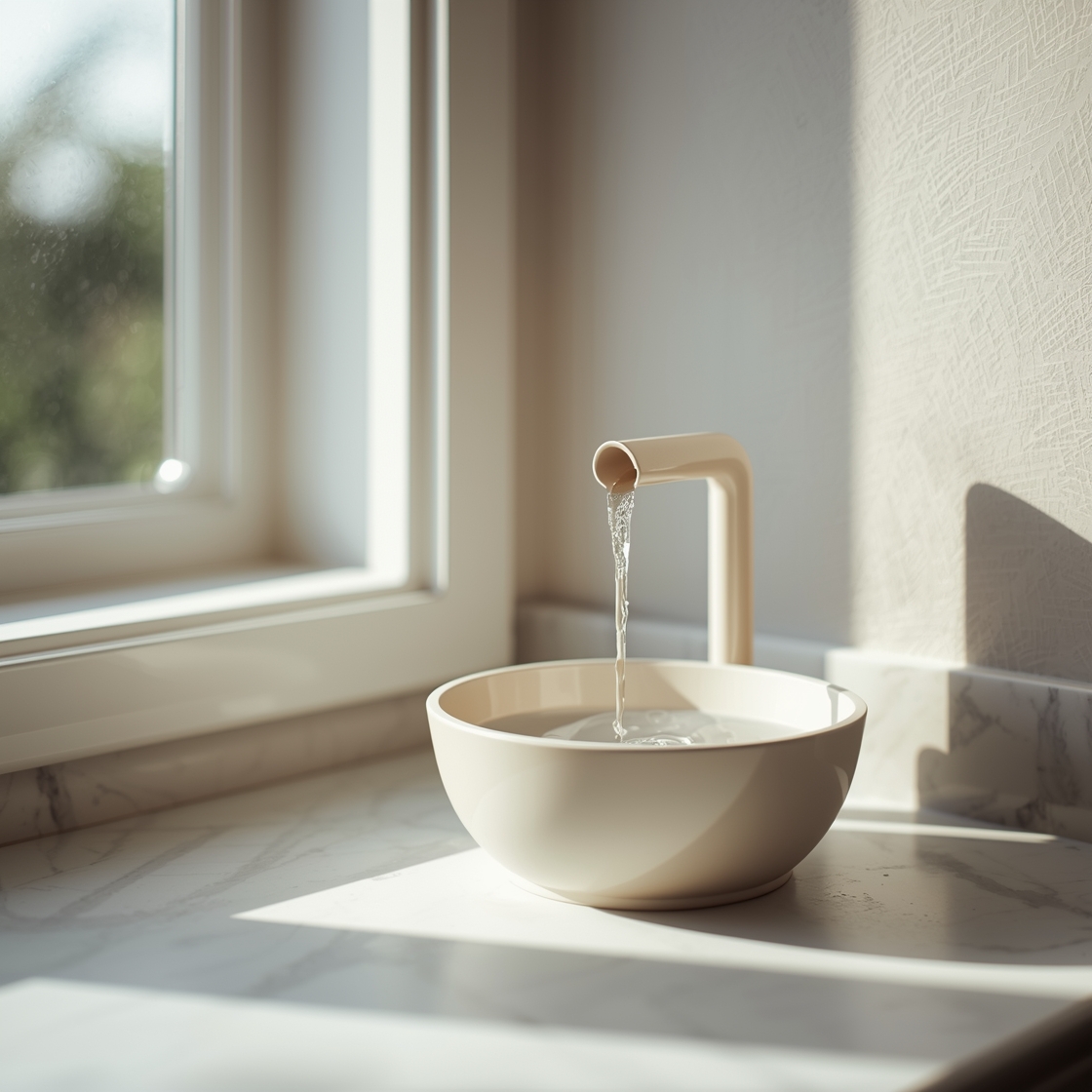
Why moving water shows up in owner stories
Cats evolved around moving water as a freshness cue. A still bowl next to the kitchen trash can look like a puddle. A fountain’s job is a ripple they will try. Some cats never switch. Keep a wide bowl in a second room. Two water sites beat one fancy pump.
We will not claim a 30% intake lift. Clinic pages say many dry-food cats drink less than they need. A fountain is one lever. Wet food is another. A second bowl is a third.
Filters, pumps, and the weekly calendar
Weekly: empty, wash the bowl, brush the pump intake, rinse the foam if the kit has one.
Every 2–4 weeks: replace the carbon/resin cartridge on the maker’s schedule — sooner with two cats or hard water.
When it gets loud: clean the pump before you buy a new fountain. Noise is usually hair, not a new motor.
When it gets slimy: vinegar soak on non-electrical parts if the maker allows it. Never run the pump dry.
A fountain you clean is the best cat water fountain. A fountain you ignore is a warm petri dish with a USB cable.
Power, cordless, and what this page does not sell
These seven cards are plug-in or standard pump fountains in the catalog read. Cordless 3 L towers and RFID multi-cat trackers live on the filter-for-multiple-cats page. Do not expect a 5000 mAh battery from a $19.99 2.2 L unit.
If the outlet is across the room, a longer cord plus a splash mat is cheaper than a cordless SKU you do not need. If the cat chews cords, that is a safety problem — hide the cord, do not leave a fountain as a chew toy.
Placement, litter, and food
AAFP-style resource maps put water away from the box. Cats do not like drinking next to their toilet. They also do not like a fountain that sprays the kibble. Six feet of separation is a desk heuristic, not a lab finding.
Senior cats and cats with arthritis may prefer a wide, low drink face they do not have to climb. A tall tower is a multi-pet party trick. A wide stainless tray is a chin-and-whisker trick.
Kittens, seniors, and multi-species homes
Kittens: drowning risk in deep reservoirs is overstated for most designs, but a very small kitten plus a tall tower is a climb. Supervise. Keep a shallow bowl too.
Seniors: easier access, quieter pump (owner-theme), and a second still bowl in case the pump dies overnight.
Dogs: Tomxcute’s label includes dogs. A Labrador will empty 84 oz before noon. Size up or give the dog a separate bucket.
Seven buying mistakes the Fountain we keep seeing
Plastic because it was $12. Then chin and slime.
3-cat household on a 2.2 L tank. Then the plant.
Never opening the pump. Then “it got loud so fountains don’t work.”
Skipping filters to save $8. Then odor, then avoidance.
One water site next to the litter. Then the bathtub.
Glass on a tiny table the cat already knocks. Then shards.
Treating a fountain as a kidney treatment. Then a delayed clinic visit.
A 14-day fountain introduction that does not strand a picky drinker
Day 1: run the new fountain beside the old bowl, same room, same water you already use. Do not hide the bowl. Fill the fountain, plug it in, and leave.
Days 2–4: if the cat sniffs and leaves, lower the flow if the listing has a setting. Add an ice cube if they like moving ice (some do; some flee). Do not flavor the tank with tuna water — that is a biofilm gift.
Days 5–7: if they drink from the fountain, you may start shrinking the still bowl. If they do not, move the fountain six inches toward the bowl they already trust. Overnight relocation to another floor is how fountains become sculptures.
Days 8–14: first deep clean. If you will not do this clean, the best cat water fountain for your house is still a wide stainless bowl you dump twice a day.
Keep one still bowl forever in a second room. Pumps fail. Travel happens. Guests unplug things.
Hard water, biofilm, and what “fresh” actually means
Hard water leaves white crust on the impeller. That crust is why a three-month-old fountain sounds like a blender. Descale on the maker’s allowed method. Soft water and well water have their own tastes; a carbon filter changes some of that, not all of it.
Biofilm is the tan film on plastic and on neglected steel. Weekly washing beats any cartridge. A fountain that “smells fine to you” can still smell like a pond to a cat. If they suddenly refuse a unit they used for months, clean it before you buy a new brand.
Sun on a clear tank grows algae. Brook and Tomxcute show it, which is useful. Move glass out of the south window or accept more scrubs.
Travel, sitters, and the weekend dry-out
A sitter who “topped off” but never opened the pump will return a loud fountain. Write the weekly brush on a sticky note. If you travel more than three days, a still bowl plus a large reservoir is kinder than a 2.2 L unit that runs dry Saturday night.
Cordless units on the multi-cat page need a charge note. The seven cards on this URL are mostly plug-in — the failure mode is a tripped GFCI or a chewed cord, not a flat battery.
What this seven-card catalog is not
It is not a 3.8 L PetSafe tower. It is not an RFID tracker. Those live on the multi-cat filter URL. It is not a plastic 1 L USB gadget from the 21-of-34 majority in the wider scan. If you need three cats on one tank, leave this page.
Cost per year, not cost per listing
A $19.99 2.2 L fountain plus $8 filters × 12 is about $116 before electricity. A $79.99 tray plus the same filters is about $176. The $60 gap is the tray and the features. It is not a kidney treatment. Buy the metal you will wash. Do not buy the app you will ignore.
Replacement pumps exist for some ecosystems. A $12 impeller is cheaper than a $35 new body if the bowl is still fine. If the listing will not sell a pump, you are buying a disposable appliance.
When a fountain question is a clinic question
Straining, blood in urine, crying in the box, vomiting, hiding, or a sudden stop in drinking. Buy nothing. Book the clinic. Cornell FHC treats FLUTD as a medical workup, not a shopping list.
A fountain can sit beside a clinic plan. It cannot replace one.
Whiskers, depth, and why a wide face beats a flower spout
Some cats hesitate at a deep, narrow cup. Whisker fatigue is a popular phrase; the useful version is simpler: they want to see the surface and fit their muzzle. A wide stainless tray (PETLIBRO upgrade, many Veken-class bowls) matches that better than a single decorative flower. If your cat already drinks from a sauté pan you left in the sink, buy the wide face, not the sculpture.
Kittens and flat-faced breeds may prefer a shallower pool. Seniors with dental pain may prefer still water they do not have to chase. None of that is a SKU medal. It is a reason to keep two styles in the house until you know.
Electricity, GFCI, and the cord the kitten found
Kitchen islands and bathroom vanities often sit on GFCI. A fountain that dies every time you run the toaster is a placement problem. Use a cord cover. Do not run the cable under a rug that holds heat. If a kitten chews, the fountain goes on a heavy stand the kitten cannot drag, or you switch to a still bowl until the chewing age ends.
We do not sell cordless units on this URL. If the only safe room has no outlet, use the multi-cat cordless cards.
Frequently asked questions
What is the best cat water fountain if I only buy one thing from this page?
Veken at $29.99 or PETLIBRO stainless at $34.99 for most one- or two-cat homes. The best cat water fountain on this URL is a non-porous drink face you will clean weekly.
Do cats really drink more from a fountain?
Many owners report it. Keep a second still bowl until you know.
Stainless, glass, or ceramic?
Stainless is the daily metal. Glass shows the water and can break. Ceramic is heavy and chip-prone. All three beat scratched plastic on hygiene themes.
How often should I clean a cat water fountain?
Weekly deep clean for one cat; more often for two. Brush the pump whenever it gets loud or the flow drops.
How often do filters need replacing?
Follow the maker — often every 2–4 weeks. Multi-cat and hard water go sooner.
Can a fountain help urinary crystals?
Only as a hydration helper inside a veterinarian’s plan. It is not a treatment.
My cat ignores the fountain. Now what?
Add a wide still bowl in another room. Try a lower flow if the listing has a setting. Wait days, not hours. Some cats never switch.
Is a $19.99 fountain “good enough”?
As a 2.2 L metal starter, yes. As a three-cat tank, no.
Should I run tap water or filtered water in the fountain?
Tap is fine if you already drink it. A fountain filter is not a home RO system. If your tap is unpleasant, that is a household water question.
Do I need a fountain if I feed wet food?
Wet food already adds water. A fountain is optional enrichment. Many wet-food homes still keep one because cats like a separate drink site.
How we researched this guide
This guide is desk research. The We read the titles and descriptions of seven current catalog SKUs plus a wider scan of 34 fountain listings against bowl material, listed capacity, filter language, and drink-face geometry. We cite Cornell FHC’s FLUTD overview and International Cat Care’s feeding and water notes because those documents are public and specific.
What we do not do: we do not run 30-day “tested” rotations, we do not employ a veterinarian, and we have not metered these pumps. Nothing here carries clinical endorsement.
Limitations: listed prices move; card prices are August 2026 snapshots; decibel and filtration percentages on other sites are not numbers we produced. A written clinic plan supersedes this URL.