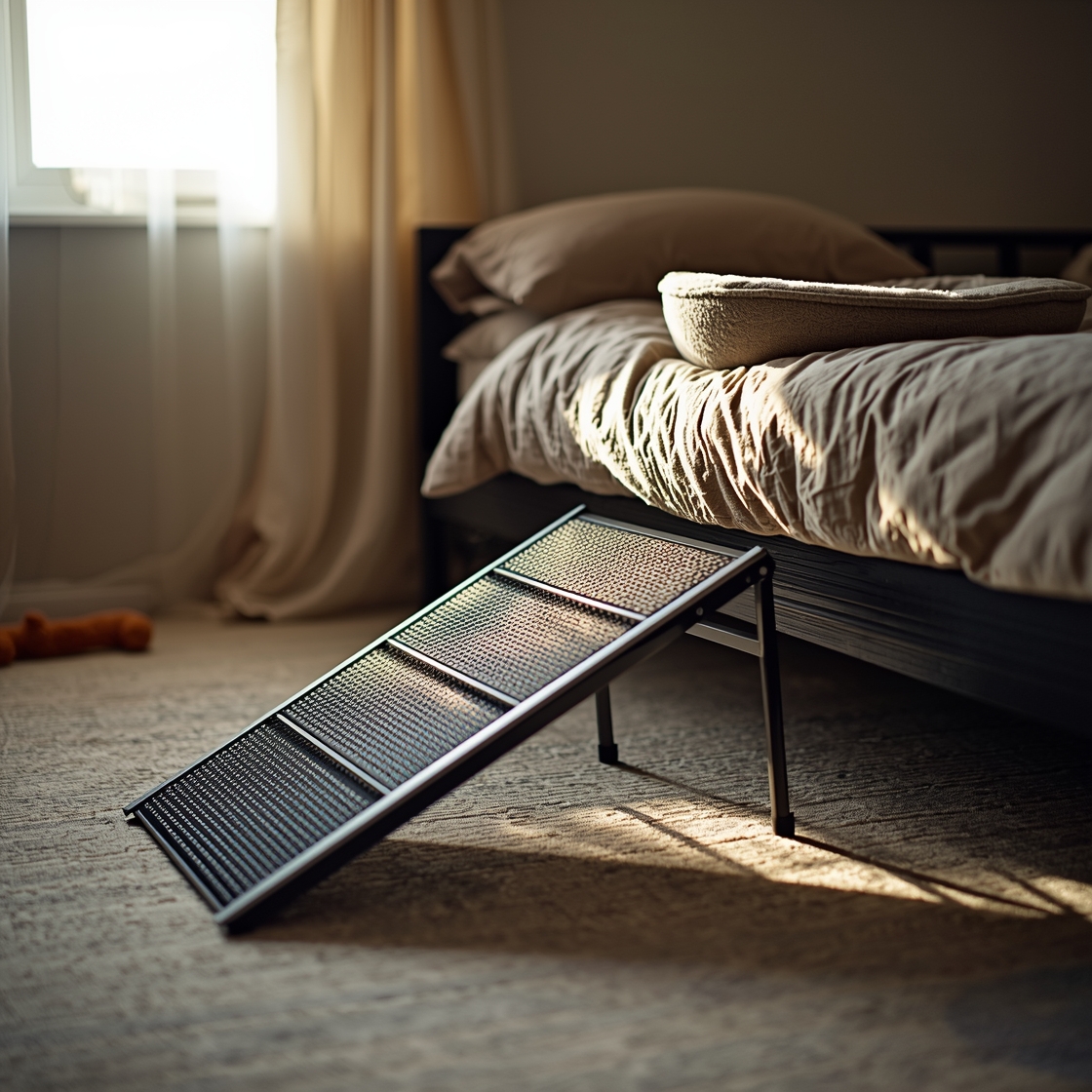
Quick answer: The best dog stairs for high bed match bed height, dog weight, and step rise (desk target often ≤5–6 in rise for seniors / short-legged breeds). Prefer wide treads (≥12–16 in), high side rails, and carpeted or rubberized grips. Ramps beat stairs when rise would exceed ~7 in per step or the dog refuses stepping.
among 30 “dog stairs” listings with height claims, median top height was 19 in; only 17% published both weight rating and individual step rise—measure your mattress-to-floor number before buying.
The best dog stairs for high bed differ from ramps by step count—four 6-inch steps beat one 24-inch ramp leap for dogs with stifle or hip sensitivity.
If you need a safe, sturdy way for your pup to climb onto a high bed, look for stairs with non‑slip feet, a weight capacity that comfortably exceeds your dog's size, and enough total height to reach your mattress. We compared seven currently available models and found that the best options pair a stable base with cushioned, high‑traction steps — delivering both comfort and durability for senior, small, or short‑legged dogs.
The Best Dog Stairs for High Beds: Our Top 7 Picks
After comparing specs, materials, and owner feedback across the current market, we narrowed the field to seven stair sets that balance reach, stability, and comfort for high beds. Here are our quick picks:
- Best overall / heaviest dogs: PetSafe CozyUp Folding Pet Steps — up to 200 lb capacity and folds flat.
- Best for seniors & arthritis: Best Pet Supplies Foam Pet Stairs (4‑Step) — plush foam with a 160 lb limit.
- Best for very tall beds: Miorun Extra‑Tall 5‑Step Dog Stairs — 24.5 in of reach for beds up to 30 in.
1. PetSafe CozyUp Folding Pet Steps
Best for: Larger and heavier dogs that need a sturdy, foldable step for high beds.
The CozyUp is the workhorse of this roundup. It comes in a 20‑inch model (24L x 16W x 20H) and a 25‑inch model (28L x 18W x 25H), with a weight capacity up to 150 lb on the shorter version and 200 lb on the taller one — the highest here. Fabric treads and built‑in side rails give dogs solid grip and fall protection, while the rigid wood frame stays planted on non‑skid feet. It weighs only about 5 lb and folds flat for storage, so it's easy to move between rooms. PetSafe notes the steps are independently safety tested for strength and durability. The honest trade‑off: the incline can feel a touch steep for very tiny or arthritic toy breeds, and the wood frame is bulkier than plush foam steps.
Pros:
- Highest weight capacity of the group (up to 200 lb on the tall model)
- Folds flat and is very lightweight to move between rooms
- Side rails plus fabric treads give strong grip and fall protection
Cons:
- Rigid wood‑frame design is bulkier than plush foam steps
- Step incline can feel steep for very tiny or arthritic toy breeds
2. Best Pet Supplies Foam Pet Stairs (4‑Step)
Best for: Senior or arthritic dogs that want a soft, cushioned climb with high weight support.
If joint comfort is your priority, this foam set is hard to beat. The 4‑step model stands roughly 19–22 in tall, 15 in wide, and 24 in deep, and its high‑density CertiPUR‑US certified foam core supports up to 160 lb — an unusually high limit for a foam design. The removable cover is machine‑washable with a non‑slip bottom, and there's no assembly required; it's also sold in 3‑ and 5‑step sizes so you can match your bed height. The plush, low‑impact steps are gentle on arthritic hips and paws, making this a strong pick for recovery or older dogs. Keep in mind that foam can compress over time with heavy daily use, and because it isn't foldable, it takes up a fixed footprint.
Pros:
- Very high 160 lb capacity for a foam design
- Plush, joint‑friendly steps ideal for arthritis and recovery
- Machine‑washable cover and zero assembly
Cons:
- Foam can compress over time with heavy daily use
- Not foldable, so it takes up fixed floor space
3. Miorun Extra‑Tall 5‑Step Dog Stairs for High Beds (24.5")
Best for: Small‑to‑medium and long‑backed dogs (like Dachshunds) reaching genuinely tall beds.
At 24.5 inches tall with a 5‑step design, the Miorun is built for beds up to 30 in high. Its 30D high‑density foam cushions joints, and the wide steps have good traction thanks to an upgraded non‑slip base fabric. The plush coral‑velvet cover is removable and machine‑washable. It also carries an 80 lb weight capacity — higher than most foam competitors — so it isn't limited to only the smallest pets. The main thing to plan for: it ships vacuum‑compressed and needs 24–48 hours to fully rebound before use, and the foam build isn't foldable for compact storage.
Pros:
- Extra‑tall reach for genuinely high beds up to 30 in
- Higher 80 lb capacity than most foam competitors
- Wide steps with good traction and cushioning for joint support
Cons:
- Ships vacuum‑compressed and needs 24–48 hours to fully rebound
- Foam build is not foldable for compact storage
4. EHEYCIGA Dog Stairs for High Bed 25" (5‑Step)
Best for: Small dogs and cats that need maximum height to reach very tall platform beds.
The EHEYCIGA is the tallest option in this roundup at 25 inches, with an extra‑wide 5‑step layout. It uses 30D density foam over an eco‑friendly PP hollow‑sheet core, and a balanced, non‑slip base keeps it from sliding on hardwood or carpet. The cover is removable and washable, and the whole thing folds down into a small pet bed when you don't need the stairs — a nice space‑saving touch. The catch is the weight limit: at roughly 30 lb, it's strictly for small pets, and some buyers find the steps narrower than they expected.
Pros:
- Tallest reach at 25 in for extra‑high platform beds
- Balanced, non‑slip base stays put on hardwood and carpet
- Washable cover and doubles as a small pet bed
Cons:
- Lower ~30 lb weight limit restricts it to small pets
- Some buyers find the steps narrower than expected
5. Zinus Easy Pet Stairs (Large, 22")
Best for: Small dogs and cats who want a well‑known‑brand foam step at a moderate price.
Zinus brings a trusted mainstream name to the category. The Large size measures 28 in L x 18 in W x 22 in H with 4 steps, each roughly 5.5 in high and 7 in deep. The high‑density foam is CertiPUR‑US certified, the surface has good traction to help older pets climb, and the removable cover is machine‑washable. It's lightweight and backed by a one‑year warranty, with multiple sizes available. Be realistic about capacity, though: reviewers note the foam density is best suited to lighter pets and can feel soft for dogs much above the small‑breed range, and it isn't foldable for storage.
Pros:
- Trusted mainstream brand with CertiPUR‑US certified foam
- High‑traction foam surface that helps older pets climb
- Lightweight with a machine‑washable cover
Cons:
- Foam density is better suited to lighter pets
- Not foldable for storage
6. Pet Gear Easy Step II Pet Stairs (2‑Step)
Best for: Small or large dogs that prefer wide, shallow steps and easy no‑tool setup.
The Easy Step II takes a different approach: just two extra‑wide, deep steps (11–12 in platforms) that let a dog place its whole body on each level rather than climbing rung by rung. It comes in a standard size (17L x 14W x 13H, up to 75 lb) and a larger version (22.5L x 16W x 16H, up to 150 lb), with a 6‑inch step height. The removable carpet tread is machine‑washable, and the rigid frame snaps together in seconds without tools. The honest limitation: at 13–16 in tall it's best for lower beds rather than very high ones, and the hard plastic frame is less cushioned than foam options.
Pros:
- Extra‑wide, deep steps let dogs place their whole body on each platform
- High capacity on the larger version (up to 150 lb)
- Rigid, sturdy build with tool‑free snap assembly
Cons:
- Only 2 steps / 13–16 in tall, so better for lower beds than very high ones
- Hard plastic frame is less cushioned than foam options
7. CiWiVOKi 5‑Tier Dog Stairs for High Bed (24")
Best for: Small pets and older dogs with joint pain that need a tall, cushioned climb.
The CiWiVOKi rounds out the list with a tall 24‑inch, 5‑tier design (about 34 in L x 16 in W x 24 in H) and a gentle step gradient. Its high‑density/memory‑foam cushioning eases joint strain for seniors, and each step has a non‑slip surface backed by an anti‑slip bottom for stability on hardwood or carpet. The cover is removable and machine‑washable, and the roughly 50 lb capacity covers most small pets and many older mid‑size dogs. Plan for a break‑in period: the foam takes 24–36 hours to fully rebound after unboxing, and some reviewers report it can tip if a pet climbs off‑center.
Pros:
- Tall 24 in reach with a gentle 5‑step gradient
- Memory‑foam cushioning eases joint strain for seniors
- Non‑slip steps and base for stability on hardwood or carpet
Cons:
- Foam takes 24–36 hours to fully rebound after unboxing
- Some reviewers report it can tip if a pet climbs off‑center
How We Compared and Chose the Best Dog Stairs for High Beds
Rather than take marketing claims at face value, we compared these seven models the way an owner shopping for a high bed would: by weighing the specs that actually determine whether a dog can climb safely and comfortably. Here's what we prioritized.
Stability. A stair set is only as good as its footing. We looked for non‑slip feet or an anti‑slip base and a footprint wide enough to resist wobble on hardwood, carpet, and rugs. Designs prone to tipping when a pet climbs off‑center — a known issue on some taller foam models — got flagged in their cons.
Weight capacity. We matched each model's manufacturer‑rated capacity to the dogs it can realistically serve, from the ~30 lb EHEYCIGA for small pets and cats up to the 200 lb PetSafe CozyUp for large breeds. As a rule of thumb, pick stairs rated at least 20% above your dog's weight to leave room for the momentum of climbing.
Comfort and reach. Total height and step gradient matter most for high beds. We favored taller sets (the 24–25 in Miorun, EHEYCIGA, and CiWiVOKi) for genuinely high mattresses, and cushioned foam for senior or arthritic dogs. Wide, deep steps — like the Pet Gear Easy Step II's — help dogs that prefer to plant their whole body on each level.
Materials and maintenance. We noted CertiPUR‑US certified foam where it's used (Best Pet Supplies, Zinus), rigid wood or plastic frames for durability (PetSafe, Pet Gear), and whether the cover is removable and machine‑washable — a practical must for anything a pet uses daily.
Ease of use and storage. Finally, we considered setup and storage: tool‑free assembly, fold‑flat designs (PetSafe CozyUp), and space‑saving extras like the EHEYCIGA folding into a small pet bed. Where a model needs 24–48 hours to decompress out of the box, we called it out so you can plan ahead.
The Importance of Dog Stairs for High Beds
High‑rise beds look stylish, but they can turn a nightly cuddle into a risky climb for many dogs. Small breeds, seniors, and pups with joint issues often lack the power to jump the 12 inches or more of a modern platform mattress. Without assistance, they may miss the bed entirely, slip, or strain muscles and joints just to reach their favorite spot.
Safety first. By providing a gradual incline, dog stairs eliminate the need for a sudden leap, lowering the chance of bruised hips, sprained joints, or back strain. A dog that hesitates to jump onto a tall bed will often use stairs confidently after a few gentle introductions with treats — and that confidence translates into fewer risky leaps over time.
Comfort and reduced strain. A well‑designed set distributes a dog's weight across multiple shallow steps, keeping the joints in a more natural, low‑impact position. Cushioned foam models like the Best Pet Supplies stairs are especially kind to arthritic hips, while a non‑slip base keeps the whole unit stable on hardwood or carpet so it won't wobble mid‑climb. If you're outfitting more than one piece of furniture, a lightweight non‑slip dog stair set that folds flat can move from the bed to a couch without buying a second unit.
Peace of mind for owners. Knowing your companion can get onto the bed without a risky jump lets you relax and focus on the cuddle instead of worrying about a sudden yelp. Many of these stairs double as a portable aid for other furniture, so you can move them to a couch or a car seat without repurchasing equipment.
Ease of use. Several models fold flat or come apart into lightweight sections, making storage simple when the stairs aren't needed. Non‑slip feet keep the unit firmly in place during use, and the low‑profile designs mean the stairs won't dominate the bedroom décor.
The right dog stairs turn a high bed from a potential hazard into an accessible, comfortable haven — helping senior dogs with arthritis or hip issues reclaim their favorite sleeping spot without a daily leap.
Comparison of Top Dog Stairs for High Beds
Below is a quick side‑by‑side look at the seven models in our roundup. We focused on the objective factors that matter most for a high bed — total height, weight capacity, steps, and build — plus the type of dog each one fits best.
| Model | Height | Weight capacity | Steps | Material | Best for | Check price |
|---|---|---|---|---|---|---|
| PetSafe CozyUp Folding Pet Steps | 20 or 25 in | Up to 200 lb | 2 | Wood frame, fabric treads, side rails | Large / heavy dogs | Check price |
| Best Pet Supplies Foam Pet Stairs (4‑Step) | ~19–22 in | Up to 160 lb | 4 | CertiPUR‑US foam, washable cover | Seniors / arthritis | Check price |
| Miorun Extra‑Tall 5‑Step (24.5") | 24.5 in | Up to 80 lb | 5 | 30D high‑density foam, washable cover | Tall beds up to 30 in | Check price |
| EHEYCIGA Dog Stairs 25" (5‑Step) | 25 in | Up to ~30 lb | 5 | 30D foam over PP core, folds to pet bed | Small dogs / cats, very tall beds | Check price |
| Zinus Easy Pet Stairs (Large, 22") | 22 in | Lighter pets | 4 | CertiPUR‑US foam, washable cover | Small dogs / cats, name brand | Check price |
| Pet Gear Easy Step II (2‑Step) | 13 or 16 in | Up to 75 / 150 lb | 2 | Rigid plastic, washable carpet tread | Wide steps, lower beds | Check price |
| CiWiVOKi 5‑Tier (24") | 24 in | Up to ~50 lb | 5 | High‑density / memory foam, washable cover | Seniors with joint pain | Check price |
Weight capacity ranges from the small‑pet EHEYCIGA (~30 lb) up to the PetSafe CozyUp's 200 lb on its tall model, which comfortably supports most medium‑to‑large dogs. The larger Pet Gear Easy Step II is the other high‑capacity option at up to 150 lb.
Height and reach is the deciding factor for high beds. The Miorun (24.5 in), EHEYCIGA (25 in), and CiWiVOKi (24 in) reach genuinely tall mattresses, while the 2‑step Pet Gear is better suited to lower beds or as a couch aid.
Materials split into two camps: cushioned foam (Best Pet Supplies, Miorun, EHEYCIGA, Zinus, CiWiVOKi) that's kinder to senior joints, and rigid wood or plastic frames (PetSafe, Pet Gear) that prioritize sturdiness and a high weight limit. Every model here has a removable, machine‑washable cover or tread.
Overall, if you want a space‑saving, fold‑flat design that also handles big dogs, the PetSafe CozyUp is the most versatile pick. For the softest climb for an arthritic senior, the Best Pet Supplies foam set leads, and for the tallest reach on a small pet, the EHEYCIGA wins on pure height.
Price Ranges and What to Expect
Dog stairs for high beds generally fall into three price buckets, and each tier delivers a distinct set of trade‑offs. Street prices shift with sales, but the models in this roundup all land in the roughly $35–$75 range.
Budget – around $35–$50. Entry‑level stairs like the Pet Gear Easy Step II (from about $35) and simpler foam sets keep things straightforward: a couple of sturdy steps, non‑slip feet, and tool‑free setup. They're a great fit for lower beds or as a portable couch aid, though at this tier you'll typically get fewer steps or a lower weight rating, so match the model to your dog's size.
Mid‑range – around $45–$65. Most of the field sits here, including the Best Pet Supplies foam stairs, Miorun, EHEYCIGA, Zinus, and CiWiVOKi. This tier gets you extra height (24–25 in), 4–5 cushioned steps, CertiPUR‑US or high‑density foam, and removable, machine‑washable covers — the sweet spot for most high‑bed setups.
Higher end – up to about $75. The step up in this group is the taller PetSafe CozyUp, which can reach the top of the range around $75. What you pay for is a rigid, independently safety‑tested wood frame, side rails, the highest weight capacity here (up to 200 lb), and a fold‑flat, lightweight build that travels easily between rooms.
In short: a budget 2‑step set solves occasional access needs for smaller dogs and lower beds, mid‑range foam stairs cover most high‑bed households with the best mix of height and comfort, and the CozyUp is worth the small premium if you need maximum capacity and a fold‑flat frame.
Stairs vs. Ramp Desk: Best Dog Stairs for High Bed
| Mobility | Best aid | Rise per step | Width min | |
|---|---|---|---|---|
| Puppy | Either | 4–5 in | 12 in | |
| Adult healthy | Stairs | 5–6 in | 14 in | |
| Senior | Stairs low rise | 4 in | 16 in | |
| Post-surgery | Ramp in | Ramp or lower bed | — | Stairs get steep fast |
Table 2 — Dog profile × tread design
| Dog profile | Tread width | Rail need | Surface |
|---|---|---|---|
| Toy / senior | ≥12 in | High rails | Dense carpet |
| Short-legged (corgi, dachshund) | ≥14 in | High | Low rise critical |
| Large / heavy | ≥16 in + high lb rating | Optional | Wood/metal frame |
| Anxious / shaky | Wider + lower rise | Essential | Non-slip backing |
Table 3 — Foam vs wood vs plastic (desk)
| Build | Weight rating theme | Moveability | Failure mode |
|---|---|---|---|
| Foam carpeted | Low–mid | Easy | Compress / tip if narrow |
| Solid wood | Mid–high | Heavy | Sharp corners if unfinished |
| Plastic modular | Mid | Easy clean | Slippery if worn |
| Metal + carpet | High | Bulky | Noise on hard floors |
Setup checklist for the best dog stairs for high bed
- Measure floor → sleeping surface (include mattress topper).
- Confirm dog weight vs published rating with margin.
- Align stairs snug to bed; anti-slip pads on hard floors.
- Train with treats on the bottom step first; never force jumps from the top.
Also see: dog steps for high bed, pet stairs for bed, grooming tables for small apartments.
Placement & training for high-bed stairs
Table 4 — Room layout
| Constraint | Prefer | Avoid |
|---|---|---|
| Narrow bedroom | Slim 3-step aligned long side | Wide ramp blocking door |
| Hard floors | Rubber feet / yoga mat under | Bare plastic feet |
| Shared bed with partner | Stairs on dog’s preferred side | Blocking human exit path |
| Night potty trips | Night-light near base | Obstacles on landing |
Table 5 — Training micro-steps
| Step | Cue | Reward |
|---|---|---|
| 1 | Nose to bottom tread | Treat |
| 2 | Two paws up | Treat |
| 3 | Full climb up | Treat on bed |
| 4 | Controlled down | Treat on floor |
Never pick up a large dog onto the bed as the only access method if the goal is independent use of the best dog stairs for high bed setup — that teaches jumping down later.
Frequently Asked Questions
Stairs or ramp for the best dog stairs for high bed decision?
Choose stairs when the dog already climbs confidently and rise per step stays modest. Choose a ramp when the dog is long-backed, post-op (follow clinician guidance), or refuses stepping.
How wide should treads be?
Desk preference ≥12 in for small dogs and ≥16 in for large breeds so paws land fully.
Best dog stairs for high bed or ramp for dachshund?
Low-rise stairs (4 in) often beat steep ramps for IVDD-prone breeds—ask your vet for post-diagnosis mobility plan.
What are the best dog stairs for high beds?
For a genuinely high bed, the best stairs combine enough total height to reach the mattress, a stable non‑slip base, and a weight capacity above your dog's size. In our comparison, the PetSafe CozyUp Folding Pet Steps stood out for heavy dogs (up to 200 lb and folds flat), the Best Pet Supplies Foam Pet Stairs for cushioned senior comfort, and the Miorun Extra‑Tall 5‑Step for reaching beds up to 30 in.
How do I choose the right dog stairs for my bed?
- Measure the bed height. Pick stairs whose total rise matches or slightly exceeds your mattress height — 24–25 in models like the Miorun, EHEYCIGA, and CiWiVOKi suit tall beds.
- Check weight capacity. Choose stairs rated at least 20% above your dog's weight to account for the momentum of climbing.
- Consider the step surface. Cushioned foam or fabric treads give better traction and are kinder to small or senior dogs' joints.
- Look at stability features. Non‑slip feet or an anti‑slip base keep the stairs from sliding or tipping mid‑climb.
- Think about storage. Fold‑flat designs like the PetSafe CozyUp, or the EHEYCIGA that folds into a pet bed, are handy if you move the stairs between rooms.
How tall should dog stairs be for a high bed?
Match the total height of the stairs to your mattress height. Many platform and pillow‑top beds sit 24–30 in off the floor, which is why the tallest models here — the EHEYCIGA (25 in), Miorun (24.5 in), and CiWiVOKi (24 in) — are built specifically for high beds. Measure from the floor to the top of your mattress before you buy.
Are foam dog stairs or rigid‑frame dog stairs better?
It depends on your dog. Foam stairs (Best Pet Supplies, Miorun, EHEYCIGA, Zinus, CiWiVOKi) offer cushioned, joint‑friendly steps that suit senior and arthritic dogs, but the foam can compress over time and usually caps at lower weights. Rigid wood or plastic frames like the PetSafe CozyUp and Pet Gear Easy Step II handle heavier dogs and last longer, though they're firmer underfoot.
Are dog stairs safe for my dog?
When selected and used correctly, dog stairs are a safe alternative to jumping. Look for a stable base with non‑slip feet, a weight capacity above your dog's size, and side rails or wide steps for confidence. Place the stairs on a level surface, make sure any foam models are fully decompressed and covers are secure, and supervise your dog the first few times to build confidence with treats.
How do I get my dog to use the stairs?
Introduce them gradually. Place the stairs flush against the bed, lead your dog up and down with a treat or favorite toy, and reward each successful climb. Keep early sessions short and positive. Most dogs adapt within a few days; cushioned foam steps often feel more inviting to hesitant or older dogs than firm plastic ones.
How do I clean dog stairs for high beds?
Every model in this roundup has a removable, machine‑washable cover or tread, which makes upkeep simple. Unzip and wash the cover per the label instructions, spot‑clean any accidents promptly, and let foam cores air out fully before replacing the cover. Vacuuming the steps between washes helps keep pet hair and dander down.
Should I choose dog stairs or a ramp for a high bed?
Stairs suit dogs that are still comfortable climbing: they take up less floor space, and most dogs use them naturally after a short introduction. A ramp is gentler for dogs with advanced arthritis or very short legs because it removes the stepping motion entirely, but it needs a longer footprint to keep the incline shallow. If your dog hesitates on steps or has a diagnosed joint condition, start with our best dog ramp for bed guide; otherwise, stairs are usually the more practical pick beside a tall bed.
Are carpeted pet stairs a good choice for high beds?
Carpeted treads offer dependable traction, which matters most on the taller staircases used beside high beds. The trade-off is upkeep: carpet holds pet hair and odors more readily than the washable fabric covers found on foam models, so look for stairs whose carpeted treads are removable or machine-washable. On hard flooring, a carpeted or rubber-backed base also helps keep the unit planted when an enthusiastic dog charges up.
Can large dogs use bed stairs, or are they only for small breeds?
Plenty of bed stairs are aimed at small and medium dogs, but large-breed options exist — the key specifications are the stated weight capacity and a deep, wide tread that accepts a big dog's paws. Choose a capacity comfortably above your dog's weight, and check that the step depth lets your dog place its full paw without overhanging the edge. Wider stairs also let a large dog walk straight up rather than angling sideways, which is easier on the hips and shoulders.
Last reviewed: August 2026. If you spot something out‑of‑date, let us know.
- We confirmed each product's specs, height, and weight capacity against its manufacturer and retailer listings, replaced the comparison table with real linked products, corrected the price ranges to match, and expanded the FAQ to cover height, foam vs. rigid frames, training, and cleaning.
We will continue to monitor new releases and reader feedback, revisiting this guide to keep it accurate and useful for dog owners seeking safe, comfortable access to high beds.