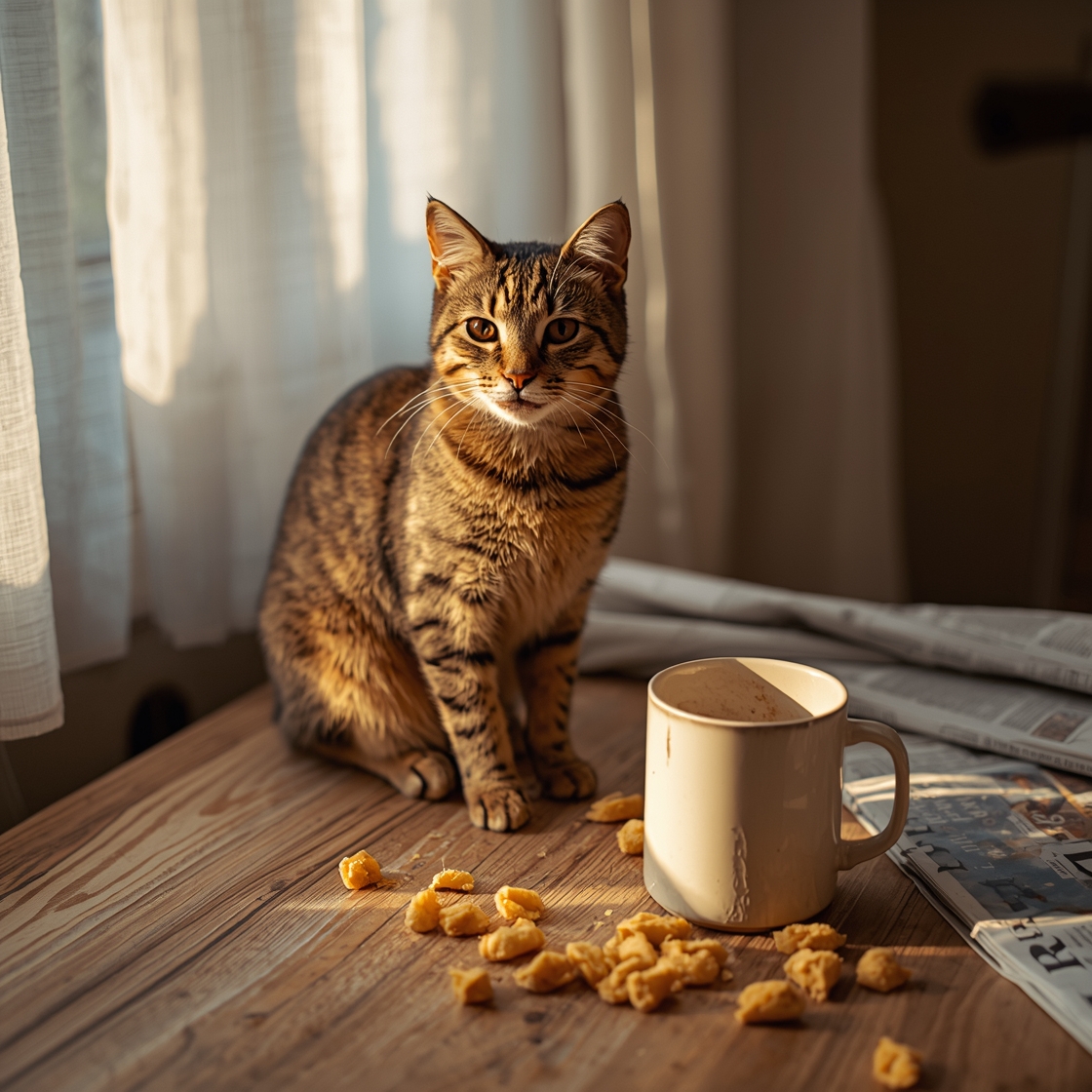
The cat dental care that actually moves plaque is a soft feline toothbrush plus enzymatic paste, several times a week, plus a VOHC-accepted diet or treat you can open on vohc.org. Chews and “dental” kibble are supplements. They are not a brush. We read current Amazon listing titles and descriptions and scored four jobs. Brushing clears this checklist. A grocery crunchy treat without a seal is Partial. A nylon bone or human toothpaste is Fail. Cornell’s Feline Health Center still treats periodontal disease as common by midlife when home care is absent. This desk did not open a mouth.
Brush. Confirm the seal. Book the exam if the gum line is red.
Our guides are reader-supported. This article may contain affiliate links. As an Amazon Associate we may earn a commission if you buy through links, at no extra cost to you.
Related: cat dental water additive, dental chews for senior dogs, best dog dental chews.
Quick picks for cat dental care
- Best daily tool: a feline toothbrush plus enzymatic paste — listed kits often sit under $15; cat toothbrush + cat enzymatic toothpaste.
- Best named dental diet class: Hill’s Science Diet Oral Care / Hill’s Prescription Diet t/d / Pro Plan Veterinary Diets DH — confirm the current VOHC row, not the bag art.
- Best named treat class: Greenies Feline Dental Treats — commonly VOHC-accepted; still a calorie, still not a brush.
- Best clinic reset: a veterinary oral exam with dental radiographs when the cat will not eat kibble, drools, or has a red gum line.
What current Amazon listings show (Cat Dental Tool, /images/hKi9-VTr0iUsBcGCKF045-s1-how-to-brush-your-cat-s-teeth.png)
Four jobs. Most Amazon “dental” tiles fail at least one.
| Job | What clears it | 2026 aisle fake | Fails if missing |
|---|---|---|---|
| Mechanical reach | Soft brush at the gum line | Finger wipe only, forever | Fail as complete care |
| Paste safety | Feline enzymatic paste | Human fluoride toothpaste | Fail |
| Claim | VOHC seal you can open on vohc.org | “Cleans like a toothbrush” with no seal | Partial |
| Calories | Treat kcal subtracted from dinner | Free-feeding dental treats | Partial |
| Tool | Listed snapshot | VOHC (verify) | Index job | Desk note |
|---|---|---|---|---|
| Feline toothbrush + enzymatic paste | Often $8–$18 as a kit | Paste lines vary — check | Primary | Gold standard on AVMA-style home-care pages |
| Hill’s Science Diet Oral Care | Search live listing | Often accepted — confirm SKU | Diet assist | Texture kibble; still brush |
| Hill’s Prescription Diet t/d | Vet-channel | Typically accepted — confirm | Diet assist | Prescription class, not a grocery bag |
| Pro Plan DH | Vet-channel | Typically accepted — confirm | Diet assist | Same rule: seal, then brush |
| Greenies Feline | Often $8–$20 | Commonly accepted — confirm | Treat assist | Size the pouch; count kcal |
| Generic “dental” crunchy | $6–$15 | Often no seal | Partial / Fail | Marketing word, not a protocol |
| Water additive | $8–$16 | Some SKUs accepted, many not | Partial | Taste change ≠ plaque score |
| Nylon / hard rubber “chew bone” | $7–$20 | No | Fail | Fracture risk on a worn feline tooth |
Before you shop: (1) the paste is feline, (2) you can name the VOHC product if you are buying a diet or chew, (3) you will still book an exam if the cat pawed its face yesterday. A $20 treat pouch that the cat swallows whole is a snack.
What cat dental care has to do
Plaque can start forming within a day of a meal. Mineralization into tartar is a matter of days if nothing scrapes the gum line. AAHA and AVMA client pages still put brushing at the top of home care. Cornell’s Feline Health Center treats periodontal disease, tooth resorption, and stomatitis as the three names owners actually meet in a clinic — not “bad breath” as a flavor problem.
Systemic links (kidney, heart, liver) appear in veterinary client-education language as associations. This desk is not restating those as a chew trial we ran.
The cat dental care that fails is the one that swaps a brush for a water additive and calls it a protocol. The cat dental care that clears this checklist is boring: short sessions, a tiny head, a paste the cat will lick, and a professional exam when the mouth says so.
How to brush: a 3-week desk ladder
Human toothpaste is a Fail. Fluoride and foaming detergents are a vomiting problem in cats. Buy a feline enzymatic paste. Buy a brush with a head that can reach the upper carnassial. A finger brush is a step, not the finish.
Week 1 — paste only. Let the cat lick a rice-grain of paste off a finger. Stop at a hiss. That is the session.
Week 2 — finger on the gum. Rub the upper canine for five seconds. Treat after. Do not chase the cat through the apartment.
Week 3 — brush one tooth. 45-degree angle to the gum line. Short circles. Ten to fifteen seconds. Then stop. Build toward 30–60 seconds over later weeks if the cat stays.
AVMA-style pages still say several times per week is the floor; daily is the ideal if the cat will sit. This desk did not time a panel of cats.
Tips that are actually actions:
- After play, not during a zoomie.
- One person holds; one person brushes — or do not start.
- Cooked chicken crumb after, not a dental chew in the same minute (you will not see what the brush did).
- If the cat bleeds, stop. That is a clinic question, not a harder brush.
Check feline toothbrush listings →
Check feline enzymatic toothpaste listings →
Dental diets: texture is a claim, not a lab
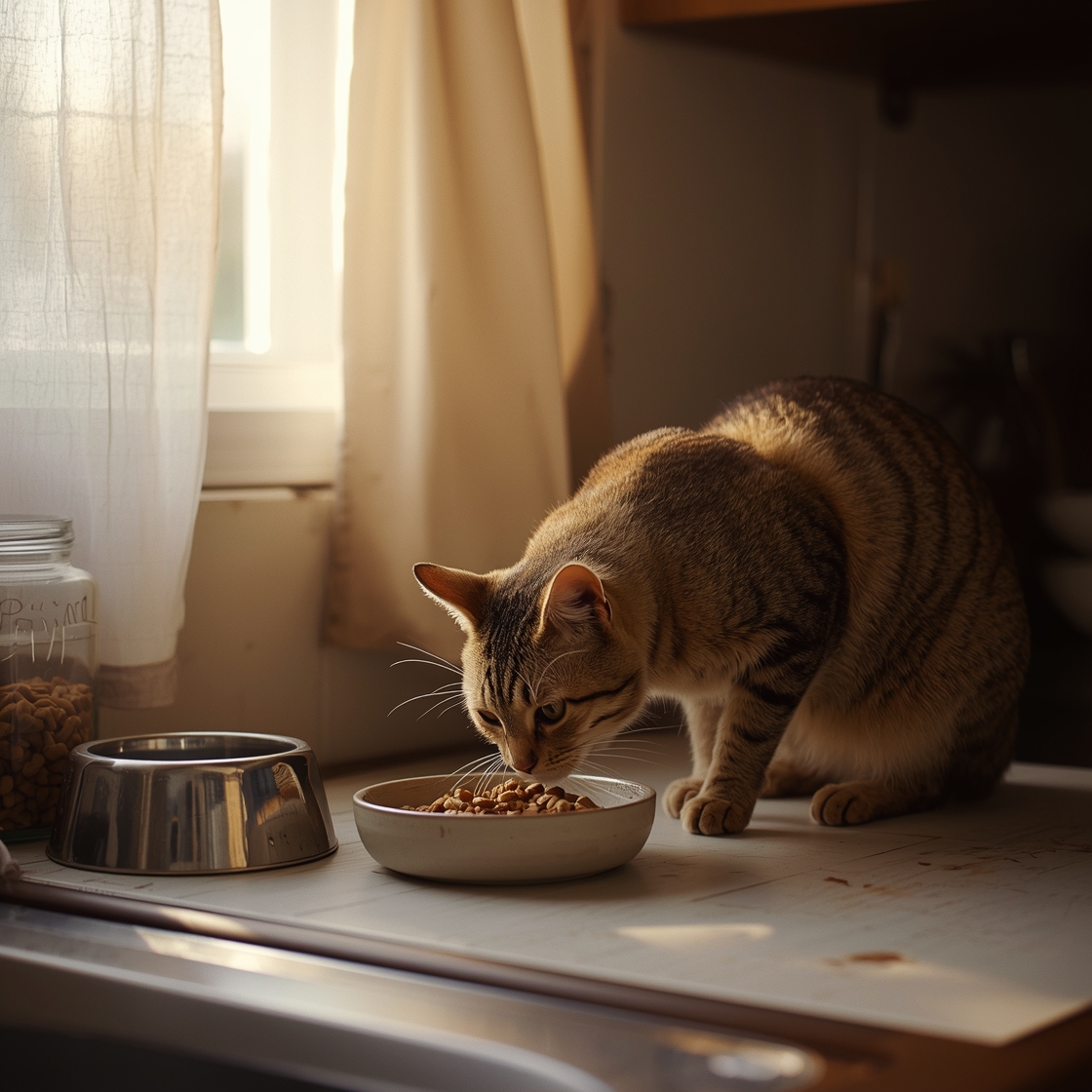
A dental diet earns the word when VOHC has accepted that SKU for plaque or tartar reduction. Larger, ridged kibble is the mechanical story manufacturers print. Fiber (beet pulp, cellulose) is the saliva-and-sweep story. Antioxidants on a bag are a gum-inflammation talking point, not a number this desk assayed.
Three classes on the 2026 aisle:
- OTC oral-care kibble — Hill’s Science Diet Oral Care is the named grocery-adjacent example. Search the live bag. Confirm the VOHC row.
- Veterinary dental diets — Hill’s t/d,DH, Royal Canin Dental. These are clinic-channel foods. They are not a substitute for radiographs.
- Wet-plus-crunch — moisture plus a hard bit. Useful for cats that will not drink. The crunch still has to be sized so the cat actually chews.
Owner-theme language on listings talks about “less tartar on the lower incisors” and “better breath in a few weeks.” Those are owner themes.
Check dental cat food listings →
Chews and treats: four textures, one calorie problem
Dental chews for cats are a supplement for cats that will not sit for a brush. They are not a replacement.
| Texture | What the listing usually is | Mechanical story | Desk risk |
|---|---|---|---|
| Protein stick (chicken / fish) | Dense, low-carb | Scrape if the cat actually chews | Swallow-whole if too small |
| Ridged rubber | Toy, not food | Longer session if the cat stays | Choke / shard if cheap rubber |
| Freeze-dried gelatin / plant bite | “Rawhide-free” | Hardens, then crumbles | Calories + GI upset |
| Grain bar with catnip | Soft, melts | Minimal scrape | Sugar / starch; Fail as a cleaner |
Size rule: too small to swallow whole; soft enough that a worn feline tooth does not slab-fracture. Semi-flexible beats brick.
Ingredient rule: named animal protein, no xylitol (rare in cat treats, still read the panel), no human mint paste.
Claim rule: VOHC or it is a snack with a dental word.
Greenies Feline is the named treat this desk will write down because the family is commonly on the accepted list. Confirm the current SKU. Count the kcal. A 9 lb indoor cat does not need a “dental” calorie stack on top of dinner.
Check Greenies Feline listings →
Calorie
| Cat weight | Treat kcal desk cap | What to cut | Watch |
|---|---|---|---|
| 6–8 lb | 15–25 | A few kibbles | Body-condition score monthly |
| 9–12 lb | 25–40 | More than you think | Stool firmness |
| 13 lb+ | 40–55 | Treats are dinner | Indoor weight creep |
This is arithmetic from typical treat labels, not a metabolic cage study.
Recognizing dental problems (clinic, not a chew)
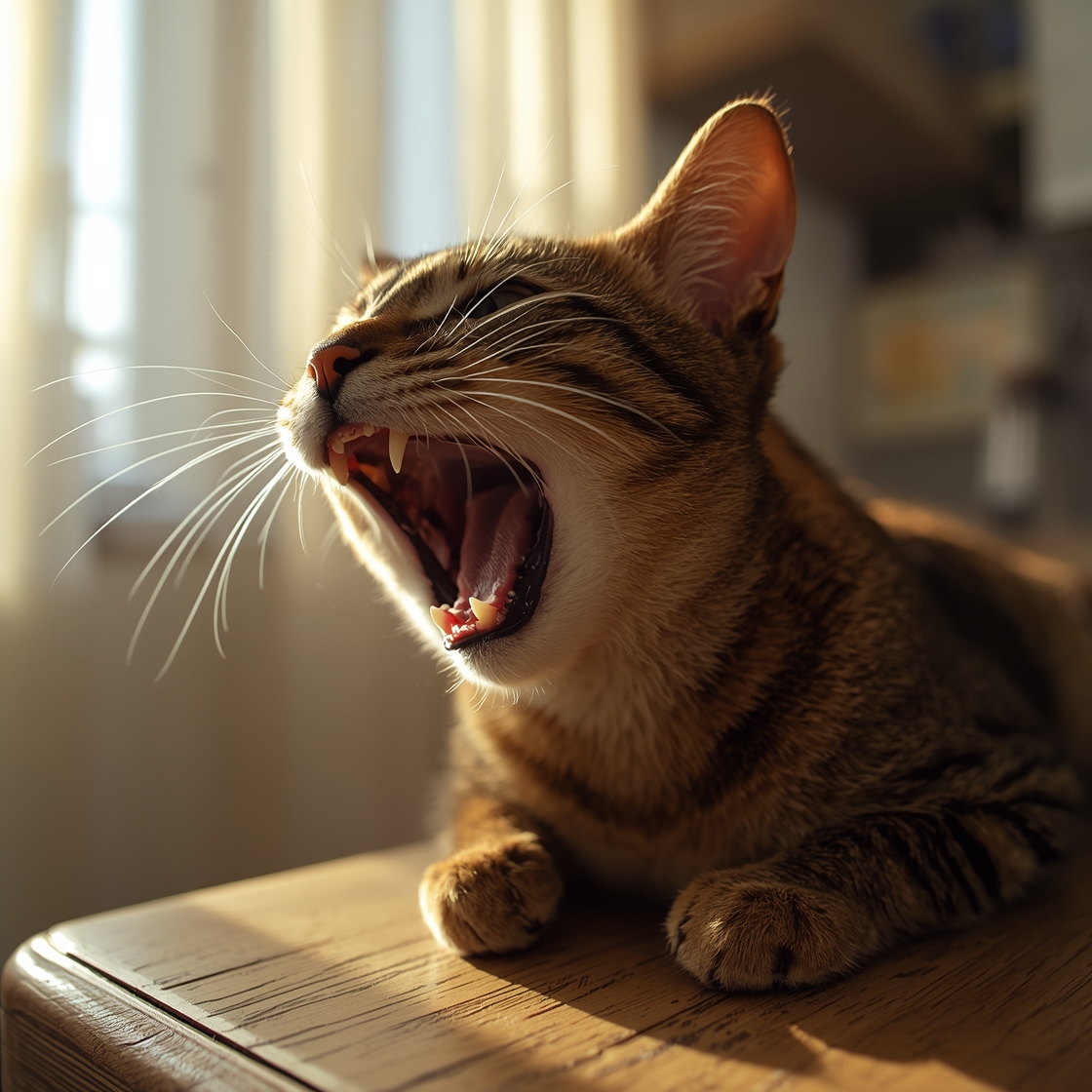
Cats hide oral pain. The names on Cornell-style pages are periodontal disease, tooth resorption, stomatitis, tartar/calculus, and fractures.
Signs that are not subtle once you look:
- Soft-food only, or walking away from kibble after three bites
- Drool, especially pink-tinged
- Pawing the face
- Breath that stays sour after a brush
- Red or receded gums, facial swelling
- A click when the cat bites
- Weight loss
Book the veterinarian if any of those last more than a day, or immediately if there is blood, swelling, or a sudden food strike. Published surveys in veterinary literature put a large share of cats over age three on some form of dental disease. Early exam beats an emergency extraction bill. This desk did not examine a panel.
Professional care: what the clinic actually does
Home brushing cannot scale a mineralized sheet off a premolar. Once tartar is visible, or breath stays foul, the job is an anesthetized scaling plus dental radiographs. Much feline disease lives under the gum line. A flashlight exam on a wriggly cat is a screen, not a full chart.
The clinic’s three jobs: diagnose what you cannot see, reset the surface so daily brushing can work, and name a plan (diet, chew, recheck interval) for that mouth. Breeds and individuals differ. We are not writing a protocol for your cat.
Anesthesia risk is a real conversation with that veterinarian — age, kidney values, heart murmur. It is not a reason to skip a painful mouth.
Home-care schedule for cat dental care
| Life stage | Treat / brush | Professional exam | Stop-and-call |
|---|---|---|---|
| Kitten | Paste on finger; intro only | First-year wellness | Rare; still check mouth at vaccines |
| Adult 1–7 yr | Daily–3×/week brush | Annual | Red gum line, persistent odor |
| Senior 7+ yr | Daily if tolerated | Every 6–12 months | Drool, pawing, food strike |
Periodontal disease figures of roughly 50–90% of cats over age four appear in published veterinary surveys. Prevention is cheaper than a full-mouth extraction set. That is a cost observation, not a guarantee.
Tool-progression desk
| Step | Tool | Time | Stop signal |
|---|---|---|---|
| 1 | Paste on finger | 5 sec | Hiss |
| 2 | Finger brush | 15 sec | Swat |
| 3 | Cat toothbrush | 30–60 sec | Repeated flee |
Never use human toothpaste.
Price snapshot (August 2026 listings)
| Item | Typical listed band | Recurring? |
|---|---|---|
| Toothbrush + paste kit | $8–$18 | Paste every 1–3 months |
| Greenies Feline pouch | $8–$20 | Weekly if you use them |
| OTC oral-care bag | $20–$45 | Monthly food |
| Vet dental diet | Clinic price | Monthly food |
| Professional cleaning | Hundreds, clinic-quoted | As directed |
A tube of paste and a brush still undercuts one anesthetized cleaning. That math only holds if you actually brush.
What this cat dental care page will not do
It will not rank a top 5 chew It will not invent a plaque-percent from owner stars. It will not call a water additive a toothbrush. It will not say we are veterinarians.
If the cat has not had an oral look in a year, start there. Then buy the brush.
Does cat dental care work without a veterinary exam?
No. Hidden resorption can make a brush look like an attack. Get clearance on a new rescue and on any senior that suddenly hates the kitchen. Then run the Index: paste, brush, optional VOHC diet or treat.
How often should cat dental care include a toothbrush?
Several times per week is the floor on typical veterinary home-care pages. Daily is better if the cat will sit. Ten seconds done is better than a two-minute fight that ends the habit.
Can a dental chew replace cat dental care brushing?
No. Chews reduce surface plaque in some VOHC protocols. They leave biofilm at the gum line. Call them a bonus. Do not call them a brush.
Are dental diets enough for cat dental care?
They help when the SKU is VOHC-accepted and the cat actually chews the kibble. They plateau. Pair with brushing. Confirm the seal on vohc.org for the bag in your hand, not a cousin SKU.
When should I start cat dental care on a kitten?
After the veterinarian has looked at the mouth. Finger-paste in the first year builds tolerance. Do not force a full brush on a teething kitten.
Is a water additive cat dental care?
Sometimes a VOHC-accepted additive is a Partial assist. Many bottles are flavor. Read the current accepted list. Do not drop the brush because the water tastes minty.
What if my cat will not accept any cat dental care at home?
That is common. Do not injure the cat or yourself. Use VOHC diet/treat if the veterinarian agrees, and keep the professional exam on the calendar. A clinic cleaning is still care.
How to verify a VOHC row (desk steps)
Open vohc.org. Find the feline accepted-products list. Search the exact product name on the bag, not the brand family. Greenies has dog and cat lines. Hill’s has Oral Care and t/d. A cousin SKU can sit off the list while the bag art still says “dental.”
If the list moved since August 2026, believe the list. This page is a snapshot method, not a cached seal.
Print or screenshot the row. That is the only “proof” a treat or diet should get on this desk.
Rescue-week cat dental care (after the exam)
Day 1–2: look, do not force. Offer paste on a plate if the cat is food-motivated.
Day 3–5: finger-paste on the upper canine only. One second is a win.
Day 6–10: finger brush if the cat stayed. Stop at a swat.
Day 11+: toothbrush if the mouth is cleared. If the veterinarian found resorption, skip home scraping on that tooth.
A new rescue that fled the carrier is not a brushing prospect on night one. Food, litter, and sleep come first.
What “professional cleaning” usually includes
Anesthetized oral exam, dental radiographs, scaling above and below the gum, polishing, charting, and extractions if a tooth is done. Fluoride or a sealant is clinic-dependent. Pain control is clinic-dependent. Ask for the estimate before you authorize extractions you did not expect.
Home care starts again when the mouth is comfortable — the clinic will say when. Brushing a fresh extraction site is a Fail.
Indoor vs outdoor cats
Indoor cats live longer and accumulate more years of plaque. Outdoor cats still get periodontal disease; they also get trauma fractures. Neither lifestyle replaces a brush. “He eats dry food, so his teeth are clean” is the sentence this Index exists to retire.
Last reviewed August 2026. If a price or a VOHC row moved, tell us.