Cat Owners: Don't Buy a Toothbrush Kit Until You Read This
Our guides are reader-supported. This article may contain affiliate links. As an Amazon Associate we may earn a commission if you buy through links, at no extra cost to you.
Quick answer: The best cat toothbrush and toothpaste kit pairs a cat-labeled enzymatic paste with no xylitol and a finger brush for week one — then a small-head cat brush once the cat accepts flavor on a lip. Human toothpaste is the wrong object. A long handle on day one is how sessions end under the bed. Brushing does not replace a dental exam or a professional cleaning. VOHC (Veterinary Oral Health Council) seals live on treats and diets more often than on paste tubes; confirm any seal on the current VOHC cat table. Sudden foul breath, drooling, pawing at the mouth, or a cat that stops eating is a clinic job.
” We compared current marketplace listings, AVMA / AAHA-style dental common sense, VOHC’s public accepted-products idea, and maker pages (including Virbac’s enzymatic, no-rinse C.E.T. story). If a fetched page did not print an ingredient, this page does not invent one.
Passive options: best cat dental water additive. Chewables: best cat dental treats. Dog kits are a different mouth: best dog toothbrush and toothpaste kit.
How to choose the best cat toothbrush and toothpaste kit (six checks)
- Paste first, brush second. The paste must be pet toothpaste. Read the tube for xylitol — it does not belong in a cat mouth. Enzymatic formulas (protease / glucose-oxidase class on clinic brands) are the usual plaque-chemistry story. Baking-soda-heavy pastes can be harsh; “mint fresh” is often a human leftover and a compliance killer.
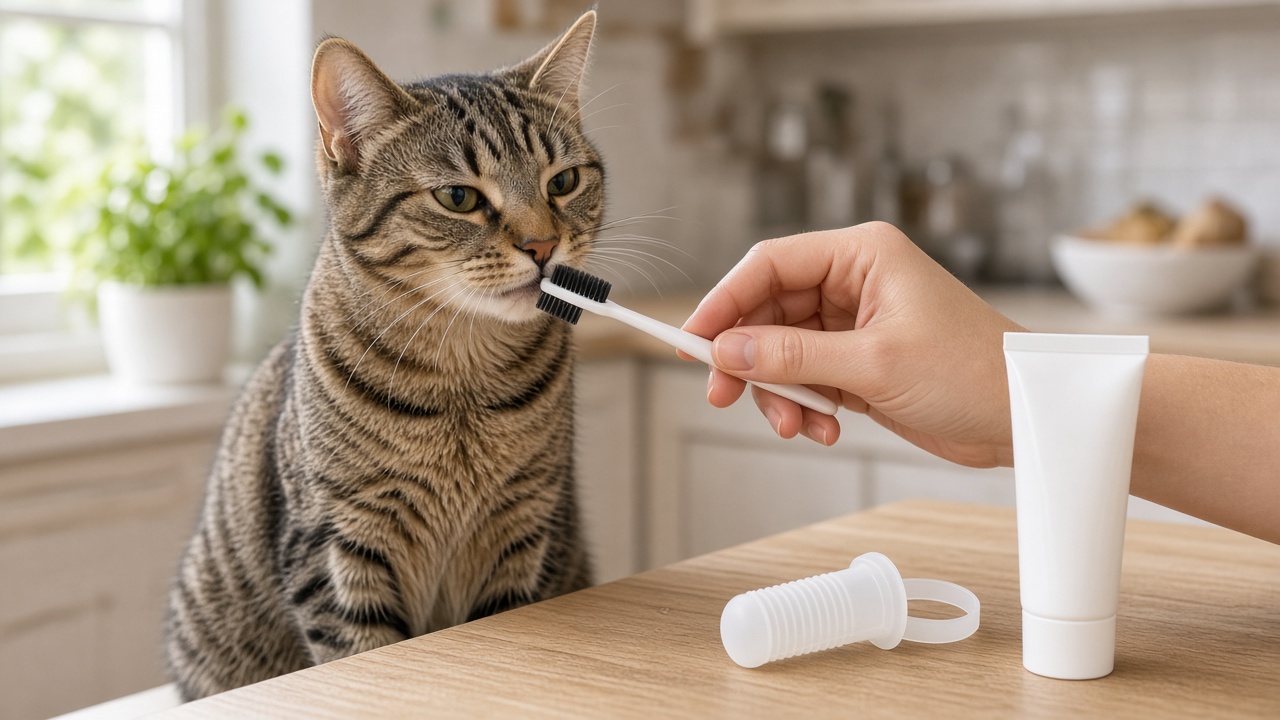
- Finger brush is week one. A fingertip silicone or finger sleeve lets you control pressure and stay at the lip. Dual-head mini brushes come after the cat will sit for flavor. Electric / sonic handles are a dog-aisle idea; noise ends most cat sessions.
- Cat-titled when you can get it. Petrodex, TropiClean, and Arm & Hammer on this page are sold as cat kits. The live C.E.T. card is titled for Dogs. Virbac enzymatic chemistry is real clinic-aisle chemistry; the card on this URL is still a dog-titled kit. Use a cat C.E.T. SKU if you can find one, or treat the dog kit as dual-use only if the paste is xylitol-free and the heads fit a cat mouth. Do not pretend the title says “cat.”
- Head size. Kitten mouths and many adult cats need a mini or angled head. A dog-scale head is a gag risk and a fight.
- VOHC is a seal, not a vibe. VOHC accepts submitted plaque/tartar claims for named products. Most toothpaste tubes are not on that table. “Vet recommended” on a marketplace title is advertising. We will not invent a VOHC row for a kit org the morning you read this.
- Mouth first if something is wrong. AVMA’s public dental pages treat periodontal disease as common in adult cats and treat home care as an adjunct. Tooth resorption is a feline-specific disease a brush cannot “scrub away.” We are not diagnosing either.
AAHA and veterinary dental teaching pages describe daily or near-daily brushing of the outer surfaces as the home-care ideal. Inside surfaces and under the gum are clinic geography. Thirty seconds of outer upper canines and premolars, most days, beats a monthly wrestling match.
Tool Map — best cat toothbrush and toothpaste kit by job
| Job you can describe | Tool class | Kits on this page | Honest skip |
|---|---|---|---|
| Cat has never been brushed | Finger brush + pea of enzymatic paste | VVHOMIFE; dual kits that include a finger brush | Day-one long handle |
| Cat accepts flavor, needs molars | Small / angled cat brush | TropiClean; Petrodex | Dog-scale heads |
| Tight budget, cat-titled paste | Grocery / value cat kit | Arm & Hammer; Petrodex | Human paste “just this once” |
| Clinic-aisle enzymatic name | C.E.T. / Virbac chemistry | C.E.T. card is dog-titled — match the tube you hold | Assuming the card is a cat SKU |
| Multi-pet household | Dual-species box | Oakley; generic dog & cat kit | One flavor both species hate |
| Cat will not tolerate a brush | Not a kit | Water additive / dental treat / clinic | Forcing a kit and calling it “training” |
Named kits — currently sold hardware, not a medal table
Street prices are live-card snapshots (Aug 2026). Search links use our Amazon tag.
1. Petrodex Dental Care Kit for Cats
Best for: a cat-titled malt-flavor starter when you want a known grocery-aisle name.
Snapshot ~$9.83. Petrodex is a long-running pet enzymatic / malt kit class. Malt is a compliance flavor, not a plaque percent. Brush heads on value kits can be large for kittens — use the finger sleeve if the box includes one, or buy a finger brush separately. Confirm the current tube is cat-labeled and xylitol-free.
Pros: Cat-titled; low snapshot; familiar malt class Cons: Head may be large for kittens; not a VOHC substitute
2. TropiClean Fresh Breath Cat Toothbrush and Toothpaste Kit
Best for: a cat-titled kit when the shopping job is odor plus a small angled brush.
Snapshot ~$15.99. TropiClean sells a fresh-breath / botanical story on many SKUs. Breath that appeared suddenly is still a clinic rule-out, not a parsley problem. Angled mini heads are the useful hardware if the listing you open actually includes one. Flavor rejection is the usual owner con — keep a second paste class on hand rather than forcing mint.
Pros: Cat-titled; small-brush story Cons: Scent is polarizing; odor marketing is not a diagnosis
3. C.E.T. Oral Hygiene Kit for Dogs
Best for: shoppers who want Virbac C.E.T. enzymatic chemistry — read the title: this card is a dog kit.
Snapshot ~$15.29. Virbac’s C.E.T. line is the clinic-aisle enzymatic name. Their own US copy emphasizes enzymatic action without rinsing. Fingerbrush + mini-brush is the useful kit shape. This live product card is titled for dogs. A cat mouth needs a cat-scale head and a paste that is safe if swallowed. If you buy this exact card, confirm the paste is appropriate for cats on the tube you hold, or search a C.E.T. cat SKU. We will not launder “veterinarian gold standard” into a desk award.
Pros: Named enzymatic line; finger + mini toolset Cons: Card title is dogs; head scale may be wrong
4. Arm & Hammer Complete Care Cat Dental Kit
Best for: the lowest-risk cash outlay to see whether this cat will accept paste.
Snapshot ~$5.99. Cat-titled value kit. Baking-soda heritage is the brand story; it is not a license to scrub hard. Stiff bristles on value brushes are a real con — if the cat hates the feel, switch to a silicone finger brush and keep the paste if the tube is cat-safe. This is a trial kit, not a professional cleaning.
Pros: Lowest snapshot; cat-titled Cons: Bristle stiffness; baking-soda class can be sharp if you over-scrub
5. VVHOMIFE Cat Toothbrush & Toothpaste Kit
Best for: silicone finger-brush first sessions.
Snapshot ~$13.99. Marketplace cat kit built around a soft finger tool. That is the right week-one geometry. Finger brushes are a poor match for a cat that bites down and treats your finger as prey — stop, do not escalate. Sanitize the sleeve; silicone is washable, not sterile.
Pros: Finger-first design; gentle class Cons: Not a molar-reach tool for a cooperative adult; marketplace paste — read the tube
6. Oakley Dental Toothbrush Kit for Dogs & Cats
Best for: one box on a shelf in a two-species house — still read both labels.
Snapshot ~$12.97. Dual-species kit class. Convenience is the sell. Flavor and head size are the risks: a paste a dog loves can be a cat refusal, and a “universal” head can be a dog head. Confirm xylitol-free. Do not share a used brush between species.
Pros: One checkout; usually includes more than one tool Cons: Compromise flavor / head; not two optimized kits
7. Dog & Cat Toothpaste Kit with Toothbrush & Finger Brush
Best for: a beginner who wants both tool shapes in one anonymous box.
Snapshot ~$9.99. Generic dual kit. The useful part is the finger + stick combo. The weak part is an underspecified paste tube — read every ingredient line. Small tubes mean you will repurchase paste before you repurchase brushes. That is fine; paste is the consumable.
Pros: Two tool types; low snapshot Cons: Marketplace paste; tube volume is the limit
Want to browse current kits? See cat toothbrush kits on Amazon →
Best cat toothbrush and toothpaste kit tables
Listing audit — not a plaque trial.
Table 1 — Species title × kit
| Kit | Title species | Snapshot | Desk note |
|---|---|---|---|
| Arm & Hammer Complete Care | Cat | $5.99 | Value trial |
| Petrodex | Cat | $9.83 | Malt / grocery class |
| Generic dog & cat kit | Dual | $9.99 | Read the tube |
| Oakley | Dual | $12.97 | Do not share brushes |
| VVHOMIFE | Cat | $13.99 | Finger-first |
| C.E.T. Oral Hygiene Kit | Dogs | $15.29 | Chemistry name ≠ cat card |
| TropiClean Fresh Breath | Cat | $15.99 | Odor-positioned |
Table 2 — Brushing progression (desk protocol, not a timed study)
| Week | Tool | Duration target | Goal |
|---|---|---|---|
| 0 | Paste on a finger / lip | Seconds | Accept flavor as food, not a fight |
| 1 | Finger brush, one canine | ~10 sec | Sit still, then stop |
| 2–3 | Finger brush, outer upper arcade | ~20 sec | Gumline on the side you can see |
| 4+ | Mini cat brush if tolerated | 30–45 sec | Outer surfaces, most days |
| Never | Human paste, electric handle on a frightened cat | — | Wrong object |
VOHC-accepted dental treats can supplement. They do not replace mechanical plaque disruption when the cat will accept a brush.
Table 3 — Paste ingredient desk (read the tube)
| What you want | Why | What to avoid |
|---|---|---|
| Enzymatic pet paste | Maker chemistry aimed at biofilm | Human fluoride / foaming paste |
| Poultry, malt, or seafood flavor | Compliance | Spearmint “fresh breath” the cat hates |
| Xylitol-free | Toxicity class | Any tube that lists xylitol |
| Pea-sized amount | Cats swallow paste | A ribbon like a human brushing |
If the listing photo is the only “ingredient list,” wait for the box.
Table 4 — Kit vs additive vs treat vs clinic
| Format | What it can do | What it cannot do | Sister page |
|---|---|---|---|
| Toothbrush kit | Mechanical disruption of outer plaque if the cat allows it | Subgingival tartar, resorption, stomatitis | This URL |
| Water additive | Passive adjunct for cats that will not be brushed | Replace brushing or a cleaning | Dental water additive |
| Dental treat | Chew time + possible VOHC claim | Help a gulper | Dental treats |
| Veterinary dentistry | Exam, radiographs, cleaning under anesthesia when indicated | A $10 kit | Your clinic |
What enzymatic toothpaste is (and is not)
Clinic-aisle enzymatic pastes are sold as enzyme systems that act on plaque biofilm so you do not need a rinse. That is maker chemistry plus veterinary-dental teaching, not a PetBench percent. Non-enzymatic pastes can still be a compliance win if the cat will accept them and the tube is pet-safe. Abrasive “whitening” stories are for humans.
Swallowing a pea of pet paste is expected. Swallowing human paste is how you get GI upset and, with some human formulas, worse. Foam is a warning sign you grabbed the wrong tube.
Session method (no folklore, no “we timed 90 seconds”)
- Pick a calm window — after a meal or play, not during a stranger in the house.
- Let the cat lick paste off a finger for several days. If they refuse the flavor, change paste before you change the cat.
- Lift the lip. Touch. Stop. Treat (a dental treat only if it fits the calorie budget).
- Finger-brush the outer surface of one upper canine. Stop on any fight. Restraint that requires two adults is a groomer / clinic job, not a tougher kit.
- Graduate to a mini brush on the outer premolars. You will not see the insides well. That is normal.
- Rinse the tool. Replace a splayed or chewed head.
ASPCA / AVMA-style desensitization is the same script used for nails: one or two successful seconds beat a five-minute loss of trust. We are not quoting a house stopwatch.
If the cat bites the finger brush as prey, switch to a short-handled mini brush so your finger is not the toy — or stop and use an additive / treat / clinic path.
Safety we will stand behind
- No human toothpaste.
- No xylitol.
- No forced jaw prying on a painful mouth.
- Blood on the brush once can be gingivitis or trauma. Recurring blood is a veterinarian.
- Kittens: wait until they will accept handling; baby teeth are not a reason to skip the clinic if the mouth looks wrong.
- Seniors: dental disease is common. A new kit is not a reason to delay an exam.
Price bands (snapshots)
| Band | What we opened | What you are buying |
|---|---|---|
| ~$6 | Arm & Hammer | Cat-titled trial |
| ~$10 | Petrodex; generic dual | Known name or two tools |
| ~$13–16 | VVHOMIFE; Oakley; C.E.T. dog card; TropiClean | Finger class, dual box, clinic name, or odor kit |
Paste refills are the recurring cost. Shop the tube species and ingredients, not the pretty handle.
Owner themes we keep seeing (not a survey we ran)
- “They hate it.” Flavor or day-one long handle.
- “I used my toothpaste.” Wrong object.
- “Breath is still terrible.” Clinic. Tooth resorption and periodontal disease do not smell like a TropiClean problem.
- “The C.E.T. kit is for dogs.” Yes. The card title says so. Read it.
- “Treats are enough.” Only if the cat chews and you accept that brushing is still the mechanical gold standard in dental teaching pages.
Frequently asked questions about the best cat toothbrush and toothpaste kit
How often should I use the best cat toothbrush and toothpaste kit?
Dental teaching pages aim at daily or near-daily outer-surface brushing. Three focused days a week beat one monthly battle. If you cannot brush, use the additive / treat path and keep the exam.
How often should I brush my cat’s teeth?
Same answer: most days, 30–45 seconds, outer surfaces, if the cat allows it. Zero days plus a yearly exam is still more honest than a traumatizing weekly marathon.
What if my cat resists brushing?
Stop earlier. Flavor-only days. Finger tool. If the mouth is painful, stop entirely and book the veterinarian. A harder brush is the wrong escalation.
How do I introduce a new toothbrush and toothpaste?
Paste on food or a finger first. Lip lifts for days. Then one tooth. Then a week at that length. Do not introduce a new food, a new carrier, and a new brush the same weekend.
Can I use dog toothpaste on a cat?
Only if the tube is explicitly safe for cats and xylitol-free, and the head fits. The C.E.T. card on this page is dog-titled — verify the SKU in your hand. When you can buy a cat-titled tube, do.
Do I need a VOHC seal on the paste?
Usually you will not find one. VOHC is more common on diets and chews. Absence of a seal is not proof of harm. Presence of “vet approved” on a title is not VOHC.
Is enzymatic paste required?
It is the clinic-aisle default story. A cat-safe non-enzymatic paste the cat accepts is more useful than an enzymatic paste the cat refuses.
When is this a veterinarian, not a kit?
Drooling, dropping food, pawing the face, bleeding, swelling, sudden breath change, or a cat off kibble. Also any kitten or senior you have never had examined.
Internal links
- Passive: best cat dental water additive
- Chew: best cat dental treats
- Snacks cluster: best cat food and treats
- Dog kits: best dog toothbrush and toothpaste kit
The best cat toothbrush and toothpaste kit is the cat-safe enzymatic (or accepted) paste plus the smallest tool the cat will allow, used most days, after a mouth that needed a veterinarian has seen one. If you cannot name xylitol status and week-one tool, you are not ready to check out.
What home care can and cannot touch
Veterinary dental teaching splits the mouth into geography you can see and geography you cannot. The outer surfaces of the upper canines and premolars are the home-care map. The inner arcade, the tongue side, and anything under the gumline are clinic geography. A $16 kit that you use most days on the outside is still doing a real job. A $16 kit that you jam toward the back of a closed mouth is how you get bitten and quit.
Calculus that is already a brown ledge will not brush off. That is why AAHA-style pages keep professional cleaning in the plan. Tooth resorption — a feline-specific lesion — is not a paste problem. Stomatitis is not a flavor problem. This desk will not hint that daily Petrodex replaces radiographs.
Anesthesia dentistry is a risk conversation with the veterinarian who knows that cat. We are not that conversation. We are the page that says: start the habit when the mouth is not an emergency, so the next exam is maintenance, not salvage.
Flavor, handling, and the two-week on-ramp
Cats decide with smell first. A seafood paste a dog kit loves can be a hard no. Malt (Petrodex-class) and poultry are the usual compliance flavors. Mint is the usual refusal. If week-zero lip licks fail, change the tube before you change the tool.
Handling is a separate skill. A cat that will not let you lift a lip will not accept a TropiClean angled head. Spend the first week on towel-wrapped lap time and lip lifts with no tool. That is the same desensitization shape used on nail work. We will not pretend we did.
Two-adult restraint is a stop rule. If it takes two people, the job belongs to a clinic or a groomer who already has a plan, not to a stiffer brush.
Dual-species boxes without pretending they are two kits
Oakley and the generic dog-and-cat card exist because households hate two checkouts. The honest way to use them:
- Read the paste once. If xylitol appears, the box is trash for the cat.
- Assign tools by mouth: finger sleeve and smallest head to the cat; larger head to the dog if the dog will use it.
- Never share a used brush. Periodontal bacteria are not a reason to be cute about hygiene.
- If the cat refuses the dual-species flavor, buy a cat-titled tube (Petrodex / TropiClean / Arm & Hammer class) and keep the finger tool.
The C.E.T. card on this URL is titled for dogs. Virbac’s enzymatic story is still the clinic-aisle reference. Search a cat C.E.T. SKU if you want that name on a cat carton. Do not write “gold standard for cats” over a dog title.
Breath, diet, and the additive fork
Chronic “cat breath” is often periodontal disease. Sudden breath change is a rule-out (tooth, kidney, GI). A Fresh Breath kit is a positioning line, not a diagnosis. If brushing is refused, the honest fork is:
- Book the exam.
- Add a water additive only as a passive adjunct, preferably a current VOHC cat row if you can match one.
- Add a dental treat only if the cat chews and the calories fit.
Do all three plus a new food the same week and you will not know what mattered. One variable.
Dry food is not a toothbrush. Crunch marketing is not VOHC. Wet food is not the enemy of teeth; plaque forms on both. Diet arguments belong on the food pages, not as a reason to skip the kit.
Kitten and senior special cases
Kittens: baby teeth shed. A finger brush and a pea of cat paste is handling school. Do not “see if they can take a dog head.” First dental look belongs in the kitten series of exams.
Seniors: assume dental disease is likely until an exam says otherwise. A new kit is not a reason to delay. If they suddenly refuse kibble, that is pain until proven otherwise. Brushing a painful mouth is cruelty, not enrichment.
Flat-faced cats: crowded mouths and more clinic dentistry, not a special paste. Smaller heads. More lip-lift practice. Same xylitol rule.
Tool care that actually matters
Rinse the tool. Air-dry. Replace a splayed or chewed head. Silicone sleeves can go in hot soapy water; they are not sterile. Do not store a wet brush in a closed travel case. Do not borrow a human brush “because it’s soft.” Soft human bristles still travel with human paste residue if the cup is shared.
Travel: a finger sleeve plus a travel-size pet paste is the kit. A long handle in a hotel bathroom is how you skip the session.
We will not claim a 30% or 40% plaque drop. We will not claim a five-point breath scale. We will not claim a veterinary panel reviewed our data. We will not claim enzymatic paste makes professional cleanings unnecessary. We will not claim the dog-titled C.E.T. card is a cat SKU.
The best cat toothbrush and toothpaste kit is still the cat-safe tube plus the smallest tool this cat will allow, most days, after the mouth that needed a veterinarian has seen one.
A one-month habit without a fake plaque score
Week 1: flavor only. Week 2: finger on one canine. Week 3: outer upper on one side. Week 4: both sides if they still sit. If you stall at week 2 forever, that is still more home care than zero. Put a reminder on the same night you already do a nail check so the handling session is one block, not two arguments.
Missed a week? Restart at flavor, not at a molar marathon. A guilty 10-minute session after a gap is how trust resets to zero.
Keep the tube where you will see it. A kit in a bathroom drawer behind human paste is how the habit dies — and how someone grabs the wrong tube.
If two people share the cat, write the week-one rule on a note: finger first, pea of paste, stop on a fight. A household that improvises a new tool every night never builds a habit.
Sources
- AVMA, public companion-animal dental care pages. https://www.avma.org/
- Veterinary Oral Health Council, accepted products (verify current cat rows). https://vohc.org/
- AAHA dental guidelines / client education (home care as adjunct to professional care). https://www.aaha.org/
- Virbac C.E.T. US product information (enzymatic, no-rinse story). https://us.virbac.com/
- Maker listings opened August 2026 for the seven named SKUs on this page.