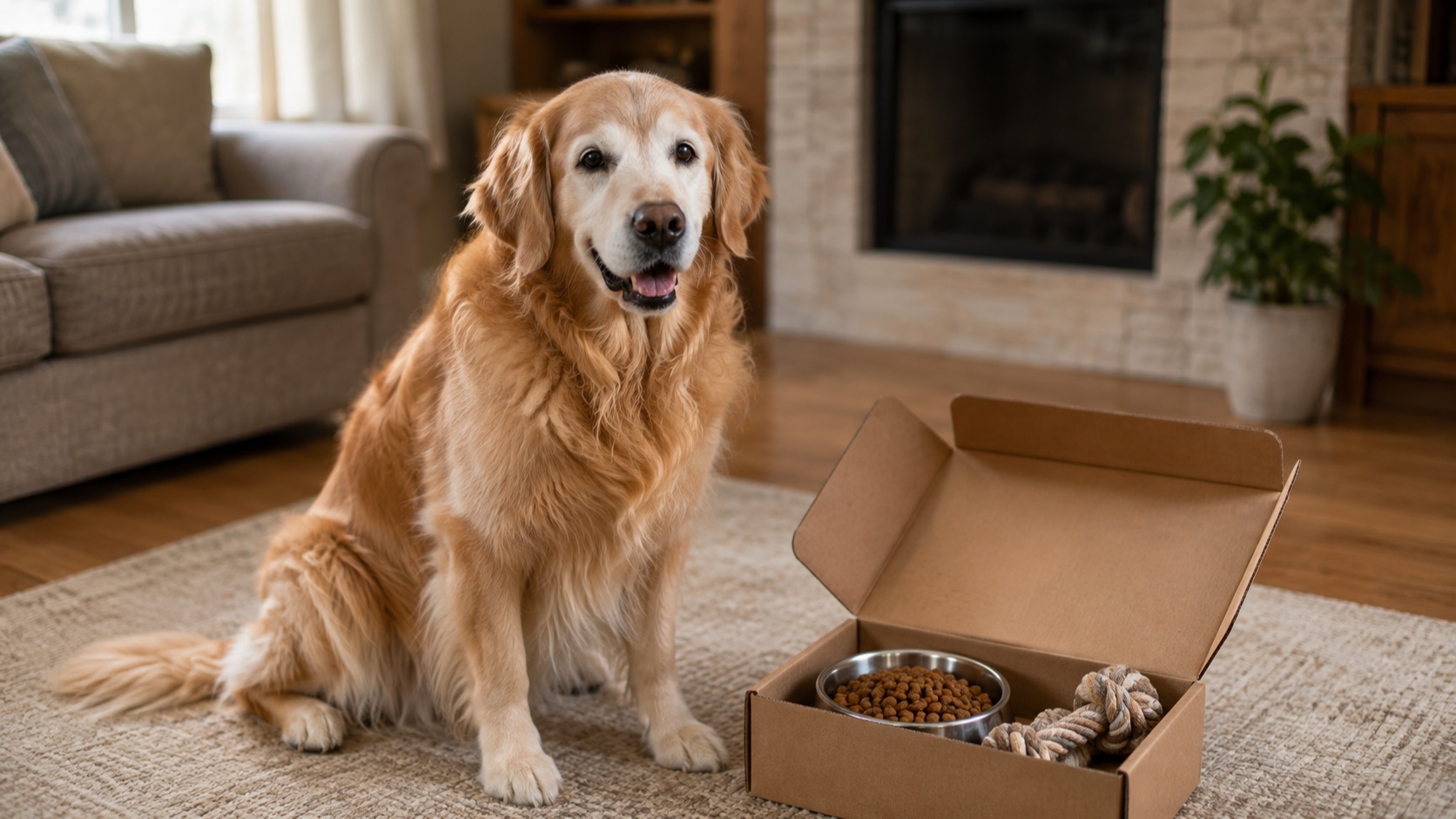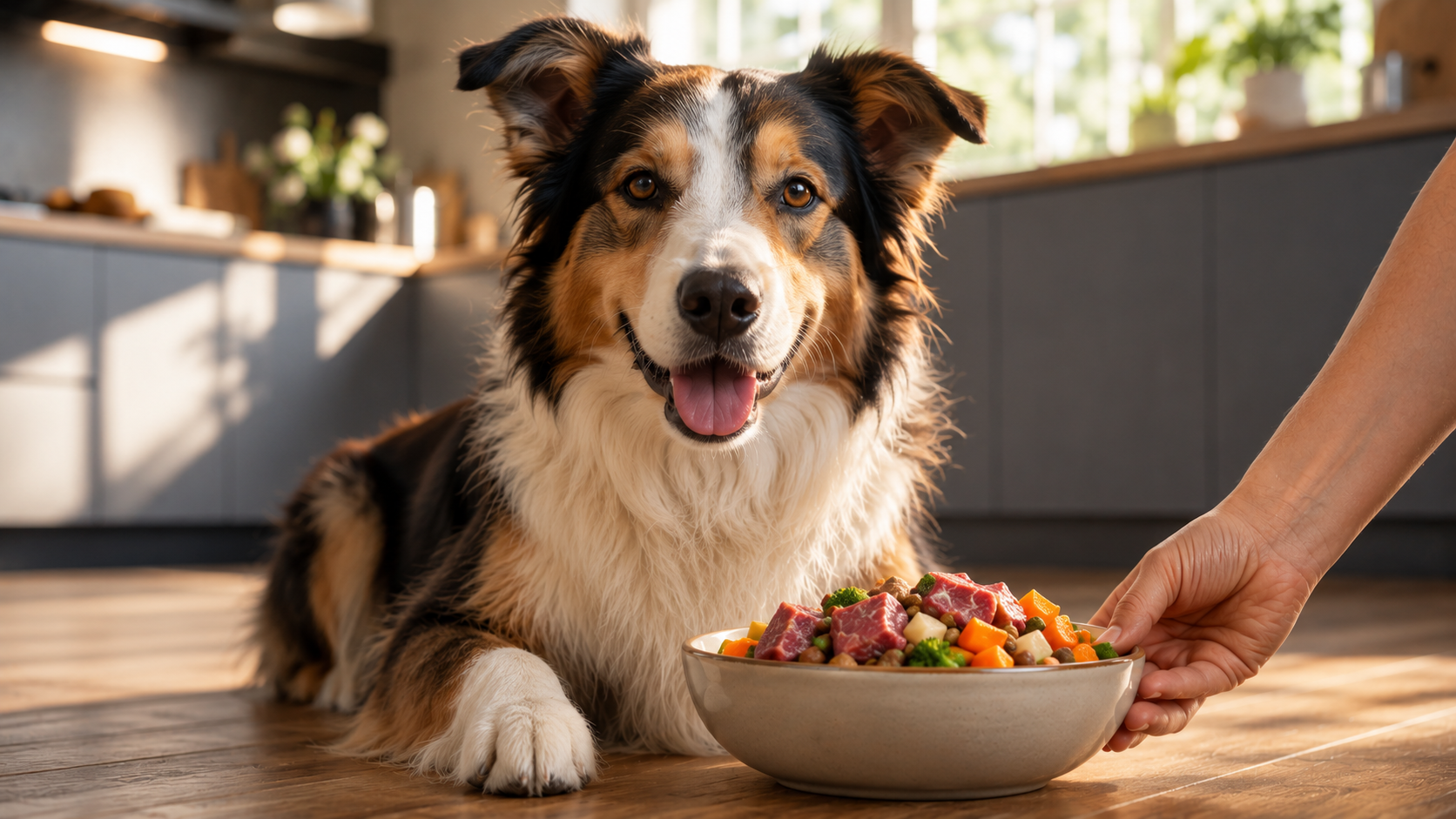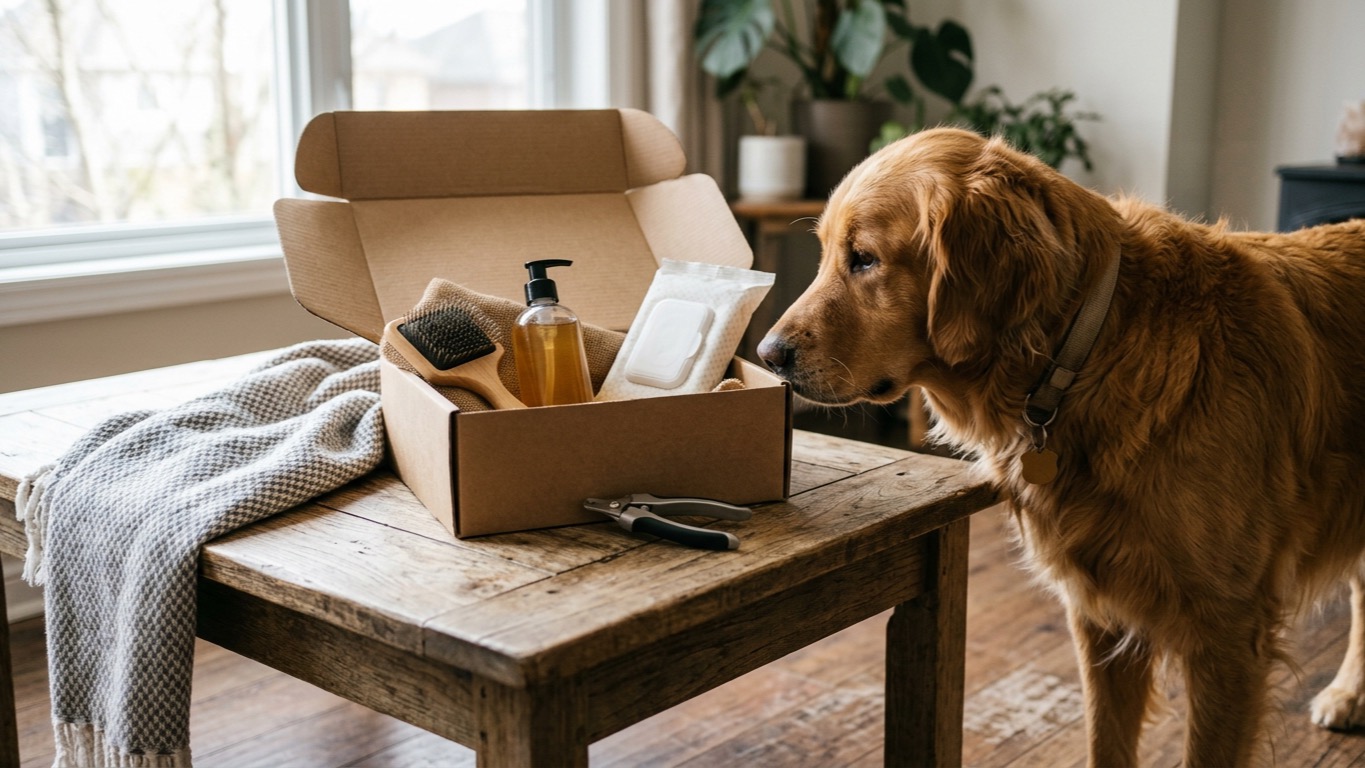

Quick answer: Dog food subscription box reviews on this desk compare portion math, AAFCO statements, and cancel policies. Fresh meal services are not the same product as Amazon Subscribe & Save kibble. A subscription box here means a recurring delivery — frozen fresh, air-dried, freeze-dried, or a toys-and-treats crate — billed on a schedule you can pause.
Dog food subscription boxes send measured meals to the door. That saves store runs. It also locks you into a format and a price band. Read the quiz, the cancel page, and the calorie math before you click “subscribe.”
The Ultimate Guide to Dog Food Subscription Boxes: Top Picks & Reviews
Convenience is the headline. Automatic deliveries cut last-minute store runs. Most providers let you set weekly, bi-weekly, or monthly drops so the box matches pantry space. Online portals that pause, skip, or edit a box without a phone call are the feature busy owners actually use.
Variety is the second sell. The category now spans grain-free, high-protein, limited-ingredient, freeze-dried raw, and human-grade fresh. Fresh brands usually start with a quiz: size, activity, and health notes become a portioned plan. The trade-off is cost. Fresh and freeze-dried run far higher per calorie than grocery kibble.
Toy-and-treat boxes such as BarkBox and Bullymake are not meal services. They add a monthly surprise. They pair with a food subscription; they do not replace one. Multi-dog households can usually create separate profiles so portions do not get mixed.
The category reflects a shift toward doorstep pet care. Consistent feeding is the gain. A broader menu than one supermarket aisle is the other gain. The bill is the constraint.
Quick Top Picks
- Best overall fresh food: The Farmer's Dog — personalized, veterinary-nutritionist-formulated meals, with a first-box discount on its own site.
- Best you can actually buy on Amazon: JustFoodForDogs Pantry Fresh — human-grade, shelf-stable meals with true Subscribe & Save.
- Best budget-friendly fresh-adjacent pick: Spot & Tango UnKibble — fresh-quality nutrition at closer-to-kibble prices, no freezer required.
How this desk selected subscription boxes
This desk kept services that publish a complete-and-balanced meal story or a clearly labeled enrichment box. Vaporware and “mystery nutrition” listings were dropped.
Nutritional paperwork. We read AAFCO statements and the ingredient pages each company publishes. Named whole-food proteins and a board-certified veterinary nutritionist on the formulation page scored higher as documentation. Vague “meat meal blend” copy scored lower.
Customization copy. Quizzes that ask breed size, age, activity, and restrictions (grain-free, limited-ingredient, sensitive stomach) are easier to audit than a single SKU. Automatic portioning is a software claim, not a calorie we verified on a scale.
Price bands. We compared published monthly ranges for small, medium, and large dogs, including shipping language and intro discounts. That is a listing snapshot. It is not a paid test plan.
Breed, age, and health still sit above the brand. Large-breed puppies need controlled calcium. Senior small dogs often need fewer calories and more joint-support talk. A plan that can change portions as the dog ages is useful if the site actually exposes that control.
This shortlist is a paperwork compilation. It is not a laboratory ranking.
Top 7 Dog Food Subscription Boxes of 2026: In-Depth Reviews
Each review lists who the service is for, the published specs, an honest drawback, and a pros-and-cons snapshot. Prices move. Recheck the live quote.
1. The Farmer's Dog Fresh Dog Food Subscription
Best for: Fully personalized fresh food with the strongest brand recognition.
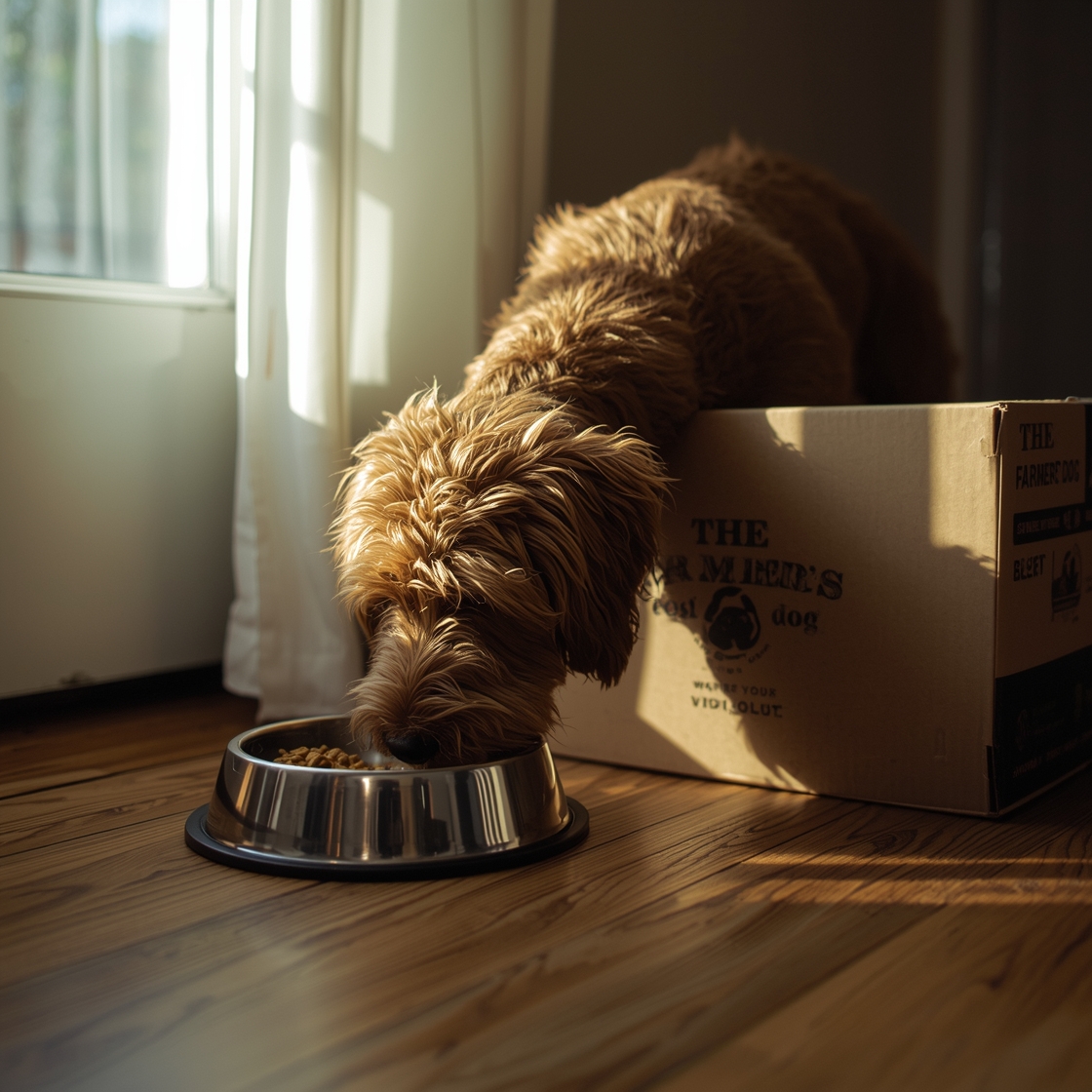
The Farmer's Dog ships fresh, human-grade meals cooked in US kitchens, frozen in pre-portioned packs. Recipes (beef, turkey, chicken, pork) are described as formulated by board-certified veterinary nutritionists. Portions come from the sign-up quiz: weight, age, activity. Shipping is advertised as free. Pause, skip, or cancel is an online control. Published pricing often runs about $2.31 to $26.77 per day by size — commonly $60–$90+ per month — with 50% off the first box.
Honest con: Large breeds get expensive (the site’s own quotes can exceed $20/day). You need freezer space. It is not sold on Amazon.
Pros:
- Pre-portioned packs remove measuring guesswork
- Veterinary-nutritionist formulation page and named proteins
- Flexible subscription management (pause or cancel anytime)
Cons:
- Very expensive for large breeds
- Requires freezer space; only available via its own website
2. Ollie Fresh Dog Food Subscription
Best for: Plan flexibility — mixing fresh and baked food to control cost.
Ollie publishes five fresh recipes plus two baked recipes across Full Fresh, Mixed Bowl, and Half Fresh plans. A health questionnaire (weight, age, allergies, activity) drives the plan. Packs arrive as pre-portioned trays with a reusable container and scoop. Fresh plans are direct-to-consumer; the baked and dry line also appears at Petco. Shipping is advertised as free. Full fresh often sits about $4–$8 per day; Mixed plans are described from about $1.36 per meal, with up to 60% off the first box.
Honest con: Full Fresh is premium ($6–$9/day is a common medium/large quote). Protein variety is thinner than some rivals.
Pros:
- Cheapest on-ramp to fresh via Half Fresh / Mixed
- High-quality ingredient story and a satisfaction guarantee
- Easier storage than all-frozen competitors
Cons:
- Full Fresh plans are premium-priced
- Fewer protein options than some rivals
3. Nom Nom Fresh Dog Food Subscription
Best for: Portion precision and a Mars / Royal Canin R&D story.
Nom Nom cooks fresh meals it describes as formulated by board-certified veterinary nutritionists and ships them in single-serve packs matched to a calorie target. Mars Petcare (Royal Canin division) has owned the brand since 2022. Delivery is advertised as free. Portions are said to adjust with weight change. Pricing is custom-quoted and sits in the premium fresh band beside Ollie and The Farmer's Dog.
Honest con: Few proteins. Frozen packs need freezer volume.
Pros:
- Single-serve packs are the most convenient fresh format in owner reports
- Corporate food-safety infrastructure is part of the pitch
Cons:
- Only a handful of protein choices
- Needs significant freezer space
4. Spot & Tango UnKibble Subscription
Best for: Fresh-quality nutrition at closer-to-kibble prices.
UnKibble is a “fresh-dry” food — human-grade ingredients dried at low temperature, no fridge required. A fresh-cooked line exists too. A quiz builds the plan. Shipping is advertised as free. Four UnKibble recipes plus the fresh line are the usual menu. UnKibble is often quoted near $1/day (about $27/month for a small dog, about $100/month for a 20 lb dog). The fresh line is often nearer $2/day.
Honest con: The company warns that Amazon listings are unauthorized resellers. Recipe count is thinner than the big fresh brands.
Pros:
- Most affordable entry among fresh-adjacent subscriptions
- No freezer for UnKibble
- Dry-style and fresh under one account
Cons:
- Amazon listings are unauthorized — buy on the official site
- Fewer recipes than bigger rivals
5. Sundays for Dogs Air-Dried Food Subscription
Best for: Fresh-food nutrition with zero-prep, shelf-stable convenience.
Sundays air-dries human-grade recipes (beef, chicken, turkey) to a jerky-like texture. No fridge, no thaw. The brand describes vet-developed recipes and no synthetic additives, and it advertises a clean recall record. Sold only at sundaysfordogs.com. Published math is often about $2.33/day for a 15 lb dog, or about $140–$185/month by size.
Honest con: Still far above kibble. Some reviewers mention fulfillment or support hiccups.
Pros:
- Easiest premium format — no cold chain
- Frequent picky-eater and sensitive-stomach anecdotes
- Cheaper than most frozen-fresh services
Cons:
- Still far pricier than kibble
- Occasional fulfillment / customer-service complaints
6. PetPlate Fresh Dog Food Subscription
Best for: Cup/container format and topper-size flexibility.
PetPlate cooks human-grade entrees in USDA-inspected kitchens, with a board-certified veterinary nutritionist on the formulation page and an AAFCO complete-and-balanced claim. Food arrives in pre-portioned, resealable containers. Four entrees plus toppers and supplements let you subscribe at topper size to cut cost. The brand advertises no recall history. Direct-to-consumer only. Full plans are often $70–$100+ per month.
Honest con: Large-breed portions can look small. Name recognition lags The Farmer's Dog and Ollie.
Pros:
- Container format is easy to serve and store
- Topper-size subscriptions cut the bill
- Easy online cancellation
Cons:
- Portions can run small for large breeds
- Less name recognition than bigger rivals
7. BarkBox Monthly Dog Subscription Box
Best for: A toys-and-treats fun box (not a meal-delivery service).
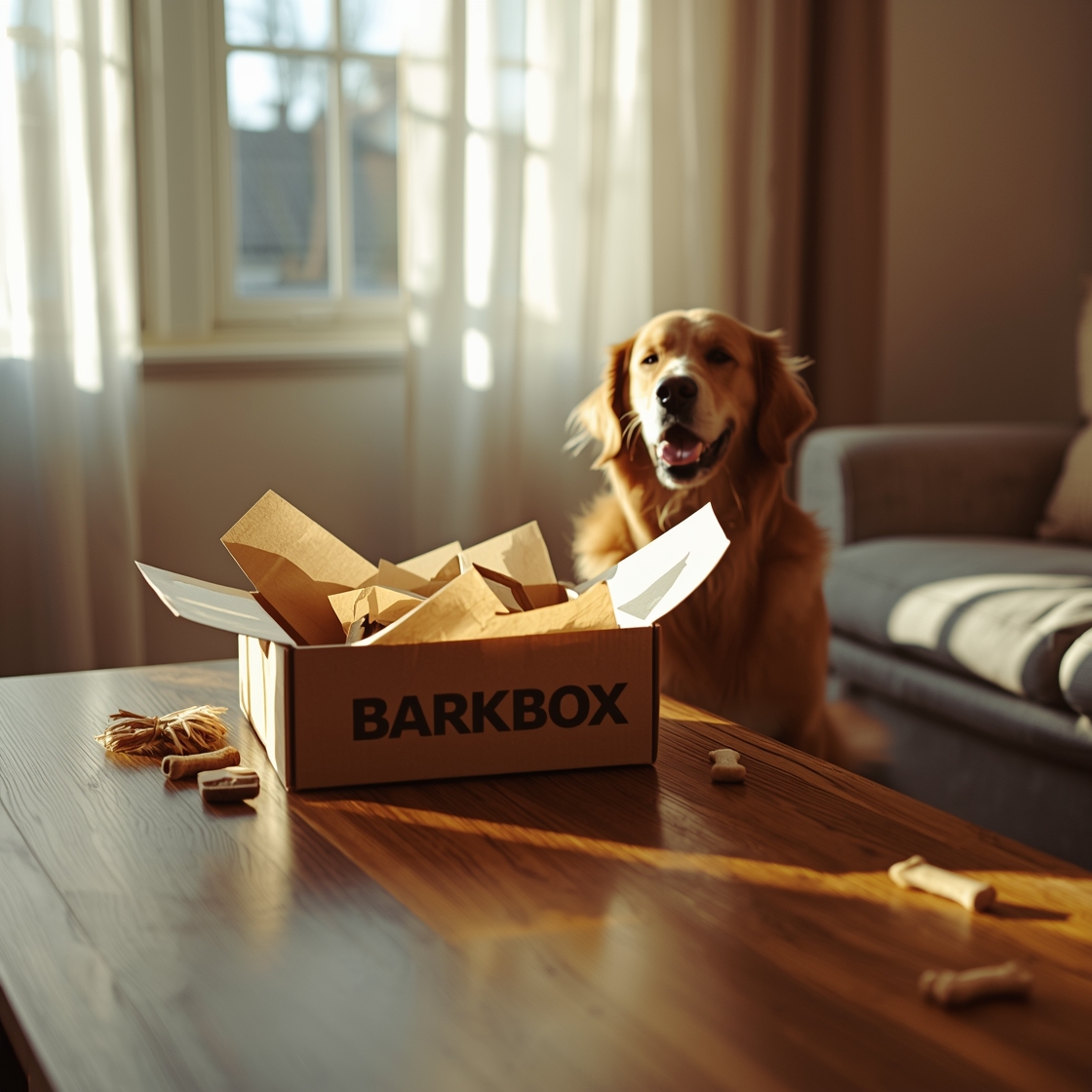
BarkBox is the best-known dog subscription brand. A themed box typically packs two toys, two full-size treat bags, and one chew. You can customize by size, allergies, and chew style. Super Chewer is the power-chewer variant. Treats are described as made in the USA/Canada. Shipping is free in the contiguous US. Pause or cancel anytime. Pricing is $35/month, about $26/month on six months, about $23/month on twelve. A one-month eGift card is sold on Amazon.
Honest con: No meals. Toy durability varies; Super Chewer costs more.
Pros:
- Best-known brand, large community
- Strong perceived value versus buying toys and treats separately
- Giftable via an Amazon gift card
Cons:
- Not a food subscription — treats only
- Toy durability varies for aggressive chewers
Prefer Subscribing on Amazon? Two Standouts
Most fresh brands sell direct only. Two human-grade options give you genuine Amazon Subscribe & Save.
JustFoodForDogs Pantry Fresh Wet Dog Food is the major human-grade fresh-style brand with true Subscribe & Save. Shelf-stable Tetra Pak meals need no fridge. They are complete and balanced to AAFCO standards and work as a full diet or a topper. A Beef & Russet Potato 6-pack is listed around $47.99 (Lamb & Brown Rice $50.94; 12-packs about $89.88), plus a Subscribe & Save cut. Per-calorie cost is high as a sole diet for big dogs. You pick recipes; there is no personalized quiz.
K9 Natural Freeze-Dried Dog Food brings a high-meat freeze-dried raw story to Amazon auto-delivery. New Zealand cage-free chicken or grass-fed lamb and beef, grain- and GMO-free on the label, rehydrated with warm water. A 1.1 lb chicken bag is often $52.99 (17.6 oz bags from about $33.99), with 30% off the first Subscribe & Save order. Cost per pound is among the highest here. It is a recurring product, not a curated box.
If your dog destroys standard box toys, Bullymake is the toughest toys-and-treats subscription in this category ($29–$45/month by commitment), with a replacement guarantee if a toy fails. The subscription runs through bullymake.com. Some individual toys appear on Amazon.
Pros and Cons of Dog Food Subscription Boxes: A Balanced View
The category now spans fresh, air-dried, freeze-dried, and toy-and-treat formats. That variety is the benefit. It is also why the “best” box depends on freezer space and the monthly number you will actually pay.
Convenience is the real product. A set schedule beats a Sunday store run. Pre-portioned packs and scoop-and-serve air-dried food cut daily prep.
Customization is the fresh-brand pitch. A quiz that captures age, activity, and sensitivities is easier than comparing kibble bags yourself. The recipe is still the company’s, not a home-cooked plan.
Format flexibility is newer. UnKibble, Sundays, and JustFoodForDogs Pantry Fresh skip the freezer. Frozen-fresh brands maximize personalization if you have the space.
Cost is the hurdle. Fresh and freeze-dried sit well above kibble per calorie. Large dogs can push frozen-fresh past $20/day. Spoilage risk is real for cold-chain boxes if a delivery sits. Ingredient control is limited; last-minute swaps your veterinarian suggested may not exist in the menu.
Subscriptions buy ease and a locked-in recipe. They do not buy a cheaper calorie than sale kibble.
Dog Food Subscription Box Comparison Table: Quick Reference Guide
Quick answer: For most families who want personalized fresh food, The Farmer's Dog or Ollie is the paperwork-and-reputation center. If you want Amazon or no freezer, JustFoodForDogs Pantry Fresh and Spot & Tango UnKibble are the standouts.
| Service | Format | Customization | Approx. price / month* | Where to buy | Check price |
|---|---|---|---|---|---|
| The Farmer's Dog | Frozen fresh | Full per-dog portioning | ~$60–$90+ | Brand site (not Amazon) | Check price |
| Ollie | Fresh + baked | Fresh/Mixed/Half plans | ~$40–$130+ | Brand site (not Amazon) | Check price |
| Nom Nom | Frozen fresh | Portion-matched to calories | Custom quote (premium) | Brand site (not Amazon) | Check price |
| Spot & Tango UnKibble | Fresh-dry / fresh | Quiz-based plan | ~$27–$100 | Brand site (not Amazon) | Check price |
| Sundays for Dogs | Air-dried | Size-based portioning | ~$140–$185 | Brand site (not Amazon) | Check price |
| PetPlate | Frozen fresh (cups) | Meals + toppers | ~$70–$100+ | Brand site (not Amazon) | Check price |
| BarkBox | Toys + treats box | Size, allergies, chew style | ~$23–$35 | Brand site; gift card on Amazon | Check price |
\*Prices reflect common starter plans and move with dog size. Several brands quote only after a quiz.
Key takeaways
- Customization is the fresh-food product. Farmer's Dog, Nom Nom, and Ollie portion from a profile.
- You do not always need a freezer. UnKibble, Sundays, and Pantry Fresh stay shelf-stable.
- Amazon is the exception. Among true meal products, JustFoodForDogs and K9 Natural offer genuine Subscribe & Save. Most fresh brands sell direct.
Price Ranges and What to Expect: A Guide to Dog Food Subscription Costs
Because most fresh brands quote after a quiz, treat these as bands, not invoices.
Budget tier – roughly $27 – $50 per month
Fresh-dry or shelf-stable options that skip the freezer. UnKibble can start near $27/month for a small dog. BarkBox lands here at $23–$35/month on longer commitments. Air-dried and toy boxes avoid cold-chain shipping. Customization is lighter: size and preference, not per-calorie targets.
Mid-range tier – roughly $60 – $100 per month
Human-grade fresh or freeze-dried with real per-dog portioning. The Farmer's Dog often sits $60–$90+ for small and medium dogs. PetPlate is often $70–$100+. Ollie’s fresh share of the bowl lives in a similar band.
Premium tier – roughly $100 – $185+ per month
Full fresh or air-dried for larger dogs. Sundays is often $140–$185/month. Full-fresh plans for big dogs (Farmer's Dog, Nom Nom, Ollie Full Fresh) can climb past $20/day. Small-batch cooking plus cold chain or premium drying drives the sticker.
Factors that shift the price
- Dog size is the biggest lever. The same brand can cost three to four times more for a large breed because pricing tracks daily calories.
- Format. Frozen-fresh pays for ice packs. Air-dried and fresh-dry (Sundays, UnKibble) skip that line item.
- How customized. Per-calorie portioning costs more than size-based scoops. Mixed / Half Fresh (Ollie) or topper-size (PetPlate) is the main way to cut the bill.
Intro discounts are common — 50% first box at The Farmer's Dog, up to 60% at Ollie, 30% first Subscribe & Save at K9 Natural. The ongoing rate is the number that matters.
Subscription Model Compare: Dog Food Subscription Box Reviews
| Model | Delivery | Custom portion | Geographic limit |
|---|---|---|---|
| Fresh meal | Weekly | Yes | Often metro / contiguous US |
| Kibble auto-ship | 2–8 weeks | Bag size | Nationwide |
| Raw frozen | Weekly | Yes | Cold chain |
Calculate $/day: divide bag price by (cups per day × cups per bag). Marketing “per meal” hides kilocalories.
Dog Food Subscription Box Reviews — Transition Protocol
| Day | Old:new ratio | Track |
|---|---|---|
| 1–3 | 75:25 | Stool |
| 4–6 | 50:50 | Appetite |
| 7–10 | 25:75 | Energy |
| 11+ | 100% new | Weight |
Loose stool past day 7 — slow the ratio or call your veterinarian. This is standard transition advice, not a feeding trial we ran.
Subscription paperwork
Desk reading of brand help pages and AAFCO language. Not a taste test.
Table 1 — Job × format
| Job | Prefer | Avoid | Notes |
|---|---|---|---|
| No freezer | UnKibble, Sundays, Pantry Fresh | Frozen-fresh | Confirm shelf-stable, not “keep frozen” |
| Personalized calories | Farmer's Dog, Nom Nom, Ollie | One-SKU Amazon bag | Quiz is software, not a lab assay |
| Lowest monthly bill | UnKibble, BarkBox, Mixed Ollie | Full fresh large breed | Compare $/kcal |
| Amazon only | JustFoodForDogs, K9 Natural | “Unauthorized” UnKibble listings | Spot & Tango warns against Amazon |
| Enrichment, not meals | BarkBox, Bullymake | Using treats as dinner | Treat calories still count |
Table 2 — Cancel-page audit
| Check | Why it matters |
|---|---|
| Pause / skip in the dashboard | Avoids a box you will not be home for |
| Notice window | Some brands lock a shipment once it is packed |
| Address change | Cold-chain boxes fail on a porch in August |
| Multi-dog profiles | Stops one calorie target feeding two dogs |
Table 3 — Storage reality
| Format | Space | Failure mode |
|---|---|---|
| Frozen fresh | Freezer volume | Thawed box, broken seal |
| Air-dried / fresh-dry | Pantry | Humidity if the bag stays open |
| Tetra Pak wet | Shelf | You still need a fridge after opening |
| Treat box | Bin | Calories on top of the meal plan |
See also: grain-free dog food subscription boxes, senior dog food subscription boxes, and best senior dog food for heart health.
Worked calorie math without a fake result
Subscriptions sell “per day” and “per meal.” Those phrases hide kilocalories.
A desk method you can reuse:
- Find kcal per cup or per pack on the brand’s nutrient page.
- Find the daily calorie target the quiz — or your veterinarian — set.
- Packs per day = daily kcal ÷ kcal per pack.
- Monthly food cost ≈ packs per day × days × price per pack, plus shipping if it is not included.
This desk will not invent a pack weight or a kcal number for a named recipe. Plug in the live figures. If the site only shows a blended “from $X/day” after a quiz, that blended number is a quote, not a lab assay.
Compare that monthly cost to the grocery bag you already buy, using the same kcal basis. A 10–30% premium is common. Convenience is the product you are buying.
Freezer and porch reality
Frozen-fresh brands need volume. A large-dog week of packs can fill a drawer. If the freezer is already full of human food, UnKibble, Sundays, or Pantry Fresh is the format conversation — not a smaller Farmer's Dog plan that still arrives frozen.
Porch time kills cold chain. August asphalt plus a four-hour window is how boxes thaw. If you cannot be home, change the address to a workplace that will take the box inside, or pick a shelf-stable format.
You still know what summer does to ice packs.
Quiz red flags
A useful quiz asks weight, body-condition, age, activity, and known allergies. A weak quiz asks only “small / medium / large” and then locks a calorie target you cannot see.
If you cannot display the daily kcal after checkout, you cannot audit the portion. Write to support and ask for the number. If they will not give it, you are buying a black box.
Health questions about kidney disease, pancreatitis, or a prescription diet should route you to “ask your veterinarian,” not to an auto-selected gourmet recipe. A quiz is not a clinician.
Multi-dog households
Create one profile per dog. Sharing a calorie target is how the 15 lb dog gets fat and the 70 lb dog stays hungry.
Allergies do not transfer. A chicken-free plan for one dog is wasted if the second dog’s treats are chicken and they share a bowl.
Toy boxes (BarkBox, Bullymake) are per-household or per-dog depending on the plan. Super Chewer is for the destroyer, not for the senior who mouths a toy once.
When not to subscribe
Skip a fresh subscription when:
- The dog is on a prescription therapeutic diet the brand does not make.
- You travel weekly and cannot store or pause boxes.
- The only “deal” is a first-box discount you cannot afford at the renewal rate.
- You need Amazon-only logistics and the brand is DTC with unauthorized resellers.
A grocery Subscribe & Save bag is a subscription too. It is just a cheaper format.
Recalls and safety paperwork
Before you subscribe, search the brand name plus “FDA recall” and read the company’s own safety or kitchen page. Mars ownership (Nom Nom) and USDA-inspected kitchens (PetPlate) are infrastructure claims. They are not a promise this desk verified in a plant.
Human-grade means the ingredients are fit for human consumption at the time of cooking, as the brand defines it. It is not a medical claim.
If a box arrives warm, leaking, or with a broken seal, photograph it and refuse or return it. Do not feed it “to be polite.”
Fresh versus kibble, without a winner ribbon
AAFCO complete-and-balanced is the same legal bar for a fresh pack and a kibble bag when both carry the statement. Fresh wins on moisture and, often, on named whole cuts. Kibble wins on cost per kcal and pantry life.
Picky-eater anecdotes cluster on fresh and air-dried. Sensitive-stomach anecdotes cluster there too — and so do “too rich” complaints. Owner themes are not a stool trial we ran.
Ask the veterinarian before you move a cardiac, renal, or food-allergy dog onto a new protein set. See best senior dog food for heart health if sodium is the constraint.
Reading a brand’s nutrition page like a desk
Open the company’s “nutrition,” “ingredients,” or “vet” URL — not a reseller’s Amazon bullet. You want three documents:
- AAFCO statement for the recipe you will feed, not for a different SKU in the same brand family.
- kcal per cup or per pack, so the quiz math can be checked.
- Typical analysis or guaranteed analysis, including fat and protein, so a pancreatitis-prone or weight-loss dog can be discussed with a clinician.
If those three are missing, you are buying a story. Some fresh brands hide kcal behind the logged-in portal. Ask for a PDF before the first box if you need to show it to a veterinarian.
Sourcing language (“US kitchens,” “New Zealand lamb,” “USDA-inspected”) is origin copy. It is useful. It is not a feeding trial.
A 30-day decision checklist after the first box
Keep the subscription only if all of these are true:
- The dog eats it without daily bargaining.
- Stool is formed enough that you are not mopping daily. (One loose day in a transition is common; a week is a call.)
- You can see and edit the next delivery date in under two minutes.
- The renewal quote, not the intro discount, fits the monthly food budget.
- You have a pause plan for the next trip.
If any line fails, skip the next box and switch format. Loyalty to a brand that empties the freezer or the wallet is not a nutrition plan.
This list is a decision filter, not a scored trial.
Gift cards versus a live subscription
A BarkBox eGift card on Amazon is a one-month voucher, not a meal plan. It is the right gift when you do not want to manage someone else’s protein list.
Do not gift a full fresh subscription unless the recipient has freezer space and wants to own the quiz. A surprise frozen box on a porch is a spoiled gift.
If you are the recipient, redeem, then immediately open pause/cancel so you are not locked into a protein your dog cannot eat.
Frequently Asked Questions
Do dog food subscription box reviews beat retail?
Convenience and portion control win. Unit price often runs 10–30% above a sale retail bag. Compare $/kcal, not box photography.
How long does shipping take, and are there extra fees?
Fresh and air-dried brands typically quote a few business days. Most include standard shipping in the subscription price. Frozen-fresh brands ship on a cold-chain calendar. Remote or non-contiguous US addresses may see limits or surcharges. Read that brand’s shipping page before you subscribe.
Can I cancel or pause at any time?
The services here — including The Farmer's Dog, Ollie, and BarkBox — advertise online pause, skip, or cancel without a penalty. A few require notice before the next box is packed. Adjust before you travel.
Which subscriptions are actually on Amazon?
JustFoodForDogs Pantry Fresh and K9 Natural offer genuine Subscribe & Save. BarkBox sells an eGift card on Amazon. Farmer's Dog, Ollie fresh, Nom Nom, PetPlate, Sundays, and Spot & Tango sell direct. Spot & Tango warns that Amazon UnKibble listings are unauthorized.
How do I judge ingredient quality without a lab?
Look for an AAFCO complete-and-balanced statement and a named veterinary nutritionist on the formulation page. Farmer's Dog, Nom Nom, and PetPlate all publish that pairing. Human-grade brands should list named proteins first. Confirm details on the manufacturer’s own nutrient page. Ask your veterinarian about that dog.
What if my dog refuses the food or reacts badly?
Pause the next delivery. Many brands advertise a satisfaction guarantee. Transition slowly. Check the new protein list. Vomiting, diarrhea, or persistent itch — stop and call the veterinarian.
Do I need a freezer?
Not always. Farmer's Dog, Nom Nom, PetPlate, and Ollie fresh trays do. Sundays, UnKibble, and JustFoodForDogs Pantry Fresh do not.
Are subscription boxes cheaper than store kibble?
Usually not per calorie. You pay for human-grade ingredients, portioning, and the truck. Mixed plans, toppers, shelf-stable formats, and first-box discounts are the cost levers.
How do I pause for a two-week trip?
Open the dashboard as soon as the dates are firm. Skip the shipment that would hit an empty porch. Frozen-fresh brands need extra lead time because the box is packed on a cold-chain calendar. Shelf-stable plans are more forgiving. If the UI will not skip, email support before the cutoff — not the day the truck leaves.
Can I use a fresh subscription as a topper only?
Some brands (PetPlate, JustFoodForDogs) sell or portion that way on purpose. Others assume a full-calorie plan. If you top grocery kibble with a few ounces of fresh food, recalculate calories or the dog gains weight. Confirm the brand allows a topper-size subscription so you are not paying for packs you will thaw and waste.
What about puppies and large-breed calcium?
Large-breed puppies need controlled calcium for growing bones. A generic “puppy fresh” recipe is not automatically the right calcium density. Ask the veterinarian before a quiz locks a growth diet. This desk did not analyze a calcium assay.
Do toy boxes count toward the daily calorie budget?
Yes. Treat bags inside BarkBox and Bullymake are calories. If the dog is on a weight or cardiac plan, those bags are not “free.” Use them as training rewards and subtract from the meal, or skip the treat box.
Last reviewed: August 2026.
The fresh-food market moves. Ground this guide in each brand’s current price page — not in a trial this desk never ran.