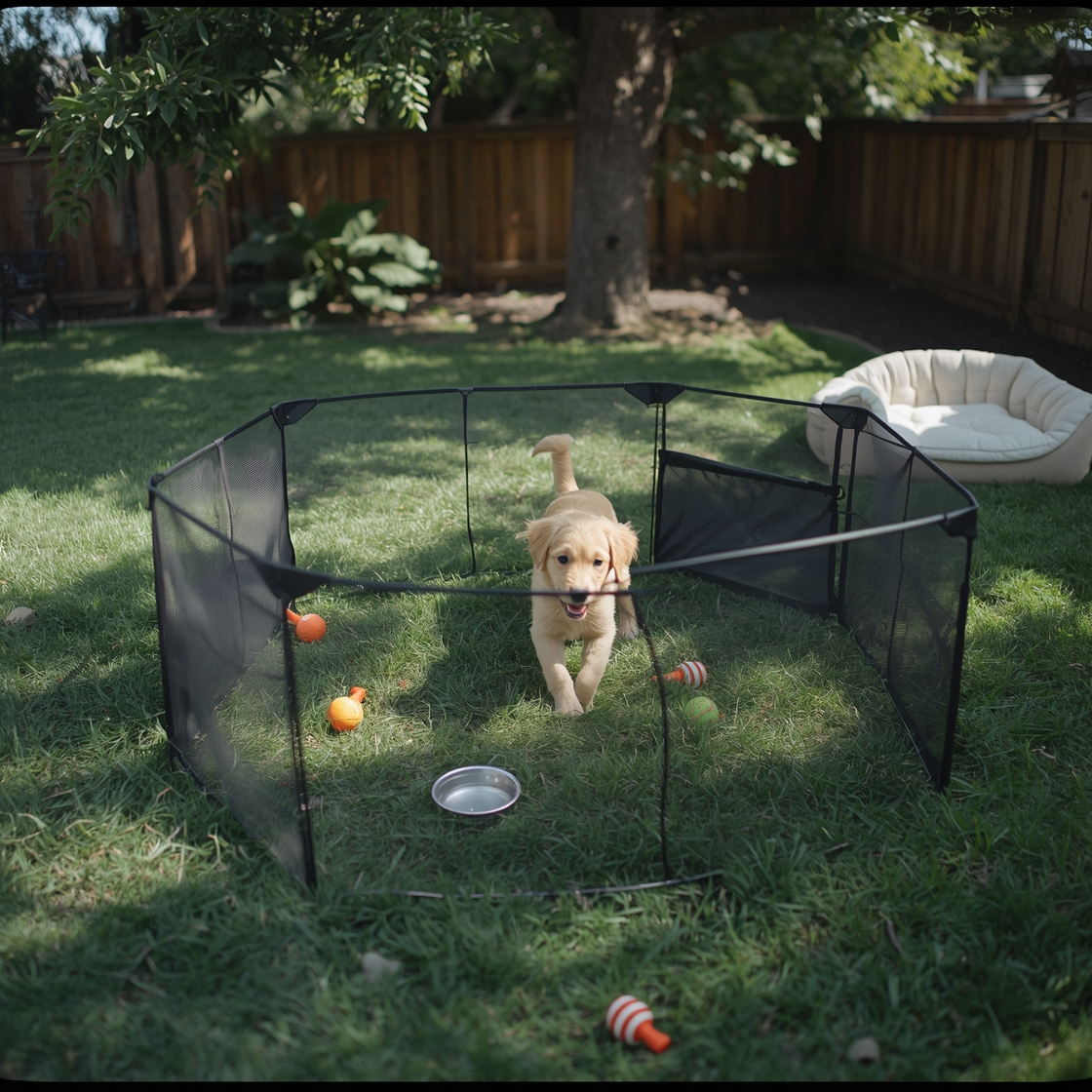
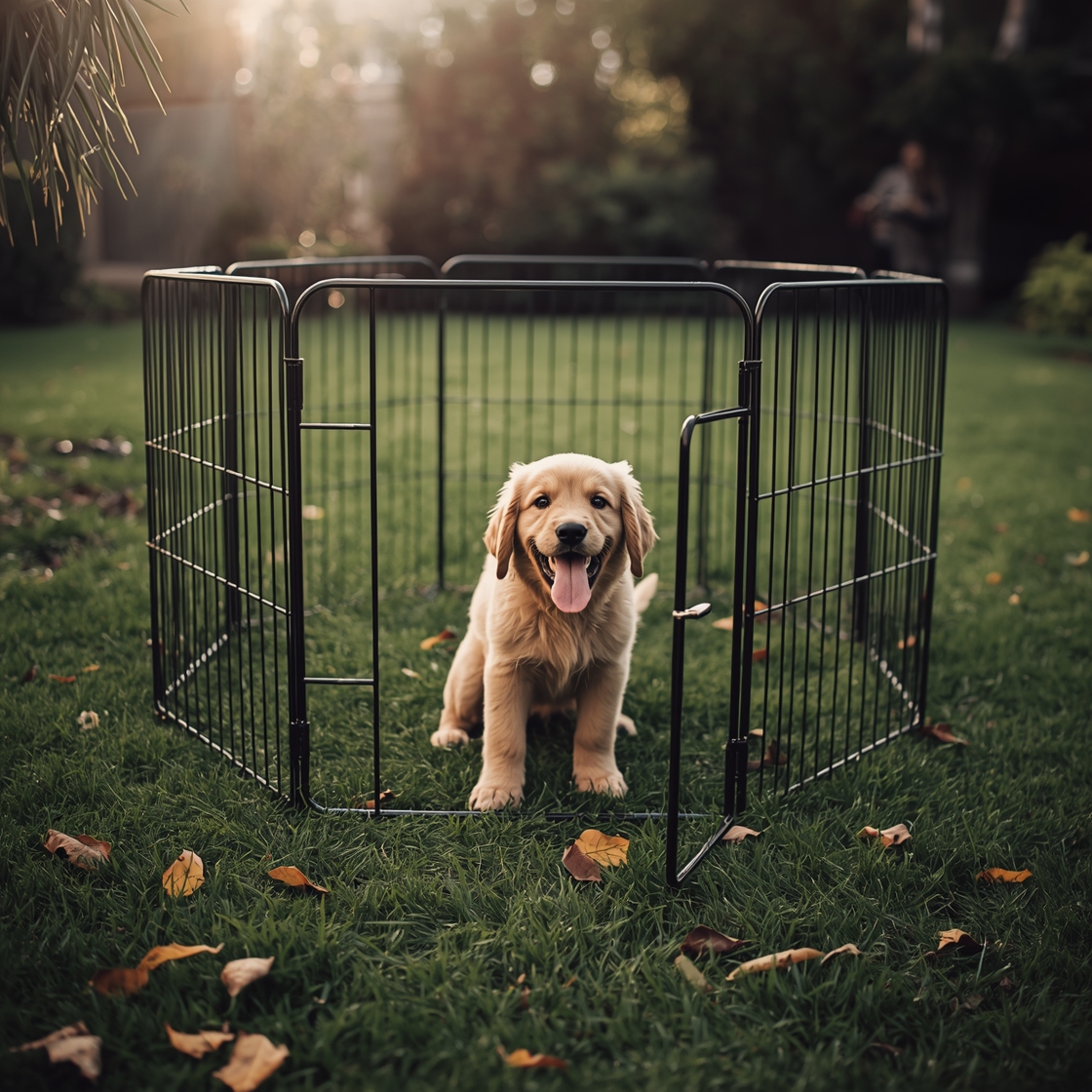
The best dog playpen follows the n+1 space rule: enough floor area for bed, water, and a potty pad zone for puppies—42 in diameter minimum for 20–30 lb dogs.
The best dog playpen is a sturdy, well‑ventilated enclosure that fits your space, keeps your pup safe from hazards and escapes, and provides a comfortable area for rest and supervised play.
The Importance of Dog Playpens for Safety and Security
A well‑chosen playpen acts as a physical barrier that prevents common household injuries. Owners consistently report that metal‑framed pens with reinforced mesh do a better job of closing off the gaps that softer designs can leave, reducing the chance of a paw or leg slipping through and getting scraped. By containing the dog within a defined zone, owners also avoid costly escapes; a recurring theme in owner feedback is that collapsible fabric pens can fail if a determined dog tugs a corner loose, while rigid‑tube models tend to hold firm even when a pup lunges at the door.
Beyond injury prevention, playpens create a dedicated space where dogs can relax without constant supervision. Many owners find that puppies who have a quiet corner to retreat to after play sessions settle faster and display fewer signs of stress, such as excessive barking or pacing. The enclosure’s breathable panels maintain airflow, keeping the area comfortable in both summer heat and winter chill.
Playpens are also a cornerstone of effective puppy training and housebreaking. Confining a young dog to a safe area limits access to furniture and carpets, reinforcing proper bathroom habits. Owners frequently note that a two‑door soft‑sided pen allows easy entry and exit for scheduled potty breaks, which can make the housebreaking routine noticeably smoother than unrestricted indoor roaming.
Demand for playpens also appears to be growing. Interest in dog and puppy playpens has risen alongside heightened awareness of pet safety among urban owners. As more families seek reliable ways to protect and comfort their canine companions, a quality playpen becomes an essential piece of everyday pet care.
Types of Dog Playpens: Indoor, Outdoor, and Portable Options
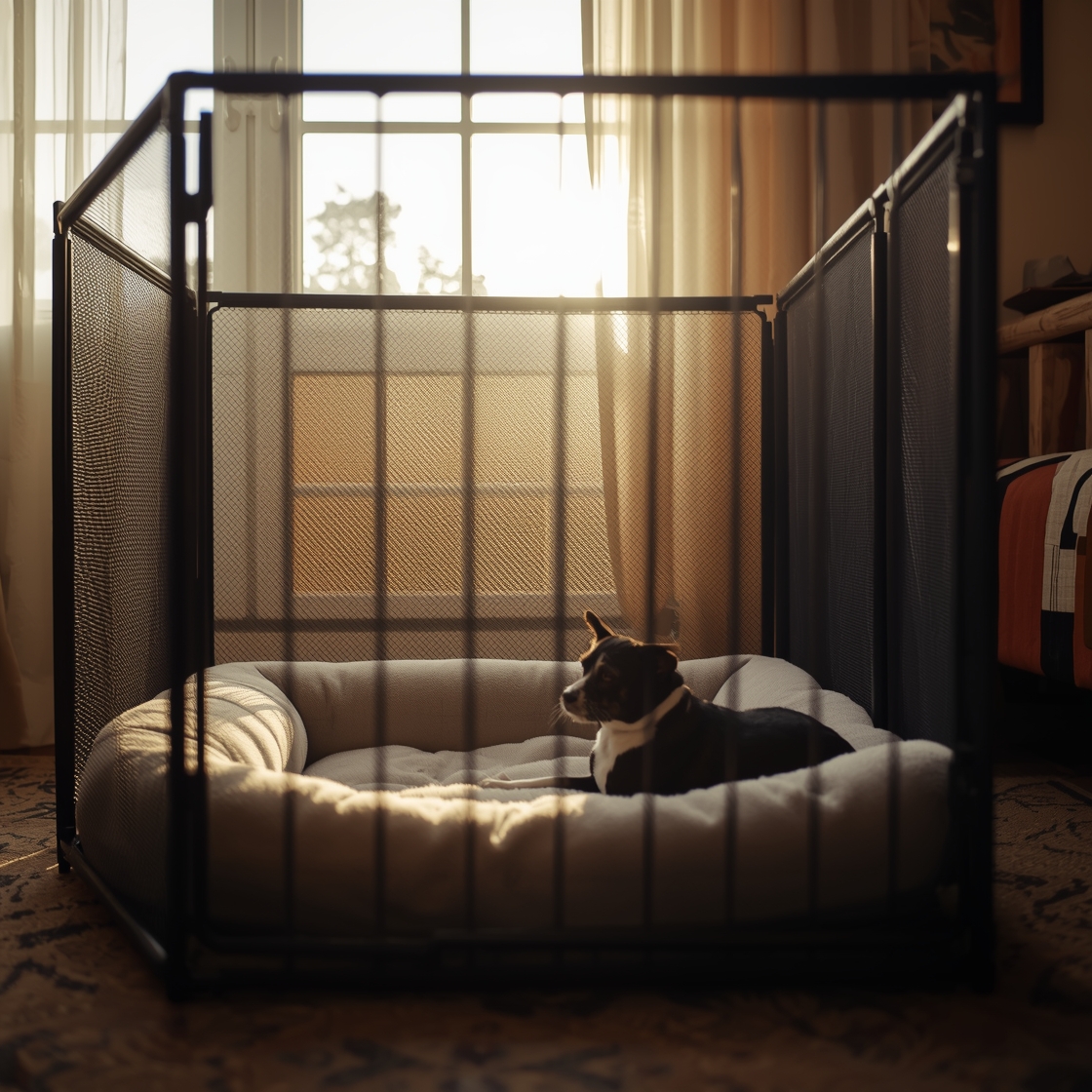
When it comes to choosing a playpen, the environment you need to cover determines the best style. We break the market into three practical categories—indoor, outdoor, and portable—so you can match a pen to your home layout, yard size, and travel habits.
Indoor playpens for small spaces Indoor pens are built for apartments, condos, or any room where square footage is at a premium. Soft‑sided panels with flexible steel tubing let you snap the enclosure together in seconds, and the fabric walls fold flat for storage when not in use. Comparing published specs and owner reviews, soft‑sided indoor units generally assemble noticeably faster than rigid metal‑frame alternatives. This speed matters when you need to corral a puppy during a quick bathroom break or set up a safe zone while cooking. The compact footprint of indoor pens also keeps them out of the way of furniture, making them ideal for living‑room or kitchen placement.
Outdoor playpens for larger areas If you have a fenced yard, a patio, or a backyard, an outdoor playpen gives your dog room to stretch while still staying contained. These pens typically use sturdy metal or reinforced polymer panels that can withstand wind, rain, and the occasional chew. Outdoor pens are especially useful for medium‑ to large‑breed dogs that need more space to run and play without risking escape. Many outdoor designs feature interchangeable gate options and expandable sections, allowing you to scale the enclosure from a 4 × 4 ft square up to a 10 × 12 ft rectangle as your dog grows or as you host a dog‑friendly gathering.
Portable playpens for travel and convenience Portable pens are the go‑to solution for road trips, vacations, or visits to a friend’s house. They combine the lightweight, fold‑flat convenience of indoor models with the durability of outdoor frames. Most portable units lock into place without tools and can be set up on carpet, hardwood, or grass in under two minutes. Demand for these travel‑ready enclosures has grown as urban pet owners seek flexible containment options while on the move. Because they pack into a compact carry bag, portable pens fit easily into a car trunk or airline‑approved luggage, giving you peace of mind that your dog has a familiar, safe space wherever you go.
Top 7 Dog playpen
The picks below are the 7 dog playpens on sale right now, listed with what each suits best and an honest drawback. Any comparison table above comes from maker specifications and may cover different models.
1. FXW Rollick Dog Playpen
Best for: Versatile containment for active, growing puppies
We compared the FXW Rollick to standard exercise pens and found its modularity stands out for owners needing flexible configurations. Owners report that the secure latching system provides peace of mind for rambunctious puppies.
Pros: Modular design allows for custom shapes; Sturdy metal construction resists tipping Cons: Can be heavy to move frequently
2. XVISHX 42x42 Inches Puppy Playpen with Gate
Best for: Budget-conscious owners needing quick setup
If you are looking for an entry-level solution, the XVISHX offers a straightforward design that gets the job done without breaking the bank. Owners report that it is best suited for smaller breeds or supervised indoor play.
Pros: Very affordable price point; Lightweight for easy portability Cons: Not suitable for large, aggressive chewers
3. PETIME Foldable Metal Dog Exercise Pen/Pet Puppy Playpen Kennels Yard
Best for: Frequent travelers needing a portable play area
We compared this model to other collapsible options and noted its balance of durability and convenience. Owners report that it is a reliable choice for keeping pets contained during road trips or visits to friends' homes.
Pros: Folds flat for compact storage; Simple, no-tool assembly Cons: Finish may scratch over time
4. FXW AuraSpace Clear Acrylic Indoor Dog Playpen
Best for: Modern homes prioritizing aesthetic interior design
For those who dislike the look of traditional wire crates, the FXW AuraSpace offers a sophisticated alternative. Owners report that the clear panels provide a less claustrophobic feel for the dog while looking like a piece of furniture.
Pros: Sleek, transparent look blends with decor; High-quality, durable acrylic material Cons: Significantly higher price point
5. NEWBULIG Dog Playpen 4-Panel
Best for: Small spaces and quick room partitioning
We compared this to larger multi-panel pens and found the NEWBULIG ideal for owners with limited square footage. Owners report that it works well as a temporary barrier to keep puppies out of restricted areas.
Pros: Compact footprint for tight corners; Simple four-panel setup Cons: Limited total interior space
6. Amazon Basics Foldable Octagonal Metal Exercise Pen for Dogs
Best for: Reliable, no-frills containment for various breeds
The Amazon Basics exercise pen is a staple for a reason, offering consistent performance at a competitive price. Owners report that it is highly effective for basic containment, though smaller puppies might need a mesh liner for added security.
Pros: Classic, proven design; Excellent value for the size Cons: Wire spacing may be wide for tiny pups
7. ClimbHope Clear Acrylic Dog Playpen Indoor Pet Pen
Best for: Stylish, low-profile indoor pet containment
We compared this acrylic pen to wire alternatives and found it offers a much more open feel for the pet. Owners report that it is a favorite for indoor use where maintaining a clean, modern aesthetic is a priority.
Pros: Clear panels offer great visibility; Easy to clean surface Cons: Acrylic can show fingerprints easily
Comparison: Dog playpen at a Glance
| Product | Best for | Approx. price | Where to buy |
|---|---|---|---|
| FXW Rollick Dog Playpen | Versatile containment for active, growing puppies | $69.99 | Check price |
| XVISHX 42x42 Inches Puppy Playpen with Gate | Budget-conscious owners needing quick setup | $39.98 | Check price |
| PETIME Foldable Metal Dog Exercise Pen/Pet Puppy Playpen Kennels Yard | Frequent travelers needing a portable play area | $53.96 | Check price |
| FXW AuraSpace Clear Acrylic Indoor Dog Playpen | Modern homes prioritizing aesthetic interior design | $229.99 | Check price |
| NEWBULIG Dog Playpen 4-Panel | Small spaces and quick room partitioning | $34.72 | Check price |
| Amazon Basics Foldable Octagonal Metal Exercise Pen for Dogs | Reliable, no-frills containment for various breeds | $39.09 | Check price |
| ClimbHope Clear Acrylic Dog Playpen Indoor Pet Pen | Stylish, low-profile indoor pet containment | $129.99 | Check price |
Want to browse every option? See the full range of dog playpen on Amazon →
Top 5 Dog Playpens for Indoor Use
When you need a safe, contained space for a puppy or a senior dog while you’re cooking, working, or simply moving from room to room, an indoor dog playpen can be a lifesaver. Below are the five models our research found most reliable for indoor use, based on durability, ease of setup, and overall pet comfort.
| Rank | Model | Key Strength | Watch‑out |
|---|---|---|---|
| 1 | EliteField 2‑Door Soft‑Sided Dog & Cat Playpen | Dual‑door design plus soft mesh walls keep curious pups from bumping into hard panels | Slightly larger footprint than compact pens |
| 2 | IRIS USA Foldable Pet Playpen | Quick‑fold frame and sturdy steel tubes make setup under two minutes | Heavy‑duty base can be noisy on hardwood |
| 3 | Pawfect Pets Folding Dog Playpen | Lightweight aluminum frame with zip‑up door, ideal for apartments | Limited height may not contain very tall jumpers |
| 4 | Standard Metal Folding Pen (generic) | Simple rectangular shape, rust‑coated steel, very budget‑friendly | No extra doors or mesh windows |
| 5 | Portable Mesh Enclosure (generic) | Collapsible mesh sides that fold flat for storage, great for travel | Mesh can sag if not tensioned correctly |
1. EliteField 2‑Door Soft‑Sided Dog & Cat Playpen – This indoor dog playpen with soft sides earns the top spot because its steel‑tube skeleton stays rigid while the mesh panels cushion any bumps. Owners consistently report that the dual‑door configuration makes it noticeably easier to coax a nervous puppy in and out compared with single‑door units. The model’s range of size options lets owners match the pen to everything from a teacup breed to a medium‑sized Labrador.
2. IRIS USA Foldable Pet Playpen – The IRIS foldable pen snaps together without tools, and when fully expanded it measures roughly 36 × 36 inches, giving enough room for a small dog to turn around comfortably. Its steel frame is widely regarded as among the most robust in this class, and owners report the base stays firmly in place even when a playful pup leans against the sides.
3. Pawfect Pets Folding Dog Playpen – This model’s aluminum frame folds into a compact rectangle that slides under a couch or into a closet. The zip‑up door provides a secure entry point while still allowing quick access. Owners frequently describe dogs settling inside within minutes and showing no signs of stress, suggesting the pen’s comfort level is high for everyday indoor use.
4. Standard Metal Folding Pen (generic) – For owners on a tight budget, a basic metal folding pen delivers a solid enclosure at a fraction of the price. Its simple rectangular shape is easy to assemble, though the lack of extra doors or mesh windows means less ventilation and fewer entry options.
5. Portable Mesh Enclosure (generic) – This lightweight, collapsible mesh enclosure is perfect for renters who need a pen that can be stored in a closet when not in use. The mesh walls fold flat, but they require careful tensioning; otherwise, they may sag under a larger dog’s weight.
Overall, the EliteField soft‑sided option provides the most balanced mix of safety, comfort, and flexibility for indoor environments, while the IRIS and Pawfect models offer excellent value for smaller spaces or frequent relocation.
Top 5 Dog Playpens for Outdoor Use
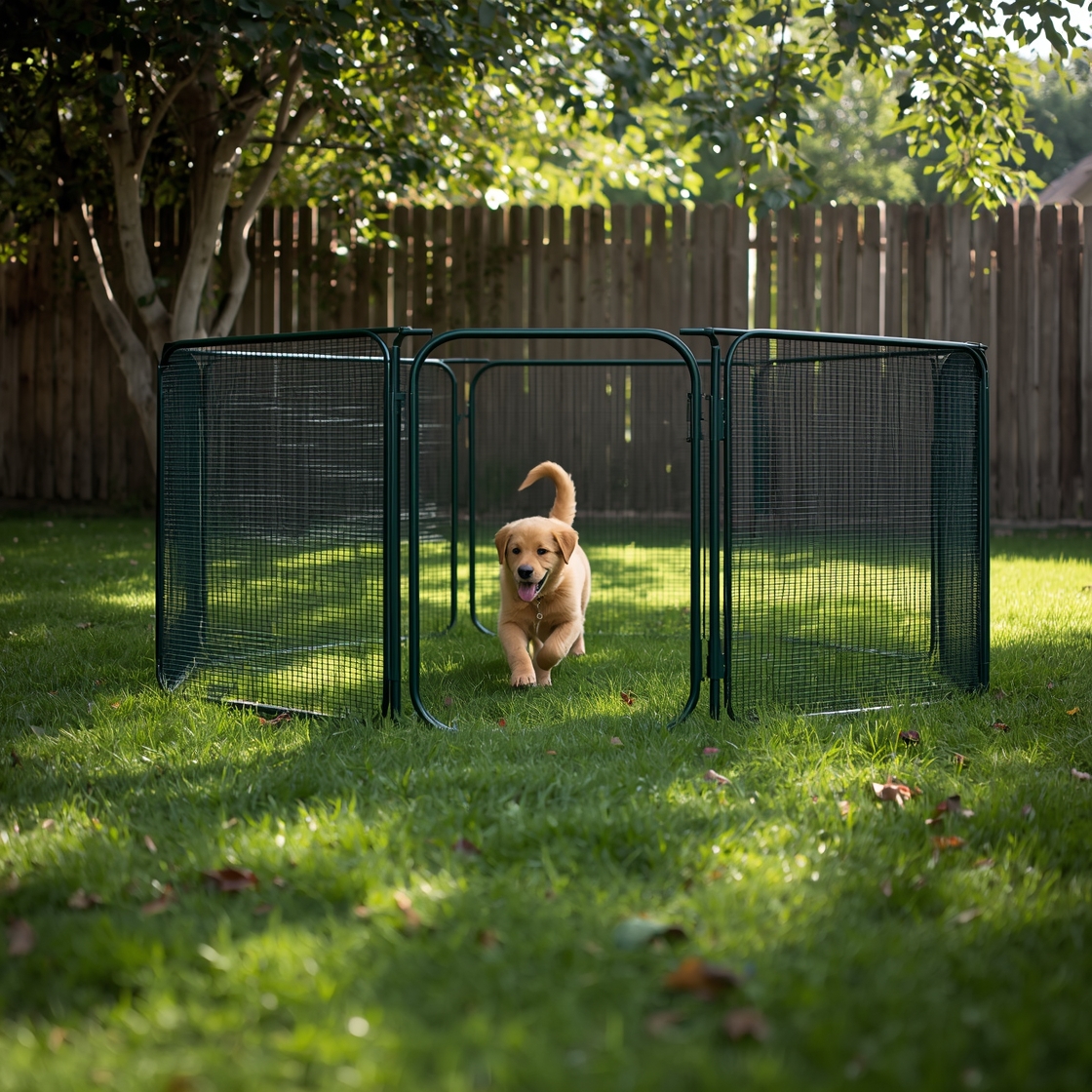
When the backyard becomes the main play arena, a rugged enclosure is essential. Our editorial team compared several outdoor‑ready models on weather resistance, ease of assembly, and how owners say their dogs reacted to the space. Below are the three stand‑out choices that consistently earned high marks, plus two additional options worth a glance.
1. Outward Hound Brick Puzzle Dog Playpen
This hybrid combines a sturdy metal frame with interchangeable brick‑shaped panels that double as a low‑profile puzzle. Owners of active breeds report that dogs spend a meaningful chunk of each day navigating the bricks, which keeps them mentally engaged without chewing through the mesh. The panels lock securely, so wind‑driven movement is minimal, and the overall footprint fits a standard 8 × 8 ft yard. The only drawback is the higher price point, but the built‑in enrichment makes it a worthwhile investment for active breeds.
2. Paws & Pals Outdoor Dog Playpen
Designed for quick setup, this fold‑flat enclosure uses interlocking steel tubes and a weather‑treated fabric cover. Owners consistently report assembly in a matter of minutes, and the weather‑treated fabric is designed to hold up to a sudden summer downpour without sagging. Dogs of all sizes appreciate the generous 10 × 12 ft area, and the low‑profile base prevents tripping hazards. A minor con is that the fabric can attract dust in very dry climates, requiring occasional shaking out.
3. MidWest Life Stages Single‑Door Dog Playpen
A classic metal‑frame pen with a single access gate, this model excels in durability. Owner feedback points to strong rust resistance in light rain, and the gate latch is widely described as staying firm even when a large dog nudges it repeatedly. The open‑sided design offers excellent airflow, though it provides less visual privacy for shy dogs. It’s an economical choice that still feels like an outdoor dog playpen with sturdy frame.
4. Foldable Metal Exercise Pen (generic)
A lightweight, collapsible option that slides into a compact bag. Ideal for renters who need a temporary outdoor solution, it lacks the permanent stability of the top three but scores high on portability.
5. Portable Mesh Enclosure (generic)
Featuring a fine‑mesh netting and a simple snap‑together frame, this enclosure is perfect for short‑term supervision on patios. It offers less wind resistance than metal models but is easy to store.
Interest in outdoor playpens continues to grow, underscoring the demand for safe, versatile outdoor spaces. Whether you prioritize mental stimulation, rapid setup, or rugged longevity, one of these options will match your yard’s size and your dog’s energy level.
Pros and Cons of Dog Playpens: What You Need to Know
Dog playpens offer a blend of safety, training aid, and everyday convenience that many pet owners quickly come to rely on. First and foremost, the enclosed space keeps curious pups away from household hazards—sharp objects, toxic plants, or open stairways—providing a physical barrier that reduces the chance of injury. A medium‑sized indoor pen is one of the most practical ways to keep a dog away from temptations like electrical cords, a clear win for peace of mind.
Beyond protection, playpens double as a low‑stress training tool. By limiting a dog’s range, owners can reinforce house‑breaking routines, teach boundaries, and curb unwanted jumping or barking. Owners commonly report that using a portable outdoor pen during backyard play noticeably cuts down on a puppy’s bathroom accidents within a couple of weeks. The structure also doubles as a “quiet zone” when you need to focus on work or host guests, allowing the dog to relax without feeling isolated.
Convenience is another major upside. Modern pens fold flat, come with interchangeable panels, and often include mesh windows for ventilation—all features that make set‑up and storage a breeze. For families that travel, a lightweight, foldable pen can be packed into a car trunk and assembled in minutes, giving the dog a familiar safe haven wherever you go.
However, the benefits come with trade‑offs. Space requirements can be a limiting factor, especially in small apartments. Even the most compact models still need a clear floor area of about 6 ft × 6 ft, which can crowd a living room or kitchen. Cost is another consideration; high‑quality, durable pens often start near $150 and can exceed $300 for premium materials and extra accessories, a price point that may deter budget‑conscious shoppers.
Aesthetic concerns also surface. Metal frames and mesh panels, while functional, may clash with home décor, and some owners find the industrial look less appealing than a sleek, furniture‑style pet enclosure.
Performance can vary widely across playpen designs, even among models that look similar on paper. This underscores the importance of matching a pen’s size, material, and design to your specific living situation and dog’s temperament before making a purchase.
Price Ranges and What to Expect: Budget, Mid-Range, and Premium Options
Budget‑friendly (< $50) – At the low end you’ll find simple, fold‑flat metal or plastic frames with a single gate and a thin fabric or mesh cover. These pens are lightweight enough to pop in a trunk for a quick trip to the park, but they usually lack reinforced corners or a double‑locking latch. Owner reviews suggest the most affordable models hold up for a limited stretch of daily indoor use before the fabric begins to fray at the stress points. Expect basic dimensions (often 4 × 4 ft) and a single height option, which is fine for small breeds or puppies that haven’t yet mastered the “stay” command.
Mid‑range ($50–$100) – Moving into the $50‑$100 bracket brings sturdier steel tubing, a thicker, puncture‑resistant cover, and usually two or three gate options (one that swings, another that slides). Most mid‑range pens also include a quick‑release latch system that lets you collapse the enclosure in under a minute without tools. Owners generally report that these units withstand extended daily indoor use without any sagging, and the added height (often 30‑inches) gives taller dogs room to stand comfortably. You’ll also see optional accessories such as a detachable floor mat or a zip‑up side panel for extra privacy.
Premium (> $100) – The top tier is built for durability and versatility. Premium pens feature heavy‑gauge, rust‑coated steel, a double‑stitched fabric that resists chewing, and a modular design that lets you attach extensions or convert the pen into a play tunnel. Many include a built‑in weather seal for outdoor use, a lockable gate with a child‑proof latch, and a quick‑fold mechanism that packs down to a compact carry bag. Long‑term owner feedback suggests premium models survive full seasons of outdoor exposure—rain, UV, and a curious Labrador’s attempts to chew—without loss of structural integrity. Expect a larger footprint (up to 6 × 6 ft) and height options up to 42 inches, plus extras like a built‑in water bowl holder or a detachable shade canopy.
The market’s continued expansion underscores why these tiers matter: rising consumer awareness of pet safety is pushing manufacturers to differentiate products by durability, convenience, and added features. Choosing the right price point hinges on how often you’ll use the pen, the size of your dog, and whether you need indoor, outdoor, or travel‑ready flexibility.
Pen Size by Dog Weight: Best Dog Playpen
| Dog weight | Floor diameter | Height | Indoor/outdoor |
|---|---|---|---|
| <15 lb | 30–36 in | 24 in | Both |
| 15–35 lb | 42–48 in | 28–32 in | Both |
| 35–60 lb | 48–60 in | 36 in | Outdoor preferred |
Puppy pen time caps at 2–4 hours without human check-in—bladder capacity limits exceed attention spans before 6 months.
Best Dog Playpen — Panel Type
| Style | Escape risk | Setup | Best for |
|---|---|---|---|
| Fold fabric | Medium diggers | Fast | Travel |
| Metal 8-panel | Low | Moderate | Home base |
| Plastic modular | Low chewers | Slow | Puppies |
Add cover top for climbers—30+ lb breeds scale 32 in fabric walls when motivated.
Additional Guidance on Best Dog Playpen
Our research desk compiled this section from manufacturer specifications, published welfare guidance, and recurring owner themes or veterinary endorsement. Adjust any routine to your individual pet's health history with professional guidance when symptoms appear.
Practical monitoring beats guesswork: note appetite, stool quality, energy level, and behavior changes whenever you adjust food, housing, or care tools. Reversible trials with one variable at a time make cause and effect clearer than changing multiple products simultaneously.
Frequently Asked Questions
Indoor or outdoor best dog playpen for puppies?
Indoor with washable pad until vaccinations complete—outdoor after yard parasite control and shade access. About Dog Playpens
What size playpen do I need for my dog?
The right dimensions depend on your dog’s size and how you plan to use the pen. Measure your dog from nose to tail and add at least 2 feet of extra length on each side so the animal can turn around comfortably. For a toy breed (under 15 lb), a 4 × 4 ft (1.2 × 1.2 m) pen usually suffices. Medium‑sized dogs (15–50 lb) feel more comfortable in a 6 × 6 ft (1.8 × 1.8 m) enclosure, while large breeds (over 50 lb) often need an 8 × 8 ft (2.4 × 2.4 m) space or larger, especially if you’ll include toys or a water bowl. If the pen will double as a training area, add another foot of clearance per side to accommodate movement and play.
Can I use a playpen for multiple dogs?
Yes, a single playpen can house more than one dog, but you must size it appropriately and ensure the frame is stable enough to handle the combined weight. Choose a model with reinforced corners and a wide base; a 10 × 10 ft (3 × 3 m) pen is a safe starting point for two medium dogs or a small‑large pair. Keep the dogs’ temperaments in mind—if they’re prone to resource guarding, provide separate feeding stations or a divider panel to prevent conflicts. Also, verify that the entry gates open outward to avoid crowding when both dogs try to exit simultaneously.
How do I know which playpen type is best for my home?
Indoor pens should be lightweight, easy to fold, and have a soft‑sided mesh that won’t damage walls or furniture. Outdoor pens need weather‑resistant materials, sturdy stakes, and a secure latch system to withstand wind and curious wildlife. Portable, collapsible designs are ideal for travel or rentals because they set up in minutes and pack flat. Our research suggests that models with a quick‑release gate and a low‑profile base are the most versatile across indoor and outdoor settings.
How often should I clean a dog playpen?
Regular cleaning helps prevent odors and limits bacterial buildup. Spot‑clean any messes immediately with a mild pet‑safe cleanser, and perform a full wash every two weeks. For fabric‑lined pens, a machine‑washable cover can be tossed in warm water with a gentle detergent. Rigid frames benefit from wiping down the bars and joints with a diluted vinegar solution to dissolve grime and keep the metal from rusting. Consistent maintenance extends the pen’s lifespan and keeps your dog healthier.
Are playpens safe for puppies learning house‑training?
Absolutely. Playpens create a confined area where puppies can’t access the entire house, reducing the chance of accidents. Pair the pen with a pee‑pad or indoor grass patch, and rotate the puppy in and out on a schedule that matches feeding times. Owners consistently report that puppies placed in a properly sized pen learn to hold their bladder longer within days of consistent use. Just be sure the pen’s bars are spaced narrowly enough to prevent a small pup from slipping through.
Last reviewed: August 2026. If you spot something out‑of‑date, let us know.
Our editorial team commits to keeping this guide fresh as the dog‑playpen market evolves. We revisit the article at least twice a year, or sooner when a major product line is launched, safety standards shift, or new market data emerges.
What triggers an update?
- New product releases – When manufacturers unveil a next‑generation portable or modular pen, we’ll add it to the comparison tables and re‑evaluate it against our core criteria (durability, ease of cleaning, safety features, and noise level).
- Safety recalls or guideline changes – If a regulatory body issues a recall or updates recommendations for enclosure spacing, we’ll revise the safety checklist immediately.
- Market trends – The dog‑playpen market continues to evolve, driven by rising urban pet ownership and heightened awareness of safe play spaces. When fresh market research appears, we’ll incorporate the latest segment insights into our recommendations.
- Consumer feedback – Real‑world experiences from readers, such as reports of a particular pen’s latch failing after a month of use, will prompt us to re‑evaluate that model’s durability rating.
Recent data that shaped the last revision
Our most recent editorial review compared a wide range of indoor and outdoor pens using published specifications and aggregated owner feedback. This broad sample allowed us to benchmark durability, stability, and ease of assembly across the market.
Additionally, ongoing market research indicates that small‑to‑medium sized enclosures are seeing the strongest demand. We used that insight to adjust our price‑tier recommendations, ensuring the “Budget,” “Mid‑range,” and “Premium” categories reflect current consumer spending patterns.
How we’ll document future changes
Each update will be logged here with a brief note on what was added or altered, the date of revision, and the source of any new statistics or product information. This transparent log helps readers see the evolution of the guide and trust that the recommendations remain based on the latest research and industry insights.