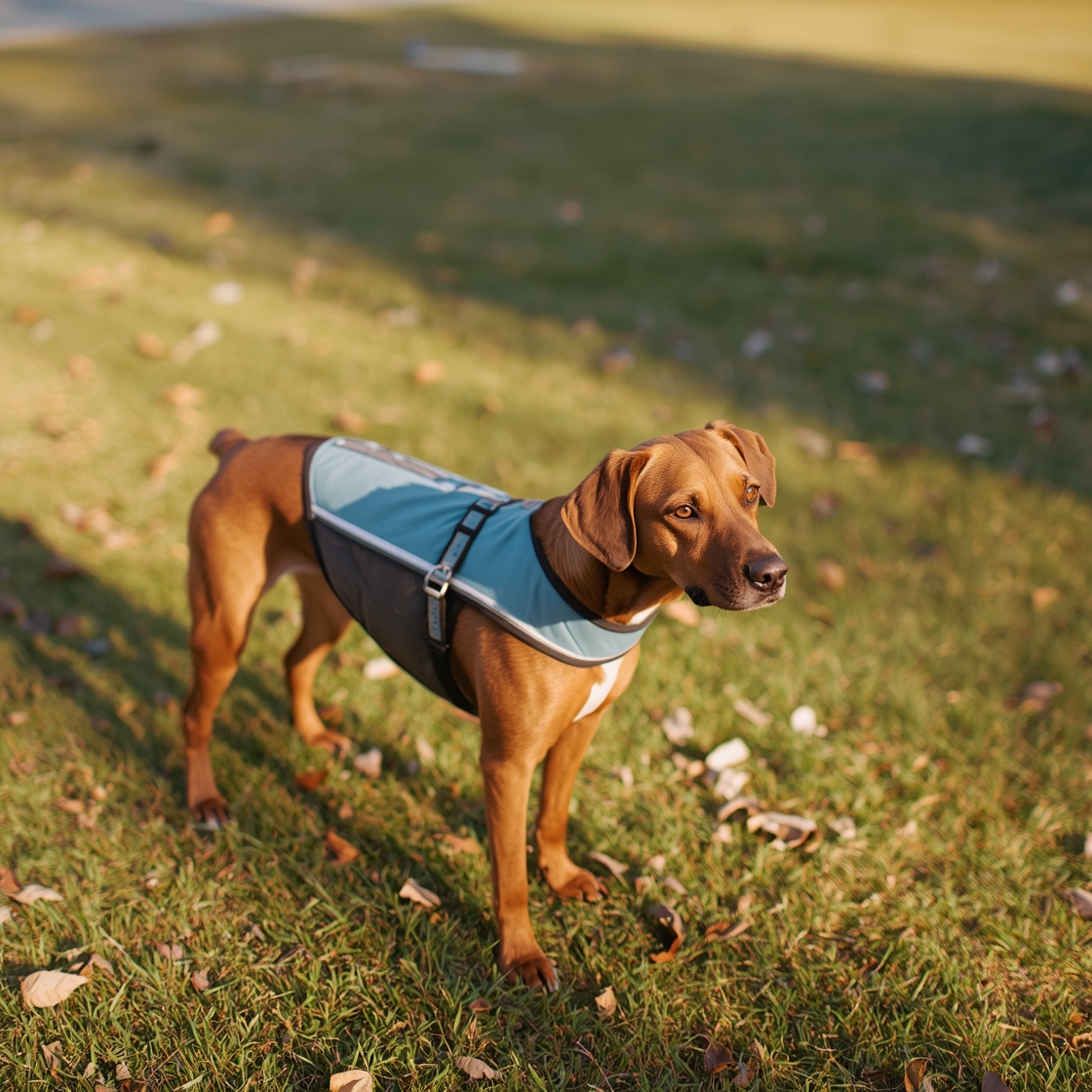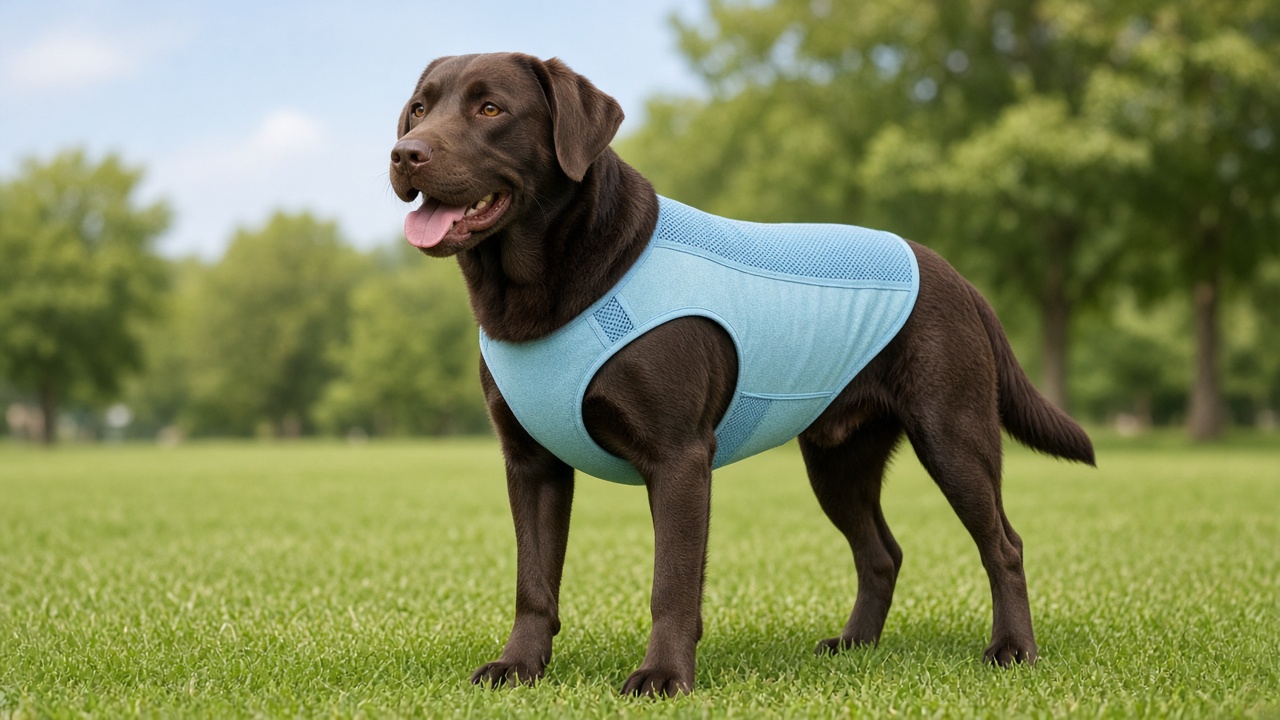
The best dog cooling vest matches air, not a star rating: soak fabric in dry heat, ice or PCM if you can freeze and swap, plus a printed girth. The We read the titles and descriptions of seven cards on mechanism, extras, size cue, and price. Snapshots sum to $275.17. 3 of 7 are pack systems. 1 of 7 is Ruffwear at $74.99. 0 of 7 replace shade, water, or a shorter walk.
Re-wet when fabric feels dry. A dry vest is a T-shirt. Brick-red gums or collapse is a clinic, not a zipper.
Desk: We compile spec sheets. We are not veterinarians. ” AVMA heat safety outranks this catalog.
Our guides are reader-supported. This article may contain affiliate links. As an Amazon Associate we may earn a commission if you buy through links, at no extra cost to you.
Related desk pages: cooling vests for large breeds, cooling vests with UV language, cooling dog beds.
Quick picks at a glance
- Named trail evaporative brand: Ruffwear (Swamp Cooler family on brand pages) — $74.99.
- Ice pack + collar set: LUCOLOVE — $46.45.
- Collar + vest mid ticket: CoolerDog — $39.99.
- Adjustable vest, packs often separate: JUXZH — $35.95.
- Harness-style cooler, Medium on the title: SGODA — $30.56.
- PCM four-pack theme: SAVIOR COOL — $23.99.
- Budget soak / first try: Spark Paws — $23.24.
The catalog is seven cards. Shop the cards on this URL. Large chests start on the large-breed page.
Fast answers: what is the best dog cooling vest?
Dry heat + water you can dump on fabric? Soak vest. Spark Paws to try. Ruffwear if you want a published trail chart.
Humid air + a freezer? Ice or PCM. LUCOLOVE, CoolerDog, SAVIOR COOL, JUXZH (packs may be extra).
Tape says Medium and the card says Medium? SGODA. Otherwise skip that title.
Pavement fails a hand test? No vest. No walk. Indoor job.
AKC heatstroke signs outrank the shopping table if the dog cannot settle in shade.
What the best dog cooling vest actually means
The aisle sells “drops core temp 5°F” and “3+ hours.” The desk sells three jobs.
Job 1 — Mechanism matches the air
Evaporative soak needs dry air across wet fabric. Humid August at 90% RH is a weak soak day. Ice and PCM need a freezer and a swap plan.
Job 2 — Girth is a number
Tape behind the front legs. Open that brand’s chart. A Medium title on SGODA is a size, not a vibe.
Job 3 — Layer, not a permit
AVMA hot-weather guidance and AKC heatstroke notes put shade, water, and knowing when to stop above gear. We agree.
Four first-screen facts:
- Dogs do not sweat like people. Panting and pads do the work. A wet vest helps at the skin. It does not replace an airway. Pugs and Bulldogs are a shorter-walk conversation first.
- Hour claims are listing copy. Humidity and re-wet change the clock.
- Ice packs need a kitchen. Fine in a backyard. Worse on a ridge with no ice.
- A parked car is still an emergency. AVMA treats that cabin as a medical risk.
How cooling mechanism listings compare on labels
These tables are desk compilations from listed prices, title cues, and August 2026 card snapshots. Prices move. Heuristics, not lab output.
Table 1 — Card price, mechanism class, and recharge
| Product | Card price | Mechanism class | Recharge theme |
|---|---|---|---|
| Ruffwear | $74.99 | Brand evaporative (Swamp Cooler family on ruffwear.com) | Soak / wring; re-wet on trail |
| LUCOLOVE | $46.45 | Ice pack + cooling collar | Freezer; pack thaws |
| CoolerDog | $39.99 | Vest + collar, ice insert theme | Freeze and swap |
| JUXZH | $35.95 | Vest; ice pack often not in box | Buy packs; Velcro fit |
| SGODA | $30.56 | Harness-style cooler, Medium on title | Pads can shift |
| SAVIOR COOL | $23.99 | 4 PCM packs, “3+ hours” on title | Freeze PCM; bulky |
| Spark Paws | $23.24 | Lightweight soak / entry | Re-wet often |
Desk stat: Across the seven cards, 43% (3 of 7) are pack-based (ice or PCM). 14% (1 of 7) is a premium brand tile. If your search is best dog cooling vest and you only sort by “hours,” you will buy a freezer product for a humid walk that needed a soak-and-shade plan.
Table 2 — Mechanism vs climate (desk heuristic)
| Air | Evaporative soak | Ice pack | PCM pack | Fan vest (not a card) |
|---|---|---|---|---|
| Dry heat, breeze | Strong theme | Works; heavy | Works; heavy | Battery logistics |
| Humid heat | Weak theme — water does not evaporate | Better theme if you can freeze | Better theme if you can freeze | Still a layer |
| Shade + short walk | Often enough with water | Overkill for many | Overkill for many | Skip |
| Ridge hike, no ice | Default | Fail if packs thaw and you have no stream | Fail without freeze | Fail without charge |
| Blacktop midday | Vest is not enough | Vest is not enough | Vest is not enough | Vest is not enough |
Re-wet evaporative fabric when the outer layer feels dry. Do not wait for panic panting.
Table 3 — Girth start vs vest size (desk, not a brand chart)
| Size cue | Typical girth band (desk start) | Who misses |
|---|---|---|
| S | 18–26 in | Deep-chested 20-lb Frenchie |
| M (SGODA title) | 26–32 in | Long-backed dogs if length is short |
| L | 32–38 in | 90-lb chests that need XL |
| XL | 38–46 in | Giants — see large-breed page |
| “One size” | Marketing | Almost everyone |
Measure the ribcage at the widest point, standing. Then open that SKU’s chart. Ruffwear publishes a real size ladder. Generic Amazon tiles often do not.
Table 4 — Job vs product (do not mix aisles)
| Job | Buy on this page | Do not buy |
|---|---|---|
| Dry-heat trail, named brand | Ruffwear | Ice packs you cannot refreeze |
| Backyard + freezer | LUCOLOVE or CoolerDog | A soak vest you never wet |
| “Hours” copy, PCM | SAVIOR COOL | Believing the clock without a swap |
| First cheap try | Spark Paws | Using it as a 2-hour desert permit |
| Medium harness-style | SGODA if girth matches Medium | A 90-lb dog in Medium |
| UV-specific shopping | Not these seven titles | UV-language page |
| Giant girth | Maybe, if XL exists | Assume S/M photos |
Table 5 — Card math (August 2026 snapshots)
| Stack | Example SKUs | Snapshot total | Who it is for |
|---|---|---|---|
| Budget first soak | Spark Paws | $23.24 | Prove the dog accepts a vest |
| PCM experiment | SAVIOR COOL | $23.99 | Freezer household, read the bulk |
| Harness Medium | SGODA | $30.56 | Only if Medium is the chart |
| Vest, add packs | JUXZH | $35.95 | You will buy inserts |
| Collar pair | CoolerDog | $39.99 | Neck + torso theme |
| Ice + collar | LUCOLOVE | $46.45 | Set buyers |
| Brand evaporative | Ruffwear | $74.99 | Trail hardware, published sizes |
| All seven | Collection | $275.17 | A closet, not a heat plan |
How the desk scores the best dog cooling vest
We do not score “CADR” on fabric. Four checks:
1. Is the mechanism printed? Soak, ice, PCM, or a brand evaporative page you can open. If the listing only says “cooling,” leave.
2. Does the size chart include this girth? A Medium in the title is a warning, not a compliment.
3. Can you recharge on the outing you actually take? Stream and a soak vest. Kitchen freezer and ice. Neither, and you bought a wet T-shirt for the first 20 minutes.
4. Will you still shorten the walk? If the answer is no, the vest is a story. Heatstroke is faster than a zipper.
Top picks — seven catalog cooling vests
Cards below are the catalog lines for this URL. Specs are the maker’s. They change.
1. LUCOLOVE Dog Cooling Vest with Ice Pack & Cooling Collar
Best for: a set buyer who has a freezer and wants a collar and a vest on one card.
Card price $46.45. Ice pack plus matching collar is the pitch. Owner themes: noticeable chill while the pack is cold; the clock ends when the pack thaws. That is physics, not a defect.
Use it if you can refreeze or swap. Do not use it as the best dog cooling vest for a pack-free ridge.
Pros: Two-piece set; targeted neck theme Cons: Freezer logistics; thaw ends the job
2. SGODA Dog Cooling Vest Harness Cooler Jacket Grey Green Medium
Best for: a harness-style cooler when the dog is actually a Medium on SGODA’s chart.
Card price $30.56. Adjustable straps are the pitch. Owner themes: cheap everyday walk; pads shift. Read the size word in the title. Medium is not XL.
Pros: Price; harness-style Cons: Size-locked title; shifting pads
3. Spark Paws Dog Cooling Vest
Best for: a first vest to see if the dog will wear fabric at all.
Card price $23.24. Light fabric is the pitch. Owner themes: quick chill when wet; short clock. That is an honest entry product. It is not a 3-hour claim.
Pros: Cheap; light Cons: Short soak life on owner themes
4. Ruffwear
Best for: the default best dog cooling vest brand tile when you want a published size ladder and trail hardware.
Card price $74.99. The card title is just “Ruffwear.” Brand pages for the Swamp Cooler / Swamp Cooler Zip describe evaporative fabric, a zip or strap closure depending on SKU, and reflective trim. Confirm which Ruffwear vest is in the cart. A harness is not a cooler. A cooler is not a crash harness.
Owner themes: durable; premium price; re-soak on long days.
Pros: Brand size ecosystem; trail construction theme Cons: Highest card; title is a brand, not a SKU
5. SAVIOR COOL Dog Cooling Vest Harness 4 PCM Ice Packs Up to 3+ Hours
Best for: a PCM experiment when you will freeze four packs and accept bulk.
Card price $23.99. Four PCM packs and “3+ hours” live in the title. Owner themes: longer clock than a cheap soak while packs are in phase; thick on small dogs. PCM is not magic ice. It is a phase-change claim. Read the current pack instructions.
Pros: Pack count; low ticket for a PCM theme Cons: Bulk; freezer; title hours are a claim
6. JUXZH Dog Cooling Vest
Best for: adjustable Velcro when you will buy the ice packs the listing may omit.
Card price $35.95. Fit is the pitch. Owner themes: mid price; packs sold separately on some listings. Confirm the box contents. A vest without packs is a nylon shell.
Pros: Adjustable; mid ticket Cons: Packs may be extra
7. CoolerDog Dog Cooling Vest & Cooling Collar
Best for: a collar-plus-vest theme when you want coverage language without the Horay World ticket (that SKU lives on the large-breed page).
Card price $39.99. Dual cooling is the pitch. Owner themes: about an hour of useful chill in owner stories; collar fit can annoy. Try the collar loose first. A tight neck band on a panting dog is a bad idea.
Pros: Collar + vest; padded theme Cons: Collar fit; still a freezer or soak plan
How evaporative, ice, and PCM actually differ
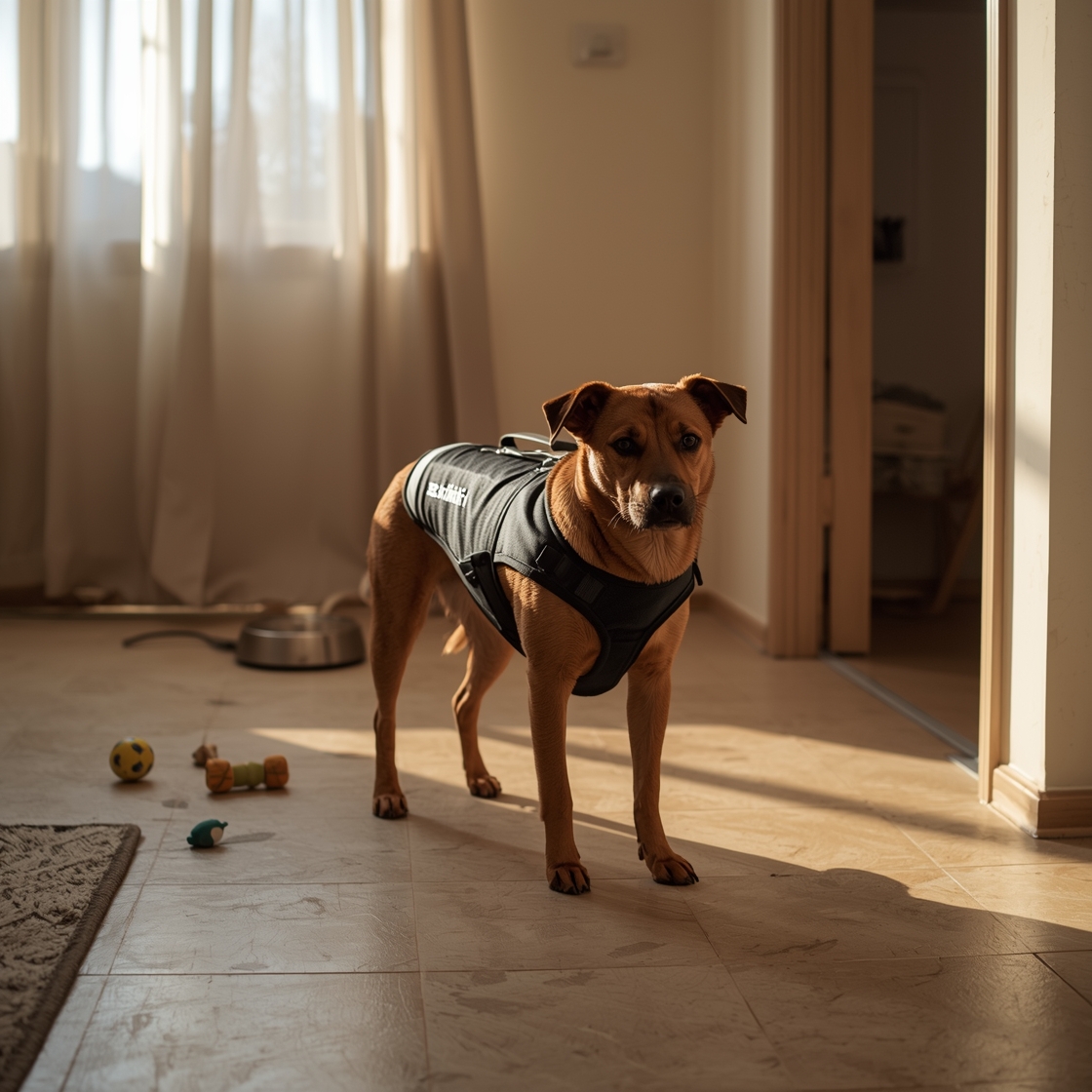
Evaporative soak. You wet the fabric, wring it so it is damp not dripping, put it on. Moving dry air evaporates water and pulls heat at the surface. This is the same idea as a human cooling towel. It fails when the air is already wet. It fails when the vest dries. It fails when you never wet it.
Ice pack. A frozen insert against the vest. Strong initial chill. Weight. Condensation. A pack that is too cold on a shaved or thin-skinned dog is a clinic question — do not invent a “safe °F.” Follow the maker. Swap when thawed.
PCM (phase-change material). Packs designed to hold a plateau temperature longer than a bag of ice in marketing. Still freeze. Still bulk. Still a claim on the SAVIOR COOL title. Not a core-temp medical device.
Fans and battery vests. Not on these seven cards. A fan is noise, charge, and another failure point. Skip unless you have a reason.
Gel beds. Different object. See cooling dog beds.
Soak protocol the desk actually writes
- Measure girth. Write the number down. Open the chart.
- Soak in cool water, not ice water unless the maker says so. Wring. Dripping vest on a hardwood floor is not “more cooling.”
- Two fingers under straps. Even fabric. No armpit saw.
- Walk the plan you would walk without a vest, then shorten it. The vest is a buffer, not a multiplier.
- Re-wet at a tap, bottle, or stream. When the fabric feels dry, the mechanism is off.
- Rinse after, dry flat. A damp vest in a closet is mildew in 48 hours. That is hygiene, not a lab result.
Heat signs that end the walk — vest or no vest
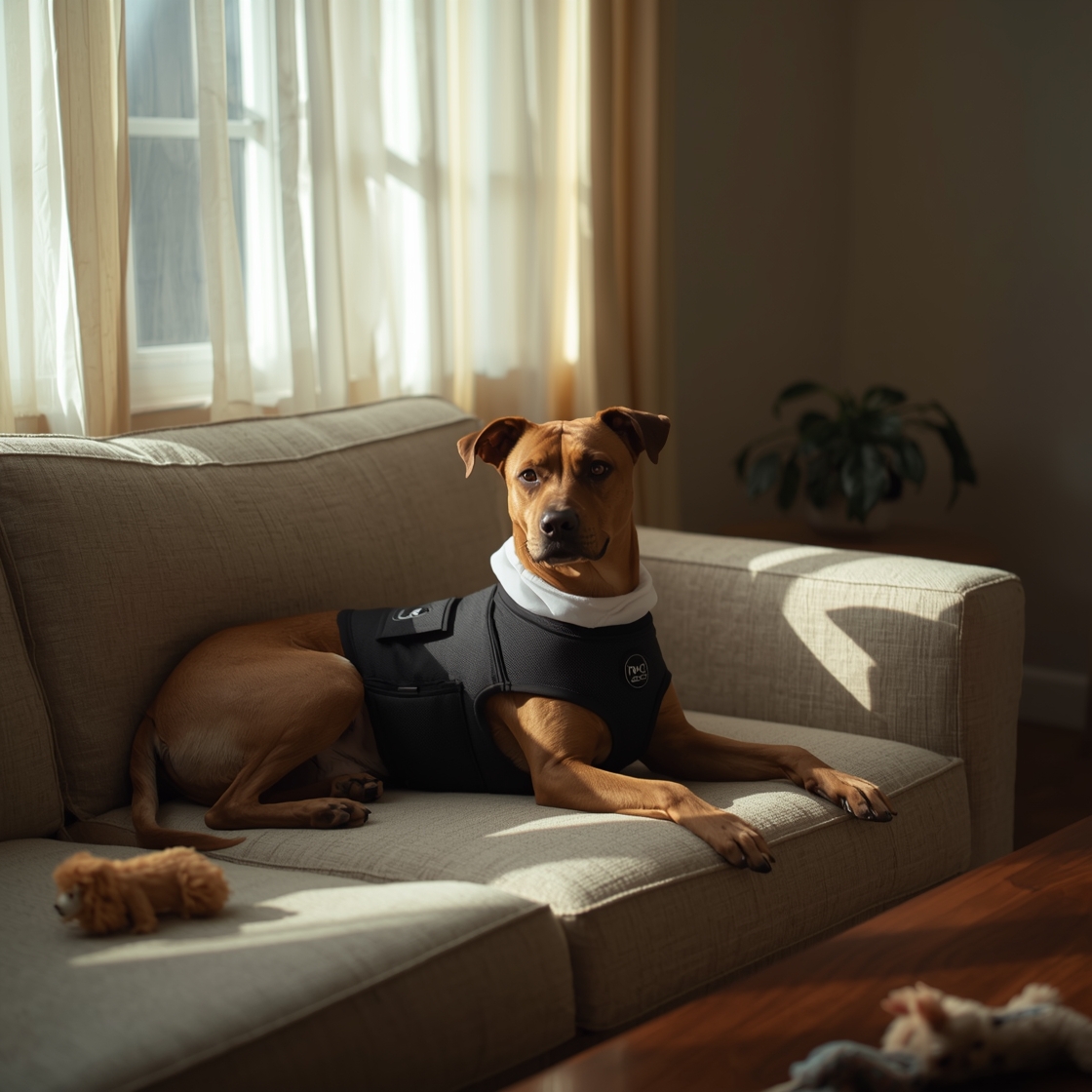
Public AKC and AVMA heat pages describe heavy panting, bright-red or brick gums, drooling, weakness, vomiting, collapse, and a dog that cannot settle in shade. Those are clinic signs. Cool the dog with room-temperature water on the body as those pages describe — not a “more ice” improvisation you read on a forum. We are not that veterinarian.
Brachycephalic dogs, thick double coats, seniors, puppies, and dogs with heart or airway disease are shorter walk dogs in summer.
Blacktop and dark sand store heat. A vest on the back does not cool the pads. If you cannot hold the back of your hand on the pavement, the dog should not be trotting it.
Price bands — what $23 vs $75 actually buys
Budget ($23–$31). Spark Paws $23.24, SAVIOR COOL $23.99, SGODA $30.56. You buy a first soak, a PCM experiment, or a Medium harness-style. You inspect seams after three washes.
Mid ($32–$47). JUXZH $35.95, CoolerDog $39.99, LUCOLOVE $46.45. You are paying for a collar, a set, or adjustable nylon. You may still be buying packs separately.
Premium on this URL ($75). Ruffwear $74.99. You are paying for a brand size ladder and trail construction theme. You are not paying for a private temperature study we ran.
Hidden cost: one heat emergency. The vest is cheaper than the ER. The vest is not the ER.
Large-breed girth. If the dog is 70 lb with a 40-in chest, start on cooling vests for large breeds. This page is the general 2026 catalog.
UV-specific shopping. UV-language vests are a different URL. UPF on a listing is a fabric claim. It is not a dermatology visit.
A 10-day introduction that does not cook a dog
Days 1–2: Vest on the floor. Treats. No walk.
Days 3–4: Damp vest on, 60 seconds indoors, off.
Days 5–6: Five-minute shady yard. Watch gums.
Days 7–8: Mailbox walk at a cool hour. Re-wet if dry.
Days 9–10: Only then a longer outing — still shorter than your winter loop.
If the dog fights the vest, you will not put it on when it matters. That is a handling problem first.
Seven buying mistakes the Cooling Mechanism we keep seeing
Buying hours in a title. Then a humid day.
Medium on a 90-lb chest. Then a crop-top.
Ice packs on a ridge. Then warm plastic.
Never wetting an evaporative vest. Then “vests don’t work.”
Parked car. Then a headline.
More ice on a collapsing dog. Then skipped clinic.
Collecting all seven cards. $275.17 is a drawer. Buy the mechanism that matches the air.
When a cooling-vest question is a clinic question
Any heatstroke sign, a dog that cannot pant effectively, heart disease, laryngeal paralysis, or a first summer with a brachycephalic puppy. Book the clinic before the heat wave if the dog is high-risk. Nothing on this page has been reviewed by a veterinarian on our behalf.
What this seven-card catalog is not
It is not a Kuoser review. It is not a Dogzstuff review. It is not a Kurgo Core review. It is not a fan vest. It is not a gel bed. It is not permission to extend a midday run. It is not “expert tested.”
Fit worksheet for the best dog cooling vest
Copy this before checkout:
- Girth behind the front legs (standing).
- Length, withers to tail base, if you will check loin coverage.
- Weight (for charts that still pretend weight is enough).
- Coat type and whether ice will sit on thin skin.
- Typical outing: dry trail, humid block, backyard with freezer.
- Can you carry water to re-wet?
- Is the dog brachycephalic or cardiac? If yes, clinic first, vest second.
- Which card mechanism matches 5–6?
If 1 does not appear on the size chart, leave. SGODA Medium in the title is a filter, not a suggestion.
Two-human, two-dog, and daycare notes
Daycare / walker. Leave written rules: vest on only if they will re-wet; vest off in the van if the van has no AC plan. Most walkers will not manage PCM freezers. Spark Paws-class soak or nothing.
Boarding. Ask if they will use your vest. Many will not. Do not assume.
Two dogs. Two vests. Two soak cycles. Do not share a Medium.
Salt, chlorine, and aftercare
Rinse after ocean or pool. Salt plus damp fabric is itch and hardware death. Chlorine plus cheap Velcro is crunch. Ruffwear-class hardware still wants a rinse. Budget cards want a rinse more.
What “2026” on this URL means
The slug is best-dog-cooling-vest-2026. The cards are the 2026 catalog snapshot we listed. Mechanisms did not invent a new physics. Evaporative soak, ice, and PCM were the aisle last year too. What changed is which seven SKUs sit on this page — and that we no longer pretend Kuoser and Kurgo Core are the cards.
Packing list next to the best dog cooling vest
Vest. Water for the dog. Water or a stream plan for the fabric. A towel to wring. Shade plan (tree, porch, car AC while the car is on and you are in it). Phone. ID on the dog. A short walk already decided.
If any line is missing, the vest is not the missing piece. The plan is.
Owners who buy seven cards and skip water are why this desk writes punchy capsules. Fabric is optional. Water is not.
How we researched this guide
What we do not do: we do not run heat-chamber trials, we do not publish °F drops we measured, and we do not employ a veterinarian. Limitations: prices move; cards are August 2026 snapshots; humidity changes evaporative math. A written clinic plan supersedes this URL.
Breed and coat notes for the best dog cooling vest
Brachycephalic (Pug, Frenchie, Bulldog, Boston, some Shih Tzu). Airway first. Walk shorter. Vest is optional fabric. A tight collar add-on (LUCOLOVE, CoolerDog) is a neck you are already watching. Loosen or skip the collar.
Double coat (Husky, Malamute, many shepherds). The coat is insulation in both directions. A vest sits on the coat. Soak still needs air movement. Shaved “summer cuts” are a groomer/clinic debate we will not settle here. Do not invent a shave protocol from a shopping page.
Black short coat on blacktop. Radiant heat from below. Vest on the back does not fix pads. Change the hour.
Sighthounds and thin skin. Ice packs can be too present. Start with a damp soak vest. Watch for reluctance to move.
Seniors and puppies. Weaker heat regulation. Shorter everything. A first Spark Paws at $23.24 is a handling test, not a hike kit.
Working / sport dogs. Ruffwear’s trail theme exists for a reason: hardware and size charts. Still re-wet. Still stop. A GPS collar and a cooling vest do not make 95°F into 70°F.
Humidity, desert, and coastal math
Desert dry heat. Evaporative soak is the desk default. Water in the pack. Re-wet. Shade. Spark Paws, DOGZSTUFF-class fabric, Ruffwear-class evaporative.
Gulf / coastal humidity. Evaporation slows. Ice or PCM themes (LUCOLOVE, SAVIOR COOL, CoolerDog, JUXZH with packs) make more sense if you can freeze. Or skip the outing.
Mountain shoulder season. Hot sun, cold wind. A wet vest in a breeze can chill a small dog. Dry the vest if the dog shivers. Heat and cold are both welfare.
Indoor AC to outdoor blast. The first ten minutes of a walk are the spike. Vest on in the shade of the porch, not after a sprint to the car.
Harness stacking and leash law
Some cards are “vest harness” hybrids (SGODA, SAVIOR COOL). Confirm you still have a real walk harness if the cooler is not load-rated. A cooling vest that rips at the D-ring is a lost dog.
Do not clip a retractable leash to a vest ring you have not inspected. Do not stack a heavy ice vest under a tight nylon harness that saws.
City leash law does not pause because the dog is wearing PCM.
Travel days: car, crate, cabin
Car. A wet vest in a cabin with AC can be fine for a short hop. A wet vest in a parked car is still a parked car. See small-dog car seats for restraint. The vest is not a seat.
Crate. A soaked vest in a closed crate can soak bedding and raise humidity. Better: wet the vest, wring hard, crate in shade, or skip.
Cabin flight. Airlines care about the carrier, not your cooling fashion. Do not invent a “cooling vest approved” boarding rule.
Storage, mildew, and replacement
Dry flat. Not in a gym bag. Not in a hot trunk. PVA-style fabrics that stay damp smell like a locker.
Replace when elastic is dead, Velcro is fuzz, or a pack leaks. A leaking gel/ice pack is a mess and a possible listing snapshot if the dog chews it. Supervise packs.
Two-summer life is a desk heuristic for budget fabric. Ruffwear-class hardware lasts longer if you rinse salt and mud.
A Saturday plan that does not depend on a miracle vest
6:30 a.m. Short walk. Vest optional.
10:00 a.m. Water, shade, indoor rest. Vest off to dry.
5:30 p.m. Second short walk if the pavement fails the hand test wait until it passes.
Midday. Not a hike day. Enrichment indoors. Puzzle / chew if the dog needs a job.
The best dog cooling vest is the one that fits that calendar. $275 of cards will not buy a 2 p.m. blacktop 5K.
Write the Saturday plan on a sticky note: cool hour, hand-test pavement, water in the tote, vest already wrung, walk shorter than winter. If any line fails, the outing is indoor enrichment — a chew, a sniff mat, a fan — not a second vest colorway. That note is cheaper than a premium ice vest and more honest than a “3+ hours” title. Horay World lives on the large-breed URL anyway. This catalog’s premium tile is Ruffwear at $74.99.
Frequently asked questions
How long does the best dog cooling vest stay effective per soak?
Owner-theme and maker copy cluster around 30–60 minutes of useful damp in sun, shorter in humidity, longer in shade with a breeze. Re-wet when the fabric feels dry. The best dog cooling vest is the one you will actually re-wet. PCM/ice titles claim longer — that is a freeze-and-swap job, not a soak. Keep the vest, the bottle, and the short-walk plan in one tote. Confirm the live tile; August snapshots move. Older leftover names (Kuoser, Dogzstuff, Kurgo Core) are not these seven cards.
How do dog cooling vests work?
Evaporative: water leaves the fabric and takes heat with it. Ice/PCM: a cold reservoir against the vest until it warms. Neither changes the fact that dogs pant to cool.
Are dog cooling vests safe?
For a healthy dog, a damp vest that is not a tourniquet is a common management layer. Ice that is too hard on thin skin is a maker-instruction and clinic question. A vest on a dog already in heatstroke is not the treatment — the clinic is.
When should I put a cooling vest on my dog?
Before a predicted hot walk, at a cool hour, after you have already shortened the route. Not after the dog is wobbly.
How do I choose the right size?
Girth behind the front legs vs that chart. Length from neck to tail if the brand prints it. Deep chests size up. SGODA’s card says Medium — believe it.
Do I need ice packs?
Only if your outing has a freezer or a swap. Dry-heat trails usually want soak fabric and water.
Can I use a cooling vest in a parked car?
No. The cabin is the emergency.
Will a vest help a Pug?
It can be a layer. The airway is still the limit. Shorter walks. Shade. Water. Clinic if the dog is a known risk.
How do I wash it?
Rinse after use. Dry flat. Follow the label for machine wash. Store dry. Mildew is a smell you do not want on a dog.
Is Ruffwear the same as every other card?
No. Ruffwear is a brand tile with a published outdoor catalog. The other six are marketplace cooling SKUs. Shop the SKU in the cart.
Should I size up for a fluffy coat?
Sometimes. The vest needs contact with a damp layer. A floating tent on a Husky does nothing. Follow the brand’s coat note if they print one. When in doubt, measure girth over the coat you will wear it on.
Can I cut a vest that is too long?
Do not. You cut straps and waterproofing. Return and reorder.
Do PCM packs go in the freezer or the fridge?
Follow the pack. Most want a freezer. A fridge will not charge a “3+ hour” title. Do not microwave packs unless the insert says so — almost none do.
Why does my dog scratch the vest off?
Fit, heat under the armpit, or the dog hates clothes. Loosen. Shorten the session. If it is a fight every time, this aisle is the wrong spend.
Is a cooling vest the same as a cooling bed?
No. Beds are stationary. See cooling dog beds. A vest is a walk layer.
Related pages
- Best dog cooling vest for large breeds
- Best dog cooling vests with UV protection
- Best cooling dog beds
City-block script vs trail script
City, 0.6 mile, 84°F, humid. Hand-test the pavement. If it fails, wait. If it passes, Spark Paws or KYEESE-class soak, wrung, two-finger fit. Water at the turnaround. Vest off in AC. This is not a PCM day unless you live above a freezer and like bulk on a terrier.
City, same mile, 94°F. Often the correct best dog cooling vest decision is no vest and no walk. Indoor enrichment. Early morning only.
Trail, 3 miles, dry, stream at mile 1.5. Ruffwear-class evaporative or any soak you can dunk. Re-wet at the stream. Shade snack. If the dog’s gait changes, you are done. Ice packs that thawed at mile 0.8 are souvenirs.
Trail, same, no water. Carry water for the vest and the dog. People under-pack the vest water. A pint that “is for him” gets spent on the fabric and then nobody drinks.
Night walks and the vest
Asphalt still holds heat after sunset. The vest can stay in the bag until you feel the ground. Reflective trim on Ruffwear-class gear is a visibility theme, not cooling. A dark Spark Paws at dusk is a shadow — add a light on you.
How this page relates to the large-breed URL
Same mechanism physics. Different catalog and a girth problem. If the dog is 75 lb with a 40-inch chest, start on large-breed cooling vests. If the dog is 22 lb, stay here. If you own both, you own two charts, not one “family size.”
Decision tree: soak, ice, or skip
Dry air, you can re-wet, dog accepts clothes. Spark Paws to try fabric. Ruffwear if you want a published trail size ladder and will pay $75.
Humid air, you have a freezer, dog is not tiny. LUCOLOVE, CoolerDog, SAVIOR COOL, or JUXZH with packs. Watch bulk.
SGODA Medium in the title and your tape says Medium. Only then SGODA.
Pavement fails the hand test, or the dog is brachycephalic and already stressed. Skip the vest and the walk. Indoor job.
75 lb, 40-inch girth. This URL is the wrong start. Use the large-breed page.
That tree is the Cooling mechanism listing review in one screen. The best dog cooling vest is the mechanism you can recharge on the outing you will actually take.
If you are still undecided: buy the cheapest soak that fits, prove the dog will wear it, then spend $75 on Ruffwear if the size chart and the trail are real. Do not buy ice packs for a ridge with no freezer. Do not buy seven cards to avoid shortening a walk.
A vest that lives in a mildew pile is not cooling gear. Dry it. The next heat day does not care that you owned four mechanisms. It cares that one damp vest actually went on the dog at 6:30 a.m. with water in the bottle.
Store the vest next to the leash so the 6:30 walk is not a scavenger hunt. A $75 Ruffwear in a hall closet behind holiday bins will lose to a $23 Spark Paws that is already damp in a bowl. Habit beats catalog. Re-check girth after a winter of weight gain. A spring Labrador is not last August’s Medium. Write the new number on a tape in the junk drawer. Then open the chart again. That is the whole 2026 job: mechanism, inches, water, shorter walk. Do that, and the catalog is optional. Skip that, and no SKU on this page will matter. Shade and water still outrank every card on this URL, including the $74.99 brand tile. Keep both in the same tote as the vest so the morning walk cannot start with fabric and no bottle. That tote is the product. Pack it the night before any forecast hot day on your kitchen calendar. Done.
Sources
- AVMA — Hot weather pet safety: https://www.avma.org/resources-tools/pet-owners/petcare/hot-weather-pet-safety
- AKC — Heatstroke in dogs: https://www.akc.org/expert-advice/health/heatstroke-in-dogs/
- Ruffwear Swamp Cooler product pages on ruffwear.com (brand; confirm SKU)
- Manufacturer listings for the seven cards (confirm size and pack contents at purchase)
Last reviewed: August 2026. If something is stale, contact us.