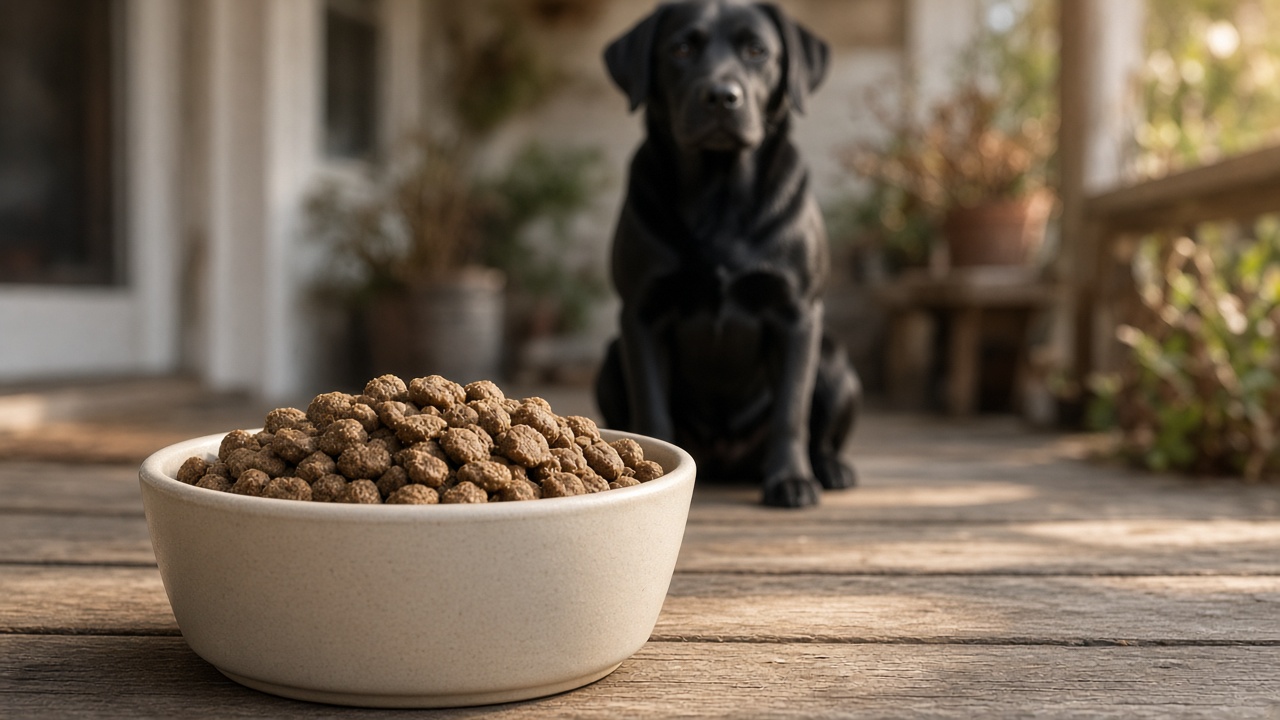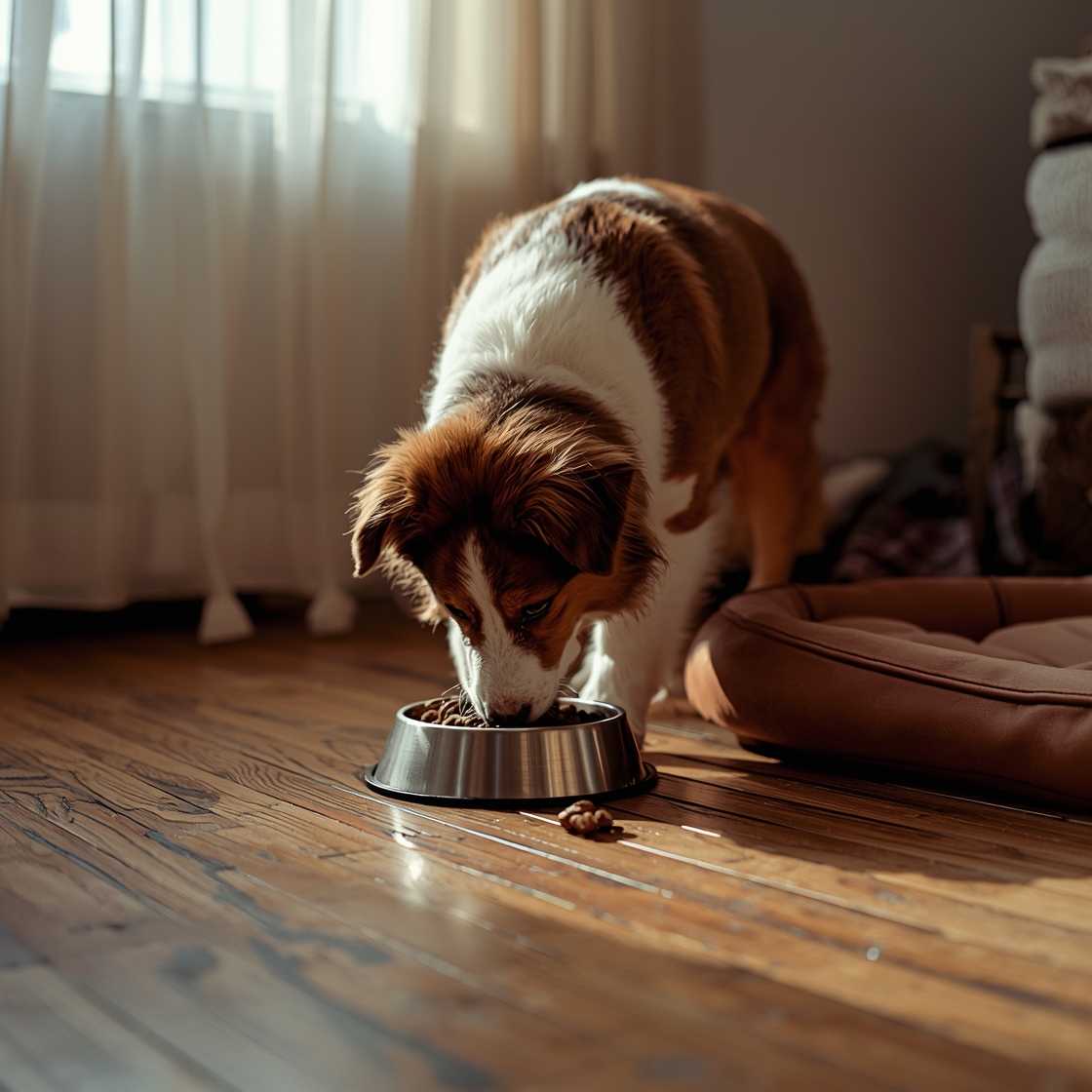
The best high-fiber dog food for weight management delivers 8–12% crude fiber with reduced kcal/cup versus standard adult—our desk compared calories per cup and satiety fiber sources, not metabolic chamber studies.
High-fiber dog foods that meet AAFCO standards, are low in calories, and contain quality, digestible fibers are the most effective option for helping overweight dogs feel full while supporting healthy bowel function.
To make the picks below genuinely useful, we compared widely available weight-management formulas against their published guaranteed analyses and manufacturer feeding data, prioritizing foods that pair a lower calorie density with real fiber sources and muscle-sparing protein.
Our Top Picks at a Glance
- Best low-fat wet topper: Pro Plan Weight Management Turkey & Rice Entree — moisture plus lower fat for satiety on fewer calories.
- Best clinically backed dry food: Hill's Science Diet Adult Perfect Weight — a soluble/insoluble fiber blend plus L-carnitine.
- Best breed-size-specific option: Royal Canin Weight Care Adult — calorie control with added fiber, sized to your dog.
Introduction to High-Fiber Dog Food for Weight Management
Fiber works like a natural appetite regulator for dogs. When a diet is rich in soluble and insoluble fibers, the bulk expands in the stomach, sending signals of satiety that can reduce overall caloric intake. This "feeling of fullness" is a key mechanism by which high-fiber formulas help overweight pets stay satisfied between meals.
Beyond appetite control, fiber is essential for a smooth digestive process. It adds bulk to stool, speeds up intestinal transit, and helps maintain a balanced gut microbiome. Because obesity is a leading driver of many canine health problems, a well-balanced fiber intake can also mitigate the constipation or diarrhea that sometimes accompany weight-loss diets. By stabilizing stool consistency, fiber reduces the risk of gastrointestinal upset that might otherwise derail a weight-management plan.
In our experience comparing these formulas, the right amount and type of fiber plays a pivotal role in weight control, especially when paired with a reduced-calorie recipe. Dietary fiber is one of the most underused nutritional tools available to owners, and it can help with everything from soft stools to blood-sugar stability.
In practice, a high-fiber dog food typically contains ingredients such as beet pulp, pumpkin, chicory root, or whole grains that are digestible and low-glycemic. These sources not only promote satiety but also supply prebiotic fibers that feed beneficial gut bacteria, further supporting metabolic health. When selecting a product, look for clear labeling of fiber content (often expressed as a percentage of the guaranteed analysis) and ensure the formula aligns with your dog's specific size, activity level, and any existing health conditions.
By choosing a scientifically formulated, fiber-rich diet, pet owners can give their dogs a practical tool for weight management while safeguarding digestive comfort.
How this desk selected the best high-fiber dog foods
Selection criteria
- AAFCO compliance – Every formula had to print an Association of American Feed Control Officials complete-and-balanced statement for adult maintenance (or the equivalent nutrient-profile claim). That is a regulatory floor, not a weight-loss proof.
- Nutrient profile – We looked for a printed mix of protein, low-to-moderate fat, and a named fiber source. Foods that paired fiber with higher moisture were mapped as a satiety-without-calories class because water has no calories.
- Ingredient quality – Whole-food sources such as sweet potatoes, pumpkin, peas, or beet pulp ranked above isolated “fiber” with no named source. We also screened labels for artificial colors, flavors, and unnamed fillers. That is a reading pass, not a digestibility trial.
Desk method (not a feeding trial)
- Guaranteed analysis – Using the guaranteed analysis on each label, we compared listed calorie density language against crude-fiber lines, favoring formulas that advertise satiety-supporting fiber at a lower calorie load.
- Ingredient review – We read the leading ingredients to see whether a recognizable whole food was the primary fiber source. A generic “fiber” line without a named source was treated as weaker evidence.
- Compliance check – We cross-checked each product's AAFCO statement as printed.
- Company feeding data – Hill’s and Royal Canin publish their own weight-loss percentages. Those figures stay theirs. We reprint them with that attribution.
By combining label scrutiny with those company-published numbers, we arrived at a shortlist of five foods that meet the printed regulatory floor and use named fiber sources. That is an aisle map, not a metabolic-chamber ranking.
Top 5 High-Fiber Dog Foods for Weight Management
1. Pro Plan Weight Management Turkey & Rice Entree
Best for: overweight or less-active dogs whose owners want a low-fat, high-moisture topper or full meal that promotes fullness.
This low-fat, high-moisture option pairs real turkey with rice and gravy in a satiety-friendly recipe. Sold as a 12-pack of 13 oz cans, it carries 25% less fat than Pro Plan's Complete Essentials Classic Chicken & Rice entree, and it delivers 23 essential vitamins and minerals with no artificial colors, flavors, or preservatives. Because it is AAFCO complete-and-balanced for adult maintenance, it can serve as a full meal or as a leaner topper mixed with kibble. The honest trade-off: wet food costs more per calorie than dry kibble, and its crude fiber is modest versus dedicated high-fiber dry formulas.
Pros
- High moisture plus lower fat helps dogs feel full on fewer calories
- Real turkey supports lean muscle retention during weight loss
- Widely trusted vet-recommended brand, easy to portion or mix with kibble
Cons
- Wet food is more expensive per calorie than dry kibble
- Crude fiber is modest versus dedicated "high-fiber" dry formulas
2. Hill's Science Diet Adult Perfect Weight
Best for: adult dogs needing steady, clinically backed weight loss without switching to a prescription diet.
Hill's uses a blend of soluble and insoluble fibers, including beet pulp, to support satiety, plus L-carnitine to help the metabolism convert fat to energy. The chicken and brown rice recipe comes in a 25 lb bag (with 4, 12, 15, and 28.5 lb sizes also available) and meets the AAFCO nutrient profile for adult maintenance. Hill's reports that over 70% of dogs lost weight within 10 weeks in company testing — a Hill's figure, not a desk result. The honest trade-off: it commands a premium price per pound versus grocery brands, and some picky eaters take time to transition to the leaner formula.
Pros
- Hill's company testing reports weight loss within 10 weeks; we did not run that trial
- L-carnitine plus quality protein helps preserve lean muscle
- Available OTC in many sizes; strong veterinary reputation
Cons
- Premium price per pound versus grocery brands
- Some picky eaters take time to transition to the leaner formula
3. Royal Canin Weight Care Adult (Medium Breed)
Best for: dogs that tend to gain weight and need calorie control with muscle-sparing protein, sized by breed.
Royal Canin's Weight Care recipe combines added fiber (including beet pulp) for bulk and satiety with L-carnitine to support fat metabolism, and it adapts protein content to help maintain muscle mass during weight loss. The 30 lb bag reviewed here is formulated for medium breeds (23–55 lb), with small- and large-breed versions available. Royal Canin reports that 80% of slightly overweight medium dogs lost weight within two months in company data — their figure, not ours. The honest trade-off: it sits at a higher price point than mainstream retail brands, and because the line splits by breed size, buyers must pick the right variant.
Pros
- Breed-size-specific kibble and portioning guidance
- L-carnitine plus fiber targets fat loss while sparing muscle
- Royal Canin publishes feeding-trial percentages; we did not replicate them
Cons
- Higher price point than mainstream retail brands
- Line splits by breed size, so buyers must pick the right variant
4. Merrick Grain Free Healthy Weight Recipe
Best for: weight-conscious dogs on a grain-free diet or with grain sensitivities, using legume-based fiber.
Merrick's grain-free line leads with deboned beef and relies on legumes and peas for soluble fiber, which can aid glucose stability and satiety. The 22 lb bag is formulated for weight management with reduced calories and fat, contains no corn, wheat, soy, gluten, or artificial preservatives, and includes leading levels of glucosamine and chondroitin for joint support—a real perk for older, heavier dogs. The honest trade-off: grain-free, legume-heavy diets are not ideal for every dog, so check with your vet, and the recipe is priced above grocery-store kibble.
Pros
- Whole-food, grain-free recipe with legume fiber for satiety and glucose stability
- Reduced fat and calories aimed specifically at weight control
- Added joint support benefits older, overweight dogs
Cons
- Grain-free legume-heavy diets are not ideal for every dog; check with a vet
- Priced above grocery-store kibble
5. Blue Buffalo Life Protection Formula Healthy Weight Adult
Best for: value-minded owners wanting a natural, whole-grain weight-control kibble with joint and coat extras.
Blue Buffalo blends whole-grain oats with brown rice and flaxseed, delivering both soluble and insoluble fiber alongside omega fatty acids. Real chicken is the first ingredient, L-carnitine supports lean muscle and weight control, and antioxidant-rich LifeSource Bits round out the recipe, with no corn, wheat, soy, or artificial flavors or preservatives. The 34 lb bag offers strong value relative to premium weight lines (30 lb, 6 lb small-breed, and large-breed variants are also sold). The honest trade-off: crude fiber is moderate rather than a true high-fiber therapeutic level, and some dogs dislike the kibble size or LifeSource Bits.
Pros
- Whole-grain oats plus flaxseed deliver soluble and insoluble fiber for fullness
- L-carnitine and real chicken support lean muscle during weight loss
- Large-bag value pricing relative to premium weight lines
Cons
- Crude fiber is moderate rather than a true high-fiber therapeutic level
- Kibble size/LifeSource Bits are disliked by some dogs
All five foods meet AAFCO nutrient profiles for adult maintenance and are engineered specifically for weight control. When choosing, match the dog's size, activity level, and any sensitivities to ensure the fiber source works harmoniously with the rest of the diet.
Comparison Table: High-Fiber Weight-Management Dog Foods
| Product | Type | Standout benefit | Approx. price | Check price |
|---|---|---|---|---|
| Pro Plan Weight Management Turkey & Rice Entree | Wet, 13 oz × 12 | Moisture-rich, 25% less fat for satiety | $30–$38 (12-pack) | Check price |
| Hill's Science Diet Adult Perfect Weight | Dry, 25 lb | Fiber blend + L-carnitine, clinically tested | $85–$100 (25 lb) | Check price |
| Royal Canin Weight Care Adult (Medium) | Dry, 30 lb | Beet-pulp fiber + L-carnitine, breed-sized | $100–$110 (30 lb) | Check price |
| Merrick Grain Free Healthy Weight | Dry, 22 lb | Legume fiber + joint support, grain-free | $65–$80 (22 lb) | Check price |
| Blue Buffalo Life Protection Healthy Weight | Dry, 34 lb | Whole-grain oats + flaxseed, value size | $70–$85 (34 lb) | Check price |
Prices are approximate street prices and vary by retailer, bag size, and flavor.
Pros and Cons of High-Fiber Dog Food for Weight Management
High-fiber dog foods are prized for two main reasons: they keep the gastrointestinal tract running smoothly and they help overweight pups feel fuller on fewer calories.
Pros
- Supports healthy digestion. Fiber adds bulk to the stool, which promotes regular bowel movements and can prevent both constipation and loose stools.
- Aids weight management. Because fiber expands in the gut, it creates a sense of satiety that can curb overeating, a key mechanism by which high-fiber diets assist dogs on a weight-loss program.
- Stabilizes blood sugar. Soluble fibers slow carbohydrate absorption, which can blunt post-meal glucose spikes—beneficial for dogs with diabetes or pre-diabetic tendencies.
- Broad health ripple effects. From anal gland problems to blood-sugar stability, high-fiber foods can help address a range of canine issues, underscoring how a single nutrient can improve overall wellness.
Cons
- Potential for gas and bloating. Introducing a large amount of fiber too quickly can ferment in the colon, producing excess gas; sudden dietary shifts may lead to bloating or stomach upset in sensitive dogs.
- Stomach upset in some individuals. Not every dog tolerates the same fiber type; insoluble fibers can be harsher on a delicate gut, causing mild diarrhea or cramping, so a gradual rollout with close monitoring is best.
- Palatability challenges. Some high-fiber formulas have a coarser texture or earthy flavor that picky eaters reject, potentially requiring a transition period or mixing with a small amount of wet food.
Bottom line
When chosen wisely and introduced gradually, high-fiber dog food is a powerful tool for digestion and weight control. However, owners should watch for gastrointestinal side effects and adjust the fiber level as needed, ideally under veterinary guidance.
Price Ranges and What to Expect
When you compare high-fiber dog foods, price usually reflects the quality of fiber sources, overall ingredient selection, and the presence of supplemental nutrients that support weight management. The tiers below match the street prices of the products reviewed above, grouped by format.
| Price tier | Typical cost | What you get |
|---|---|---|
| Budget | $30–$40 per 12-pack of 13 oz wet cans | A low-fat, high-moisture wet formula (like Pro Plan Weight Management) used as a full meal or leaner topper. Meets AAFCO minimums and promotes satiety, though wet food costs more per calorie than kibble. |
| Mid-range | $65–$85 per large dry bag (22–34 lb) | Dedicated dry weight formulas such as Merrick Grain Free Healthy Weight or Blue Buffalo Healthy Weight, combining named fiber sources (legumes, oats, flaxseed) with L-carnitine and, in some cases, joint support. |
| Premium | $85–$110 per 25–30 lb bag | Clinically positioned lines such as Hill's Science Diet Perfect Weight and Royal Canin Weight Care, featuring engineered soluble/insoluble fiber blends, L-carnitine, and documented feeding-trial results. |
Budget options (wet, $30–$40 per case)
Expect a straightforward calorie-controlled diet that still delivers the moisture and fiber needed to promote satiety. Wet formulas like Pro Plan Weight Management use high moisture plus lower fat to help dogs feel full, making them useful for weight-management programs—provided you monitor portion sizes carefully and account for the higher cost per calorie versus dry food.
Mid-range options (dry, $65–$85 per large bag)
These foods usually combine several fiber ingredients—legumes, peas, whole-grain oats, or flaxseed—delivering a broader spectrum of soluble and insoluble fibers that support both gut health and steady blood-sugar levels. You'll often find added L-carnitine and joint-support nutrients that help maintain lean muscle while the dog loses weight. Because the ingredient list is more selective, you may notice improved stool quality compared with grocery brands.
Premium options (dry, $85–$110 per bag)
At the top end, manufacturers invest in engineered fiber blends (such as Hill's soluble/insoluble mix or Royal Canin's beet-pulp matrix), L-carnitine for metabolism, and breed-size-specific formulations. These lines back their claims with company feeding trials and carry strong veterinary reputations. The higher price reflects that clinical positioning and consistent quality control.
Choosing the right tier depends on your dog's specific health needs, sensitivity profile, and how closely you want to track weight-loss progress. Even a budget-friendly high-fiber diet can be effective, but the clinically positioned premium options tend to come with the most published weight-loss data.
Calorie Cut Desk: Best High-Fiber Dog Food for Weight Management
| Starting BCS | Target loss | kcal cut | Weekly weigh |
|---|---|---|---|
| 6/9 | 1–2% body wt/wk | 10–20% | Same scale |
| 7/9 | 2% max/wk | 20–25% | Monday AM |
| 8+/9 | Vet plan | 25–30% | Twice weekly |
Treats must stay ≤10% daily calories—one large biscuit can erase a 15% kibble reduction.
Best High-Fiber Dog Food for Weight Management — Fiber Types
| Source | Satiety desk | Gas risk | Transition |
|---|---|---|---|
| Beet pulp | Medium | Low | 7 days |
| Cellulose | High | Medium | 10 days |
| Pumpkin powder | Medium | Low | 5 days |
Increase fiber too fast → loose stool 48–72 hours—step portion 25% every 3 days.
Calories, fiber, and what this desk will not invent
Weight loss in dogs is a calorie deficit plus muscle-sparing protein, confirmed on a scale and a body-condition score. Fiber is a satiety tool inside that plan. It is not a fat-burning ingredient. WSAVA-style nutrition talking points and AAFCO complete-and-balanced language still sit underneath every bag on this page.
Pace. Public veterinary nutrition writing keeps landing on about 1–2% of body weight per week. Faster loss risks muscle. Use the same scale, same time of day, and have the clinic confirm body condition so you are not chasing a vanity number.
Treats. Treats at more than about 10% of daily calories can erase a kibble cut. That is arithmetic on the feeding-guide calories, not a biscuit trial we ran.
Transition. Seven to ten days, stepping the new food up in quarters, is the standard gut-adjustment advice this desk reprints. Loose stool at 48–72 hours after a sudden fiber jump is a common owner theme. Slow down. Do not add a second new variable (new treat, new probiotic, new table scrap) in the same week if you want to read cause and effect.
Grain-free legumes. Merrick Healthy Weight is in the grain-free, legume-fiber class. FDA DCM discussion around grain-free/legume-heavy diets is why this desk will not crown that class as the default weight-loss bag. Ask the veterinarian who knows that dog’s heart and diet history.
Prescription versus OTC. Hill’s Perfect Weight and Royal Canin Weight Care are over-the-counter weight lines, not the prescription metabolic or gastrointestinal diets a clinician may write. A dog that needs a prescription diet should not be swapped onto an OTC bag from a roundup.
Wet versus dry. Moisture has no calories and can slow a gulper. Dry is cheaper per calorie and often lists more crude fiber. Mixing a can into kibble is a palatability tactic, not a protocol we timed.
We compared labels. Nothing here has been reviewed by a veterinarian on our behalf.
Frequently Asked Questions
How fast should weight drop on best high-fiber dog food for weight management?
Aim 1–2% body weight per week; faster loss risks muscle loss—recheck ribs and waist monthly with scale weight.

What is the best high-fiber dog food for weight management?
The best choice is a low-fat, weight-management formula that meets AAFCO standards and includes quality protein plus a named fiber source. Among the products we reviewed, Hill's Science Diet Adult Perfect Weight stands out for its soluble/insoluble fiber blend, L-carnitine, and company testing showing over 70% of dogs lost weight within 10 weeks. If you prefer a high-moisture option, the Pro Plan Weight Management Turkey & Rice Entree pairs lower fat with the fullness that moisture provides.
How much fiber does my dog need?
There is no single number that fits every dog, and total dietary fiber needs vary widely with size, activity, and health status. Most commercial weight-management foods list crude fiber in their guaranteed analysis, and dedicated formulas run higher than standard maintenance kibble. Rather than targeting a specific gram count on your own, match your dog's calorie target and fiber level to your veterinarian's guidance, especially if there are existing digestive or metabolic conditions.
Can feeding too much fiber cause digestive upset?
Yes. While moderate fiber improves stool quality and satiety, excessive amounts can lead to loose stools, gas, or constipation, especially if the fiber source is not easily fermentable. Introduce a new high-fiber food gradually and monitor stool consistency; if problems appear, slow the transition or consult your vet about adjusting the fiber level.
Is it safe to supplement my dog's diet with homemade high-fiber foods?
Homemade additions—like cooked pumpkin, green beans, or oat bran—can boost fiber, but they should complement a complete, balanced commercial diet rather than replace it. Consult a veterinarian to ensure the overall diet remains nutritionally complete. The type of fiber matters: soluble fibers (such as oats) aid satiety and weight control, while insoluble fibers (such as cellulose) primarily support bowel regularity.
Is wet or dry food better for weight loss?
Both can work. Wet formulas like Pro Plan Weight Management add moisture that boosts satiety without extra calories, which suits dogs that eat too fast or need help feeling full. Dry weight formulas are more economical per calorie and often carry more concentrated fiber and L-carnitine. Many owners mix a small amount of wet food into a leaner kibble to improve palatability during the transition.
How long does it take to see weight loss?
Healthy canine weight loss is gradual. Hill's reports that over 70% of dogs lost weight within 10 weeks in company testing, and Royal Canin reports that 80% of slightly overweight medium dogs lost weight within two months in its data. Expect steady, modest change over weeks—not days—and have your vet track body condition so the diet supports muscle retention while fat comes off.
Expert Insights and Scientific Backing
Veterinarians and animal nutritionists broadly agree that dietary fiber is a useful component of weight-management programs for dogs. Fiber helps dogs feel full, which can curb overeating and support a steady reduction in body condition. Because obesity contributes to many canine illnesses, adding appropriate fiber is one of the simplest ways to promote satiety without increasing calorie intake.
The mechanism is well understood: soluble fibers such as beet pulp and psyllium form a gel in the gastrointestinal tract, slowing glucose absorption and extending the feeling of fullness after a meal. This not only aids weight loss but also helps stabilize blood sugar, which is especially beneficial for dogs prone to diabetes. Insoluble fibers, meanwhile, add bulk and speed intestinal transit, supporting regular bowel movements.
Manufacturer feeding data reinforces the practical advice. Hill's reports that over 70% of dogs lost weight within 10 weeks of feeding its Perfect Weight formula in company testing, and Royal Canin reports that 80% of slightly overweight medium dogs lost weight within two months on Weight Care. Both lines pair fiber with L-carnitine, which supports the metabolism of fat while quality protein helps preserve lean muscle during weight loss.
Taken together, the nutritional consensus and manufacturers' published results confirm that incorporating quality fiber sources—whether beet pulp, pumpkin, oats, or legumes—into a balanced, calorie-controlled diet is a sound strategy for helping dogs achieve and maintain a healthy weight. As always, confirm the right calorie and fiber targets with your veterinarian.
When to Feed High-Fiber Dog Food
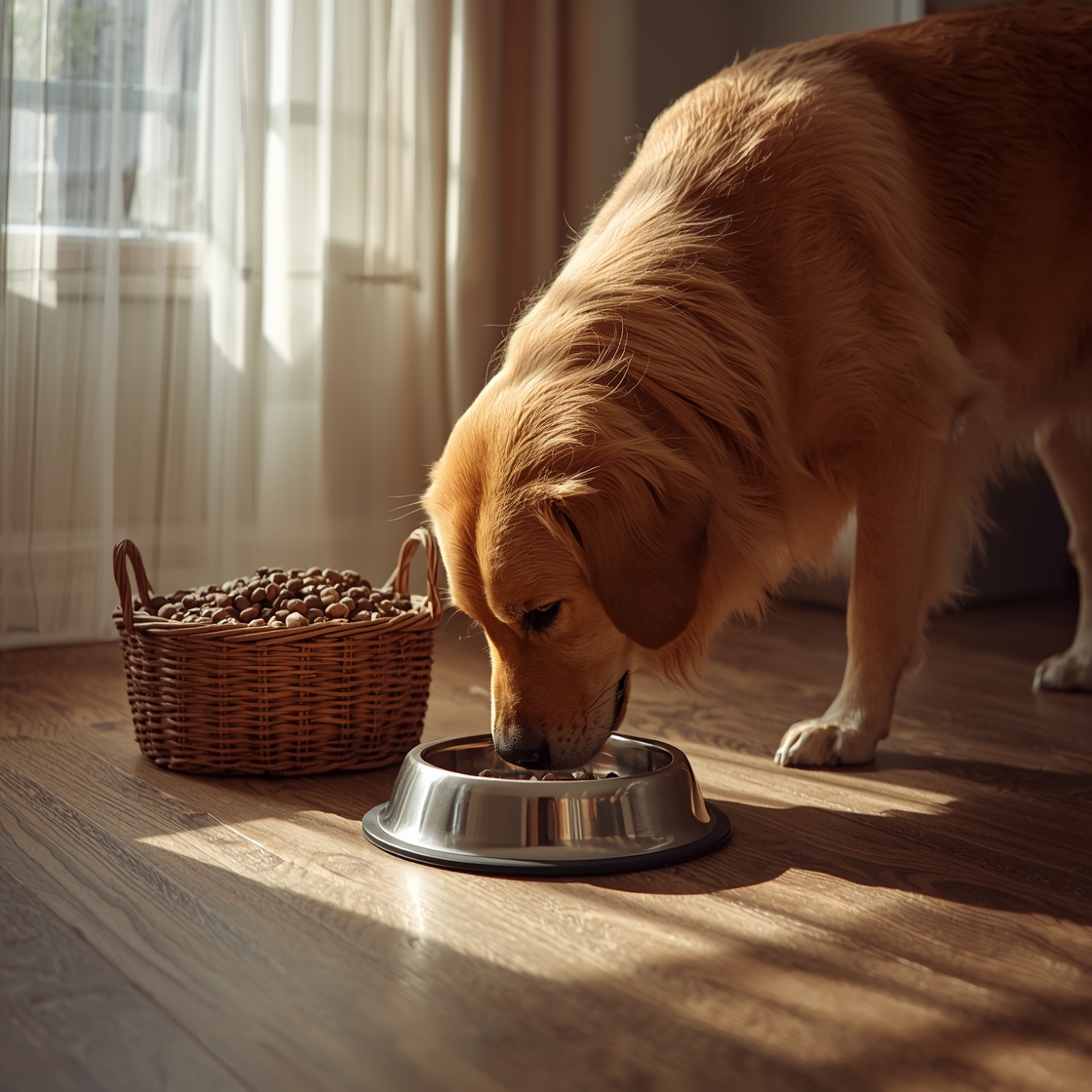
High-fiber formulas aren't a one-size-fits-all supplement; they shine in particular health scenarios.
1. Dogs with digestive issues – Dogs that experience irregular bowel movements, soft stools, or chronic constipation benefit from the bulking effect of soluble and insoluble fibers. The fiber absorbs water and adds bulk, helping to normalize stool consistency and promote regularity, which makes fiber a go-to ingredient for sensitive stomachs and anal-gland issues.
2. Dogs needing weight management – Fiber expands in the gut, creating a feeling of fullness that can curb overeating and reduce overall caloric intake without sacrificing nutrient density. For dogs on a weight-loss program, switching to a low-fat, high-fiber formula—wet or dry—can help maintain muscle while shedding excess pounds.
3. Dogs with diabetes or other metabolic conditions – Slow-digesting soluble fibers blunt post-meal glucose spikes, a critical factor for diabetic canines. Fiber is valuable for diabetes management because it moderates blood-sugar fluctuations while supporting gut health, and it may help with insulin sensitivity as part of a veterinarian-designed therapeutic diet.
Practical timing – Introduce a high-fiber food gradually over 7–10 days to let the gut microbiome adjust. Start with about 25% of the new formula mixed with the current food, then increase the proportion every few days. Monitor stool quality and weight; if stools become overly firm, add a bit of canned pumpkin or a probiotic to soften the bulk. Always confirm the appropriate fiber level with your veterinarian, especially for dogs with existing medical conditions, to ensure the diet supports—not hinders—their specific health goals.
The Bottom Line: Choosing the Best High-Fiber Dog Food for Your Pet
When it comes to weight management, a high-fiber dog food can be a powerful ally, but it should never replace professional guidance. Veterinarians can assess your pet's body condition, activity level, and any underlying health issues before recommending the right fiber level and overall calorie target. Their input ensures the diet supports not only weight loss but also the essential nutrients your dog needs for muscle, immune function, and joint health.
A balanced high-fiber formula should meet AAFCO nutrient profiles, contain quality protein sources, and include a blend of soluble and insoluble fibers such as beet pulp, pumpkin, oats, or legumes. These fibers slow gastric emptying, which helps dogs feel satiated longer and can reduce overall food intake. At the same time, the diet must supply adequate vitamins, minerals, and omega-3 fatty acids to avoid deficiencies that could compromise skin, coat, and overall vitality.
Keep an eye on calorie density: low-fat weight-management options are engineered to deliver satiety on fewer calories than standard kibble while still supplying quality protein. Among our picks, the Pro Plan Weight Management Turkey & Rice Entree leverages moisture to keep dogs full, while dry lines like Hill's and Royal Canin lean on engineered fiber blends and L-carnitine. Pairing any of these diets with regular exercise maximizes fat loss and preserves lean muscle.
Finally, monitor your pet's stool quality and energy levels. A well-formulated high-fiber food should produce firm, regular stools without causing diarrhea or constipation. If you notice digestive upset, adjust the fiber source or amount under veterinary supervision. By combining a vet-approved, nutritionally complete high-fiber diet with consistent activity, you give your dog the best chance to achieve and maintain a healthy weight while staying happy and healthy.
Reading a weight-management bag without pretending we fed it
kcal/cup versus cup count. A “weight” bag that is calorie-dense still makes a dog fat if the cup is heaped. Use a gram scale if the clinic gave a gram target. Cup marks drift.
Crude fiber versus total dietary fiber. U.S. pet-food labels print crude fiber, which is not the same number as total dietary fiber in a human nutrition panel. Comparing crude-fiber percentages across brands is a rough aisle tool, not a digestibility coefficient we measured.
L-carnitine. Hill’s, Royal Canin, and Blue Buffalo print L-carnitine as a fat-metabolism support. That is a nutrient claim. It is not a reason this desk can promise faster fat loss.
Joint extras. Merrick’s glucosamine/chondroitin line is a joint-support add-on on a weight bag — useful as a shopping class for heavier seniors, not as a proven arthritis protocol from this URL.
Picky transition. Leaner kibble often tastes leaner. A wet topper from the same calorie budget (Pro Plan Weight Management cans counted into the day) is the palatability class. Do not “just add oil” to make it tasty; that undoes the deficit.
We still have no metabolic chamber. Company 70% and 80% figures stay on their side of the attribution. Confirm the calorie target with the veterinarian who can see the dog.
Last reviewed: August 2026. If you spot something out-of-date, let us know.
- We added a comparison table with linked product names and a Check-price column, aligned the pricing tiers with real street prices, expanded the FAQ, and removed unverifiable third-party statistics and citations.
We remain committed to providing a science-backed, up-to-date resource for pet owners seeking the best high-fiber dog food for weight management.