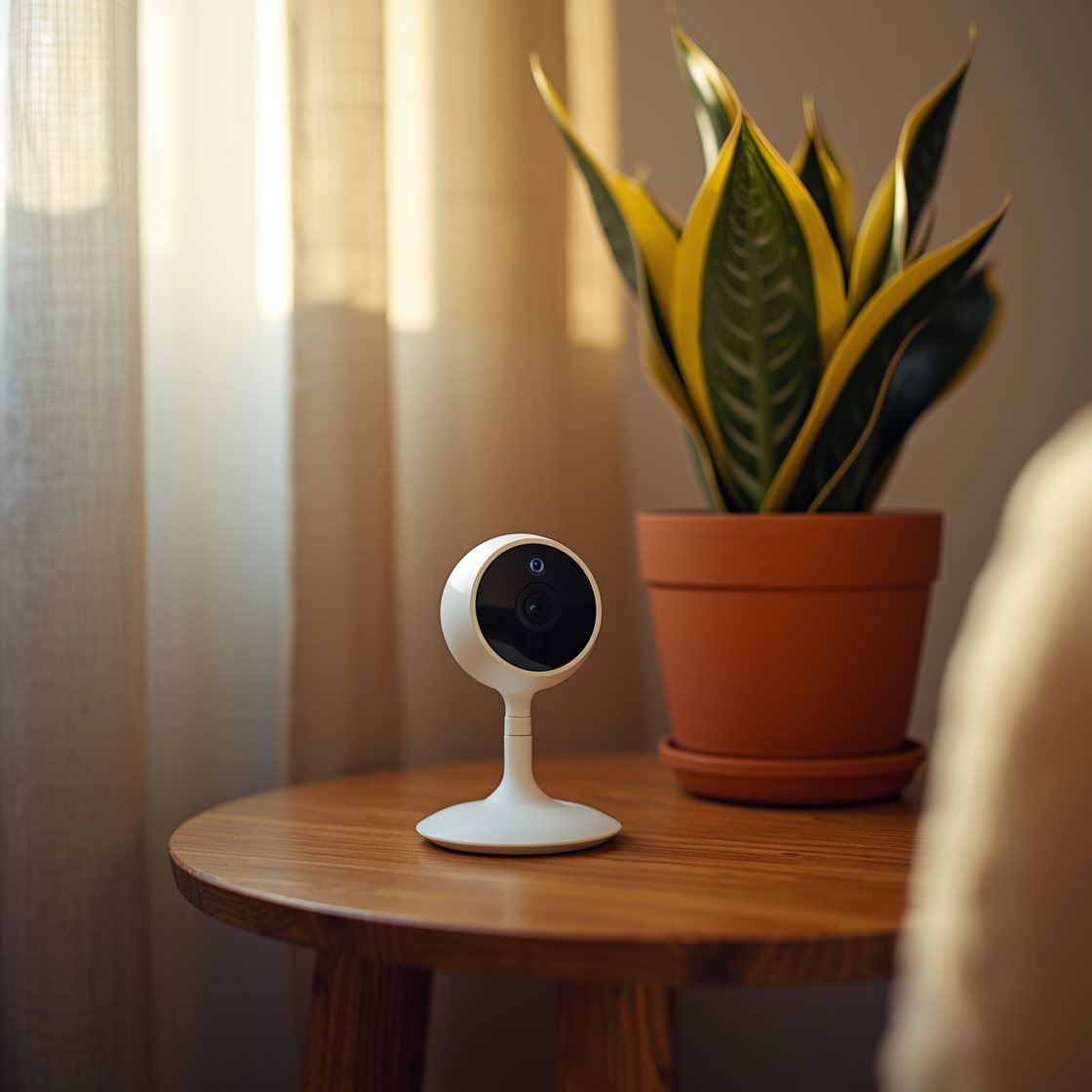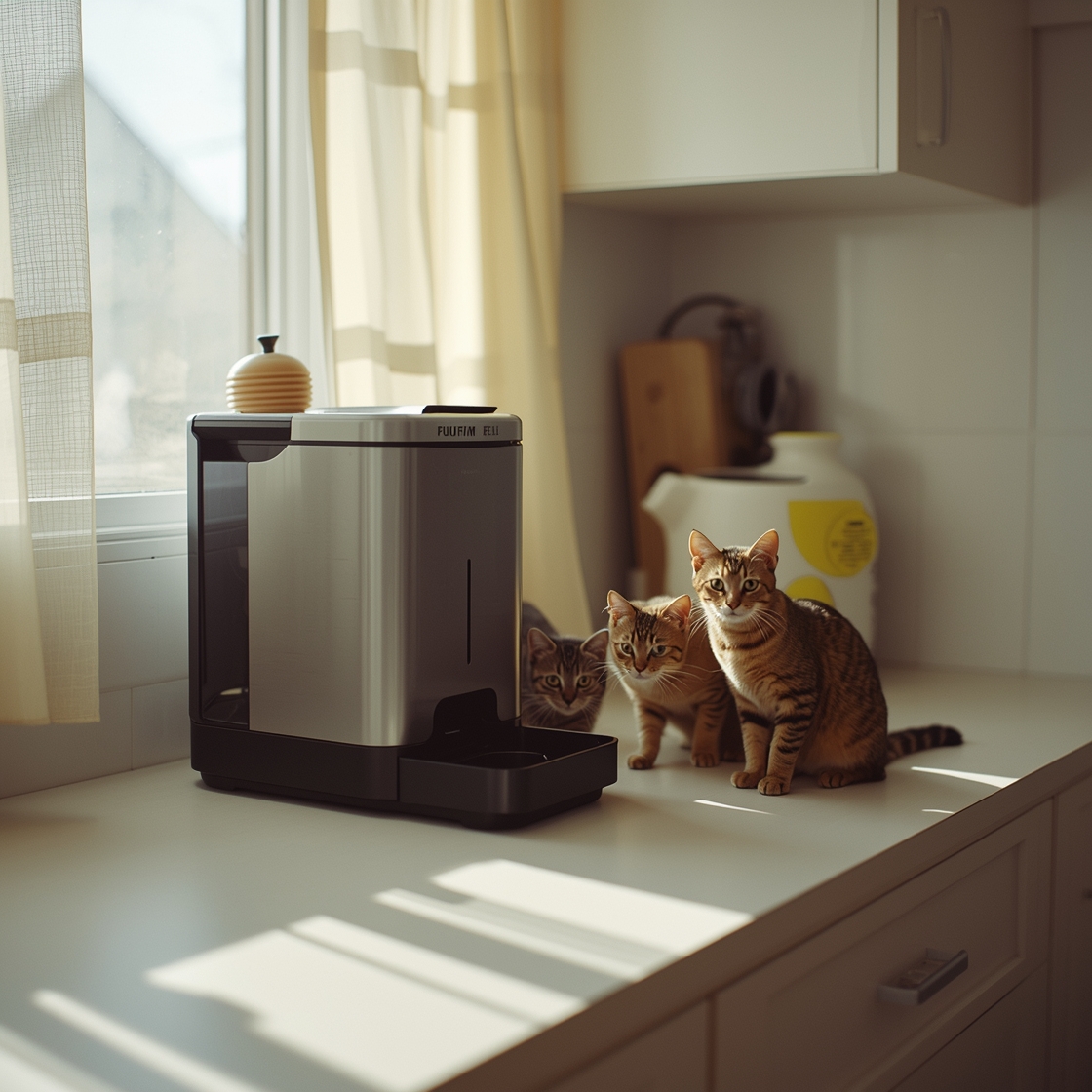

The best pet camera no subscription is a camera that writes the clip you keep to a card, onboard flash, or a USB hub — without a required cloud plan. Live view can be free while history is rented. On this URL the priced fixed file is Wyze Cam v4 $36. The priced pan motors are Wyze Cam Pan v3 $40 and eufy Indoor Cam E220 $55. The Alexa-stack puck is Blink Mini 2 $40 — local USB usually needs a Sync Module, a second SKU. Tapo C220 and eufy Pet Camera D605 store no price. Not a six-cam trial podium, not a Furbo plan wall, and not “top picks” We read current Amazon listing titles and descriptions and scored 6 named SKUs. 4 of 6 (67%) store a snapshot. Those four run $36–$55 (median $40, a 1.53× spread). Priced snapshots sum to $171. Mean priced tile is $42.75. 2 of 6 (33%) are Wyze. 2 of 6 (33%) are eufy. 3 of 6 (50%) are pan/tilt titles (Tapo C220; eufy E220; Wyze Pan v3). 1 of 6 (17%) is a treat hopper (D605). 0 of 6 (0%) print “no subscription” in the title. The claim lives on maker pages.
Desk pick: Priced fixed file → Wyze v4 $36 plus a card you buy. Priced motor → Wyze Pan v3 $40 or eufy E220 $55 (1.53× v4). Alexa local → Blink Mini 2 $40 plus Sync Module 2. Treat + onboard flash story → eufy D605 (unpriced on the card). Two rooms on these snapshots → two Wyze v4 = $72, still $17 under two eufy E220 at $110. Read the maker’s storage sentence. Do not confuse optional AI labels with “can I record.”
Related: best pet camera for home, treat-dispenser cameras.
What current Amazon listings show (No-Sub)
| Signal | What it buys | On this URL | Fail mode |
|---|---|---|---|
| microSD in the cam | Footage you own if the card is in | Wyze v4; Wyze Pan v3; Tapo C220; eufy E220 (maker pages) | Buying Cam Plus / Tapo Care thinking it is required for any recording |
| Onboard flash | No card to buy | eufy D605 — maker pages cite built-in storage | Treating 16 GB as infinite 2K history |
| USB via hub | Local path that is not “in the cam” | Blink Mini 2 + Sync Module 2 (module sold separately) | Expecting the $40 Mini 2 alone to be a no-sub NVR |
| Optional AI plan | Person/pet labels | Wyze Cam Plus is optional for labels; free tier is motion + local | Calling the camera “useless” without the plan |
| Treat hopper | Food + video | eufy D605 | Using treats as a separation-anxiety protocol — see AVSAB |
| Listed price | A desk dollar | 4 of 6 cards | Inventing Tapo / D605 street prices |
From the listings: “best pet camera no subscription” on this URL is six name-brand tiles, not a $10 no-name dump. The no-sub job is where the file lives. It is not a six-way two-dog-house trial story.
Desk pick by file location (August 2026): want a priced fixed file → Wyze Cam v4 at $36 plus a card you buy. Want a priced pan motor → Wyze Cam Pan v3 at $40 or eufy E220 at $55. Want Alexa local → Blink Mini 2 at $40 plus Sync Module 2 (second SKU). Tapo C220 and eufy D605 have no stored price — open the search. Furbo is not on this URL.
How these products compare on labels and price
Street snapshots from the six cards as of August 2026.
| Listing | Class | Storage class (maker-stated, confirm live) | Snapshot |
|---|---|---|---|
| Wyze Cam v4 | Fixed indoor/outdoor-capable (IP65 on Wyze’s page) | microSD, continuous local per Wyze Cam v4 | $36 |
| TP-Link Tapo C220 Pan/Tilt Camera | Pan/tilt | microSD (Tapo lists high GB ceilings on the C220 page) | — |
| eufy Indoor Cam E220 (Pan & Tilt) | Pan/tilt | Local / HomeBase-class language on eufy pages; RTSP appears on some eufy indoor docs | $55 |
| Wyze Cam Pan v3 | Pan/tilt | microSD per Wyze Pan pages | $40 |
| eufy Pet Camera D605 (Treat Dispenser) | Treat + cam | Built-in storage on eufy pet-cam copy | — |
| Blink Mini 2 | Fixed, Alexa stack | USB local via Sync Module 2 — module is a second SKU | $40 |
Desk stat: Among the 4 priced cards, three sit at $36–$40 (75% of priced tiles). eufy E220 at $55 is 1.53× Wyze v4. The two unpriced cards are the pan/tilt Tapo and the treat eufy — the two SKUs a shopper is most likely to “fill in” with last year’s blog number. We left them blank.
Storage worksheet for the best pet camera no subscription
| Constraint in front of you | Desk lean on this URL | Do not do |
|---|---|---|
| One room, want 24/7 file | Wyze v4 $36 + a card you buy | Assume Cam Plus is mandatory for any file |
| One room, want the lens to follow | Tapo C220 or eufy E220 $55 or Wyze Pan v3 $40 | A fixed v4 “because it is sharper on a blog” |
| Alexa household, accept a hub | Blink Mini 2 $40 plus Sync Module 2 | Expect Mini 2 alone to be an NVR |
| Want treats without Furbo’s plan wall | eufy D605 (price not stored) | Treats as a veterinary anxiety drug |
| Refuse any optional AI upsell | Local motion + file; skip label plans | Shame a $36 cam for lacking paid labels |
| Need two rooms | Two Wyze v4 at $72 on these snapshots | One pan/tilt as a second-floor miracle |
| Pet is ill | A veterinarian | A no-sub clip of vomiting |
Affiliate disclosure: as an Amazon Associate we may earn from qualifying purchases.
A best pet camera no subscription is a file-location problem first — card, flash, or USB hub — not a six-cam trial podium.
Our guides are reader-supported. This article may contain affiliate links. As an Amazon Associate we may earn a commission if you buy through links, at no extra cost to you.
The useful question is not “which is the best of six.” It is: when the trash is down, is the clip on a card you hold, or on a plan you rent?
Bottom line in one screen: Wyze Cam v4 $36 is the priced fixed file. Wyze Pan v3 $40 is the priced motor. eufy E220 $55 is the other priced pan. Blink Mini 2 $40 needs a Sync Module for the usual local path. Tapo C220 and eufy D605 are unpriced on the card. Buy the card or the hub. Do not confuse Cam Plus labels with “can I record.”
We read the six live product cards and stored prices. We opened public maker pages that still matter for the no-sub claim:
- Wyze Cam v4 — local microSD, Cam Plus as optional AI/cloud features
- TP-Link Tapo C220 — local microSD language
- eufy’s indoor / pet-camera support pages — local and HomeBase-class language; confirm the live D605 carton
- Blink Mini 2 plus Blink’s Sync Module docs — USB local is a system, not a lone puck
We point at CISA default-password guidance because a free file on an SD card is still a microphone in the house.
We did not record daylight/night clips, trigger a ball, or judge speaker clarity. If a claim needs a lab, a behaviorist, or a penetration test, it is not here.
The home camera page is the indoor-token dump (Tapo/Kasa/Cinnado). This URL is the named no-sub dump.
First decision: file, label, or stop shopping
File. Continuous or event video on media you control. This is the no-sub definition we use.
Label. “Pet” vs “person” badges. Often a paid tier (Wyze Cam Plus). Optional. Not the same as “the camera does not record.”
Cloud backup. Off-site copies. Useful if a thief takes the cam. That is a different product: rent.
Treat. eufy D605. Food plus video. AVSAB does not treat remote feeding as a standalone anxiety protocol.
When a person is the answer, not the cart
- The pet is in medical distress. Clinic, not a clip.
- You will not buy a card or a Sync Module. Then you will get nagged into a plan. Budget the accessory.
- You need outdoor floodlight coverage. Wyze v4’s IP65 sentence is Wyze’s, not a porch trial we ran. The other five titles are indoor-first.
- You want Furbo’s app. Furbo’s subscription wall is on the treat page.
Decision framework for the best pet camera no subscription
1. Name the file location before the brand
Card in the cam (Wyze, Tapo). Flash in the cam (D605). USB on a hub (Blink). If you cannot name the location, you do not have a no-sub plan — you have a hope.
2. Pan/tilt is a motor, not storage
Tapo C220, eufy E220, Wyze Pan v3 follow a moving pet inside one room. They do not create a second file location. A fixed Wyze v4 plus a second v4 is often the cheaper two-room file plan on these snapshots ($72 vs one $55 E220 that still cannot see upstairs).
3. Optional plans are optional
Wyze’s public copy still separates free local recording from Cam Plus. Tapo Care is an add-on on many Tapo SKUs, not the only way to write an SD card. Read the live sentence.
4. Blink is a stack
Blink Mini 2 at $40 is not a complete local NVR. Sync Module 2 + USB drive is the usual local story. Budget the module.
5. Privacy still applies
Local files can leave the house if the app uploads “for convenience.” Turn off unused cloud. Change the default password. CISA is still right.
How we read the listings (not a test protocol)
We scored six cards on four readable axes:
Listed price. 4 of 6.
Fixed vs pan. v4 and Blink Mini 2 are fixed-class titles. C220, E220, Pan v3 print pan. D605 is a pet/treat title.
Treat vs watch. 1 of 6.
Hub required. Blink.
The 6 listings on this URL — desk notes, not a ranked test
1. Wyze Cam v4
Desk job: Priced fixed cam. Wyze’s page is the no-sub local-SD sentence most shoppers mean.
Listing snapshot $36. Lowest priced card. Fixed lens — two rooms need two units or a pan sibling. Cam Plus is optional for AI labels; do not confuse labels with “can I record.” IP65 is Wyze’s outdoor-adjacent claim, not a storm trial we ran.
2. TP-Link Tapo C220 Pan/Tilt Camera
Desk job: Named pan/tilt. Price not stored.
Confirm the live street price. Tapo’s C220 page is the microSD / local-feature document. Tapo Care may still exist as an optional cloud. The no-sub job is the card slot, not the Care upsell.
3. eufy Indoor Cam E220 (Pan & Tilt)
Desk job: Highest stored price. Pan/tilt.
Listing snapshot $55. 1.53× Wyze v4. eufy markets local-first storage on many indoor cams. Confirm RTSP / HomeBase language on the live SKU — eufy lineups change.
4. Wyze Cam Pan v3
Desk job: Priced Wyze pan. 1080p-class on typical Wyze Pan copy (confirm live).
Listing snapshot $40. 1.11× v4. You pay a motor, not a second brand. Same Cam Plus optional-label story as v4. Same “put a card in it” no-sub story.
5. eufy Pet Camera D605 (Treat Dispenser)
Desk job: Only treat tile. Price not stored.
Onboard storage is the no-sub pitch on eufy pet-cam copy. Hopper jams and kibble size are carton issues — Treat-dispenser page is the hopper aisle; this card is why a “no-sub” URL still sells food.
6. Blink Mini 2
Desk job: Alexa puck. Local is a module + USB system.
Listing snapshot $40. Same dollar as Wyze Pan v3, different architecture. Without Sync Module 2, “no subscription” often collapses to live view plus Amazon’s cloud upsell. Budget the hub.
Cloud-rent math you can do without a lab
| Monthly cloud (example) | Year 1 extra | Year 3 extra | vs Wyze v4 $36 |
|---|---|---|---|
| $3 | $36 | $108 | Year 1 equals the cam; year 3 is 3.0× the cam |
| $6 | $72 | $216 | Year 1 is 2.0× the cam |
| $10 | $120 | $360 | Year 3 is 10× the cam |
A $36 Wyze v4 plus a $15 card is still cheaper than three years of a $6 plan if the card is the file you wanted. Cloud can still win if you need off-site copies or you lose SD cards. That is a preference, not a test win.
Comparison of the best pet camera no subscription cards
| Listing | Snapshot | Desk note | Link |
|---|---|---|---|
| Wyze Cam v4 | $36 | Fixed, local SD on Wyze’s page | Check price |
| Tapo C220 | — | Pan/tilt, confirm price + SD | Check price |
| eufy E220 | $55 | Pan/tilt, local-first brand story | Check price |
| Wyze Pan v3 | $40 | Priced pan Wyze | Check price |
| eufy D605 | — | Treat + onboard storage | Check price |
| Blink Mini 2 | $40 | Hub + USB for local | Check price |
Hardware you still buy (the card, the hub, the outlet)
A no-sub camera is rarely “$36 and done.”
- microSD. Buy a reputable card. Cheap fakes fail. Size: match the maker’s max (Wyze v4 pages have cited 256 GB class; Tapo C220 pages have cited higher ceilings — confirm the live PDF). Format in the app if the maker says to.
- Sync Module + USB for Blink. The $40 puck is incomplete for the local story.
- Outlet. These are plug-in indoor cams except where a listing says otherwise. Wyze v4’s outdoor-adjacent rating still wants power.
- Mount. Adhesive vs screw. A cat will test adhesive.
Security for a no-subscription pet camera
Local storage reduces cloud exposure. It does not remove:
- Default passwords (CISA).
- An app account that still phones home.
- RTSP left open on the LAN (eufy/Wyze power-user paths).
- A stolen camera that contains a week of your hallway.
Encrypt the home Wi-Fi. Guest VLAN if you can. Firmware from the maker.
We kept maker URLs.
Frequently asked questions
What defines the best pet camera no subscription?
A camera that writes event or continuous video to media you control without a required monthly plan. Labels and off-site backup can still be paid. The file is the definition.
Does Wyze work as a best pet camera no subscription?
Wyze’s v4 page still describes local microSD recording without Cam Plus. Cam Plus is optional for AI labels. Confirm the listing page when you buy — SKUs change.
Does Furbo require a subscription?
Furbo is not on these six cards. The treat URL’s Furbo title prints Subscription Required. Do not shop Furbo on this page.
Are pet cameras without a subscription secure?
They can be less cloud-heavy. They are still IoT. Change the password. See CISA.
Do I still need Wi-Fi for the best pet camera no subscription?
Yes for live view and app setup. Local recording still uses the home network for the clock and the app. There is no card-only “airplane mode” pet cam on these titles.
What video quality can I expect without paying monthly?
Whatever the sensor is. A plan does not create 2.5K. Wyze v4’s QHD sentence is Wyze’s. Pan v3 and Blink Mini 2 are typically 1080p-class on maker copy — confirm live.
Is Blink Mini 2 a best pet camera no subscription by itself?
Not for the usual local story. Budget Sync Module 2 + USB. The $40 card is the puck.
Can a no-subscription camera treat separation anxiety?
No. A file and a speaker are not a behavior plan. AVSAB-class work and a veterinarian if needed.
SOURCES
Listing snapshots: this URL’s six cards, August 2026 listing snapshot.
Maker pages (confirm live SKU):
- https://www.wyze.com/products/wyze-cam
- https://www.tp-link.com/us/home-networking/cloud-camera/tapo-c220/
IoT / behavior context:
- https://www.cisa.gov/news-events/news/default-passwords-are-still-problem
- https://avsab.org/
Related:
- https://www.thepetbench.com/articles/best-pet-camera-for-home/
- https://www.thepetbench.com/articles/best-pet-camera-with-treat-dispenser/
Card-size math you can do at a desk
Makers publish maximum GB, not hours. Hours depend on resolution, bitrate, and whether you record 24/7 or motion-only. We will not invent a “256 GB = 14 days of 2.5K” table without a bitrate we measured. Rule of thumb shoppers use: motion-only lasts longer than 24/7; 1080p lasts longer than QHD at the same bitrate class. Pull the card and replace it before it dies. That is operations, not a lab.
Two-room and multi-pet notes for the best pet camera no subscription
Two Wyze v4 units at $72 on these snapshots beat one $55 pan/tilt if the rooms do not share a sightline. Same app. Two cards. Two passwords to change.
Two pets in one room: one pan/tilt (C220 / E220 / Pan v3) or one wide fixed v4. Treats (D605) become a resource-guarding problem if two dogs share a hopper. That is a training issue, not a firmware issue.
Alexa, HomeKit, and Google — as aisle language
Blink Mini 2 is the Alexa-stack tile. Wyze and Tapo publish Alexa/Google skills on many SKUs; HomeKit is rarer and often a different model number. 0 of 6 titles print HomeKit. If you need HomeKit Secure Video, you are probably off this card set.
FAQ add-ons
Is continuous recording required for the best pet camera no subscription?
No. Motion-only local is still no-sub. Continuous uses the card faster. Choose the job: “catch the trash” vs “a 4-hour nap file.”
What if the SD card dies?
You lose history. Cloud would have survived the card. That is the trade. Keep a spare card.
Can I use NAS?
Some eufy/Wyze power-user paths mention RTSP or NAS. That is extra software. It is not printed on these six titles. Confirm the live SKU.
Does outdoor use void the no-sub idea?
No. Storage class is independent of weather. Wyze v4’s IP65 is a weather claim. The other cards are indoor-first titles. Rain on an indoor puck is a short.
Accessory — what the six cards do not include
A no-subscription camera is a puck. The file system is often a second SKU.
| Accessory | Why it exists | On this URL |
|---|---|---|
| microSD (Wyze / Tapo / many eufy indoor) | The file | Not a card. Budget $10–$25 for a reputable 128–256 GB class stick. We do not sell cards. |
| Sync Module 2 + USB (Blink) | The local NVR | Blink Mini 2 is $40. The module is a second search. |
| Extra puck | Second room | Two Wyze v4 = $72 on stored snapshots |
| Mount plate / adhesive | Height | 0 of 6 titles print a mount rating |
| Spare treats (D605 only) | Hopper | D605 is the treat tile; price not stored |
Desk stat: If you treat “$36 Wyze” as a complete system, you still owe a card. If you treat “$40 Blink” as a complete local system, you still owe a hub. The no-sub idea is the file. The no-sub receipt is often two line items.
Resolution vs storage — a desk pairing, not a lab
Maker copy (confirm live) typically pairs like this.
| SKU | Typical maker resolution class | Storage story |
|---|---|---|
| Wyze Cam v4 | QHD / 2.5K on Wyze’s page | microSD; Cam Plus optional for labels |
| Wyze Cam Pan v3 | 1080p-class on typical Pan copy | microSD |
| Tapo C220 | 2K QHD on TP-Link’s C220 page | microSD; Tapo Care optional |
| eufy E220 | 2K-class on many E220 listings | Local / HomeBase-class language |
| eufy D605 | 1080p-class on many D605 listings | Onboard flash |
| Blink Mini 2 | 1080p-class | USB via module |
Paying for QHD (v4 at $36) and then recording motion-only is a valid no-sub plan. Paying for 1080p pan (Pan v3 at $40) because the pet leaves a fixed cone is also valid. Paying for both QHD and a $10/month cloud on the same cam is how people double-pay. Pick one file location.
App families and the best pet camera no subscription
Two Wyze units share an account. Two Tapo units share an account. Mixing Wyze + eufy + Blink is three passwords and three “storage” mental models (SD / local-first / module). If you are buying a second room, stay in family unless you have a reason. We did count brands: 2 Wyze, 2 eufy, 1 Tapo, 1 Blink.
HomeKit: 0 of 6 titles print it. If you need HomeKit Secure Video, you are shopping a different model number. Alexa: Blink is the stack tile. Wyze and Tapo publish skills on many SKUs — Confirm the listing page.
Placement worksheet for a no-subscription pet camera
Same geometry as the home page, with a storage twist.
| Place | Why | Storage note |
|---|---|---|
| High shelf, couch + door | One-room watch | Fixed v4 or Mini 2 |
| Corner, two furniture zones | Pan | C220 / E220 / Pan v3 |
| Crate close-up | Face | Fixed; 1080p is enough |
| Porch / catio | Weather | Only v4 even claims IP65 — still confirm power |
| Treat interaction | Hopper | D605 — not a second-floor cam |
Night vision: 0 of 6 titles print a foot-range. Color night (spotlight) vs IR is a live-listing sentence.
What “free AI” means on a no-subscription aisle
On-device motion is usually free. “This is a pet” badges are often a plan (Wyze Cam Plus). Tapo’s pet detection on some C220 copy is listed as on-device — confirm the live C220 page, because Tapo Care still exists as an upsell for other features. eufy markets on-device AI on many indoor cams. Blink’s person detection story has shifted with Amazon plans over the years — read the current Mini 2 + module FAQ, not a 2023 blog.
We will not print a “free AI score.” We will print: labels ≠ files.
Multi-day travel and the best pet camera no subscription
If you leave for a week:
- A sitter still beats a clip.
- Local-only means if the cam dies Tuesday, you have no off-site copy. That is the privacy win and the theft loss.
- Cloud rent can be a travel week product even if you refuse it at home. That is a preference.
- A full SD card stops writing. Pull it or enable overwrite.
Heat: a closed house in August is an AVMA warm-weather problem. A camera that shows a panting dog is a reason to send a person, not a reason to buy QHD.
Firmware, accounts, and leaving a household
When you move or sell the cam: factory reset. Remove it from the app. A no-sub file on an SD card still contains your hallway. Pull the card. Blink accounts live in the Amazon ecosystem — remove the device there too.
FAQ add-ons for the best pet camera no subscription
Is Wyze Cam v4 the best pet camera no subscription for two rooms?
It is the cheapest priced fixed file on this URL at $36. Two rooms is $72 plus two cards. A single pan/tilt (E220 $55, Pan v3 $40, or unpriced C220) does not see upstairs.
Does eufy E220 need a HomeBase for the best pet camera no subscription story?
Many indoor eufy cams record locally in the puck. HomeBase is a different product family. Read the live E220 bullets.
Why is Tapo C220 unpriced?
We do not invent last month’s ~$30 blog number. Open the search link.
Why is eufy D605 on a no-subscription page?
It is a treat cam with an onboard-storage story on eufy copy. It is also the hopper aisle. See the treat page for Furbo’s plan wall — Furbo is not one of these six cards.
Can I use a no-subscription camera without an account?
Almost never for setup. “No subscription” ≠ “no account.” You still get a vendor login. That is an IoT fact.
Does a best pet camera no subscription still need two-way audio?
Only if you will use it. A file without a speaker still meets the no-sub definition. A speaker without a file is a baby monitor you cannot rewind.
What is the best pet camera no subscription on this URL?
The best pet camera no subscription on these six cards is the one whose file lives on media you hold. Wyze Cam v4 $36 is the priced fixed file. Wyze Cam Pan v3 $40 is the priced motor at the median. eufy E220 $55 is the other priced pan (1.53× v4). Blink Mini 2 $40 is the Alexa puck that usually needs a Sync Module. Tapo C220 and eufy D605 are unpriced. 0 of 6 print “no subscription” in the title.
How should you read storage for the best pet camera no subscription?
Read the maker’s storage sentence, not the aisle badge. microSD in the cam (Wyze v4, Wyze Pan v3, Tapo C220, often eufy E220). Onboard flash (eufy D605 story). USB via a hub (Blink Mini 2 + Sync Module 2). Optional AI plans are labels. They are not the file. CISA default-password guidance still applies to a free clip.
Two-room and rent-avoidance math
Priced tiles only. Nulls stay blank.
| Kit | Stickers on this URL | What you still buy | Desk note |
|---|---|---|---|
| One fixed room | Wyze v4 $36 | microSD | Floor priced file |
| One pan room | Wyze Pan v3 $40 | microSD | Median priced motor |
| One pan room, other brand | eufy E220 $55 | Confirm local path | 1.53× v4 |
| Two fixed rooms | 2× v4 = $72 | Two cards | Still $17 under 2× E220 |
| Two pan rooms (Wyze) | 2× Pan v3 = $80 | Two cards | $8 above two v4 |
| Alexa local | Blink $40 | Sync Module 2 (second SKU) | $40 is not an NVR |
| Treat + watch | D605 + v4 | Hopper food + a card | D605 price not stored |
12-month rent illustration (desk arithmetic, not a bill): a $6/month cloud clip plan is $72/year. That equals two Wyze v4 on these snapshots, or 1.31× one eufy E220. A $3/month plan is $36/year — one v4. If you already pay the plan, the no-sub job is “stop renting history,” not “buy a sixth brand.”