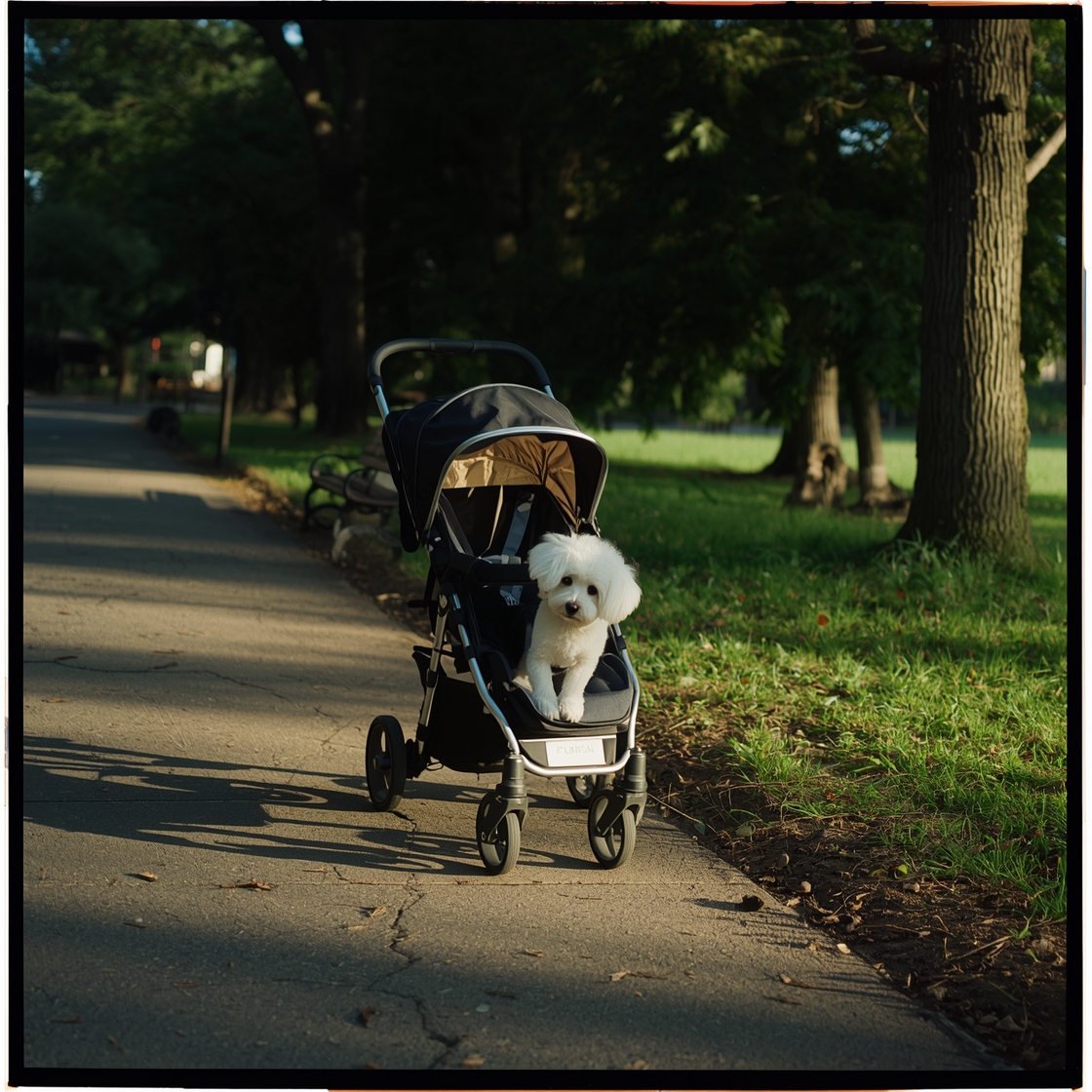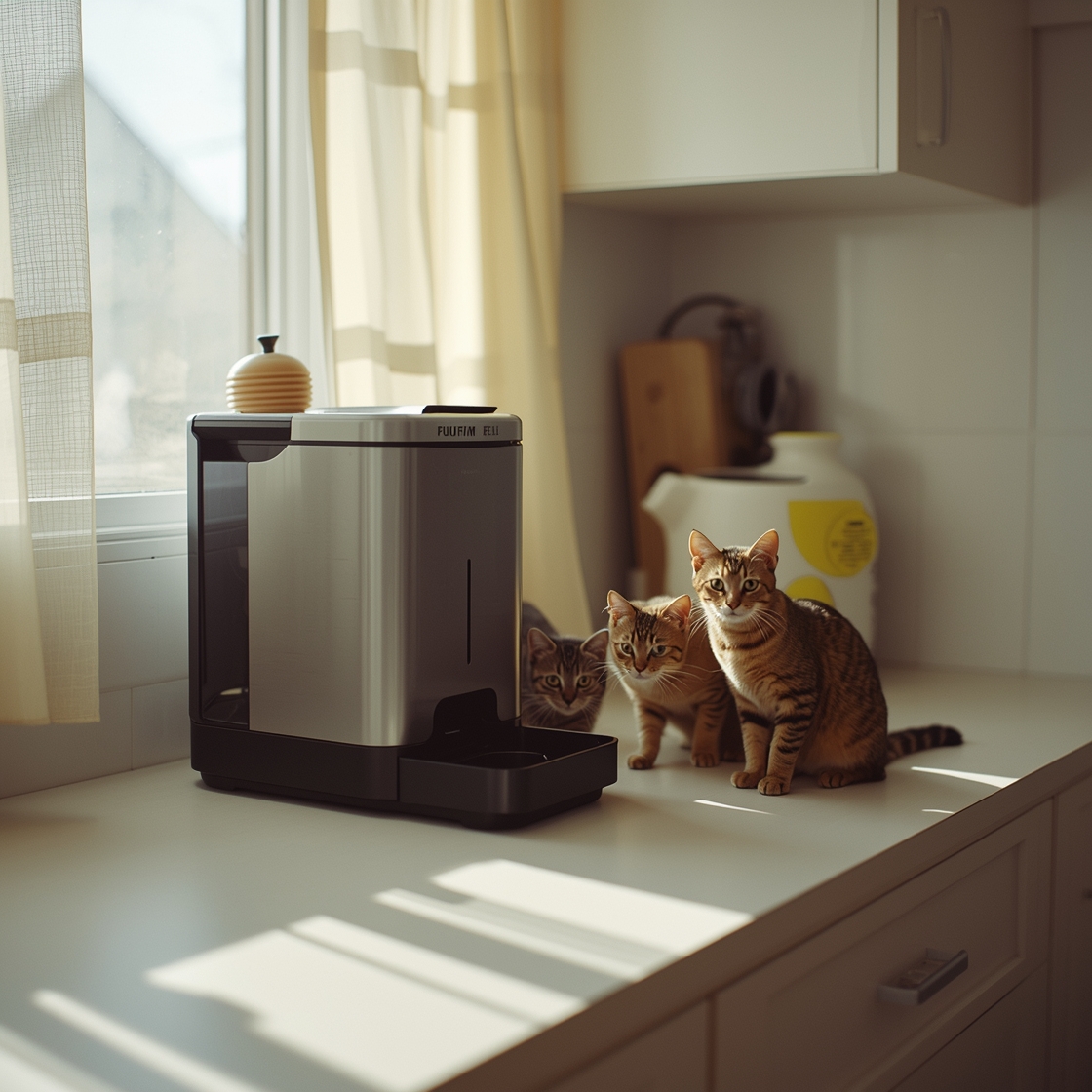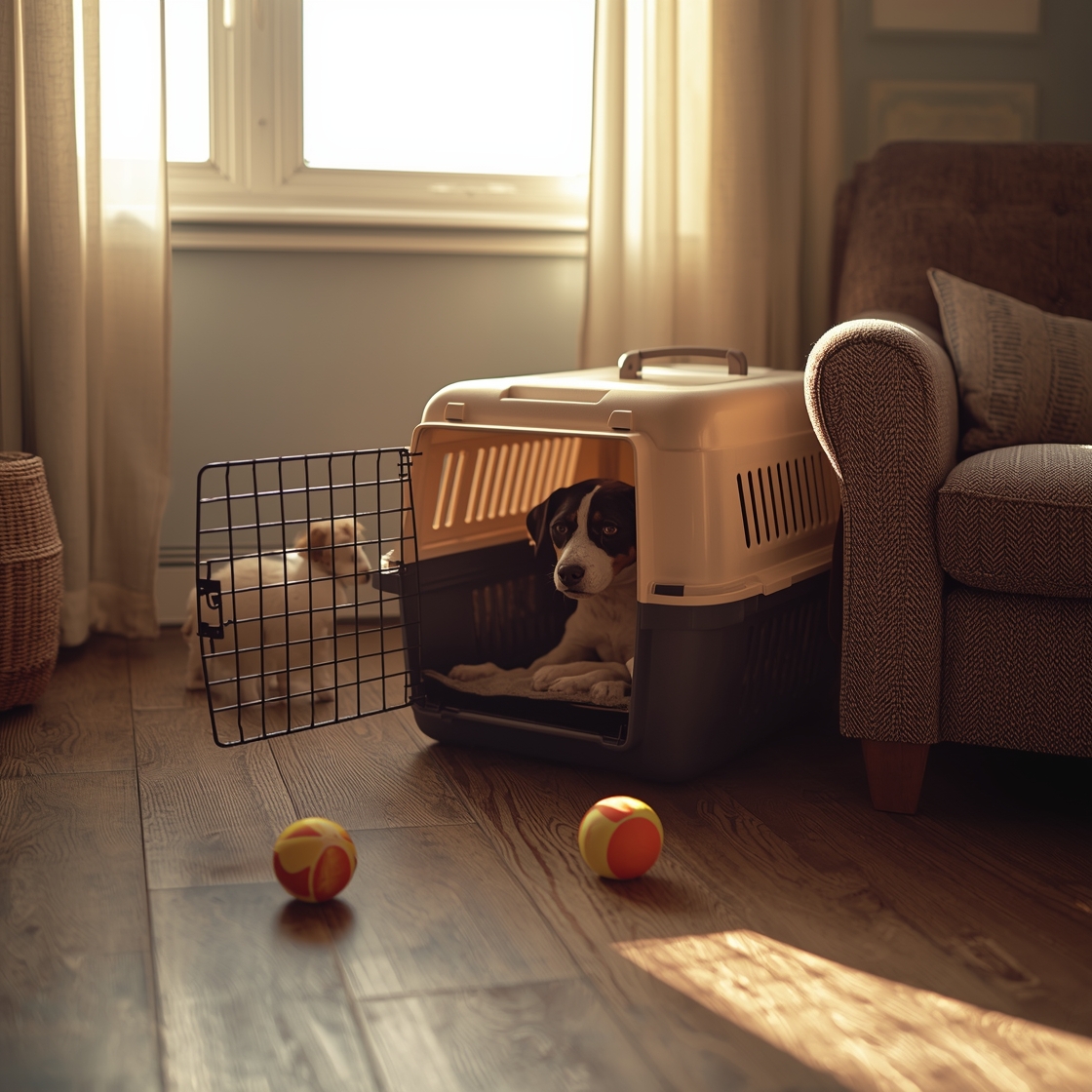
The best pet carrier for dogs and cats on this URL is a job plus a tape — cabin, car, or vet lobby — not one hero tote. Six named maker SKUs still have public pages (this URL stores 0 product cards). Soft cabin / vet tote: Sherpa Original Deluxe $69.99. Flex-height cabin bag: SturdiBag Pro 2.0 $59–$89. Cabin plus a current Center for Pet Safety car record: Sleepypod Air $214.99. Hard lobby kennel: Petmate E-Z Load Two Door $54.99. Cat-first hard lobby: Catit Cabrio (confirm live street). Cargo / hold rigid: Petmate Sky Kennel from $74.99. Name the job first. Cabin is a soft under-seat box on that flight. Car is an independent crash record if you want a restraint. Vet lobby is wipeable, top-load, and sits still. Then pick hard or soft. Then use a tape. No single SKU is cabin-legal, crash-tested, and lobby-tall for every pet. Sleepypod Air is the closest cabin-plus-car compromise we could verify on maker + CPS pages. It is still a small-pet compression bag. It is not a 25 lb lobby kennel.
we compiled 6 named maker SKUs that still have public product pages (no product cards are stored on this URL). Maker/list snapshots we fetched: Sherpa Original Deluxe $69.99; SturdiBag Pro 2.0 $59–$89; Sleepypod Air $214.99; Petmate E-Z Load Two Door $54.99; Petmate Sky Kennel from $74.99; Catit Cabrio (confirm live — maker page did not pin a single US street in our last fetch). 1 of 6 has a current CPS car record (Sleepypod Air: 4-star, January 2025, 18 lb test dog). 0 of 6 are IATA-certified brands — IATA does not certify brands. 2 of 6 are cabin-shaped soft bags (Sherpa; Sturdi Large). 2 of 6 are hard lobby kennels (E-Z Load; Cabrio). 1 of 6 is cargo/hold (Sky Kennel). Soft cabin box used as the desk ruler: Delta/American 18 × 11 × 11 in.
This page is a research-desk map of job → material → tape. Nothing here has been reviewed by a veterinarian on our behalf.
Related: backpack for dogs, airline soft carriers, crash-tested crates, road-trip carriers.
Our guides are reader-supported. This article may contain affiliate links. As an Amazon Associate we may earn a commission if you buy through links, at no extra cost to you.
Quick picks at a glance
- Best listed cheapest hard lobby kennel: Petmate E-Z Load Two Door — $54.99. Top-load. 10 in tall. Not an American hard cabin box.
- Best listed cabin-shaped soft tote: Sherpa Original Deluxe — $69.99. Medium-class vs the 18 × 11 × 11 box. Strap is not crash-tested.
- Best listed flex-height cabin bag: SturdiBag Pro 2.0 — $59–$89. Large already 11.5 in. XL/XXL excluded from the cabin claim.
- Best listed cargo / hold rigid: Petmate Sky Kennel — from $74.99. IATA 51st-edition claim. Use A/B/C/D on the interior.
- Best listed cabin-plus-CPS car bag: Sleepypod Air — $214.99. CPS 4-star, January 2025, 18 lb test dog. Compression trick you must practice.
- Best listed cat-first hard lobby: Catit Cabrio — confirm live street. 13.75 in tall. Will not go under a seat.
Want current listings? See pet carrier for dogs and cats on Amazon →
Job vs named SKU
| Signal | What it buys | Named SKU on this desk | Fail mode |
|---|---|---|---|
| Soft cabin tote | Under-seat compression | Sherpa Original Deluxe $69.99; SturdiBag Pro 2.0 Large $59–$89 | Large Sherpa / Sturdi half-inch outside 11×11 |
| Cabin + CPS car | Compression bag with a public crash page | Sleepypod Air $214.99 (CPS 4-star, 18 lb) | Using it uncompressed at the gate |
| Hard lobby / short car | Top-load, wipeable | Petmate E-Z Load $54.99; Catit Cabrio | Shoving a 13.75 in Cabrio under a seat |
| Cargo / hold | IATA CR1-shaped rigid | Petmate Sky Kennel from $74.99 (51st-edition claim) | Soft tote in the hold |
| IATA brand stamp | Does not exist | 0 of 6 | “IATA approved” as a logo |
| CPS page | Independent car protocol | Sleepypod Air (Atom / Mobile Pet Bed on CPS list, not the cabin job) | Seat-belt through a Sherpa handle |
Desk pick by job: cabin, lie-down OK → Sherpa Original Deluxe list $69.99 (medium-class vs the 18 × 11 × 11 box). Cabin plus a public car record → Sleepypod Air $214.99 (CPS 4-star, 18 lb, January 2025). Wet vet lobby → Petmate E-Z Load $54.99 or Catit Cabrio (13.75 in tall — not under a seat). Hold / cargo → Petmate Sky Kennel from $74.99, then IATA A/B/C/D on the interior. Two jobs is a normal kit. One hero bag is not.
How these products compare on labels and price
| SKU | Class | Maker-stated size cue | Snapshot |
|---|---|---|---|
| Petmate E-Z Load Two Door | Hard lobby | 19 in exterior 19.4 × 12.8 × 10; cap 10 lb | $54.99 |
| Sherpa Original Deluxe | Soft cabin / vet tote | Retailer splits Small/Med/Large; official list $69.99 | $69.99 |
| SturdiBag Pro 2.0 | Soft flex-height | Large 18 × 11.5 × 11.5, 30 lb printed; XL/XXL excluded from cabin claim | $59–$89 |
| Petmate Sky Kennel | Cargo rigid | 21 in interior 18.75 × 13.5 × 14.5; 15 lb band | from $74.99 |
| Sleepypod Air | Cabin + CPS car | ~22 × 10.5 × 10 uncompressed; ~16 in compressed; 18 lb | $214.99 |
| Catit Cabrio | Cat lobby hard | Exterior 20 × 13 × 13.75; max cat height 13.75 in; 25 lb | confirm live |
Desk stat: Sleepypod Air is 3.07× Sherpa’s $69.99 list and 3.91× E-Z Load’s $54.99. You are paying for a dated CPS record plus a compression trick, not for a taller lobby. E-Z Load is the cheapest named hard kennel and is not an American hard-sided cabin box (10 in tall vs 9 in / 8 in).
PetBench title-token / class tally (6 named SKUs, August 2026): Soft cabin / tote class 2/6 (33%) (Sherpa; SturdiBag Pro 2.0). Hard lobby class 2/6 (33%) (E-Z Load; Cabrio). Cabin-plus-CPS class 1/6 (17%) (Sleepypod Air). Cargo / hold class 1/6 (17%) (Sky Kennel). Current CPS car page we fetched 1/6 (17%). IATA brand certification 0/6 (0%) — IATA does not certify brands. Printed maker street we could pin on fetch 5/6 (83%) (Cabrio: confirm live). Single-point snapshot sum using Sherpa $69.99 + E-Z Load $54.99 + Sleepypod $214.99 + Sky Kennel $74.99 + Sturdi mid $74 = $488.96 before Cabrio. Sleepypod $214.99 is 44.0% of that five-SKU dollar sum and 1 of 6 objects. Soft 18 × 11 × 11 in airline box is the desk ruler, not a SKU. The aisle is selling two cabin bags, one compression-plus-CPS bag, two lobby kennels, and one hold kennel.
What is the best pet carrier for dogs and cats on these six SKUs? Cabin, lie-down OK → Sherpa $69.99 or Sturdi Large if the airline accepts 11.5 in. Cabin plus a public car record → Sleepypod Air $214.99. Wet vet lobby → E-Z Load $54.99 or Catit Cabrio. Hold / cargo → Sky Kennel from $74.99, then IATA A/B/C/D on the interior. Two jobs is a normal kit. One hero bag is not.
Top 7 Pet carrier for dogs and cats
The picks below are the 7 pet carriers for dogs and cats on sale right now, listed with what each suits best and an honest drawback. Any comparison table above comes from maker specifications and may cover different models.
1. LEHNI Soft-Sided Cat/Dog/Pet Carrier
Best for: Budget cabin bag that folds flat
This is a budget soft-sided bag. The maker lists a 17-by-11-by-11-inch cabin shape for pets up to 16 pounds, plus a fold-flat frame and a shoulder strap. Owners treating it as a first flight bag say it works for compact cats and small dogs, then warn the interior is tight if you shop by the ‘big cat’ marketing.
Pros: Folds flat for storage; Cabin-shaped budget bag Cons: Tight for longer pets
2. Amazon Basics Sturdy Portable 2-Door Top-Load Hard-Sided Pet Travel
Best for: Squirmy cats on vet day
This is a hard plastic kennel with a front door and a top door. The maker lists it for cats and medium dogs in the 12-to-20-pound range and a 22.8-by-15-by-13-inch footprint, which is a car and lobby box, not an under-seat cabin bag. Owners keep buying it because the top lid lets them lower a reluctant cat in, then they complain it is bulky to store.
Pros: Top door for loading; Hard shell for cars Cons: Bulky, will not fold
3. Henkelion Cat Carriers Dog Carrier Pet Carrier For Small / Medium
Best for: Frequent under-seat cabin flyers
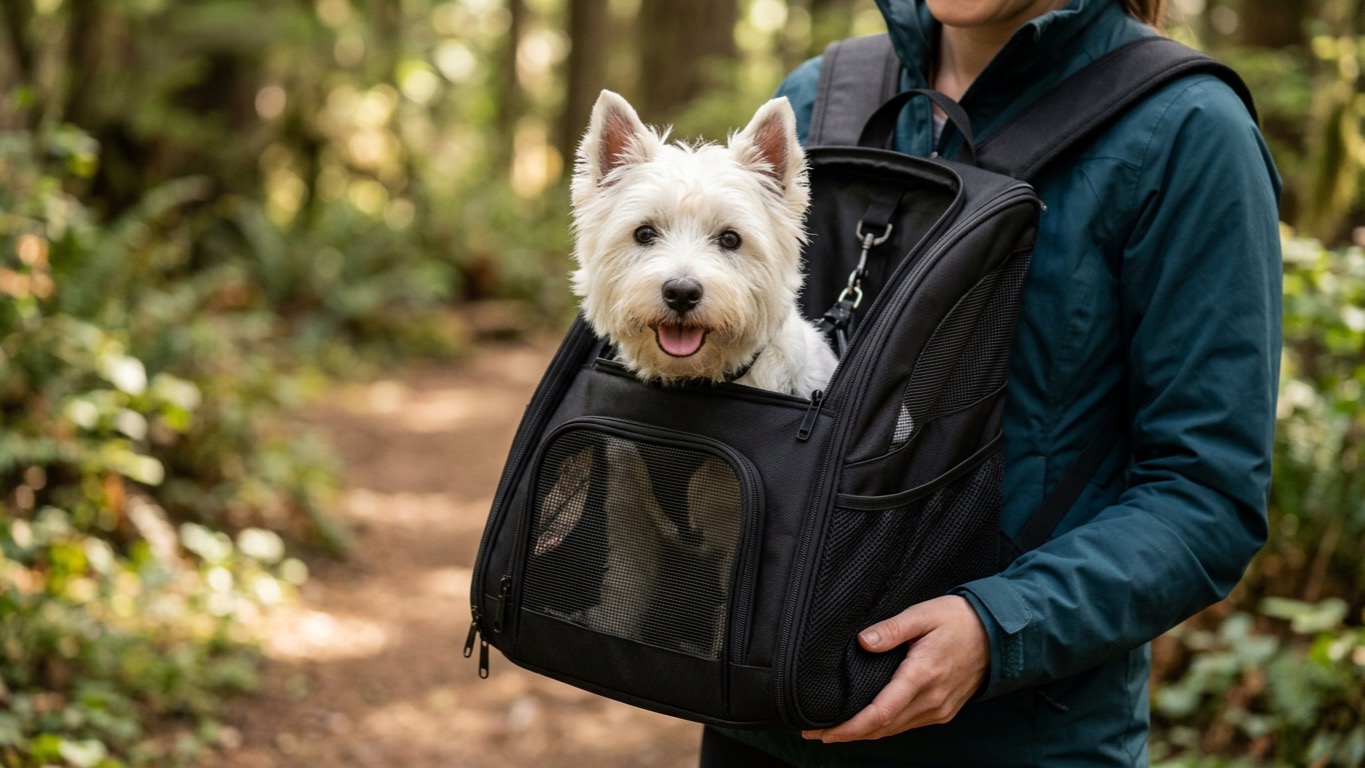
Henkelion’s small-and-medium bag is the cabin-sized soft carrier most owners already compare notes on. The maker lists a 17-by-11-by-11-inch shell, a 15-pound cap, and loop handles that clip to a seat belt or a suitcase. Owners say it rides under many coach seats, then add that ‘medium’ still means a short pet and the fabric is wipe-only.
Pros: Cabin-sized soft bag; Seat-belt loop handles Cons: Tight for chubby cats
4. Cat Dog Carriers Soft-Sided Pet Carrier Large Cats for Medium Big Cat
Best for: Spare bag for short errands
The title sells ‘large’ and ‘big cat,’ but the listing’s 17-by-11-by-11-inch size is the same cabin box as the other cheap mesh bags, with a 15-to-16-pound note. At this price it is a spare: fold it, clip the strap, go to the lobby. Owners of this class report the zippers and floor board are the first parts to feel cheap.
Pros: Lowest-price cabin shape; Folds for closet storage Cons: Title oversells the size
5. Henkelion Large Cat Carriers Dog Carrier Pet Carrier for Cats Dogs
Best for: Bigger cats on car trips
This is the larger Henkelion bag, listed at 20 by 13 by 13 inches for pets up to 25 pounds. The maker is blunt: it is for daily trips, car seats, and the vet, and it should not go under an airplane seat. Owners who outgrew the 17-inch bag like the extra room; cabin travelers need the smaller sibling instead.
Pros: Roomier than cabin bags; Folds after car trips Cons: Too big for cabin
6. Petmate Two Door Plastic Pet Kennel for Small Dogs and Cats
Best for: Cargo holds and clinic check-in
Petmate’s two-door plastic kennel is the clinic-style box: a front grate plus a top lid, sold for small dogs and cats. The maker points it at cargo-hold airline rules and wipe-clean plastic, not under-seat cabin travel. Owners like lowering a cat through the top at the lobby; they also note the shell is heavy and ships in pieces.
Pros: Top and front doors; Wipe-clean plastic shell Cons: Heavy and will not fold
7. GAPZER Pet Carrier for Large Cats up to 20lbs Soft-Sided Privacy
Best for: Nervous cats in busy lobbies
GAPZER’s pitch is privacy: mesh walls with roller blinds you drop when a cat stares down a waiting room. The listing sizes it at 18.1 by 11.8 by 11.8 inches for pets up to 20 pounds, a bit taller and longer than the 17-inch cabin bags. Owners of anxious cats like the cover; flyers should still check the airline’s under-seat number, because this shell sits on the large side.
Pros: Roll-down privacy blinds; Room for 20-pound cats Cons: May miss tight under-seats
Comparison: Pet carrier for dogs and cats at a Glance
Want to browse every option? See the full range of pet carrier for dogs and cats on Amazon →
First decision: cabin, car, or vet lobby
Buy the job. One bag can cover two jobs if you are honest about the third. Almost none cover all three well.
1. Cabin (under the seat)
This is the only flight path where you stay with the pet. The FAA treats an in-cabin pet container as carry-on. Under 14 CFR 121.589 it must fit under the seat without blocking the aisle, be stowed before the last passenger door closes, and stay stowed while the airplane is moving on the ground and for takeoff and landing. Flight-attendant stowage instructions are not optional.
The practical constraint is the under-seat box on that aircraft. Delta recommends a soft-sided kennel of 18 × 11 × 11 inches because that size fits most of its fleet, wants the pet able to move without touching the sides, three-side ventilation domestic / four-side international, a leak-proof bag, and the pet out at the checkpoint. American: soft-sided 18 × 11 × 11 inches on all flights; hard-sided 19 × 13 × 9 inches mainline and 16 × 12 × 8 inches Eagle. Some seats have no under-seat space. Check current policy for that flight.
IATA’s in-cabin guidance (CR1 cabin exception, plus IATA’s July 2026 operational guidelines) wants the pet able to stand, sit erect, lie naturally, and turn about while standing. Many soft “cabin” bags are designed so the pet lies down and cannot sit up once the top is closed. Sherpa’s FAQ says its bags are meant for lying down, with enough room to stand and turn. That is a real trade-off. A bag that slides under the seat and then fails a gate agent’s “can it stand and turn?” check is the wrong bag.
Cabin only makes sense when the pet fits the airline’s under-seat box and the maker’s own limits, you can lift the loaded bag, and you reserved the pet (Delta and American both cap cabin pets). If the pet is already at the edge of cabin size, a dedicated airline soft carrier is cleaner than a “does everything” tote. Wheels usually make a borderline bag worse (wheeled guide). A city stroller is a terminal tool — American is explicit that pet strollers must be checked.
2. Car (the commute, the road trip, the parking-lot lift)
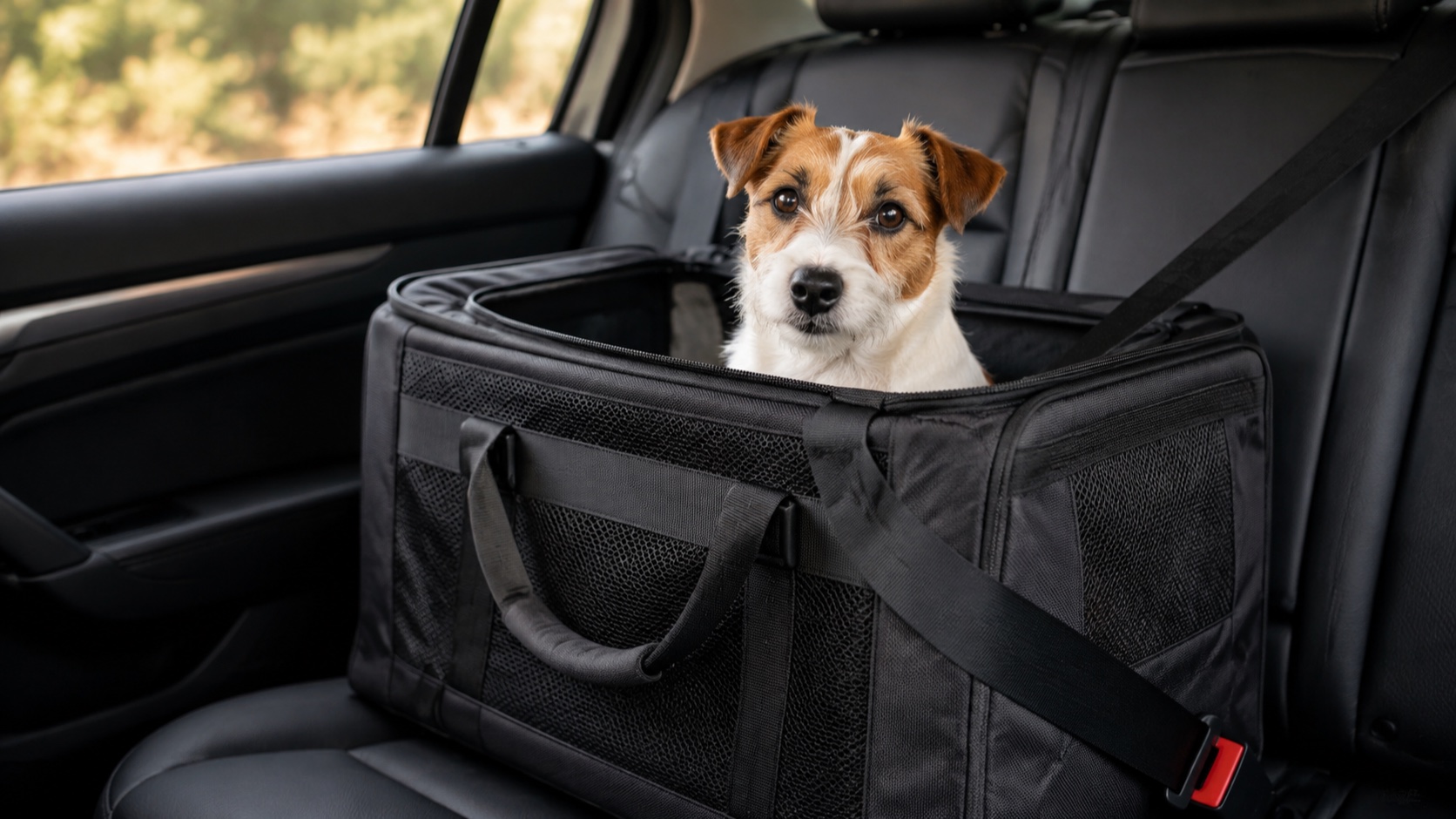
A seat-belt loop through a handle is not a crash test. Sherpa’s FAQ is plain: the strap is not crash-tested and is not intended to secure your pet in a collision or a sudden stop. Catit tells you to loop a seat belt through the Cabrio or Cat Carrier handle. That is a “don’t slide off on a gentle stop” strap, not a child-seat equivalent.
For the vehicle, look at carriers and crates with an independent crash record — Center for Pet Safety publishes those — or go to the crash-tested crate article. Sleepypod’s Air, Atom, and Mobile Pet Bed have current CPS pages. Most soft totes and most plastic vet kennels do not.
A road-trip carrier can be the everyday car bag. If the pet is too large for a tote, the object is a crate. Heat is a separate problem: AVMA’s warm-weather page flags short-nosed and overweight animals; a closed cabin in a parked car is a medical emergency. We are not that veterinarian.
3. Vet lobby (and the groomer, and the boarding desk)
This is the job most households actually buy. You need a box you can set down on a wet floor, keep closed, wipe, and open from the top without the animal launching into the waiting room.
Soft bags work if the frame stays up and the zippers lock. A carrier that collapses on a wet floor is the wrong lobby tool. One honest kit is two objects: a wipeable hard kennel for the vet, and a compressible soft bag for the rare cabin flight.
Measure the pet, then measure the box — with a tape
The four numbers
- Length. Tip of the nose to the base of the tail. IATA calls this A. Sherpa’s carrier FAQ uses the same points.
- Height standing. Floor to the top of the head or ear tip for IATA cargo height (D). Floor to the top of the back for many soft-carrier charts (Sherpa). Catit measures cat height from the top of the head to the bottom of the front paws and prints a maximum cat height (Cabrio: 13.75 in). Those are different rulers. Write down which one you used.
- Width. Shoulders or the widest point of the ribs. IATA calls this C.
- Weight. On a scale, not a guess. Then add the empty carrier if you will lift both.
Cabin: the airline box plus stand / sit / lie / turn
For cabin shopping, use the airline’s comfort language plus the maker’s measuring method. Delta and American want the pet able to move, turn, and lie down inside a closed carrier without sticking out. IATA’s cabin guidelines use the same stand / sit / lie / turn standard as CR1.
Then measure the outside at the widest points as you will present it (zipper pulls, stuffed pockets, flags, a handle spine or wheels). Compare that box to your flight. Under-seat height is the usual killer: 13 inches tall fails a lot of mainline seats; American’s Eagle hard-sided limit is 8 inches. Soft bags can compress a little if the airline allows it; American still wants the bag to fit without “excessively” collapsing. Sherpa’s spring-wire frame and Sturdi’s flex-height rods are built for that push. Neither is a promise at every gate.
Cargo / hold: IATA’s A / B / C / D formula
This is a different product. IATA Live Animals Regulations Container Requirement 1 (LAR Edition 52, January 2026) is written for dogs and cats as live animals, not as a tote under a seat. The pet must be able to stand, sit erect, lie naturally, and turn about while standing. IATA’s traveler page publishes the formula:
- A = nose to base of tail
- B = ground to elbow
- C = width at the shoulders or widest point
- D = standing height to the top of the head or ear tip, whichever is higher
- Internal length = A + ½B
- Internal width = C × 2
- Internal height = D + bedding
- Snub-nosed breeds: 10% larger container
IATA states that it does not certify, approve, or endorse any brand. A crate labeled “IATA approved” is a seller’s claim. Petmate’s Sky Kennel page cites the 51st edition (2025) and still says to check with the airline. That is a dated-edition claim, not a lifetime stamp.
CR1 expects rigid construction, leak-proof floors, paw-proof openings, ventilation on all four sides totaling at least 16% of those surfaces, spacers, and (for cargo) food and water containers. Soft totes are the wrong object for the hold. If a kennel has wheels, CR1 says they must be removed or rendered inoperable.
USDA APHIS pet-travel rules sit on top of airline policy for many itineraries. Check the USDA APHIS pet travel hub for the route. Destination paperwork is not the carrier’s job.
Vet lobby and car: interior first, then the lift
Petmate’s kennel copy is useful even when you are not flying cargo: measure nose-to-tail and floor-to-head, then look for a kennel 3–4 inches taller and longer than the pet. That is Petmate’s published method, not a lab score. Then weigh the empty kennel (E-Z Load 19-inch 3.8 lb; Sky Kennel 21-inch 6.27 lb). You will lift pet plus box plus pad. A cardboard mock-up of the interior is cheaper than a return.
Brachycephalic (snub-nosed) dogs and cats need more airspace. IATA adds 10% to the calculated crate for snub-nosed breeds in the CR1 context. Several passenger airlines also restrict snub-nosed breeds in the hold. A mesh panel does not cancel a short airway.
Hard vs soft (the job decides this)
| Soft-sided bag | Hard-sided kennel | |
|---|---|---|
| Cabin fit | Can compress a little if the airline allows it. Still must fit the published box. Soft 18 × 11 × 11 is the number Delta recommends and American publishes. | Almost never the cabin choice once height exceeds American’s 9 in mainline / 8 in Eagle hard boxes. A 11-inch-tall plastic carrier is a car/vet object. |
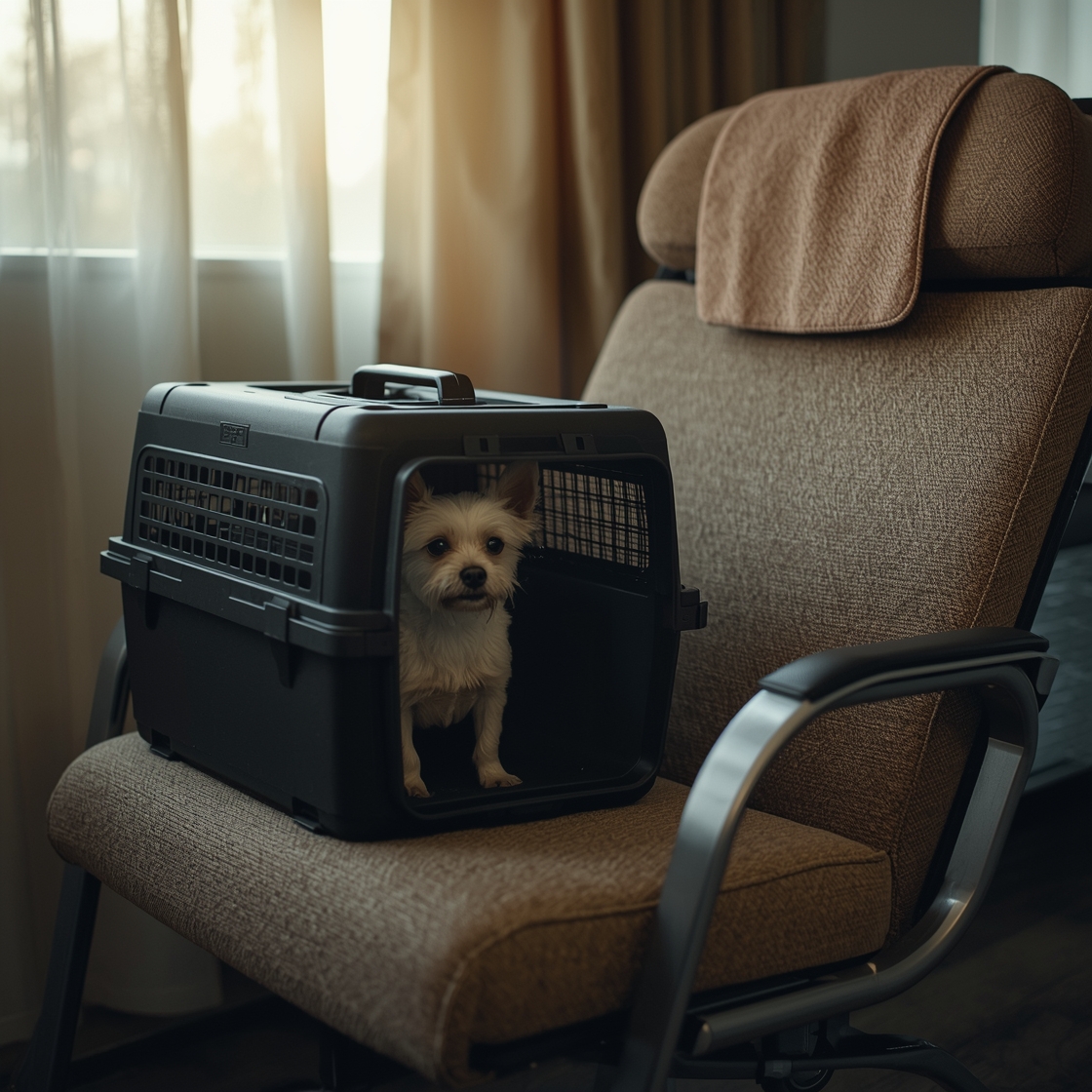
| Vet lobby | Fine if the frame stays up and zippers lock. Sagging walls on a wet floor are a mess. | Sits still. Top-load hatches (E-Z Load, Cabrio) are the loading tool. Wipeable. |
| Car crash | A seat-belt strap on a soft bag is not a crash test unless that model has an independent record (Sleepypod Air is the cabin-shaped example with a current CPS page). | A rigid crate can be a restraint if that model is independently crash-tested. Most plastic vet kennels are not. |
| Hold / cargo | Wrong tool. | Possible only if the kennel meets IATA CR1 / airline cargo rules. |
| Escape | Zippers and mesh. Locking zipper pulls and an interior tether help. Cats open zippers. | Steel-wire doors and wing-nut halves. A determined dog can still work a cheap latch. |
| Storage | Folds. Sherpa and Sturdi both publish a fold. Catit’s Cat Carrier collapses. | The E-Z Load and Sky Kennel take closet volume. That is the trade. |
What “airline approved” and “TSA approved” actually mean
Sherpa’s FAQ is the cleanest manufacturer definition we found: “Airline approved” means the carrier provides adequate ventilation, is leak-proof, and safely encloses the pet. Sizing is airline-specific. Sherpa’s “Guaranteed On-Board” program is a separate claim: a listed size on a listed airline’s GOB page, domestic U.S. and Canada only. If the style or size is not on that airline’s GOB list, Sherpa says it is not guaranteed there. Small and medium Sherpa carriers are in the program; the medium is not guaranteed on every participating airline.
IATA says the same thing from the other side: IATA does not certify brands.
Sturdi’s Pro 2.0 page says the bag is airline-compliant for in-cabin travel on most major airlines and then excludes XL and XXL. That is the useful sentence. The Large (18 × 11.5 × 11.5 inches, 30 lb printed cap) is already a half-inch wider and a half-inch taller than Delta’s and American’s published 11-inch soft box. Flex-height rods exist because of that gap. They are not a waiver.
TSA does not publish an approved-carrier list. Public checkpoint guidance is process: take the pet out, send the empty carrier through X-ray, never X-ray the animal, walk or carry the pet through the detector, expect a hand swab, and re-box away from the lane. Delta repeats the take-out step. Practice at home. FAA rules still apply after TSA: the container stays closed and stowed for movement, takeoff, and landing.
Real carriers, as examples — not a ranking
These are products we could verify on a manufacturer site. Dimensions and weight limits are manufacturer-stated unless we say they come from a retailer listing or a CPS record. We have no test scores. Brand names are plain text. Buy links go to Amazon (affiliate; tag on the URL).
Sherpa Original Deluxe (soft cabin / vet tote)
Where verified: Sherpa’s product page and FAQ. Size splits did not print as an inch table on the official page we fetched; major-retailer cartons commonly list the splits below. Confirm the carton.
Sherpa describes a quilted soft bag with a patented spring-wire rear frame that pushes down several inches, mesh panels, locking zippers, top and side entry, a washable liner, a padded strap, and a luggage strap that doubles as a seat-belt pass-through. The maker markets it for plane, car, and vet visits. The FAQ is the part to keep: the strap is not crash-tested; “airline approved” is ventilation + leak-proof + enclosure; GOB is a separate, airline-specific size program; measure length nose-to-tail and height floor-to-back.
Retailer cartons commonly split:
- Small: about 15 × 10 × 8.5 inches, pets up to 8 lb
- Medium: about 17 × 11 × 10.5 inches, pets up to 16 lb
- Large: about 19 × 11.75 × 11.5 inches, pets up to 22 lb
Medium is the size aimed at Delta’s and American’s 18 × 11 × 11 soft recommendation. Large is longer, wider, and taller than that box. Sherpa says some airlines allow a slightly larger soft bag if the rear frame compresses. That is not a promise at every gate. Official list price on the maker page at fetch: $69.99.
Trade-off: a long-standing cabin-shaped soft bag with an honest GOB program and an honest “not crash-tested” strap — and a Large size that will fail many published boxes, plus a lie-down interior that can fail a strict stand-and-turn check.
SturdiBag Pro 2.0 (flex-height cabin bag)
Where verified: Sturdi’s Pro 2.0 page and size chart.
Sturdi publishes 600-denier fabric, YKK zippers, flex-height rods, an interior tether, zipper clips, and a washable pad. The maker says the bag is airline-compliant on most major airlines and excludes XL and XXL. Official prices on the page we fetched ran $59–$89.
The cabin-shaped SKU is Large: 18 × 11.5 × 11.5 inches, 30 lb printed cap. That is already outside an 11 × 11 published soft box unless the rods come down and the airline accepts the compression. Medium is 15 × 12 × 11.75 inches — a width problem on Delta and American’s published numbers. Maker also lists Cube (12 × 12 × 11.25, 20 lb), Small (18 × 10 × 9.25, 25 lb), XL (20 × 12 × 15, 40 lb), and XXL (23 × 15 × 16, 50 lb). XL and XXL are not cabin tools. A 30 lb printed cap is a hinge number, not a promise a 28 lb dog fits an 11.5-inch floor.
Trade-off: one of the few soft bags that publishes a full size ladder and admits XL/XXL are not cabin tools — paid for with a Large that still sits a half-inch outside the common 11 × 11 box.
Sleepypod Air (cabin-shaped bag with a current CPS car record)
Where verified: Sleepypod’s Air page; Center for Pet Safety’s Sleepypod Air page. The official product page did not print an inch table in the copy we fetched.
Sleepypod describes a crash-tested travel carrier that compresses to fit under an airline seat on takeoff and landing and expands in flight, with plush lining, and that doubles as a car seat. Center for Pet Safety lists the Air as certified: tested January 2025, protocol CPS-001-016.02, test V25106F, 4-star, test dog 18 lb. That is CPS’s record, not ours.
Instruction-manual and authorized-wholesaler figures commonly list about 22 × 10.5 × 10 inches uncompressed, about 16 inches compressed, interior about 21 × 10 × 9.5, empty about 4.3 lb, pet 18 lb (the CPS test weight). Confirm the carton. Twenty-two inches uncompressed is longer than the 18-inch soft recommendation; the compressed length is the cabin number. Practice the fold empty. Collection price at fetch: $214.99.
Trade-off: the rare cabin-shaped bag with a dated, public CPS car record — paid for with a premium price, a compression trick you must actually use, and a 4-star (not 5-star) CPS rating on an 18 lb test dog.
Petmate E-Z Load Two Door (hard vet kennel for small dogs and cats)
Where verified: Petmate’s E-Z Load Two Door page.
Petmate describes a plastic and steel-wire kennel with a top-load hatch plus a front door, made in the USA from EcoTEC plastic (at least 90% pre-consumer recycled; other components imported). Aimed at pets 5–15 lb. Official price at fetch: $54.99.
| Size | Exterior (maker) | Interior (maker) | Printed pet cap | Empty weight |
|---|---|---|---|---|
| 19 in | 19.4 × 12.8 × 10 in | 16.75 × 11 × 9.25 in | up to 10 lb | 3.8 lb |
| 24 in | 24 × 16.8 × 14.5 in | 21 × 14.5 × 13.5 in | up to 15 lb | 6.43 lb |
The 19-inch exterior is 10 inches tall and 12.8 inches wide — a vet and car box, not an American hard-sided cabin box (9 in / 8 in). Interior height 9.25 inches is the sit-up number. A 10 lb printed cap is a weight line, not a comfort line. No crash-test record on the page we fetched.
Trade-off: a wipeable top-load kennel at a mid price, with printed interiors — and no cabin case, no crash record, and a 10 lb / 15 lb cap that will not cover a chunky cat or a small terrier that still needs 13 inches of headroom.
Catit Cabrio (cat-first hard lobby kennel)
Where verified: Catit’s Cabrio page.
Catit describes a hard carrier that opens from the top (both sides) and the front, with slide-out bowls, a one-hand front lock, a waste gutter, a carrying strap, and a seat-belt-through-handle car method. Designed for vet trips and even an overnight stay. Maker: check public-transport and airline rules before you travel.
- Exterior 20 × 13 × 13.75 inches
- Maximum cat height 13.75 inches (head to bottom of front paws)
- Maximum weight 25 lb
- Colors / SKUs: Cherry Red #41370, Turquoise #41371, Blue-Gray #41372
Thirteen-point-seven-five inches of height is a lobby and car number, not an under-seat number. Measure height first; the 25 lb cap is generous for a cat. The point of the product is the top-load with the front door shut. Catit does not publish a crash test. Treat the seat-belt-through-handle line like Sherpa’s strap: not a crash restraint.
Trade-off: a cat-shaped, top-load, wipeable lobby kennel with a printed height cap — and a 13.75-inch box that will not go under a seat.
Petmate Sky Kennel (cargo / hold rigid kennel)
Where verified: Petmate’s Sky Kennel page.
Petmate describes a heavy-duty plastic kennel with four-way ventilation, wing nuts, and latches, made in the USA from EcoTEC plastic (at least 90% pre-consumer recycled). The page says it is compliant with the 51st edition (2025) of the IATA Live Animals Regulation, including door, side, and back ventilation, and that it meets most airline cargo specifications — always check with airlines beforehand. The carton includes “LIVE ANIMAL” stickers, a food and water cup, ID stickers, and absorbent material. Only the 21-inch and 28-inch sizes include a handle. Official starting price at fetch: $74.99. Maker also lists 36 / 40 / 48-inch sizes (50–125 lb bands; those three ship freight).
| Carton size | Exterior (maker) | Interior (maker) | Printed weight band | Empty weight |
|---|---|---|---|---|
| 21 in | 21 × 16 × 15 in | 18.75 × 13.5 × 14.5 in | up to 15 lb | 6.27 lb |
| 28 in | 28 × 20.5 × 21.5 in | 24.25 × 18.25 × 19.5 in | 25–30 lb | 12.5 lb |
| 32 in | 32 × 22.5 × 24 in | 29.5 × 19.75 × 23.5 in | 30–50 lb | 16.0 lb |
Use IATA’s A / B / C / D formula on the interior, not the carton nickname. A “28-inch” kennel is not automatically legal for a 28-inch-long dog. Snub-nosed: add 10%. Wheels come off at acceptance. Confirm the current cargo path before you buy a giant kennel “for the plane.” This is not a CPS-certified crash crate; see the crate guide.
Trade-off: a documented, sized, cargo-shaped kennel with printed interiors and a dated IATA-edition claim — and a hold-or-car object, not a cabin bag, and not a crash score.
How to use a carrier on a real day
Acclimate for weeks, not the night before. IATA and TSA both say to buy the container early and let the animal live with it. Feed in it. Close it for short periods. A carrier that only appears on vet day is a trap.
Vet lobby. Load at home. Top-load a cat with the front door shut. Clip an interior tether to a harness, not a collar, if the bag has a ring. Do not unzip “just to comfort” in a room full of dogs.
Car. A CPS-certified carrier or crate, used the way that test describes, is the restraint conversation. A seat-belt through a handle is not. Rear seat, not under an airbag.
Cabin day.
- Reserve the pet. Delta asks you to call with kennel dimensions. American lets you add a carry-on pet, then pay and get sized at the counter. Cabin pets are capped per flight.
- Bring documents. USDA APHIS and, for dogs entering the U.S., CDC rules are not the carrier’s job. We are not listing a complete checklist.
- Arrive early. A ticket-counter agent can refuse a bag that does not fit or a pet that cannot turn around inside it.
- TSA is a take-out drill. Empty bag on the belt. Pet in your arms or on a leash. Practice until it is boring.
- Bag fully under the seat before the door closes. That is the FAA stowage rule.
- Do not sedate “for the flight” on a hunch. IATA’s traveler page and CR1 discourage tranquilizers (cabin altitude already drops blood pressure; IATA notes AVMA alignment). American’s pet page says it will not accept sedated or tranquilized pets, citing the AVMA. A veterinarian’s written medical plan is a clinical decision. We are not that veterinarian.
Heat. Mesh open in still air. AVMA’s warm-weather page still applies in a parking lot and on a jet bridge.
When this is the wrong buy
Skip a single “best carrier” if the pet is already at the airline’s size line and you are forcing a tote to do cargo work; if the real job is a long terminal walk (folding stroller, small-dog stroller); if the job is a trail (hiking backpack); if you need a crash restraint for a dog that will not fit a 15–18 lb CPS bag (crash-tested crate); or if you cannot lift the loaded box. One object that is cabin-legal, crash-tested, and lobby-tall mostly does not exist. Sleepypod Air is the closest cabin-plus-car compromise we could verify, and it is a compression bag for a small pet, not a 25 lb lobby kennel.
Frequently asked questions
Can one carrier do cabin, car, and the vet?
Sometimes, for a small pet. A medium Sherpa or Sturdi Large can do cabin and lobby if the pet can lie in it and the zippers lock — not a crash restraint. A Sleepypod Air can do cabin and car if you use the compression and the CPS belt path. A Cabrio or E-Z Load can do lobby and a short car ride, and will not go under a seat. Two objects is a normal answer.
How do I choose the right size?
Tape the pet (length, standing height, width, weight). Tape the interior, or build a cardboard mock-up. For cabin, also tape the outside against that airline’s current box. For cargo, IATA’s A / B / C / D plus 10% for snub-nosed. For the vet, a box the pet can sit up in. Ignore “fits most.”
Soft or hard?
Soft for cabin compression and closet storage. Hard for a wet lobby floor, a chewing zipper, and (if the model is actually crash-tested) a car. It is a job, not a trend.
What does “airline approved” mean on the box?
Usually: vents, leak-proof floor, enclosed pet. Not IATA certification, not a TSA SKU list, and not a promise the bag fits your seat. Sherpa’s FAQ is the definition we trust. GOB is a narrower size program. Measure.
Do I need a crash-tested carrier?
For the cabin, no U.S. agency crash-tests pet carriers the way NHTSA tests child seats. For the car, Center for Pet Safety publishes independent results: Sleepypod Air (4-star, January 2025, 18 lb), Atom (5-star, August 2024, 12 lb), Mobile Pet Bed on the certified list (maker 15 lb). Most Sherpa, Sturdi, Petmate, and Catit models here have no CPS page we fetched. See the crate guide.
The bottom line
A pet carrier for a dog or a cat is a job, a material, and a tape measure. Decide cabin, car, or vet lobby first. Then hard or soft. Then measure the animal and the box. Believe the spec table and the airline page for that flight, not a “top 5 types” list, and not a test
SOURCES
Manufacturer / retailer product pages (body uses brand names only):
- Sherpa Original Deluxe: https://sherpapet.com/products/sherpa-original-deluxe-travel-bag-pet-carrier
- Sherpa FAQ (measuring; not crash-tested; airline-approved definition; GOB): https://sherpapet.com/faq
- Sherpa Guaranteed On-Board: https://sherpapet.com/guaranteed-on-board
- SturdiBag Pro 2.0: https://sturdiproducts.com/products/sturdibagpro
- Sturdi size chart: https://sturdiproducts.com/pages/size-chart
- Sleepypod Air: https://sleepypod.com/products/sleepypod-air
- Sleepypod Air dimensions (authorized wholesaler table used because official page omitted inches): https://wholesalepet.com/product/sleepypod-air-pet-carrier-35319/
- Sleepypod Mobile Pet Bed: https://sleepypod.com/products/sleepypod-mobile-pet-bed
- Sleepypod Atom: https://sleepypod.com/products/atom
- Sleepypod sizing (harness tables; carrier inch tables not printed in the fetch): https://sleepypod.com/pages/sizing
- Petmate Sky Kennel: https://www.petmate.com/products/petmate-sky-kennel-1
- Petmate E-Z Load Two Door: https://www.petmate.com/products/petmate-2-door-dog-cat-kennel
- Catit Cabrio: https://www.catit.com/products/carriers/cabrio-carrier/
- Catit Cat Carrier: https://www.catit.com/products/carriers/cat-carrier/
Safety / travel (not product scores):
- Center for Pet Safety, Sleepypod Air (Jan 2025, 4-star, 18 lb, CPS-001-016.02, V25106F): https://centerforpetsafety.org/sleepypod-air/
- Center for Pet Safety, Sleepypod Atom (Aug 2024, 5-star, 12 lb, CPS-001-016.02, V241077F): https://centerforpetsafety.org/sleepypod-atom/
- Center for Pet Safety certified-products list (includes Sleepypod Air, Atom, Mobile Pet Bed): https://centerforpetsafety.org/certified-products/
- IATA Traveler’s Pet Corner (container formula, snub-nosed 10%, sedation note): https://www.iata.org/en/programs/cargo/live-animals/pets/
- IATA Live Animals Regulations Container Requirement 1, Edition 52, January 2026 (PDF): https://www.iata.org/contentassets/b0016da92c86449f850fe9560827bbea/pet-container-requirements.pdf
- IATA Operational Guidelines for In-Cabin Pet Transport, Edition 1, 15 July 2026 (PDF): https://www.iata.org/contentassets/d7c512eb9a704ba2a8056e3186a31921/operational_guidelines_for_in_cabin_pet_transport.pdf
- FAA Flying with Pets (14 CFR 121.589 carry-on stowage): https://www.faa.gov/travelers/fly_pets
- TSA, tips for traveling with small pets through the security checkpoint, 14 Dec 2022: https://www.tsa.gov/news/press/releases/2022/12/14/tsa-offers-tips-traveling-small-pets-through-security-checkpoint
- TSA Dulles checkpoint pet tips, 24 Feb 2023: https://www.tsa.gov/news/press/releases/2023/02/24/tsa-tips-traveling-pets-through-security-checkpoint-washington
- Delta Pet Travel Overview (18 × 11 × 11 recommendation; 3-side / 4-side ventilation; remove pet at checkpoint; booking caps): https://www.delta.com/us/en/pet-travel/overview
- American Airlines, Traveling with pets (soft/hard dimension table; strollers checked; AVMA sedation; seat limits): https://www.aa.com/i18n/travel-info/special-assistance/pets.html
- USDA APHIS pet travel hub: https://www.aphis.usda.gov/pet-travel
- AVMA warm-weather pet safety: https://www.avma.org/resources-tools/pet-owners/petcare/warm-weather-pet-safety
What is the best pet carrier for dogs and cats on this URL?
The best pet carrier for dogs and cats is the object that matches the job you named. On these six SKUs: Sherpa Original Deluxe $69.99 for a cabin-shaped soft tote; SturdiBag Pro 2.0 $59–$89 for flex-height rods (Large already sits a half-inch outside many 11 × 11 boxes); Sleepypod Air $214.99 for cabin compression plus a January 2025 CPS 4-star page on an 18 lb test dog; Petmate E-Z Load $54.99 for a wipeable top-load lobby kennel; Catit Cabrio for a cat-first 13.75 in-tall lobby box; Petmate Sky Kennel from $74.99 for a hold / cargo rigid. 0 of 6 is IATA-certified — IATA does not certify brands.
How do you size the best pet carrier for dogs and cats?
Tape the pet: length (nose to tail base), standing height, width at the ribs, and weight on a scale. Then tape the interior, or build a cardboard mock-up. For cabin, also tape the outside against that airline’s current under-seat box (Delta and American both publish a soft 18 × 11 × 11 in recommendation). For cargo, IATA’s A / B / C / D plus 10% for snub-nosed breeds. For the vet lobby, a box the pet can sit up in. Ignore “fits most.” Sherpa’s FAQ uses nose-to-tail and floor-to-back. Catit uses head-to-paw height (Cabrio max 13.75 in). Those are different rulers. Write down which one you used.
How should you choose a pet carrier for dogs and cats this month?
- Name the job: cabin, car restraint, or vet lobby.
- Rule out medical travel a veterinarian already banned (sedation hunches; heat; a pet already at the airline size line).
- Pick hard or soft from the job table — not from a trend.
- Match a named SKU: Sherpa $69.99 / Sturdi $59–$89 for cabin; Sleepypod Air $214.99 for cabin-plus-CPS; E-Z Load $54.99 / Cabrio for lobby; Sky Kennel from $74.99 for hold.
- Confirm the live maker page and the airline page for this flight. Prices and inch tables move.
- Practice the fold (Sleepypod) or the TSA take-out drill empty before the ticketed day.
The useful best pet carrier for dogs and cats purchase is the class you will actually lift.
Extra desk notes: two objects, one leftover type list
Dollar story (desk stickers, not a crash score). Sleepypod Air $214.99 is 3.91× E-Z Load $54.99 and 3.07× Sherpa $69.99. Sky Kennel from $74.99 is in Sherpa’s neighborhood and is a different object. Buying Sleepypod “so one bag does everything” still fails a 13.75 in Cabrio-height cat and still fails a 28 in cargo dog.
Cats vs small dogs. Top-load (Cabrio; E-Z Load) is the lobby load for a cat who launches. Side-zip cabin bags (Sherpa; Sturdi) are the flight load for a pet who will lie down. Brachycephalic pets need more airspace (IATA +10% in the CR1 context). Mesh does not cancel a short airway. Heat in a parked car is still AVMA warm-weather territory.
What we still will not claim. We are not veterinarians. Nothing here has been reviewed by a veterinarian on our behalf.
Want current listings? See pet carrier for dogs and cats on Amazon →
Keep a simple log: pet weight, interior inches you measured, outside inches vs the airline box, and whether you actually used the bag twice. A hallway sculpture is a failed category row.
Last reviewed: September 2026. If something is stale, contact us.