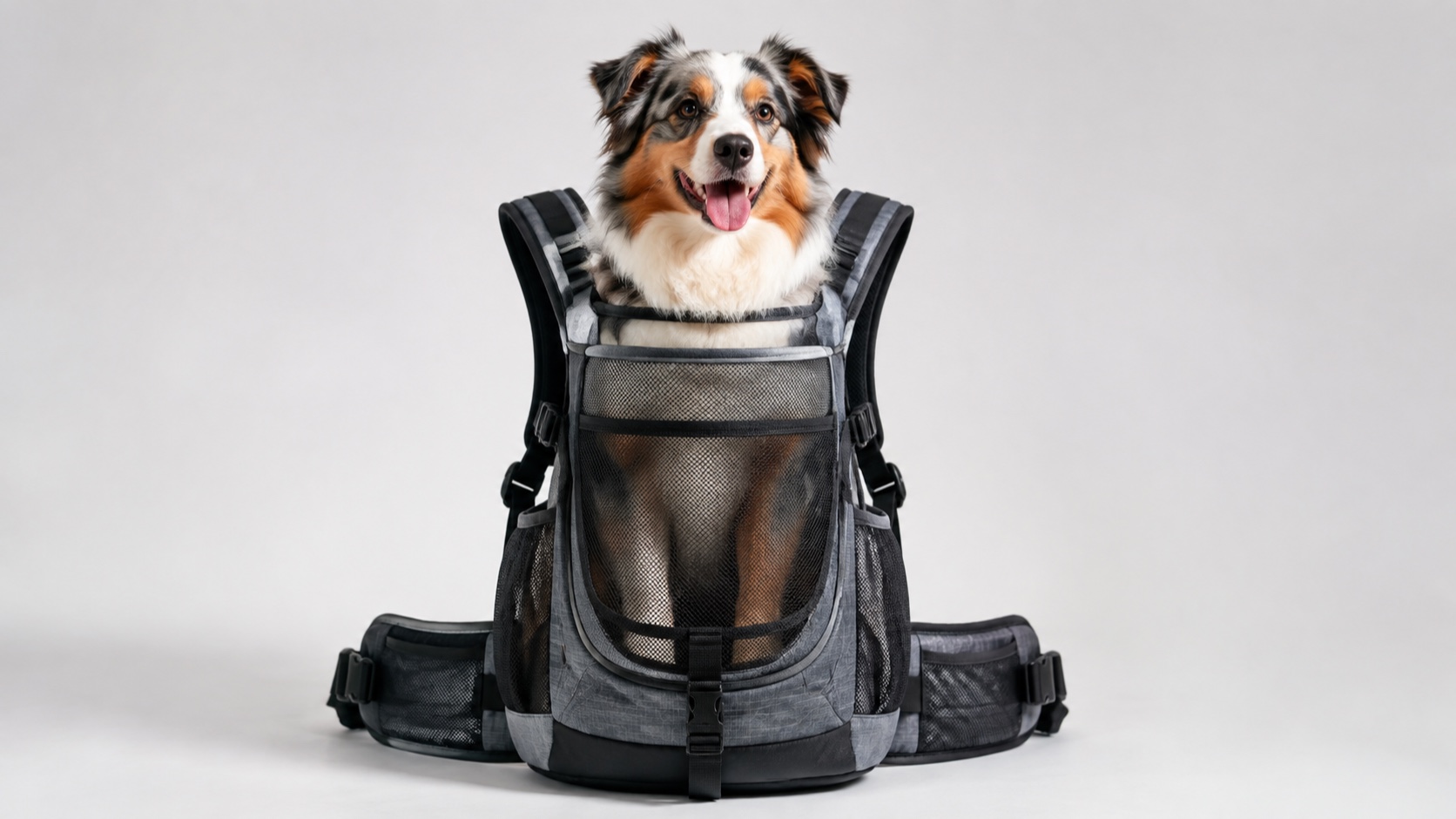
Desk pick: Front-carry, see the face, real length ladder → K9 Air $99.95 (no hip belt listed) or Knavigate $199.95 (frame + hip belt) or Kompanion $139.95 (removable waist belt + hydration sleeve). Tiny dog, short cabin → Kurgo Nomad $89.95. Back-carry plus your own water → Kurgo G-Train $144.95 or Petsfit WILDPATH $109.99. Lowest maker sale we fetched → Petsfit soft $60.95 — still mock the 13.5 × 12.5 floor. Dog-worn saddlebags → that URL, not this one.
Buy you-plus-dog-plus-water first. The best pet travel backpack for hiking small dogs fails the same way every time: the weight cap fits and the box does not, or your shoulders fail on the first grade.
Our guides are reader-supported. This article may contain affiliate links. As an Amazon Associate we may earn a commission if you buy through links, at no extra cost to you.
Related: hiking carrier backpacks, dog-worn hiking backpacks, city stroller, small-dog stroller, carrier for dogs and cats. This URL is you-carry only for a small dog on a trail.
Quick picks at a glance
- Best listed lowest maker sale: Petsfit soft hiking carrier — $60.95. Hip belt + four mesh windows + 18 lb / 8 kg cap. “60% load to hips” is a maker line.
- Best listed small-cabin back-carry: Kurgo Nomad — $89.95. Up to 15 lb. Box 15 × 11.25 × 7.5 in. The 7.5 in depth is the number that kills “it should be fine.”
- Best listed mid front-carry: K9 Sport Sack Air — $99.95. Length chart 9–22 in across sizes. No hip belt listed on the U.S. Air page we fetched.
- Best listed storage back-carry (median): Petsfit WILDPATH — $109.99. Median sticker. Empty 4 lb. Pets up to 15 lb. Pole sleeves do not carry the dog.
- Best listed waist-belt front-carry: K9 Sport Sack Kompanion — $139.95. Removable waist belt. Hydration / cooling-pad sleeve. Less published inch ladder than Air on the page we fetched.
- Best listed daypack + dog box: Kurgo G-Train — $144.95. Up to 25 lb. Box 13 × 21 × 10 in. Hip belt + sternum strap. Ten inches of depth is not a long back.
- Best listed frame + hip-belt ceiling: K9 Sport Sack Knavigate — $199.95. 3.28× Petsfit soft. Internal frame. Dogs up to 50 lb printed — stay inside the length chart, then ask if you can carry that dog.
How you carry listings compare on labels
A hiking backpack for a small dog, on this URL, is you plus a box. The best pet travel backpack for hiking small dogs is the box that fits plus the belt that keeps the load on your hips.
| Signal | What it buys | On this compilation | Fail mode |
|---|---|---|---|
| Front-carry + length chart | Face visible; size by inches | K9 Air $99.95; Knavigate $199.95 | Sizing by “Pomeranian” |
| Front-carry + waist belt | Longer-day hardware | Kompanion $139.95; Knavigate $199.95 | Belt hanging unused |
| Back-carry + printed box | Hands free; mock the tray | Nomad $89.95; G-Train $144.95; Petsfit pair | Weight cap without length |
| Printed empty weight | Load math you can start | WILDPATH 4 lb | Forgetting water |
| 50 lb printed cap | Human-frame ceiling | Knavigate $199.95 | Loading a 40 lb dog on a “small dog” hike |
| Dog-worn pannier | Wrong object | 0 of 7 | Buying Ruffwear Approach on this URL |
| Product cards on this URL | Amazon tiles | 0 | Inventing cards |
From the listings: 43% of the set is one front-carry brand. 57% is back-carry. 0% is a saddlebag. Measure still wins.
Price — maker list / sale snapshots we fetched
| Listing | Carry | Printed pet cap / box | Snapshot |
|---|---|---|---|
| Petsfit soft hiking carrier | Back | 18 lb; 13.5 × 12.5 × 17.5 in | $60.95 |
| Kurgo Nomad | Back | 15 lb; 15 × 11.25 × 7.5 in | $89.95 |
| K9 Sport Sack Air | Front | Length 9–22 in (size-dependent) | $99.95 |
| Petsfit WILDPATH | Back | 15 lb; 13.4 × 10.6 × 19.1 in; empty 4 lb | $109.99 |
| K9 Sport Sack Kompanion | Front | S/M/L (no inch ladder on page we fetched) | $139.95 |
| Kurgo G-Train | Back | 25 lb; 13 × 21 × 10 in | $144.95 |
| K9 Sport Sack Knavigate | Front | Up to 50 lb; length 9–25 in | $199.95 |
Desk stat: Petsfit soft $60.95 to Knavigate $199.95 is 3.28×. WILDPATH $109.99 is the median. Air $99.95 sits $10.00 under the median without a listed hip belt. G-Train $144.95 is $5.00 above Kompanion in a different carry class. Nomad $89.95 is $29.00 above Petsfit soft for a shorter published depth (7.5 in vs a 17.5 in Petsfit dimension — orientations differ; mock the tray).
Trail worksheet
| Constraint in front of you | Desk lean on this compilation | Do not do |
|---|---|---|
| See the face; short day | K9 Air $99.95 | Knavigate $199.95 “because 50 lb” |
| Longer day; hip belt | Knavigate $199.95 or Kompanion $139.95 | Air without a belt if your shoulders already fail |
| Tiny dog, short back | Kurgo Nomad $89.95 | G-Train’s 25 lb line on a 7.5 in problem |
| You also carry water / layers | G-Train $144.95 or WILDPATH $109.99 | Nomad as a gear dump |
| Lowest cash, still mock the floor | Petsfit soft $60.95 | Trusting “feels light after a mile” |
| Dog should walk the miles | Leash; bag as insurance | Photo-carry the whole loop |
| Sidewalk / park path | Stroller URLs | A 20 in frame on singletrack |
| Dog wears the pack | Dog-worn URL | This page |
Affiliate disclosure: as an Amazon Associate we may earn from qualifying purchases.
The best pet travel backpack for hiking small dogs is a load-and-box problem first — scale, collar-to-tail, your own fitness — not a top-7 style list.
The useful question is not “which is the best of seven.” It is: is this a carrier you wear, and can you carry the sum?
We read public manufacturer pages and size charts for K9 Sport Sack Air / Knavigate / Kompanion, Kurgo G-Train / Nomad, and Petsfit Soft Hiking Carrier / WILDPATH. Dog-worn saddlebags are a different object. We also read the AVMA warm-weather page. Dimensions, weight limits, and materials below are maker-stated unless we say otherwise.
We did not hike with a pack, score ventilation, rank a top 7, or call any bag veterinarian-approved. If a claim needs a lab, a vet, or a loaded walk up a grade, it is not here.
A broader hardware page already exists for hiking carrier backpacks. This URL is the small-dog decision: walk, ride, roll, or stay home.
This live article has zero product-card tiles.
First decision: walk, carry, stroller, or leave the dog home
Buy a backpack for a job the leash cannot do.
The dog should walk when it can cover the route, handle the surface, stay under control, and still look like itself at the end. A pack on your back is a shuttle for the ugly sections — water, scramble, crowd, a sudden limp — not a substitute for a body that still wants to walk.
AVMA’s warm-weather page is about the walk itself: cooler hours, skip hot asphalt, water for both of you, breaks, short-nosed and overweight animals as higher-risk. A mesh backpack does not cancel heat. It can make heat worse if the dog is zipped into still air in the sun.
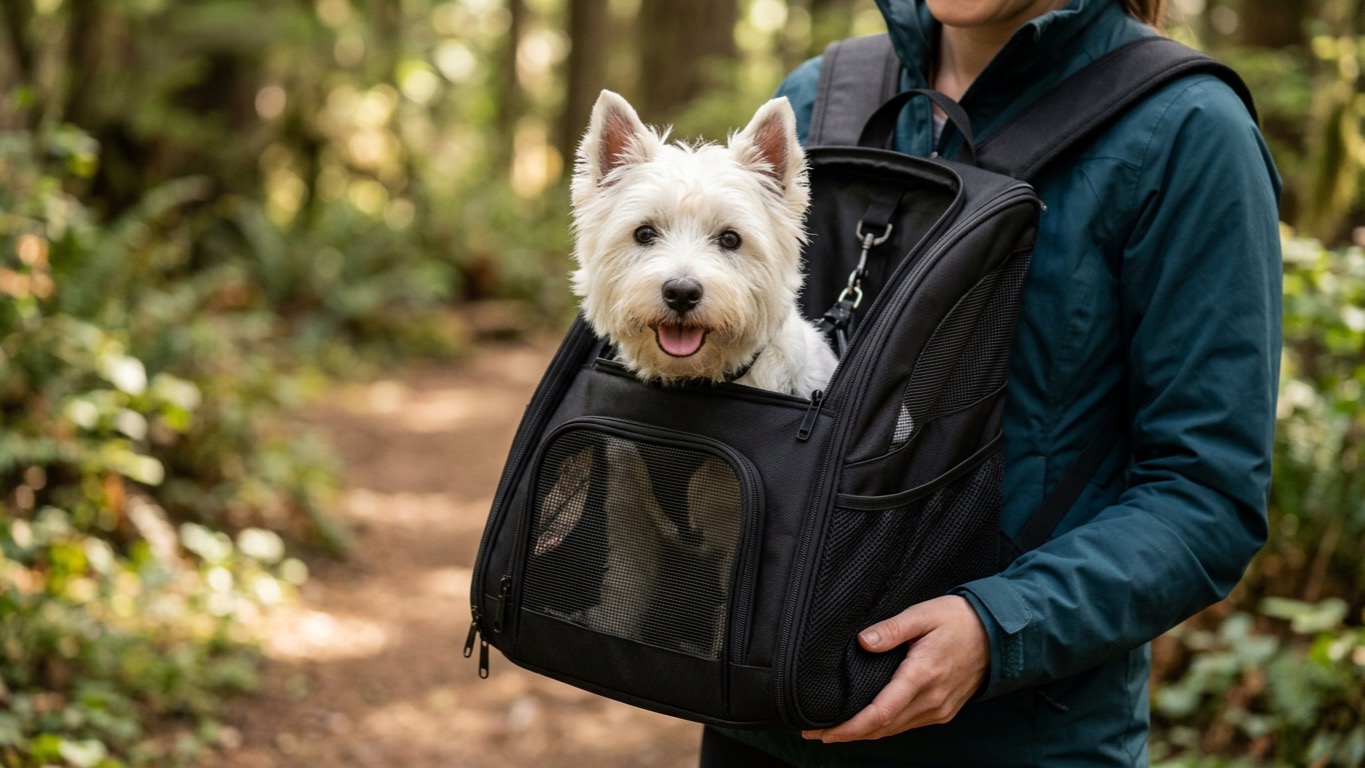
Use a carrier backpack (you wear it; the dog rides) when the dog cannot do that stretch and you can actually carry the loaded weight. Panting in a bag on a sunny grade is still panting.
If the listing is a saddlebag the dog wears, that is the dog-worn hiking page, not this URL.
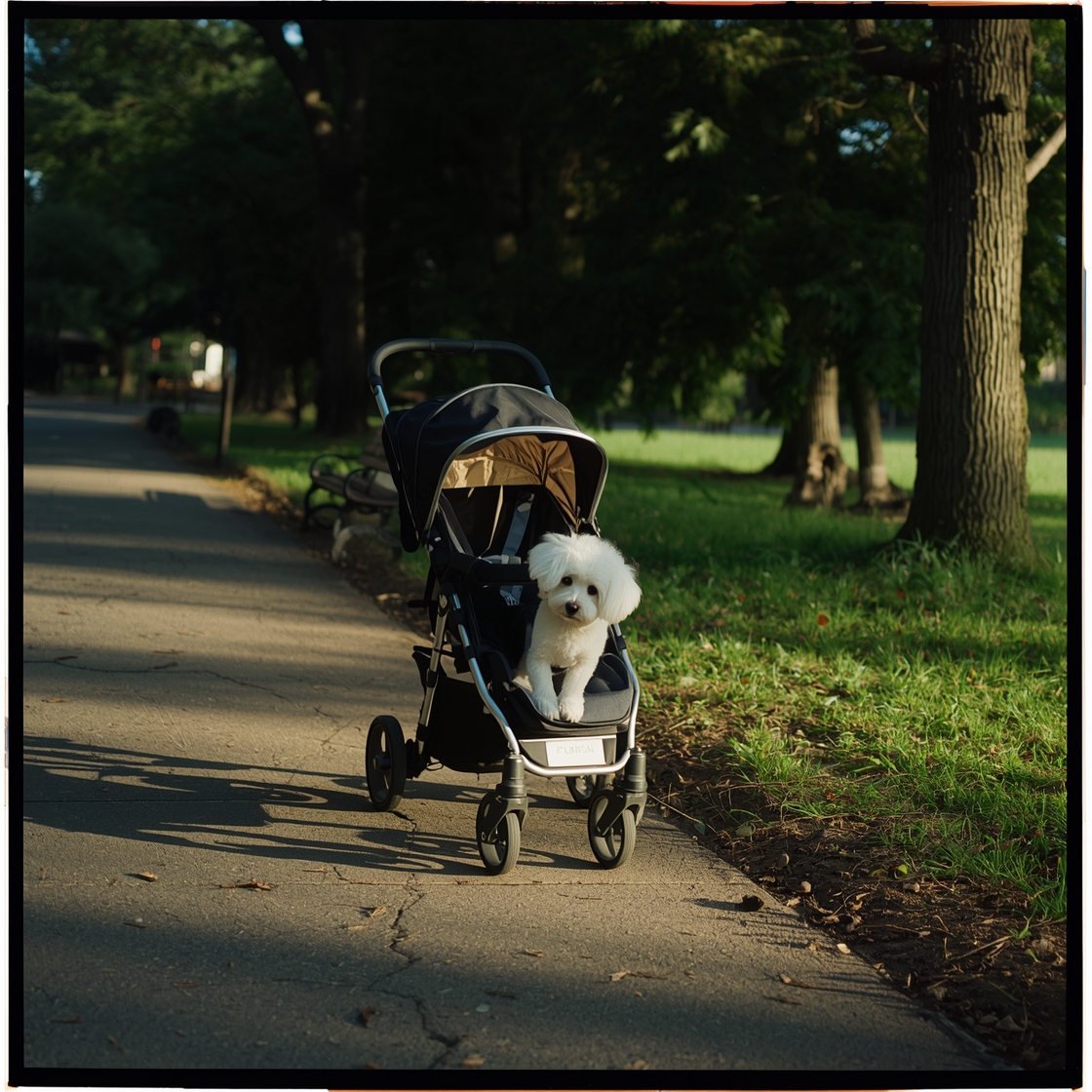
Use a stroller when the surface is a sidewalk, a park path, or a trailhead road — not a rooty singletrack. A city stroller or a small-dog stroller is a wheel job. Wheels fail on talus, mud, and stairs. If you cannot roll it, you will carry the frame and the dog. That is usually worse than a backpack.
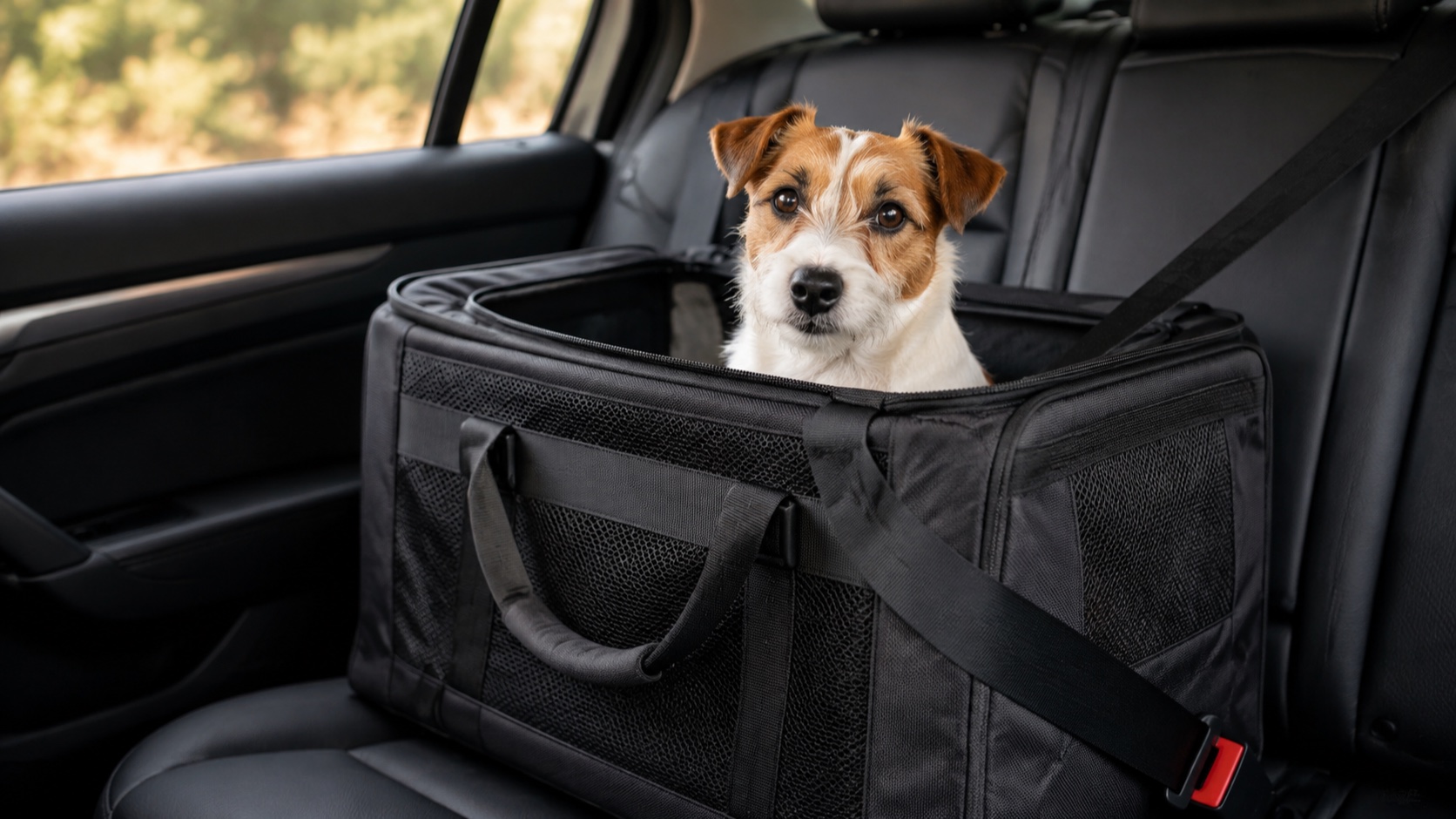
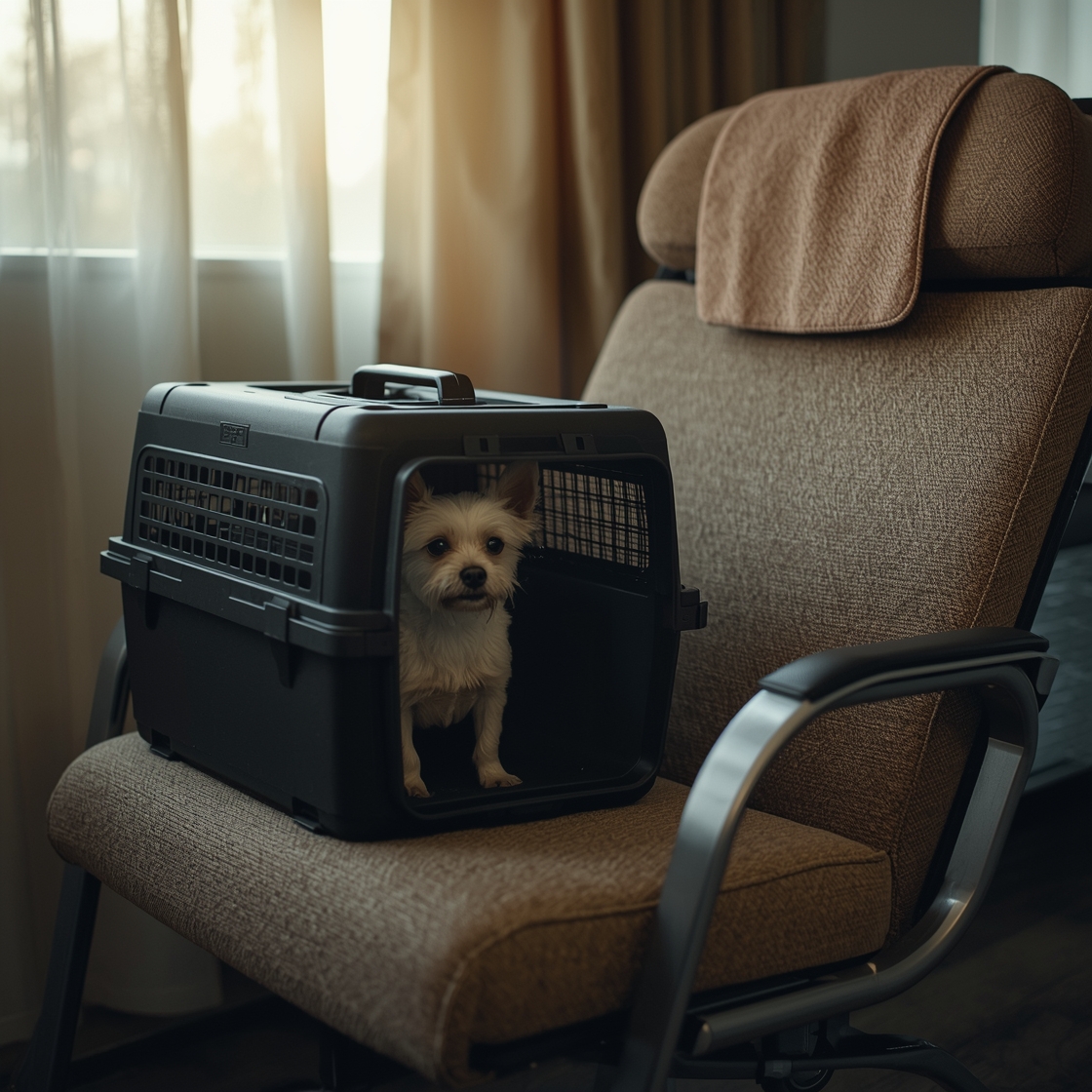
Use a regular carrier when the trip is a car, a vet lobby, or a terminal. A dog-and-cat carrier or a wheeled travel carrier is the indoor tool.
Leave the dog home when the forecast is the constraint. AVMA says if it is hot for you it is hotter for the pet, and never leave a pet in a parked car, even in the shade or with windows cracked. A backpack is not an air conditioner.
This page is you-carry only
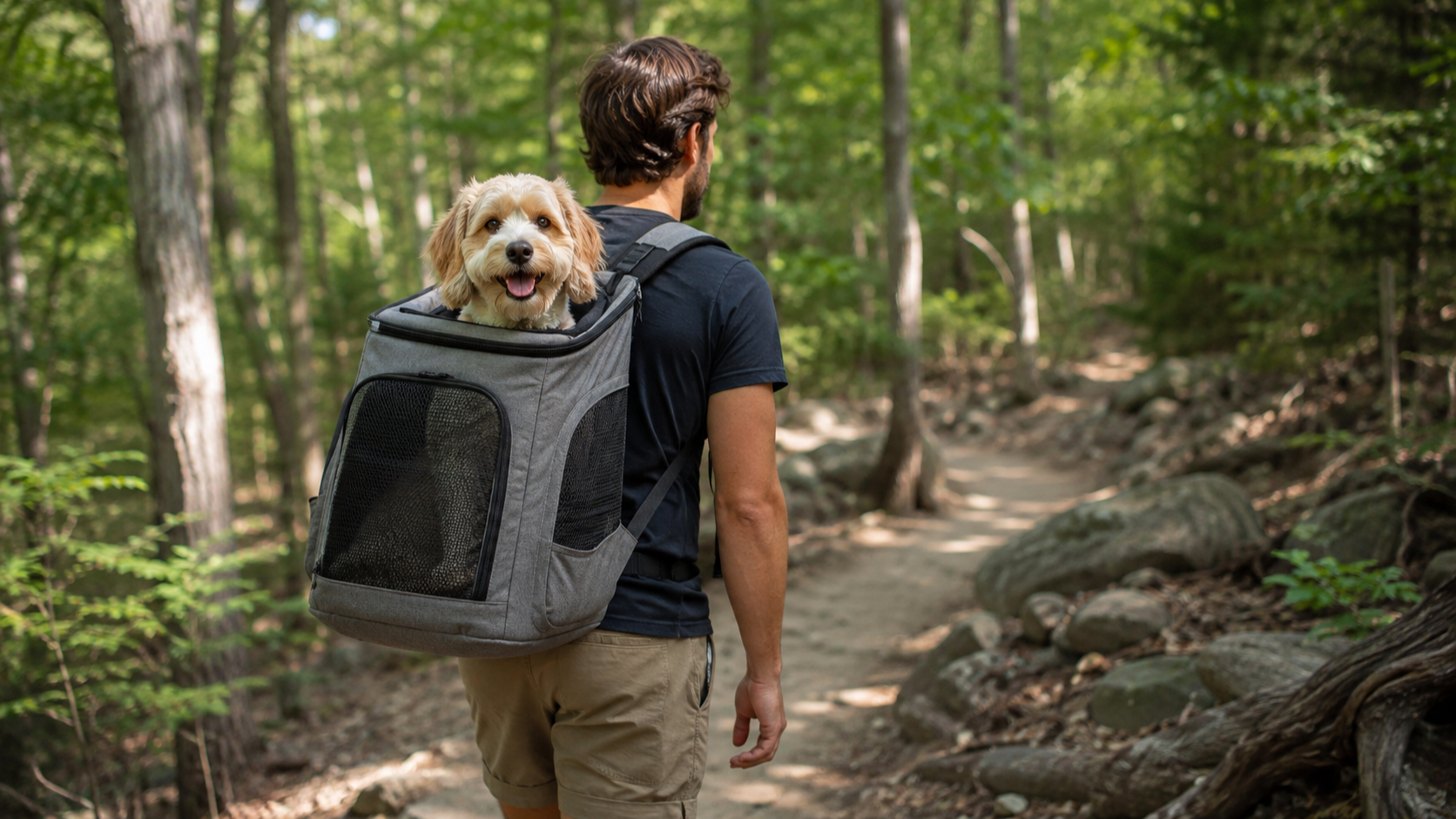
You put the dog in a bag. Leg holes or a sit-in cabin. Mesh sides. A clip that should go on a harness, not a collar. Shoulder straps, sometimes a sternum strap, sometimes a hip belt. This is K9 Sport Sack, Kurgo G-Train, Kurgo Nomad, Petsfit. The load is you plus dog plus water plus the empty bag.
How to size the best pet travel backpack for hiking small dogs
Collar-to-tail plus a cardboard tray beats a breed name. K9 Air $99.95 prints a length ladder. Kurgo Nomad $89.95 prints 7.5 inches of depth. If either number fails, the bag fails.
Decision framework for the best pet travel backpack for hiking small dogs
1. Weight — what you will actually carry
Add three numbers on a bathroom scale: the dog, the empty pack, and the water you will actually bring. That sum is what your shoulders and hips will hold on the steepest pitch. A hip belt exists because makers know shoulders fail first. K9 puts a padded hip belt and an internal frame on Knavigate $199.95, and a removable waist belt on Kompanion $139.95. Kurgo puts a hip belt and a sternum strap on G-Train $144.95. Petsfit claims its hip belt “shifts up to 60% of the load” onto the hips. That is a maker line. If the loaded pack is already awkward on your stairs at home, it will be worse on loose rock.
Maker weight limits are not comfort numbers. Knavigate is listed for dogs up to 50 lb. G-Train up to 25 lb. Nomad and WILDPATH up to 15 lb. Petsfit soft up to 18 lb / 8 kg. A 15 lb cap does not mean a 15 lb dog fits a 7.5-inch-deep cabin, and it does not mean you can carry 15 lb of dog plus water for four hours.
If the job is a pack the dog wears, use the dog-worn hiking backpacks guide. If your veterinarian limits mileage for this dog, use that limit. We are not that veterinarian.
2. Ventilation is not air-conditioning
Small dogs overheat in bags. Mesh is a hole in fabric. It is not a fan. Every carrier below publishes some version of side mesh, a roll-away top, or a “360°” window. Kompanion’s sleeve can take a hydration bladder or a cooling pad; that is a pocket, not a climate system.
AVMA’s heat-stress list is the stop rule: anxiousness, excessive panting, restlessness, excessive drooling, unsteadiness, abnormal gum or tongue color, collapse. Those signs mean emergency veterinary care. If the dog is already panting on the walk to the car, do not zip it into a bag for a south-facing climb.
3. Fit — length and the published box
Carrier backpacks are usually sized by the dog’s back length, collar to base of tail, plus weight. K9 Sport Sack is explicit: measure length, then use their weight bands (5–25 lb, 25–40 lb, 40+ lb). Current Air sizes on the U.S. product page:
- X-Small (Small + booster block): 9–12 inches collar to tail
- Small: 13–16 inches
- Medium: 17–19 inches
- Large: 20–22 inches
Knavigate uses the same length ladder and adds X-Large at 23–25 inches. The FAQ says an incorrect size affects comfort and safety, and that you should not size by breed name. We agree with the measurement part. We are not blessing a breed chart.
Kurgo publishes a box, not a back-length chart. G-Train is 13 × 21 × 10 inches (W × H × D) for dogs up to 25 lb. Nomad is 15 × 11.25 × 7.5 inches (H × W × L, height without handles) for dogs up to 15 lb. Petsfit’s soft hiking carrier is 13.5 × 12.5 × 17.5 inches for pets up to 18 lb. WILDPATH is 13.4 × 10.6 × 19.1 inches, empty weight 4 lb, pets up to 15 lb.
A dog that “fits” the weight line can still be too long, too tall, or too wide. Measure weight, collar-to-tail, height at the withers or ear tip if the top will close, and girth behind the front legs. Then mock the interior with a cardboard tray.
4. When a carrier is the right tool
A human-worn carrier earns its keep when the trail has sections the dog cannot do, when a veterinarian has limited mileage, or when you want to pick the dog up without using your arms — and you can still walk the route with the loaded weight.
It is the wrong tool when the dog can do the miles, when the bag will sit closed in midday sun, or when you cannot lift the loaded pack onto a kitchen chair. One-strap slings are city-block objects.
Front-carry (K9) puts the dog on your chest: you see the face; your balance changes on a down-climb. Back-carry (Kurgo, Petsfit) frees your hands; you cannot see the face unless you stop. Neither layout is “safer” in the abstract.
5. When a stroller is better
A stroller wins when the ground is paved. See the city-walk stroller guide and the small-dog stroller page. Do not drag a 20-inch-wide frame onto a social trail.
The 7 maker listings on this compilation
K9 Sport Sack Air — $99.95
Where verified: K9 Sport Sack’s current U.S. Air product page and the brand sizing / FAQ pages.
Air is the mid-level front-facing carrier. Listed kit: side mesh, a single side pocket, a wide base, support straps that wrap the dog, and an adjustable collar enclosure. Sizing 9–22 inches across four sizes (XS uses a booster block). The U.S. Air page does not print a single hard weight cap the way Knavigate prints “up to 50 lbs.” Do not invent one. Care (FAQ): inside out, gentle cycle, hang dry. No hip belt is listed.
Trade-off: the category-defining front-carry layout and a real length chart — without a published hip belt on this model.
K9 Sport Sack Knavigate — $199.95
Where verified: K9 Sport Sack’s Knavigate product page.
Advanced carrier: internal frame, padded hip belt, dogs up to 50 lb. Sizes X-Small (9–12 inches) through X-Large (23–25 inches). Fifty pounds is a large-dog number. Knavigate is on this page for the human hardware. FAQ care: remove the rigid back plate before washing.
Trade-off: the most documented load-moving hardware in the K9 set — paid for with price, bulk, and a weight cap that will tempt people to overload a small-dog hike.
K9 Sport Sack Kompanion — $139.95
Where verified: K9 Sport Sack’s Kompanion product page.
Newer carrier: lumbar straps, a removable waist belt, neoprene leg openings, and a sleeve the maker says can take a hydration bladder or a cooling pad, with a hose port. Sizes Small, Medium, Large only — no collar-to-tail inch ladder on the page we fetched. Do not paste Air’s inches onto this SKU. The sleeve is a pocket, not a heat-illness plan.
Trade-off: a removable waist belt and a real hydration sleeve — with less published sizing detail than Air or Knavigate.
Kurgo G-Train — $144.95
Where verified: Kurgo’s G-Train product page.
Human daypack with a dog compartment. Dogs up to 25 lb. Box 13 × 21 × 10 inches. Hardware: fiberglass rods, Armorsole bottom, mesh back and sides, hip belt, sternum strap, interior tether, grab handles, stowable shoulder straps, mesh top that rolls out of the way. Care: liner out, machine-wash gentle, air dry; pack is a spot-clean. Lifetime guarantee is for manufacturing defects, not trail abrasion.
Trade-off: a real hip belt and human storage in one bag — inside a 10-inch-deep cabin.
Kurgo Nomad — $89.95
Where verified: Kurgo’s Nomad product page.
Dogs up to 15 lb, box 15 × 11.25 × 7.5 inches. Listed kit: washable liner, Armorsole bottom, dual handles, side pockets, interior tether, DWR, tablet sleeve, side vents, front panel that rolls up to show mesh. The 7.5-inch length is the number that kills “it should be fine.”
Trade-off: a measured small-dog box and a roll-away mesh window — with almost no room to grow.
Petsfit soft hiking carrier — $60.95
Where verified: Petsfit’s Soft Pet Backpack Carrier for Hiking page.
13.5 × 12.5 × 17.5 inches, pets up to 18 lb / 8 kg. Foam back cushion, hip belt, chest strap, four mesh windows, a leash clip the maker says to use on a harness, washable mat. The page claims the hip belt “shifts up to 60% of the load” and that dogs “feel genuinely light after the first mile.” Maker lines.
Check Petsfit soft carrier on Amazon →
Trade-off: a printed hip belt and four mesh windows at a low maker price — with comfort claims we cannot reproduce.
Petsfit WILDPATH multi-compartment — $109.99
Where verified: Petsfit’s WILDPATH multi-compartment hiking-carrier page.
13.4 × 10.6 × 19.1 inches, empty 4 lb, pets up to 15 lb. Water-repellent shell, TPU base, circular mesh top, bottle pockets, hidden back compartment, bottom stash, sternum and waist belts, reflective strips, chest-buckle whistle, trekking-pole holders. A Q&A mentions airline travel and then says verify the airline. Do that. Four pounds empty plus a 12 lb dog is already 16 lb before water.
Trade-off: a published empty weight and human-gear pockets — inside a 15 lb pet cap and a 10.6-inch width.
Wrong job: dog-worn saddlebags
Wrong job. A saddlebag the dog wears is not a you-carry hiking backpack. Those packs (Ruffwear Approach, Outward Hound DayPak, and the rest of that class) live on the dog travel backpacks for hiking page. If the listing photo shows a dog in panniers, leave this page.
How to use a carrier backpack on a real hike
This is process, not a product score.
Before you leave. Weigh the dog. Measure collar-to-tail and girth. Clip the interior tether to a harness, not a collar. First sessions belong in a hallway with the top open. If the dog panics in the bag, the hike is not the training plan.
On your body. Hip belt first if the pack has one, then sternum strap. A belt that hangs unused is a strap. If you front-carry, check that you can still see your feet.
On the trail. Default: the dog walks. The bag goes on for the section that needs it. Shade, open mesh, water. AVMA heat-stress signs beat your pace.
After. K9: inside-out, gentle cycle, hang dry; pull Knavigate’s back plate first. Kurgo G-Train: liner out, gentle wash. Do not store a damp pad in a closed bag.
If you already own a generic bag, keep it if the dog fits, the harness clip works, and you can carry the load. There were no scores.
Two-sticker math the aisle hides
| Pair | Sum | Note |
|---|---|---|
| Petsfit soft $60.95 + Nomad $89.95 | $150.90 | Almost G-Train money for two small cabins |
| Air $99.95 + Kompanion $139.95 | $239.90 | Two K9 front-carries; pick belt vs chart |
| WILDPATH $109.99 + G-Train $144.95 | $254.94 | Over Knavigate; two back-carries |
| Nomad $89.95 vs G-Train $144.95 | $55.00 gap | 7.5 in vs 10 in depth, 15 vs 25 lb |
If two adults buy Air $99.95 and Knavigate $199.95 for the same 10 lb dog, you spent $299.90 on two front-carries. Pick the belt you need.
Sources
Manufacturer product pages (body uses brand names only):
- K9 Sport Sack Air: https://k9sportsack.com/products/air-2
- K9 Sport Sack Knavigate: https://k9sportsack.com/products/k9-sport-sack-knavigate
- K9 Sport Sack Kompanion: https://k9sportsack.com/products/kompanion-1
- K9 Sport Sack sizing: https://k9sportsack.com/pages/sizing
- K9 Sport Sack FAQ: https://k9sportsack.com/pages/faq
- Kurgo G-Train: https://www.kurgo.com/p/g-train-dog-carrier-backpack/K01909
- Kurgo Nomad: https://www.kurgo.com/p/nomad-carrier-backpack/ZCR30-17286
- Petsfit Soft Pet Backpack Carrier for Hiking: https://petsfit.com/products/petsfit-soft-pet-backpack-carrier-for-hiking
- Petsfit WILDPATH: https://petsfit.com/products/petsfit-wildpath-pet-carrier-backpack-for-hiking
- AVMA warm-weather pet safety: https://www.avma.org/resources-tools/pet-owners/petcare/warm-weather-pet-safety
Frequently asked questions
What is the best pet travel backpack for hiking small dogs?
There is not one SKU. Front-carry (K9 Air $99.95 / Kompanion $139.95 / Knavigate $199.95) if you need to see the face. Back-carry with storage (G-Train $144.95, WILDPATH $109.99) if you also carry your water. Tiny cabin (Nomad $89.95) if the dog is actually under 15 lb and short. Lowest maker sale (Petsfit soft $60.95) if you will still mock the floor. A saddlebag the dog wears is the dog-worn page.
When is the best pet travel backpack for hiking small dogs the wrong tool?
Dog you cannot carry, heat with a closed bag, technical scramble, or a sidewalk that wants a stroller. Also wrong if the listing is panniers.
How much weight can a small dog carry in a backpack?
This page is you-carry only. There is no published pet-industry percentage we will invent for your shoulders. Add dog + pack + water. If you cannot carry that weight around the block, you cannot carry it up a trail.
How do I choose the size?
Measure. For K9-style front carriers, collar to tail, then the brand’s weight band. For Kurgo and Petsfit, the published box against a cardboard mock-up, then the weight cap. Do not size by breed. K9’s own FAQ says not to.
Can I use a hiking backpack as an airline carrier?
Sometimes the bag is small enough, often it is not. Petsfit’s WILDPATH Q&A says to verify the airline. Cabin fit is an under-seat box on a specific aircraft. Use a travel carrier when the job is a terminal.
Is a backpack better than a stroller for hiking?
On a trail, usually yes, because wheels do not belong on roots. On a city path, usually no. See the city stroller guide.
Do I need a backpack if my small dog already hikes?
Often, no. Bring the bag as insurance if the route has a known carry section. Do not put a fit, sound dog in a bag for the photo.
The bottom line
A hiking backpack for a small dog, on this URL, is a carrier you wear. It is not a ranked top 7, and it is not a saddlebag the dog wears. The these you-carry listings is 7 maker SKUs, $60.95–$199.95, 3.28×, 43% K9 front-carry, 0 cards. Measure the dog. Add the empty pack and the water. Decide whether this trail is a walk, a carry, a roll, or a day the dog stays home.
Prefer the walk when the body can do the route. Prefer a front-carry or a hip-belted back-carry when you are the engine. Prefer a stroller when the ground is a sidewalk. Prefer a plain carrier when the ground is a lobby. Mesh is not weather. A hip belt is not a score.