This is not veterinary advice. We are not licensed veterinarians. A cat that suddenly stops using the box, strains, cries, or passes blood needs a veterinarian before a shopping list. Inches below are labeled by source.
Our guides are reader-supported. This article may contain affiliate links. As an Amazon Associate we may earn a commission if you buy through links, at no extra cost to you.
Quick answer
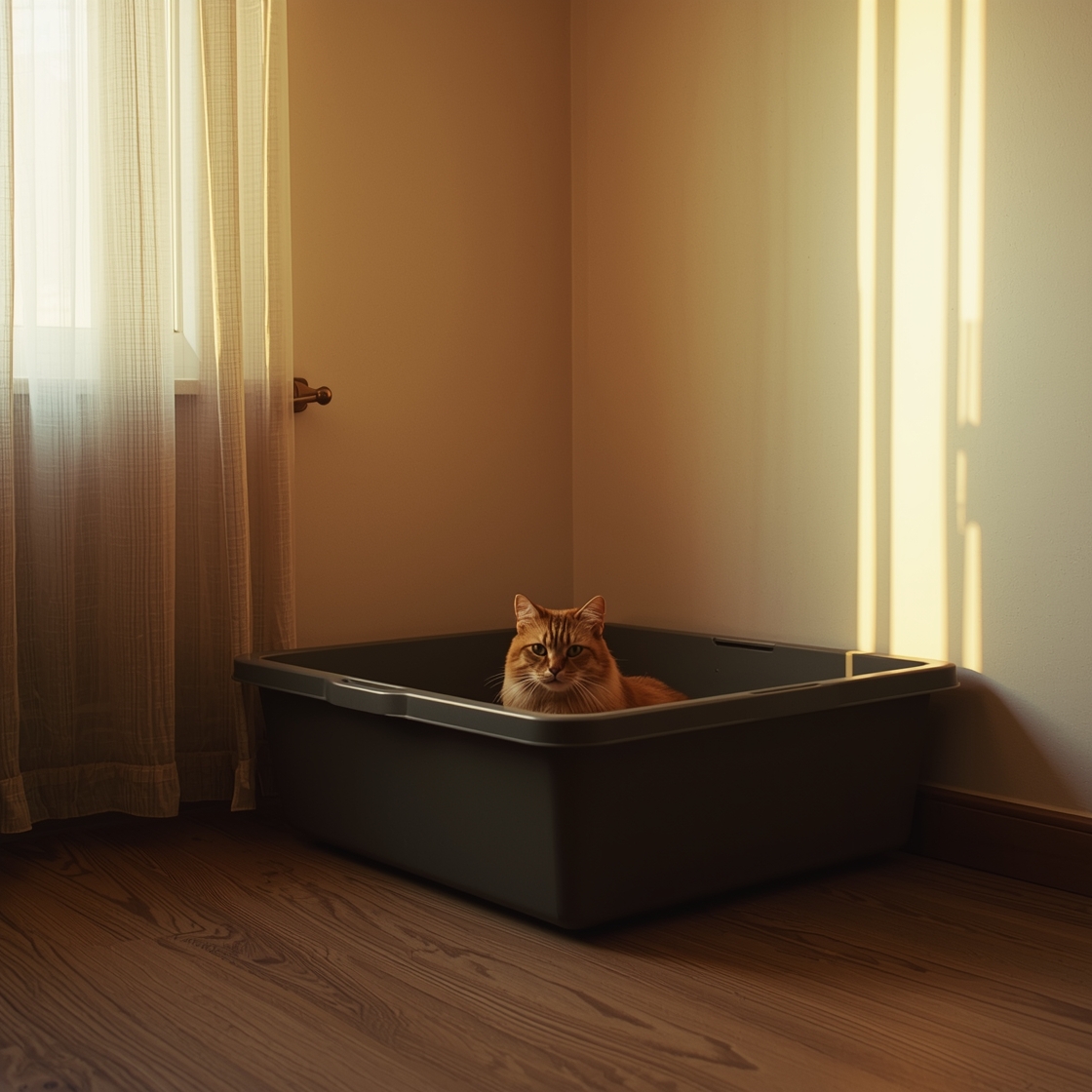
A large cat does not need a ranked “top 5.” It needs a box whose usable interior floor is big enough for that cat, with a wall-versus-entry height it can actually step over, in a material and style that cat will use. AAFP/ISFM and AAHA/AAFP both say most store-bought boxes are too small. They also say bigger is better, and that a storage tote is a legitimate alternative when a commercial pan is short.
Do this in order:
- Measure the cat from nose to the base of the tail (and, if you want the other published wording, to the tip as well).
- Compare that length to the pan’s usable interior floor, not the outer rim.
- Check wall height against entry height, especially for seniors.
- Decide open versus hooded (heat and odor versus scatter and privacy).
- Decide plastic versus stainless (odor absorption versus noise and weight).
- Count boxes. AAFP/ISFM and AAHA/AAFP both use a version of one per cat plus one.
The five pans below are currently sold examples, not a lab ranking. The Petmate Giant is the only product with a buy link: it is the manufacturer listing we loaded today, and it publishes the largest outer dimensions in this set.
Top 7 Cat litter box for large cats
The picks below are the 7 cat litter boxes for large cats on sale right now, listed with what each suits best and an honest drawback. Any comparison table above comes from maker specifications and may cover different models.
1. Stainless Steel Cat Litter Box
Best for: open‑air steel box for easy cleaning
We compared several open‑air options and owners report that this stainless steel box holds up to daily use without rusting. Its high sides keep most litter inside, though the lack of a cover means odors are more noticeable.
Pros: Durable rust‑resistant material; High sides reduce litter scatter Cons: No lid for odor control
2. AIPERRO Stainless Steel Litter Box | XL Enclosed Cat Litter Boxes
Best for: enclosed steel box with privacy
Owners report the AIPERRO’s enclosed design gives larger cats a private retreat while the steel body stays odor‑free. We compared it to other enclosed models and found the lid seals well, though the unit’s weight can make relocation a chore.
Pros: Sturdy stainless steel construction; Lid contains odors Cons: Heavier to move
3. OneBug High-Sided Stainless Steel XL Cat Litter Box for Cats
Best for: budget‑friendly XL steel box
We compared budget options and owners say the OneBug box offers generous space without breaking the bank. The high sides limit scatter, but the lightweight lid can vibrate when the cat jumps in.
Pros: Spacious interior for big cats; High sides keep litter in Cons: Simple lid may rattle
4. Idymere Stainless Steel High Sided Cat Litter Box
Best for: affordable high‑side steel option
Owners report the Idymere box delivers the essential high sides at a fraction of the cost of premium steel models. While it handles daily traffic, the thinner steel can dent if a cat claws the edges.
Pros: Very low price point; High walls limit mess Cons: Thin gauge steel may dent
5. Tevila XL Enclosed Stainless Steel Litter Box with Lid
Best for: large enclosed box with secure lid
We compared enclosed designs and owners love the Tevila’s roomy interior combined with a lockable lid that keeps odors contained. The premium price reflects its larger size and sturdy stainless steel build.
Pros: Spacious XL footprint; Locking lid adds privacy Cons: Price higher than open models
6. Arm & Hammer Rimmed Cat Litter Box with High Sides and Microban
Best for: plastic box with antimicrobial coating
Owners report the Arm & Hammer box stays fresher longer thanks to the Microban treatment, and the rim helps sweep litter back into the pan. We noted that, like most plastic, it can become brittle with age.
Pros: Microban reduces bacterial growth; Rim catches stray litter Cons: Plastic may crack over time
7. Amazon Basics No-Mess Hooded Enclosed Cat Litter Box with Odor
Best for: hooded plastic box with carbon filter
We compared hooded options and owners appreciate the Amazon Basics box’s odor‑blocking hood and easy‑swap carbon filter. The enclosure works well for most cats, though very large felines sometimes find the hood restrictive.
Pros: Snap‑on hood limits odor; Replaceable carbon filter Cons: Hood can be tricky for larger cats
Comparison: Cat litter box for large cats at a Glance
| Product | Best for | Approx. price | Where to buy |
|---|---|---|---|
| Stainless Steel Cat Litter Box | open‑air steel box for easy cleaning | $49.98 | Check price |
| AIPERRO Stainless Steel Litter Box / XL Enclosed Cat Litter Boxes | enclosed steel box with privacy | $56.99 | Check price |
| OneBug High-Sided Stainless Steel XL Cat Litter Box for Cats | budget‑friendly XL steel box | $31.49 | Check price |
| Idymere Stainless Steel High Sided Cat Litter Box | affordable high‑side steel option | $16.99 | Check price |
| Tevila XL Enclosed Stainless Steel Litter Box with Lid | large enclosed box with secure lid | $59.99 | Check price |
| Arm & Hammer Rimmed Cat Litter Box with High Sides and Microban | plastic box with antimicrobial coating | $17.33 | Check price |
| Amazon Basics No-Mess Hooded Enclosed Cat Litter Box with Odor | hooded plastic box with carbon filter | $36.89 | Check price |
Want to browse every option? See the full range of cat litter box for large cats on Amazon →
Decision framework: size the cat, then the box
1. Measure the cat, not a breed chart
Place the cat on a flat surface. Measure from the tip of the nose to the base of the tail (where the tail meets the body). That is the length AAFP and ISFM use in the 2014 house-soiling guidelines (the amended online text). Those guidelines recommend a rectangular box that is 1.5 times that length, and they cite one study in which adult cats preferred a box that was 34 × 15 inches (86 × 39 cm) over a smaller one.
Worked example, not a breed standard: a cat that is 20 inches nose-to-base needs about 30 inches of rectangular length under the AAFP/ISFM 1.5× rule. Very few commercial “XL” pans clear 30 inches of interior floor. That is why both documents say most manufactured boxes are not large enough, and why they endorse a large storage container when a store pan is short.
2. Usable interior floor, not the outer rim
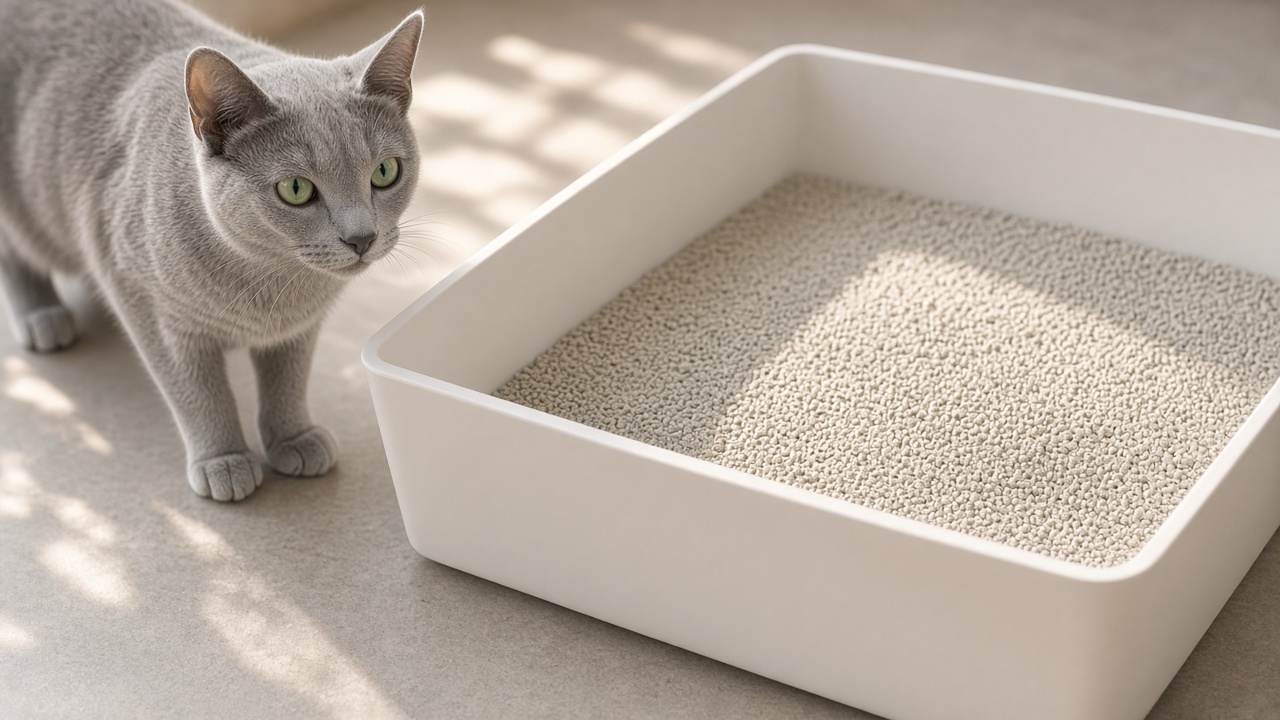
Tapered plastic pans lose inches between the rim and the litter bed. A 24-inch outer shell can have a much smaller floor. Hooded boxes lose more, because the hood and door eat length and width. If a maker publishes only exterior inches, treat those as a ceiling, not a floor. If a number appears only on Amazon and not on the brand page, we say so or we leave it out.
AAFP/ISFM: bigger is better. If the cat cannot turn, dig, and squat without touching the walls, the box is too small no matter what the SKU says.
3. Wall height versus entry height
High walls contain scatter and high-aim urine. They also become a hurdle. AAHA/AAFP: litter-box edges should not be too high for a kitten or senior to enter and exit. ASPCA: geriatric cats and cats with physical limits may struggle with high sides or top-entry designs; try a lower entry. A useful commercial compromise is a high-sided open pan with a cut-down front. Measure the step-in, not just the back wall.
4. Open versus hooded
ASPCA: most cats do not like lids on their boxes; large, easy-entry boxes are the default. AAHA/AAFP: whether the box is open or covered can matter to some cats. A hood can cut scatter and give a shy cat a wall. It also traps heat and odor if you do not scoop daily, and it shrinks the interior. Start open unless this cat already uses a hood.
If scatter is the human problem and the cat already accepts a lid, see stainless steel top-entry and enclosure furniture. Those are different jobs than “is this pan long enough.”
5. Plastic versus stainless
Plastic is light and easy to replace. Petmate itself tells owners to replace a plastic box about every 12 months because odor soaks into scratched resin. Stainless does not absorb urine the way plastic does; it is heavier, louder when litter drops, and colder under paws. Neither material substitutes for scooping. AAHA/AAFP: scoop daily; hot water is best; avoid soap and strong chemicals.
6. Number of boxes
AAHA/AAFP (2021, “General Litter Box Considerations”): one litter box for each cat plus one additional box, or one box per social group plus one if you know the groups. Place them in different quiet locations with an escape route.
AAFP/ISFM (2014 house-soiling guidelines): a single-cat household should have two boxes in two separate locations. In multi-cat homes the historical rule of thumb is at least one more box than the number of cats, and that is not an absolute requirement. Affiliated cats may share; unaffiliated cats need separate stations. At least one box on each level of a multilevel home.
ASPCA: one box per cat, plus one extra (three cats → four boxes). Same direction, slightly different wording. Do not line three pans up as one giant station.
Five currently sold oversized pans (examples, not a ranking)
Specs are copied from manufacturer or major-retailer pages we checked and labeled.
Petmate Giant Litter Pan — largest manufacturer-published open footprint in this set
Petmate’s own product page for the Giant Litter Box (SKU 22211) lists outer dimensions 25.560 × 18.300 × 10.020 inches and a product weight of 2.69 lb. The copy says the open style suits large cats, multi-cat homes, and cats that refuse a hood; a sloped entry is meant to help older cats and kittens; high sides are meant to contain scatter; the pan can hold over 30 lb of litter; it is 95% pre-consumer recycled plastic, made in the USA. The listing also flags Microban on the current Giant SKU. Petmate says litter liners are not available at this size, and it recommends replacing a plastic box about once a year because odor penetrates resin.
Honest trade-off: those inches are exterior. Petmate does not publish a usable interior floor on the page we fetched. A 25.56-inch outer length still sits short of the 34 × 15 inch box preferred in the study AAFP/ISFM cite. The open top does nothing for odor. Plastic will smell eventually. For a big-bodied cat that wants floor more than a lid, this is the most honestly dimensioned commercial open pan in this group.
Frisco High-Sided Extra Large 24-in house brand, high walls, lower front
Frisco is ’s house brand. lists a Frisco High Sided Cat Litter Box, Extra Large, Gray, 24-in. Third-party copies of ’s product card repeat 24 × 18 × 10 inches, BPA-free recyclable plastic, high sides and back, and a lowered front wall. A 2025 Cats.com hands-on review — not the manufacturer — reports the same 24 × 18 exterior, a 10-inch depth, an entry just under 6 inches, and a tapered interior they measured at about 22 × 17 inches.
Honest trade-off: “24-in” is the size name, not a 24-inch interior floor. We are not repeating some listings' 19.75 × 12.875 inch interior figure; Open top, no odor lid, plastic.
iPrimio XL stainless with enclosure — metal pan, plastic walls, narrower floor
iPrimio’s official site, fetched today, sells an XL stainless steel litter box with a detachable enclosure. The brand copy says rust-resistant stainless, high sides, a nonstick finish, and up to 6 inches of added enclosure height. The homepage we fetched does not print pan inches.
Retailer listings and a Cats.com review give the stainless pan as 23.5 × 15.5 × 6 inches, with the enclosure raising total wall height to about 12 inches. Those inches are not on the brand homepage. Treat 15.5 inches of width as the constraint. The enclosure is plastic, sits on the rim, and does not form a sealed hood. Litter on steel is louder; the filled pan is heavier.
Honest trade-off: buy this for hygiene and spray height, not for maximum floor.
Nature’s Miracle High-Sided — tall plastic walls; inches are retailer-published
Nature’s Miracle still sells a High-Sided Litter Box (Amazon listing B0087Y5NKS, model P-82035). The Amazon page we reached publishes 23 × 18.5 × 11 inches (the feature list also says 23.4 × 18.25 × 11). The brand site’s high-sided URL timed out from this desk today, so those inches are Amazon-published, not a Nature’s Miracle spec sheet we could quote. The listing claims high sides to limit scatter and a non-stick interior.
Honest trade-off: 11-inch walls are the point. A 23-inch outer length is not a giant floor, and we do not have a manufacturer interior.
IRIS USA Jumbo Hooded — manufacturer interior is smaller than the name
IRIS USA’s Jumbo hooded page, fetched today, publishes exterior dimensions 21.00 × 18.75 × 17.00 inches and inside dimensions 15.25 × 14.0 × 15.5 inches. The lid has a flap-door entry, handle, buckle latches, curved sides, and an included scoop.
Honest trade-off: “Jumbo” here means a tall hood, not a large floor. 15.25 × 14 inches of interior is the smallest footprint in this set. Vertical clearance is the feature for a long-bodied cat that will use a cave. ASPCA warns that many cats dislike covers. Scoop daily or the hood becomes a heat-and-ammonia box.
How the published inches actually compare
| Pan | Source of inches | What is published | Open or hooded | What that means for a large cat |
|---|---|---|---|---|
| Petmate Giant | Petmate.com (fetched) | 25.560 × 18.300 × 10.020 in exterior; 30+ lb litter capacity | Open | Longest manufacturer exterior here; interior floor not published |
| Frisco High-Sided XL 24-in | size name; Cats.com review (not brand HTML) | Sold as 24-in XL; review reports 24 × 18 × 10 in, ~6 in entry | Open, high-sided | High walls, lower door; floor tapers — do not treat 24 in as interior |
| iPrimio XL + enclosure | Brand site confirms SKU; inches from retailers / Cats.com | 23.5 × 15.5 × 6 in pan; ~12 in with enclosure | Open steel + 3-sided plastic walls | Narrower than the plastic opens; better hygiene than floor |
| Nature’s Miracle High-Sided | Amazon product page (brand page timed out) | 23 × 18.5 × 11 in (also 23.4 × 18.25 × 11) | Open, high-sided | Tallest plastic wall claim in this set; floor not published by brand |
| IRIS USA Jumbo Hooded | irisusainc.com (fetched) | 21.00 × 18.75 × 17.00 in outside; 15.25 × 14.0 × 15.5 in inside | Hooded, flap door | Smallest floor; most vertical privacy |
None of these match the 34 × 15 inch box in the study AAFP/ISFM cite. If your measured 1.5× target is in the low 30s, a commercial “XL” is a compromise. A storage tote with a door cut in one short wall is what AAHA/AAFP and ASPCA are pointing at when they say manufactured boxes run small.
Pick the constraint, not a trophy
- Need floor: Petmate Giant, then a tote if 25.56 inches of exterior is still short.
- Need wall height for spray or kick-out, and a lower step-in: Frisco 24-in high-sided or Nature’s Miracle high-sided (retailer inches).
- Need a surface that does not soak urine: iPrimio stainless, knowing the floor is 15.5 inches wide.
- Need a lid the cat already accepts: IRIS Jumbo, knowing the floor is 15.25 × 14.
- Need the box hidden: that is furniture, not a bigger pan — litter-box enclosure furniture.
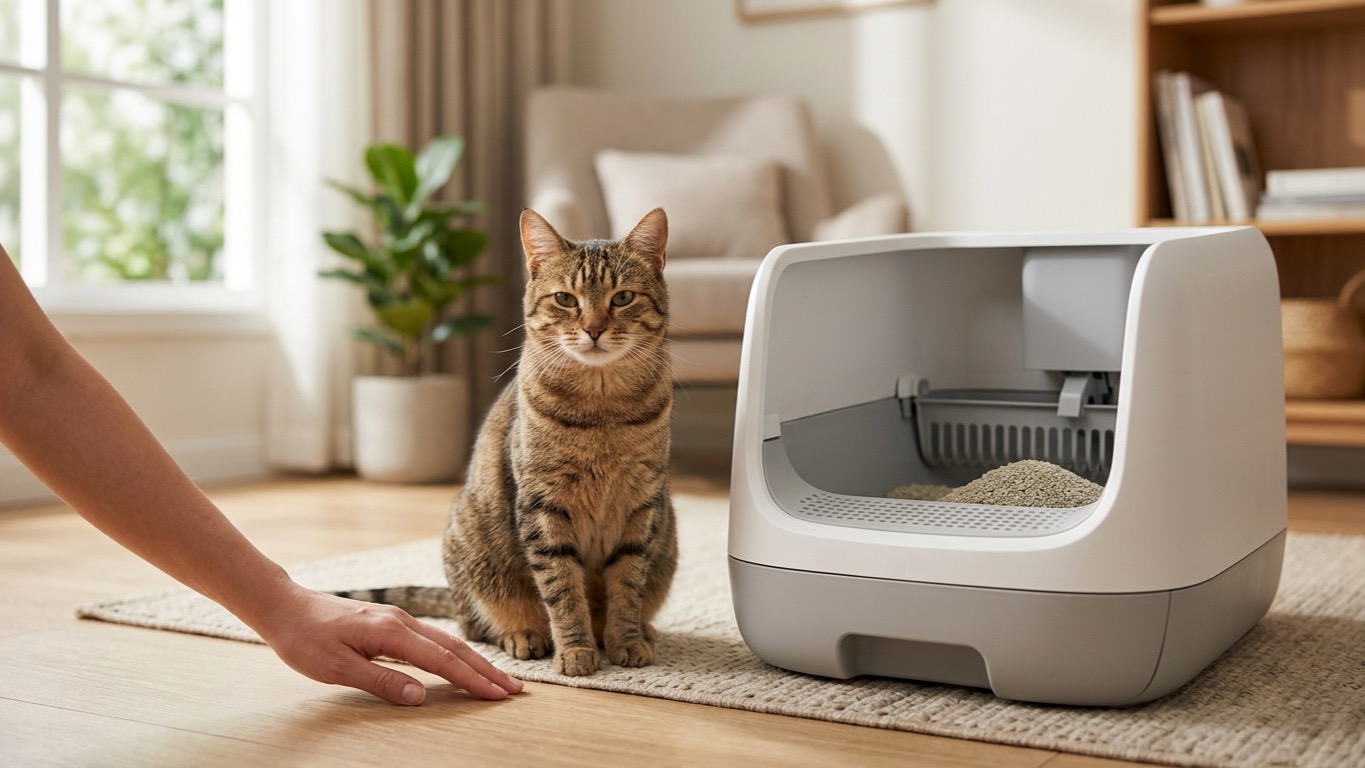
Automatic boxes are a different product and can be tight for a large body. If you are shopping motors, start with automatic litter boxes and the multi-cat automatic page — then still apply the 1.5× measure to the globe or tray.
Litter, seniors, and when a tote wins
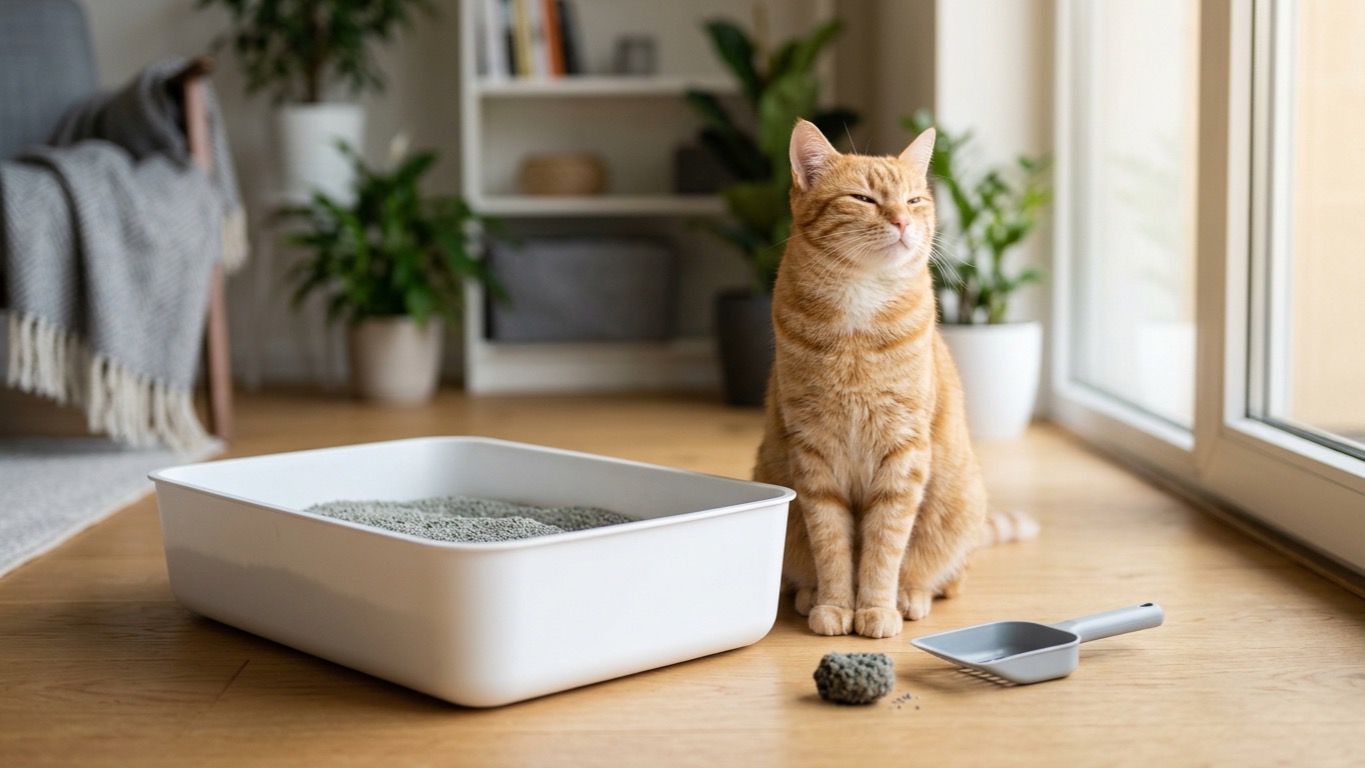
A bigger pan does not fix a box the cat has learned to hate. ASPCA: most cats prefer a large, easy-entry box; most prefer clumping, unscented litter with a medium-to-fine texture; most like 1–2 inches of litter, not 3–4; scoop at least daily; rinse weekly with baking soda or unscented soap. AAHA/AAFP: unscented clumping may be preferred after urinary problems; scoop daily; hot water, not harsh chemicals. If the fight is scent or texture, not length, use the preference-test steps in cat litter for picky cats.
ASPCA: older or limited cats may not manage high sides or top-entry. A 10- or 11-inch wall with a 5–6 inch cut-out is a different object from a 10-inch wall all the way around. If a large senior started missing the box after you raised the walls, lower the entry or add a second low pan. Pain (arthritis, a urinary flare) is a vet visit, not a new SKU.
AAHA/AAFP: using larger storage containers is likely to achieve proper litter-box size. ASPCA: plastic sweater boxes make excellent litter boxes. Cut a U-shaped door in one end, leave the other three walls high, and you can approach the 1.5× length the guidelines describe. That is not a failure to buy a brand.
Frequently asked questions
What is the best litter box for a Maine Coon or Ragdoll?
There is no lab-ranked best and no honest breed-inch chart here. Measure that cat nose-to-base (AAFP/ISFM) and, if you want the other published rule, nose-to-tip (AAHA/AAFP). Then buy the largest open floor you can place, or a tote. The Petmate Giant is the longest manufacturer-published commercial pan we fetched today. It is still shorter than the 34-inch study box.
Is 1.5 times body length a real rule?
Yes, as guideline language — with a wording split. AAFP/ISFM (amended 2014 house-soiling guidelines): 1.5× from nose to base of tail; one study preferred 34 × 15 inches. AAHA/AAFP 2021: 1.5× from nose to tip of tail.
How many boxes does a large cat need?
Same rules as any cat. AAHA/AAFP: n + 1, or one per social group plus one. AAFP/ISFM: two locations for one cat; n + 1 as a historical multi-cat rule of thumb, not a law. ASPCA: n + 1. A giant pan does not replace a second room.
Open or hooded for a big cat?
Default open (ASPCA) if the cat has never used a hood. Use a hood only if this cat already accepts one and you will scoop daily. IRIS’s own jumbo interior (15.25 × 14) is the cautionary number.
My large cat started peeing outside the box. Is the box too small?
Maybe. Also maybe medical. ASPCA and AAHA/AAFP treat sudden house-soiling as a veterinary problem first (pain, urinary disease, blockage). After the exam: size, cleanliness, lid, litter scent, location, and number of boxes.
Bottom line
SOURCES:
- AAFP and ISFM Guidelines for Diagnosing and Solving House-Soiling Behavior in Cats (Journal of Feline Medicine and Surgery, 2014; amended size text: 1.5× nose to base of tail; 34 × 15 in study box) — https://journals.sagepub.com/doi/full/10.1177/1098612X14539092
- AAFP/ISFM 2014 amendment note (updated size sentence and Guy et al. 2014 citation) — https://journals.sagepub.com/doi/10.1177/1098612X18765338
- AAFP/ISFM house-soiling guidelines, PMC full text — https://pmc.ncbi.nlm.nih.gov/articles/PMC11148882/
- 2021 AAHA/AAFP Feline Life Stage Guidelines, “General Litter Box Considerations” (1.5× nose to tip of tail; n + 1; storage containers) — https://www.aaha.org/resources/2021-aaha-aafp-feline-life-stage-guidelines/general-litter-box-considerations/
- ASPCA — Litter Box Problems (n + 1; large boxes / sweater containers; lids; 1–2 in litter; seniors and high sides) — https://www.aspca.org/pet-care/cat-care/common-cat-behavior-issues/litter-box-problems
- Petmate Giant Litter Box (SKU 22211; 25.560 × 18.300 × 10.020 in; 30+ lb capacity) — https://www.petmate.com/products/petmate-giant-litter-box
- IRIS USA Hooded Cat Litter Box – Jumbo (21.00 × 18.75 × 17.00 in exterior; 15.25 × 14.0 × 15.5 in interior) — https://www.irisusainc.com/products/hooded-cat-litter-box-jumbo
- IRIS USA Jumbo Hooded Cat Litter Box with Litter Scoop, Gray (interior 15.25 × 14.0 × 15.5 in) — https://www.irisusainc.com/products/jumbo-hooded-cat-litter-box-with-litter-scoop-gray
- iPrimio official site (XL stainless with enclosure; no homepage inches) — https://iprimio.net/
- Nature’s Miracle High-Sided Litter Box (model P-82035; 23 × 18.5 × 11 in published on the Amazon product page we fetched when the brand URL timed out) Frisco High Sided Cat Litter Box, Extra Large 24-in (listing confirmed via category pages; product HTML 429 from this desk) — https://www.akc.org/frisco-high-sided-cat-litter-box/dp/168285
- Cats.com — Frisco High-Sided Cat Litter Box Review (24 × 18 × 10 in; ~6 in entry; taper note)
- Cats.com — iPrimio Stainless Steel Cat Litter Box Review (23.5 × 15.5 × 6 in pan; ~12 in with enclosure)
Interior Floor Math: Best Cat Litter Box for Large Cats
| Cat length | Min floor length | Wall height | Entry height |
|---|---|---|---|
| 18 in | 27 in | 8–10 in | ≤6 in step |
| 22 in | 33 in | 10–12 in | Low cutout |
| 26 in | 39 in | 12+ in | Ramp optional |
AAFP/ISFM: bigger is better—covered boxes often feel too small even when footprint looks large.
Best Cat Litter Box for Large Cats — Style Desk
| Style | Large cat fit | Odor | Track |
|---|---|---|---|
| Open XL | Best visibility | Room vent | Higher |
| Top entry | Needs agile cat | Contained | Lower |
| Furniture hide | Measure interior | Varies | Low |
One box per cat plus one extra—blocking causes litter avoidance in multi-cat homes.
Additional Guidance on Best Cat Litter Box For Large Cats
Our research desk compiled this section from manufacturer specifications, published welfare guidance, and recurring owner themes or veterinary endorsement. Adjust any routine to your individual pet's health history with professional guidance when symptoms appear.
Practical monitoring beats guesswork: note appetite, stool quality, energy level, and behavior changes whenever you adjust food, housing, or care tools. Reversible trials with one variable at a time make cause and effect clearer than changing multiple products simultaneously.