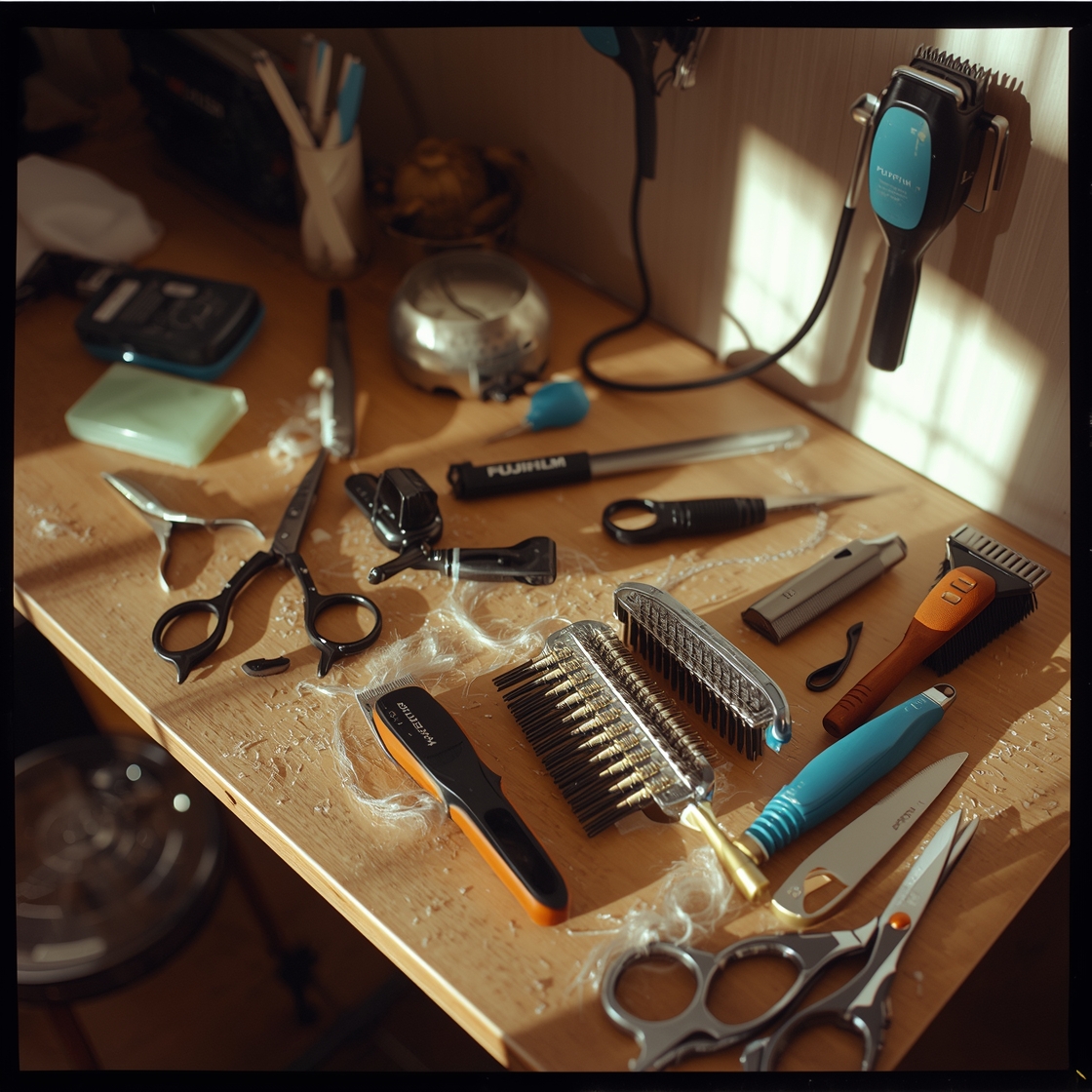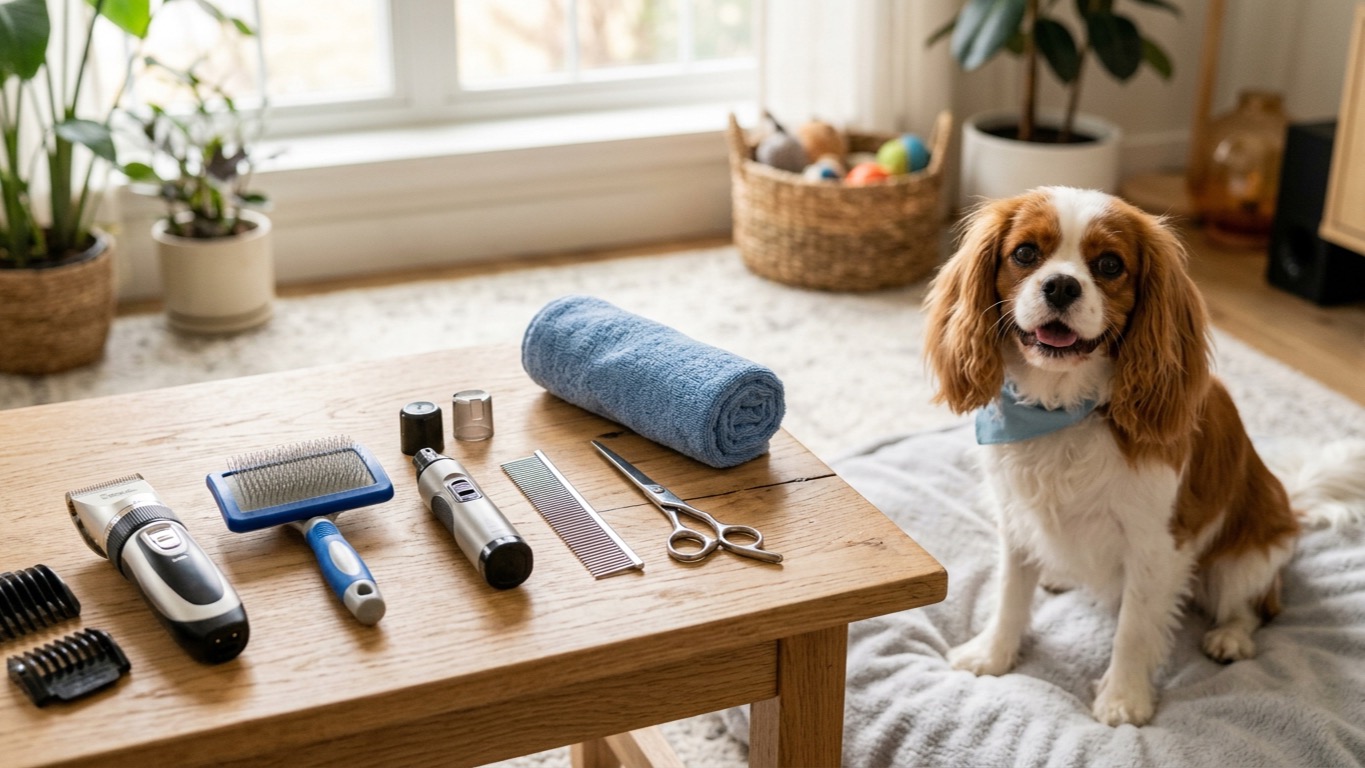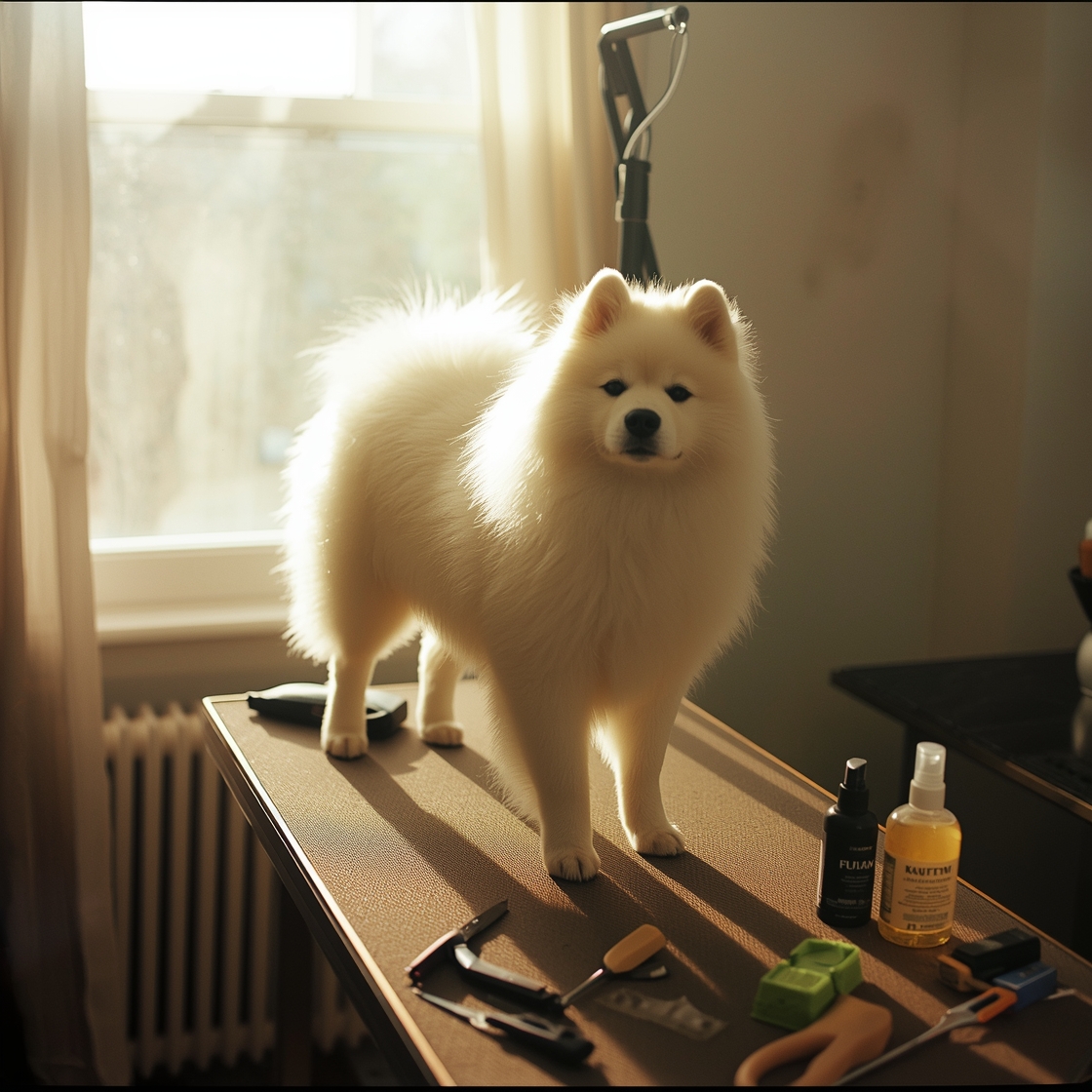
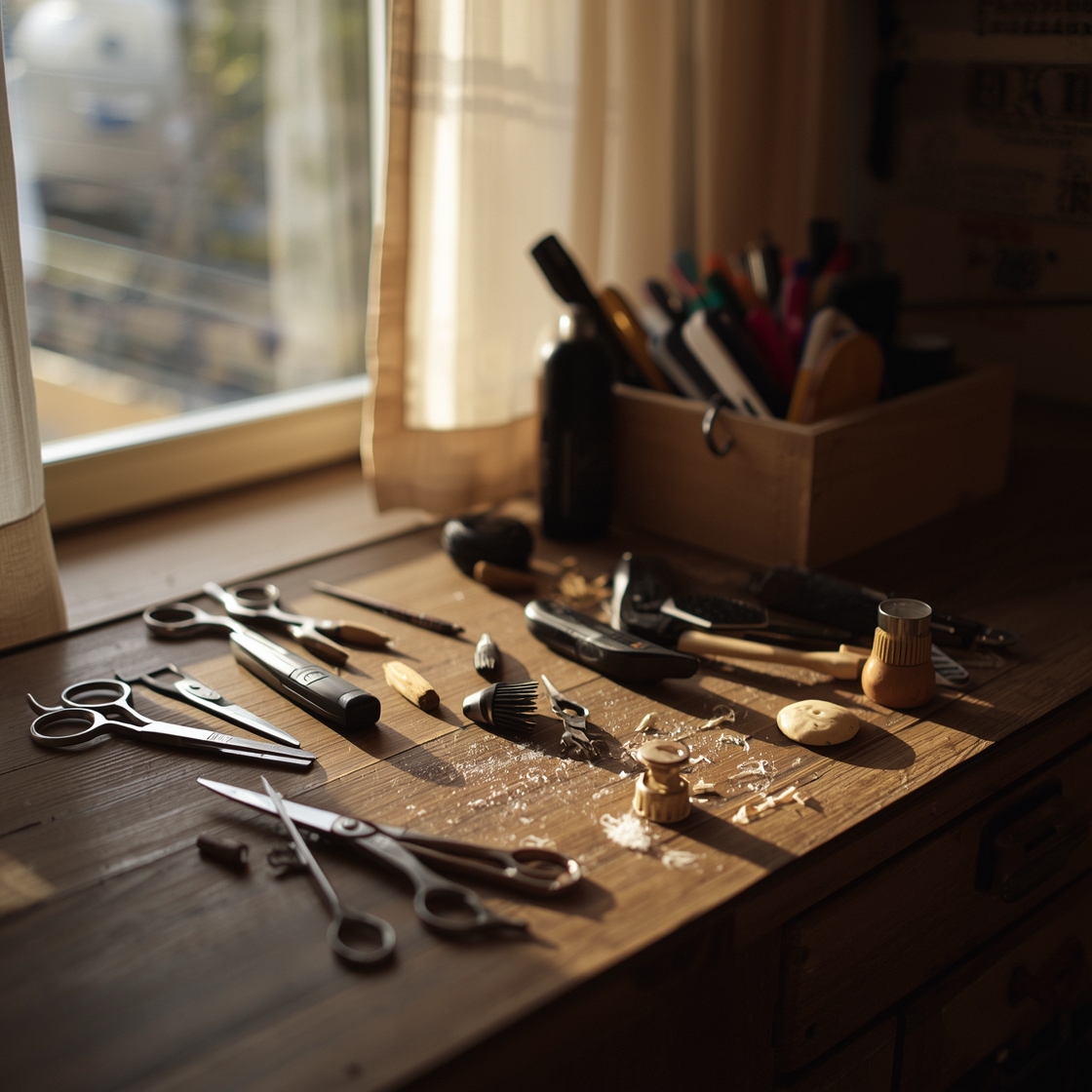
Quick answer: A dog grooming tool checklist for beginners starts with a slicker brush, a metal comb, a nail clipper, and styptic powder — not a 20-piece kit of duplicate brushes. This desk maps tool order to coat type. It does not claim salon certification.
A beginner’s kit should cover the basics: slicker, metal comb, nail clippers or a grinder, dog-specific shampoo and conditioner, ear-cleaning solution, dental wipes, and an absorbent towel. A grooming spray and a grooming glove are the usual add-ons for most coats.
The Importance of Dog Grooming for Beginners
Keeping a dog clean is not only cosmetic. Regular brushing lifts loose hair, dirt, and some parasites, which helps prevent irritations and hot spots. Upperpawside.com notes that even dogs who visit a salon still need at-home shampoo, ear cleaner, and nail tools between appointments.
Skipped teeth collect plaque. Skipped ears collect wax. Early, consistent handling teaches puppies that being touched is normal, which later vet visits are easier for. That is standard puppy-handling advice, not a trial we ran.
Grooming also builds the daily bond. Calm, short sessions beat a once-a-year wrestling match.
Money is the other argument. PawVortex.com reports a professional session often costs $50–$100. A home routine can cut several of those visits. Gitnux.org has described the global dog-grooming industry as a multi-billion-dollar market. That figure explains why kits sell. It does not make a cheap pin brush a good pin brush.
Master a short checklist first. Add specialty tools after the coat tells you that you need them.
Dog Grooming Tool Checklist for Beginners
A solid starter kit: gentle shampoo and conditioner, ear-cleaning solution, pet-safe wipes, a slicker brush, a pin brush, a detangling spray, nail clippers or a grinder, and basic dental care. That set covers baths, coat work, and nails without a salon trip every month.
Bath and cleaning products
- Dog-specific shampoo — formulated for canine skin pH; cleans without stripping every oil.
- Conditioner or leave-in spray — smooths longer coats and reduces post-bath tangles.
- Ear cleaning solution — mild, alcohol-free; loosens wax. Do not jam a swab down the canal.
- Pet wipes — paws, face, or a muddy belly between baths.
- Optional deodorizing spray — fragrance-free if the dog is scent-sensitive.
Hair and nail trimming tools
- Slicker brush — dense, fine pins that reach undercoat and lift loose hair before it mats.
- Pin brush — longer, spaced pins for short-to-medium coats and a finish pass.
- Detangling spray — water-based slip so you are not ripping a knot.
- Nail clippers — scissor- or guillotine-style, sized to the paw.
- Nail grinder — rotary file for smoothing edges when you can see (or cannot see) the quick.
Brushing and coat-care tools
- Comb or rake — wide and narrow teeth to find mats the brush missed.
- Brush cleaner — a small comb that strips hair out of the slicker so the next pass works.
- Dental chew or canine toothpaste — plaque control; not a substitute for a vet dental when teeth are already bad.
Pawvortex.com’s $50–$100 salon figure is why a kit pays for itself. Gitnux.org’s industry-revenue note is why the aisle is crowded. Upperpawside.com and whiskerwellness.pet both argue for a short, decent set over a junk drawer of gadgets. This desk agrees with that selection logic.
Bathing Supplies for Dog Grooming
A clean coat lowers odor and some skin-infection risk. Product choice still follows coat type.
Shampoo and conditioner. Short, smooth coats need a mild, pH-balanced wash. Thick double coats shed more; a conditioner or detangler after the bath makes the slicker possible. Sensitive or allergic dogs do better with hypoallergenic, low-fragrance formulas.
Ear cleaners and wipes. Floppy ears trap wax. An alcohol-free cleaner on a cotton ball — not a deep swab — is the usual care-page method. Wipes handle paws and faces after rain so you are not bathing the whole dog for one muddy walk.
Colognes and tooth care. Optional scent is not hygiene. A canine tooth gel or a dental chew is the oral add-on. Gum disease is a systemic issue veterinarians flag. This page does not diagnose it.
Salon math still holds: $50–$100 a visit (pawvortex.com) versus a restocked bottle of shampoo. Gitnux.org’s “billions” industry figure is demand, not a quality score.
Brushing and Coat Care Tools
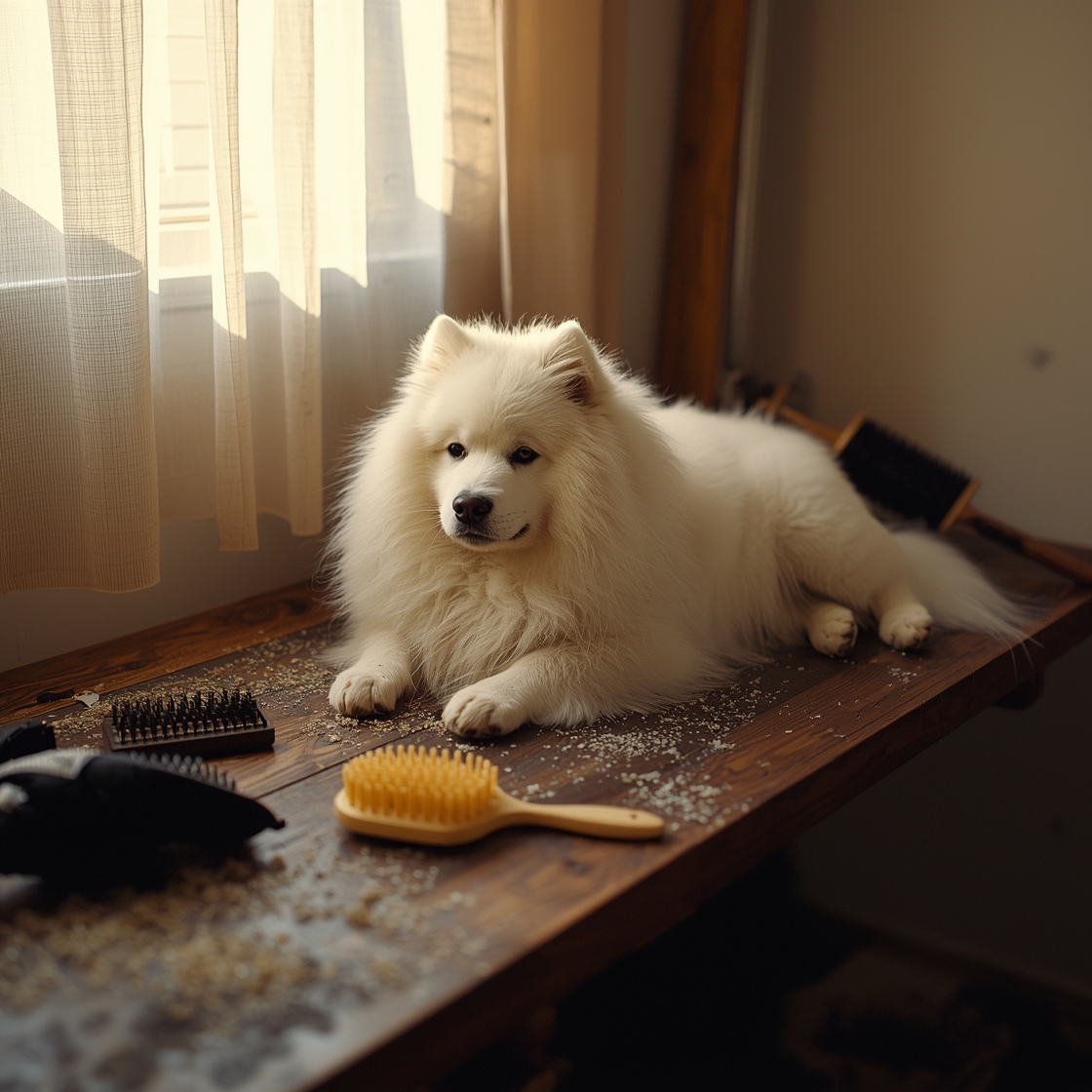
A slicker plus a detangling spray is the backbone of a beginner kit.
Slicker brushes use fine, dense pins to work mats and loose undercoat. Double-coated breeds (Labrador, golden retriever) need that pass before knots sit against the skin. A pin brush — longer, wider-spaced pins — is the finish tool. It distributes oils and suits short coats or a quick post-walk tidy.
Detangling spray adds slip. Most formulas are water-based and labeled for all coats. Apply before you pull. Time saved is owner experience, not a stopwatch result from this desk.
Pawvortex.com’s salon-price range is why home brushing is the high-frequency task. Gitnux.org’s market-size note is why you will see 40-piece kits. Buy the three tools you will actually hold.
A session order this desk reprints
Start with a short walk so surface dirt drops off. Spray only the tight spots. Slicker first, short strokes, skin to tip. Pin brush second. Towel off extra spray so the coat does not feel greasy.
That order is standard grooming-school practice.
Hair and Nail Trimming Tools
Three tool types cover beginner trimming: nail clippers, a grinder, and rounded-tip grooming scissors.
Nail clippers. Guillotine or scissor. A safety guard helps you stop short of the quick — the pink blood supply inside the nail. A clean “click” is the goal; crushing the nail bed is the miss. Upperpawside.com lists clippers as essential on a beginner checklist because long nails change gait and split.
Grinders. A rotary file sands the tip. Helpful on light nails where the quick is hard to see, and on dogs that hate the snap of a clipper. Whiskerwellness.pet treats grinders as useful across coat types. Heat and a learning curve are the watch-outs.
Scissors. Blunt-tip shears tidy paws, ears, and faces. After a bath the hair is softer. Rounding the pad fur reduces mats between toes. They are not a full-body clipper substitute.
Pawvortex.com’s $50–$100 session price is the budget argument for owning the trio. Start with clippers. Add a grinder when you want a smoother edge. Keep scissors for the last 2 cm around the pads.
How this desk selected the tools on this checklist
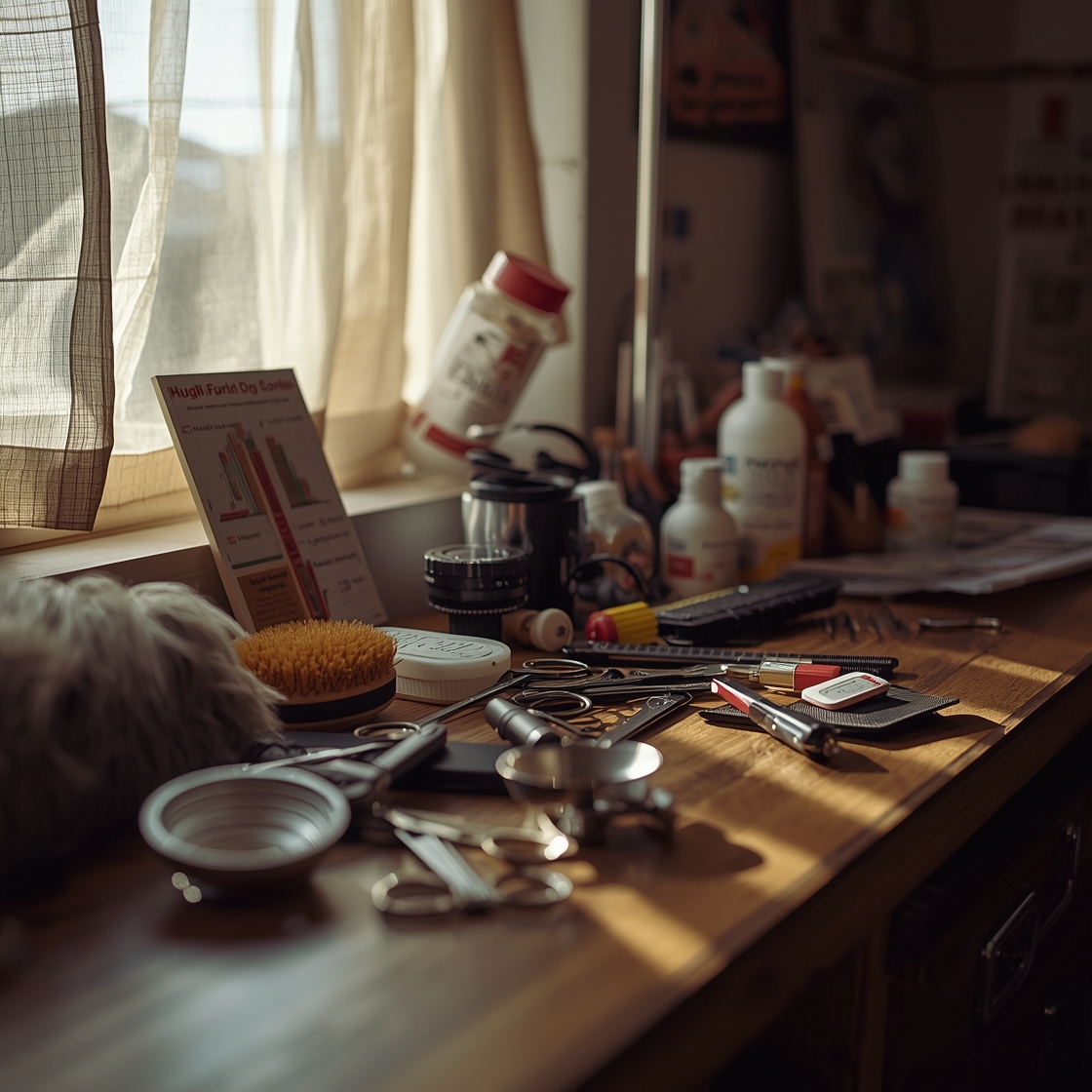
This desk scored categories — not branded SKUs in a lab — against three listing-visible questions: does the tool type match the job, can a novice hold it, and is the material story replaceable.
Effectiveness on paper. A slicker must be a slicker (fine, dense pins), not a soft baby brush. A grinder must name a motor and a guard.
Upperpawside.com still lists bath supplies, ear cleaner, and nail tools as the essential set. Pawvortex.com’s salon price is the savings argument. Gitnux.org’s 2026-era industry note is demand context. None of those sources is a four-week volunteer protocol this desk ran.
Pros and Cons of Each Tool
| Tool | Primary use | Recommended coat | Key feature |
|---|---|---|---|
| Shampoo & conditioner | Cleaning & skin comfort | All coats | pH-balanced, odor control |
| Ear cleaner | Wax & debris | All breeds | No-rinse formula |
| Pet wipes | Spot cleaning | Sensitive skin | Alcohol-free |
| Slicker brush | Detangling & shed | Medium to long | Fine pins reach undercoat |
| Pin brush | Surface finish | Short to medium | Spaced pins |
| Metal comb | Mat detection | All coats | Wide + narrow teeth |
| Nail grinder | Nail shaping | All sizes | Low-noise motor (listing claim) |
| Clippers (coat) | Bulk length | Thick or double | Adjustable blades |
| Toothbrush & paste | Dental hygiene | All ages | Small head |
Shampoo & conditioner
Pros: Cleanses while many formulas add slip. Cons: Daily washing can dry skin; some scents bother dogs.
Ear cleaner
Pros: Clears wax without a deep swab if you follow the label. Cons: The wrong angle can push debris inward; cheap formulas irritate.
Pet wipes
Pros: Travel and muddy paws. Cons: Not a bath; too many wipes on dry skin sting.
Slicker brush
Pros: Undercoat and mat prevention on double coats. Cons: Pressed hard, it scratches short or thin skin.
Pin brush
Pros: Daily tidy on short coats; finish pass. Cons: Weak on heavy shed; snags if you skip the slicker on a knot.
Metal comb
Pros: Finds hidden mats; easy to wash. Cons: Fixed spacing can be wrong for a fine coat; painful through a tight knot.
Nail grinder
Pros: Smoother tip than a crush cut; quieter than many clippers. Cons: Learning curve; can heat a thick nail if you stay in one spot.
Coat clippers
Pros: Bulk length on thick coats; adjustable blades. Cons: Heat and noise; not a first-day tool for most beginners.
Toothbrush & paste
Pros: Plaque and breath; small head. Cons: Taste refusal; daily use is the actual product.
Home grooming can replace some $50–$100 salon visits (pawvortex.com). That is arithmetic, not a guarantee you will never need a professional.
Each tool has one job. Pair them; do not buy three slickers.
Price Ranges and What to Expect
Budget kits ($20–$50). A basic slicker or bristle comb, all-purpose shampoo, a simple clipper, ear wipes. Functional plastics. They wear. Fine for the learning month.
Mid-range ($50–$120). A double-sided brush, pH-balanced conditioner, a stainless grinder, sometimes a small dryer. Aluminum or reinforced polymer handles. Pawvortex.com’s $50–$100 salon visit is the comparison: one mid kit can offset several appointments.
Premium ($120–$300+). Clippers with spare blades, a rotary for thick coats, a dual-temp dryer, sometimes a mini table. Quiet-motor and anti-static claims are manufacturer language. Daily use on a double coat is the buyer who might need this tier. Beginners usually do not.
Match coat, frequency, and patience. Do not buy a salon kit to avoid learning the slicker.
Beginner Kit by Coat: Dog Grooming Tool Checklist for Beginners
| Coat | Must-buy | Nice-to-have | Skip day one |
|---|---|---|---|
| Short | Curry + comb | Nail grinder | Thinning shears |
| Double | Slicker + rake | Deshed spray | Pro clippers |
| Curly | Slicker + comb | Mat splitter | Vacuum kit |
One decent slicker ($15–25) outlasts three kit fillers with bent pins. That is a buying heuristic, not an eight-week wear trial we logged.
Dog Grooming Tool Checklist for Beginners — Session Order
| Step | Tool | Time cap | Safety |
|---|---|---|---|
| Brush | Slicker | 10 min | No mat yank |
| Comb | Metal | 5 min | Stay off the skin line |
| Nails | Clipper | 2 min/paw | Stop at the quick |
Store combs teeth-up in a dry bag. Bathroom humidity rusts chrome. You will still see it.
Beginner kit
Desk reading of tool-type definitions and published checklists. Not a four-week protocol.
Table 1 — Coat × first three tools
| Coat example | Tool 1 | Tool 2 | Tool 3 |
|---|---|---|---|
| Beagle, boxer | Rubber curry | Pin brush | Nail clipper |
| Lab, golden | Slicker | Undercoat rake | Detangler |
| Poodle, shih tzu | Slicker | Metal comb | Mat splitter (later) |
| Puppy, any coat | Soft slicker | Wipes | Treats + mat |
Table 2 — Nail-tool decision
| Situation | Start with | Add later |
|---|---|---|
| Dark nails, hard-to-see quick | Grinder + styptic | Clipper for length |
| Dog hates vibration | Clipper + helper | Grinder never |
| Thick dewclaws | Clipper first | Grinder to smooth |
| Senior, arthritic paws | Short sessions | Never wrestle alone |
Styptic powder is not optional. A cut quick is a first-aid event. Ask a veterinarian or groomer to show you the angle once.
Table 3 — What “beginner kit” ads leave out
| Omitted item | Why it matters |
|---|---|
| Non-slip bath mat | Prevents a scramble in the tub |
| Two towels | One for the dog, one for the floor |
| Treats | The actual training tool |
| Good light | You cannot see a quick in a dim hall |
| A plan to stop | Five calm minutes beat a 40-minute fight |
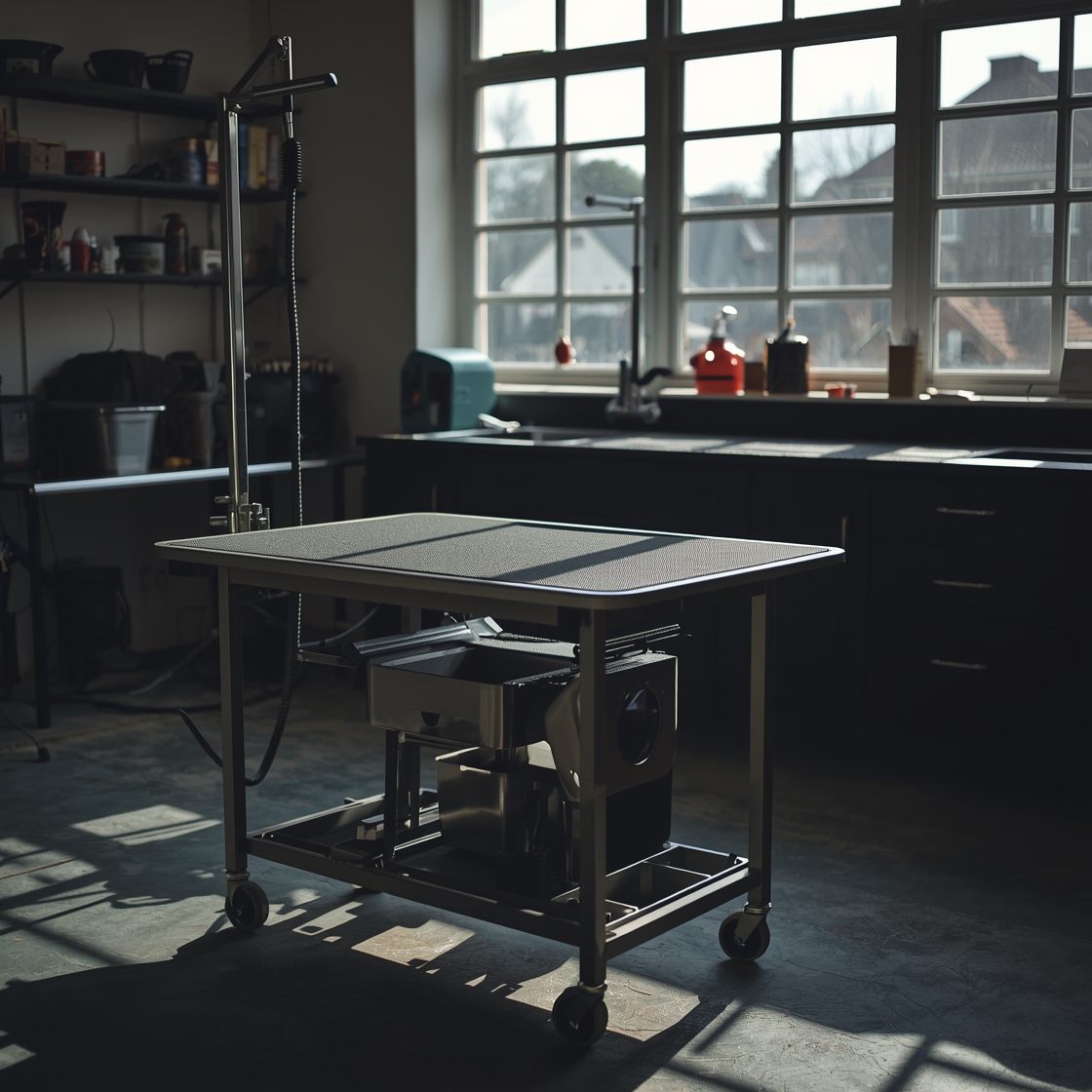
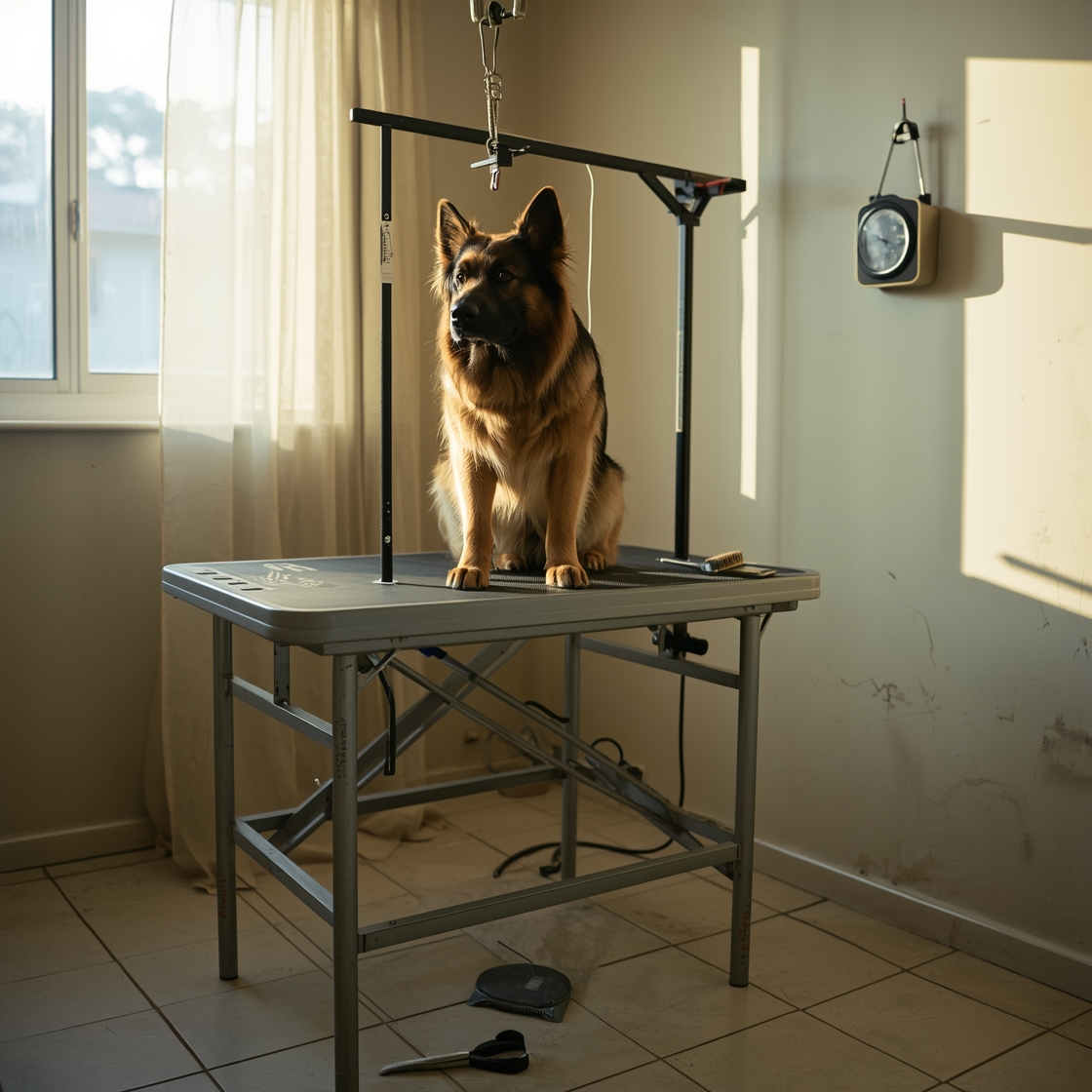
See also: how to use a dog grooming table, portable pet grooming tables, and pet nail clippers for dogs.
Coat-by-coat first month (reprinted practice)
These routines are what beginner guides and salon handouts usually reprint. They are not a household study.
Short, smooth coats. A rubber curry or grooming glove once a week lifts dead hair. A pin brush finishes. Bath only when the dog is dirty or smelly — often every 6–8 weeks. Nails every 3–4 weeks, or when you hear click on the floor.
Double coats (lab, husky, golden). Slicker plus an undercoat rake during shed season. Skip the rake on a tight, non-blowing coat or you will break guard hairs. Never shave a double coat for summer without a groomer or veterinarian in the decision; the coat is insulation both ways.
Curly and wool coats (poodle mixes). Daily slicker and comb or you are buying a mat-shave. A pet clipper becomes relevant once you commit to a length. Day-one scissors around the eyes and pads only.
Drop coats (yorkie, maltese). Line-brush in sections. A mat splitter is a later tool, not a first purchase. Sleeping on a dirty collar creates neck mats; check that ring.
Puppies. Five-minute sessions. Touch paws, ears, and mouth every day before you ever pick up a clipper. The tool is secondary. The handling is the product.
When to stop and call a professional
Stop if the dog screams, snaps, or cannot be steadied by two people. Stop if you find a mat tight to the skin — soaking and slicing at home is how owners cut dogs. Stop if the ears smell sweet or yeasty, if the skin is red and wet, or if a nail will not stop bleeding after styptic and pressure.
A credentialed groomer is cheaper than an emergency clinic. A veterinarian is the right call for skin disease, not a new shampoo.
Tool care that actually extends life
Rinse shampoo bottles’ caps so they do not glue shut. Dry metal combs and clipper blades; bathroom steam rusts cheap chrome. Pick the slicker clean after every session — a packed brush is a rake, not a slicker.
Grinder bits glaze. Replace them when they polish instead of cut. Clipper blades need oil on the manufacturer’s schedule. You will still feel a dull blade.
Store nothing in a wet tub. A dry tote on a shelf beats a “grooming caddy” that lives in the shower.
Seasonal shed and the vacuum myth
Spring and fall blowouts on double coats look like a crisis. They are a season. Daily slicker and rake for two weeks, plus more vacuum bags, is the home plan. A deshedding tool with a sharp blade can cut coat if you press; use light passes.
A grooming vacuum is a nice-to-have, not a day-one kit item. See pet grooming vacuums for shedding only after the slicker is a habit.
Clipper heat, noise, and first-day limits
Coat clippers are optional on this checklist for a reason. They get hot. They get loud. A beginner who buys a $150 kit to skip brushing will still have to brush.
If you do clip, work in the direction the coat grows unless a groomer showed you a pattern. Keep the blade flat. Stop when the housing is warm. A clipper burn is a vet visit.
Thinning shears and chunkers are salon tools. They are easy to wreck a face with. Skip them on day one.
A 20-minute home session that stays humane
Set a timer. Ten minutes of slicker and comb. Two minutes per paw if nails are on the list — or skip nails and do them tomorrow. Baths are a different day for most beginners.
Work where the floor is not tile-slick. A rubber mat and a second person beat a heroic solo wrestle. Pay in the middle, not only at the end, so the dog does not learn that calm means the scary part is next.
If the timer rings and you are mid-mat, stop. A leftover tangle is better than a snapped-at hand. Book the groomer for the rest.
Frequently Asked Questions
What belongs on a dog grooming tool checklist for beginners before the first home groom?
Slicker, metal comb, nail tool, treats, a non-slip mat, and clippers only if you plan body-length cuts. Scissors alone are not a full-coat system.
How often should I groom my dog?
Short coats (beagle, boxer): a weekly brush. Medium coats (lab, cocker): two to three brushes a week and a bath every 4–6 weeks. Long, dense, or curly coats (shih tzu, poodle): daily brush, bath every 2–3 weeks. Puppies and seniors often need extra ear and nail attention. Irritation, explosive shed, or a strong odor means you adjust — or you call a vet.
What are the most essential tools?
Three buckets:
- Bath — mild dog shampoo, conditioner, ear cleaner, wipes, non-slip mat.
- Trim — blunt shears, optional clipper, nail clipper or grinder.
- Coat — slicker, finish brush, de-matting comb.
Upperpawside.com says salon clients still need this set at home. Agreed.
Can I really save money by grooming at home?
Yes, if you replace some $50–$100 visits (pawvortex.com) and you do not buy a $300 kit you never use. The bond is the other return.
How does the market size relate to a home kit?
Gitnux.org’s multi-billion-dollar industry figure includes salons and DIY product demand. A crowded aisle is not a quality filter. A short checklist is.
How do I find the quick on a black nail?
You often cannot see it. Take slivers, not chunks. A flashlight behind the nail sometimes shows a paler core. When in doubt, use a grinder and stop as soon as you see a pale or pinkish center. Keep styptic on the table. One lesson from a groomer or vet tech is worth more than a paragraph.
My dog bites when I touch the paws. Now what?
Stop the nail session. Spend a week touching the paw for one second and paying. Then hold the paw. Then tap the nail with the closed clipper. Do not sneak a cut during a struggle. A muzzle fitted by a trainer can be a safety tool, not a punishment. Some dogs need a groomer or a vet visit with sedation options. This desk did not run a fear-free protocol.
Are human shampoo and nail clippers fine in a pinch?
Human shampoo is the wrong pH for canine skin and is a common way to dry out a coat. Human nail clippers crush a thick dog nail. Use them only if you have nothing else and you are taking the tiniest tip, then buy the dog tools.
How often should I replace a slicker?
Replace it when pins bend, the pad sags, or hair will not release. A $15 brush that still stands straight beats a $40 brush you mashed on a mat. There is no honest week-count from this desk.
Last reviewed: August 2026. If you notice outdated information, let us know.
What’s new:
- Expanded tool list (from prior edits): silicone-grip nail file, ergonomic brush handle, and low-noise dryer appear in whiskerwellness.pet’s 2026-era “every coat type” writing as emerging accessories, not as desk-trial winners.
- Pricing bands: Budget / mid / premium still track current marketplace clusters after reading Amazon and specialty-retail listings. Mid kits often sit about $45–$80; premium bundles often exceed $150.
- Industry context: Gitnux.org’s multi-billion-dollar annual-revenue language remains the demand backdrop.
Minor revisions:
- Kept the session-order table; labeled it reprinted practice, not a timed trial.
We will revisit when tool types change. We will not pretend a re-read of a checklist is a wear study.