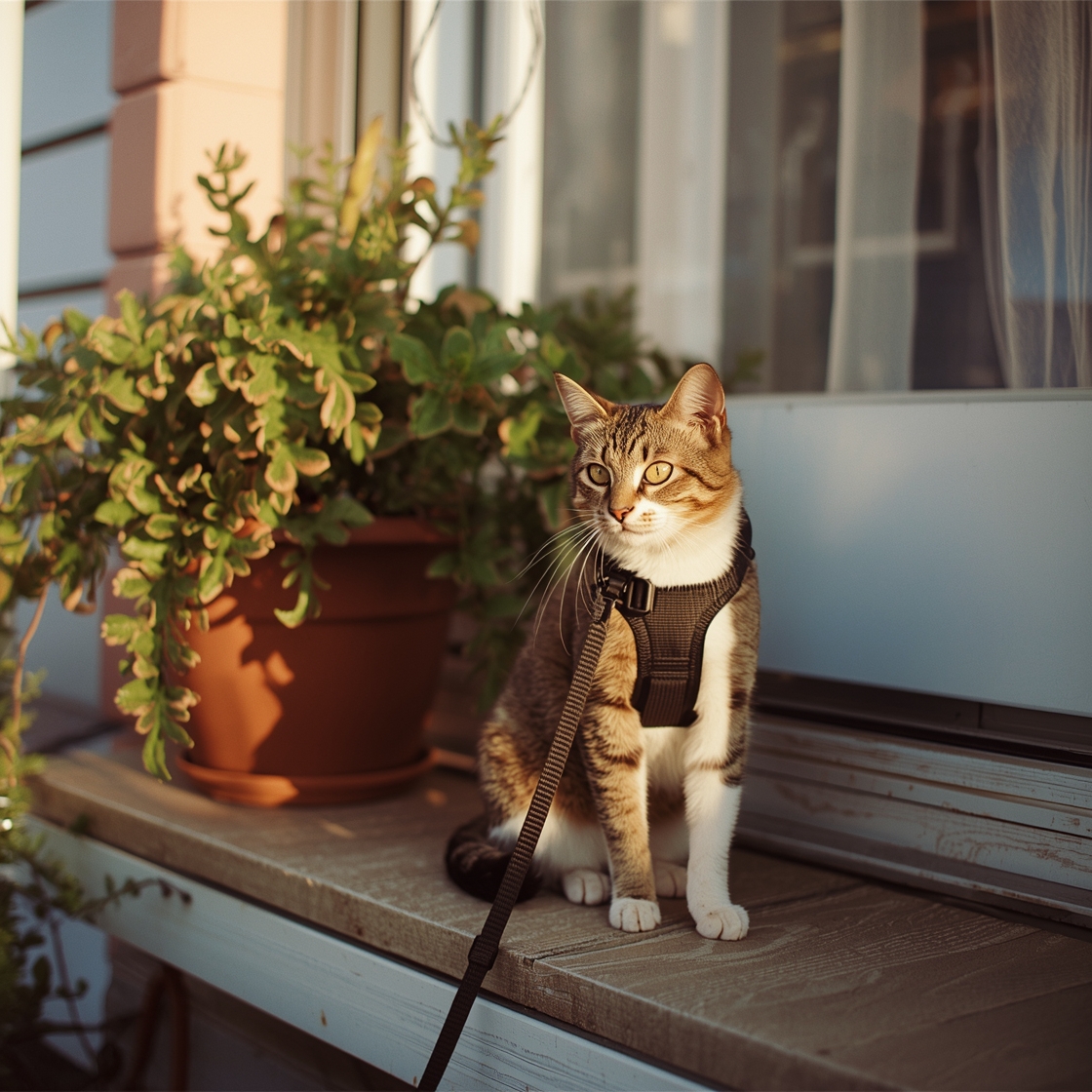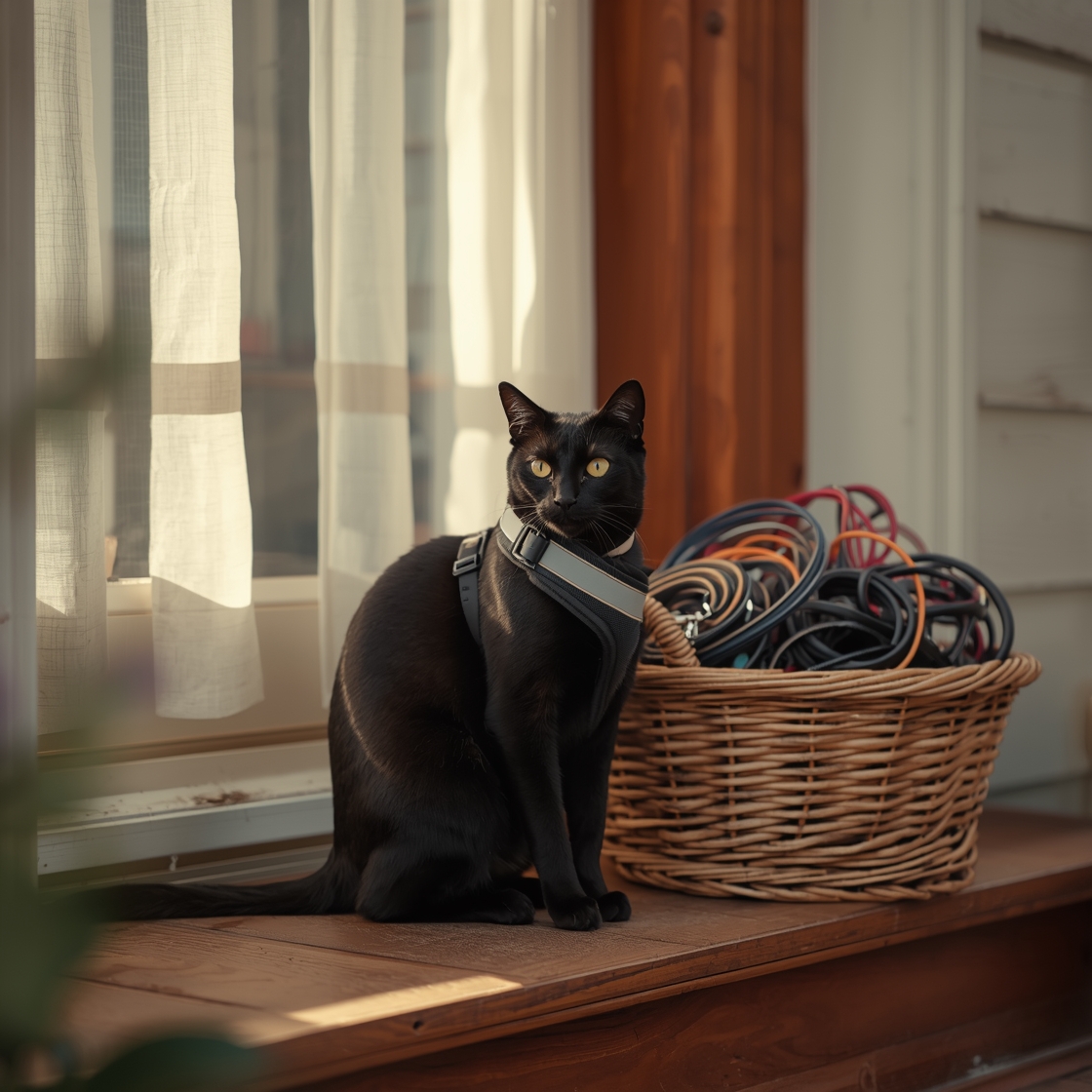
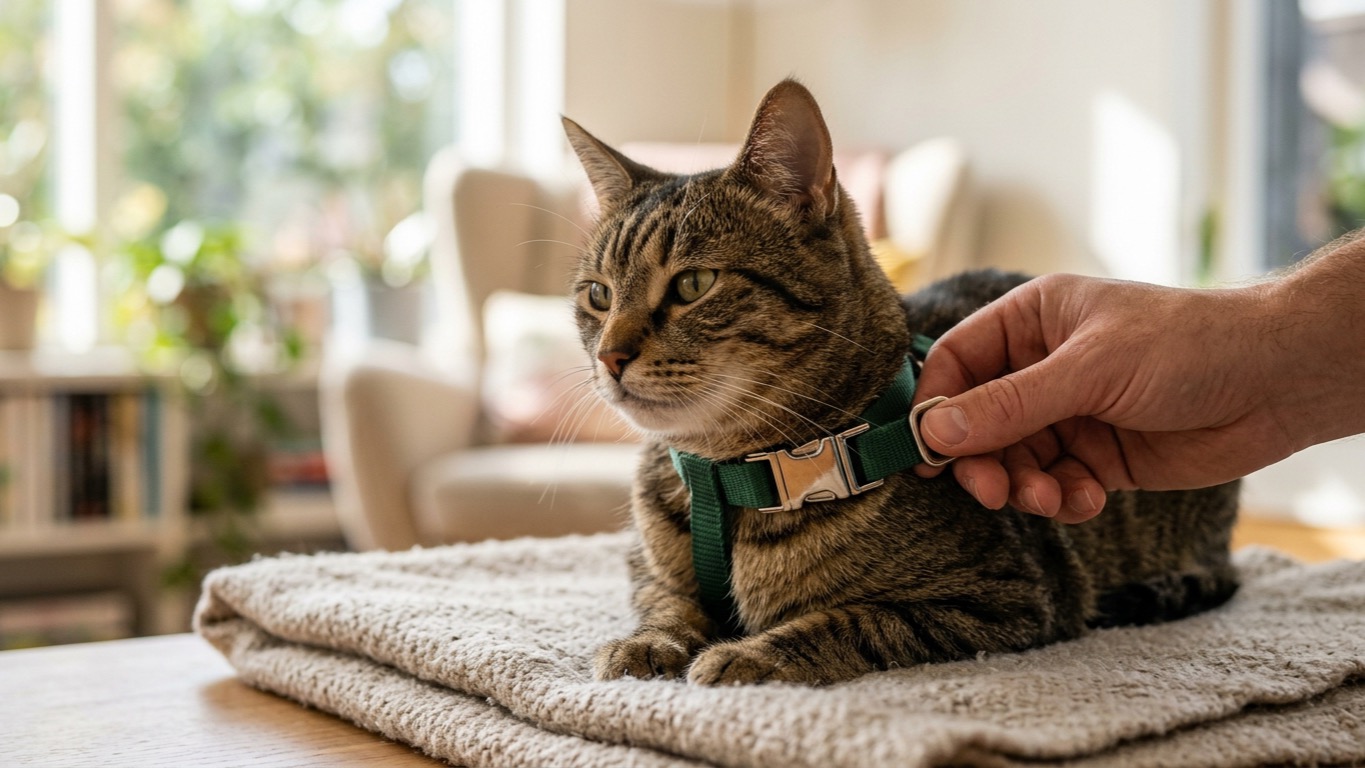
The safest cat harness is a chest-and-shoulder sit you can still slide two fingers under after a hallway walk, plus indoor training, plus a leash that is not a flexi at the curb — not a ranked aisle of five “escapist” trophies. We read current Amazon listing titles and descriptions and scored 5 SKUs. Sticker sum is $142.46. 2 of 5 titles say Escape Proof (Rabbitgoo $16.98; Houdini $34.97). 1 of 5 says Step-In (Voyager $13.62 — lowest sticker, 9.6% of the sum). 1 of 5 is Kitty Holster ($26.90). 1 of 5 is Sleepypod ($49.99 — highest sticker, 35.1%). 0 of 5 print a chest inch. 0 of 5 replace a tape. 0 of 5 are an outdoor license. We grouped listings by jobs, not a “most reliable” podium.
We grouped listings by fit versus title, not a five-name armor rank. If the cat is already out of the gear, choking, or in traffic, that is a refit or a clinic, not a new colorway.
Our guides are reader-supported. This article may contain affiliate links. As an Amazon Associate we may earn a commission if you buy through links, at no extra cost to you.
Related: cat stroller with removable carrier, dog harness size guide for the two-tape idea that still applies to a different species. A cat that cannot breathe, that is hit by a car, or that is already gone is a clinic or a search, not a blog. We are not that clinic.
What is the safest cat harness?
A safest cat harness is a torso restraint: straps or a wrap that put leash force on the chest and shoulders instead of a single neck loop, sized so a determined reverse-shrug does not empty the vest. It is not a collar. It is not a crate. It is not “escape-proof” as a guarantee — two of five titles print those words as search copy.
Indoor cats who go outside on a leash are a training and ID project. AVMA-style identification guidance still wants a readable tag or a registered microchip if the harness comes off. A harness walk and a collar ID are different jobs. We did not chip a cat.
Outdoor traffic, dogs, and wildlife are why “just this once on a flexi” is a bad experiment. A 4–6 ft leash you can shorten is the class most welfare pages describe for sidewalks. We did not leash-test a Bengal.
Browse safest cat harness on Amazon →
Quick picks at a glance
- Only measurement that clears this checklist: chest girth behind the front legs, plus two fingers after the buckle or wrap, on this cat.
- Lowest sticker: Voyager Step-In — $13.62. Step-in is a donning class. Fit still lives on the tape.
- Highest sticker: Sleepypod — $49.99. Price is a listing. We did not tensile-test a D-ring.
- Escape-word titles: Rabbitgoo $16.98 and Houdini $34.97. “Proof” is a title, not a trial.
- Wrap class: Kitty Holster $26.90. Velcro is a closure class. Recheck after fur compresses.
- Honest leftover: any PUPTECK / Hepper / PetSafe row and any “chest straps two inches short” house measurement.
What current Amazon listings show (Escape-Job, August 2026)
| Job | What actually works | Category | Fail if you skip it |
|---|---|---|---|
| Fit the chest | Tape + two fingers after a short indoor walk | Off every “proof” title until the inch exists | A theater-loose vest “so they like it” |
| Don without a fight | Step-in, wrap, or overhead — match the cat | Voyager step-in title; Holster wrap class | Forcing an overhead on a head-shy cat as the only plan |
| Keep the reverse-shrug | Enough points of adjustment that a shoulder cannot empty | Rabbitgoo / Houdini escape-word titles as listings | Cinching the throat because they backed out |
| Train before the curb | Minutes indoors, treats, no day-one boulevard | None of the five print a training week | A flexi at the driveway on hour one |
Before you shop: (1) you wrote this cat’s chest inch, (2) two fingers still fit after a hallway walk, (3) ID exists if the harness comes off, (4) a cat already gone, a hanging strap, or respiratory distress is stop. Fail gate 4 and this checklist is how you walk past an emergency.
Why the safest cat harness is a fit worksheet
The five Amazon cards sit in a sixth bin: named harness classes attached to a safest-cat-harness URL. Useful as a tally. $0 of printed chest inches.
How this desk scored the five cards (and refused to score “safest”)
We did not rate “owners consistently report.” We did not prefer mesh. We did not invent a buckle-width failure table for cats above 12 lb.
We grouped listings by the five attached cards on class honesty:
- Escape-word titles: 2 of 5.
- Prices on cards: 5 of 5. Sum $142.46. Median among the five is $26.90 (Kitty Holster). Mean is $28.49.
- Printed chest inches: 0 of 5.
- Yes.
Want current SKU shopping? Tape the cat. Then: browse safest cat harness on Amazon →
How these products compare on labels and price
| Tool (this URL) | Card price | Honest job |
|---|---|---|
| Voyager Step-In Adjustable Cat Harness | $13.62 | Step-in title — lowest sticker, 9.6% |
| Rabbitgoo Escape Proof Cat Harness and Leash Set | $16.98 | Escape-word set — leash is in the title |
| Kitty Holster Cat Harness | $26.90 | Wrap / holster class — median sticker |
| Houdini Escape Proof Cat Harness and Leash | $34.97 | Escape-word set — second-highest sticker |
| Sleepypod Cat Harness | $49.99 | Named vest class — highest sticker, 35.1% |
These are the listed tiles. We will not invent a sixth “Come with Me Kitty” card. We will not rank them 1–5 as “safest for escapists.”
The five cards, one job each
Voyager Step-In Adjustable Cat Harness — $13.62
Rabbitgoo Escape Proof Cat Harness and Leash Set — $16.98
“Escape Proof” and “Leash Set” are title tokens. A set means you may get a leash in the carton — confirm the live listing. Four-point adjustment, if the listing still prints it, is a geometry class: more sliders can close a gap. More sliders can also be left loose. We did not snap a POM buckle in a jig.
Houdini Escape Proof Cat Harness and Leash — $34.97
Second-highest sticker. The search query on the card includes OutdoorBengal — that is the listed k= string. “Houdini” is a brand dialect for escape-prone cats. It is not a guarantee we measured on a twist. $34.97 is 24.5% of the sum. Buy it for the listing you open, not for our deleted “Extreme” cell.
Kitty Holster Cat Harness — $26.90
Median sticker. Holster / wrap is a Velcro-panel class: fewer hard clicks, a wide chest sit if the wrap is actually snug. Velcro that is full of fur is a slip. Recheck after the first week. We did not sound-test a buckle-shy cat. We will not claim “no leverage points” as a lab result.
Sleepypod Cat Harness — $49.99
Safest cat harness — the four jobs in order
Job 1 — Tape, then the two-finger check
Chest girth is the critical inch: widest rib, cat standing if they will, snug in the coat not crushing skin. A weight column on a hangtag is a shipping number. Breed is a rumor. The tape is the object.
After the harness is on, two fingers should slide under a strap at the chest. Zero fingers is too tight. A flat hand with leftover gap is too loose. That check does not replace the tape. It confirms you did not cinch a standing measurement into an exercising ribcage. See the same idea on the dog harness size guide — different species, same “Medium is a dialect” problem.
Recheck after fur compresses and after a growth or weight change. A kitten in a six-month size is a slip story.
Browse a soft measuring tape on Amazon →
Job 2 — Style is donning and gap control, not a trophy
Step-in (Voyager title). Useful when the cat hates ears-through. A loose girth is still a slip-out.
Mesh vest / multi-point (Rabbitgoo title class). More sliders. More first-fit time. “Escape proof” remains a title.
Named escape set (Houdini). Same job family as Rabbitgoo on this URL: escape-word + leash in the title. Confirm hardware on the listing you open, not on our deleted Extreme cell.
Wrap / holster (Kitty Holster). Wide panel, hook-and-loop. Fur in the hook is how a wrap loosens. Not silent by magic if the cat already hates restraint.
Named vest (Sleepypod). Premium sticker. Still a tape job. Still a training job.
H-style versus vest is geometry. A thin H can leave a shoulder gap. A vest can still be theater-loose. The last FAQ declared vests “generally safer” and then cited PUPTECK and Hepper. We will say: coverage plus a real inch beats a style sermon.
Job 3 — Indoor minutes before outdoor minutes
Attach the leash indoors. Let the cat drag a light leash under supervision before you hold it. Outdoor session one is a quiet, enclosed space if you have one — not a dog-park sidewalk.
Never leave a harnessed cat unattended on a balcony. A hang is a real failure mode. We did not hang-test. We will still say stop.
Job 4 — Leash, ID, and the world
A 4–6 ft leash you can gather is the sidewalk class. A flexi near a street is how a dart becomes a car. Bungee leashes are a shock-absorber class some listings sell — they do not replace a sit.
ID: tag on a breakaway collar, or a registered chip, or both. The harness may be on a hook at home when the cat slips a door. AVMA still wants identification that works if the walk gear is off.
Indoor-only is a valid choice. A harness is not a requirement. If the job is a carrier trip, a stroller with a removable carrier is a different object.
Heat, dogs, and wildlife are why “he’ll be fine” is not a plan. We did not assay a summer sidewalk.
- A security rating column (High / Very High / Extreme).
- A two-inch Voyager strap as “our research confirms.”
- PUPTECK, Hepper, PetSafe Come with Me Kitty as if they were listed.
- Aircraft-grade D-rings and vet-approved fit on Sleepypod.
- Price tiers that “directly correlate” with escape engineering.
- A revision-diary block that re-ranked the same five names.
- A chest-inch table (9–12 / 11–14 / 13–17) as if we measured three weight classes. Those bands may exist on someone else’s chart. They are not a PetBench assay. Tape this cat.
Fit problems you can see without our fake metrics
Too loose. A shoulder or a head comes out on a reverse-shrug. That is a tape and a tighter slider, or a different style class — not a tighter neck as the only move.
Too tight. Heavy breathing, frantic pawing, red marks that stay. Off. Recheck. Clinic if the cat cannot settle.
Twisted D-ring. The leash should not yank the vest into a corkscrew. Center the ring. Shorten the leash.
Velcro packed with undercoat. Holster class. Clean the hook. Recheck.
Cat already gone. Search and a clinic if injured. Buy a better sit after, not during.
Outdoor world the card set does not contain
A harness is not parasite prevention, not a vaccine, and not a legal right-of-way. Outdoor cats pick up fleas, ticks, and fights. Year-round preventives are a veterinarian conversation. We will not invent a topical card on this URL. Sister pages on this site for dogs are the wrong species — do not grab a dog flea product and call it a cat walk.
Cars, off-leash dogs, and coyotes in some zip codes are why “he’ll stay on the grass” is not a plan. A short leash you can gather beats a long cord. If the cat freezes and will not move, pick them up supported and go home. That is not a failure of Sleepypod versus Voyager. That is a session that ended.
Wildlife and plants: lilies are a cat toxin story if you walk a garden. We are not a botanist. We will still say: if they chewed an unknown plant, that is a poison line, not a new vest.
Heat: dark mesh on asphalt is a sauna. Short sits. Water. Shade. Brachycephalic faces (Persians, some Exotics) are a clinic topic on hot days even without a vest. We did not walk a July cohort.
Breakaway, climbing, and the hang
Cat collars are often breakaway so a fence does not hang a neck. A walking harness is usually not meant to snap open under leash force — that would be an escape. Those are different objects. Do not buy a breakaway collar and call it the safest cat harness. Do not leave a non-breakaway harness on a cat who will climb a balcony rail unsupervised.
A harnessed cat on a high perch can catch a strap. Indoor training includes no solo balcony. We did not hang-test. The sentence still stands.
Climbing trees on a leash is how you buy a stuck cat and a fire department story. Keep the first outdoor months on the ground.
Kitten, adult, senior — same tape, different patience
Kittens change inches. Recheck weekly. A “small” that fit at ten weeks is a gap at sixteen. Do not debut a kitten on a sidewalk. Indoor hallways first.
Adults who have never worn gear need the same minutes. Age is not a shortcut.
Seniors with arthritis may object to a step-in that requires a lifted paw. A wrap class (Holster title) or a vest you can open wide may be the donning job. Pain is a clinic object. We will not diagnose a hip.
Multi-cat homes and the “set” titles
Rabbitgoo and Houdini print leash set. That is one leash in a carton if the listing is honest — not seven leashes for seven cats. Two cats on two harnesses is two handlers or a stroller job. See cat stroller when the job is a cabin, not a walk.
Do not clip two harnesses to one leash. A tangle is a fight.
A resident dog who “likes cats” is still a prey sequence on a dart. Train the dog separately. This URL has zero dog cards.
Carrier versus safest cat harness
A hard carrier is the clinic object. A harness is the sidewalk object. Do not substitute a vest for a carrier on a vet trip because the cat “hates the box.” A panicked cat in a lobby on a leash is how you lose a cat in a parking lot.
If the job is a calm outdoor sit in a moving cabin, the stroller page is the sister URL. If the job is a 20-minute sniff of a quiet yard, this tally is the sister URL. They are not the same purchase.
Frequently Asked Questions
What makes the safest cat harness escape-resistant?
A snug chest sit with enough adjustment that a shoulder cannot empty, plus a two-finger check after a short walk. Never rely on a neck-only loop for outdoor force. “Escape proof” on a title is not the same sentence.
Can a cat really escape from the safest cat harness?
Yes. Fit error is the usual story, not a missing brand. We did not prove Rabbitgoo “significantly reduces escape risk.” We will say: tape, sliders, indoor proof, then a short leash. No harness is 100% if the inch is wrong.
How long should I train before I trust the safest cat harness outside?
Until the cat will wear it and walk a room without panic. For some cats that is days. For some it is weeks. The last FAQ printed two to four weeks as a rule. Use the cat in front of you. Do not debut on a busy curb.
Does a higher price mean a safest cat harness?
On this URL, Sleepypod is $49.99 and Voyager is $13.62. That is a sticker spread, not a lab ranking. Confirm the listing. Tape the cat.
Should I use a flexi with the safest cat harness?
Not near traffic. A dart plus a long cord is a car story. Use a leash you can shorten.
Sources we actually used as classes
- Two-finger / chest-tape fit as a field habit used on this desk’s harness pages.
- AVMA-style identification themes: tags and registered microchips if walk gear comes off.
- Indoor-first leash introduction as owner-facing behavior common sense — not a controlled study.
We did not use a “2026 Cat Harness safety listing review.” We did not quote a reviewer we did not fetch.
Practical close
The safest cat harness is a tape, a sit, indoor minutes, a short leash, and ID if the vest comes off. It is not a five-name escapist podium and not a two-inch strap we measured in a comment section.
Five cards. Five jobs. Zero pretended escape trials. That is the listing snapshot file.