Our guides are reader-supported. This article may contain affiliate links. As an Amazon Associate we may earn a commission if you buy through links, at no extra cost to you.
There is no honest best dog travel carrier backpack airline approved for large breeds for the cabin. PetBench Travel Desk (August 2026) read IATA Live Animals Regulations CR1, FAA 14 CFR 121.589, TSA checkpoint pages, USDA APHIS, and the current Delta and American pet pages. An adult Labrador, Shepherd, or similar does not fit the 18 × 11 × 11 in soft box those airlines publish for under-seat pets. The backpack cards below are terminal / hiking / small-dog objects. The cargo object is a rigid IATA-formula crate. The honest trip is often a car.
- A soft under-seat cabin bag (Sherpa Deluxe class: about 18 × 11 × 11 inches).
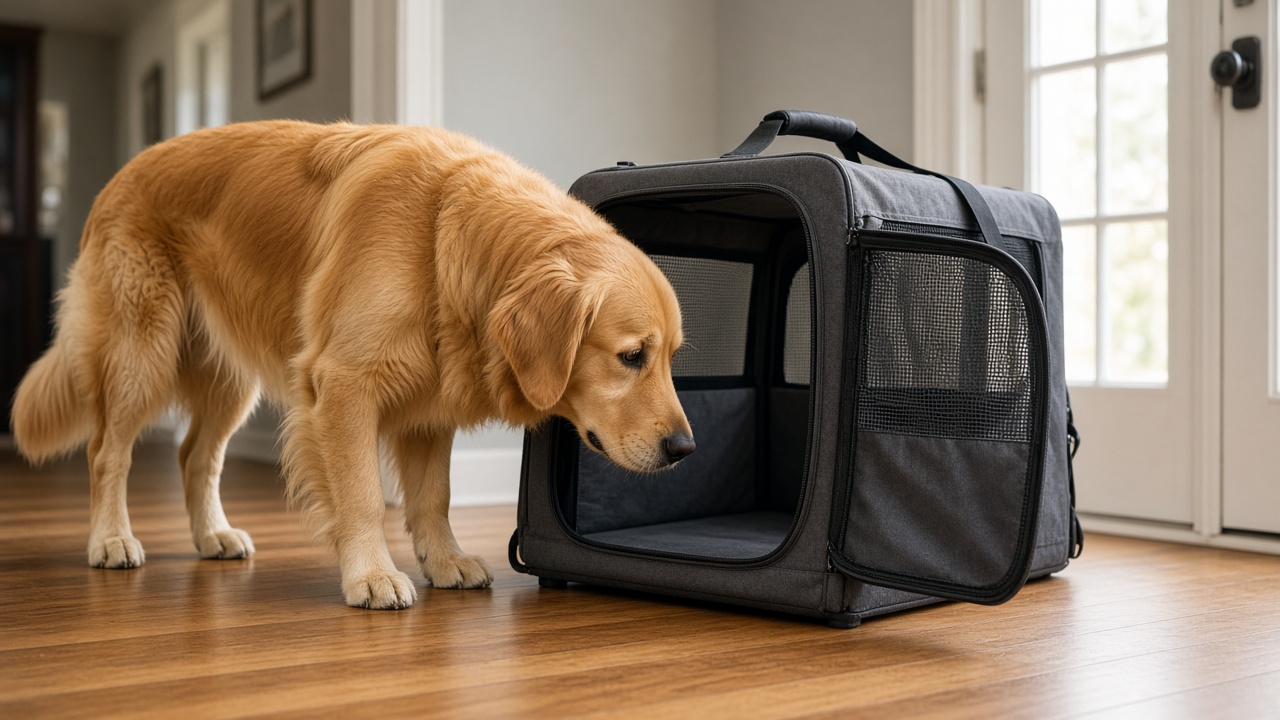
- A hard IATA-style cargo crate (Petmate Vari Kennel / Sky Kennel class).
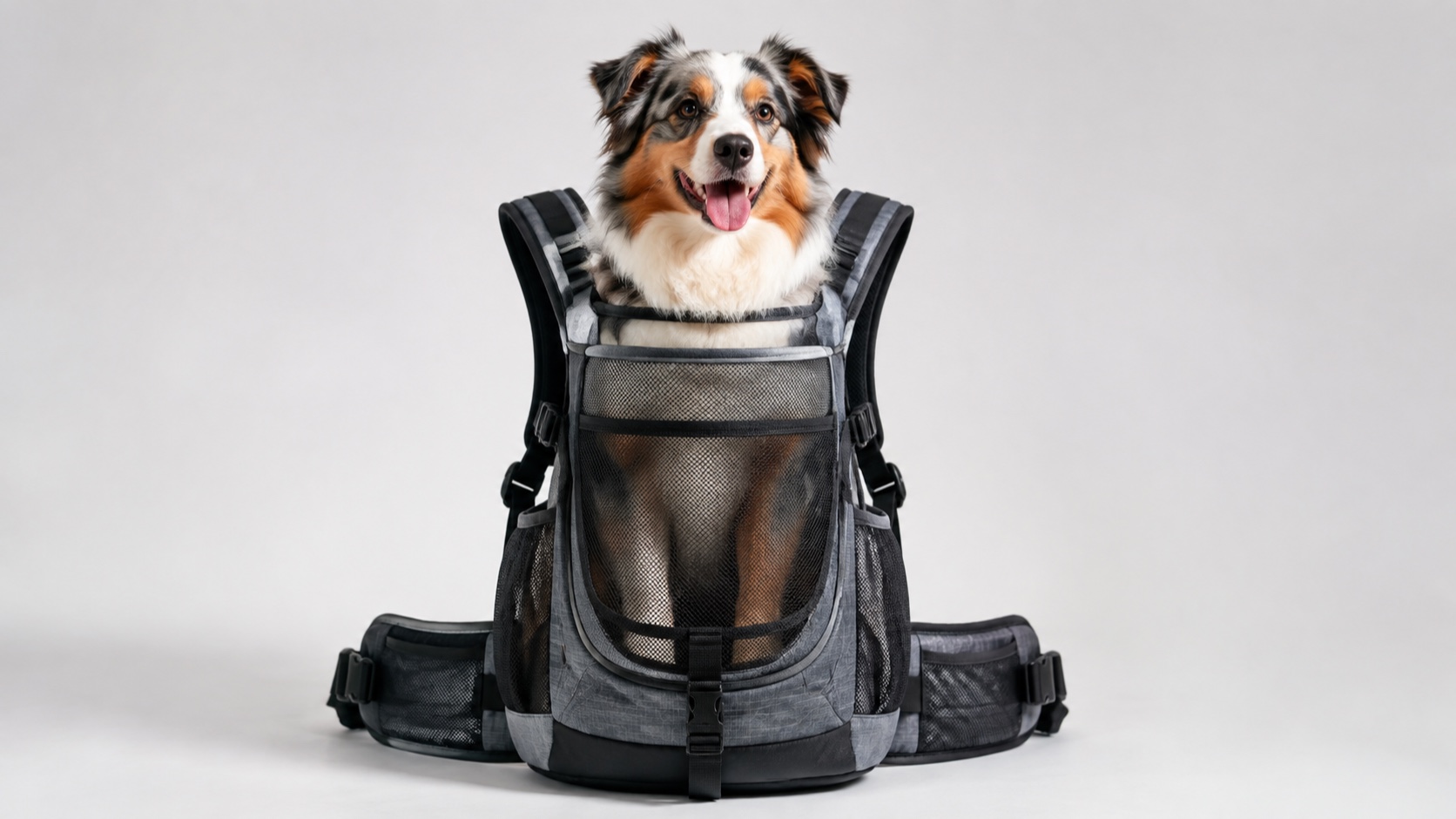
- A you-carry hiking backpack (K9 Sport Sack class).
Those are not interchangeable. A listing badge that says “airline approved” does not merge them.
We read public pages from IATA (CR1 and traveler pet pages), the FAA, TSA, USDA APHIS, and Delta and American pet-travel pages. Named examples exist as real product lines. Specs are maker-class or airline-published numbers.
We did not: fly any dog; run a “TSA/FAA check”; keep a ranked top 5; put a large breed in an 18 × 11 bag; treat a hiking backpack as a cargo kennel; invent owner quotes or “flame-resistant fabric accepted at security.”
If a claim needs a lab, a vet, a cargo agent, or a boarding pass, it is not in this article. Rules change; re-check size numbers on the day you book.
A general dog-and-cat carrier page covers hard vs soft. A small-dog cabin page is the right URL if the dog actually fits under a seat. This page is the large-dog fork: most of you should not be shopping a backpack.
Soft backpacks on this URL (what they actually are)
The seven cards below are real listings. They are not large-breed cabin packs. We keep them because this URL already sells them and the cards must stay. Read each as a carry tool — wheels through a terminal, a long-backed small dog, an expandable cat pack — then go to cargo or car for the flight.
1. EliteField Deluxe Rolling Backpack Dog & Cat Carrier (2-Year Warranty)
Best for: rolling a small-to-medium pet through a long terminal, not stuffing a large breed under a seat.
Wheels plus backpack straps. Two-year warranty on the listing. Bulkier than a pure soft tote — wheels add height that fights under-seat stow. Use it as a rolling shuttle if the pet already fits the maker’s weight band. Do not buy it because the slug says “large breeds.”
2. ETIAL Dachshund Carrier Backpack Long Body Ergonomic Dog Travel Bag
Best for: long-backed small dogs (dachshund class), not a large-breed cabin plan.
The long-body cut is the only honest reason this SKU is on a travel page. It is still a backpack, not CR1 cargo hardware. $134.99 on the card.
3. PetAmi Dog Backpack Carrier Airline Approved Cat Pet Puppy Bag
Best for: a cheap fold-flat bag for a puppy or small pet that already fits the 18 × 11 class.
4. Little Chonk Maxine One Dog Backpack Carrier for Medium Dogs (Gray)
Best for: a hiking-style pack for a medium dog you can actually carry.
$125.00. Heavier than mesh-only bags. Trail shuttle, not under-seat, not CR1. If the dog is a large breed adult, you are past this pack’s job.
5. Lekebobor Extra Large Cat Backpack Carrier Expandable Pet Carrier
Best for: expandable mesh for a cat or small dog, not a 70 lb cabin pet.
$43.19. Expansion helps layovers on the ground. Fully expanded it will not go under a seat. That is the point.
6. COVONO Expandable Cat Carrier Backpack
Best for: mesh-heavy ventilation for a cat, same cabin limits as every other soft pack.
$59.99. Expansion and zippers are the owner-theme trade-off. Not a cargo kennel.
7. Sherpa 2-in-1 Medium Pet Backpack & Carrier
Best for: a convertible medium / small Sherpa — the brand people confuse with large-breed cabin.
Sherpa’s own FAQ defines “airline approved” as the company’s checklist, not a letter from Delta. Seat-belt straps on Sherpa bags are not crash-tested. This is a small-pet cabin-class object. It is the counter-example on purpose.
Comparison: backpack cards vs the job (not a ranking)
| Product | Honest job | Cabin for large breed? | Card price |
|---|---|---|---|
| EliteField rolling | Terminal wheels, small/medium | No | $62.99 |
| ETIAL long body | Long-backed small dog | No | $134.99 |
| PetAmi | Budget small/puppy tote | No | $39.99 |
| Little Chonk | You-carry medium | No | $125.00 |
| Lekebobor XL expand | Cat / small, expanded on ground | No | $43.19 |
| COVONO expand | Cat mesh | No | $59.99 |
| Sherpa 2-in-1 | Small/medium cabin-class | No | Listing |
Want a crate, not a backpack? Petmate Vari Kennel is the cargo-class search, not the slug query.
Trip-matrix
| Path | Object | Who it is for | Who it is not for |
|---|---|---|---|
| Cabin | Soft 18×11 class bag | Dogs that stand, sit, lie, turn inside and fit that airline’s box | Adult large breeds |
| Cargo / hold | Rigid CR1 crate, wheels off | Dogs the airline still accepts that day | Mesh backpacks |
| Car | Crash-tested crate | Most large dogs | Treating a Sherpa as a seatbelt |
Why the best dog travel carrier backpack airline approved for large breeds is a search phrase
The rest of this page is the method: cabin vs cargo vs car, IATA math, airline pages, and what “airline approved” actually means. Read it before you buy any card above for a plane.
First decision: cabin, cargo, or car
Buy the trip, then the box. A backpack does not change the legal category. It only changes how you carry the animal between the parking lot and a door that may refuse you.
1. In-cabin (under the seat)
This is the only path where you stay with the dog for the whole flight. The FAA treats an in-cabin pet container as carry-on baggage. Under 14 CFR 121.589 it must fit underneath the seat in front of you without blocking anyone’s path to the aisle, be stowed before the last passenger door closes, and stay stowed while the airplane is moving on the ground and for takeoff and landing. A flight attendant’s stowage instruction is not optional.
The practical constraint is the under-seat box on that aircraft, not a logo on a listing. Delta’s pet-travel page says the maximum kennel size is determined by the aircraft and recommends a soft-sided kennel of 18 × 11 × 11 inches because that size fits most of its fleet — not because every seat on every airplane is that size. American publishes a table: soft-sided 18 × 11 × 11 inches on all flights; hard-sided 19 × 13 × 9 inches on mainline and 16 × 12 × 8 inches on American Eagle. American also notes that some cabins and seats have no under-seat space at all (bulkheads, exit rows, and several widebody premium cabins). Check current policy for your exact flight.
United’s traveling-with-pets page has not been a reliable fetch in this research series. Confirm United’s current policy and the aircraft before you buy.
IATA’s in-cabin welfare line is stricter than a marketplace badge. The pet should be able to stand, sit erect, lie in a natural position, and turn about normally while standing. An 18 × 11 × 11 bag that forces a dog to lie flat for three hours can still be “within the airline’s published exterior box” and fail a gate agent’s “can it stand and turn?” check.
Cabin only makes sense when all of these are true:
- the dog is small enough for that airline’s under-seat box and for the maker’s own weight and length limits
- the dog can stand, sit, lie, and turn inside the bag you will actually stow
- you reserved the in-cabin pet spot (airlines cap them) and you can lift the loaded bag at security and into the under-seat space
A Chihuahua, a Yorkie, a small terrier, a cat — those are cabin animals on a good day. An adult Labrador, Golden Retriever, German Shepherd, Boxer, Standard Poodle, Husky, or mixed large dog is not. “Large breed” and “18 × 11 backpack” do not belong in the same shopping sentence.
If the dog is already at the edge of cabin size, a slimmer non-backpack cabin bag is the cleaner tool. Wheels add height; see the wheeled-carrier page. A hiking backpack adds a frame and a tall silhouette that will not go under a seat.
2. Cargo / hold (checked pet or cargo shipment)
This is a different product and a different desk. IATA Live Animals Regulations Container Requirement 1 is written for dogs and cats traveling as live animals, not as a tote under a seat. Public IATA pages and the CR1 document require enough internal space for the animal to stand, sit erect, lie naturally, and turn about normally while standing. IATA publishes a sizing formula on its traveler pet page:
- A = nose to base of tail
- B = ground to elbow
- C = width at the shoulders or widest point
- D = standing height to the top of the head or ear tip, whichever is higher
- Internal length = A + ½B
- Internal width = C × 2
- Internal height = D + bedding
- Snub-nosed breeds: 10% larger container
IATA states that it does not certify, approve, or endorse any brand. A crate labeled “IATA approved” is a seller’s claim. The useful test is whether the interior matches the formula and whether the hardware matches what CR1 and that airline’s cargo desk currently want: rigid construction (not a mesh backpack), leak-proof floors, nose- and paw-proof openings, ventilation on all four sides totaling at least 16% of the four side surfaces, spacers so other freight cannot block vents, and (for cargo) food and water containers. If the crate has wheels, CR1 is explicit: they must be removed or rendered inoperable.
USDA APHIS pet-travel rules sit on top of airline policy for many U.S. and international itineraries: age, weaning, health certificates, destination paperwork. Check the APHIS pet-travel hub for the route, not a forum post.
The policy reality matters more than the crate brand. Many U.S. passenger airlines have narrowed or closed civilian “checked pet in the hold” programs and pushed larger animals to cargo divisions, exceptions, or “do not fly the pet.” Some still accept pets as checked baggage on limited routes; some accept them only as manifested cargo; some refuse whole breed groups or refuse travel above or below temperature bands. That is a current policy question on the airline’s own page. It is not a backpack question.
A hiking or “carrier backpack” is the wrong object for the hold. Soft mesh, zipper walls, and a human harness do not meet CR1. Do not buy a trail pack and hope a cargo agent will “see that it is sturdy.”
3. Car (often the honest trip)
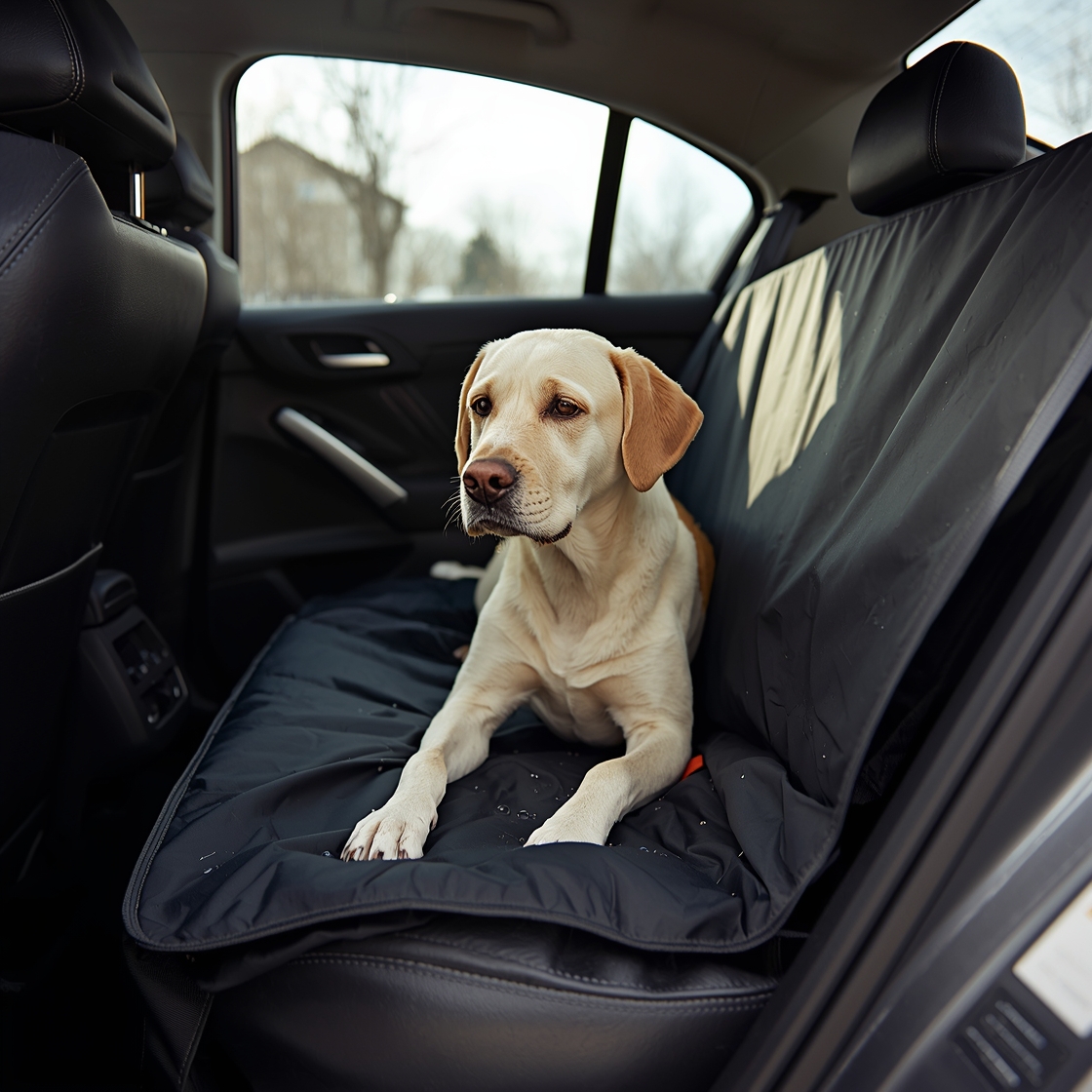
If the dog does not fit the under-seat box, and the airline will not take the breed in the hold — or you are not willing to put a living animal in a pressurized cargo compartment — the honest trip is a car, a train that actually accepts large dogs, or staying home.
A car is not “no rules.” A crash-tested crate and a road-trip carrier page exist because a loose 70-pound dog in a cabin is a projectile. Sherpa’s own FAQ on a sibling product line says a seat-belt strap on a soft bag is not crash-tested. Do not treat an airline backpack as a car restraint.
For a large dog, “I bought an airline backpack” is usually a way to postpone the real decision. Make the decision first.
“Airline approved” on a listing is marketing
There is no single federal stamp that makes a backpack legal on every flight.
When a marketplace card says “airline approved,” the honest reading is: the seller hopes the exterior is close to a common 18 × 11 × 11 soft box, or the crate looks like the plastic boxes cargo desks have seen before. That is a hint, not a boarding pass.
How to verify for a real itinerary:
- Open that airline’s official in-cabin or cargo pet page for the booking class you are actually using.
- Read the kennel size, the combined weight cap if they publish one, the breed list, and the temperature or embargo notes.
- Measure the dog (next section) and the interior of the box you will buy.
- Reserve the pet. Cabin spots are capped. Cargo wants a booking, not a surprise at the curb.
- If the agent is unsure, ask the desk that will accept the animal — ticket counter for cabin, cargo terminal for hold — with the kennel dimensions in writing. A product-page badge is not that conversation.
Do this even if a friend “flew a similar bag last year.” Policies move.
Why an 18 × 11 backpack is not a large-breed cabin pack
some listings' “compliance made simple” block said all five backpacks met typical cabin limits of roughly 18 × 11 × 11 inches and could take “large-breed travelers.” That sentence is the whole problem.
Eighteen by eleven by eleven inches is a small-dog envelope. It is the number Delta recommends and American publishes for soft-sided cabin bags because it fits under many mainline seats. It is also roughly the exterior of Sherpa Deluxe-class bags. A large-breed adult cannot stand, sit erect, lie naturally, and turn around inside that box. Many cannot even lie without curling against the walls. Weight caps printed on those bags sit in the teens or low twenties of pounds — a Boston Terrier on a good day, not a “large breed.”
If your dog is a large breed:
- Cabin backpack: almost certainly no.
- Cabin hard carrier: also no. American’s hard-sided cabin boxes are 19 × 13 × 9 (mainline) and 16 × 12 × 8 (Eagle). Those are smaller in height than the soft bag, not larger.
- Cargo crate: maybe, if the airline still accepts the breed, the weather window is open, the crate interior matches IATA’s formula, and you accept hold travel.
- Car: often yes, with a crate that is actually a car crate.
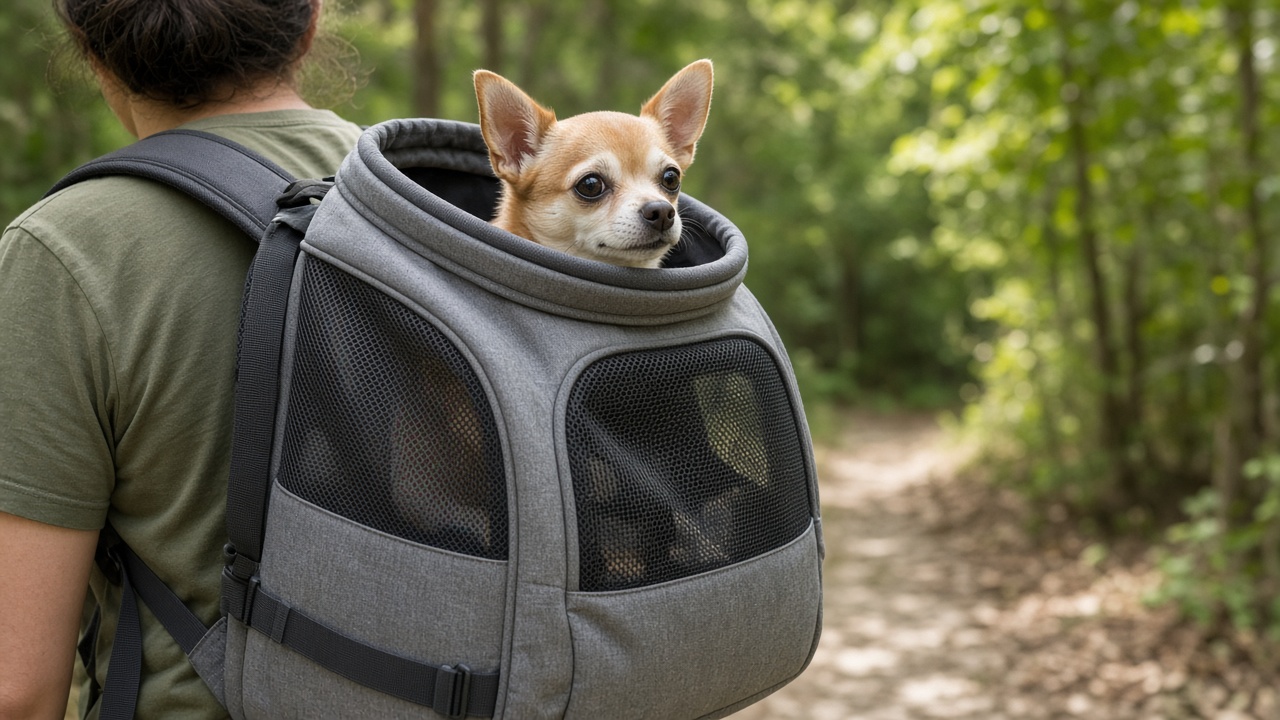
A you-carry hiking backpack can move a tired medium dog on a trail. That is a shuttle on dirt, not a cabin stow. A small-dog hiking pack is the same object at a smaller weight. Neither is an airline cargo crate.
Named examples (not a ranking)
Three real product classes, three jobs. We are not scoring them. We are naming them so the shopping query stops pointing at unnamed mesh bags.
Sherpa Original Deluxe (small-dog cabin bag — counter-example)
The job this bag is built for is small in-cabin. The exterior aims at the common 18 × 11 class box. The maker’s own weight bands live in the small-dog range (teens to low twenties of pounds — read the carton). Ventilation is mesh panels, not four-sided cargo vents. Closures are zippers, not CR1 cargo hardware. Sherpa’s public FAQ defines “airline approved” as its own checklist (enclosure, ventilation, leak-resistant bottom), not as a letter from Delta or the FAA. The same FAQ family is explicit that a seat-belt strap on a Sherpa bag is not crash-tested.
Use it only if:
- the dog already fits the maker’s size and weight for that SKU
- the dog can stand, sit, lie, and turn inside that bag
- your airline’s current soft-sided box still matches the bag as stowed
- you reserved the cabin pet
Do not use it as a large-breed cabin pack, a cargo kennel, or a car crash box. A Labrador does not become “cabin legal” because the brand name is familiar.
No buy link. This bag is the counter-example, not a large-breed pick.
Petmate Vari Kennel and Sky Kennel (hard crates for cargo-class travel)
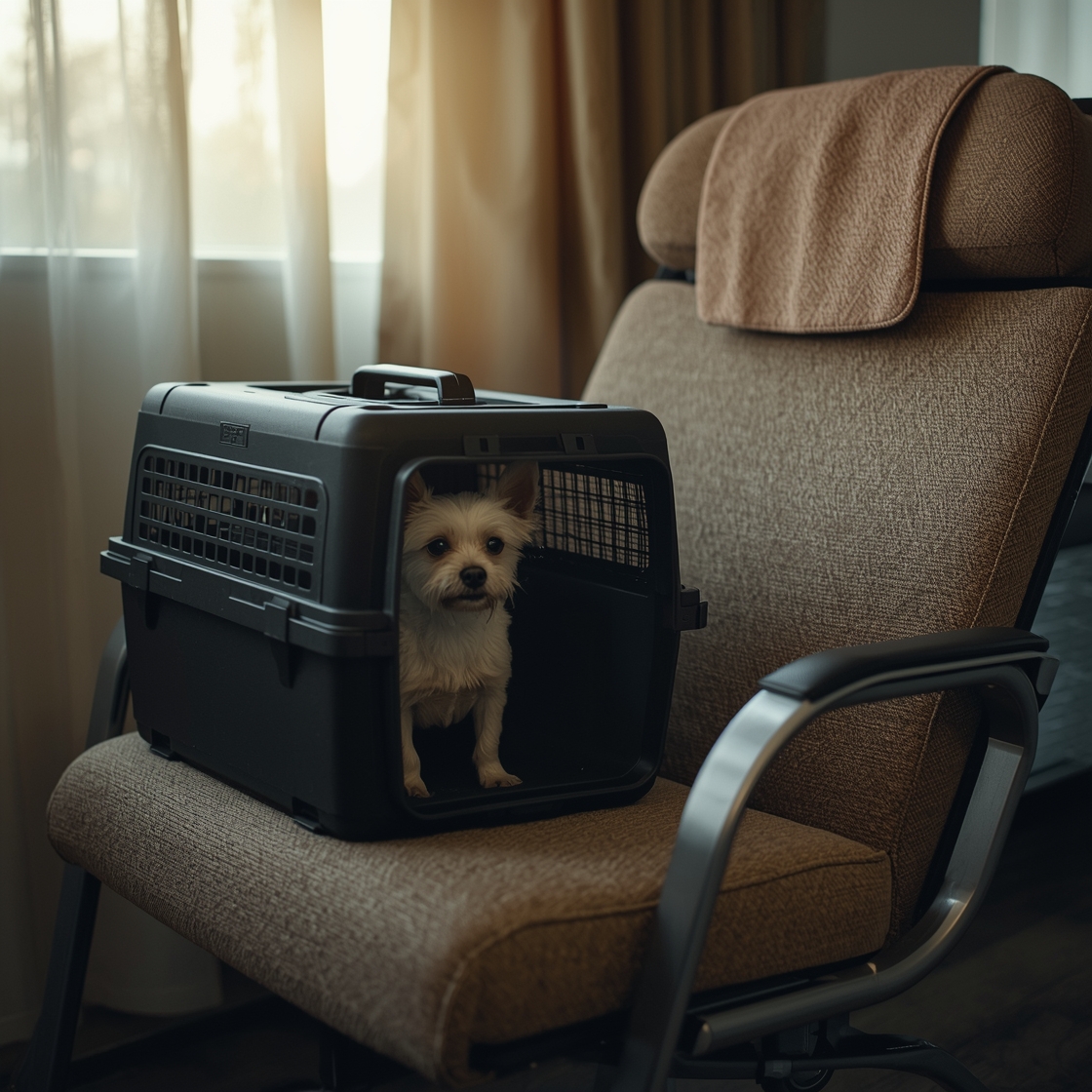
Petmate’s Vari Kennel and Sky Kennel lines are the everyday plastic two-piece crates people mean when they say “airline crate.” They are a class, not a magic stamp. IATA does not certify Petmate. Cargo desks have seen these boxes for decades because the shape is close to what CR1 describes: rigid plastic shell, metal door, fastener hardware, ventilation openings, room to buy a size that actually matches a large dog.
Sky Kennel is the sibling Petmate sells with more air-travel language on the carton (metal nuts and bolts rather than living-room latches, water cups, the usual “for aircraft” copy). Vari Kennel is the broader household-and-travel line in the same two-piece plastic family. Buy the size from the dog’s measurements, not from the number on a search tile.
What this class is for:
- hold travel if the airline or its cargo division still accepts that dog on that day
- a sturdy home or car crate if you separately confirm it is the restraint you want in a vehicle (a cargo crate is not automatically a crash-tested car crate)
- acclimation: IATA tells owners to buy the container early and let the animal live with it
What this class is not:
- an under-seat cabin bag
- a backpack
- “IATA approved” just because the search title says so
- a guarantee the airline will take a brachycephalic breed, a heat-embargo day, or a route that no longer has a checked-pet program
If the crate has wheels or a wheeled dolly, plan to remove them. CR1 says wheels must come off or be locked out. Confirm fasteners are the metal hardware the cargo desk wants, not living-room plastic snaps, and that ventilation matches the airline’s cargo notes (cargo follows the stricter CR1 four-side rule).
Measure the interior. Carton codes (100 / 200 / 300 / 400 / 500 / 700 and the names that go with them) are marketing sizes. IATA’s A + ½B length and C × 2 width are the numbers that matter. A crate that looks huge in a living room can still be short on length for a long-bodied dog, or short on height for a dog that sits with ears up.
K9 Sport Sack (you-carry backpack — not for the plane)
K9 Sport Sack makes human-worn carrier backpacks (Air, Knavigate, Kompanion, Kolossus and related models). The maker lists weight caps by model — the Knavigate, for example, is listed for dogs up to 50 lb. That is a trail-shuttle number, not a cabin number and not a cargo number.
This object is: you wear a bag, the dog rides, mesh or a roll-away window, a clip that should go on a harness, shoulder straps, sometimes a hip belt. It is the hardware on our hiking carrier-backpack page. Use it when a stretch of trail is something the dog cannot do and you can actually carry the loaded weight.
Do not use it as:
- an under-seat cabin carrier (the silhouette is too tall; the job is hiking)
- a cargo kennel (soft walls, zippers, no CR1 spacers, no four-side cargo vents of the required type)
- proof that “backpack” and “airline approved” belong in the same cart for a large breed
A 50-pound dog in a backpack on a jet bridge is a person carrying an animal, not a passenger with a stowed pet. A 70- or 90-pound large breed is past even that trail cap on most of these packs.
No buy link. Trail shuttle only. The hiking pages sell that job.
Search the crate class, not a backpack, if the trip is actually a plane:
Decision framework (do this in order)
1. Measure the dog, not the vibe
Use a tape on a standing dog, on a floor, not a guess from a harness size.
- Length: tip of nose to base of tail (IATA A).
- Elbow height: ground to elbow (B).
- Width: shoulders or widest point (C).
- Height: ground to top of head or ear tip, whichever is higher (D).
Then apply the formula if hold travel is even on the table. Add bedding to height. Add 10% for snub-nosed breeds. For cabin, the test is harsher in a different direction: the bag’s interior must clear stand / sit / lie / turn and the exterior must still fit under that aircraft’s seat. For a large breed, that pair of constraints almost never closes.
Write the four numbers down. Take them to the airline page. Take them to the crate aisle. Do not take a breed name to a “large” search filter and stop.
2. Read that airline’s page for that booking
Not a roundup. Not this article in a year. The carrier’s current pet page, for the cabin product or the cargo product you will actually use, for the airports on the ticket.
Look for:
- kennel exterior limits (cabin) or acceptance photos / CR1 language (cargo)
- combined weight of pet + kennel (some cabin pages publish one; it will not save a large dog)
- reservation process and fees
- breed restrictions, including brachycephalic or “snub-nosed” lists that sometimes include mixes
- age and health-certificate rules
- temperature embargoes and embargo months
- whether checked baggage pets still exist or you are in a cargo-only or no-pets world
If two airlines are on one ticket, you need both to accept the same box. A crate that clears one cargo desk can fail the connection.
3. Ask whether they accept the breed at all
This is the step backpack listicles skip. Many large and brachycephalic breeds are restricted or banned in the hold. Lists and heat embargoes change. We are not publishing a breed table that will rot. Open the page.
If the answer is no, the crate is irrelevant. The trip is a car, a different route, or no.
4. If cargo is open, buy a hard crate that fits the formula
Petmate Vari Kennel / Sky Kennel class, or another rigid crate that actually matches CR1 — not a mesh backpack, not a folding fabric “giant carrier,” not a soft bag with a “cargo-compatible” adjective. Confirm:
- interior vs A/B/C/D
- metal hardware the desk will accept
- door that latches and cannot be pawed open
- water and food cups if cargo asks for them
- live-animal labels and “this way up” the airline specifies
- wheels off
Acclimate for weeks. IATA and TSA both tell owners not to debut the box at the airport. Feed in it. Close it for short periods. Drive around the block with it belted or crated in the car so the motion is not new.
5. If cargo is closed or you will not use the hold, plan the car
A crash-tested crate is the car object. An airline backpack is not. Overnight stops, heat in a parked car, and leash discipline at rest areas are the real project. That is a different article on purpose.
- Five unnamed backpack types (ventilated mesh, soft-sided fleece, hybrid frame, fold-flat, heavy-duty nylon) sold as bags that “consistently pass TSA/FAA checks.” TSA/FAA do not run a backpack certification, and
- A compliance block that put large-breed travelers inside an 18 × 11 × 11 cabin envelope.
- Sherpa Original Deluxe reviewed as if an 18 × 11 × 9 bag for a dog “up to 18 lb” were a large-breed cabin pack. Eighteen pounds is not a large breed.
- PetAmi described for a “15-lb Labrador-mix puppy” as if a puppy weight were a large-breed use case.
- A selection rubric (comfort, durability, ease of use, airline compliance) written as if the editorial team had triangulated owner flights and turbulence behavior. We have no such dataset.
- An FAQ that told readers they could often use “the same backpack” for cabin and cargo. They cannot. Cabin is a soft under-seat bag. Cargo is a rigid CR1 crate. A backpack is usually neither.
- A closer that sent “large breed” shoppers to a generic Amazon query for an airline backpack.
If you already bought one of those unnamed mesh packs because this URL told you a large dog could fly in it, measure the dog and the bag before you book. The bag is not the problem. The category is.
How a real travel day looks (when the airline said yes)
This is process, not a product score.
Cabin (small dogs only — included so the contrast is clear). Reserve the pet. Bring the bag you measured. Arrive early for the special-services or ticket counter. TSA: empty bag on the belt, dog in your arms or on a leash. Stow under the seat before the door closes. Keep the dog inside for taxi, takeoff, landing, and turbulence. Do not sedate “for the flight” on a hunch (see the FAQ).
Cargo / hold (the large-dog flight path, when it exists). Book through the channel the airline names — often a cargo office, not the passenger app. Confirm drop-off location (cargo terminal is frequently a different building and a different clock than Departures). The crate should already be the dog’s familiar room. Water cups filled as instructed. Documents the destination requires (USDA APHIS and, for dogs entering the United States, CDC import rules the airlines point to). Expect the agent to look at the dog in the crate: can it stand and turn, are the fasteners metal, are the vents clear, are the wheels off. A refusal at acceptance is cheaper than a fantasy backpack at the passenger gate.
A city stroller can move a small dog through a terminal; American is explicit that pet strollers are checked at the ticket counter. A stroller is not a large-breed cabin plan either.
Frequently asked questions
Can a large-breed dog fly in the cabin in a backpack?
Almost never. The cabin path is an under-seat box on the order of 18 × 11 × 11 inches soft-sided on Delta and American, with even tighter hard-sided numbers. A large-breed adult cannot meet IATA’s stand / sit / lie / turn test inside that envelope. “Airline-approved backpack for large breeds” is a search phrase, not a product category.
Can I use a hiking backpack as a cargo crate?
No. A you-carry pack (K9 Sport Sack and the rest of that class) is a trail shuttle. CR1 wants a rigid, leak-proof, four-side-vented container with spacers and hardware a cargo desk will accept. Zippers and mesh are the wrong materials.
What does “airline approved” mean on Amazon?
It means the seller typed it. It does not mean TSA certified the bag, the FAA listed the brand, or IATA endorsed the SKU. Read the airline’s kennel rules for that flight.
Which hard crate should I buy for cargo?
Buy a rigid crate whose interior matches IATA’s A/B/C/D formula for your dog, with hardware the airline’s cargo page currently describes. Petmate Vari Kennel and Sky Kennel are the common named class. Confirm the size on the carton against the tape on the dog. We are not ranking a top 5 of crates, and
My airline used to take pets as checked baggage. Do they still?
Do not assume it. Many U.S. passenger airlines have narrowed or closed that door. Open the current page. If it is cargo-only, you are booking a cargo shipment with cargo hours and cargo acceptance. If it is closed, the honest trip is a car.
Should I sedate a large dog for the hold?
Not because a blog said so. IATA discourages tranquilizers for air travel; American cites the AVMA and will not accept sedated pets. A veterinarian who knows that dog may still make a medical decision. Get it in writing. We are not that veterinarian.
What if I only need to get through the airport, not the flight?
Then you are shopping a terminal tool — a wheeled carrier for a pet that already fits a cabin bag, or a stroller the airline will make you check — plus the actual kennel for the flight. For a large dog that is not flying, you are shopping a car crate and a leash. Do not let “airport” talk you into an 18 × 11 backpack.
What to do tomorrow
- Tape the dog. Write A, B, C, D.
- Open the airline page for the ticket you would actually buy. If two airlines, open both.
- If the dog does not fit the cabin box — it will not, if this URL is why you are here — decide cargo-if-accepted or car.
- If cargo-if-accepted, size a hard crate to the formula and call the desk that will take the animal.
- If car, size a crash-tested crate and stop reading backpack listicles.
That is the whole method. There is no honest top 5 of large-breed cabin backpacks, because the object does not exist.
Airline Under-Seat Fit: Best Dog Travel Carrier Backpack Airline Approved for Large Breeds
| Airline class | Max soft carrier | Typical weight cap | Vent panels |
|---|---|---|---|
| Economy | 18×11×11 in | 20–25 lb dog | 3+ mesh sides |
| Premium economy | 18×11×11 in | Same | Reinforced base |
| International | Check carrier IATA | Varies | Documented |
Measure dog sitting height + 2 in—collapsed ears must clear dome without neck bend.
Best Dog Travel Carrier Backpack Airline Approved for Large Breeds — Load and Strap Math
| Dog weight | Pack rated load | Hip belt required | Sternum clip |
|---|---|---|---|
| 15–20 lb | 25 lb min | Yes | Yes |
| 20–25 lb | 30 lb min | Wide pad | Yes |
| 25–30 lb | 35 lb+ | Frame stay | Mandatory |
Practice 20-minute home wears before airport—shoulder-only carry fails on 45-minute terminal walks.
Sources
- IATA Traveler’s Pet Corner (container formula, snub-nosed 10%, sedation note): https://www.iata.org/en/programs/cargo/live-animals/pets/
- IATA Live Animals Regulations Container Requirement 1, Edition 52, January 2026 (PDF; cabin exceptions; wheels removed or rendered inoperable; 16% ventilation; sizing formula; IATA does not certify brands): https://www.iata.org/contentassets/b0016da92c86449f850fe9560827bbea/pet-container-requirements.pdf
- IATA Operational Guidelines for In-Cabin Pet Transport, Edition 1, 15 July 2026 (PDF; CR1 stand/sit/lie/turn; under-seat stowage; screening; PETC): https://www.iata.org/contentassets/d7c512eb9a704ba2a8056e3186a31921/operational_guidelines_for_in_cabin_pet_transport.pdf
- FAA Flying with Pets (14 CFR 121.589 carry-on stowage): https://www.faa.gov/travelers/fly_pets
- TSA, “tips for traveling with small pets through the security checkpoint,” 14 Dec 2022: https://www.tsa.gov/news/press/releases/2022/12/14/tsa-offers-tips-traveling-small-pets-through-security-checkpoint
- TSA Dulles checkpoint pet tips, 24 Feb 2023: https://www.tsa.gov/news/press/releases/2023/02/24/tsa-tips-traveling-pets-through-security-checkpoint-washington
- Delta Pet Travel Overview (18 × 11 × 11 recommendation; 3-side / 4-side ventilation; remove pet at checkpoint): https://www.delta.com/us/en/pet-travel/overview
- American Airlines, Traveling with pets (soft/hard dimension table; strollers checked; AVMA sedation; seat limits): https://www.aa.com/i18n/travel-info/special-assistance/pets.html
- USDA APHIS pet travel hub: https://www.aphis.usda.gov/pet-travel
- USDA APHIS, pets on planes / preparing pets for air travel: https://www.aphis.usda.gov/pet-travel/pets-on-planes/preparing-pets-air-travel
- Sherpa FAQ (airline-approved definition; not crash-tested; measuring): https://sherpapet.com/faq
- K9 Sport Sack product line (you-carry hiking packs; Knavigate maker weight cap): https://www.k9sportsack.com/
IATA sizing worked example
These numbers are a desk walkthrough, not a measurement of a real dog we taped this week. They show why a backpack search fails.
| Measure | Example large mixed dog | IATA use |
|---|---|---|
| A nose to tail base | 32 in | Length = A + ½B |
| B elbow height | 10 in | ½B = 5 in → internal length 37 in |
| C shoulder width | 12 in | Width = C × 2 → 24 in |
| D standing height (ears) | 26 in | Height = D + bedding |
| Snub-nosed 10% | If applicable | Scale all interiors +10% |
An 18 × 11 × 11 exterior cabin bag cannot contain a 37 × 24 × 26 interior requirement. That is the whole article in one table. Buy a hard crate sized to the formula, or drive.
Heat, snub-nosed lists, and why the crate still loses
Cargo desks refuse dogs for reasons that have nothing to do with the backpack aisle. Temperature embargoes close holds when the forecast at origin, connection, or destination is too hot or too cold. Brachycephalic lists (Pug, Bulldog, Boston, and mixes — lists move) close the hold even when the crate is perfect. USDA APHIS and, for dogs entering the United States, CDC import rules sit on top of the airline PDF. None of that is solved by a mesh pack with “airline approved” in the title.
If the airline page says no, the honest best dog travel carrier backpack airline approved for large breeds purchase is a crash-tested car crate and a revised itinerary. Spending $125 on a Little Chonk does not reopen a closed cargo program.
International connections need both carriers to accept the same box. A crate that clears one cargo terminal can fail the next. Print both pages. Do not argue from this article at the counter — argue from the airline’s current PDF.
Acclimation is the week you skip at your cost
IATA tells owners to buy the container early. A large dog who meets a 400-size crate at 5 a.m. at the cargo building will vocalize, overheat, and fail the “can it stand and turn” look. Feed in the crate for two weeks. Close the door for short periods. Drive around the block with the crate secured so motion is not new. That is welfare process, not a product rank.
Sedation: IATA discourages tranquilizers for air travel. American cites the AVMA and will not accept sedated pets. A veterinarian who knows that dog may still write a plan. Get it in writing. We are not that veterinarian.
Documents the backpack never replaces
Cabin: reservation confirmation, pet fee receipt, and a bag you already measured against that aircraft’s published box. Some airlines want the pet visible at check-in.
Cargo: health certificate timing (often within 10 days — check APHIS and the destination, do not use this sentence as a clock), rabies, microchip if the destination requires it, and the airline’s live-animal labels. CDC dog-import rules for the United States have moved in recent years. Open CDC, not a 2022 blog.
A mesh backpack with a badge does not hold those PDFs. Print them.
Keyword FAQ add-on
Can the best dog travel carrier backpack airline approved for large breeds fit a 28 lb dog?
Only if sitting height fits that bag and the airline’s cabin weight cap. Many cabin programs sit near 20 lb combined. Twenty-eight pounds is already past a lot of under-seat contracts. Verify the carrier’s contract of carriage. A 28 lb dog is still not a “large breed” Labrador problem — it is a borderline small/medium cabin problem.
Service animals and the backpack mix-up
A trained service dog in the cabin is a different federal framework (DOT service animal rules) than a pet in a Sherpa. Do not buy a “large breed airline backpack” to improvise a service-animal cabin plan. That is a rights-and-documentation problem, not an Amazon title.
Emotional support animals lost most cabin privileges years ago. A backpack does not restore them.
The best dog travel carrier backpack airline approved for large breeds remains a search phrase. The method on this page is cabin vs cargo vs car. Use it.
One more measurement you will skip
Girth behind the ribs. A long, skinny sighthound and a barrel-chested bully mix can share a length and fail a width. IATA width is C × 2. Tape the shoulders. Write it next to A, B, D. The backpack still will not become a cargo crate.
If you only remember one sentence from this URL: the best dog travel carrier backpack airline approved for large breeds does not exist as a cabin product. Buy the trip, then the box.
Wheels on cargo crates
CR1: wheels off or locked. A rolling EliteField backpack is a terminal tool. It is not a hold crate with the wheels left on. If you buy a Vari Kennel with a dolly, the dolly stays in the car. The crate goes to the cargo desk as a box.
Print IATA’s traveler page and the airline PDF. That pair beats this article in a year.
Soft bag + cargo desk = refusal
Agents have seen the mesh-backpack-as-crate trick. It fails. Bring a rigid crate or do not book the hold. The seven backpack cards stay on this URL as carry tools. They are not a workaround for a closed cargo program or an 18 × 11 cabin box. Tape twice if the first numbers look short.