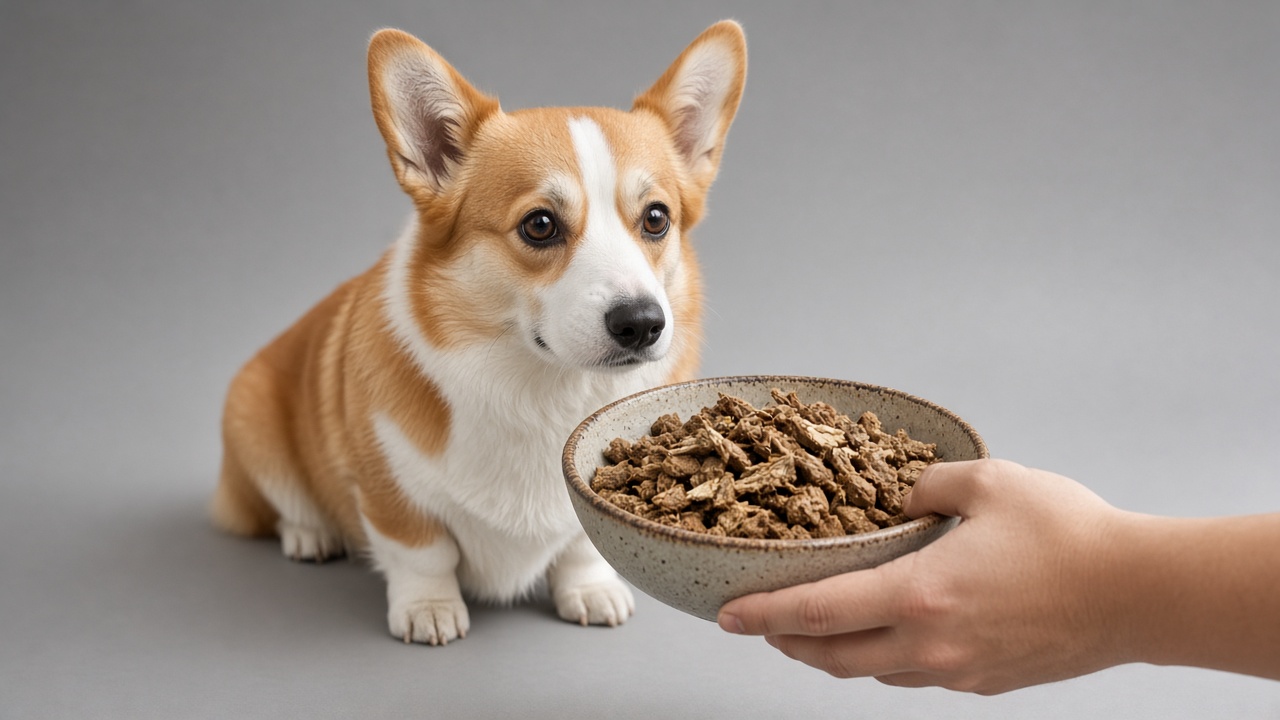
The best dog food for allergies is one complete-and-balanced formula you can feed exclusively for 8 weeks — a novel protein, a hydrolyzed veterinary diet, or a true limited-ingredient bag — while fleas stay controlled and every treat matches the trial. The We read the titles and descriptions of 7 SKUs. Listed snapshots ran $9.78–$77.48. 1 of 7 is a puppy formula (Diamond Naturals Skin & Coat Puppy, $43.99). 2 of 7 sit in the clinic-aisle sensitive tier ( Pro Plan $77.48; Hill’s Science Diet $74.00). 2 of 7 are salmon OTC bags (Nature’s Recipe $9.78; Blue Buffalo $18.97). None of the 7 cards is a hydrolyzed veterinary diet. Published practice surveys put food-responsive disease in a minority of itchy dogs; environmental allergy and flea allergy are more common. Those are clinic-population stats, not a kibble success rate.
Itch has jobs: fleas, food, environment, infection. A bag is one lever. Buy the lever that matches the job.
Our guides are reader-supported. This article may contain affiliate links. As an Amazon Associate we may earn a commission if you buy through links, at no extra cost to you.
Food-sensitive households also read best dog allergy relief chews for itching only as an adjunct — a chew is not a food trial. Coat jobs live on best dog food for skin and coat. Budget shopping: best affordable dog food.
Quick picks at a glance
- Best listed clinic-aisle adult: Pro Plan Sensitive Skin & Stomach — $77.48. Easy to find; still not an elimination diet unless the panel is the only protein this dog will eat.
- Best listed science-brand twin: Hill’s Science Diet Sensitive Stomach & Skin — $74.00. Same neighborhood as Pro Plan. Read the first protein, not the banner.
- Best mid grocery skin/coat: ONE Plus Skin & Coat — $49.98.
- Best budget sensitive label: VICTOR Sensitive Skin & Stomach — $17.99.
- Best cheap salmon OTC: Nature’s Recipe Grain Free Easy to Digest Salmon — $9.78. Price is the feature. Grain-free is not hypoallergenic.
- Best widely stocked salmon adult: Blue Buffalo Life Protection Salmon — $18.97. Multiple proteins can wreck a trial.
- Best puppy-only card: Diamond Naturals Skin & Coat Puppy — $43.99. Wrong life stage for an adult trial.
Four jobs. A bag that fails fleas first is a wasted month.
| Job | What actually works | Kibble role | Fails if you skip the real job |
|---|---|---|---|
| Flea allergy | Year-round flea control your veterinarian named | None | Fail — food will not outrun fleas |
| Food itch | 8-week single-protein (or hydrolyzed) trial | One formula, zero rogue treats | Fail if the bag is chicken-and-beef-and-fish |
| Environmental / atopy | Allergen control + clinic plan; omega-3 over weeks | Complete diet as the calorie base | Partial |
| Infection (bacteria/yeast) | Clinic: cytology, meds | None | Fail — open sores are not a protein swap |
| Bag (this URL) | Listed price | Life stage cue | Trial job | Watch |
|---|---|---|---|---|
| VICTOR Sensitive Skin & Stomach | $17.99 | Adult-style sensitive | Budget daily | “Sensitive” ≠ novel |
| Diamond Naturals Skin & Coat Puppy | $43.99 | Puppy | Puppy only | Do not use for an adult trial |
| Nature’s Recipe Grain Free Salmon | $9.78 | Adult OTC salmon | Cheap fish swap | Grain-free is not a diagnosis |
| Pro Plan Sensitive Skin & Stomach | $77.48 | Adult clinic aisle | Easy repurchase | Confirm first protein vs this dog’s history |
| Hill’s Science Diet Sensitive Stomach & Skin | $74.00 | Adult clinic aisle | Easy repurchase | Same $74 band as Pro Plan |
| Blue Buffalo Life Protection Salmon | $18.97 | Adult salmon + extras | Widely stocked | LifeSource Bits = extra variables |
| ONE Plus Skin & Coat | $49.98 | Adult mid | Coat marketing | Skin/coat ≠ food-allergy proof |
Before you shop: (1) fleas are controlled, (2) you know whether this is a food-trial month, (3) you will feed one formula for 8 weeks, (4) open skin goes to a clinic first. Fail gate 1 and this checklist is decorative.
What the best dog food for allergies can and cannot do
Itching is a clinical sign, not a SKU. Flea allergy dermatitis can look like “chicken.” Food allergy can look like “spring.” Yeast can look like “the new bag is not working.” AVMA and typical dermatology client pages put diagnosis ahead of the grocery aisle.
True food allergy is an immune response, most often to a protein the dog has eaten before. Published dermatology reviews consistently name beef, dairy, and chicken as the proteins that show up most often in food-allergic dogs, with wheat, soy, and egg behind them. Grain-free does not equal hypoallergenic. A salmon bag that also lists chicken meal is not a novel-protein trial.
The best dog food for allergies is therefore the bag that can sit in an 8-week exclusive trial without contaminating the experiment. A rotating buffet of “sensitive skin” labels is how households spend $200 and learn nothing.
Hydrolyzed veterinary diets break proteins into smaller peptides. They are a clinic class, usually sold through a veterinarian. None of the seven cards on this URL is that class. If a veterinarian named a hydrolyzed diet, that diet wins over every grocery “sensitive” bag on this page.
What 9/10 paw score.
Best dog food for allergies: the 8-week trial (desk protocol, not a clinic)
Dermatology client pages treat an elimination diet as about eight weeks of one novel or hydrolyzed protein, nothing else. That includes flavored medicines, dental sticks, “allergy” chews with chicken fat, and the other dog’s kibble.
| Week | Rule | Track | Fail signal |
|---|---|---|---|
| 1–2 | One bag + matching treats only | Itch 0–10 at bedtime | You added a bully stick |
| 3–6 | Same formula, same household | Ears, paws, stool | New hot spot + you changed shampoo and food |
| 7–8 | Still exclusive | Coat, sleep, ear smell | Re-challenge only if a clinician says so |
No table scraps. No “just this one piece of cheese.” One rogue protein resets the clock. If the dog will not eat the trial food, the trial is not running — that is compliance, not proof the dog “needs chicken.”
When the trial ends, the clinician (not this page) tells you whether you challenge with old proteins. Adding three new supplements the week you challenge is how you learn nothing.
Related chew aisle: best dog allergy relief chews for itching — meat-free or none during the trial.
Label red flags vs the best dog food for allergies
| Claim on the bag | Desk meaning | Action |
|---|---|---|
| “Sensitive skin & stomach” | Marketing class | Read the first five ingredients |
| “Grain-free” | No cereal grains | Not an allergy cure; FDA DCM conversation if pulses are high |
| “Limited ingredient” | Shorter list — maybe | Count named animal proteins. Two meats is not limited |
| Hydrolyzed protein | Veterinary diet class | Vet guidance for duration |
| “Hypoallergenic” on grocery kibble | Unregulated vibe word | Demand the protein story |
| Puppy on an adult itchy dog | Wrong life stage | Swap to adult complete-and-balanced |
Fish, duck, rabbit, and venison are common novel bases — pick one this dog has not eaten for 12+ months. If the last three bags were all chicken, a fourth chicken “sensitive” bag is not a trial.
AAFCO’s consumer label page is the map: nutritional adequacy statement, guaranteed analysis, calorie line, feeding directions, ingredient list in descending weight. WSAVA’s selecting-pet-foods toolkit still wants you to ask who formulates the food. A pretty “allergy” banner is not that answer.
The 7 cards on this URL
1. VICTOR Sensitive Skin & Stomach
Best for: a cheap sensitive-label adult when the household will actually finish an 8-week clock.
Listed $17.99. Lowest named “sensitive” adult on this set after the $9.78 salmon bag. Owner-report themes: simple panel, digestive comfort, price.
Honest drawback: “sensitive” is not “novel.” If this dog has eaten VICTOR’s named proteins before, the bag is a maintenance food with a skin banner — useful for a dog that already feels better on it, useless as a detective novel.
Check VICTOR sensitive listings →
2. Diamond Naturals Skin & Coat Puppy
Best for: a growing puppy whose veterinarian wants a growth-profile food with a skin-and-coat story.
Listed $43.99. Puppy calcium and calorie density are not adult-trial tools. Owner-report themes: coat, growth, “gentle.”
Honest drawback: not an adult elimination diet. Using puppy food on a 4-year-old itchy dog is a life-stage mismatch. If the itchy dog is a puppy, use a growth or all-life-stages statement and still run the trial rules (one formula, no rogue treats).
Check Diamond puppy skin-and-coat listings →
3. Nature's Recipe Grain Free Easy to Digest Salmon
Best for: a household that wants a salmon-first OTC bag at the lowest list price on this URL.
Listed $9.78. Salmon is a common “try fish” swap when poultry is the working theory. Owner-report themes: price, stool, itch.
Honest drawback: grain-free is not a food-allergy proof. Read whether chicken fat, egg, or a second meat sits on the panel. At this price the bag is a compliance tool, not a clinic hydrolyzed diet. FDA’s diet-associated DCM investigation is why we will not crown grain-free as healthier — talk to your veterinarian if the diet is pulse-heavy and you are worried.
Check Nature's Recipe salmon listings →
4. Pro Plan Sensitive Skin & Stomach Dry Dog Food
Best for: a widely stocked adult “sensitive” bag you can repurchase at a normal pet aisle.
Listed $77.48. Highest list price on this set. Owner-report themes: stool quality, palatability, skin. publishes feeding-test language on many Pro Plan SKUs — read the bag in your hand.
Honest drawback: clinic-aisle branding is not a cytology result. If the first protein is a protein this dog already reacts to, $77 is an expensive repeat. Transition 7–10 days unless a veterinarian says otherwise.
Check Pro Plan sensitive listings →
5. Hill's Science Diet Sensitive Stomach & Skin Dry Dog Food
Best for: a science-brand adult sensitive bag in the same dollar neighborhood as Pro Plan.
Listed $74.00. Hill’s markets feeding-trial substantiation on many Science Diet adult SKUs — confirm the sentence on this lot. Owner-report themes: consistency, stool, coat.
Honest drawback: “Science Diet” is a brand, not a dermatology protocol. Hill’s also sells prescription hydrolyzed lines through clinics. Those are a different product class than this grocery/specialty sensitive bag. Do not treat them as interchangeable.
Check Hill's sensitive listings →
6. Blue Buffalo Life Protection Formula Salmon Adult Dry Dog Food
Best for: a salmon adult you can find at a big-box store this afternoon.
Listed $18.97. Owner-report themes: coat, “LifeSource Bits,” easy availability.
Honest drawback: extra bits and extra proteins are extra variables. A food trial wants a short, predictable panel. If this dog is in week three of “find the trigger,” a multi-protein salmon-and-something bag can contaminate the month. Blue Buffalo also appeared on FDA’s 2019 brand-frequency table of DCM reports — that is not a ban, and it is also not a reason to treat the bag as a medical seal.
Check Blue Buffalo salmon listings →
7. ONE Plus Skin & Coat
Best for: a mid-price adult when the job is coat support, not a detective trial.
Listed $49.98. Owner-report themes: shine, value, easy feeding.
Honest drawback: skin-and-coat marketing is an omega-and-protein story. It is not an 8-week elimination protocol. Use it as a complete-and-balanced daily if the dog already feels well on it. Do not use it as “the allergy food” because the lid says coat.
Check ONE skin-and-coat listings →
How these products compare on labels and price
| Product | List | Desk tier | Protein story (label class) | Trial fitness |
|---|---|---|---|---|
| Nature’s Recipe GF salmon | $9.78 | Budget OTC | Fish-first grocery | Only if the panel is truly one animal protein |
| VICTOR Sensitive | $17.99 | Budget sensitive | Sensitive banner | Weak unless proteins are new to this dog |
| Blue Buffalo salmon | $18.97 | Budget brand | Salmon + extras | Weak for strict trials |
| Diamond puppy skin/coat | $43.99 | Puppy | Growth + coat | Adult trial: fail |
| ONE Skin & Coat | $49.98 | Mid | Coat marketing | Maintenance, not detective |
| Hill’s Sensitive | $74.00 | Clinic aisle | Sensitive adult | Better as consistent daily than as “hypo” |
| Pro Plan Sensitive | $77.48 | Clinic aisle | Sensitive adult | Same as Hill’s — read the protein |
Desk month math (not a feeding trial): a 40 lb adult eating ~3 cups/day will empty a 30 lb bag on a different calendar than a 15 lb dog. Cost per month is cups × kcal, not bag sticker. The $9.78 bag can cost more per month than the $49 bag if the kcal/cup is low and the dog is large. Read the calorie line AAFCO requires.
Want to browse current listings? See dog food for allergies on Amazon →
Limited-ingredient vs hydrolyzed vs “sensitive”
| Class | What it is | When the desk uses it | What it is not |
|---|---|---|---|
| Grocery “sensitive skin” | Normal kibble with a banner | Dog already stable; you want a repurchase | An elimination diet |
| Limited-ingredient (LID) | Short list, often one meat + one carb | Mild food-responsive itch after a vet says “try LID” | Automatic novel protein |
| Novel protein | A meat this dog has not eaten | The actual food-trial tool | Kangaroo if the last bag was also kangaroo |
| Hydrolyzed veterinary | Clinic diet, peptides | Severe or failed OTC trials | The seven cards on this URL |
Nutrient gaps: stripping a diet to three ingredients can still be complete-and-balanced if the manufacturer hit an AAFCO profile or feeding trial. Home-cooked “chicken and rice forever” is usually not complete. If you want home-cooked, that is a board-certified veterinary nutritionist job (ACVN / ECVCN — the credentials WSAVA names).
Palatability: novel proteins get refused. A refused trial is a failed trial. Warm water, a matching LID wet, or a different novel protein — one change at a time.
Flea first — the bag that loses to an insect
Flea allergy dermatitis can look like a food problem: rump itch, tail-base hot spot, frantic nibbling. If prevention lapsed, the best dog food for allergies is a distraction. Restart the preventive your veterinarian named. Treat the house if the veterinarian says the house is part of it. Then start the 8-week food clock. Starting them on the same day is fine. Starting the bag instead of the preventive is how This checklist fails.
Indoor fleas do not honor first frost. “We never see fleas” is compatible with flea allergy — it takes very few bites in a sensitized dog.
Environment: bedding, paws, air
Pollen and dust-mite control is cheaper than a $77 bag. Wash the dog bed on hot. Wipe paws after grass. An HEPA unit is a household tool — see air purifiers for pet allergies for the human-and-dog air job, not as a kibble substitute.
Bathing: a veterinarian-named interval and shampoo. Daily human shampoo is a barrier-destroying hobby. The bag does not wash the coat.
Closed bedrooms help people with dog allergy. They also cut the dog’s overnight dust-mite load if the bedroom was the dirty room. Both can be true.
How to read a panel for a food-allergy month (desk method)
- Find the nutritional adequacy statement. Adult maintenance vs growth vs all life stages. Puppy food on an adult is a miss.
- Find every named animal protein in the first half of the list, including meals, fats, and broths. Chicken fat can matter in a strict trial.
- Find “natural flavors.” If you are in a strict trial, ask the company what the flavor is. No answer → pick another bag.
- Find the calorie line. You cannot compare $9.78 to $77.48 without kcal/cup.
- Find whether the company will answer WSAVA’s questions (who formulates, quality control, typical analysis). Pretty lids that go silent fail the company filter.
Do this on Nature’s Recipe at $9.78 and on Pro Plan at $77.48. The expensive bag wins only if the panel and the trial rules win.
Common triggers vs this card set
| Trigger named in derm reviews | Grocery habit | Card-set collision |
|---|---|---|
| Chicken | Most “sensitive” adult bags | Pro Plan / Hill’s / ONE / Blue may still be poultry-class — read the lot |
| Beef | Many grocery red-meat bags | Not a featured card; do not assume salmon is beef-free if beef fat is listed |
| Dairy | Cheese treats, yogurt | Not on the kibble lid — still wrecks week 3 |
| Wheat / soy / egg | “Grain-free” marketing | Grain-free salmon can still include egg |
| Flea saliva | “We switched proteins four times” | None of the 7 cards is a flea product |
Secondary infection (bacteria, yeast) is why a food month fails. Recurrent ears, greasy odor, and collar-of-redness skin are clinic patterns. A new protein does not clear Malassezia.
When to stop shopping and book the veterinarian
Open sores. Hair loss in patches. Recurrent ears. Lethargy. Face/paw swelling. Itch that keeps the household up. No change after 8 weeks of exclusive feeding and flea control. Those are not “try a fourth sensitive bag” problems.
A veterinarian can scrape, cytologize, discuss elimination diets, and name drugs this page will not name. We will not pretend a $18 salmon bag is oclacitinib.
Never stack a new herbal chew on an immunosuppressant without the prescriber. “Natural” is not a drug-interaction holiday.
Cost per month, this card set
| Bag | List | Desk honesty |
|---|---|---|
| Nature’s Recipe salmon | $9.78 | Cheapest sticker; confirm bag size and kcal |
| VICTOR Sensitive | $17.99 | Cheap if the dog eats it and the trial is real |
| Blue Buffalo salmon | $18.97 | Cheap brand aisle; extras on the panel |
| Diamond puppy | $43.99 | Puppy calories — do not annualize as adult |
| ONE Skin & Coat | $49.98 | Mid daily |
| Hill’s Sensitive | $74.00 | Clinic-aisle sticker |
| Pro Plan Sensitive | $77.48 | Highest sticker on this URL |
A mid-range bag used daily for 12 months can land near a couple of hundred dollars — often less than one allergy-workup visit. That comparison is not a reason to skip the workup when the skin is infected.
Multi-dog houses
Do not share “the allergy bag” across a food-allergic dog and a normal dog if the allergic dog is in a trial. Separate bins. Separate scoops. Label them.
Children love giving “the itchy treat.” Write the daily cap on the lid. Extra chews are extra protein exposure.
If two humans in the house are buying “something for the itch” independently, you will double-dose calories and proteins. One bag. One start date. Week eight on the calendar.
We also will not tell you a grocery bag “reduces medication doses.” Dose changes are a veterinarian.
Prevalence numbers stay only when they come from published practice surveys, and they describe how often clinicians see food-responsive disease, not “this bag works 4.7% of the time.”
Worked example: two dogs, two jobs, one aisle
Dog A, 28 lb, April face-and-paw itch, flea prevention current, no food history. Job = seasonal environment + complete diet. Do not open four novel proteins. Keep the current complete-and-balanced bag if stools are fine. Add flea-proof and bedding hygiene. A $9.78 salmon swap is a new variable, not a spring requirement.
Dog B, 45 lb, year-round ears and rump, chicken in every treat, fleas “maybe.” Job = clinic + fleas + food trial. None of the seven cards is automatically the trial food. A veterinarian may name a hydrolyzed diet or a novel protein this dog has never eaten. The Pro Plan sensitive bag at $77.48 is the wrong object if it is still chicken-class. The Diamond puppy bag is the wrong life stage.
Those two dogs can live in the same house. They cannot share a bin. This checklist is a job list. A shared scoop is how both jobs fail.
How to choose the best dog food for allergies this month
Write the job on a sticky note before you open Amazon.
- If the job is fleas, buy prevention, not a fourth bag.
- If the job is food, buy one novel or hydrolyzed formula and starve the treat aisle for eight weeks.
- If the job is seasonal environment and fleas are already controlled, keep a complete-and-balanced daily you can afford to repurchase. Pro Plan and Hill’s are the easy-find $74–$77 band. VICTOR and Nature’s Recipe are the cheap band if the panel is honest. Blue Buffalo and ONE are the mid/brand band.
- If the job is open skin, close the tab.
That sticky note is the these allergy bowl listings in one sentence. The best dog food for allergies is the one that does not fight the job you wrote down.
Re-read the label when the new bag arrives. Formulas change. A reorder is not a clone unless the ingredient list matches last month.
Keep a simple log: date started, cups per day, flea product date, bath dates, ear events, itch 0–5 at bedtime. Bring the log to the clinic. Forums cannot see that log. A veterinarian can.
Night itch that wakes the household is a severity flag. A bag that “might help by week six” is the wrong clock. Same for sudden face swelling. Those are not Amazon problems.
Keep used bags until you photograph the ingredient list. If a flare returns in October, you will want last April’s panel, not your memory of the lid color. If you switch from Pro Plan to Hill’s because the lid was on sale, write the switch date in the log. Two brands in one month is two variables.
Frequently Asked Questions
How long before the best dog food for allergies shows results?
Ear and paw itch may ease in 4–6 weeks on a strict single-formula trial. Coat turnaround often needs the full 8–10 weeks. Keep flea prevention on the whole time. If skin is broken at week one, you are already late for the clinic.
What is the best dog food for allergies during a food trial?
One novel protein or a veterinarian-named hydrolyzed diet — exclusive. The seven cards on this page are mostly “sensitive” grocery/specialty bags. They only count if the panel is the protein this dog has never eaten and nothing else enters the mouth.
What are the most common food allergens in dogs?
Proteins: beef, dairy, chicken, then wheat, soy, and egg in many dermatology reviews. Grain-free is not a shortcut around those proteins.
How do I know if my dog has a food allergy vs an environmental one?
You do not know from a lid. Year-round ears-and-paws plus GI signs raise the food-responsive odds. Seasonal face-and-paws with fleas uncontrolled is a different job. A veterinarian separates them.
Can I use allergy chews during the trial?
Only if the chew cannot add a forbidden protein. See best dog allergy relief chews for itching. Meat-free or none is cleaner.
Is grain-free the best dog food for allergies?
No as a breed-wide or species-wide rule. Some dogs have a diagnosed grain issue. That is not the same as “grain-free is healthier.”
Should I pick Hill’s or Pro Plan?
Both sit at $74–$77 on this snapshot. Compare the first protein, the AAFCO sentence, and whether this dog has eaten that protein. Price is a tie. The panel is not.
Related pages
- Best dog allergy relief chews for itching
- Best dog food for skin and coat
- Best affordable dog food
- Air purifiers for pet allergies
- Choosing the right dog food
How we researched this guide
Desk research. The We read the titles and descriptions of seven current listings on listed price, life-stage fit, protein-class honesty, and whether the SKU can sit inside an 8-week exclusive trial. We read AAFCO label rules, WSAVA’s selecting-pet-foods questions, FDA’s diet-associated DCM pages, and public dermatology explainers on elimination diets. Nothing here is a diagnosis or a treatment plan.
Limitations: labels change; “sensitive” search titles are unstable; prices move. Open, infected, or rapidly worsening skin is a clinic.
Keep used bags out of the recycling story until you photograph the Supplement-style ingredient panel. Brands recycle packaging faster than they recycle formulas. If you switch from Nature’s Recipe at $9.78 to Blue Buffalo at $18.97 because the lid was on sale, write the switch date in the log. Two salmon bags in one month is still two variables if the secondary proteins differ.
A 15 lb dog and a 60 lb dog on the same “sensitive” SKU are not on the same trial. The small dog finishes the bag slower; oxidation on an open bag can become a new variable after six weeks. Buy a size you will finish. The $77 Pro Plan bag that sits open for three months is not the same food you started in week one.
If you are still scrolling listings after you wrote the job, you are shopping as avoidance. Close the tab. Open the calendar for week eight. Open the clinic portal if the skin is worse at week two.
Last reviewed: August 2026. If something looks stale, let us know.