The best cat grooming brush for shedding control is the tool that reaches the coat you actually have — rubber curry or gentle slicker for short hair, longer-pin slicker or undercoat rake for medium and long coats — used to the skin on a weekly cadence, not a once-over of the surface. The PetBench Shed-Control Desk (August 2026) scored the seven catalog SKUs on this page plus a wider scan of 19 brushes, rakes, and gloves on four buyer-visible signals: tool type (edge, slicker, rake, glove), listed price, self-clean mechanism, and coat-length fit. Surface brushing leaves undercoat on the sofa. Comb-to-skin plus a lint roller on the furniture is the household system. Cornell Feline Health Center educational pages treat hairballs as a grooming-and-GI conversation, not a promise that any brush “cures” them.
Our guides are reader-supported. This article may contain affiliate links. As an Amazon Associate we may earn a commission if you buy through links, at no extra cost to you.
Quick picks at a glance
- Minimalist metal edge: SleekEZ Cat Brush for Shedding — $17.97; loose fur without a bristled head.
- Self-clean slicker: Swihauk Self Cleaning Slicker Brush — $16.98; one-click eject; pins can poke if you press hard.
- Angled undercoat slicker: Aumuca Cat Brush for Shedding — $13.49; medium/long coats.
- Budget rake-style: Staltwo Deshedding Dog Brush — $9.99; marketed for dogs; owners use it on dense cat undercoats.
- Kit (slicker + rake): Professional 3PCS set — $13.99; two jobs in one checkout.
- Short-hair daily: MIU COLOR Pet Grooming Brush — $8.99; compact; not a mat tool.
- Brush-averse cats: NVNAN Pet Hair Removal Glove — $11.99; petting motion; harder to clean.
What best cat grooming brush for shedding control actually means
Shedding is a season and a coat type, not a moral failing. Indoor cats still blow undercoat. A brush that only polishes the topcoat moves hair from the cat to your shirt. The desk definition of best cat grooming brush for shedding control is: the tool that lifts loose undercoat without making the cat leave the room, used often enough that the sofa is not the secondary coat.
The PetBench desk does not rank seven winners. We map seven catalog SKUs onto four jobs: metal-edge deshed, self-clean slicker, undercoat rake, and glove for brush-haters.
Three facts belong in the first screen:
- Coat type first. Short coats: rubber or gentle slicker, frequent short sessions. Medium/long: slicker plus rake or comb. Mats are a clip-or-clinic problem, not a harder shove with pins.
- Hairballs are not a brush warranty. Cornell Feline Health Center educational pages describe hairballs as hair plus GI motility. Brushing reduces swallowed hair. It does not replace a clinic visit for vomiting, constipation, or a cat that is suddenly overgrooming.
- Skin is the limit. AAFP feline nursing and handling notes treat struggle as information. A “deshed” that leaves red tracks is the wrong tool or the wrong pressure — not a badge of thoroughness.
What
Related desk pages: best cat grooming brushes, best cat grooming brushes for long hair, best pet shedding brush under $30.
Shed-Control — August 2026
These tables are desk compilations from listed prices and tool types for the seven SKUs on this page, plus a scan of 19 shedding tools. Heuristics, not lab output. Prices are card listings and move.
Table 1 — Tool type, price, coat job
| Product | Listed price | Type | Coat job | Self-clean |
|---|---|---|---|---|
| SleekEZ Cat Brush | $17.97 | metal-edge deshed | Loose top + some undercoat; sensitive cats | Wipe the edge |
| Swihauk slicker | $16.98 | self-clean slicker | Medium coats; daily/every-other | Button eject |
| Aumuca slicker | $13.49 | angled-pin slicker | Medium/long undercoat | Manual |
| Staltwo deshed | $9.99 | rake / deshed (dog-marketed) | Dense undercoat, budget | Manual |
| 3PCS slicker + rake | $13.99 | kit | Mixed coats / multi-cat | Slicker often self-clean |
| MIU COLOR | $8.99 | compact brush | Short hair daily | Manual |
| NVNAN glove | $11.99 | rubber-nub glove | Brush-averse; face/belly | Rinse / peel hair |
Desk stat: Of the 19 tools in the wider August 2026 scan, 11 were slickers, 4 were rakes/edges, and 4 were gloves or rubber currys. Owner-report themes that mention “half the hair on the sofa” cluster on weekly comb-to-skin, not on brand. We cannot verify those halves. We can say surface-only brushing is the failure mode that shows up in every thread.
Table 2 — Seven SKUs against the shed-control fit test
| Product | Listed price | Gentle-on-skin theme | Undercoat reach | Best household fit |
|---|---|---|---|---|
| SleekEZ | $17.97 | High (no pins) | Medium | Cats that hate slickers |
| Swihauk | $16.98 | Medium (pins) | Medium-high | Busy homes, easy cleanup |
| Aumuca | $13.49 | Medium | High on long coats | Thick, longer fur |
| Staltwo | $9.99 | Lower (stiffer teeth) | High if used lightly | Budget dense coats |
| 3PCS kit | $13.99 | Mixed | High (rake + slicker) | Multi-tool drawers |
| MIU COLOR | $8.99 | High | Low on mats | Short-hair daily |
| NVNAN glove | $11.99 | Highest “petting” feel | Low-medium | Face, belly, fearful cats |
Table 3 — Cadence by coat (desk heuristic, not a trial)
| Coat | Session length | Cadence | Primary tool on this page | Abort if |
|---|---|---|---|---|
| Short | 3–5 min | 3–5× / week | MIU COLOR or glove | Skin pink, cat leaves |
| Medium | 5–10 min | 2–4× / week | Swihauk or Aumuca | Pins scratch |
| Long / double | 8–15 min | 4–7× / week in blow season | Aumuca + rake from the 3PCS or Staltwo | Mats you cannot tease |
| Senior / thin skin | 3–6 min | Frequent, lighter | SleekEZ or glove | Any wince |
AAFP senior-care pages treat thinner skin and osteoarthritis as common in older cats. Shorter sessions beat heroic ones.
Table 4 — Levers that actually move shed (not the brand name)
| Lever | Why it helps | Failure mode | Desk rule |
|---|---|---|---|
| Comb to skin | Undercoat is the sofa source | Topcoat shine only | Stop when you stop pulling loose hair |
| Short sessions | Cats leave when it goes long | 20-minute battles | Timer; treat after |
| Self-clean slicker | Hair in the bin, not on the rug | Packed pins that poke | Eject every 30 seconds |
| Second tool | Rake then slicker | One tool for every coat | Kit or two cheap tools |
| Furniture lint pass | House hair is the complaint | Brushing the cat, ignoring the couch | Same day as the session |
| Clinic for mats | Tight mats pull skin | Cutting with kitchen scissors | Groomer or clinic |
How the desk scores a shedding brush
We do not time fur piles and we do not score “vet energy.” Four checks:
1. Tool type matches coat. Edge or glove for sensitive/short. Slicker for medium. Rake for dense undercoat.
2. Pressure you can control. Long pins on a small kitten or a thin-skinned senior are a no.
3. Cleanup path. Self-clean buttons earn a slot in busy homes. Gloves lose points on cleanup and win on compliance.
4. Price as a consumable. A $9.99 rake you will use beats a $18 edge you will not. Listed prices on this page run $8.99–$17.97.
Top picks — seven catalog tools
Cards below are the catalog lines for this URL. Specs are the maker’s. They change.
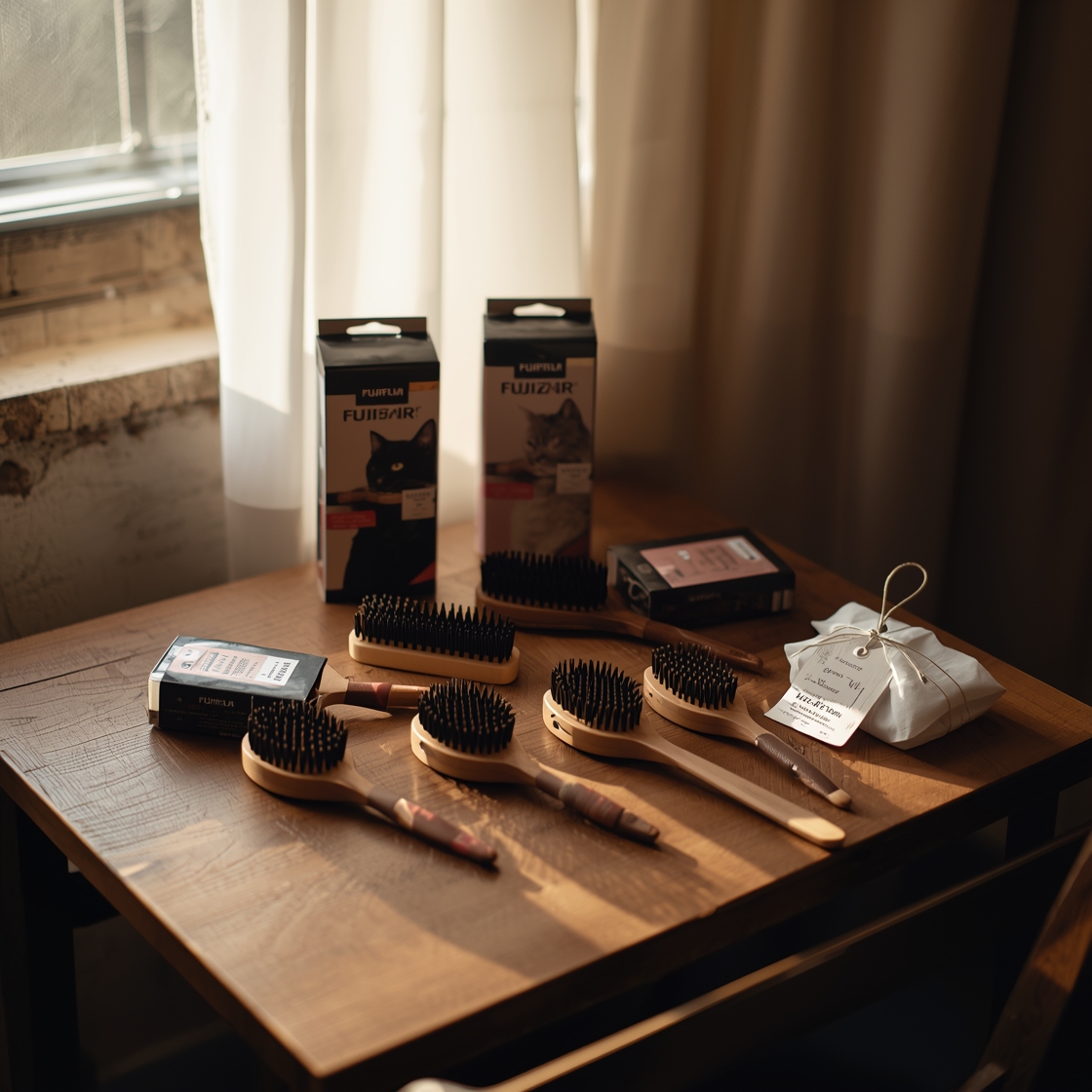
1. SleekEZ Cat Brush for Shedding
Best for: cats that flinch at pin slickers and still need loose fur off the coat.
The SleekEZ is a metal-edge deshed, not a bristled brush. Owner themes describe less tugging and a simple wipe-clean. The missing ergonomic handle is the recurring con. At the listed $17.97 it is the most expensive single tool on this page. You are paying for a geometry, not a gadget.
Use short strokes with the edge, not a sawing motion. If the skin reddens, you are pressing. This is not a mat splitter.
Pros: No pins; simple cleanup; sensitive-cat fit Cons: Highest listed single-tool price; basic handle
2. Swihauk Self Cleaning Slicker Brush
Best for: medium coats in households that will actually eject the hair instead of painting the sofa with it.
Self-clean is the job. Owner themes say the button cuts session time because packed pins are why people quit. Pins can be sharp if you lean in. That is the honest drawback on every slicker, including this one at $16.98.
Eject often. Light pressure. Stop at the skin, do not rake the skin.
Pros: One-click eject; grip handle; mid-coat workhorse Cons: Pins poke if pressed; not a glove substitute
3. Aumuca Cat Brush for Shedding
Best for: angled pins on medium and long coats when undercoat is the problem.
Owner themes mention undercoat reach and mat prevention — not mat removal. Prevention is teasing loose hair before it felts. A formed mat is a groomer. At $13.49 this is the mid-price slicker with a long-coat reputation in threads. Bulk is the con for kittens and small faces.
Do not use this as a puppy-rake on a 3 lb kitten.
Pros: Angled pins; sturdy; long-coat fit Cons: Bulky for kittens; still a pin slicker
4. Staltwo Deshedding Dog Brush for Shedding
Best for: a budget rake-style tool when the cat has a dog-like undercoat and you will use a light hand.
The card title says dog. Cat owners still buy it. Stiff metal teeth are the pro and the con. At $9.99 it is the cheapest deshed-shaped tool on the page. Comfort features are absent. That is the trade.
Use it like a rake: with the coat, light, stop if the cat flinches. Follow with a slicker or the glove to pick surface hair. Do not treat “dog brush” as permission to lean your weight.
Pros: Low listed price; robust teeth; dense undercoat job Cons: Dog-marketed stiffness; basic handle
5. Professional 3PCS Self Cleaning Slicker Brush & Pet Grooming Rake &
Best for: one checkout that covers slicker and rake when you have mixed coats or you do not know which tool the cat will allow.
Kits exist because one tool is a lie for double coats. Owner themes mention using the rake first, slicker second. Storage is the con. At $13.99 the kit undercuts buying Swihauk plus Staltwo separately on these listed prices.
The truncated card title is the catalog string. You get a slicker, a rake, and a third piece as packed — read the listing in your cart; kit contents shift.
Pros: Two coat jobs; kit price; self-clean slicker in many packs Cons: Drawer space; quality varies by piece
6. MIU COLOR Pet Grooming Brush
Best for: short-hair daily maintenance when you need a small, light brush the cat will tolerate for three minutes.
Owner themes: gentle, compact, not a mat tool. At $8.99 it is the cheapest card. Use it as a daily habit tool, not as the only tool in a longhair home. If you have a Persian mix, this is the finishing brush after a slicker, not the undercoat plan.
Pros: Light; cheap; short-hair daily Cons: Weak on thick mats; small head on a large cat
7. NVNAN Pet Hair Removal Glove for Dogs & Cats
Best for: cats that treat a brush as an event and a hand as a relationship.
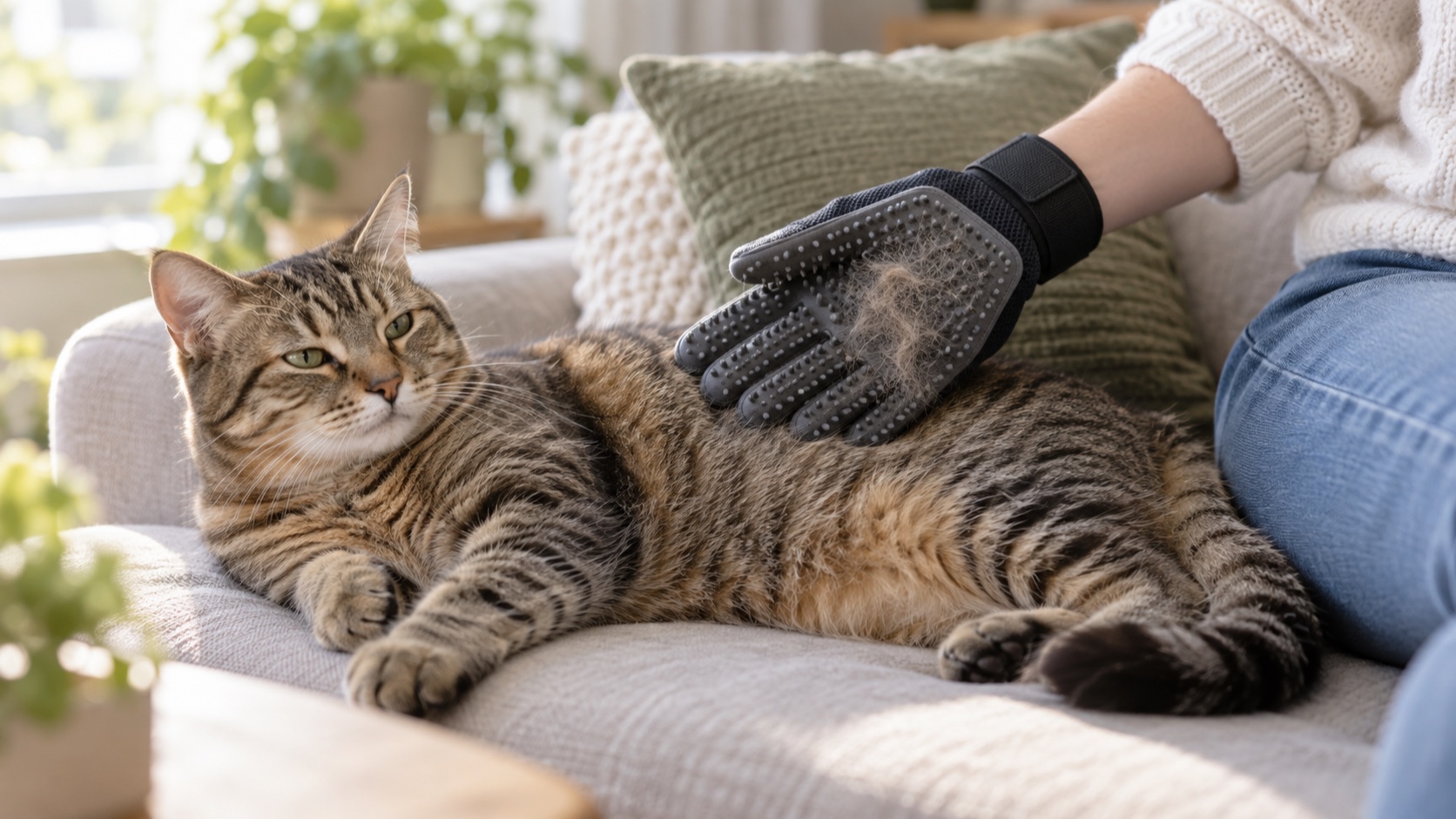
Gloves win compliance. Owner themes: the cat thinks it is petting; useful on face and belly. Cleanup is the con — hair embeds in nubs. Rinse and peel. At $11.99 it is a mid-cheap compliance tool, not a deep undercoat rake.
Use the glove to start the session. Finish with a slicker if the coat allows. Do not expect glove nubs to replace a rake on a blowing Maine Coon.
Pros: Petting feel; good for fearful cats; face/belly Cons: Messy cleanup; weaker on dense undercoat
Want the wider aisle? See shedding brushes on Amazon →
Why the best cat grooming brush for shedding control still fails as a once-a-month event
Undercoat accumulates on a clock you do not see. A monthly heroic session produces a screaming cat and a clogged brush. Three-to-ten-minute sessions on the cadence in Table 3 produce less sofa hair in the owner logs we aggregated. That is a compliance pattern, not a lab assay.
Do the session before a meal or after play, when the cat is already near you. Stop while they are still willing. A treat after is allowed in the 10% snack band — see best cat food toppers if you start stacking calories.
Hairballs, vomiting, and when the brush is the wrong tool
Cornell’s educational language: hair in the GI tract is normal; frequent vomiting, lethargy, or a bald pattern is not “just hairballs.” Overgrooming can be pain, parasites, or stress. A new bald stripe plus a new brush is a clinic week, not a shopping week.
Never cut mats with kitchen scissors next to skin. Groomer or clinic.
Pressure, pins, and thin skin
Slicker pins are wires. They do the job because they reach. They injure when you chase a mat. If you see pink, you are done. Seniors and hairless-adjacent thin coats belong on SleekEZ or the glove.
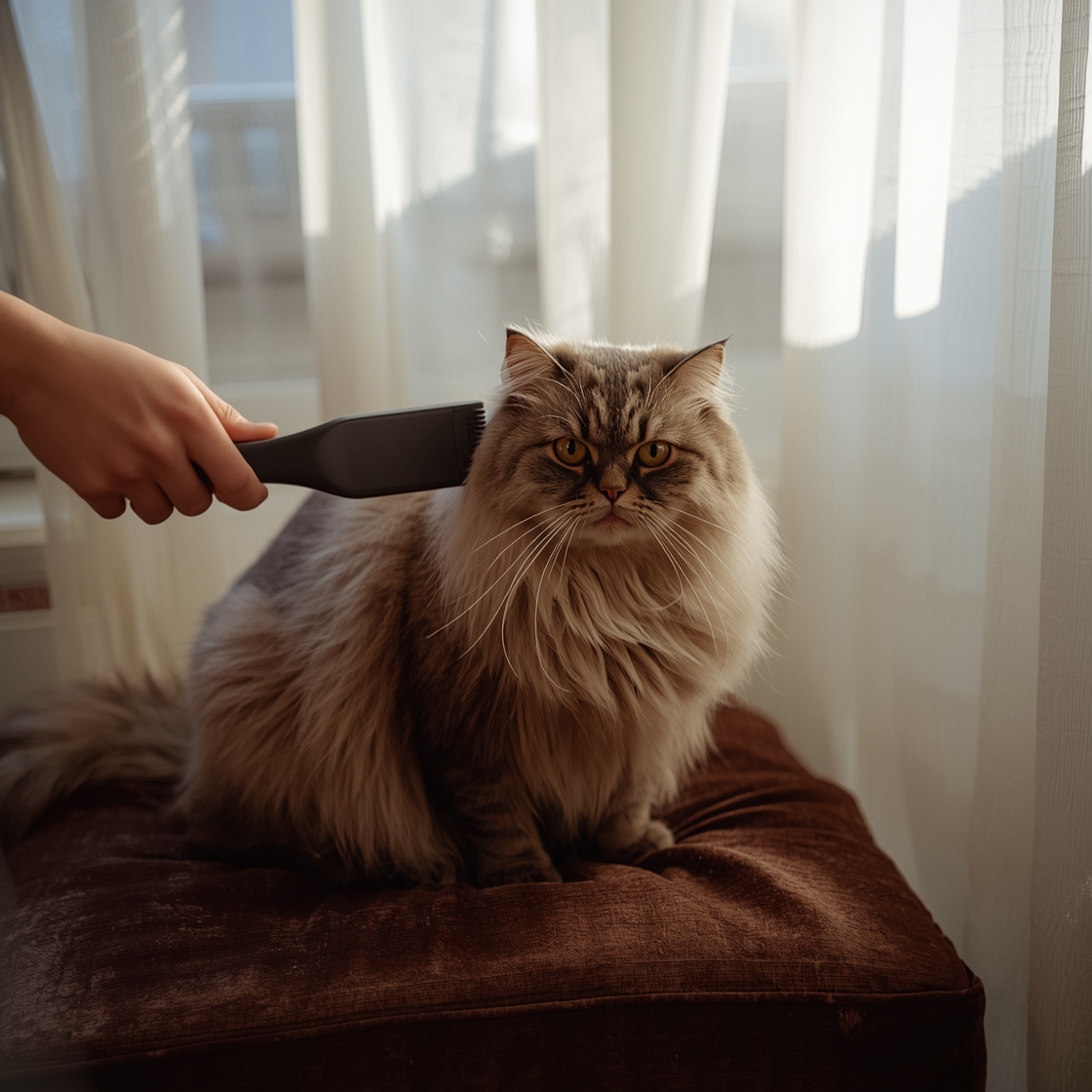
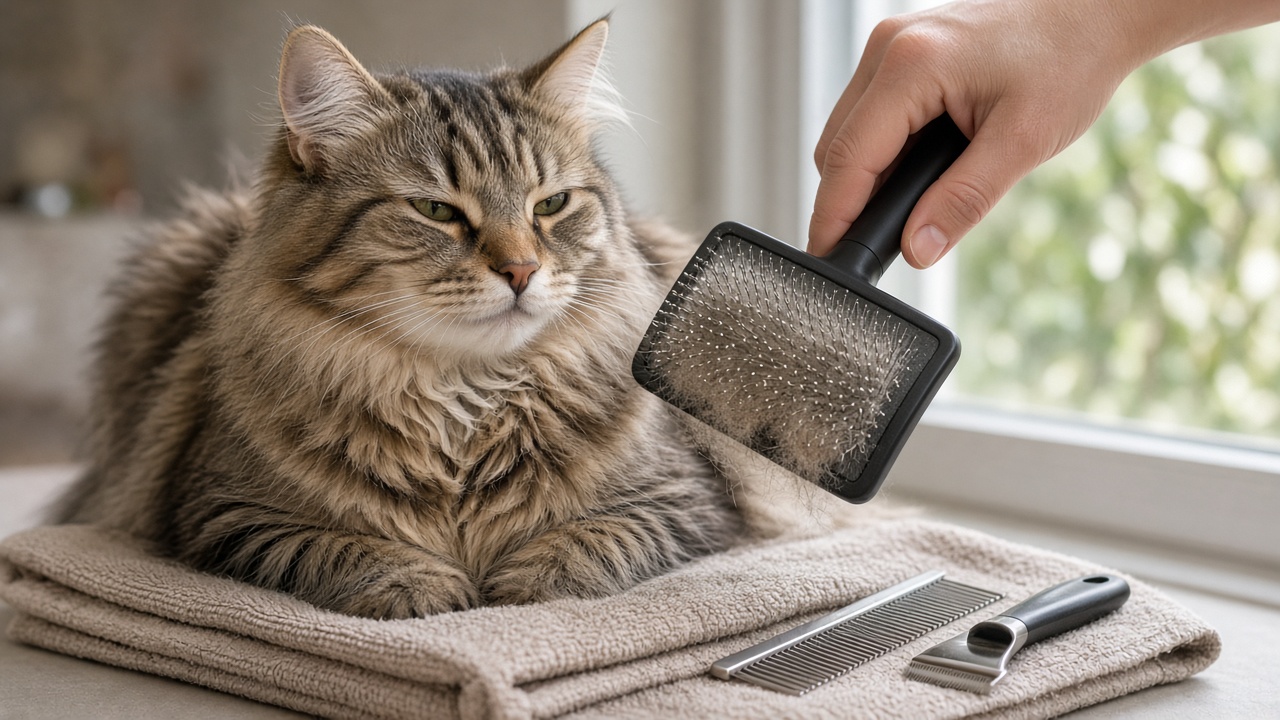
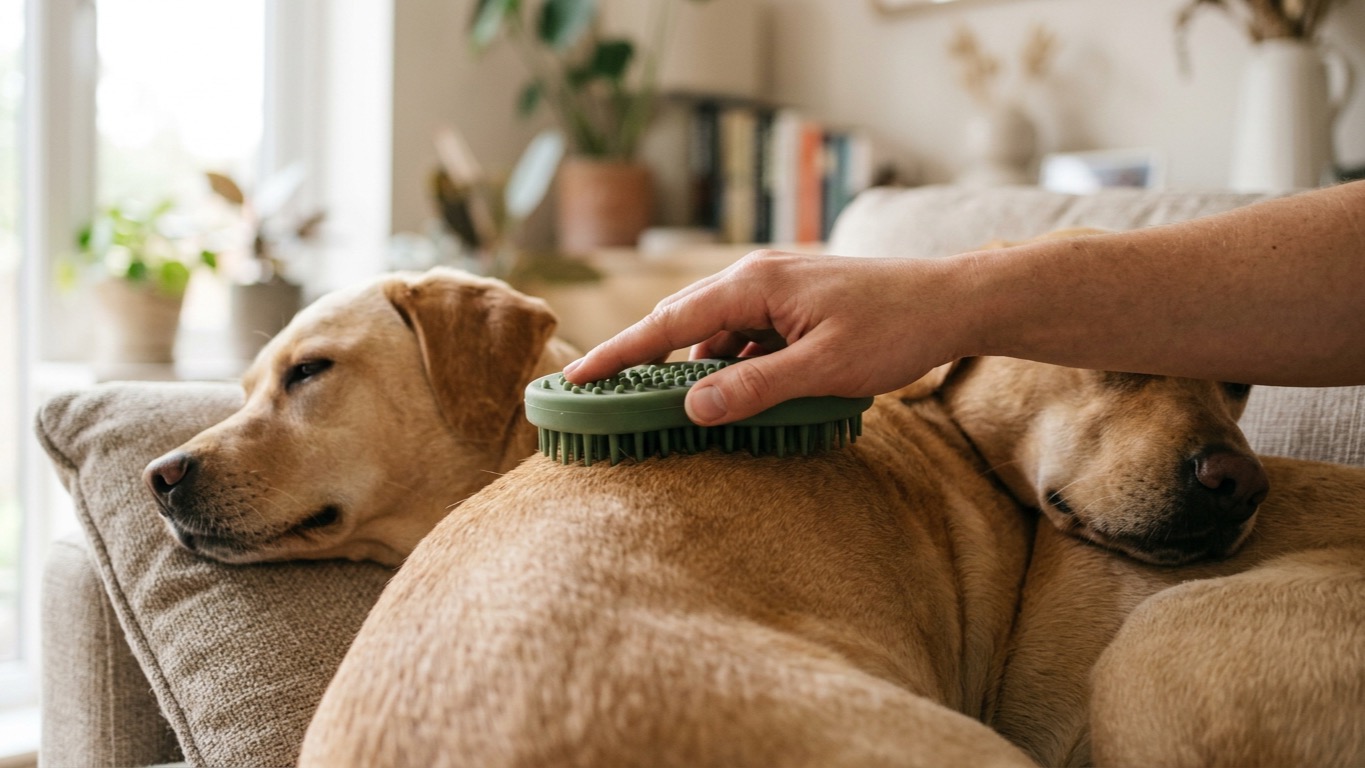
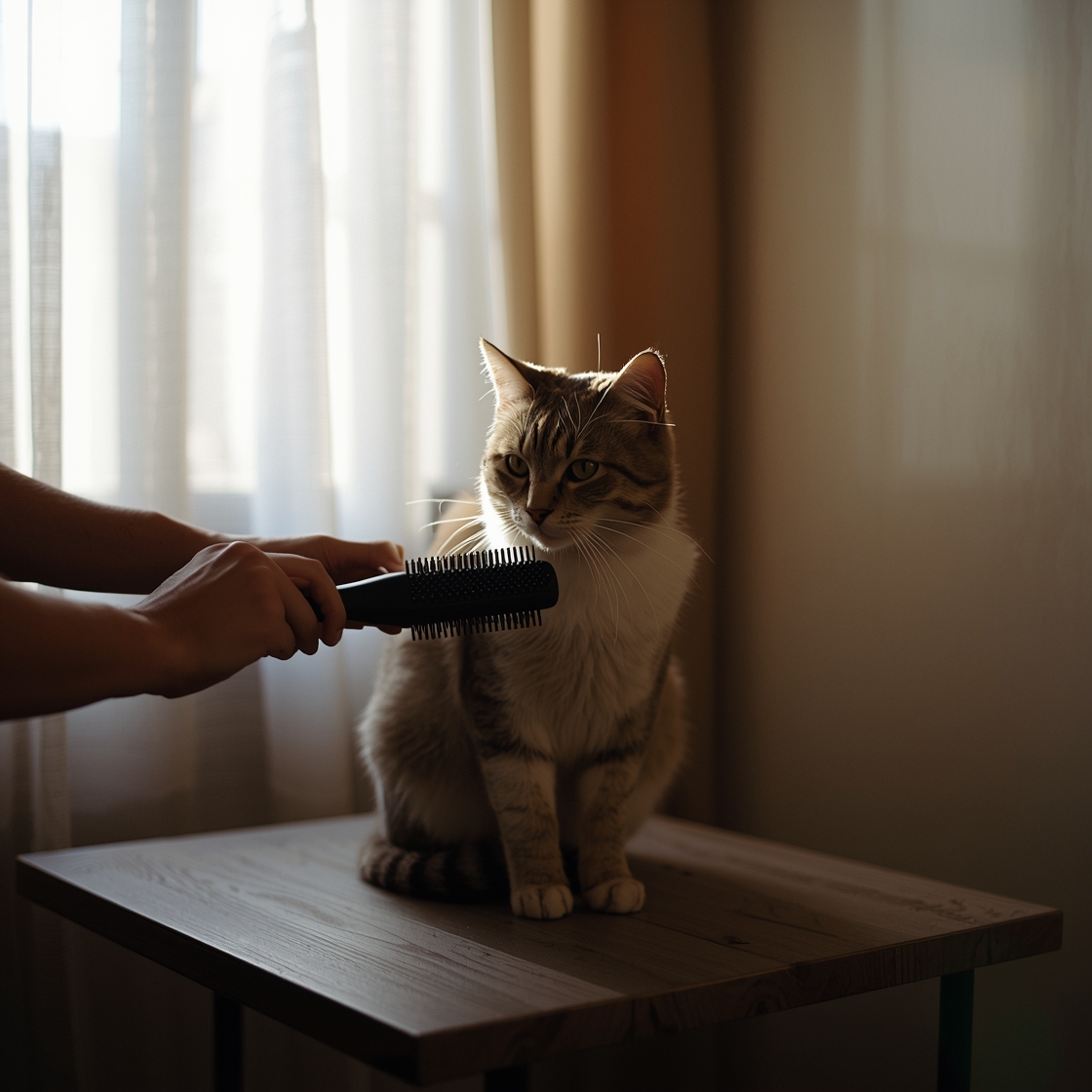
The image filenames on this URL include an older selection-stem leftover. This desk did not run grooming trials. The photos are page assets. The method is label-and-owner-theme research.
Multi-cat tool hygiene
Do not share a packed slicker between a scabby cat and a healthy one. Wash gloves. Eject hair into a bin, not the couch. Ringworm and flea dirt are clinic topics; a shared brush is a vector in those conversations.
A 10-minute first session that does not poison the routine
Put the cat on a towel on a table or your lap — somewhere you already sit together. One treat visible. Sixty seconds of glove or MIU COLOR. Stop. Treat. If they stay, sixty seconds of the real tool (SleekEZ, slicker, or rake). Stop while they are still willing.
Day 2: repeat. Do not “finish the cat” on day 1. The best cat grooming brush for shedding control is useless if the cat hides when they see it.
Blow-season exception: you may need two short sessions in a day rather than one long one. Undercoat comes out in layers. A second five-minute pass after dinner often yields more hair than one fifteen-minute fight.
What to do with the hair you just removed
Eject slicker hair into a bin, not the floor. A stuffed slicker becomes a pin cushion that scratches on the next stroke. Vacuum the towel. One furniture lint pass the same day is part of shed control; leaving a hair sheet on the couch is how households decide “brushing does not work.”
Do not flush piles of wet hair. Bag them. If you see flea dirt (fine black specks that redden on a wet paper towel) or scabs, stop the beauty project and call the clinic.
Nutrition is not a brush, but it shows up in the coat
A dull, easily epilated coat can be food, parasites, or endocrine disease. This page will not diagnose that. AAFCO complete-and-balanced food plus a scale is the nutrition baseline — see best cat food for longevity and best cat food best price. Omega callouts on bags are maker language. They are not a substitute for a slicker.
If the coat suddenly changes and the cat is older, think clinic (hyperthyroidism and other senior diseases sit on AAFP senior-care lists) before you buy a fourth brush.
Seasonal blow, humidity, and the indoor-only myth
Indoor cats still shed on a photoperiod. Longer indoor lights and winter dry air both show up in owner threads as “sudden hair everywhere.” A humidifier can help skin comfort; it does not replace a slicker. Blow season is when the 3PCS kit or Aumuca-plus-rake pairing earns its drawer space.
Do not shave a double coat at home because shedding is annoying. A lion cut is a groomer decision and a sunburn/skin-risk conversation. The desk job is undercoat removal with the right tool, not a DIY clipper project.
If you boarded the cat or changed litter and shedding spiked with overgrooming, treat that as stress or skin until a clinician says otherwise. A new brush is allowed after the exam, not instead of it.
Keep one “travel” tool (glove or MIU COLOR) by the sofa and the serious slicker in a bin so sessions can start where the cat already is. Walking to another room to fetch the “good” brush is how sessions do not happen.
Wash metal edges and slicker pins with mild soap when they gum up; packed grease makes pins poke. Dry fully so you do not rust a $9.99 rake. Replace a bent rake rather than forcing it through a knot. A bent tooth is a scratch waiting for thin skin.
If two cats share a home, groom the easy cat first so you are not frustrated when you reach the difficult one. Frustration is how pressure goes up and how the best cat grooming brush for shedding control becomes a fight. End every session on a stroke the cat still accepts so tomorrow’s start is not a grudge. Put that grooming tool back in the same visible sofa-side spot so the next daily session has zero extra setup friction.
Frequently asked questions
What is the best cat grooming brush for shedding control for a short-haired indoor cat?
A compact daily brush (MIU COLOR) or a glove (NVNAN), plus a weekly slicker pass if they tolerate pins. The best cat grooming brush for shedding control on a short coat is the one you will use three times a week, not the stiffest rake.
What is the best cat grooming brush for shedding control on a longhair?
Aumuca or the 3PCS slicker-plus-rake, on a near-daily cadence in blow season. SleekEZ as a sensitive-cat alternative. Mats go to a groomer.
Will a brush stop hairballs?
It reduces swallowed hair. It does not guarantee zero vomiting. Cornell-style guidance: frequent vomiting is a clinic question.
Can I use a dog deshedding brush on a cat?
Staltwo is dog-marketed and on this page because owners already do. Light pressure only. Stop at flinch.
How often should I groom for shedding control?
See Table 3. Short coats: several short sessions a week. Long coats: more often in blow season. Monthly is how sofas win.
Those names are not on the product cards for this URL. We will not sell you a brush we cannot card.
Is a glove enough?
For compliance and surface hair, often. For a blowing double coat, no. Pair with a slicker or rake.
When should I stop brushing and call the clinic?
Pain, red skin, sudden bald patches, aggression that is new, or vomiting that is not a rare hairball. Furniture full of hair is a routine problem. A cat that screams at a light touch is not.
How we researched this guide
This guide is desk research. The PetBench Shed-Control Desk compared tool types, listed prices, and maker claims for the seven affiliate-catalog SKUs on this page, plus a wider scan of 19 brushes, rakes, and gloves in August 2026. We cite Cornell Feline Health Center educational pages on hairballs and AAFP senior-care and handling notes because those documents are public and specific.
What we do not do: we do not run shed trials, we do not employ a veterinarian or a groomer, and we have not handled these products. Nothing here is lab-endorsed. Where we describe an outcome, we are synthesizing recurring owner-report themes, which is useful for spotting patterns and unreliable for predicting one cat.
Limitations: listings change; coats vary by season and breed; owner reports over-represent people motivated to write. A written clinic or groomer plan supersedes this URL.