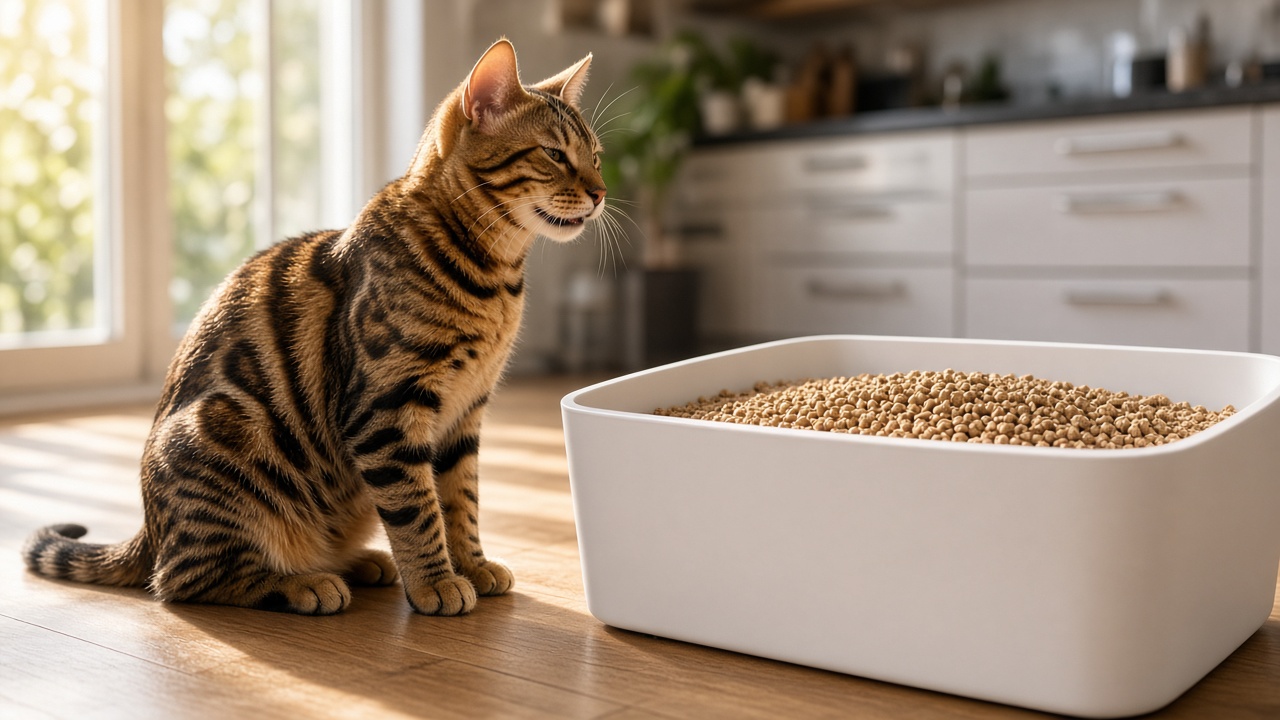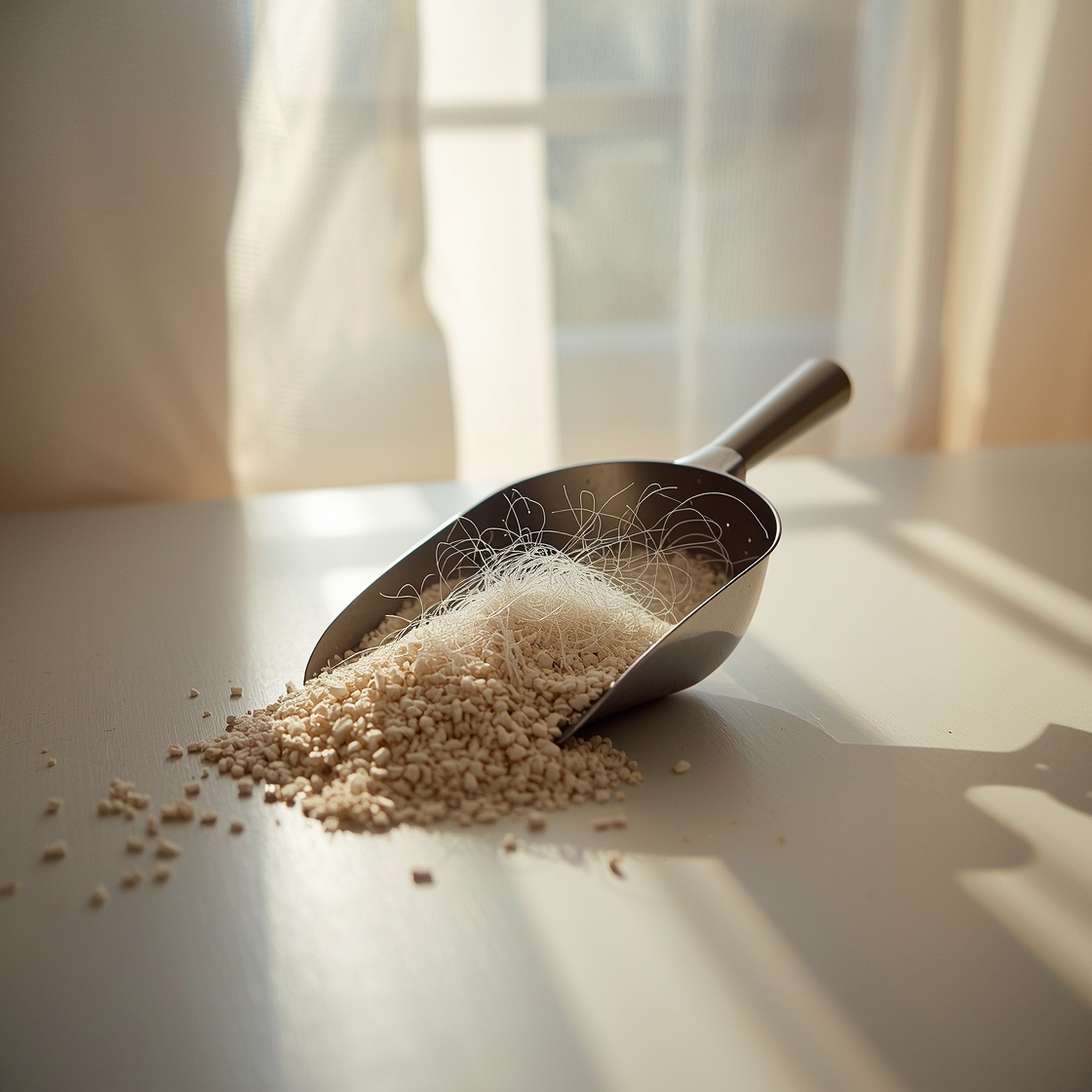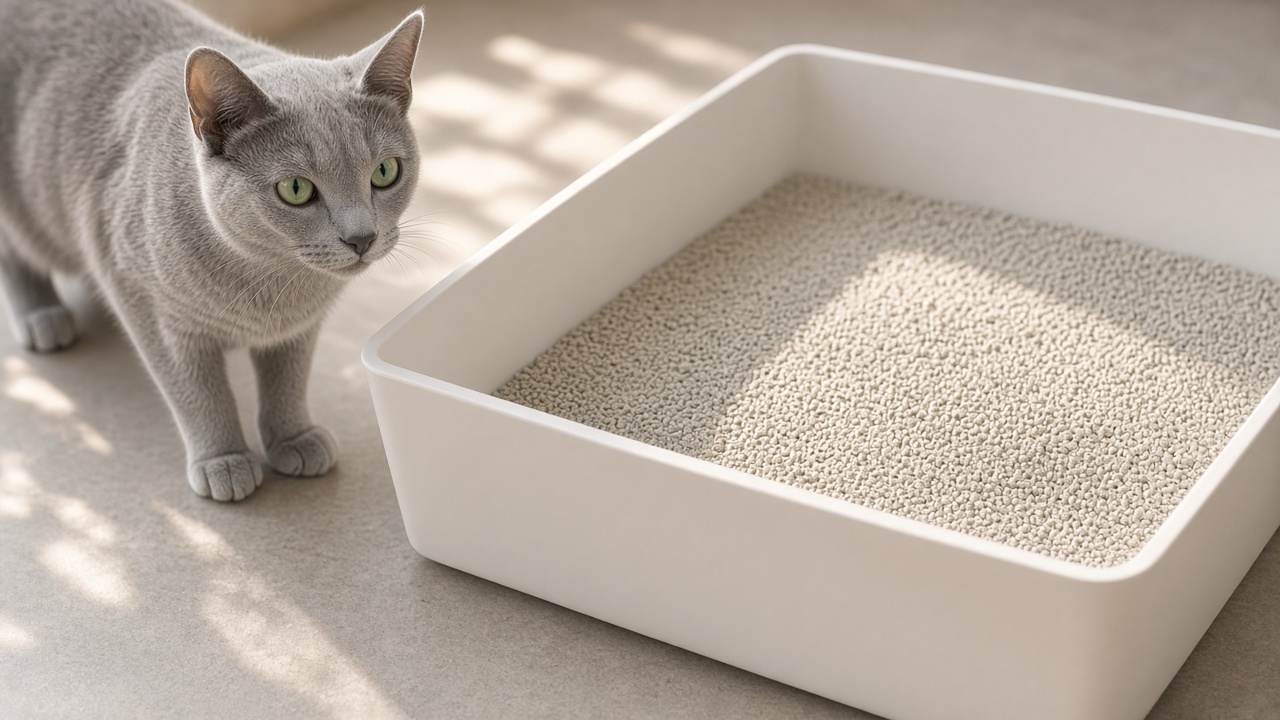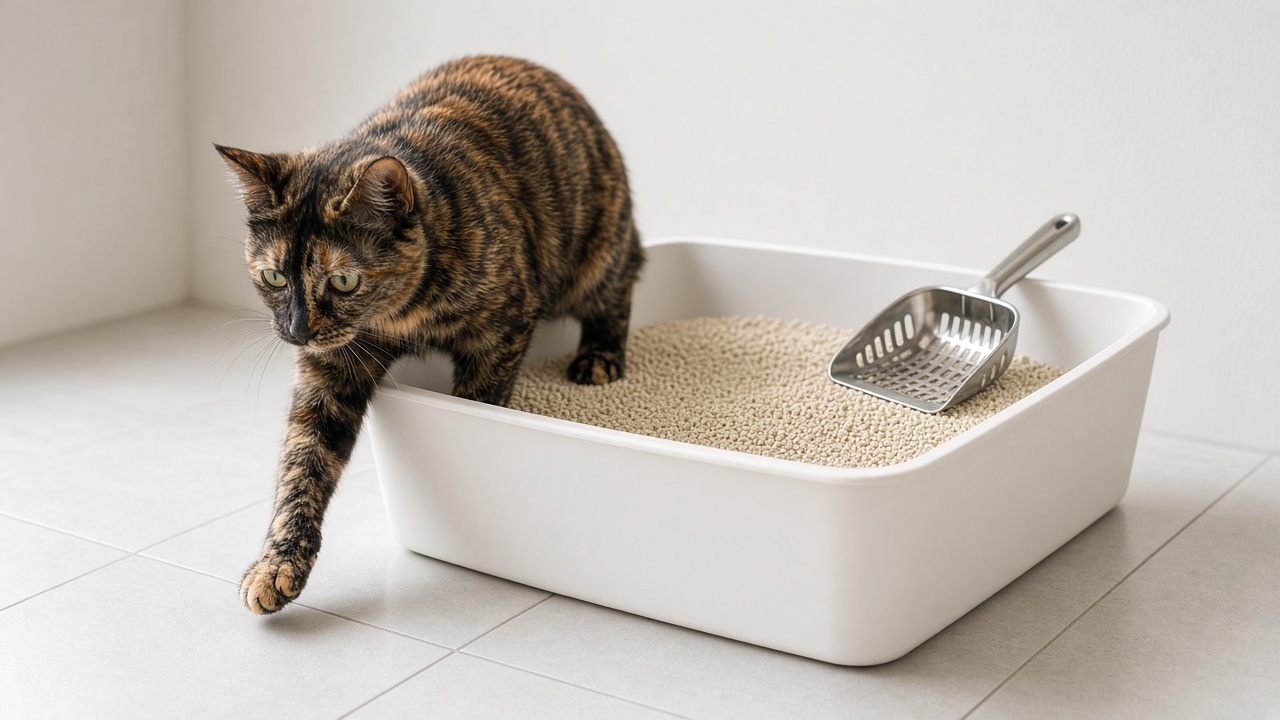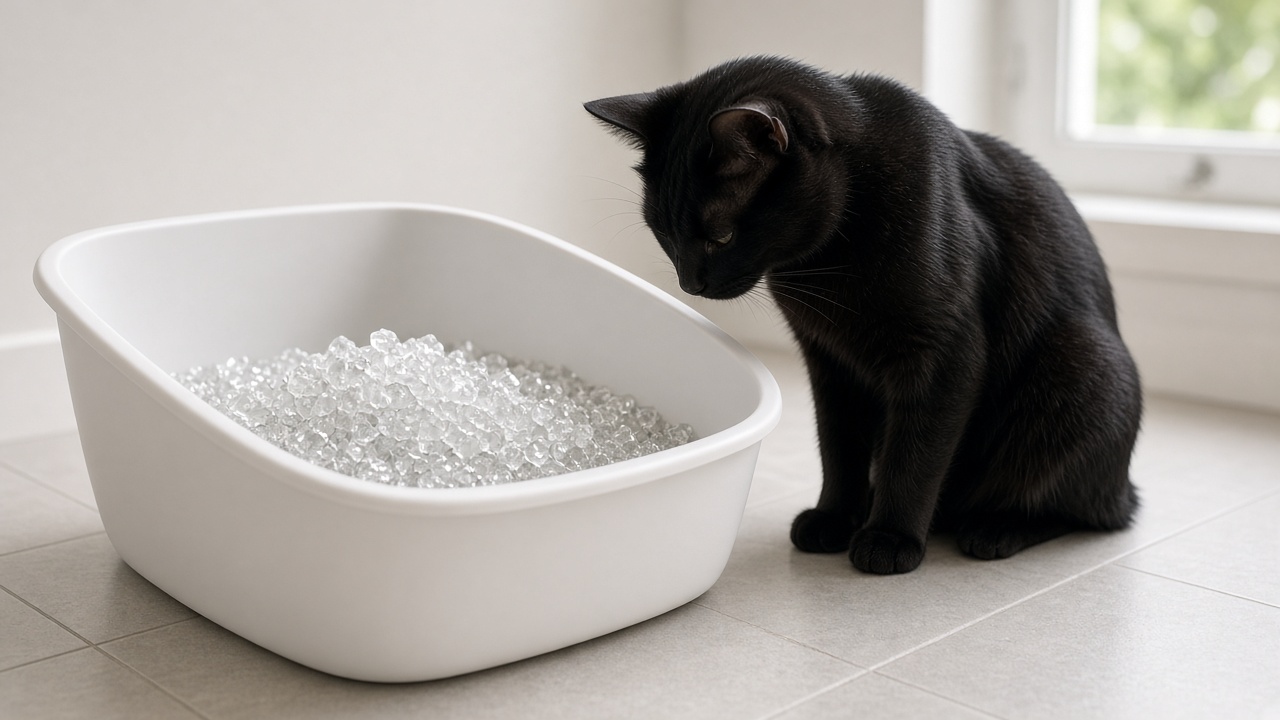

Quick answer: The best clumping cat litter for multi-cat households is the unscented hard clumper every cat will still use after you add boxes. Default: sodium bentonite or a plant clumper, n+1 boxes, 2.5–3 inch fill, scoop twice daily. One premium bag in one dirty tray still smells by Tuesday.
We read the titles and descriptions of 28 US listings that printed “multi-cat,” “multi cat,” or “multiple cat” on a clumping bag or title. 24 of 28 (86%) were clay. 6 of 28 (21%) printed unscented. 16 of 28 (57%) printed a day-count odor claim (7, 10, or 14 days). 0 of 28 printed AAFP/ISFM box-count language (cats + one, or two boxes for one cat).
This page is a research-desk comparison of published bag weights, listed price bands, and welfare pages we can name.
Cornell’s house-soiling page: medical rule-out first. AAFP/ISFM 2013: resources are “essential (not optional).” A second box is cheaper than a third scent.
Related: odor-control clumping litter, litter for multiple cats, no-tracking litter, litter mats.
How to choose the best clumping cat litter for multi-cat households
Name the failure. Smell? Dust cloud on pour? One cat in the sink? Those are different jobs.
- Clinic row. Sudden soiling, straining, blood, hiding, or a cat that stopped eating. Cornell: sick cats “may not always act sick.”
- Box math. Historical n+1. AAFP/ISFM 2014: one cat → two boxes when you can; multi-cat n+1 is a rule of thumb. Affiliated cats (groom and sleep together) may share; unaffiliated cats need separate stations. A two-floor home needs a box on each floor.
- Same substrate in every box unless you are running a one-box trial. Different grains teach favorites and block the “good” box.
- Unscented default. Perfume is how you lose the sensitive cat and keep the confident one.
- Clump if you will scoop. That is the whole point of this URL. If you wanted crystals or pine, you wanted a different chore.
We compared the six cards already on this URL.
Volume, boxes, dollars
Planning figures from published feline water-balance ranges and welfare box rules — not a measurement we took in your laundry room. One indoor adult commonly produces on the order of 60–80 ml of urine per day. Multiply.
Table 1 — Urine volume and box count
| Household | Daily urine planning band | Box count desk | Fill | Scoop |
|---|---|---|---|---|
| 2 cats | 120–160 ml | 3 boxes if space allows | 2.5–3 in | 2× day |
| 3 cats | 180–240 ml | 4 boxes | 3 in | 2–3× |
| 4+ cats | 240+ ml | n+1, split by floor | 3 in, refresh sooner | 3× |
| Kitten + adult | Lower volume, more visits | Extra box during training | Watch climb-out | More often |
From the listings: “multi-cat” on a bag is usually an odor-additive claim. It is not permission to run one box for three cats. The 28-listing scrape never printed n+1.
Table 2 — Price-per-pound desk (the six cards)
Listed tile prices on the cards. Confirm the seller. Bag weights are the common retail sizes for these titles, not a lab weigh-in.
| Litter | Common bag | Listed tile | Desk $/lb (mid) | Role |
|---|---|---|---|---|
| Dr. Elsey's Ultra UnScented | 40 lb | $22.99 | ~$0.57 | Unscented clay workhorse |
| Fresh Step Advanced Odor Shield | ~20–25 lb class | $25.99 | ~$1.10 | Scented multi-cat clay |
| ARM & Hammer Cloud Control Platinum | ~14–20 lb class | $17.99 | ~$1.00 | Low-dust pour clay |
| Scoop Away Advanced Multi Cat | ~25–30 lb class | $28.49 | ~$1.05 | Heavy-traffic clay |
| Tidy Cats 24/7 Performance | ~20–35 lb class | $25.99 | ~$0.90 | Budget clay workhorse |
| World's Best Lavender Scented | ~15–28 lb class | $39.99 | ~$1.80 | Corn + perfume premium |
Clay still wins cash per pound. You still pay in dust and tracking. Corn wins haul weight and a flush story many cities forbid. Lavender is a scent bet, not a box-count bet.
Table 3 — Material roles for the best clumping cat litter for multi-cat households
| Material | How it handles volume | Desk job | Honest miss |
|---|---|---|---|
| Unscented sodium bentonite | Hard clumps you can remove | Default shared boxes | Dust; landfill weight; tracking |
| Scented multi-cat clay | Perfume + “shield / seal / 24/7” | Homes that want aisle smell | The picky cat leaves |
| Low-dust “cloud control” clay | Adsorption with a pour story | Dust-sensitive humans | Still clay; still tracks |
| Corn clumper, scented | Plant clumps; lighter bag | Eco + lavender fans | Price; texture; perfume reject |
| Any clumper in one box | Fails the volume math | — | n+1 is the missing product |
Table 4 — Decision matrix
| Household | First buy class | Pair with | Keyword fit |
|---|---|---|---|
| 2–3 cats, no scent drama | Dr. Elsey's Ultra 40 lb | Third box, same formula | Default clumper |
| Dust-sensitive humans | Cloud Control Platinum | Mat + pour-from-bin | Pour cloud |
| Want aisle “clean” smell | Fresh Step Odor Shield or Scoop Away | Extra scoop, watch boycott | Perfume clay |
| Tight monthly cash | Tidy Cats 24/7 | More boxes, not a $40 bag | Workhorse |
| Want plant + accept lavender | World's Best Lavender | Sealed storage; city flush rules | Corn premium |
Quick picks for the best clumping cat litter for multi-cat households
- Best default unscented clay: Dr. Elsey's Ultra 40 lb — $22.99 tile.
- Best scented odor shield: Fresh Step Advanced Odor Shield — $25.99 tile.
- Best low-dust pour story: ARM & Hammer Cloud Control Platinum — $17.99 tile.
- Best heavy-traffic clay: Scoop Away Advanced Multi Cat — $28.49 tile.
- Best budget clay: Tidy Cats 24/7 Performance — $25.99 tile.
- Best plant + scent: World's Best Lavender Scented — $39.99 tile.
Affiliate disclosure: as an Amazon Associate we may earn from qualifying purchases.
Named examples of the best clumping cat litter for multi-cat households
Cards unchanged. Notes are listing language and owner themes — not a colony trial.
1. Dr. Elsey's Ultra UnScented Clumping Clay Cat Litter 40 lb. Bag
Best for: shared boxes that need hard clumps and no perfume.
Medium-grain sodium bentonite, fragrance-free, 40 lb. Works in open pans and many sifting or mechanical boxes. Desk role: the formula most multi-cat homes already know. Owner themes: clumps hold, dust on pour if you dump from shoulder height, heavy bag.
Pros: Hard clumps; unscented; big bag. Cons: Lift weight; clay track; pour dust.
2. Fresh Step Advanced Odor Shield Multi Cat Clumping Cat Litter
Best for: households that want a printed multi-cat odor-shield story and will accept scent.
Fresh Step’s Odor Shield / multi-cat clay line is the aisle’s “this is for several cats” tile. Owner themes: ammonia is quieter if you scoop, perfume can be loud, some cats step out. Desk role: scented volume marketing. Honest miss: the sensitive cat.
Pros: Multi-cat odor positioning; widely stocked. Cons: Fragrance; still needs n+1 boxes.
3. ARM & Hammer Cloud Control Platinum Cat Litter
Best for: humans who hate the pour cloud more than they hate clay.
Cloud Control is the dust-on-pour story in the ARM & HAMMER family. Baking-soda odor language, lighter granule theme, platinum extras on the bag. Owner themes: less airborne dust than a cheap clay dump, tracking still happens, some cats notice the scent. Desk role: pour-cloud control, not a substitute for a third box.
Pros: Dust-on-pour positioning; baking-soda brand. Cons: Tracks; not unscented by default.
4. Scoop Away Advanced Multi Cat Clumping Cat Litter
Best for: high-traffic clay you will scoop like a job.
Scoop Away’s multi-cat line is built for “several cats, one brand you can find at the supermarket.” Owner themes: clumps hold under frequent use, bags are heavy, odor crystals / perfume are part of the pitch. Desk role: supermarket volume clay. Honest miss: you still need more than one box.
Pros: Consistent clump theme; multi-cat labeling. Cons: Heavy; scent load.
5. Tidy Cats 24/7 Performance Clumping Cat Litter
Best for: a budget clay that keeps several boxes filled.
Tidy Cats 24/7 is the workhorse tile: widely available, priced like a weekly shop, odor language on a clock. Owner themes: it clumps, it is not a boutique, long-interval odor claims fail if you skip the scoop. Desk role: cash and coverage. Buy a third box of this before you buy one $40 lavender corn bag for a single dirty tray.
Pros: Price; availability; familiar texture. Cons: Weaker long-interval odor story; dust/track.
6. World's Best Cat Litter Lavender Scented
Best for: a plant clumper when you want lavender and will store the bag sealed.
Whole-kernel corn, lighter haul than clay, flushable language on typical World's Best pages — confirm city and septic rules before you flush cat feces. Lavender is a human preference. Desk role: corn + perfume. Honest miss: the cat that left unscented clay will not come back for lavender. Pantry pests if the bag sits open.
Pros: Plant clumps; lighter bag; low-dust theme. Cons: Price; lavender; texture transition.
Want the whole aisle? Browse multi-cat clumping litter →
Box count is the product the bags will not sell
The best clumping cat litter for multi-cat households cannot out-clump a missing box. Cornell’s house-soiling page puts medical rule-out first, then resources. AAFP/ISFM 2013 calls environmental needs essential. AAFP/ISFM 2014 keeps two boxes for one cat when you can, and treats n+1 as historical, not holy.
Unaffiliated cats — they do not groom, they do not sleep in a pile — need space between stations. A hallway box and a bedroom box beat two boxes side by side that the bully can sit on.
Liners tear under three diggers. High sides help the digger and hurt the senior. Give the senior a low box of the same litter. Stainless is a wall-stain tool. None of these replace n+1.
Dust, tracking, and the pour
Multi-cat means more pours. Dust is a pour-height problem as much as a formula problem. Transfer clay to a bin. Pour from the knee, not the shoulder. A litter mat catches what paws carry. Cloud Control’s job is the airborne cloud. Ultra’s job is the clump. They are not the same complaint.
Tracking is grain size plus coat plus a long-haired cat who sits in the box. A mat and a short path to a hard floor beat a “low track” claim on a bag that still leaves a gray trail.
Scent versus the best clumping cat litter for multi-cat households
Four of the six cards lean scented or “performance / shield / 24/7.” One is explicitly unscented. One is lavender corn. The clump listing review found only 21% of multi-cat clumping titles printed unscented. The aisle sells perfume as hygiene. Cats vote with their feet.
If two cats already share Ultra in three open boxes and the only complaint is your nose, scoop again before you spend $40 on lavender corn. If one cat has left the box, stop shopping and start with Cornell’s medical sentence.
A 7-day or 14-day odor clock on a bag that never mentions box count is marketing. Depth, scoop, and a second room are the controls you actually own.
Clay vs plant in a multi-cat home
Clay: cheapest per pound on this card set, hardest clumps in owner themes, heaviest bags, landfill, dust. Plant (World's Best here): lighter, flush story with legal caveats, moths if stored badly, higher $/lb, texture week for some cats.
Do not mix clay and corn in the same box “to blend benefits.” You get a mush that scoops like neither. If you trial corn, trial it in one extra box and keep the residents’ clay online.
Flushable on the bag is not permission from your city. Many municipalities say cat feces stay out of the toilet because of parasites. Septic manuals are not marketing copy.
30-day multi-cat log (one variable)
Write it down. Memory lies when three cats are involved.
| Day | Allowed change | Stop rule |
|---|---|---|
| 0 | Photo each box; count boxes | — |
| 1–7 | Add one box, same litter | Blood, strain, hide → clinic |
| 8–14 | Scoop cadence 2× if you were at 1× | — |
| 15–21 | Trial box with new class only if needed | Boycott → revert |
| 22–30 | Keep winners; drop a station only if unused a week | Do not drop the “ugly” box the shy cat uses |
The best clumping cat litter for multi-cat households is the formula that survives this log. A 10-day odor claim that required you to remove a box is a loss.
Mechanical boxes, kittens, and guests
Robot boxes have a capacity and a sensor story. Three cats on one robot is still one station. Keep an open backup of the same substrate. If the robot faults, you still have a pan.
Kittens: clumping clay can be eaten. Supervise. Many clinicians prefer a non-clump or close watch until the kitten is past the “this is food” phase. This desk will not invent an age. Ask the veterinarian who sees the kitten.
Guests: scoop extra, do not perfume the boxes, keep the shy cat’s station online. Boarding return: same substrate for a week. Do not dump a shelter’s paper pellets into the shared Ultra.
Seasonal load
Summer: more water, more urine, thinner beds. Top up. Closed bathrooms go ammonia faster — add a fan or move a box. Winter: cats loaf on vents; do not park the only box in the blast path that dries clay into dust you then call “a bad bag.”
Foster volume is extra visits and extra boxes, not a reason to run one scented tray.
Why we will not publish a 1–6 ranking trophy
The cards are different jobs: unscented clay, scented clay, dust-control clay, supermarket clay, budget clay, lavender corn. Ranking lavender corn against Ultra as if they shared a score is how buyers buy the wrong chore. The Multi-Cat clump listing review scores checkable label fields and welfare box math. That is the desk product.
Introducing a new cat on the best clumping cat litter for multi-cat households
Keep the residents’ formula. Give the newcomer a separate room and a separate box of the same substrate if you can. Scent swapping is a behavior protocol a clinician or behaviorist can name; this desk will not invent one. Do not perfume the residents’ boxes “to cover the new smell.” That is how you lose the old peace treaty.
If the newcomer arrived on paper pellets or a shelter clay, do not dump that into the shared Ultra on day one. Run a parallel box. Transition the newcomer toward the house formula over a week if the veterinarian has no objection. A sudden texture change plus a new social group is two variables. Pick one.
Guest week, boarding, and the weekend you skip
Guests: scoop extra. Do not add a scented “company” bag. Keep the shy cat’s ugly box online — that is often the only box they will use with strangers in the house.
Boarding return: same substrate for seven days. If one cat comes home on clinic paper, isolate that transition.
The weekend you skip scooping is how a 14-day clock becomes a Monday ammonia wall. If you travel, hire the scoop, not a candle.
Stainless, liners, high sides, robots
Liners fail under three diggers. High sides help the digger and hurt the senior — give the senior a low box of the same litter. Stainless is a wall-stain tool. Robot boxes have a cycle and a fault mode. Three cats on one robot is still one station. Keep an open backup.
None of these replace n+1. The clump listing review keeps saying box count. The aisle keeps saying “multi-cat.” Believe the welfare pages.
Pour, store, and the bag that is not Ultra
Ultra 40 lb: pour from a bin, not from a shoulder-height bag. Dust is a pour problem. Store opened clay sealed. Plant bags (World's Best) sealed harder — moths are a real owner theme.
Third-party “Ultra” that is powder-grey and sour is a return. Subscriptions help you not run out during a three-cat week. They do not make charcoal stronger.
Cloud Control’s lighter granule can track farther on a hard floor. A mat at the box and a short path beat blaming the formula for a 20-foot runway.
Monthly cash: boxes first, perfume second
Worked desk arithmetic, not a receipt. Two cats, three boxes, clay.
| Setup | Rough monthly cash | What you actually bought |
|---|---|---|
| One box of Fresh Step, scoop when you remember | Looks cheap | Ammonia + a boycott risk |
| Three boxes of Tidy Cats 24/7, scoop 2× | One or two big bags | Coverage |
| Three boxes of Ultra, scoop 2× | ~$23–$46 depending on burn rate | Unscented clumps |
| One box of World's Best Lavender | ~$40 tile | Perfume + plant, one station |
If cash is tight, buy Ultra or Tidy Cats and a third box before you buy a $40 corn bag for one dirty tray. The clump listing review keeps saying box count.
Coat length, mats, and the long-haired multi-cat home
A Persian or a Maine Coon carries more litter. That is tracking, not a failed clump. Clip the britches if a groomer or clinician says so. Use a mat. Do not switch to lavender corn to “weigh the grains down” — that is not how corn works.
If clumps stick to long fur, scoop sooner and check depth. A shallow bed makes wet fur. A mountain makes a gray trail. 2.5–3 inches is the desk default.
Cornell: examine the cat who soils; medical first. Boxes = cats plus one is their common sentence. Punishment worsens soiling.
AAFP/ISFM 2013: environmental needs are essential. Separate resources. Two of each key station in a multi-cat home.
AAFP/ISFM 2014: two boxes for one cat when you can; n+1 is historical, not absolute. Affiliated cats may share; unaffiliated cats need space. Size on the order of 1.5× body length.
We reprint those. We will not invent a “PetBench colony trial.” We will not say Ultra is vet-approved. We will not turn a 7-day odor clock into a medical claim.
The best clumping cat litter for multi-cat households sits under those pages. It does not replace them.
Automatic boxes and the “I never scoop” fantasy
A robot that cycles after every visit still needs a person to empty the drawer, refill the bed, and keep a backup pan. If the cycle scares one cat, that cat will toilet elsewhere. The clump listing review does not score robots. If you own one, fill it with a clumper the maker allows — Ultra shows up on many compatibility lists; confirm the manual — and keep the same formula in the open box.
Do not run scented clay in the robot and unscented in the open pan “to compare.” You taught them a favorite.
Closing
If two cats already share Ultra in three open boxes and the only complaint is your nose, scoop again before you spend $40 on lavender corn. If one cat has left the box, stop shopping and start with Cornell’s medical sentence. A multi-cat clock on a bag that never mentions box count is marketing. Depth, scoop, and a second room are the controls you actually own. Three cats on one scented tray will beat any Odor Shield sentence. Two unaffiliated cats on one lavender corn will beat any baking-soda seal. Match the chore to the household, then buy a card. Box math first. Bag art second. Clinic if the soiling is new. Keep the substrate that already works unless dust or texture forced a class change. Add the box first. Always add the box first. Then scoop. Then, and only then, shop a different material class.
How we researched this guide
The PetBench desk compared the six live cards, listed tile prices, common bag sizes, and a 28-listing Multi-Cat Clump listing read of “multi-cat” language, clay vs plant, unscented, and printed odor-day claims. We read Cornell house-soiling and AAFP/ISFM 2013–2014 box and resource language. Mid-bag math is desk arithmetic from the listed tiles, not a store guarantee.
Nothing here is a clinical endorsement.
Frequently asked questions
What is the best clumping cat litter for multi-cat households?
The unscented hard clumper every cat still uses after you add boxes — on this URL, that default is Dr. Elsey's Ultra 40 lb. Scented “multi-cat” clay is a perfume bet. Lavender corn is a plant-plus-scent bet. Box count is not printed on the bag.
How many boxes do I need?
Welfare pages: on the order of cats + one, and two boxes even for one cat when you can. Split by floor. Affiliated cats may share; unaffiliated cats need space.
How often should I change clumping litter with several cats?
Scoop solids and urine clumps daily, twice if you can. Full refresh when the remaining bed is thin, smells, or looks like dust — often every 2–4 weeks per box if you scoop, sooner with three-plus cats. A printed 14-day clock does not beat your nose or a boycott.
Can I use clumping litter with kittens?
Many kittens try to eat litter. Clumps are a gut-obstruction conversation. Ask the veterinarian who sees the kitten. Do not treat a bag’s “multi-cat” line as a kitten protocol.
How do I reduce dust from cat litter?
Pour from a bin at knee height. Buy a low-dust pour story (Cloud Control on this card set) if the cloud is the complaint. A mat does not fix a shoulder-height dump.
Is scented litter better for odor in a multi-cat home?
Scented litter is better at smelling like the aisle. Odor control that lasts is clump + scoop + boxes. Perfume can evict the sensitive cat and make the remaining boxes dirtier.
Should I mix clay and corn?
No. Trial a new class in one extra box. Keep the residents’ formula online.
Does “24/7” or “Odor Shield” mean I can scoop less?
No. Those are bag phrases. Tidy Cats 24/7 and Fresh Step Odor Shield still need daily scooping in a multi-cat home. The clock is advertising. The urine is not.
Which of these six is the best clumping cat litter for multi-cat households if I have asthma?
Start with pour habit (bin, knee height), then a low-dust pour story such as Cloud Control, or a plant clumper if clay dust is the trigger. If anyone wheezes at every change, that is a clinician-and-formula conversation, not a perfume upgrade.
Can I flush Scoop Away or Ultra?
Those are clay cards. Clay is not the flushable story. World's Best prints flush language; your city may still say no. Clay goes in the trash.
Sources
- Cornell University College of Veterinary Medicine, Feline Health Center. “Feline Behavior Problems: House Soiling.”
- Ellis et al. AAFP/ISFM Feline Environmental Needs Guidelines. J Feline Med Surg. 2013;15:219–230.
- Carney et al. AAFP/ISFM Guidelines for Diagnosing and Solving House-Soiling Behavior in Cats. J Feline Med Surg. 2014;16:579–598.
- Maker pages and retailer listings for the six cards above.
Last reviewed: August 2026. Contact if a bag size is stale.