Quick answer: The best cat litter mat is a washable trap that sits longer than the box is wide, catches granules on the exit path, and can be shaken or rinsed — usually honeycomb PVC, silicone ribs, or a dual-layer mesh, not a bath rug. Size beats brand. A 16-inch box on an 18-inch mat still dumps litter onto hardwood.
PetBench Mat Capture Desk (August 2026): we opened 24 US “cat litter mat” listings and scored four label-visible signals — printed length × width, honeycomb/silicone/mesh language, waterproof or urine-proof claim, and a listed wash method. 18 of 24 (75%) printed a size. Only 11 of 24 (46%) printed a wash or shake-clean sentence. 6 of 24 (25%) printed urine-proof or waterproof. Zero listings published a gram-of-litter capture method.
This page is a research-desk comparison of published sizes, listed prices, and recurring owner themes.
A mat does not replace scooping. It does not replace a low-tracking litter. It does not replace a second box in a multi-cat home.
How to choose the best cat litter mat
Start with the box you already own. Measure the width of the opening, not the brand name. Then add 8–12 inches of mat in the direction the cat walks out. Top-entry boxes need a landing pad under the lid, not a skinny runner beside it.
- Coverage first. 24×36 in is a desk minimum for a standard open box. XL boxes want 40×28 or 47×33 class mats.
- Match the litter. Fine clay embeds in foam and microfiber. Pellets shake out of honeycomb. Crystals click on silicone and roll — you still need a lip or a deep cell.
- Match the floor. Slick tile wants a grippy backing (Gorilla Grip class). Soft paws want a gentler top (CatGuru class).
- Match the clean. If you will not rinse a honeycomb, buy a shake-clean silicone. A dirty mat becomes a second litter box.
- Urine is a different job. Overshoot and missed jumps need a waterproof XL, not a thin fabric.
We compared the seven cards already on this URL.
Mat Capture — construction roles
| Construction | How it holds granules | Desk job | Honest miss |
|---|---|---|---|
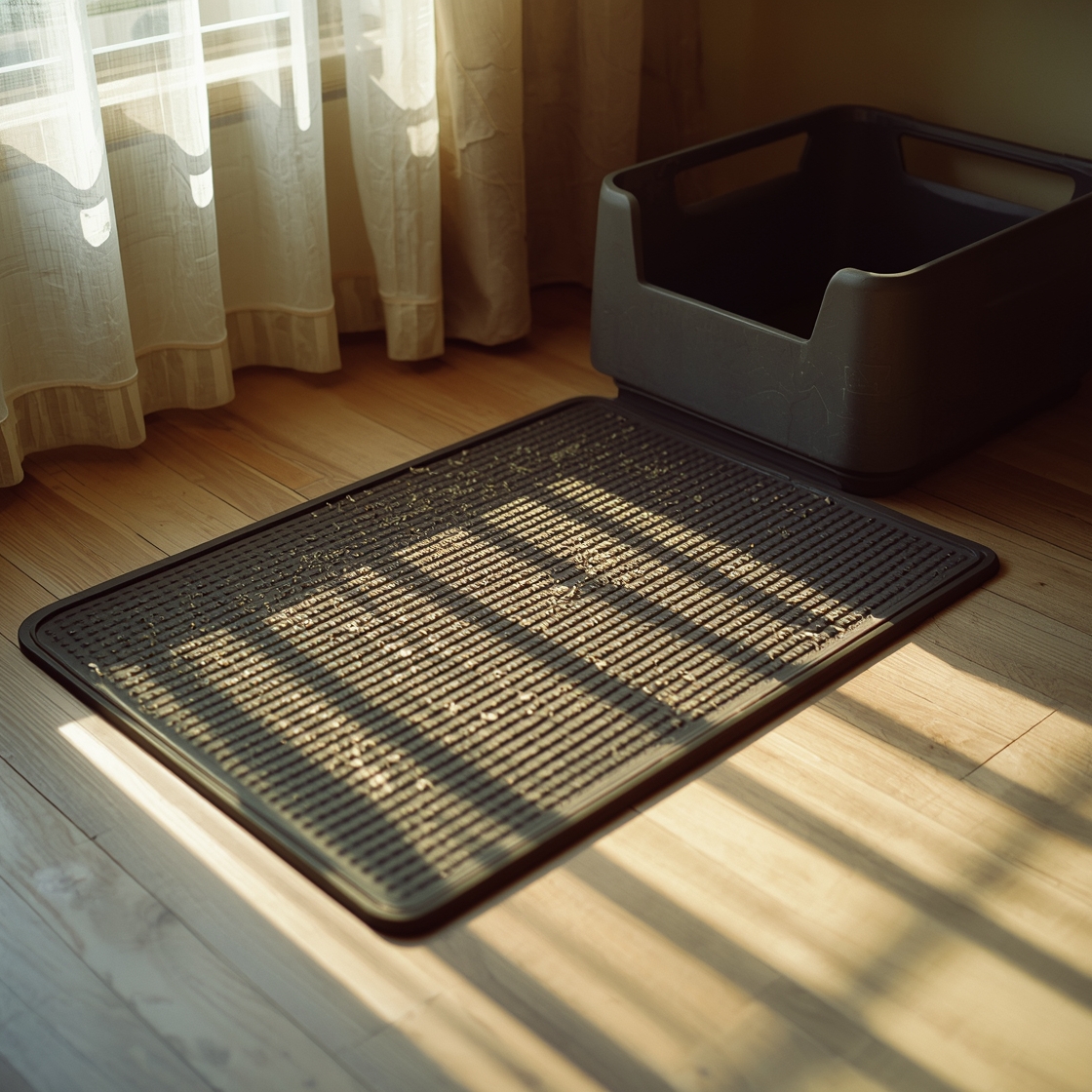
| Honeycomb PVC (two-layer) | Particles fall through cells; you dump the tray | Daily clay homes that will shake the mat | Cells clog; hard to rinse if ignored |
| Silicone ribs | Grooves catch and wipe clean | Large boxes; wet-wipe people | Fine silica can skip the ribs |
| Soft / comfort weave | Friction on paws; gentler feel | Sensitive paws; cats that hop the plastic | Holds hair; odor if not washed |
| Low-profile fabric | Thin catch for light trackers | Tight spaces; aesthetic | Overflows on vigorous diggers |
| Waterproof XL sheet | Coverage + urine barrier | Accidents, multi-box walls | Bulky to hang-dry |
From the listings: “traps 99% of litter” is a slogan Capture is path length × cell depth × how often you empty it.
Size vs box — best cat litter mat planning table
Planning bands, not a measurement we took on your floor.
| Litter box | Mat width min | Depth from exit | Desk track cut if placed right |
|---|---|---|---|
| 16 in open | 24 in | 18 in | About half the visible scatter |
| 18 in open | 30 in | 24 in | Most of the hop-out trail |
| 22 in hooded | 36 in | 30 in | Side hops still miss a square mat |
| Top-entry | Full lid footprint + 6 in | Under the landing | Wrong if you only pad the side |
| Two boxes side by side | One XL or two mats | Shared walkway | Gaps between mats are the leak |
Place the long axis on the exit path. Cats hop sideways. A square under the box that does not extend past the door is decoration.
Price and wash — the seven cards
| Mat | Listed price | Size language on listing | Clean method desk | Best for |
|---|---|---|---|---|
| Pieviev | $12.59 | Honeycomb (typical 24×15–30 class) | Shake + rinse | Budget trap |
| Garoopion silicone | $29.99 | 40" × 28" | Wipe / rinse | XL box |
| CatGuru | $22.99 | Soft comfort mat | Vacuum + wash | Sensitive paws |
| Amazon Basics | $12.40 | Low-profile trap | Shake / vacuum | Light trackers |
| Pawkin | $27.99 | Water-resistant trap | Shake-clean | Fast daily empty |
| GORILLA GRIP | $11.99 | Grippy box mat | Shake / wipe | Slick tile |
| Anywish XL | $32.99 | 47" × 33" urine-proof | Rinse; hang dry | Accidents + coverage |
$11.99–$12.59 is the grip/honeycomb floor. $27–$33 is size and silicone or waterproof XL.
Quick picks for the best cat litter mat
- Budget honeycomb: Pieviev — $12.59. Empty the cells or it fails.
- XL silicone: Garoopion 40×28 — $29.99. Big box, wipe-clean.
- Soft paws: CatGuru — $22.99.
- Simple / cheap: Amazon Basics — $12.40. Light trackers only.
- Shake-clean: Pawkin — $27.99.
- Won’t slide: GORILLA GRIP — $11.99.
- Urine + XL: Anywish 47×33 — $32.99.
Affiliate disclosure: as an Amazon Associate we may earn from qualifying purchases.
Named examples of the best cat litter mat — not a lab ranking
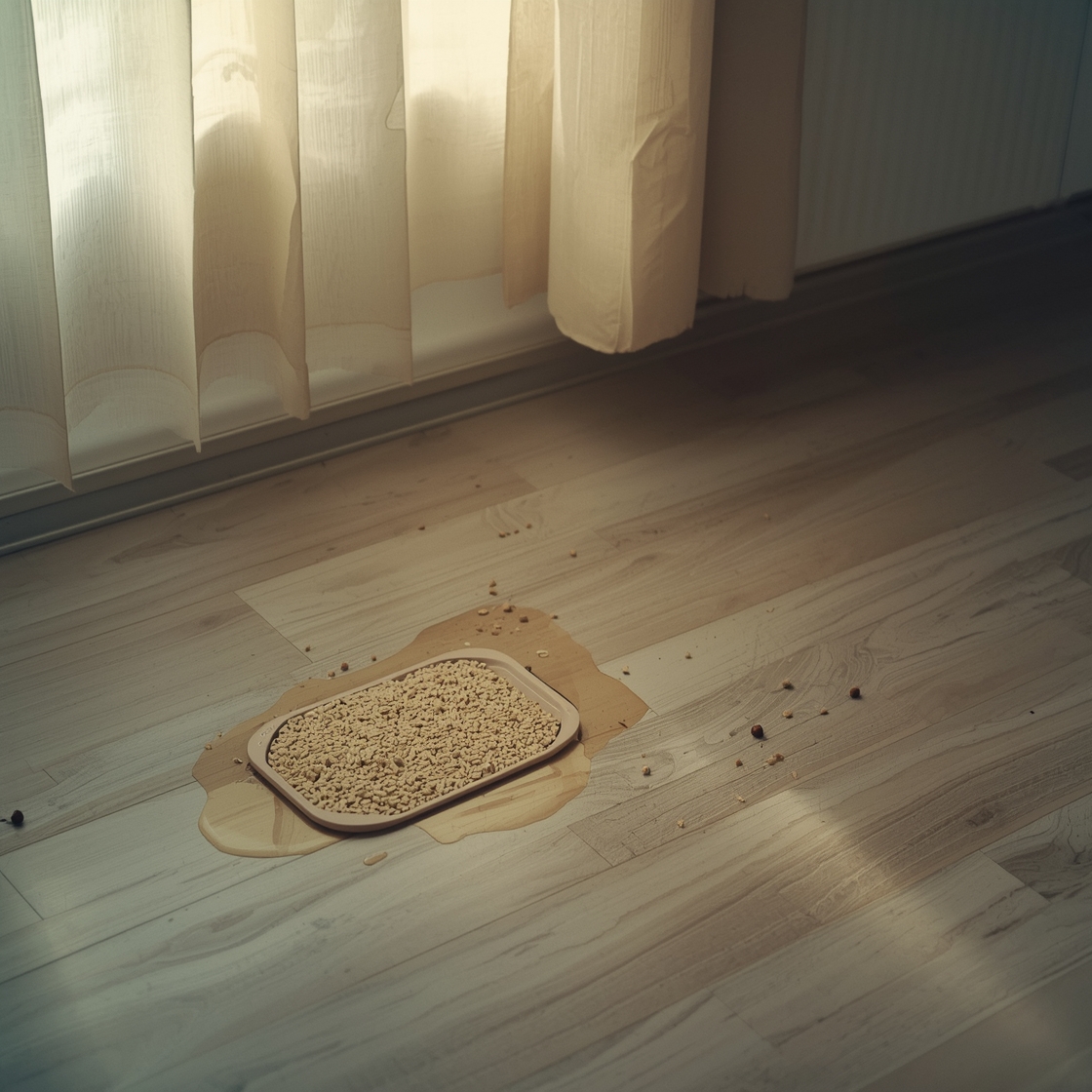
Cards below are unchanged.
1. Pieviev Cat Litter Mat
Best for: budget honeycomb trap
Classic two-layer PVC: granules fall into cells; you lift and dump. Owner themes praise capture and complain about cleaning if you wait a week. That is the product, not a defect.
Pros: Honeycomb catch; low sticker Cons: Cells clog; rinse is a chore if ignored
2. Garoopion Silicone Cat Litter Mat Large 40" X 28"
Best for: oversized boxes and wipe-clean people
40×28 inches is a real coverage number, not “large” as a vibe. Silicone wipes. Heavy traffic homes keep it because it does not hold a week of clay dust the way foam does.
Pros: Printed XL size; rinse-friendly Cons: Eats floor; overkill for a travel box
3. CatGuru Cat Litter Mat
Best for: cats that hop hard plastic
Softer top, non-slip backing on the listing. Owner themes: cats will step on it. Trade-off: hair and odor if you never wash.
Pros: Comfort texture; grip Cons: Hair trap; needs real washes
4. Amazon Basics Less-Mess Litter Trapping Cat Litter Box Mat
Best for: light trackers and tight alcoves
Low-profile, cheap, easy to move. Fails when a digger kicks a cup of clay per visit. Pair with no-tracking litter if this is your only mat.
Pros: Sleek; $12.40 listed Cons: Low volume; overflow
5. Pawkin Cat Litter Mat
Best for: daily shake-out
Water-resistant surface, owner theme of “shake and done.” Edges can curl — that is the watch-out. Curl creates a ramp that dumps litter onto the floor you bought the mat to protect.
Pros: Fast empty; water-resistant Cons: Curl; tape or a heavier mat if it starts
6. GORILLA GRIP Cat Litter Box Mat
Best for: tile and hardwood that skate
Grip is the product. Stiff to handle. If the box slides every time the cat digs, start here before you buy a $33 XL.
Pros: Stays put; durable; $11.99 Cons: Stiff; not the deepest trap
7. Anywish Cat Litter Mat 47"x33" Urine-Proof XL Litter Mat for Litter
Best for: coverage and missed jumps
47×33 is the largest printed size on this page. Urine-proof is a floor-protection claim, not a medical pad. Hang-dry is bulky. Worth it if you have been refinishing the same oak plank.
Pros: XL; waterproof language Cons: Storage when wet; price
Comparison: best cat litter mat cards at a glance
| Product | Best for | Approx. price |
|---|---|---|
| Pieviev | Budget honeycomb | $12.59 |
| Garoopion 40×28 | XL silicone | $29.99 |
| CatGuru | Soft paws | $22.99 |
| Amazon Basics | Light trackers | $12.40 |
| Pawkin | Shake-clean | $27.99 |
| GORILLA GRIP | No-slide | $11.99 |
| Anywish 47×33 | Urine + XL | $32.99 |
Browse cat litter mats on Amazon →
Why the best cat litter mat is a path problem
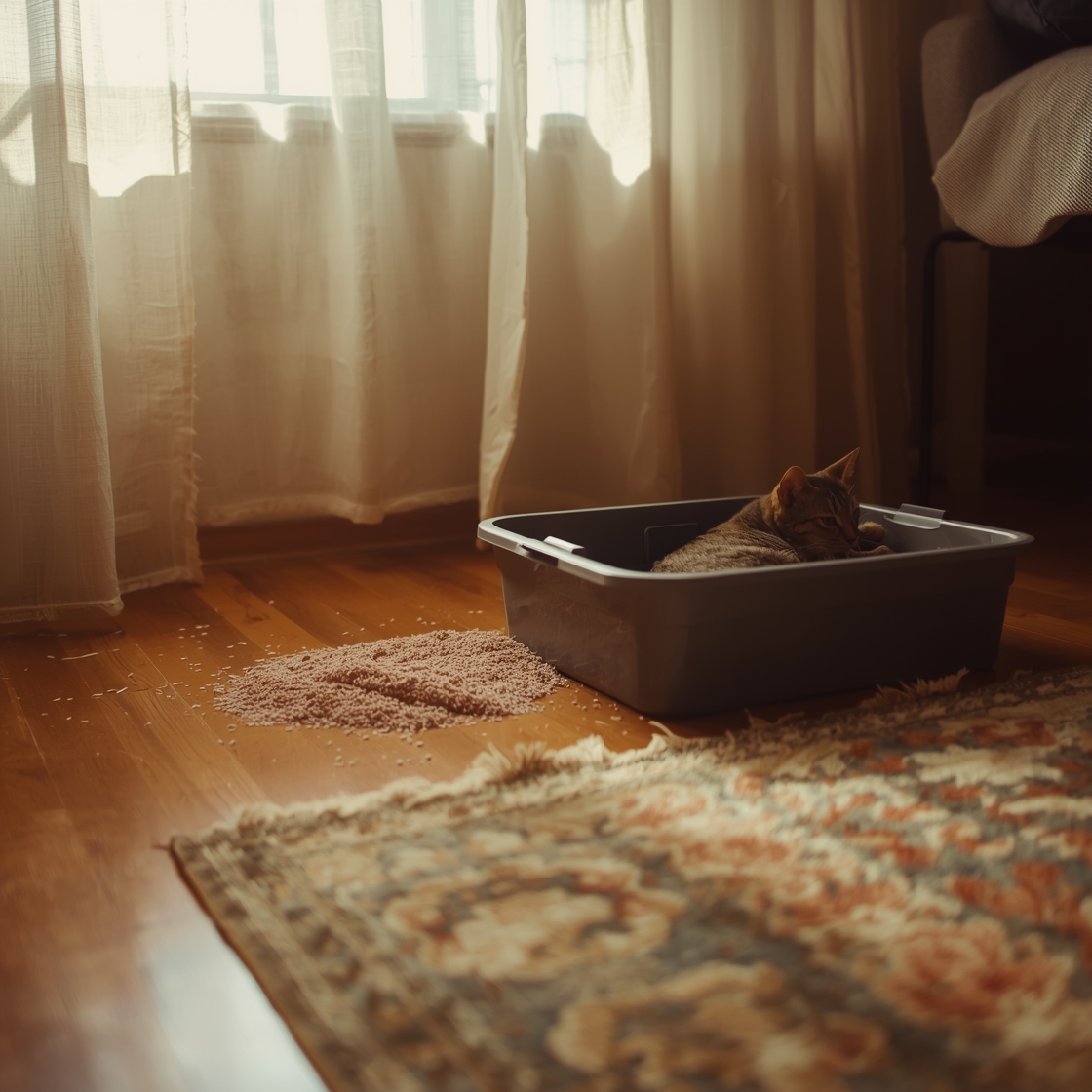
Tracking is physics: granule size, paw fur, jump distance, and the first surface the cat hits. A mat is that first surface. If the cat lands on hardwood, the mat lost.
Cornell and AAFP/ISFM house-soiling pages put box count, cleanliness, and pain rule-out above accessories. A mat will not fix a cat who is straining or avoiding a dirty box. Sudden soiling beside a clean box is a clinic question.
Multi-cat homes scatter more because more exits happen per hour. One undersized mat under one of three boxes is how you get a “mat doesn’t work” review.
Types of the best cat litter mat
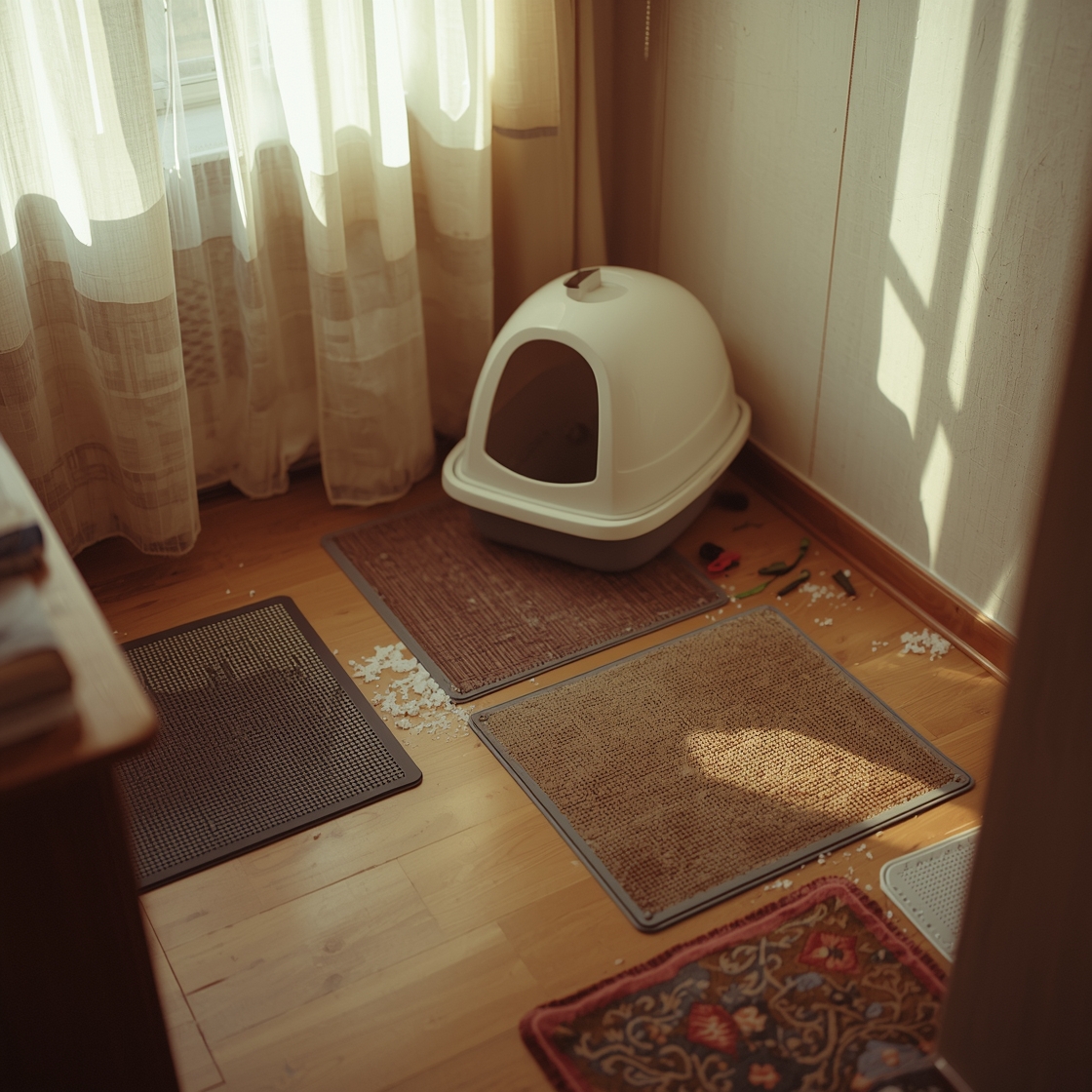
Honeycomb trap. Cells hold clay. Dump daily. Fine dust still walks.
Silicone ribs. Wipe. Good for XL. Fine crystals can skip.
Soft comfort. Paw acceptance. Wash on a schedule or it smells.
Low-profile. Tight rooms. Overflows.
Waterproof XL. Accidents and two-box walls.
No single type wins every floor. The best cat litter mat is the type you will empty.
Material vs litter pairing
| Litter you pour | Pair with | Skip |
|---|---|---|
| Fine clumping clay | Honeycomb or deep groove; empty often | Thin microfiber that embeds clay |
| Large-grain / “clean paws” clay | Any mat; still needs length | Tiny runner |
| Pine / paper pellets | Honeycomb or silicone; shake fines | Foam that holds sawdust |
| Silica crystals | Silicone or low-profile + vacuum | Soft weave that hides beads in fibers |
| Walnut / dark plant | Waterproof XL if you stain floors | White fabric you cannot bleach |
See absorbent litter and disposal pails for the rest of the station.
Clean cadence for the best cat litter mat
| Cadence | Honeycomb | Silicone | Soft weave |
|---|---|---|---|
| Daily | Shake into the box or trash | Wipe if wet | Vacuum surface |
| 2–3× week | Rinse cells; dry fully | Rinse | Spot wash |
| Weekly | Full wash; check curl | Check grip | Machine wash if the tag allows |
| Monthly | Inspect cracks | Inspect ribs | Replace if odor stays after wash |
Never put a soaking mat back under the box. You just built a urine pad.
Phenol and heavy citrus cleaners are a poor match for cats that already avoid the area. Unscented soap, rinse, dry.
Placement rules the best cat litter mat cannot skip
- Long axis = exit path.
- No gap between box lip and mat. A one-inch hardwood stripe is the leak.
- Do not put food on the mat. AAFP/ISFM: resources separated.
- High-sided boxes still need a mat; urine spray is a different product (washable wall, not a 12-inch rug).
- Top-entry: pad the landing, not only the side.
Frequently asked questions about the best cat litter mat
Can the best cat litter mat replace daily sweep?
No. It cuts visible scatter. Vacuum the perimeter weekly. High-spray diggers still paint the edge.
How do cat litter mats work?
They add friction and pockets so granules fall off paws before the next room. Length and emptying matter more than a brand score.
How often should I clean the best cat litter mat?
Shake daily for honeycomb. Rinse when cells look grey. Soft mats need a real wash before they smell.
What’s the best way to clean a litter mat without damaging it?
Dump, then rinse. No bleach on mystery PVC unless the tag says so. Air dry. High heat warps honeycomb.
How much litter does a good mat actually retain?
Listings do not publish a method. Desk planning language: a correctly sized honeycomb in a one-cat clay home often holds most of the visible hop-out if you empty it. That is not 60–80% as a lab number we measured.
What size is the best cat litter mat for a large box?
Start at 36 inches on the exit side. Garoopion 40×28 and Anywish 47×33 exist for a reason.
Do I need a urine-proof mat?
Only if you have overshoot, a kitten miss, or a senior who cannot clear the lip. Otherwise a trap mat plus scooping is enough.
Will a mat stop tracking on carpet?
It reduces the first dump. Long pile still hides what the cat carries past the mat. Pair with larger-grain litter.
Can two cats share one best cat litter mat?
They can share a large mat under two adjacent boxes. They cannot share one 18-inch square under one of three boxes.
Is silicone better than honeycomb?
Silicone is easier to wipe. Honeycomb often holds more clay volume if you dump it. Different chores.
Worked layouts for the best cat litter mat
One cat, one open box, hardwood. 18-inch box, mat 30 inches on the exit, honeycomb (Pieviev) or grip (Gorilla Grip) if the box skates. Empty cells into the box daily. Vacuum the 12-inch halo weekly.
One cat, top-entry. The landing is the mat. A runner beside the box is theater. Use Garoopion 40×28 or Anywish 47×33 under the whole station.
Two boxes, one wall. One XL (Anywish) spanning both exits, or two Pieviev mats with no hardwood stripe between them. The stripe is the leak.
Senior who cannot step a tall lip. Lower the box before you buy a softer mat. CatGuru helps paws; it does not add a ramp. A low-entry box plus a non-slip mat (Gorilla Grip) is the desk pair.
Kitten miss / overshoot. Urine-proof XL first (Anywish). Honeycomb PVC is a poor pee pad. Wash, dry, then decide if you still need cells.
Multi-cat politics and the best cat litter mat
More exits per hour. The confident cat uses the “good” box and launches clay. The blocked cat uses a corner — that is not a mat problem. Add a box on the multi-cat page, then pad every exit.
Do not put food bowls on the mat. AAFP/ISFM: resources separated. A mat that smells like dinner is how you get kibble in the honeycomb.
Paw comfort vs capture — you cannot maximize both
Soft weaves (CatGuru) win acceptance and lose volume. Honeycomb wins volume and loses “my cat hops the plastic.” Silicone sits in the middle: wipe-clean, cooler feel, XL sizes exist.
If the cat refuses to step on the mat, the mat is not capturing. A rejected $33 XL is a rug you trip on. Try CatGuru or a lower-profile Basics for a week. One variable.
Floor finishes the best cat litter mat is trying to save
| Floor | Risk | Desk pair |
|---|---|---|
| Oil-finished oak | Scratches + urine stain | Waterproof XL + large-grain litter |
| Luxury vinyl | Slide | Gorilla Grip |
| Tile with grout | Grains in grout | Honeycomb + frequent dump |
| Berber | Hidden clay | Longer mat + no-track litter |
| Concrete basement | Dust + moisture | Silicone you can hose |
Refinishing a plank costs more than Anywish. That is the value argument. It is not a lab capture percent.
Curl, cupping, and other mechanical fails
Pawkin’s curl watch-out is the class problem: thin mats cup at the corners and become ramps. Tape is a temporary fix. A heavier silicone or a grippy rubber back is the real fix. Do not put a curling mat on a stair landing.
Honeycomb PVC cracks at fold lines if you store it doubled. Hang or roll large.
Overnight guests and the best cat litter mat
Guests step on cells with bare feet. That is a product-class complaint, not a brand defect. Before guests: dump, rinse, dry. Offer a cheap second mat you can hide. Do not perfume the PVC.
When a mat is the wrong spend
- The box is in a carpeted closet with no “next room.” Sweep the closet.
- The cat has stopped using the box. Cornell first.
- You are on your fourth bag of fine clay and will not change grain. Change grain.
- You want “no vacuum ever.” That product does not exist.
Extra FAQ
Can I cut the best cat litter mat to fit a closet?
You can ruin a waterproof layer. Measure first; buy the size. Cut honeycomb only if you accept raw edges that catch claws.
Will a mat teach a cat to wipe its paws?
No. It is a physical trap. Some cats shake. Some launch.
How long does the best cat litter mat last?
Owner themes: 6–18 months depending on rinse cadence and clawing. Cracked cells and permanent urine smell are retire signals.
Can I stack two cheap mats?
You create a lip that dumps litter between layers. One correctly sized mat beats a stack.
Is rubber better than PVC?
Rubber/grip backs stay put. PVC honeycomb holds volume. Different jobs. Gorilla Grip vs Pieviev is that split.
Buying notes and a 30-day desk log for the best cat litter mat
Day 1: measure the box opening and the exit walk. Tape the outline on the floor if you are between 24 and 36 inches. Day 2: install so there is no hardwood stripe at the lip. Day 3–7: dump honeycomb daily; note whether the cat hops the plastic. Day 14: if grains still hit the next room, you have grain or path — change litter class or add length, not a second identical cheap mat. Day 30: inspect curl, cracks, and urine smell. Retire or keep.
Subscriptions on mats are how you get a second mat you do not need. Buy one that matches the box. Confirm the printed inches on Garoopion (40×28) and Anywish (47×33). “Large” without numbers is a guess.
Third-party no-name honeycomb that smells of solvent is a return. Air out in a garage, not a bedroom, if you still want to try it. Cats have noses.
Pair with no-tracking litter before you decide the mat “failed.” Pair with a disposal pail if the smell is the open trash, not the floor.
Warranty language on grip mats is about backing, not capture percent. Wipe grit under the mat; grit is a skate.
More size math for the best cat litter mat
A 16-inch box plus a 16-inch mat is a frame, not a path. Add 8–12 inches of walking surface. A 22-inch hooded box that opens on the short side needs the mat on that short side, not “centered under the hood” in a photo.
Two cats, two boxes, opposite walls: two mats. One XL in the middle of the room captures nothing.
What a week of emptying the best cat litter mat actually looks like
Monday: shake honeycomb into the box or a bag. If the cells look grey, you waited too long. Tuesday–Thursday: same shake. Friday: rinse in a tub, no standing water left in cells. Saturday: confirm the mat is dry before it goes back — a wet PVC sheet is a urine pad. Sunday: vacuum the halo. That is the chore. A $12 Pieviev you never empty is worse than no mat because you walk clay into the hallway on your own socks.
Silicone weeks are wipe-heavy and rinse-light. Soft-weave weeks are vacuum plus a real wash before guests. Pick the week you will do.
If you travel, have someone empty the mat, not just the box. A full honeycomb plus a full box is how you come home to a permanent grey stain on the vinyl.
Care products that wreck a mat
Phenol cleaners, heavy citrus, and oily “shine” sprays leave a film cats avoid — and they can sit in honeycomb cells. Unscented dish soap, rinse, dry. Bleach only if the tag allows and you rinse until it is gone. Essential-oil “fresh” hacks are a Merck-class problem for cats, not a cleaning upgrade.
Price bands without a fake “best value” trophy
$12 class (Pieviev, Amazon Basics, Gorilla Grip): you are buying a trap or a grip, not an XL waterproof sheet. Empty them. $23–$30 class (CatGuru, Pawkin, Garoopion): you are buying comfort, shake-clean, or printed 40×28 inches. $33 class (Anywish): you are buying 47×33 and a urine story. Pay for the inches you measured. Do not pay for a lifestyle photo of a cat on a rug.
If the best cat litter mat you receive is shorter than the listing photo implied, return it. Size is the spec. Capture slogans are not.
Want a current listing snapshot? See cat litter mats on Amazon →. Confirm inches on the tile you stand on, not only the title. A 40×28 silicone and a 47×33 waterproof sheet exist because “large” without numbers wasted a decade of returns. Measure twice. Place once. Empty the cells. That is the whole best cat litter mat job. Empty it. Dry it. Keep the long axis on the exit. Nothing else in the aisle matters as much.
How we researched this guide
The PetBench desk compared the seven live cards, listed prices, printed sizes (40×28, 47×33), and a 24-listing Mat Capture scrape of size, construction words, waterproof claims, and wash language. We read Cornell house-soiling and AAFP/ISFM environmental-needs language on box count and cleanliness. We compared listed prices on the seven cards ($11.99–$32.99) as a buyer-facing band, not a durability score.
Nothing here is a clinical endorsement.
Sources
- Cornell Feline Health Center. House soiling / litter-box guidance.
- AAFP/ISFM Feline Environmental Needs Guidelines (2013) and house-soiling guidelines (2014): box number, cleanliness, resource separation.
- Maker and retailer size lines on the seven cards above.
Last reviewed: August 2026. Contact if a size or price is stale.