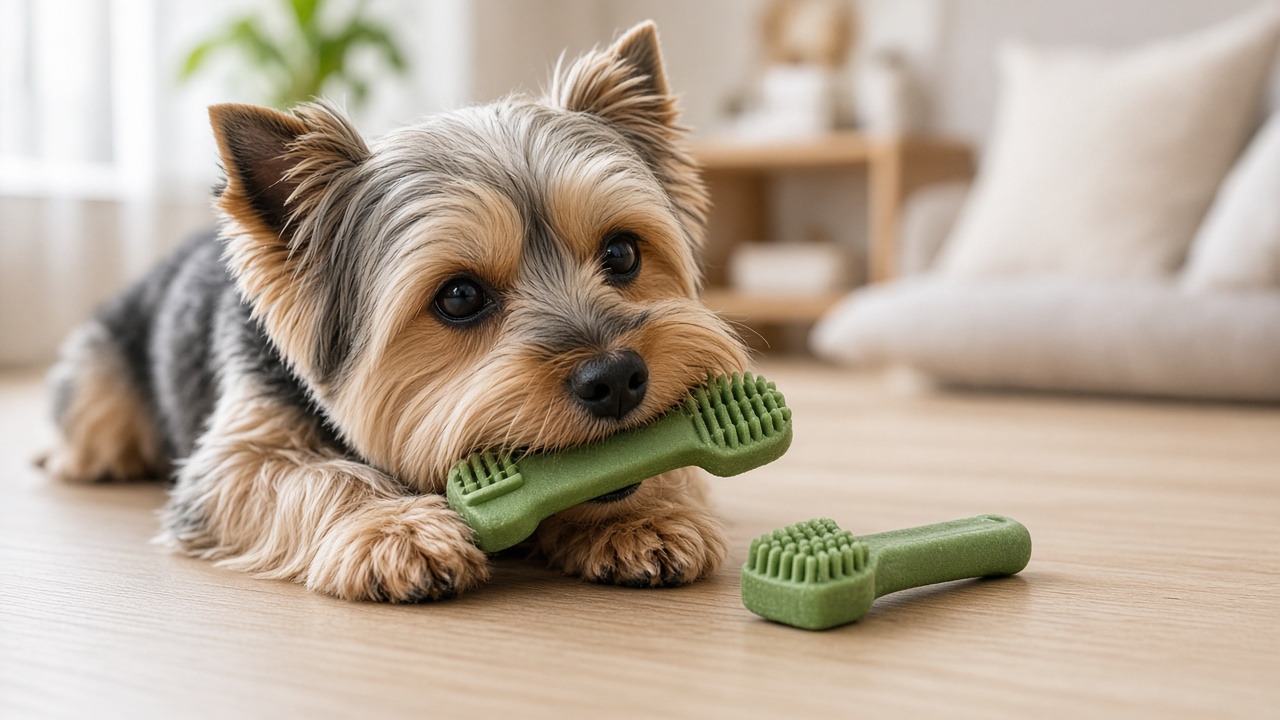
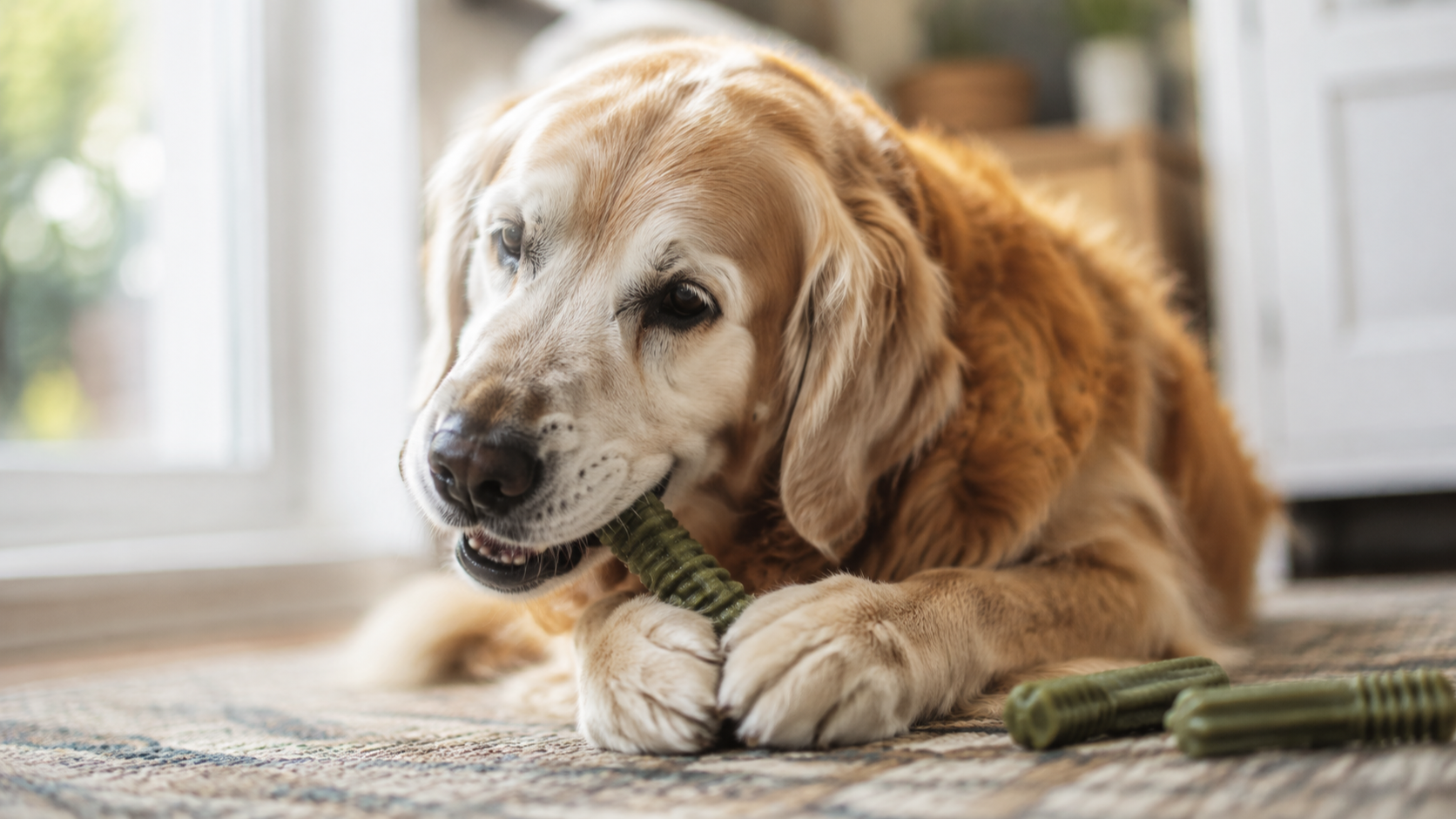
The best dog dental chew for senior dogs is a soft-to-medium, weight-banded chew — preferably VOHC-accepted — that the dog can finish without slab-fracturing a worn molar. We read current Amazon listing titles and descriptions and scored 7 SKUs. Listed snapshots ran $7.16–$33.99. 2 of 7 are explicitly senior- or gentle-chewer SKUs (Groovies Senior 5–15 lb; Greenies Senior Teenie). 2 of 7 are large-breed sticks (Dentalife Large $7.94; Pedigree Dentastix Large $16.98) that fail this checklist if the senior is a 12 lb mouth. Antlers and nylon bones score Fail on texture. AVMA-style home-care pages still treat brushing as the gold standard; a chew is a supplement.
Soft enough to bend. Sized for this dog. Calories subtracted from dinner. Clinic if it hurts.
Our guides are reader-supported. This article may contain affiliate links. As an Amazon Associate we may earn a commission if you buy through links, at no extra cost to you.
Tiny jaws without the senior constraint: dental chews for small breeds. All-size aisle: best dog dental chews.
Quick picks at a glance
- Best labeled senior / gentle small: Groovies Senior & Gentle Chewers 5–15 lb — listed $9.99.
- Best named senior Greenies band: Greenies Senior Teenie — listed $32.98; VOHC family, premium per treat.
- Best Z-shape plant chew: C.E.T. Veggiedent Fr3sh — listed $33.99; clinic-shelf texture, not a marshmallow.
- Best cheap large-breed daily: Dentalife Daily for Large Dogs — listed $7.94; only if the senior is actually large and still has a working set of teeth.
- Best soft bite / breath job: Minties FreshBites Soft and — listed $15.98; less scrape, more give.
- Best grain-free budget stick: Get Naked Dental Sticks Chicken — listed $7.16; may be too soft for heavy tartar and too firm for a gummy mouth — check the bag in your hand.
- Best grocery large stick: Pedigree Dentastix Large Breed — listed $16.98; accessible, not a senior-specific formula.
What current Amazon listings show
Three jobs. Most bags fail at least one.
| Job | What clears it | 2026 aisle fake | Fails if missing |
|---|---|---|---|
| Texture | Soft-to-medium; bends; not antler/nylon | “Dental” antler, hooves, brick biscuits | Fail |
| Size | Maker weight line matches this senior | Large stick for a 15 lb mouth | Fail |
| Claim | VOHC seal you can open on vohc.org | “Cleans like a toothbrush” with no seal | Partial |
| Chew | Listed price | Senior-labeled? | Weight honesty | Texture desk | VOHC (verify) |
|---|---|---|---|---|---|
| Groovies Senior 5–15 lb | $9.99 | Yes | Small seniors only | Gentle / soft | Check current list |
| Greenies Senior Teenie | $32.98 | Yes | Teenie = tiny adults | Bendable Greenies family | Greenies lines are commonly accepted — confirm SKU |
| C.E.T. Veggiedent Fr3sh | $33.99 | No | Size the bag, not the title | Firm plant Z — not for gummy mouths | Typically accepted — confirm |
| Dentalife Large | $7.94 | No | Large dogs | Porous daily stick | Typically accepted — confirm |
| Minties FreshBites | $15.98 | Soft/our research copy | Check bag | Soft — less mechanical scrape | Check current list |
| Get Naked Dental Sticks | $7.16 | No | Check bag | Grain-free stick | Often no seal — check |
| Pedigree Dentastix Large | $16.98 | No | Large breed | Grocery stick | Some Dentastix SKUs vary — check |
Before you shop: (1) you can flex the chew, (2) the weight line matches, (3) you will still brush or wipe. A $34 clinic chew that the dog cannot close on is a paperweight.
What the best dog dental chew for senior dogs has to do
As dogs age, enamel thins, teeth go missing, and gums get tender. Periodontal disease is already common by midlife on typical veterinary-dental pages; risk climbs after about seven years. Left alone, oral pain is a quality-of-life problem. Systemic links (heart, kidney, liver) appear in client-education language as associations — we are not restating those as a chew trial.
A senior-friendly chew balances three needs: easy on worn teeth, gentle enough for inflamed gums, tasty enough that the dog finishes it. Harder is not cleaner if the dog refuses or fractures a cusp.
The best dog dental chew for senior dogs is therefore a texture and a size, not a podium. Groovies and Greenies Senior exist because the aisle finally printed “senior” on a bag. Dentalife Large and Dentastix Large exist because large dogs buy large bags. Those are different jobs. We are not inventing a top 5.
Calorie budget desk
| Dog size | Chew kcal desk cap | Meal adjust | Watch |
|---|---|---|---|
| Small senior | 30–50 | Cut a slice of kibble | Weight monthly |
| Medium | 50–80 | Cut more than you think | Body-condition score |
| Large | 80–120 | Treats are dinner | Stool firmness |
Broken-tooth signs: drooling, one-sided chew, refusing hard kibble. Stop hard chews. See a veterinarian. We are not that veterinarian.
The 7 cards on this URL
1. Groovies Senior & Gentle Chewers Small Dog Dental Chews 5-15 lbs
Best for: small seniors with a delicate jaw and a bag that actually says senior.
Listed $9.99. Weight class is printed: 5–15 lb. That is the product. Owner-report themes talk palatability for picky, dental-sensitive dogs.
Honest drawback: it does not become a large-breed chew if you buy two. A 60 lb senior needs a different card.
Check Groovies Senior 5–15 lb listings →
2. Greenies Senior Teenie Size Adult Natural Dental Dog Treats
Best for: a named senior Greenies in the Teenie band.
Listed $32.98. Greenies is the dental-treat brand most listings treat as default. Senior + Teenie is the small-mouth senior sentence. VOHC acceptance is the usual Greenies story — confirm the exact SKU on vohc.org. Premium per treat.
Honest drawback: price, grain base on typical Greenies, and Teenie still vanishes in seconds for a determined chewer. Senior is a formula/size flag, not a promise the teeth are safe.
Check Greenies Senior Teenie listings →
3. C.E.T. Veggiedent Fr3sh Plaque and Tartar Control Chews for Dogs
Best for: a plant-based Z-shape when the senior still has a working bite.
Listed $33.99. Virbac C.E.T. VeggieDent / Veggiedent Fr3sh is the clinic-shelf chew: Z-shape, plant formula, tartar-control marketing, typically VOHC-accepted. That texture is not a gel bite. Owners of seniors with moderate wear sometimes keep it; owners of gummy mouths should not.
Honest drawback: premium price. Size the bag. A large Z in a tiny senior is the same mistake as a large Greenies.
Check Veggiedent Fr3sh listings →
4. Dentalife Daily Dental Chews for Large Dogs
Best for: large seniors who still have a relatively full set of teeth and need a cheap daily stick.
Listed $7.94. Porous daily chew. Often VOHC-accepted in the DentaLife family — confirm SKU. Value is the point.
Honest drawback: large dogs is on the title. This card fails the checklist for a 15 lb senior. Not a severe-tooth-loss chew. If the dog cannot close on a grocery stick, this is not kindness.
Check Dentalife Large listings →
5. Minties FreshBites Soft and Dental Treats
Best for: older dogs who cannot handle a firm stick and still want a daily mouth job.
Listed $15.98. Soft-and-our research copy is the reason this card is on a senior page. Breath-freshening is the usual marketing. Mechanical scrape is lower than a ridged VOHC stick. That is the trade.
Honest drawback: if you need maximum abrasion, this is the wrong job. If you need the dog to finish something without a fracture, this is the closer job.
Check Minties FreshBites listings →
6. Get Naked Dental Sticks Grain-Free Chicken Flavor Dog Treats
Best for: seniors whose household is already avoiding grain, at a grocery price.
Listed $7.16. Grain-free chicken flavor. Digestibility is the owner-report theme. Texture sits in the “stick” class — not automatically senior-soft.
Honest drawback: may be too soft for people chasing tartar ridges and too firm for a mouth with missing premolars. Hold it. Flex it. If it feels like a biscuit brick, skip it. Often not the VOHC headline — check the list.
Check Get Naked Dental Sticks listings →
7. Pedigree Dentastix Large Breed Dental Dog Treats
Best for: budget large-breed households that will actually repurchase.
Listed $16.98. Everywhere. Consistent grocery stick. Large-breed jaw size is the design brief.
Honest drawback: ingredients may not suit sensitive seniors. Not a senior-specific line. Monitor texture against this dog’s remaining teeth. Some Dentastix SKUs carry VOHC and some do not — open the current list.
Check Dentastix Large listings →
Chews senior dogs should avoid
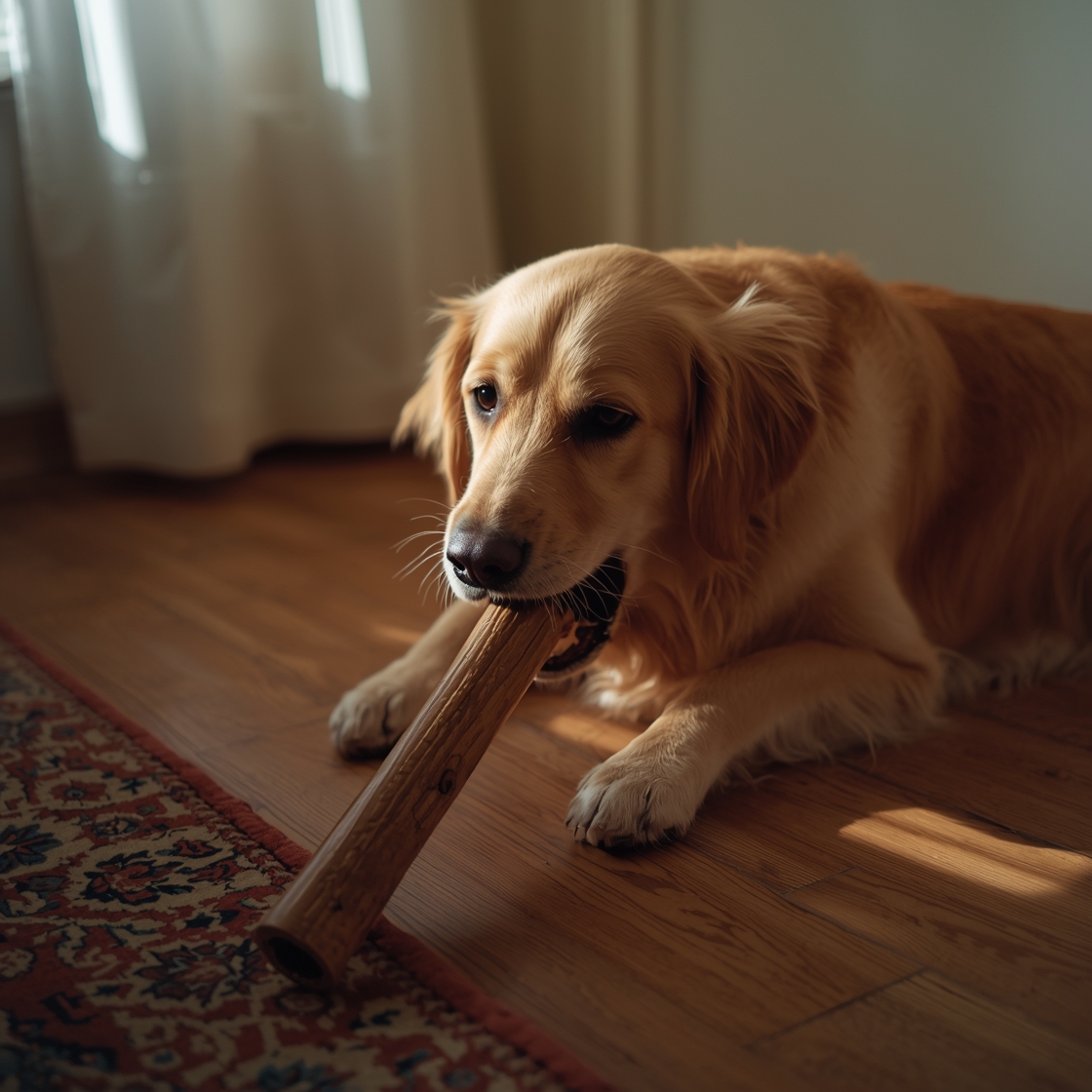
Rock-hard objects. Antlers, nylon bones, hooves, dense biscuits that would threaten a human tooth. Veterinary dental pages treat these as slab-fracture risks. Aging enamel does not get a vote.
Wrong size. A large-breed stick in a 12 lb senior is a lever on a worn cusp. This checklist fails that pair even if the bag says “dental.”
Rawhide. Choke and GI obstruction stories. Not a senior plan.
Human dental products. Xylitol is toxic. Do not improvise.
Artificial colors and flavors are a preference and sensitivity issue, not a PetBench toxicity trial. If the first three ingredients are dye and sugar, pick another bag.
Soft, medium, hard — a desk you can do at the store
| Feel in your hand | Senior ok? | Examples on this page | Limitation |
|---|---|---|---|
| Bends / squashes | Usually yes | Groovies Senior, Minties FreshBites, Greenies Senior Teenie | Less scrape |
| Slight give, holds shape | If the dog still has molars | Veggiedent, Dentalife Large, Dentastix Large, Get Naked | Too much for gummy mouths |
| Bone / antler / nylon | No | Not on this card set on purpose | Fracture risk |
Daily chew time of 5–10 minutes does not replace brushing. That swap is not in veterinary home-care guidance.
Why “senior” on the bag is not a diagnosis
A 7-year-old Giant Schnauzer and a 14-year-old Yorkie are both called senior in casual speech. Their remaining teeth are not the same object. The current Amazon listing review (Senior Chew Texture) treats this mouth, not the birthday.
Senior-labeled SKUs (Groovies Senior, Greenies Senior Teenie) exist because someone finally printed the constraint. They still fail if you ignore the weight line. Greenies Senior Teenie is a tiny senior sentence. It is not a 70 lb Labrador sentence.
Large-breed cards on this URL (Dentalife Large, Dentastix Large) exist because the live product set included them. They are honest only when the senior is actually large and can still close on a grocery stick. Putting them on a 12 lb dog because the title says “dental” is how This checklist fails.
When a chew is the wrong object entirely
Loose teeth. Draining tracts. A mass on the gum. Inability to close the mouth. Sudden drop in eating. Pawing at the face. Those are clinic patterns. A softer chew is not a treatment plan.
Anesthesia-free “dental” kiosks market themselves as senior-friendly because owners fear anesthesia. Typical veterinary-dental position statements treat a complete cleaning (below the gumline, with dental films) as a medical procedure, not a grooming add-on. We are a research desk. We will not pretend a chew or a kiosk scaler replaces films. If your veterinarian has staged an extraction, the post-op mouth is a soft food problem first. Ask that clinician when a dental stick is allowed again. Do not take this URL as the all-clear.
Kidney, heart, and the sodium you are not counting
Some seniors live on prescription renal or cardiac diets. Treat calories and sodium are not free. If the dog is on a restricted diet, the chew is a question for that veterinarian — including “no chew.” Get Naked’s chicken flavor and Dentastix’s grocery formula are not automatically “renal safe” because they are cheap.
Water intake matters more on a hot day with a salty treat. That is not a trial. It is a bowl.
After extractions — re-entering the aisle slowly
A dog that just lost four premolars is not ready for Veggiedent’s Z-shape on day three. Start with whatever the discharge sheet named. When you return to this aisle, start at the soft end (Minties FreshBites, Groovies Senior if the weight matches) and stay there until a recheck says the extraction sites are quiet.
“He misses his Greenies” is not a healing metric.
Small senior vs large senior — stop using one bag for both
| Household | First listing | Fails checklist |
|---|---|---|
| 8–15 lb senior, some missing teeth | Groovies Senior or Greenies Senior Teenie or Minties | Dentalife Large, Dentastix Large, firm WHIMZEES-class sticks from the small-breed page |
| 15–25 lb senior, decent molars | Greenies Senior if the band fits; or a medium VOHC stick sized correctly | Antlers; “just use the large bag and break it” |
| 50+ lb senior, full-ish mouth | Dentalife Large or Dentastix Large if texture is still safe; confirm VOHC SKU | Teenie as the only chew (calories and contact time are a joke) |
| Any senior, gummy mouth | Soft chew or wipe + clinic | “Step up hardness to clean better” |
The small-breed dental page is the size sister. This page is the texture sister. Use both when the dog is a 10 lb twelve-year-old.
Calories stacked — the hidden senior weight gain
Seniors already slow down. A daily $8 stick plus training treats plus a “just this once” biscuit is how body-condition slides. this comparison's calorie caps (30–50 / 50–80 / 80–120 kcal) are desk caps, not feeding trials. Subtract from the bowl. Weigh monthly. A fatter senior is not a happier mouth — obesity shows up on ACVS-style aftercare lists for other conditions and does not help dental surgery recovery.
Do not run two “daily” dental products. Pick one.
Breath is a clue, not a product category
Minties markets breath. Sudden septic breath is periodontal disease or a foreign body or a necrotic tooth. A minty bag will perfume the living room and leave the tooth. If breath changed in a week, skip the aisle.
Chronic “old dog breath” that never changes is still worth a dental exam. Owners normalize it. Clinics do not have to.
How to offer a chew to a cautious senior
Warm the treat in a closed hand for a minute if the dog is scent-driven and the house is cold. Sit on the floor. Do not hover the way you hover a pill. If the dog mouths and drops, the texture may hurt. Stop. A dropped chew is data.
If the dog takes it to a crate and you hear cracking like ice, you bought too hard. Take it away. That sound is not “working.”
If you need a number, use a manufacturer number (Virbac publishes VeggieDent figures on the small-breed sister page) or a VOHC seal you can open. Do not use a blog’s “38% after 30 days” unless you can name the study.
Professional cleaning vs the $8 bag
The $7.94 Dentalife bag is a maintenance habit. It is not a substitute for the cleaning your veterinarian already said is due. Delay has a cost in extractions. We will not soften that to sell a stick.
If money is the block, ask the clinic about staging — films and the worst quadrant first — rather than two years of grocery sticks and hope. That advice is household triage, not a treatment protocol.
Multi-dog houses and the senior who “just wants one bite”
The young dog’s WHIMZEES is a weapon in a senior mouth. Feed dental treats in crates or rooms. the listing review cannot save you from a stolen antler.
Frequently missed label lines
“For large dogs.” Believe it.
“Senior.” Believe it as a marketing flag, then still flex the chew.
Calories per treat. If missing, assume it is not free and email the brand or pick a bag that prints them.
VOHC seal. Confirm SKU. “Dental” in the title is not the seal.
How to shop the best dog dental chew for senior dogs without a podium
Walk the aisle with three questions on a note:
- Can I flex this? If no, it is not for a worn mouth.
- Does the weight line match this dog? If the bag says large and the dog is 14 lb, put it back.
- Can I open a VOHC line for this exact name? If you care about a plaque/tartar claim, yes. If you only need a soft calorie-controlled treat the dog will finish, a non-seal soft chew can still be the safer object — just do not call it a cleaning.
Then buy one bag. Run it two weeks. Watch stool, weight, and whether the dog drops the piece. Switching bags every three days is how you learn nothing and spend $80.
If two bags tie on flex and weight, pick the cheaper one you will repurchase. Compliance beats a $34 Z-shape that stays in the pantry.
Print the current Amazon listing review (Senior Chew Texture) table. Circle the row that matches. That circle is the shopping list. Everything else is aisle lighting.
Homes that already brush four days a week can treat the chew as optional enrichment. Homes that never brush should not pretend seven Dentastix close the gap. Start the brush or a wipe the same week you open the bag. The best dog dental chew for senior dogs is the one that fits beside that habit, not instead of it.
Pharmacy-shelf “dental water additives” are a different product family. They do not flex. They do not replace a stick or a brush. If a clinician named one, that is that clinician’s plan.
Frequently Asked Questions
Are antlers the best dog dental chew for senior dogs?
No. Too hard for worn dentition. Choose a softer, preferably VOHC-listed stick or treat sized for weight.
What is the best dog dental chew for senior dogs with missing teeth?
A soft chew the dog can gum safely — Minties FreshBites or a senior/gentle SKU like Groovies — plus a veterinarian, because missing teeth often means disease you cannot see. Do not “step up” to a harder stick to compensate.
How often should I give my senior dog a dental chew?
Follow the bag if the texture is safe. Many daily sticks are built for once a day. Three to five times a week is a common household rhythm when calories are tight.
Can dental chews replace brushing?
No. Chews loosen some surface plaque. Brushing reaches the gumline and contact points. Combine both. Wipes are a fallback if the mouth cannot take a brush.
What texture should I look for?
Soft to medium. Pliable. If you would not want it slammed on a human molar, do not give it to a 12-year-old dog.
What warning signs mean stop?
Choking, large swallowable shards, drooling, gum bleeding, one-sided chewing, sudden refusal. Persistent bad breath or loose teeth is a clinic, not a different flavor.
Is Greenies Senior worth the price vs grocery Dentastix?
You are paying for a senior/Teenie size band and the Greenies VOHC reputation. Dentastix Large is cheaper and only honest if the dog is large and can still chew a grocery stick. Price is not a plaque assay.
Related pages
Worked households (desk models, not case studies)
Household 1 — 11 lb mixed-breed, 13 years, missing premolars, still eats kibble. Groovies Senior 5–15 lb or Minties FreshBites. Flex first. Subtract 30–50 kcal from dinner. Brush or wipe the days you skip the chew. Dentalife Large is a fail. Antlers are a fail. Greenies Senior Teenie is a maybe if the dog can still close on a Teenie without cracking — watch the first three.
Household 2 — 65 lb Labrador, 10 years, tartar ridge, still steals the young dog’s sticks. Dentalife Large or Dentastix Large if a hand-flex still gives. Confirm VOHC SKU. Crate the young dog during dental time. Calories 80–120 cap. If the Labrador’s chew sounds like ice, you are too hard — step toward a senior-labeled large SKU or a clinic, not toward nylon.
Household 3 — 22 lb spaniel, 12 years, on a renal diet. Do not pick from this page without the prescribing veterinarian. Sodium and phosphorus are not printed as a PetBench column because “Grain-free” is not renal. “Senior” is not renal.
Household 4 — any senior, last cleaning was “years ago,” breath changed this month. Stop the aisle. Book films. The $7.94 bag will still be there after the estimate.
These four models are why a single “winner” on a senior URL is a lie. This checklist is a filter. Your house is the rank.
Travel: pack the same flex-tested SKU, not a gas-station antler. Hotels are how people “treat” a senior with the wrong object. Boarding: write “soft dental only — no hooves, no nylon” on the intake form. Staff default to whatever is in the enrichment bin.
If you already own a freezer full of marrow bones, that freezer is not a senior dental program. Bones are a fracture and GI story. We are not adding a bone card to this URL.
Homes that rotate seven bags “to keep it interesting” rotate calories and risk. Pick one daily object. Interesting is a walk, not a harder stick.
Coat color does not pick a chew. White muzzles show tartar earlier in photos; that is lighting, not a different SKU. Black muzzles hide tartar until breath or eating changes. Photograph the gumline in the same window light once a month if you like logs. A photo is not a film. It is how you notice a sudden chip.
Seniors on pain medicine for arthritis still have mouths. A chew is not a reason to skip the dental exam because “he is already on so much.” Polypharmacy is a clinic conversation. Adding an unlisted herbal dental stick to that pile without asking is how desks create problems they then deny.
If the dog is crate-resting after back surgery or a fall, a long chew session on the shoulder is not rest. Use a wipe. Return to a flex-tested stick when the clinician clears activity. The best dog dental chew for senior dogs can wait a week. A surgical site cannot wait while you invent enrichment.
Cold weather makes some sticks brittle. Brittle is hard. Flex again when the bag has sat in a garage. Summer cars make soft chews into pudding that a senior inhales. Neither garage nor dashboard is a pantry.
Rescue seniors with unknown dental history get the softest card and the fastest clinic slot, not the biggest “value” bag. Unknown mouths are how grocery sticks become emergency extractions.
A final pass on the seven cards: Groovies Senior and Greenies Senior Teenie are the only bags that bother to say senior in the title. Minties is the soft-job card. Veggiedent is the firm clinic-shelf card. Dentalife Large and Dentastix Large are large-dog grocery cards that fail small seniors on purpose. Get Naked is the grain-free price card that still has to flex. If your cart has all seven, you built a collection. If your cart has the one row that matches weight and flex, you used the checklist. Collections do not clean teeth. Matched objects might help a little, beside a brush, beside a clinic. That is the honest ceiling of a chew.
Neighbors will offer antlers “because my dog lived to sixteen on them.” Survivorship is not a protocol. The dogs who fractured molars are not at the barbecue. Take the antler home and put it in the donate box, or smile and leave it on their porch. Your senior does not need a souvenir.
If this URL helped you skip one hard object, it did the job. If it sold you seven cards, it failed. Buy the matched row. Flex it. Subtract the calories. Brush. Book the cleaning you already know is due. Then stop shopping. The aisle will still be there next year. The tooth that you save this year is the one that still eats breakfast. That is the only ranking that matters on a senior dental URL, and it will never appear as a stars-out-of-five on a marketplace tile. Print the checklist. Circle one row. Flex the bag in the store if you can, or flex it on the porch when it arrives, and send it back if it fights your thumbnail. A return is cheaper than an extraction. Your veterinarian still owns the mouth; this research desk only owns the filter on the aisle.
How we researched this guide
Limitations: prices move; VOHC lists update; large-breed cards on a senior URL will mislead if you ignore the weight line. Oral pain is a veterinarian.