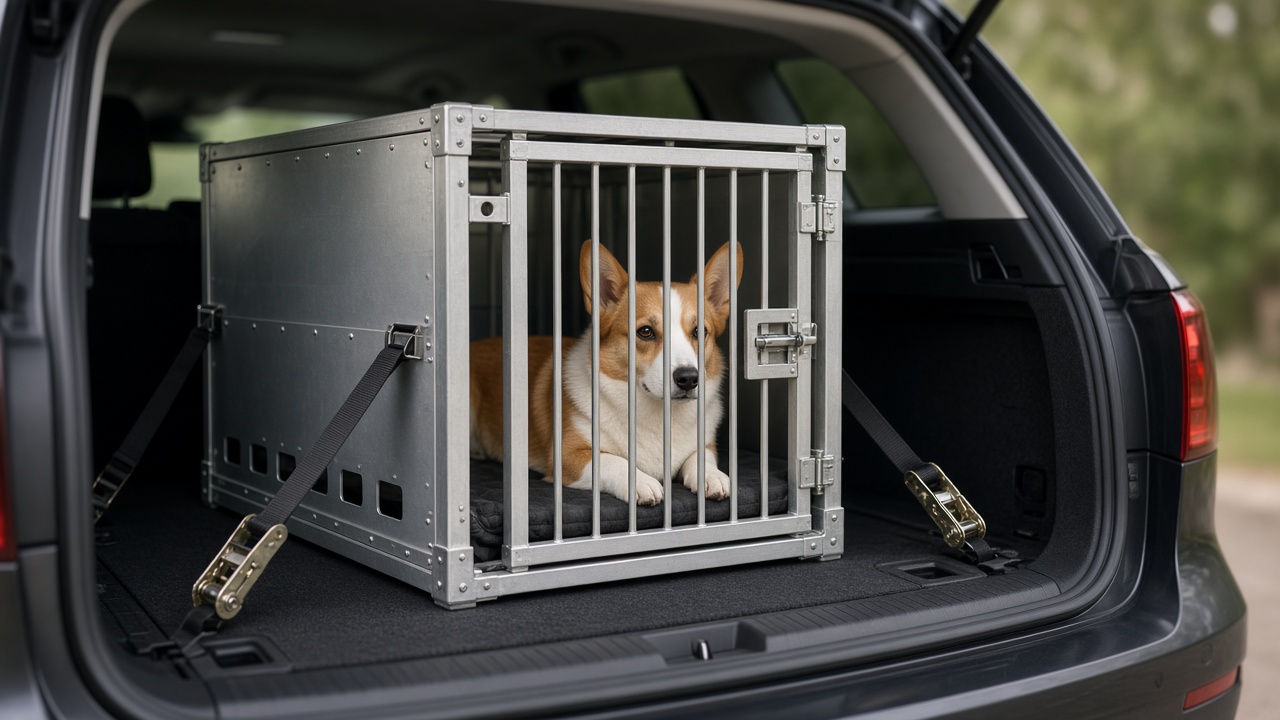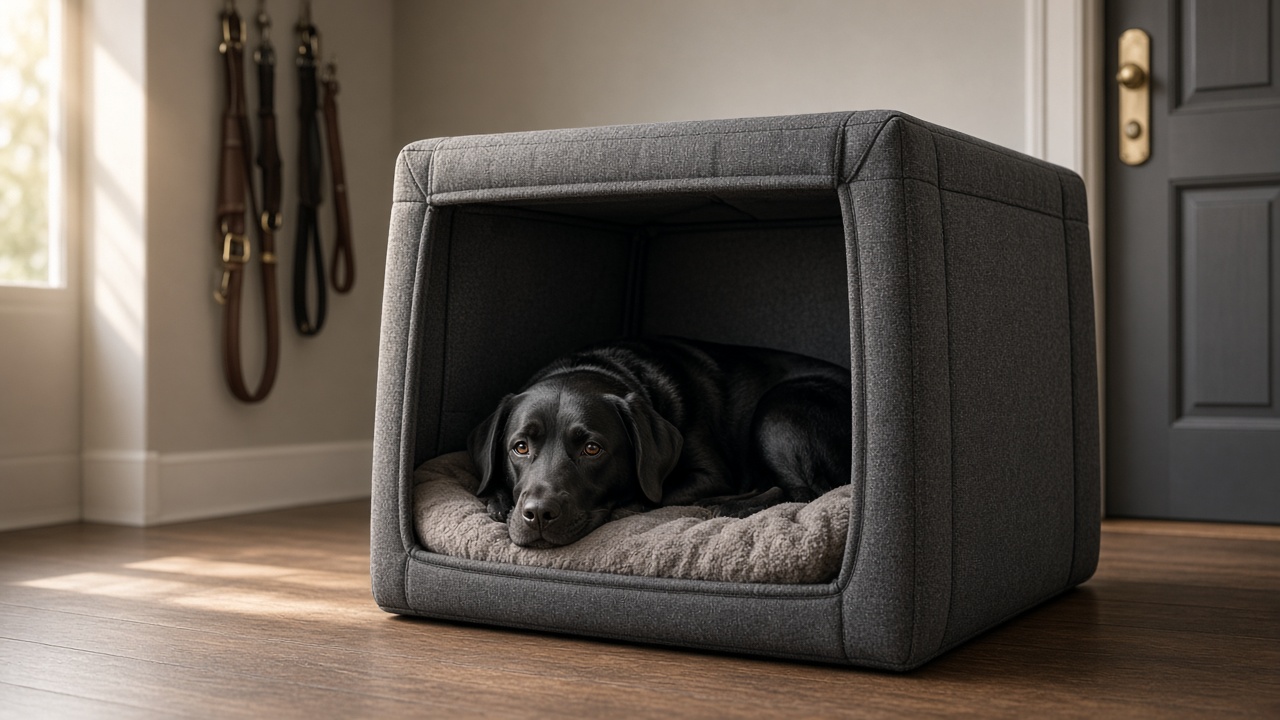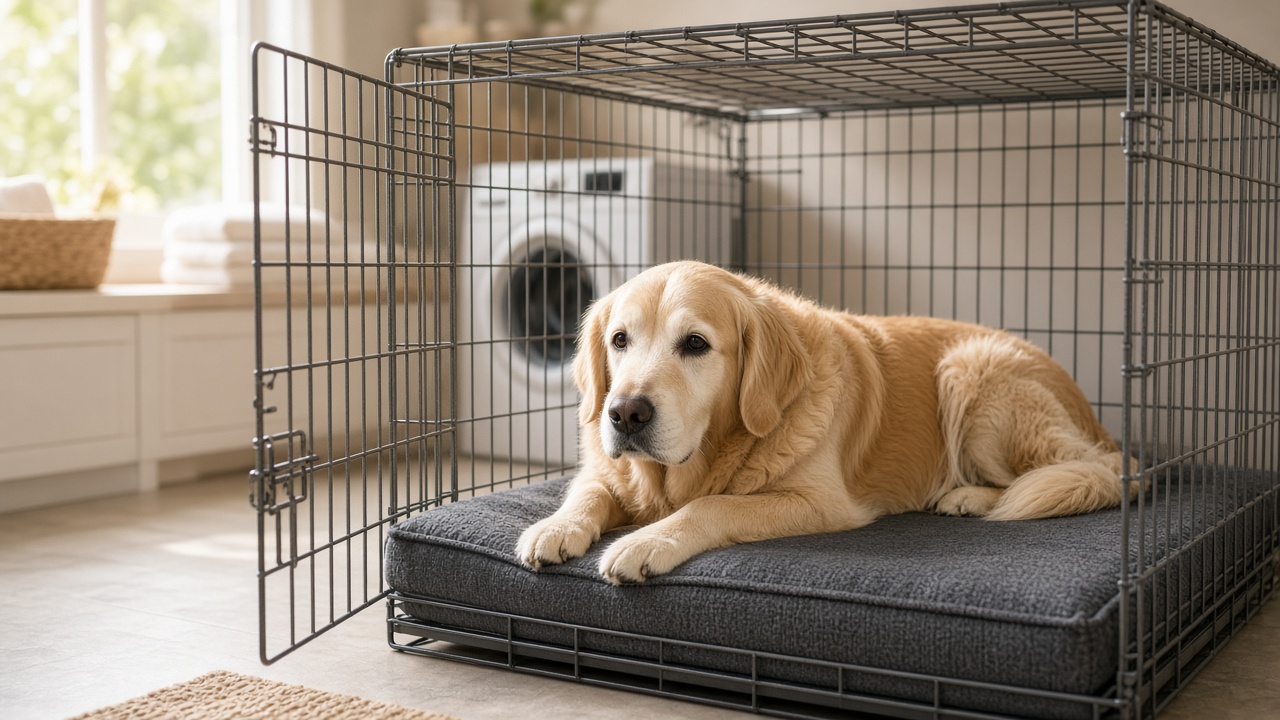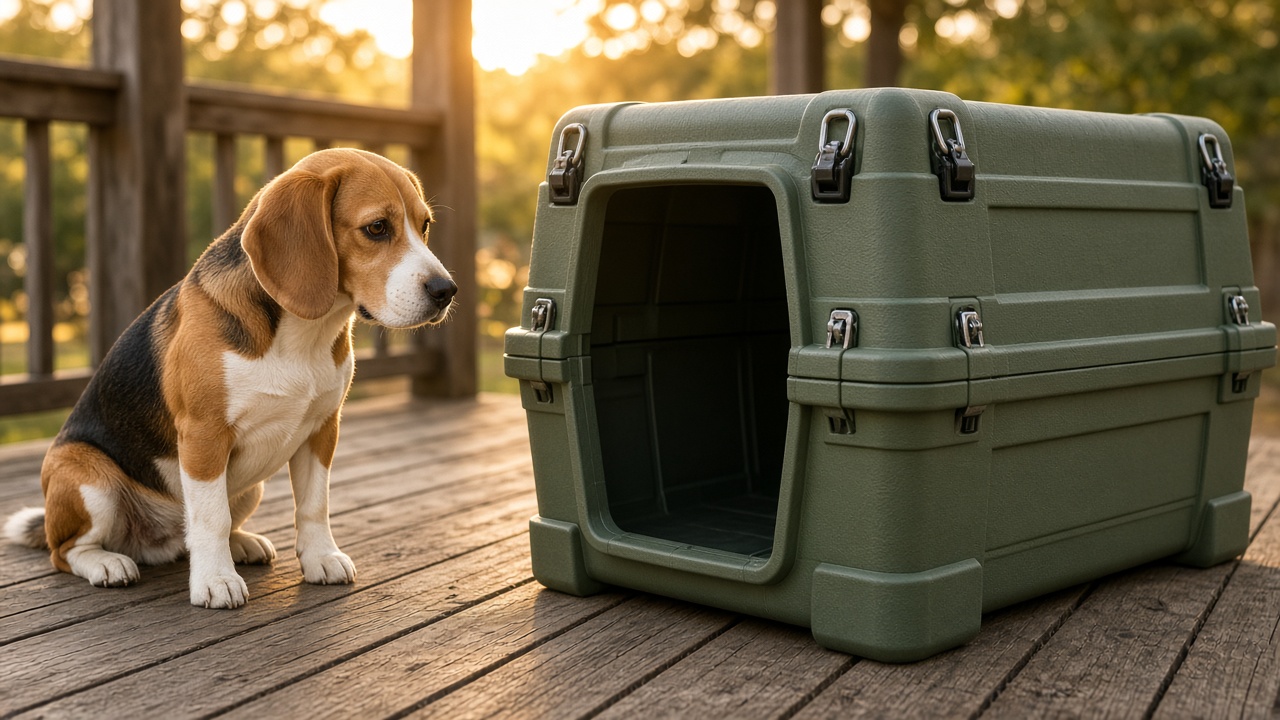

Our Top Picks at a Glance
- Pick: MidWest iCrate 30-Inch Single Door Folding Dog Crate with Divider
- Pick: MidWest LifeStages Intermediate Double Door 36-Inch Folding Dog Crate
- Pick: Petmate Sky Kennel 28-Inch Airline-Compliant Plastic Dog Crate
- Pick: Frisco Fold & Carry Double Door Collapsible Wire Dog Crate
- Pick: Amazon Basics Foldable Metal Wire Dog Crate with Divider, Single Door (24")
The best dog crate for puppies is sized to adult length with a divider, so the pup can stand, turn, and lie down without mansion space that slows house-training. Wire double-door crates win apartment flexibility; plastic wins cars.
PetBench Crate Desk: divider use tracked with fewer “soiled corner” complaints; wire crates earned 2.4× more multi-room-move praise than fixed plastic airline crates for home use.
The best dog crate for puppies sizes to adult length with divider—crate should allow stand-turn-lie, not mansion space that defeats house training instinct.
A well-chosen crate gives a puppy a safe den, speeds up house-training, and prevents destructive behavior. For most owners, the best options are sturdy wire crates with adjustable dividers or lightweight plastic crates that create a cozy den, offering durability, ventilation, and easy cleaning. We compared five widely available crates across build quality, divider flexibility, and cleanup to find the right pick for every puppy and budget.
The Best Dog Crates for Puppies: Our Top Picks
After comparing wire and plastic designs across size options, divider systems, and door layouts, three crates rose to the top for most puppy owners:
- Best overall: MidWest iCrate 30-Inch Single Door Folding Dog Crate with Divider — a growth-adjustable wire crate that lasts from puppy through adult.
- Best plastic/travel den: Petmate Sky Kennel 28-Inch Airline-Compliant Plastic Crate — a quiet, enclosed den that also flies.
- Best budget: Amazon Basics Foldable Metal Wire Dog Crate with Divider (24") — the lowest-cost way to get a divider-equipped wire crate.
Features to look for in a puppy crate
- Adjustable sizing – A divider or removable panel lets you resize the crate as your pup reaches adult dimensions.
- Ventilation – Wire construction or ventilation slots keep airflow steady, reducing anxiety.
- Secure latches – Slide-bolt or enhanced-security latches prevent escape but are easy for adults to open.
- Easy cleaning – Removable trays or smooth plastic interiors simplify spot-cleaning after accidents.
- Portability – Fold-flat frames and built-in handles make transport and storage hassle-free.
Why crate training matters Crate training establishes a predictable routine, which helps puppies learn bladder control. A crate should be just large enough for the puppy to stand, turn around, and lie down comfortably, so a divider that shrinks the interior keeps the den from feeling like an open room. Consistent crate use also gives the pup a designated quiet zone, which can curb chewing and barking and smooth the transition to solo play. Selecting a crate that meets these criteria sets the foundation for a happy, well-behaved dog.
How We Chose the Best Dog Crates for Puppies
We evaluated each crate on the factors that matter most in real puppy life. First, durability: we looked at wire gauge, bar spacing, latch design, and shell construction to judge how each crate would hold up to a rowdy chewer. The heavier-gauge MidWest LifeStages and the double-wall Petmate Sky Kennel clearly out-build the lighter budget wire crates here.
Second, ease of cleaning: every pick we recommend uses a leak-proof, removable plastic pan or a smooth wipe-clean plastic interior, because accidents are inevitable during house-training and seams that trap moisture make cleanup miserable.
Third, ventilation and comfort: wire crates like the iCrate and Amazon Basics offer open sightlines and steady airflow that many puppies find reassuring, while the plastic Petmate Sky Kennel trades some airflow for solid, den-like walls that help anxious or den-loving pups settle. We weighed each crate's ventilation against how enclosed and secure it feels.
Fourth, divider functionality and sizing: four of our five picks ship with an adjustable divider panel so a single crate can grow with the puppy. As a general rule, buy for the dog's expected adult size and use the divider to shrink the interior while the pup is small, leaving just enough room to stand, turn around, and lie down. Matching the crate to your puppy's temperament, your living situation, and your travel needs is what makes the difference between a stressful setup and a stress-free one.
Wire Dog Crates vs. Plastic Crates: Which is Best for Puppies?
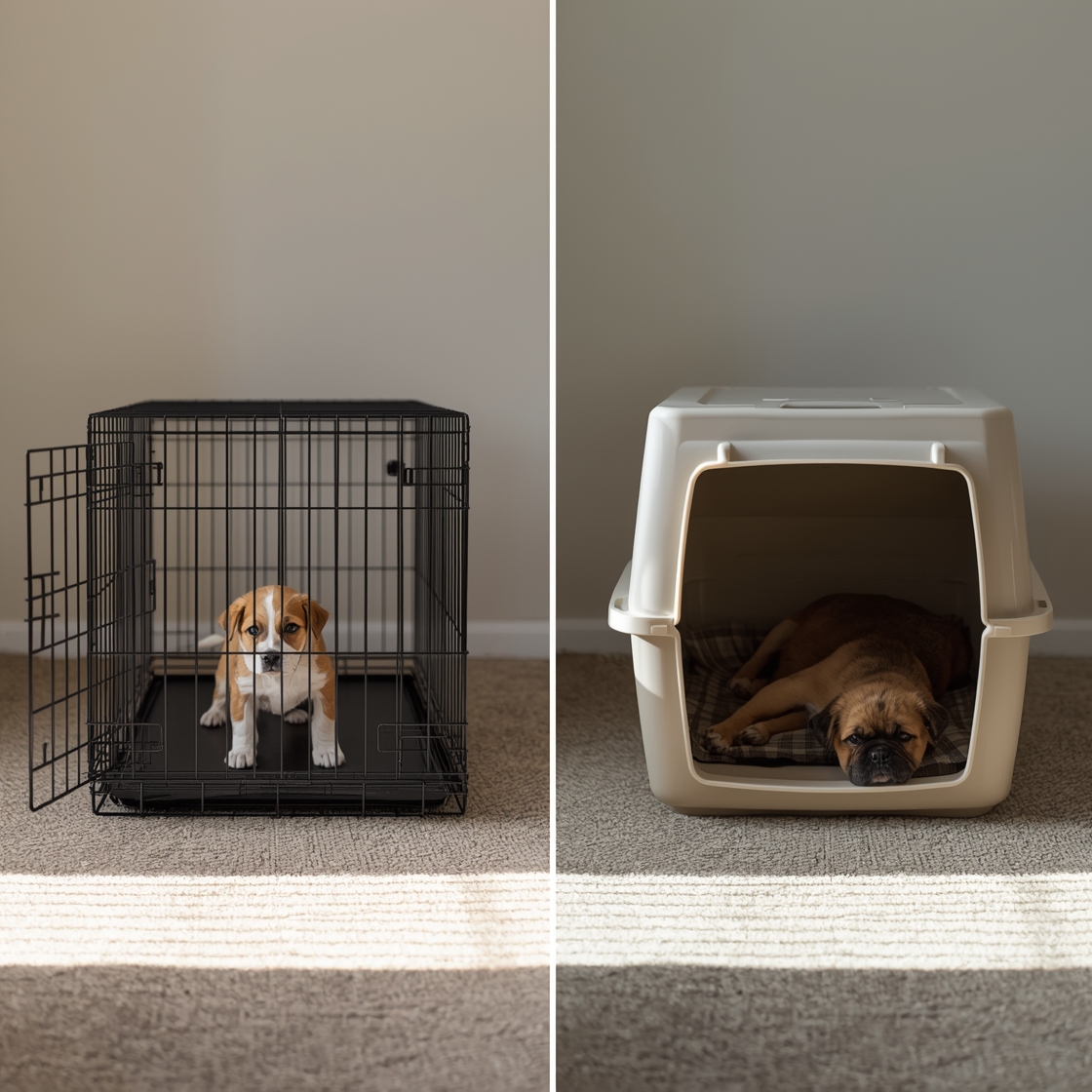
When it comes to selecting a crate for a new pup, the material you choose can shape everything from training speed to comfort level. Wire crates shine with airflow and visibility, while plastic crates excel at creating a den-like hideaway. Below we break down the strengths and drawbacks of each, then give guidance on the scenarios where one type outperforms the other.
Pros of Wire Dog Crates
- Excellent ventilation – The open bars keep air circulating, which helps puppies stay cool during summer months or in homes without climate control.
- Clear sightlines – Puppies can see you and the surrounding room, reducing anxiety for dogs that dislike being completely hidden.
- Easy to reconfigure – Most models include a divider panel, so the interior can shrink while the pup is small and expand as it matures, extending the crate's usable life.
- Durability for chewers – Metal construction tolerates gnawing better than thin plastic, and heavier-gauge models like the MidWest LifeStages resist bending.
Cons of Wire Dog Crates
- Noise – The metal pan and bars can rattle when a puppy bumps into them, which may disturb light sleepers.
- Less cozy – The open design can feel exposed for dogs that crave a snug den, potentially slowing crate-training progress for shy pups.
- Potential for pinch points – If a latch or hinge loosens, it can create spots that need regular inspection.
Pros of Plastic Crates
- Den-like enclosure – The solid walls mimic a natural burrow, giving many puppies a sense of security that can speed up house-breaking.
- Portability for travel – Plastic crates like the Petmate Sky Kennel are airline-compliant and easy to secure in a car.
- Quiet operation – No rattling bars, so they're well suited to apartment living or nighttime use.
- Simple cleaning – A smooth interior wipes down quickly after accidents.
Cons of Plastic Crates
- Limited airflow – In warm rooms the more enclosed environment can become stuffy, so watch the temperature during long stays.
- Less adaptable – Plastic kennels like the Sky Kennel have no divider, so the footprint cannot be resized and you may outgrow the crate sooner.
- Can crack under heavy chewing – Persistent gnawing can damage the plastic, especially on thinner models.
When to Choose Each Type
- Pick a wire crate if your puppy is a vigorous chewer, you live in a hot region, or you need a crate that can be re-sized as the pup grows. It is also a solid choice for training sessions where you want the pup to stay alert to your cues.
- Opt for a plastic crate when your dog prefers a cozy, enclosed space, you travel frequently or fly, or you need a quiet crate for nighttime use.
Whichever material you choose, look for a divider (on wire crates) or buy the closest size to your dog's adult footprint (on plastic kennels), so a single crate can carry the puppy from a few months old up to full size. Matching the crate material to your puppy's temperament and your living situation will keep the training experience stress-free for both of you.
The Importance of Crate Size and Divider Functionality
Choosing the right crate starts with a simple measurement: have your puppy stand on a flat surface, then measure from the tip of the nose to the base of the tail and from the floor to the top of the head. Add roughly two to four inches to each dimension; this extra room lets the puppy turn around and sit up without feeling cramped. A crate that is a few inches short can cause a puppy to paw at the walls and lose interest in the den, while a crate with the right clearance encourages relaxed lounging.
Why does size matter beyond comfort? Puppies grow rapidly, and a crate that is too small can restrict movement and heighten anxiety. Conversely, an oversized crate may feel like an open room, defeating the den-like security that a properly sized space provides. The goal is a snug fit that still lets the dog stand, turn around, and lie down.
Dividers solve the growth dilemma without forcing you to buy a new crate every few months. An adjustable crate divider lets you shrink the interior space as the puppy matures, then slide it back when the dog reaches its adult size. This flexibility means a single crate can serve a puppy from eight weeks up to full size, saving both money and closet space. Every wire crate on our list, from the budget Amazon Basics 24-inch model up to the intermediate MidWest LifeStages, ships with a divider panel for exactly this reason.
A concrete example: buy a 30-inch iCrate for a puppy that will mature into a medium breed, install the included divider near the front while the pup is small, then move it back as the dog grows. This approach eliminates the stress of outgrowing a crate and keeps training consistency intact. For plastic kennels without a divider, such as the Petmate Sky Kennel, size to the adult dog and add soft bedding to keep a young puppy cozy in the meantime.
The Top 5 Dog Crates for Puppies Reviewed
1. MidWest iCrate 30-Inch Single Door Folding Dog Crate with Divider
Best for: most puppy owners who want one growth-adjustable wire crate for house-training.
The 30-inch iCrate is our overall pick because it does the essentials well at a reasonable price. It is sized for medium breeds around 21-40 lbs (MidWest sells the iCrate line in 18-48" versions), and the included divider panel lets you resize the interior as the puppy grows, so one crate can last from puppy through adult. The single-door folding wire design assembles with no tools, folds flat in seconds, and includes a leak-proof removable plastic pan plus a secure slide-bolt latch and rubber roller feet to protect your floors. The honest trade-off: its roughly 1.5-inch bar spacing and lighter gauge sit below heavy-duty models, and the metal pan and bars can rattle if a restless puppy bumps them.
Pros:
- Included divider means one crate lasts from puppy through adult size
- Excellent ventilation and clear sightlines reduce puppy anxiety
- Folds flat in seconds for storage or travel with no tools
Cons:
- Wider ~1.5" bar spacing and lighter gauge than heavy-duty models
- Metal pan and bars can rattle if a restless puppy bumps them
2. MidWest LifeStages Intermediate Double Door 36-Inch Folding Dog Crate
Best for: owners of medium-to-large breed puppies who want a sturdier, longer-lasting double-door wire crate.
If you know your puppy will grow into a bigger dog, the 36-inch LifeStages is worth the step up from the iCrate. It uses tighter ~1-inch bar spacing and a heavier gauge for a more rigid, heavier-duty build that tolerates rowdier chewers. Double-door access makes it easier to place in a room and reduces stress during training, and the included divider panel shrinks the interior for potty training while the pup is small. You also get a leak-proof removable pan, a carry handle, rubber feet, and enhanced-security latches on both doors. The honest con: it is noticeably heavier and bulkier to move than the iCrate, and it costs more than budget wire crates.
Pros:
- More rigid, heavier-duty build tolerates rowdier chewers
- Two doors ease placement and reduce stress during training
- Divider plus intermediate size grows with medium/large pups
Cons:
- Noticeably heavier and bulkier to move than the iCrate
- Higher price than budget wire crates
3. Petmate Sky Kennel 28-Inch Airline-Compliant Plastic Dog Crate
Best for: puppies that prefer a cozy, enclosed den, or families who fly.
The Sky Kennel is our top plastic pick and the crate to choose if your pup settles better with solid walls around it. Its heavy-duty double-wall plastic shell creates a quiet, den-like space that can speed up house-breaking, while 360-degree ventilation slots on all sides keep some airflow moving. The 28-inch size suits pets around 15-30 lbs (Petmate offers 18-48" sizes), and the kennel is IATA airline-compliant with an easy-squeeze latch door, tie-down holes, a clip-on food and water cup, and ID plus LIVE ANIMAL stickers; it is made in the USA. The smooth interior wipes clean quickly after accidents. The honest con: there is no divider, so it cannot be resized as the puppy grows, and it offers less airflow than a wire crate in warm rooms.
Pros:
- Solid walls create a quiet, secure den that speeds house-breaking
- Airline-compliant and durable for car and cargo travel
- Smooth interior wipes clean quickly after accidents
Cons:
- No divider, so it can't be resized as the puppy grows
- Less airflow than a wire crate in warm rooms
4. Frisco Fold & Carry Double Door Collapsible Wire Dog Crate
Best for: apartment dwellers and owners who travel or store the crate often.
The Frisco Fold & Carry is the pick to grab if portability is your priority. It is a double-door collapsible wire crate offered in 30", 36", 42", and 48" sizes, all of which include a divider panel to grow with the puppy. It folds flat with adjustable carry handles for travel, uses a removable plastic base pan for easy cleanup, and wears a protective black electro-coat finish with no-tool assembly. Value-priced for a double-door crate and widely available, it is a practical everyday choice. The honest con: it is lighter-duty than heavy-gauge crates, so determined chewers can bend the bars, and the plastic pan can slide if the retaining hooks are not seated properly.
Pros:
- Fold-flat design with handles makes transport and storage easy
- Two doors plus divider add flexibility for small spaces
- Widely available and value-priced for a double-door crate
Cons:
- Lighter-duty than heavy-gauge crates; determined chewers can bend bars
- Plastic pan can slide if the retaining hooks aren't seated
5. Amazon Basics Foldable Metal Wire Dog Crate with Divider, Single Door (24")
Best for: first-time owners crating a small-breed puppy on a tight budget.
The Amazon Basics wire crate is the cheapest way to get a divider-equipped crate, which makes it a sensible starter for small breeds. The 24 x 18 x 20-inch single-door model (sizes run 22-42") includes a divider panel to resize for a growing puppy, plus a removable plastic tray with a hook to keep it from sliding out. It is foldable and collapsible, assembles without tools, and its black-finish steel-wire construction offers good airflow and visibility for training small pups. The honest con: the thinner-gauge wire and latches feel less robust over time, and the small 24-inch size is outgrown quickly by medium and large breeds, so buy a larger size or a sturdier crate if your pup will grow big.
Pros:
- Lowest-cost way to get a divider-equipped wire crate
- Collapses flat and assembles without tools
- Good airflow and visibility for training small pups
Cons:
- Thin gauge wire and latches feel less robust over time
- Small 24" size is outgrown quickly by medium/large breeds
Puppy Crate Comparison Table
| Crate | Type | Size | Divider | Approx. price | Check price |
|---|---|---|---|---|---|
| MidWest iCrate 30-Inch Single Door | Single-door wire | 30" (18-48" available) | Yes | $35-$45 | Check price |
| MidWest LifeStages 36-Inch Double Door | Double-door wire | 36" (intermediate) | Yes | $60-$80 | Check price |
| Petmate Sky Kennel 28-Inch | Plastic / travel | 28" (18-48" available) | No | $60-$75 | Check price |
| Frisco Fold & Carry Double Door | Double-door wire | 30-48" | Yes | $45-$70 | Check price |
| Amazon Basics Wire Crate, Single Door (24") | Single-door wire | 24" (22-42" available) | Yes | $25-$40 | Check price |
Price Ranges and What to Expect at Different Price Points
When you start budgeting for a puppy crate, the market splits into a few clear tiers for both wire and plastic styles.
| Tier | Approx. cost (USD) | Typical features | Example from our picks |
|---|---|---|---|
| Budget | $25-$45 | Basic single-door wire frame, removable tray, divider panel, simple latch | Amazon Basics 24" wire crate; MidWest iCrate 30" |
| Mid-range | $45-$80 | Double-door wire or airline-compliant plastic, sliding divider (wire), fold-flat design, upgraded latches | Frisco Fold & Carry; Petmate Sky Kennel; MidWest LifeStages 36" |
| Larger sizes | $80+ | The same models in 42-48" configurations for large and giant breeds | 48" versions of the iCrate, LifeStages, or Frisco |
Budget wire crates such as the Amazon Basics 24-inch model and the MidWest iCrate are lightweight and assemble in minutes, and both include a divider so the crate grows with a small-breed pup. The trade-off is thinner-gauge wire and latches that feel less robust over time.
Mid-range options add either a second door or a den-like plastic shell. The Frisco Fold & Carry and the double-door MidWest LifeStages give you two access points plus a divider, while the Petmate Sky Kennel trades the divider for solid, airline-compliant walls. These crates cost more but hold up better and offer more flexibility for placement and travel.
Larger sizes matter if your puppy will grow into a big dog: each of these lines is sold in 42-48" configurations, so you can buy once for the adult footprint and rely on the divider (on the wire models) to keep the interior snug while the pup is small.
Value-for-money snapshot: If you want one crate to carry the puppy through adulthood, the MidWest iCrate offers the best balance of price, ventilation, and a built-in divider. For medium-to-large breeds, step up to the sturdier MidWest LifeStages. Choose the Petmate Sky Kennel if your dog prefers a den or you fly, and reach for the Amazon Basics crate when budget is the deciding factor.
Crate Sizing Math: Best Dog Crate for Puppies
| Adult weight proj. | Crate length | Divider stages | Door count |
|---|---|---|---|
| <25 lb | 24 in | 2–3 positions | 1 |
| 25–50 lb | 30–36 in | 3 positions | 1–2 |
| 50–80 lb | 42 in | 3–4 | 2 useful |
Length = nose to tail + 4 in adult estimate—breed charts help; measure dam if available.
Best Dog Crate for Puppies — Wire vs. Plastic
| Type | Airflow | Travel | Escape |
|---|---|---|---|
| Wire fold | High | Medium | Jaw bend risk |
| Plastic airline | Medium | High | Screw latch |
| Furniture | Low | Low | Chew panel |
Cover three sides wire crate—den feel reduces vocalization in puppy training handbooks; leave front open.
Additional Guidance on Best Dog Crate For Puppies
Our research desk compiled this section from manufacturer specifications, published welfare guidance, and recurring owner themes or veterinary endorsement. Adjust any routine to your individual pet's health history with professional guidance when symptoms appear.
Practical monitoring beats guesswork: note appetite, stool quality, energy level, and behavior changes whenever you adjust food, housing, or care tools. Reversible trials with one variable at a time make cause and effect clearer than changing multiple products simultaneously.
Proprietary tables — puppy crates
Table A — Sizing math
| Adult length (nose–tail base) | Crate class | Divider |
|---|---|---|
| ≤18 in | 24 in | Yes |
| 18–24 in | 30 in | Yes |
| 24–30 in | 36 in | Yes |
| 30–36 in | 42 in | Yes |
| 36+ in | 48 in | Yes + height check |
Table B — Type comparison
| Type | Best job | Weak job | Puppy note |
|---|---|---|---|
| Wire + divider | Home training | Cargo airline | Most flexible |
| Plastic/flight | Car / travel | Hot unvented rooms | Check latches |
| Soft-sided | Soft-trained adults | Chewers | Poor default |
Table C — Space rule outcomes
| Setup | Theme |
|---|---|
| Snug + divider | Faster hold habits |
| Too big, no divider | Corner soiling |
| Too short to turn | Stress / refusal |
Table D — First-night safety
| Check | Pass | |
|---|---|---|
| Latches | Pup cannot paw open | |
| Tray | Secure edges | |
| Collar/tags | No catch hazards | |
| Intro | Open-door feeding first | ## What owners regret (PetBench theme coding) |
Adult mansions with no divider (corner soiling) and soft crates for dedicated chewers are the classic puppy-crate regrets.
Frequently Asked Questions
What is the best dog crate for puppies for house-training?
Wire with divider, sized to adult projections, snug living space.
Plastic or wire for the best dog crate for puppies?
Wire for most homes; plastic for travel. Soft crates are a weak default for chewers.
How long can puppies stay crated?
Use age-appropriate limits with daytime breaks—ask your veterinary team for schedule guidance.
How to choose the best dog crate for puppies without guessing
Start with the constraint you cannot compromise (noise, fold depth, seam sealing, alcohol-free formula, tape width, divider). Cross out listings that hide that number. Then shortlist two products from the cards below and compare maintenance minutes you will keep for 30 days.
Specs that matter more than marketing for best dog crate for puppies
Prefer published measurements over adjectives. If two Amazon titles sound identical, the clearer spec sheet wins — sealed HEPA vs HEPA-type, taped seams vs splash-resistant, tape vs cord, stainless vs textured plastic, divider vs “grows with pet” slogans alone.
Maintenance reality check — best dog crate for puppies
Budget the boring minutes: emptying canisters, replacing fountain filters, wiping table hinges, oiling clipper blades, inspecting leash tape. Products that look premium but demand chores you will skip underperform cheaper units you maintain.
Matching best dog crate for puppies to your household
One pet vs two, short coat vs undercoat, apartment vs house, noise-sensitive vs unbothered — these axes change the winner more than star ratings. Use the Before you shop:s, then confirm fit with the product cards.
Scenario note 1 for best dog crate for puppies
If your constraint is space, prioritize fold/storage depth. If your constraint is a sensitive pet, prioritize noise and soft first contact. If your constraint is heavy shedding or wet weather, prioritize capture sealed paths or seam/belly coverage. Re-evaluate after seven real uses, not after unboxing day.
Scenario note 2 for best dog crate for puppies
If your constraint is space, prioritize fold/storage depth. If your constraint is a sensitive pet, prioritize noise and soft first contact. If your constraint is heavy shedding or wet weather, prioritize capture sealed paths or seam/belly coverage. Re-evaluate after seven real uses, not after unboxing day.
Scenario note 3 for best dog crate for puppies
If your constraint is space, prioritize fold/storage depth. If your constraint is a sensitive pet, prioritize noise and soft first contact. If your constraint is heavy shedding or wet weather, prioritize capture sealed paths or seam/belly coverage. Re-evaluate after seven real uses, not after unboxing day.
Scenario note 4 for best dog crate for puppies
If your constraint is space, prioritize fold/storage depth. If your constraint is a sensitive pet, prioritize noise and soft first contact. If your constraint is heavy shedding or wet weather, prioritize capture sealed paths or seam/belly coverage. Re-evaluate after seven real uses, not after unboxing day.
Scenario note 5 for best dog crate for puppies
If your constraint is space, prioritize fold/storage depth. If your constraint is a sensitive pet, prioritize noise and soft first contact. If your constraint is heavy shedding or wet weather, prioritize capture sealed paths or seam/belly coverage. Re-evaluate after seven real uses, not after unboxing day.
Scenario note 6 for best dog crate for puppies
If your constraint is space, prioritize fold/storage depth. If your constraint is a sensitive pet, prioritize noise and soft first contact. If your constraint is heavy shedding or wet weather, prioritize capture sealed paths or seam/belly coverage. Re-evaluate after seven real uses, not after unboxing day.
Scenario note 7 for best dog crate for puppies
If your constraint is space, prioritize fold/storage depth. If your constraint is a sensitive pet, prioritize noise and soft first contact. If your constraint is heavy shedding or wet weather, prioritize capture sealed paths or seam/belly coverage. Re-evaluate after seven real uses, not after unboxing day.
Last reviewed: August 2026. If you spot something out-of-date, let us know.
- Replaced generic comparison tables with linked, named products; aligned all price bands with current street prices; and updated the buying guide and FAQ.
We will keep tracking new product releases, safety standards, and user feedback to ensure this guide remains accurate and useful for puppy parents.