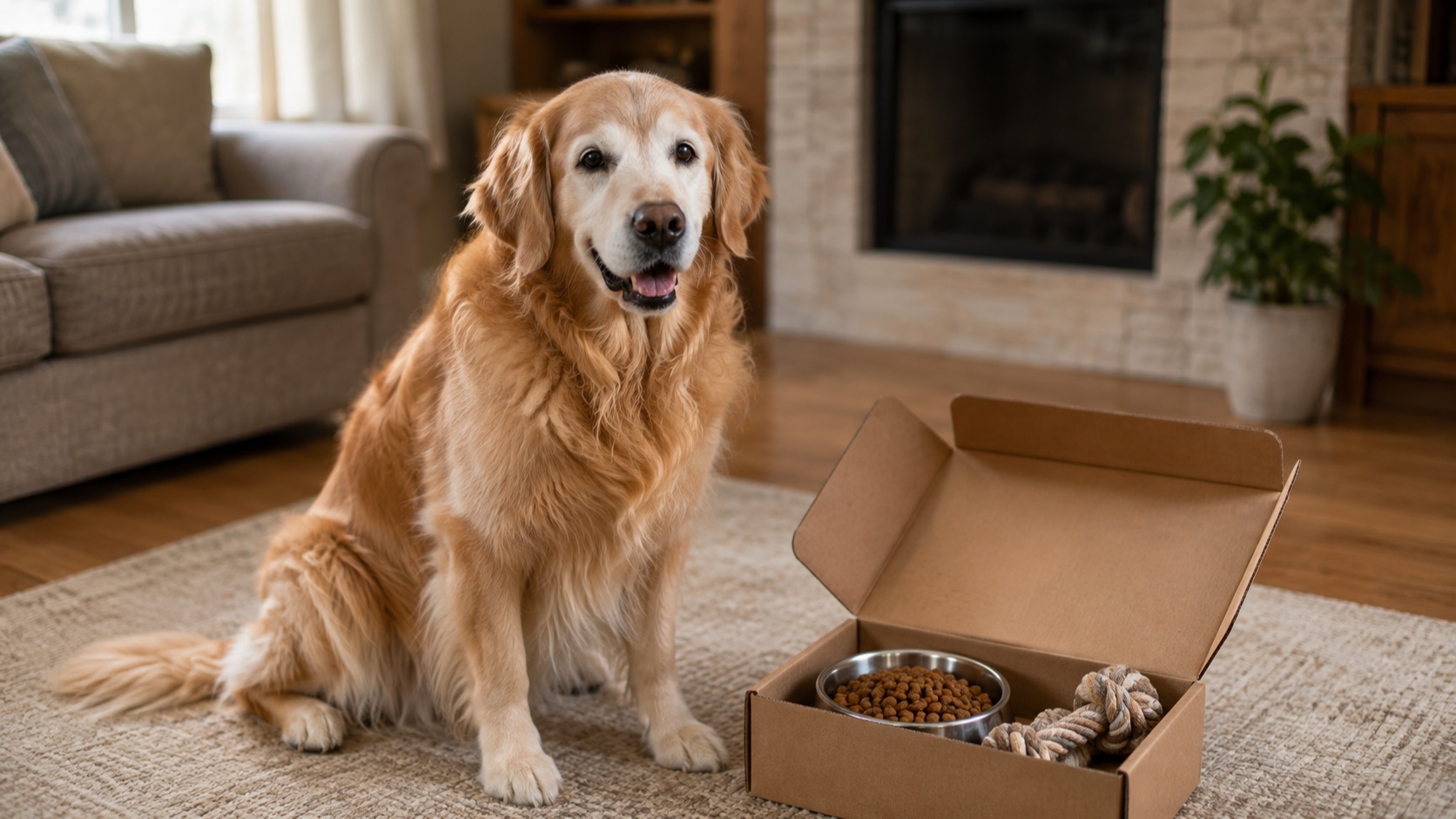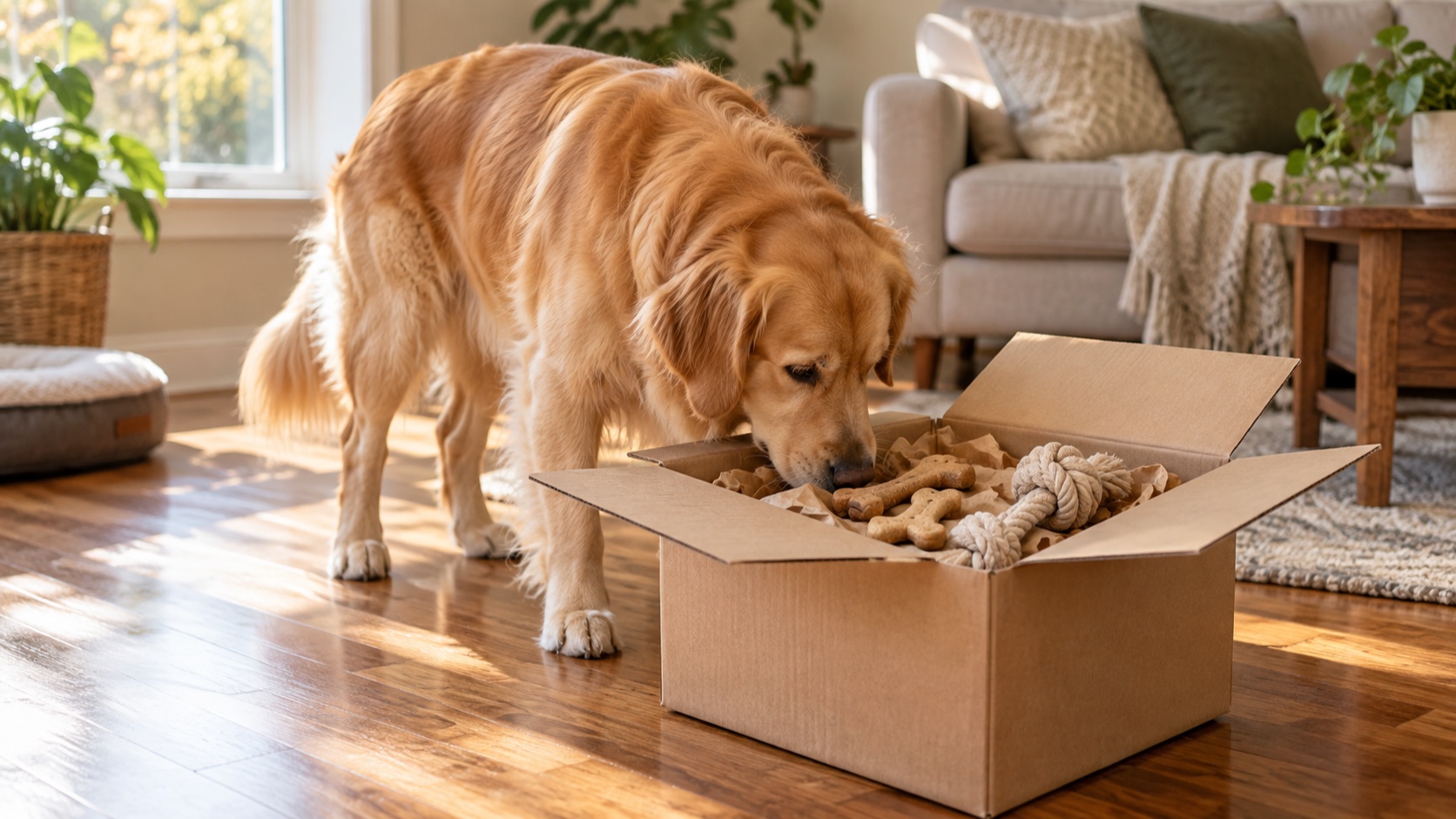
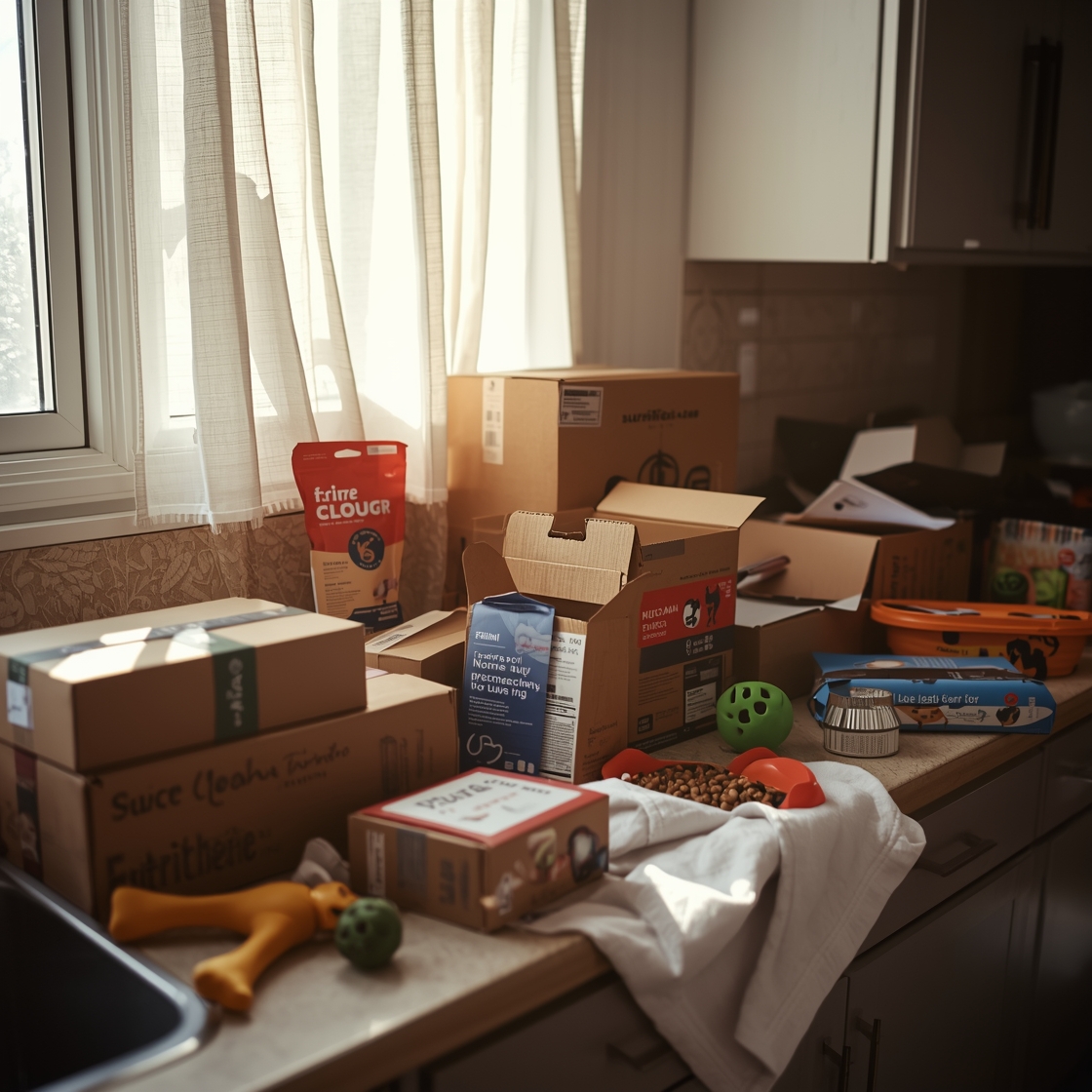
Read the job on the tile. A cookie box does not replace dinner.
Our guides are reader-supported. This article may contain affiliate links. As an Amazon Associate we may earn a commission if you buy through links, at no extra cost to you.
True meal-plan writeups live here: dog food subscription box reviews, grain-free subscription boxes, senior subscription boxes, fresh meals.
Quick picks (honest jobs)
- Best named grocery wet you can subscribe: Cesar Classic Loaf in Sauce — listed $24.46; meal class, not a birthday crate.
- Best named grocery dry you can subscribe: BIXBI Liberty Grain-Free — listed $19.99; kibble class.
- Best cheap treat rotator: Three Dog Bakery Lick'n Crunch! Variety Pack — listed $18.56; snacks only.
- Best named birthday crate: Dog Gift Box with Treats and Toys — listed $39.99; enrichment, not calories-for-the-month.
- Best named new-pet crate: Good Dog Care Package — listed $39.99; mixed extras; read the contents before you call it food.
- Best named bakery cups: BoxDog yogurt cups — listed $29.99; refrigerated treat class.
- Best named bakery cookies: BoxDog frosted cookies — listed $39.99; celebration calories.
If you want Farmer’s Dog, Ollie, Nom Nom, or JustFoodForDogs as a meal plan, use those brand sites (or the reviews article). They are not these seven tiles.
What current Amazon listings show (Box-Job)
|---|---|---|---| | Meal | AAFCO complete food you can auto-ship | Cookie crate called a “food box” | Fail as food | | Recurring | Subscribe & Save or a brand-site cadence | One-time gift | Partial | | Honesty | Title matches contents | “12 options” with 7 gift tiles | Fail as a pricing guide |
| SKU | Listed | Class | Meal? | Checklist |
|---|---|---|---|---|
| Dog Gift Box Treats and Toys | $39.99 | Birthday gift | No | Enrichment |
| Three Dog Bakery Lick'n Crunch | $18.56 | Treat pack | No | Snack |
| Good Dog Care Package | $39.99 | New-pet gift | Maybe a sample | Mixed crate |
| Cesar Classic Loaf | $24.46 | Grocery wet | Yes (confirm SKU) | Meal / S&S |
| BIXBI Liberty | $19.99 | Grocery dry | Yes (confirm SKU) | Meal / S&S |
| BoxDog yogurt cups | $29.99 | Bakery gift | No | Treat |
| BoxDog frosted cookies | $39.99 | Bakery gift | No | Treat |
Before you shop: (1) you can name whether the tile is dinner, (2) you know the cancel path (Amazon S&S vs a brand portal), (3) you will not price a $40 cookie box as “$40/month fresh food.”
What a dog food subscription box actually is
Three markets share the phrase:
- Fresh / lightly cooked DTC — Farmer’s Dog, Ollie, Nom Nom, Spot & Tango. Quiz, freezer or pantry packs, brand-site pause/cancel. Priced by dog weight and kcal. See the reviews article.
- Amazon Subscribe & Save grocery — Cesar trays, BIXBI bags, any complete food with a subscribe toggle. That is a recurring product, not a nutritionist quiz.
- Gift and bakery crates — Bark-style toys-and-treats, birthday boxes, cookie tins. Enrichment. Not a feeding plan.
The 7 cards on this URL
1. Dog Gift Box with Treats and Toys for Birthday
Best for: a one-time birthday crate — toys plus snacks — not a monthly calorie plan.
Listed $39.99. Owner themes: excitement at the unboxing. Honest drawback: you can buy the treats cheaper without the cardboard theater.
Check birthday gift box listings →
2. Three Dog Bakery Lick'n Crunch! Dog Treats Variety Pack
Best for: a rotating crunchy snack bag you can Subscribe & Save — still not dinner.
Listed $18.56. Lowest price on the URL. Honest drawback: variety pack calories add up if you treat like a meal topper.
Check Three Dog Bakery listings →
3. Good Dog Care Package New Pet Gift box
Best for: a welcome crate for a new dog — mixed extras, not a formulated feeding plan.
Listed $39.99. Same listed price as the birthday crate. Honest drawback: contents may include toys or grooming bits a large-breed household will ignore. Read the live bullet list.
Check Good Dog care package listings →
4. Cesar Classic Loaf in Sauce Wet Dog Food
Best for: the grocery wet meal card — Subscribe & Save if the veterinarian is fine with this formula.
Listed $24.46. Soft loaf plus sauce. Owner themes: picky eaters. Honest drawback: sodium and calorie density vs a therapeutic diet. This is not a kidney or heart prescription. See low-sodium senior food if a clinician restricted salt.
5. BIXBI Liberty Grain-Free Dry Dog Food
Best for: the grocery dry meal card — grain-free kibble you can auto-ship.
Listed $19.99. Second-lowest price; lowest meal card. Honest drawback: grain-free is a marketing class, not a medical plan. FDA DCM conversations still belong with a veterinarian, not a subscribe toggle.
Check BIXBI Liberty listings →
6. BoxDog Handmade in USA Dog Yogurt Cups | Dog Bakery Gift Box
Best for: a refrigerated bakery treat box — probiotic marketing, short shelf life.
Listed $29.99. Honest drawback: not a meal; shipping heat and fridge space matter. Do not call this a “fresh food subscription.”
Check BoxDog yogurt listings →
7. BoxDog Frosted Dog Cookies Handmade in USA | Cookie Gift Box for Dogs
Best for: celebration cookies — training crumbs or a birthday, not a feeding plan.
Listed $39.99. Ties the birthday crate and the care package at the top gift price. Honest drawback: frosting crumbs on the rug; sugar/fat calories.
Check BoxDog cookie listings →
Comparison at a glance
| Product | Listed | Job |
|---|---|---|
| Birthday gift box | $39.99 | Toys + treats |
| Three Dog Bakery | $18.56 | Treat pack |
| Good Dog care package | $39.99 | New-pet mixed crate |
| Cesar loaf | $24.46 | Grocery wet meal |
| BIXBI Liberty | $19.99 | Grocery dry meal |
| BoxDog yogurt | $29.99 | Bakery treat |
| BoxDog cookies | $39.99 | Bakery treat |
Browse dog food subscription box listings →
Fresh-meal services exist — they are not these cards
If you need that comparison, use dog food subscription box reviews. Do not price Ollie from a BoxDog cookie tile.
Subscribe & Save vs brand-site cadence
| Path | What you get | Cancel | Price lever |
|---|---|---|---|
| Amazon S&S | Cesar, BIXBI, treat packs | Amazon subscribe settings | Coupon + S&S % |
| Brand fresh site | Quiz portions, frozen/packed meals | Brand portal | Dog weight / plan mix |
| One-time gift | Birthday / bakery crate | N/A | Wait for a sale |
A dog food subscription box is cheaper than the store only if you compare the same SKU, include shipping, and subtract the intro teaser. Fresh DTC often loses to grocery kibble on cost per kcal. Gift crates always lose if you treat them as food.
Cost-per-meal desk (grocery cards only)
0 of 7 cards store kcal. This is sketch math from typical tray/bag sizes — recheck the live label.
| Card | Listed | Desk assumption | Sketch $/day (30 lb adult, maintenance) |
|---|---|---|---|
| Cesar | $24.46 | Multipack of trays | Often ~$2–$4/day if trays are the whole diet — confirm tray count |
| BIXBI | $19.99 | Small bag | Often ~$1–$2/day on a small bag that will not last a month for a 60 lb dog |
A 70 lb dog on Cesar-as-sole-diet is a different cart than a 12 lb dog.
The old budget / mid / premium monthly bands ($30–$45 / $60–$90 / $110–$150) described fresh meal services. They do not describe these seven tiles.
| Honest band on this URL | What it buys |
|---|---|
| $18.56 | Treat variety pack |
| $19.99–$24.46 | Grocery meal SKUs |
| $29.99–$39.99 | Bakery or gift crates |
If your fresh-meal quote is $115/month for a 50 lb dog, that number did not come from these cards.
Pros and cons by job
Gift crate
- Pro: occasion, toys, unboxing.
- Con: expensive snacks; not AAFCO dinner.
Treat pack
- Pro: cheap rotator; easy S&S.
- Con: calories; choking sizes.
Grocery wet / dry
- Pro: real meal; pause on Amazon.
- Con: not personalized; formula may not match a medical diet.
Fresh DTC (other URLs)
- Pro: portion quiz; named proteins.
- Con: freezer, cost at large-breed kcal.
Security and trust (without a fake trial)
Look for: AAFCO statement on meal SKUs, a real business address, a cancel control you can find in two clicks, and a lot code you can photograph. Do not treat a “Taste Test” marketing line as a lab this desk ran. Do not treat a blog’s “78% fewer vet trips” as a statistic we collected.
Kidney, pancreatitis, or prescription diets are clinic jobs. A subscribe quiz is not a clinician.
Is a dog food subscription box cheaper than the store?
For Cesar or BIXBI: sometimes, if S&S plus a coupon beats the same SKU at a supermarket. For a birthday crate: no, not as food. For Farmer’s Dog: compare kcal to your current bag, including shipping — often more expensive, sometimes worth the convenience.
Are dog food subscription box gift crates worth it?
As gifts, sometimes. As nutrition, no. Price the toys and treats separately if you care about value.
Can I switch a dog food subscription box easily?
Amazon S&S: yes, in the subscribe menu. Brand-site fresh: read the pause page before box one. Gift crates: you are not switching a diet.
How do I choose a dog food subscription box that is actually food?
Start at Cesar or BIXBI on this card set, or leave this URL for a meal-plan review. Confirm AAFCO complete-and-balanced. Confirm the dog’s calories. Confirm cancel.
Does a dog food subscription box work for a puppy?
A complete puppy formula can. These seven cards are not puppy-specific. Large-breed calcium rules still apply. Ask the veterinarian.
What about 2027 “trends”?
We will not predict packaging fashion. The durable split is still meal vs gift vs grocery S&S. That split is why this page no longer pretends it compared twelve fresh brands.
Worked monthly carts (desk arithmetic, not a quote)
Assume a 30-day month. Recheck kcal on the live bag. These are illustrations so the $40 gift crate stops looking like a $40 meal plan.
15 lb adult, maintenance ~400–500 kcal/day (ballpark)
| Cart | What you buy | Desk monthly sketch | Job |
|---|---|---|---|
| BIXBI only | One or two small bags | Often ~$20–$40 if the bag lasts | Meal |
| Cesar only | Several multipacks | Often ~$50–$90 | Meal |
| Birthday crate + BIXBI | $39.99 crate + kibble | Meal + $40 theater | Mixed |
| Cookies only | $39.99 BoxDog | $40 of frosting | Fail as food |
A 15 lb dog can live on the grocery cards. The crate is extra.
40 lb adult, maintenance ~900–1,200 kcal/day (ballpark)
| Cart | Desk monthly sketch | Note |
|---|---|---|
| BIXBI $19.99 small bag | Will not last the month — buy 2–4 bags | Still grocery S&S |
| Cesar as sole diet | Tray count climbs fast — often $80–$140 | Wet is heavy |
| Fresh DTC (other URL) | Commonly $80–$130 published | Not these cards |
| Three gift crates | 3 × $39.99 = $119.97 | Zero complete meals |
Three birthday boxes cost more than a lot of fresh first-month teasers and still do not feed the dog.
70 lb adult, maintenance ~1,600–2,000 kcal/day (ballpark)
| Cart | Desk monthly sketch | Note |
|---|---|---|
| Grocery dry | Multiple large bags — often $50–$90 | S&S on a bigger SKU than the $19.99 tile |
| Cesar sole diet | Easy to clear $150+ | Poor large-dog value |
| Fresh full plan | Brand quotes can exceed $20/day | Other article |
| Gift crates | Still $40 each | Irrelevant as food |
Subscribe & Save checklist (Cesar and BIXBI)
- Confirm the exact flavor and pack size. S&S can swap a cousin SKU.
- Set a delivery interval that matches how fast the dog empties the bag — not Amazon’s default.
- Turn off “subscribe” before you leave town if you do not want a pile-up.
- Photograph the lot code on first open.
- Recalculate calories after a weight change.
A dog food subscription box on Amazon is a recurring SKU. It is not a nutritionist.
Brand-site fresh checklist (not these seven tiles)
If you leave this URL for Farmer’s Dog / Ollie / Nom Nom / JustFoodForDogs:
- Run the quiz with honest weight and activity.
- Screenshot the first-box price and the regular price.
- Read pause / skip / cancel in the help center before you pay.
- Measure freezer or pantry space for a full interval.
- Ask the veterinarian if the dog has CKD, pancreatitis, or a prescription diet — the quiz will not catch IRIS stage 3.
See dog food subscription box reviews for named meal services.
Storage desk
| Format | Where it lives | Fail mode |
|---|---|---|
| BIXBI kibble | Cool, dry bin | Fat rancidity in a garage |
| Cesar trays | Pantry, then fridge after open | Forgotten open tray |
| BoxDog yogurt | Fridge | Heat-killed shipping in August |
| BoxDog cookies | Cool tin | Ants, crumbs |
| Gift toys | Closet | Chew-through stuffing |
| Fresh DTC (other) | Freezer | Thaw chaos |
August heat is why a yogurt “subscription” is a different logistics job than a kibble S&S.
Treat-calorie cap (so the bakery cards do not become dinner)
| Dog | Desk treat cap | What $18.56 of Three Dog Bakery can do |
|---|---|---|
| 15 lb | ~40–60 kcal/day | Blow the cap in two days if you free-feed the pouch |
| 40 lb | ~80–120 kcal/day | Still a lot of crunch |
| 70 lb | ~120–180 kcal/day | Cookies plus frosting still add up |
Subtract treats from dinner. This comparison does not care that the pouch said “variety.”
Multi-dog and gift crates
One $39.99 birthday box for two dogs is not “half price nutrition.” It is one toy pile. Separate S&S profiles (or separate bags) if the dogs eat different formulas. A grain-free BIXBI dog and a prescription-diet dog should not share a Cesar tray because the crate looked festive.
How the old 12-service list broke this URL
If you need twelve named fresh brands, you need a different card set. We will not paste them back as if they were listed products.
Cancellation and refunds (Amazon vs brand)
Amazon: returns follow Amazon policy on unopened food; opened pet food is often non-returnable. S&S you can stop; you cannot always return box four.
Brand fresh: first-box guarantees are marketing. Read the current terms. This desk did not file a claim.
Gift crates: treat them as gifts. If a toy is unsafe (string, button eye), throw it out.
What a good dog food subscription box page should have said in 2026
- Name the job: meal vs gift.
- Print the card count (7), not 12.
- Separate S&S grocery from DTC fresh.
- Refuse a testing narrative.
- Link the real meal-plan article.
That is this page now.
More questions
Can I mix Cesar and BIXBI? Yes if both are complete and the calories add up. Mix slowly. Watch stool.
Is grain-free BIXBI a medical diet? No.
Is BoxDog yogurt a probiotic prescription? No.
Does BarkBox count? BarkBox-style toys-and-treats are the gift job. They are not on this card set. They still are not dinner.
What if my quote is $40/month for fresh food? Read the fine print. That is often a small dog plus a first-box discount. The regular price is the number to budget.
Label walk-through: Cesar vs BIXBI vs a gift crate
Cesar Classic Loaf. Look for the AAFCO statement (adult maintenance vs all life stages). Count trays per sleeve. Divide listed $24.46 by tray count for a per-tray sketch. Compare kcal per tray to the dog’s daily need. Sauce loaves are easy to overfeed because the tray looks “small.”
BIXBI Liberty. Look for the protein name, the grain-free claim, and kcal/cup. A $19.99 bag that is 4 lb is a different month than a $19.99 bag that is 10 lb. The tile does not store bag size. Open the listing.
Birthday gift box. There is no AAFCO complete-and-balanced meal statement that turns toys into dinner. Price per “wow” is the only honest metric.
Three Dog Bakery. Ingredients are bakery ingredients. Fine as a rotator. Fail as a subscription food plan.
Good Dog care package. Read every line item. If it includes a sample bag, that sample is not a month of calories.
BoxDog yogurt / cookies. Handmade and USA are origin stories. They are not feeding directions.
Intro-discount trap (fresh plans, other URLs)
Brand sites advertise 40–60% off box one. The dog food subscription box that looked like $45 becomes $110 on month two. Budget month two. If you cannot afford month two, do not start month one.
Amazon S&S coupons are smaller and more honest. Cesar at 5–15% off is still Cesar.
Shipping and temperature
Grocery dry: a porch in January is fine. Grocery wet: freeze-thaw can separate loaf; still usually pantry-stable unopened. Bakery yogurt: a 100°F porch is a Fail. Fresh DTC: gel packs and a “leave with neighbor” note.
This URL’s yogurt card is the one that should make you read the weather.
Return-to-kibble plan
If a fresh plan (other URL) fails — diarrhea, refusal, cost — go back to a complete food the dog already tolerated, over 7 days, not overnight. Cesar or BIXBI can be that landing pad if they were already appropriate. They are not a medical reset for a dog that just came off a prescription diet.
Competitor-content we will not copy
We will not invent a carbon-neutral score. We will not score packaging as if we weighed a liner.
A 10-minute buy path for a dog food subscription box
- Decide meal vs gift.
- If gift: pick birthday, care package, or BoxDog and stop.
- If meal: Cesar (wet) or BIXBI (dry) on this card set, or leave for the reviews article.
- Read AAFCO and kcal.
- Set S&S interval from how fast the bag dies, not from a default.
- Put a calendar reminder for month-two price if you also opened a fresh-brand tab.
That is the whole checklist.
Seasonal and holiday crates
December will flood this search with tins. A frosted cookie box is still a cookie box. Do not let a holiday SKU reset a senior’s calorie math. If you gift food, gift a complete bag the owner already feeds — not a surprise protein.
Per-kcal sketch (why listed price lies)
A $19.99 kibble that is 1,800 kcal per bag is ~1.1¢/kcal. A $24.46 wet sleeve that is 1,200 kcal is ~2.0¢/kcal. A $39.99 cookie box that is 800 kcal of frosting is ~5.0¢/kcal and still not complete. These kcal figures are placeholders you must replace with the live label. The point is the method: dollars ÷ kcal, then compare to the dog’s daily need.
Protein rotation vs Subscribe & Save
S&S locks a flavor. If you rotate proteins on purpose, use a longer interval or buy one-off. BIXBI Liberty’s “limited flavor” owner theme is a rotation problem. Cesar flavors are easier to swap because grocery wet SKUs proliferate. Neither rotation is a medical hydrolyzed diet.
Allergies and elimination diets
A dog food subscription box that arrives as a surprise flavor is the opposite of an elimination diet. If the veterinarian put the dog on a single-protein trial, pause gifts and pause variety packs. Three Dog Bakery is a Fail during that trial.
Puppies, seniors, and this card set
Puppies: need a puppy AAFCO statement. These seven titles do not say puppy. Large-breed calcium is a separate rule.
Seniors: calorie needs often fall; treat crates do not. If the senior has kidney values, leave this page for kidney-support food. Cesar is not a renal diet.
Working dogs: kcal climbs. A $19.99 BIXBI tile will not last. Buy a larger bag SKU than the stored card implies.
Inventory so you do not double-order
Write the on-hand days on a note on the bin. S&S plus a “deal” click is how you end up with six Cesar sleeves and a rancid kibble bag. Pause, then resume.
What “customization” means on Amazon vs a quiz
Amazon customization is pack size and ship dates. A fresh-brand quiz customization is weight, activity, and sometimes a health checkbox. Only the second changes the recipe. This URL has the first. Do not expect the second from a birthday crate.
final listing review recap
| Want | Card or exit |
|---|---|
| Dinner, wet | Cesar $24.46 |
| Dinner, dry | BIXBI $19.99 |
| Crunchy snacks | Three Dog Bakery $18.56 |
| Birthday unboxing | Gift box $39.99 |
| New-pet extras | Good Dog $39.99 |
| Fridge bakery | BoxDog yogurt $29.99 |
| Cookie tin | BoxDog cookies $39.99 |
| Fresh quiz meals | Leave this URL |
Seven cards. Seven jobs. Zero pretended farm-to-bowl trials.
If a friend forwards you a “$40 unlimited fresh food” ad, ask which dog weight and which month. Then open this Index. The birthday crate will still be $39.99 and still will not be dinner. A 70 lb dog on a teaser quote is the other way that $40/month story dies — the regular invoice is the number that matters, and it is almost never the number in the ad. Screenshot both prices on the checkout page before you click pay.
Last reviewed August 2026. If a listed price moved, tell us.