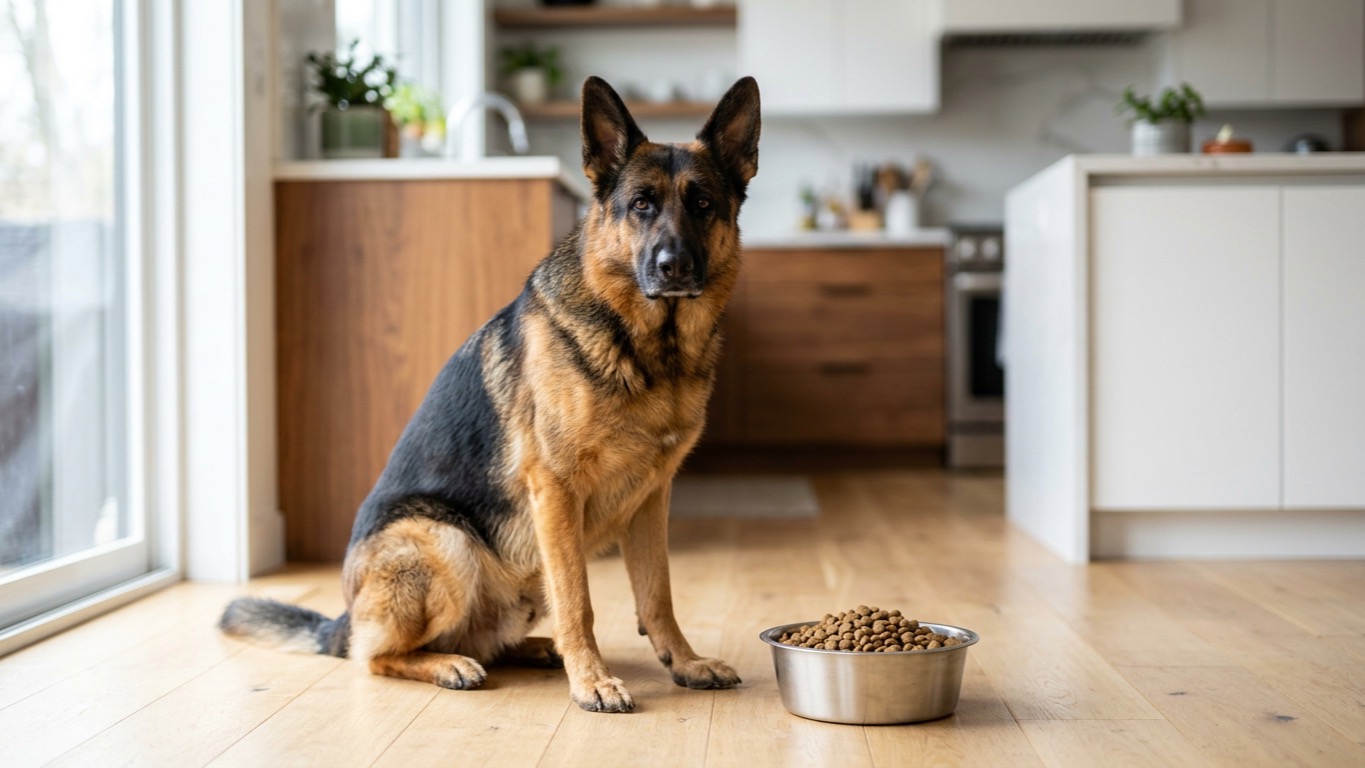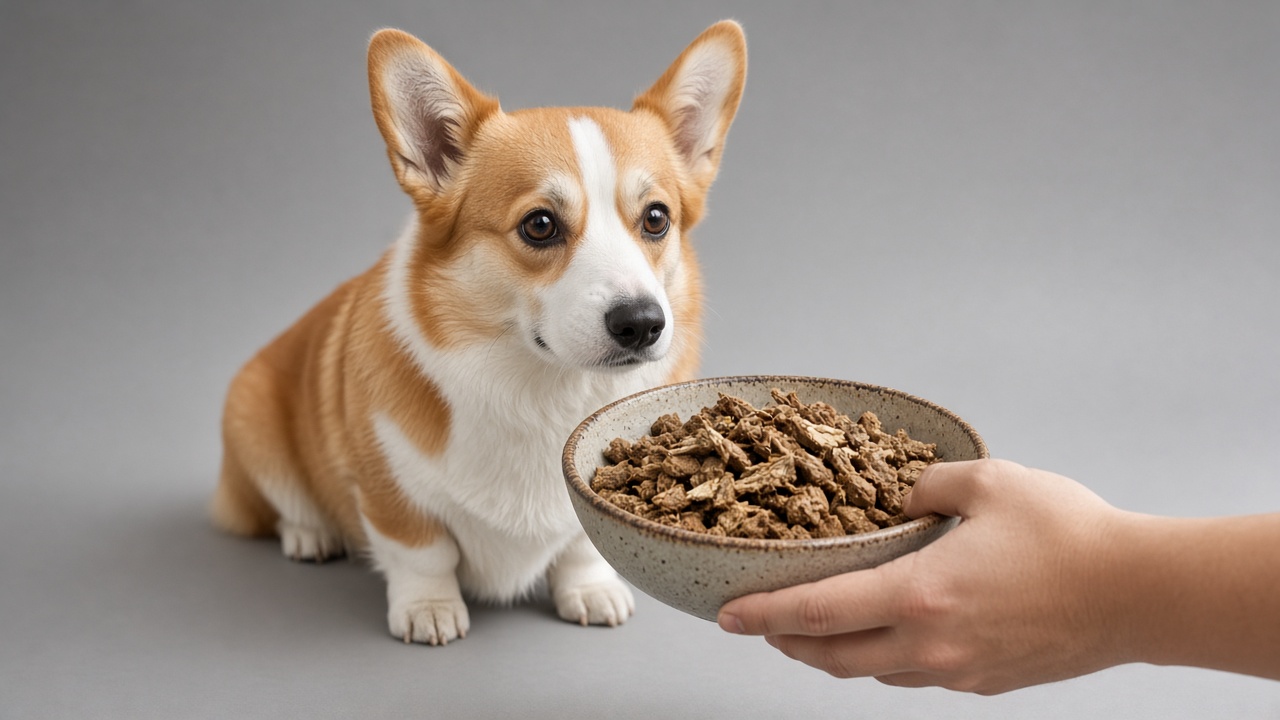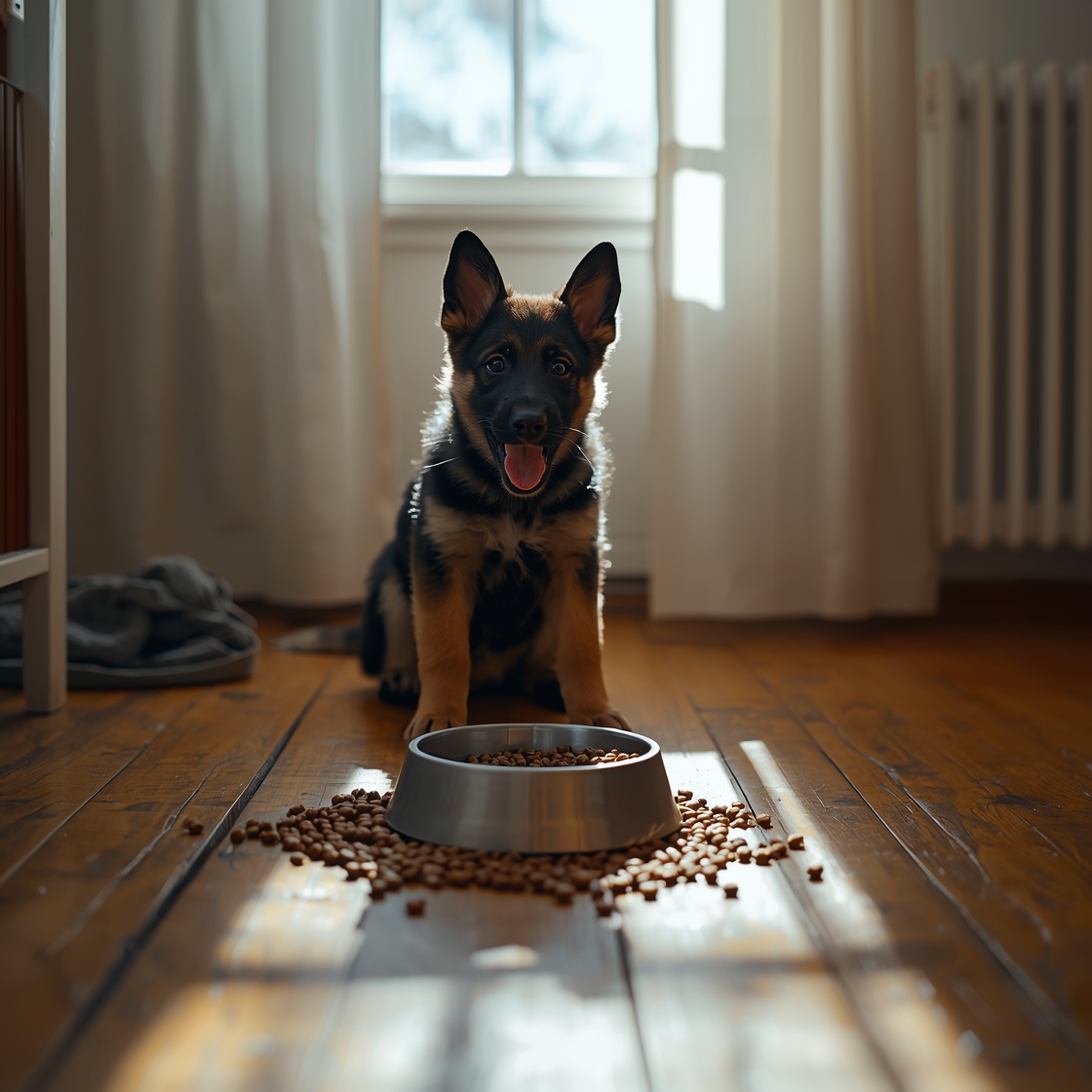
The best dry dog food for german shepherd puppies is a large-breed puppy formula you can read calcium and calories on — the $35.24 IAMS Proactive Health Large Breed Puppy when the title actually prints large-breed growth, the $104.99 Royal Canin German Shepherd Puppy when you want the only breed-named kibble on this URL, a $14.97 Blue Buffalo puppy or $43.99 Diamond Naturals Skin & Coat Puppy when the bag still says puppy and you will measure cups, or a $6.49 Pedigree Puppy as an entry complete — not a $16.49 “German diet” that does not say puppy and not a $19.98 high-protein tile you free-feed to a couch pup. The We read the titles and descriptions of 7 SKUs. Listed snapshots ran $6.49–$104.99 (median $19.98, a 16.2× spread). 5 of 7 (71%) print “Puppy.” 1 of 7 (14%) prints German Shepherd (Royal Canin). 1 of 7 (14%) prints Large Breed (IAMS). 2 of 7 do not say puppy on the card (Best Breed; Pro Plan High Protein). 0 of 7 print a calcium percentage, a Ca:P ratio, or a kcal/cup on the card. Bag weight is not on the card, so $/lb is not computable.
Desk pick: Want the only large-breed title → IAMS $35.24. Want the only GSD title → Royal Canin $104.99 (confirm kilograms). Want a named-protein puppy bag → Blue Buffalo $14.97. Coat story on a puppy bag → Diamond $43.99. Entry complete → Pedigree $6.49 after you read the growth statement. Confirm life stage on Best Breed $16.49 and Pro Plan High Protein $19.98 before you treat either as a puppy SKU.
Before you shop: (1) the bag has an AAFCO growth (or all-life-stages including growth) statement, (2) you can name large-breed or read calcium, (3) you will measure cups and score body condition, (4) limp, bunny-hop, or a pup that will not eat is a clinic, not a “better” bag. Fail gate 4 and this checklist is how you shop past an emergency.
Related: German Shepherd adult food, sensitive-stomach puppy food, puppy food for Havanese.
Our guides are reader-supported. This article may contain affiliate links. As an Amazon Associate we may earn a commission if you buy through links, at no extra cost to you.
How to choose the best dry dog food for german shepherd puppies without a breed trophy
Name the growth job. A late-maturing, heavy-boned puppy is not an 8 kg terrier. Then name the failure you are actually trying to block: too many calories, calcium you cannot read, or an adult bag on a 12-week GSD.
- Read the life-stage sentence. Puppy / growth, or all life stages including growth. Adult-only is the wrong aisle.
- Prefer large-breed language. IAMS is the only card that prints it. Other bags may still be large-breed inside — we cannot see the panel from the card.
- Ask for calcium. Public large-breed education commonly discusses controlled calcium around 1.0–1.4% on a dry-matter basis, with a Ca:P ratio near 1:1 to 1.8:1 depending on the reference. Those are education bands, not assays of these seven bags.
- Measure cups. A ribless five-month GSD is not “thriving.” WSAVA body-condition notes treat extras as calories.
- Do not panic-swap on a blog. Grain-free / DCM headlines belong in a FDA DCM conversation with the veterinarian.
We compared the seven cards already on this URL. We also did not pretend a high-protein adult-looking tile became a large-breed puppy diet because it sits on this page.
AAFCO’s public nutrient-profile framing is the line we will keep: a food offered as complete for a growing puppy needs a growth nutritional adequacy statement. A breed photo is not that statement.
Breed bag vs large-breed vs generic puppy
Four different objects get sold as the best dry dog food for german shepherd puppies. This comparison treats them as four jobs.
| Job class | What the growing dog actually needs | Listing example on this page | Fail mode |
|---|---|---|---|
| Large-breed growth control | Energy and calcium that do not floor the plates | IAMS Proactive Health Large Breed Puppy | Generic “puppy” with no size sentence |
| Breed-shaped kibble | Geometry aimed at a GSD jaw | Royal Canin German Shepherd Puppy | Shape ≠ calcium number |
| Coat / skin add-on | Omega language on a puppy bag | Diamond Naturals Skin & Coat Puppy | Shine is not a growth plate |
| Budget complete | Growth statement, measured cups | Pedigree Puppy | Skipping the cup |
| High-protein energy | More calories if the pup actually works | Pro Plan High Protein | Extra calories on a couch puppy |
| Named-diet tile | A brand story | Best Breed Dr. Gary's German Dog Diet | Title does not say puppy |
| Adult bag | Not a puppy job | Confirm or drop | Adult minerals at 12 weeks |
From the listings: “puppy” appeared on more titles than “large breed.” A German Shepherd word on one carton is not a proof that the other six are wrong. The nutrient question is large-breed growth, not the breed photo.
Price and title — the seven cards
Listed street prices on the cards below as of the August 2026 snapshot. Confirm the seller. Bag kilograms are not on the card.
| Food (card title) | Listed price | Title class | Desk growth role | Honest miss |
|---|---|---|---|---|
| Pedigree Puppy Dry Dog Food | $6.49 | Generic puppy | Entry complete | Confirm bag weight |
| Blue Buffalo Life Protection Formula Chicken Puppy | $14.97 | Named-protein puppy | Mid puppy | Not large-breed titled |
| Best Breed Dr. Gary's German Dog Diet | $16.49 | “German” diet, no “puppy” | Confirm life stage | Title is not a pup SKU |
| Pro Plan High Protein | $19.98 | High protein, no “puppy” | Energy class | Confirm puppy SKU |
| IAMS Proactive Health Large Breed Puppy | $35.24 | Large-breed puppy | Only large-breed title | Still read calcium |
| Diamond Naturals Skin & Coat Puppy | $43.99 | Skin/coat puppy | Coat story on a puppy bag | Shine ≠ plates |
| ROYAL CANIN German Shepherd Puppy Dry Dog Food | $104.99 | Breed-specific puppy | Only GSD title | Highest snapshot; confirm kg |
A $6 bag and a $105 bag are not the same unit. Confirm kilograms before you call either a bargain.
Kibble SKU arithmetic
| Desk equation | Dollars / count | What it actually buys |
|---|---|---|
| Royal Canin $104.99 ÷ Pedigree $6.49 | 16.2× | Breed-line snapshot vs grocery puppy |
| Royal Canin $104.99 ÷ IAMS $35.24 | 2.98× | Breed name vs the only large-breed title |
| Diamond $43.99 − IAMS $35.24 | $8.75 | Coat story vs large-breed word |
| IAMS $35.24 − Blue Buffalo $14.97 | $20.27 | Large-breed title vs named-protein puppy |
| Pro Plan $19.98 − Best Breed $16.49 | $3.49 | Two cards that do not say puppy |
| Blue Buffalo $14.97 − Pedigree $6.49 | $8.48 | Named chicken puppy vs entry |
| Median of 7 stickers | $19.98 | The Pro Plan high-protein tile |
| Puppy in title | 5 of 7 (71%) | Best Breed + Pro Plan are the misses |
| Large breed in title | 1 of 7 (14%) | IAMS only |
| German Shepherd in title | 1 of 7 (14%) | Royal Canin only |
Desk bag math: IAMS $35.24 is the only printed large-breed sentence on this URL. Royal Canin $104.99 is $69.75 over IAMS for a breed name and a kibble shape — not a calcium assay we ran. Pedigree $6.49 + Blue Buffalo $14.97 = $21.46, still $13.78 under IAMS, and neither title says large breed. Do not buy Best Breed $16.49 or Pro Plan $19.98 blind. Read the life-stage panel.
Label worksheet for the best dry dog food for german shepherd puppies
| What the carton says | What the desk still needs | Skip if… |
|---|---|---|
| “Puppy” / “growth” | AAFCO growth statement | The bag is adult-only |
| “Large breed puppy” | Calcium and kcal you can read | You buy “puppy” meant for toys |
| “German Shepherd” | Kibble shape and a breed line | You treat the name as a trial |
| “High protein” | kcal/cup and a body-condition plan | The pup is already overweight |
| “Skin & coat” | Omega source on the panel | You skip calcium to chase shine |
| “Grain-free” | A vet conversation, not a default | You switched because of a blog |
| No calcium % | Ask the maker PDF or pick another bag | You guess 1.2% from a forum |
Quick picks for the best dry dog food for german shepherd puppies
- Only large-breed title: IAMS — $35.24. Start here if you want the printed size class.
- Only GSD title: Royal Canin — $104.99. Confirm bag kilograms.
- Named-protein puppy: Blue Buffalo — $14.97. Measure cups.
- Coat story on a puppy bag: Diamond — $43.99. Still read calcium.
- Entry complete: Pedigree — $6.49. Growth statement + cup, not free-feed.
- Confirm before you treat as puppy: Best Breed $16.49; Pro Plan High Protein $19.98.
Named examples of the best dry dog food for german shepherd puppies — not a feeding trial
Cards below are unchanged. Desk roles and honest drawbacks are ours.
1. ROYAL CANIN German Shepherd Puppy Dry Dog Food
Desk job: The only breed-named puppy bag on this URL.
Listing snapshot $104.99. Title: German Shepherd + Puppy. That is a breed-line class: kibble geometry and a GSD-specific recipe story. It is the highest snapshot by a wide margin. Confirm bag weight before you compare it to a $15 tile. Breed-line is not a radiograph. It is not a reason to ignore body condition.
2. Best Breed Dr. Gary's German Dog Diet
Desk job: “German” diet tile; life stage not in the title.
Listing snapshot $16.49. The card title does not say puppy. Confirm you are buying a growth formula, not an adult maintenance bag with a German-breed story. Older site copy called this “holistic.” Holistic is not an AAFCO category.
3. Diamond Naturals Skin & Coat Puppy
Desk job: Puppy bag with a skin/coat sentence.
Listing snapshot $43.99. Omega and coat language is a second job. For a GSD pup the first job is still large-breed growth. If the panel is a standard puppy (not large-breed) formula, treat coat as a bonus, not the reason you skipped calcium control.
4. IAMS Proactive Health Large Breed Puppy Dry Dog Food
Desk job: The only title that prints large-breed puppy.
Listing snapshot $35.24. This is the class match the keyword is actually asking for. Grocery-aisle availability is a feature. “More grain” in older site cons is not a panel we read. Read the calcium line. Measure the cup.
5. Pedigree Puppy Dry Dog Food
Desk job: Lowest snapshot; generic puppy.
Listing snapshot $6.49. Entry complete if the AAFCO growth statement is on the bag. Weak as a long-horizon GSD plan if the formula is not large-breed. Fine as a short bridge when that is what the shelter sent home — then read the panel and decide.
6. Blue Buffalo Life Protection Formula Chicken Puppy Dry Dog Food
Desk job: Named-chicken puppy; not large-breed titled.
Listing snapshot $14.97. First-ingredient marketing is clear. Confirm whether the SKU is large-breed puppy or all-size puppy. DHA language is common on this line — it is a label word, not a cognition trial we ran.
7. Pro Plan High Protein
Desk job: High-protein tile; puppy not in the title.
Listing snapshot $19.98. Confirm you are on a puppy Pro Plan SKU, not an adult sport bag. High protein plus high fat on a fast-growing GSD is a calorie problem if you follow the high end of the chart. Working-line energy is a real job. Couch energy is not.
Comparison: best dry dog food for german shepherd puppies cards at a glance
| Food | Best for | Approx. price | Key strength | Watch-out |
|---|---|---|---|---|
| Pedigree Puppy | Entry complete | $6.49 | Lowest $ | Confirm kg; measure cups |
| Blue Buffalo puppy | Named-protein puppy | $14.97 | Chicken-lead title | Not large-breed titled |
| Best Breed German diet | Named-diet tile | $16.49 | “German” in the title | Does not say puppy |
| Pro Plan High Protein | Energy class | $19.98 | High-protein title | Confirm puppy SKU |
| IAMS Large Breed Puppy | Printed large-breed | $35.24 | Only large-breed title | Still read calcium |
| Diamond Skin & Coat Puppy | Coat story on a puppy bag | $43.99 | Omega language | Shine ≠ plates |
| Royal Canin GSD Puppy | Breed-named kibble | $104.99 | Only GSD title | Highest $; confirm kg |
Want the category without a podium? Browse German Shepherd puppy food.
Nutrient targets the cards do not print
Zero tiles print calcium, phosphorus, or kcal/cup. The desk still needs those numbers because German Shepherds are a late-maturing, heavy-boned breed. Growth plates stay open well into the second year. Excess energy and excess calcium are the two levers owners can actually see on a bag.
Public large-breed education commonly discusses controlled calcium around 1.0–1.4% on a dry-matter basis, with a Ca:P ratio near 1:1 to 1.8:1 depending on the reference. Those are education bands, not assays of these seven bags. If the maker will not show calcium, you do not have a large-breed argument.
AAFCO consumer pages explain how to read a nutritional adequacy statement. WSAVA global nutrition guidelines ask whether the maker employs a qualified nutritionist, can provide a full nutrient analysis, and owns feeding trials. Those are questions for the maker, not badges we stamped on these cards.
OFA’s hip-dysplasia education treats growth rate and body condition as owner-visible levers.
Feeding volume — cups, meals, body condition
A GSD puppy that is ribless at five months is not “thriving.” Body-condition scoring (visible waist, ribs you can feel) beats the bag chart. Pro Plan High Protein is an energy class. Extra protein is not a license to free-feed.
Split the day. Three to four meals for a young pup is a common household pattern. Two meals later. The bag chart is a starting band. The dog in front of you is the correction.
Treats and toppers leak calories. A training week can add a cup you never wrote down. Count the extras. WSAVA body-condition notes treat extras as calories.
Transition bands (not a feeding trial)
| Situation | Desk move | Skip |
|---|---|---|
| New bag, same life stage | 5–7 day mix, increasing new | Overnight swap “because the photo is a GSD” |
| Breeder already on a named large-breed puppy diet and the pup is thriving | Stay | “Upgrade” for a blog |
| Soft stool on a new bag | Slow the mix; call the clinic if blood or lethargy | A third brand in 48 hours |
| Approaching adult switch | Ask the veterinarian for a month, not a birthday | Adult bag at 16 weeks because the pup “looks big” |
| Homemade or raw request | Boarded nutritionist | An Amazon “German” tile as a homemade substitute |
German Shepherds often stay on a large-breed puppy or large-breed growth profile longer than toy breeds. The switch month is a clinic conversation, not a calendar we invented.
Treats, toppers, and the calorie leak
Cheese cubes, peanut butter in a toy, and “just a little” wet food add up. If the pup is on IAMS $35.24 or Royal Canin $104.99 for a growth reason, do not erase the calorie math with a second bag of training fats.
Use the day’s kibble as the training treat when you can. If you add wet food, subtract kibble. We can still say: write the extras down for one week.
Storage, lot codes, and the 30 lb trap
Royal Canin’s $104.99 snapshot is often a large bag. A large bag that sits open for three months is stale fat. Store in the original bag inside a bin, not poured loose into a sunny plastic drum. Lot codes matter if a recall hits. Photograph the code when you open the bag.
Pedigree $6.49 may be a small bag. That can be honest for a trial week. It can also be a bad unit price. Confirm kilograms before you call it cheap.
Grain-free, DCM, and the blog swap
FDA’s historical DCM investigation is a conversation with the veterinarian, not a reason to panic-swap tonight. None of these seven cards print “grain-free” in the title. Do not invent that row. If a future lot does, the Index still wants calcium and a growth statement first.
When the best dry dog food for german shepherd puppies stops being the answer
- Lameness, bunny-hopping, or reluctance to jump. That is a workup. A new bag is not a workup.
- Persistent diarrhea, blood in stool, or a pup that will not eat. Clinic first.
- You want a homemade or raw puppy diet. That is a nutritionist, not an Amazon search.
- The pup is already overweight at four months. Cut toppers. Measure cups. Ask the clinic before you buy a “light” adult bag.
If the job is “this puppy is sick,” stop shopping kibble.
How the best dry dog food for german shepherd puppies fits a real week
Buy the bag you will finish while it is still fresh. Measure the morning cup. Score the waist on Saturday. Write limp checks the same way you write vaccine dates.
IAMS $35.24 is the only printed large-breed sentence on this URL. Start there if you want the size class in the title. Royal Canin $104.99 is the only German Shepherd sentence. Pay that sticker for shape and a breed line if that is the job you named — not because 16× Pedigree looks like quality.
Best Breed $16.49 and Pro Plan High Protein $19.98 are the two cards that do not say puppy. Confirm the SKU on the bag. An adult “German” diet is the wrong life stage unless the panel says otherwise.
Adult GSD shopping lives on the German Shepherd food page. Sensitive-stomach transitions live on the sensitive puppy page.
Frequently asked questions about the best dry dog food for german shepherd puppies
Why is the best dry dog food for german shepherd puppies a large-breed formula?
Because German Shepherds grow fast and late. Public education treats controlled calcium and calories as the growth-plate levers. IAMS is the only card on this URL that prints Large Breed Puppy. Other bags may still qualify inside. Read the panel.
How much should I feed a German Shepherd puppy?
The bag chart is a start. Body condition is the correction. Ribs you can feel. A waist you can see. Three to four meals early. Two later. Count toppers.
When do I switch off the best dry dog food for german shepherd puppies?
Ask the veterinarian for a month. Many large-breed dogs stay on a growth profile longer than a toy breed’s first birthday. Do not switch at 16 weeks because the pup “looks adult.”
Can I mix wet food with the kibble?
Yes if you subtract kibble to match calories. Wet food is not a calcium plan. It is a calorie leak if you do not write it down.
Should I buy grain-free for a GSD puppy?
Not as a default. FDA’s DCM investigation is a clinic conversation. None of these seven titles print grain-free. Do not invent that aisle.
Is Royal Canin automatically the best dry dog food for german shepherd puppies because it says German Shepherd?
No. It is the only breed-named card. Shape and a breed line are the job. Calcium is still a panel you must read. IAMS $35.24 is the only large-breed title. Those are different jobs.
Why is Best Breed on a puppy page if the title does not say puppy?
Because it is a live card on this URL. Treat it as a search. Confirm life stage on the bag. Do not buy a “German” adult diet for a 12-week pup.
Related pages
- Best dog food for German Shepherds
- Best puppy food for sensitive stomach
- Best puppy food for Havanese
Worked bag examples (listing math, not a feeding trial)
Breeder already sent a large-breed puppy bag and the pup is thriving. Stay. Do not “upgrade” to Royal Canin $104.99 because the photo is a GSD. This checklist is a shopping map for a household that does not already have a working bag.
First bag, 10-week GSD, no clinic diet. Look for large-breed puppy language. IAMS $35.24 is the only card that prints it. Read calcium on the panel. Measure cups. Pedigree $6.49 is an entry complete if the growth statement is there — confirm kilograms so you are not buying a sample-size unit.
Coat is dull in shed season. Diamond $43.99 is the coat-story puppy bag. Shine is not a growth plate. Do not skip calcium to chase omega language. Ask the veterinarian if the coat change is sudden or patchy.
Working-line energy, lots of training. Pro Plan High Protein $19.98 is an energy class. Confirm it is a puppy SKU on the bag. Extra calories on a couch puppy are a waist problem. Body-condition Saturday, not a free-feed bowl.
“German” in the title felt specific. Best Breed $16.49 does not say puppy on the card. Confirm life stage. An adult mineral profile on a 12-week GSD is the fail mode. Royal Canin $104.99 is the only card that prints German Shepherd and Puppy.
Budget week, large litter of one. Pedigree $6.49 + a kitchen scale beats a $105 bag you leave open for four months. Freshness is a nutrient. Stale fat is not a large-breed plan.
Kibble shape, jaw, and what “German Shepherd” on a bag actually buys
Royal Canin’s breed lines sell a kibble geometry aimed at a GSD jaw. That is a shape class. It can matter for a dog that swallows kibble whole or that will not pick up a tiny pellet. It is not a calcium number. IAMS $35.24 does not print a breed. It prints Large Breed Puppy. Those are different jobs at a 2.98× price spread ($104.99 ÷ $35.24).
Blue Buffalo’s title leads with chicken. That is a first-ingredient story. It is not a digestibility trial. Novel-protein swaps belong with the veterinarian if there is a real food-allergy workup.
Diamond’s skin-and-coat title is an omega story on a puppy bag. Keep the growth statement. Keep the cup.
WSAVA-adjacent questions worth asking the maker
You do not need a boarded nutritionist on speed-dial to ask four questions:
- Who formulates the food, and what are their credentials?
- Can you share a typical nutrient analysis, not only the guaranteed analysis?
- Do you run feeding trials, or do you meet AAFCO by formulation only?
- Where is it made, and how do I read the lot code?
WSAVA’s nutrition toolkit is the public source for that list. A marketplace title is not an answer.
If the maker will not show calcium on a large-breed puppy bag, you do not have a growth-plate argument. Pick another bag or wait for a PDF.
Multi-puppy math and the open-bag clock
Two GSD puppies are not “one puppy times two” on the calendar. They are two cups, two body-condition scores, and one bag that goes stale twice as fast. A $104.99 Royal Canin snapshot that is a 30 lb class (confirm) may be honest for two pups if you finish it. The same bag for one small-appetite pup is a rancid-fat project.
Store in the original bag. Squeeze the air. Bin in the dark. Do not pour a month of kibble into a sunny drum on day one.
Write the open date on the bag. Write the limp check on the calendar. Those two notes beat a third brand swap.
If a listing title changes, this comparison changes. Contact if a card is stale.