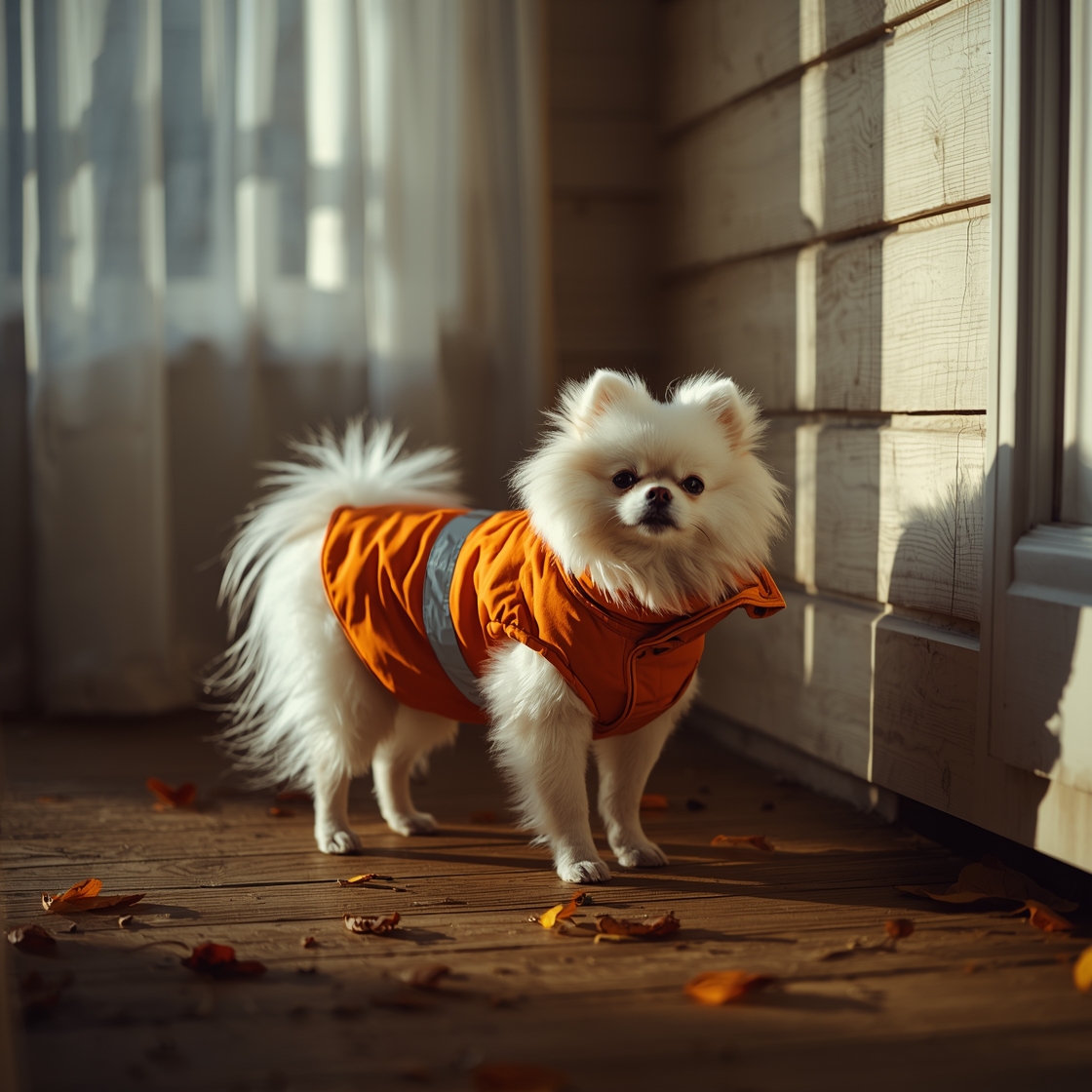
The best insulated dog coat for small breeds on this URL is the shell that covers the torso you measured and still lets the dog walk — not a Carhartt titled L, and not a puffer titled Medium & Large — a small-titled fleece when the chart agrees (JoyDaog Fleece Lined Dog Jacket for Small Dogs, $25.99), a small-titled budget shell when you will not pretend it is expedition gear (SUNFURA Dog Coat for Small Dogs, $12.41), a mild-day polyester when 40–50°F is the week (Gooby Green Polyester Dog Jacket, $21.00), a generic winter slip-on when adjustability is the question (Warm Dog Winter Coat, $19.99), a $9.99 keyword-salad tile only after you open the live size chart (Dog Coats Warm Winter Dogs Jacket Pet Jackets Puppy Cold Weather Coat, $9.99) — not Carhartt Firm Duck Brown/Brass L ($27.49) as a default 6 lb coat, not LovinPet Reversible Medium & Large ($29.99) as a toy cut, and not “5 Best This Winter” on a seven-card catalog. We read current Amazon listing titles and descriptions and scored 7 named SKUs. Listed snapshots ran $9.99–$29.99 (median $21.00, a 3.00× spread). Printed snapshots sum to $146.86. Mean tile is $20.98. 2 of 7 (29%) print “Small Dogs” (JoyDaog; SUNFURA). 1 of 7 (14%) is Carhartt titled L. 1 of 7 (14%) is LovinPet titled Medium & Large. 0 of 7 (0%) print a clo or tog number. 0 of 7 is a hypothermia trial we ran.
Desk pick: Lowest tile → $9.99 keyword-salad after you confirm the live chart. Small-titled budget → SUNFURA $12.41 (1.24× the floor). Slip-on basic → Warm Dog $19.99 (2.00× the floor). Mild polyester → Gooby $21.00 (median). Named small fleece → JoyDaog $25.99 (2.60× the floor). Honest mismatch, rugged duck → Carhartt L $27.49 only if the measured size is L. Honest mismatch, reversible puffer → LovinPet $29.99 (3.00× the floor) only if the dog is medium/large. Two highest stickers are the two size mismatches.
Small dogs lose heat faster because surface area is large relative to mass. That is physiology, not a fashion brief. AVMA’s cold-weather pet pages still say: limit time outside in extreme cold, watch for shivering, and do not treat a coat as a license to stay out.
Related: best dog raincoat for large breeds, best dog rain boots, best dog cooling vest (the opposite season), small-breed harness.
Our guides are reader-supported. This article may contain affiliate links. As an Amazon Associate we may earn a commission if you buy through links, at no extra cost to you.
Quick picks at a glance
- Best listed small-dog fleece title: JoyDaog Fleece Lined for Small Dogs — $25.99. Named small. Confirm the chart.
- Best listed small-dog budget title: SUNFURA for Small Dogs — $12.41. Entry shell. Not a blizzard parka.
- Best listed everyday polyester: Gooby Green Polyester — $21.00. Mild-day jacket. Color is not warmth.
- Best listed generic winter tile: Warm Dog Winter Coat — $19.99. Slip-on class. Adjustability is the question.
- Best listed floor price: $9.99 keyword-salad coat. Read the live size chart. Expect thin fill.
- Honest mismatch — keep the card: Carhartt Firm Duck L — $27.49. Rugged duck. Size L is not a 6 lb dog.
- Honest mismatch — keep the card: LovinPet Reversible Medium & Large — $29.99. Highest sticker. Wrong default toy.
What current Amazon listings show (Small-Coat, August 2026)
| Job | What actually works | Category | Fail if you skip it |
|---|---|---|---|
| Toy / small daily cold | Small-titled jacket + measured back length | JoyDaog; SUNFURA | Medium & Large puffer |
| Mild 40–50°F walk | Light polyester shell | Gooby; Warm Dog | Hanging a Carhartt L |
| Wet + wind | Water-resistant shell + fill that stays dry | Carhartt duck if the size is honest | Soaked fleece |
| Fashion / reversible | Two-sided puffer | LovinPet M/L | Buying it for a 5 lb dog |
Before you shop: (1) you measured back length (base of neck to tail base) and girth, (2) you can slide two fingers at the chest, (3) the coat does not block the urethra or drag in urine, (4) shivering, pale gums, or reluctance to walk goes inside — then to a veterinarian if it does not stop, (5) wet fill is retired, not “dried on the dog.” Fail gate 1 and this checklist is a costume.
What the best insulated dog coat for small breeds can and cannot do
It can trap a layer of air and block wind. It cannot replace a healthy coat, a dry crate, or a shorter walk. It cannot treat hypothyroidism or arthritis — those are clinic conversations. It cannot make 10°F with windchill “fine because the jacket is cute.”
How the desk scored the best insulated dog coat for small breeds
this comparison uses four visible signals plus the listed sticker:
- Size words in the title. Small vs L vs Medium & Large vs none.
- Fill / shell class. Fleece, polyester, duck chore, puffer, generic.
- Printed price. $9.99–$29.99.
- Adjust story in listing copy (tabs, Velcro, zip) — words, not a fit trial.
Price is almost a wash. A $12 SUNFURA that fits beats a $30 LovinPet that is cut for a Lab.
How these products compare on labels and price
| Coat | Listed price | Title size language | Small-breed job |
|---|---|---|---|
| Keyword-salad winter jacket | $9.99 | None (puppy/cold words) | Floor / confirm SKU |
| SUNFURA small | $12.41 | Small dogs | Budget small |
| Warm Dog Winter Coat | $19.99 | None | Slip-on basic |
| Gooby green polyester | $21.00 | None | Mild everyday |
| JoyDaog fleece small | $25.99 | Small dogs | Named small fleece |
| Carhartt Firm Duck L | $27.49 | Size L in title | Rugged; wrong default toy |
| LovinPet reversible M/L | $29.99 | Medium & Large | Style; not a toy cut |
Desk kit math: Snapshot sum is $146.86. Mean tile is $20.98. Median is $21.00 (Gooby). LovinPet $29.99 is 3.00× the $9.99 floor. Carhartt $27.49 is 2.75× the floor. JoyDaog $25.99 is 2.60× the floor. Warm Dog $19.99 is 2.00× the floor. SUNFURA $12.41 is 1.24× the floor. The two size-mismatch tiles (Carhartt L + LovinPet M/L = $57.48) are 39.1% of the dollar sum and 29% of the catalog — two wrong-default sizes taking nearly two-fifths of the aisle’s printed dollars. The two small-titled tiles (JoyDaog + SUNFURA = $38.40) are 26.1% of the dollar sum and 29% of the catalog. The two under-$15 tiles ($9.99 + $12.41 = $22.40) are 15.3% of dollars and 29% of the catalog. Honest small-titled tiles are a minority. The two highest stickers are the two size mismatches.
Fit worksheet for the best insulated dog coat for small breeds
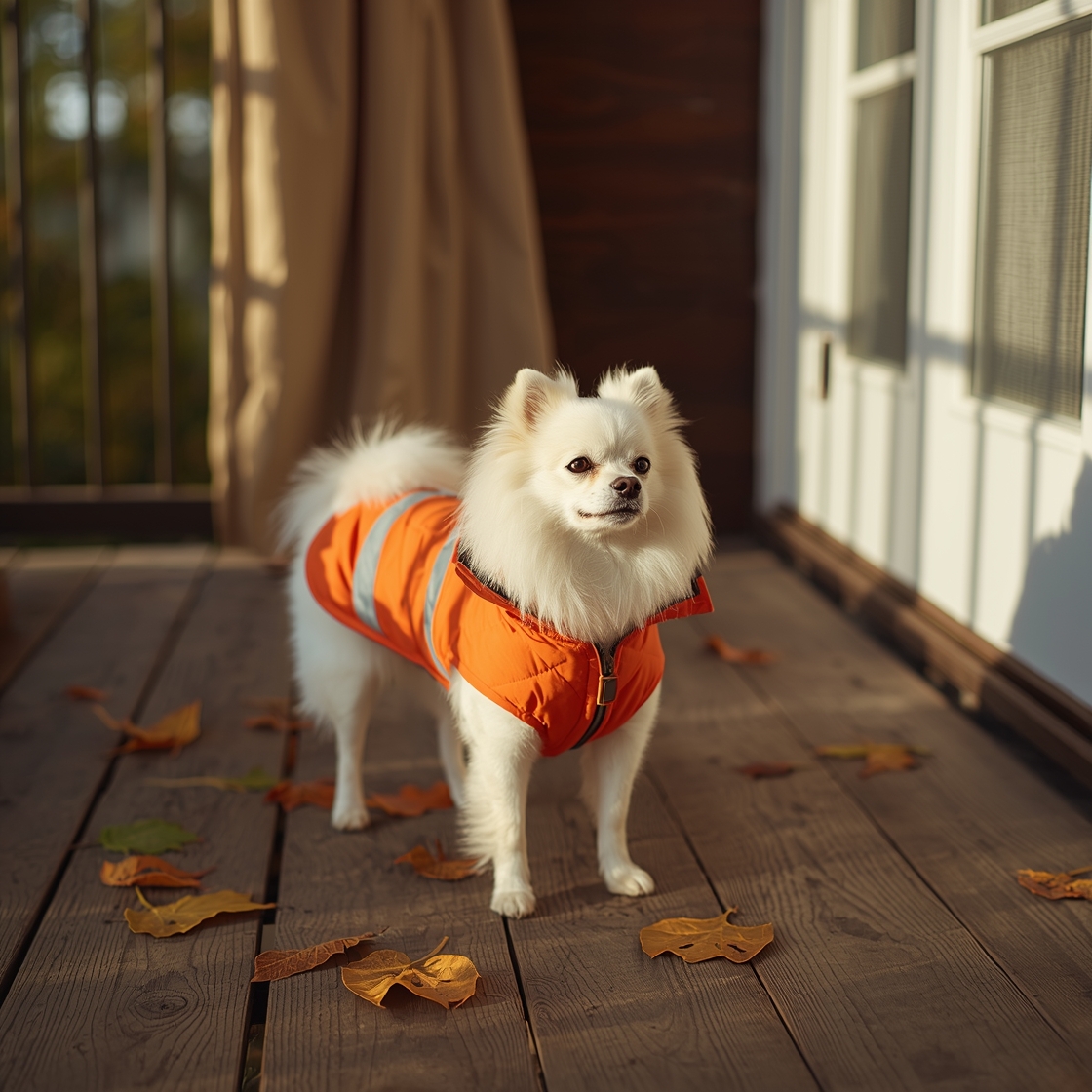
| Measure | How | Fail |
|---|---|---|
| Back length | Base of neck to tail base | Coat ends at the last rib or covers the anus poorly |
| Girth | Widest chest, behind front legs | Chest strap saws or leaves a draft tunnel |
| Neck | Collar line | Coat chokes or spins |
| Weight | Sanity check only | Buying “S” from an 8 lb photo |
Take two photos: dog standing from the side, and the coat laid flat with a tape. Compare. If you walk on a small-breed harness, decide the stack before you buy: coat then harness (leash slit required) or harness then coat (coat must close over the back clip).
Material desk
| Class | What it buys | Wet-weather note |
|---|---|---|
| Fleece liner (JoyDaog) | Soft, named small | Soaks; wind cuts a wet liner |
| Light polyester (Gooby) | Mild-day shell | Not a blizzard |
| Firm duck (Carhartt) | Wind / chore story | Size L is the title problem |
| Reversible puffer (LovinPet) | Two faces, synthetic fill | Cut for M/L |
| Generic winter / slip-on | Low sticker | Thin unknown fill; spinner risk |
The 7 cards on this URL
1. Carhartt Firm Duck Insulated Dog Chore Coat Carhartt Brown/Brass L
Best for: a dog whose measured size is L on Carhartt’s chart — not a default toy.
Listed $27.49. Firm duck canvas and quilted lining are the brand story. Hook-and-loop tabs are the fit story. Rugged. The card title includes L. We keep that letter. We do not sell this as a 5 lb coat.
Honest drawback: bulky on the smallest dogs even in a smaller Carhartt size. Confirm the live size, not the leftover L tile.
Check Carhartt dog chore coat listings →
2. Gooby Green Polyester Dog Jacket
Best for: a mild winter day and a dog that will wear a light shell.
Listed $21.00. Median sticker. Polyester, washable, bright green. Thin warmth is the honest class. Sub-zero is not this jacket’s job.
Honest drawback: limited insulation. Color is visibility, not clo.
Check Gooby polyester jacket listings →
3. LovinPet Reversible Dog Puffer Coat for Medium & Large Dogs
Best for: a medium or large dog that wants two faces. Not a toy default.
Listed $29.99. Highest sticker. Reversible colors, synthetic fill, zip copy. Sizing runs toward larger dogs in the title.
Honest drawback: loose on very small breeds is the owner theme. We will not invent a toy size that the title contradicts.
Check LovinPet reversible puffer listings →
4. Warm Dog Winter Coat
Best for: a first slip-on if the chart matches and you accept few straps.
Listed $19.99. Simple overhead class. Low-mid price. Minimal adjustability is the listed limit.
Honest drawback: a loose slip-on on an active small dog is a spinner. Recheck after the first sprint.
Check Warm Dog Winter Coat listings →
5. Dog Coats Warm Winter Dogs Jacket Pet Jackets Puppy Cold Weather Coat
Best for: opening the live listing and confirming fill and a size chart.
Listed $9.99. Floor of the checklist. The title is a keyword string. No “best for” story we will invent.
Honest drawback: thin unknown fill. Puppy in the title is search bait, not a growth protocol.
Check generic winter dog coat listings →
6. JoyDaog Fleece Lined Dog Jacket for Small Dogs
Best for: a household that wants the words Small Dogs and a fleece liner on the card.
Listed $25.99. Fleece-lined jacket class. Named small. Mid-high sticker.
Honest drawback: fleece soaks. Wind cuts through a wet liner. Pair with a short walk, not a snow-hour.
Check JoyDaog small-dog jacket listings →
7. SUNFURA Dog Coat for Small Dogs
Best for: a budget small-titled shell when you will not pretend it is expedition gear.
Listed $12.41. Second-lowest sticker. Small dogs in the title.
Honest drawback: expect light fill. Inspect stitching at the neck. Replace when the shell pills through.
Check SUNFURA small-dog coat listings →
Signs a small dog is actually cold
Shivering, tucked tail, lifting paws, seeking a heater, whining on wind. Those are owner-visible cues, not a clo meter. If shivering continues after you come inside, the coat was not enough or the dog is ill. A veterinarian is the next step, not a second Amazon size.
Worked example: three dogs, three coats
Dog A — 8 lb Yorkie, apartment, elevator, 35°F sidewalk. Kit: SUNFURA $12.41 or JoyDaog $25.99 after back length. Do not buy LovinPet $29.99 “for coverage.” Do not buy Carhartt L $27.49.
Dog B — 12 lb Min Pin, 25°F, city block, short coat. Kit: JoyDaog $25.99 if dry; Carhartt only if the live size (not the leftover L tile) matches the tape. Wet + wind: a soaked fleece is a wet shirt. Shorten the walk.
Dog C — 28 lb small-medium mix, reversible fashion, dry cold. Kit: LovinPet $29.99 if the title’s Medium & Large chart contains this dog. A 6 lb toy is still the wrong object.
Worked week: 25°F, 12 lb Min Pin, city block
Monday dry: JoyDaog $25.99 after the tape. Tuesday wet wind: fleece soaks — shorten the walk or use a water-resistant shell in an honest size. Wednesday 40°F sun: Gooby $21.00 or no coat if the dog is moving. Thursday salt sidewalk: rinse the belly; salt is not a clo upgrade. Friday elevator + 8-minute block: if the dog shivers in the lobby, the coat failed the week, not the brand.
Worked example: 8 lb Yorkie, apartment, elevator
Measure back length against JoyDaog or SUNFURA. Overhead coats on a head-shy toy dog are a wrestling match. Velcro bellies are faster. Zips catch fur. An elevator draft is not a blizzard. A $29.99 M/L puffer that spins toward the head is a neck problem.
How to choose the best insulated dog coat for small breeds this month
- Measure back length and girth. Write the numbers down.
- Name the weather: dry cold, wet wind, or mild 40–50°F.
- Pick a title class. Prefer “Small Dogs” if the dog is a toy. Skip L and Medium & Large as defaults.
- Open the live chart. If the band does not contain your numbers, leave.
- Decide the harness stack before you click.
- Walk once around the block. Recheck spin and urine clearance.
- Retire wet fill. Do not “dry it on the dog.”
The best insulated dog coat for small breeds that belongs in the cart is the one whose live inches match this dog — not the one with the longest winter keyword string.
What is the best insulated dog coat for small breeds on this URL?
The best insulated dog coat for small breeds cards on this URL are the $9.99 keyword-salad floor, SUNFURA $12.41 and JoyDaog $25.99 for small-titled tiles, Warm Dog $19.99 and Gooby $21.00 for mild/slip-on class, Carhartt L $27.49 as a rugged size mismatch, and LovinPet $29.99 as a Medium & Large size mismatch. 0 of 7 print a clo number.
How should you measure a dog for the best insulated dog coat for small breeds?
Measure back length from the base of the neck to the tail base, and girth behind the front legs. Two fingers at the chest. The coat must clear the urethra. These seven cards do not store inch fields. The live chart does. Weight is a sanity check only.
Frequently asked questions
Do all small dogs need the best insulated dog coat for small breeds?
No. Coat, body condition, and wind matter. A moving double-coated dog at 40°F may need nothing. A 6 lb short coat at 20°F with wind usually needs a layer and a shorter walk.
When does a best insulated dog coat for small breeds matter?
Wind, wet, and time outside. AVMA’s cold-weather page is the risk frame. A cute jacket is not a camping permit.
How can I tell if my small dog is cold?
Shivering, lifting paws, tucked tail, seeking heat. If it continues indoors, call a veterinarian.
What features matter most on the best insulated dog coat for small breeds?
Inches that match. A closure that does not spin. A shell that stays dry enough for this walk. Size words in the title are a hint, not a tape.
Can a coat replace a dog’s fur?
No. It is a layer. Hypothyroidism and arthritis are clinic conversations.
Did a veterinarian review this page?
No. Nothing here has been reviewed by a veterinarian on our behalf.
Wet weather and the best insulated dog coat for small breeds
Fleece (JoyDaog $25.99) soaks. Wind then cuts. A water-resistant duck (Carhartt) only helps if the size is honest. Rain boots are a paw object. They do not dry a soaked liner. Shorten the walk.
Breed shapes and the best insulated dog coat for small breeds
Yorkie, Chihuahua, Min Pin, Pomeranian, and dachshund mixes are not one S. A long back needs length without covering the anus poorly. A barrel chest needs girth without a draft tunnel. If the dog is a dachshund, the coat still has to leave the urethra clear and not pull the back into a U.
Layering, indoor heat, and the best insulated dog coat for small breeds
Do not leave a puffer on under a radiator. Indoor heat plus a coat is how you invent panting that is not “winter drive.” Layer for the outdoor block. Take it off in the lobby.
Night, salt, and the best insulated dog coat for small breeds
Dark + salt sidewalk: a bright Gooby $21.00 is visibility, not clo. Rinse salt off the belly. Salt is not insulation. A light on the human matters more than a $9.99 keyword title.
Seniors, arthritis, and when a coat is not the job
A senior who will not walk may be sore, not cold. A coat does not treat arthritis. A shorter walk and a veterinarian beat a second Amazon size. Sudden reluctance in the cold can be pain.
0 of 7 cards print clo or tog. We will not invent one. “Insulated” appears on the Carhartt title. That is a word. Fill loft dies in the wash. Replace when the coat is a flat rag.
Two-coat and travel kits
A dry fleece (JoyDaog) plus a wet shell in an honest size is a two-object kit. Buying LovinPet + Carhartt L “to compare at home” on a 7 lb dog is how you own two mismatches. Travel: pack the coat that fit last week, not the higher sticker.
On/off, harness holes, and the best insulated dog coat for small breeds
Overhead coats on a head-shy toy dog are a wrestling match. Velcro bellies are faster. Zips catch fur. A slick puffer under a harness slides toward the head on a pull and becomes a neck problem. Decide the stack before you buy.
Wash, loft, and when the best insulated dog coat for small breeds is done
Follow the live care line. High heat kills loft. A coat that smells like urine and will not dry is retired. $9.99 tiles are consumables. Carhartt duck can outlast a generic — if the size was honest.
Extra desk notes: loft, salt, and the week the tape wins
Loft. Squeeze the live listing’s fill photos. A flat $9.99 tile is a shirt. A puffer titled Medium & Large is still the wrong cut on a 5 lb dog.
Two small titles. JoyDaog $25.99 vs SUNFURA $12.41 is a 2.09× kit split inside the honest-small minority. Read both charts. Buying both is how you own two small coats and still skip the tape.
Carhartt letter. The stored title includes L. We keep that letter. If your dog is an XS on Carhartt’s live chart, this tile is the wrong click.
Desk row you can reuse. Toy / small dry → JoyDaog $25.99 or SUNFURA $12.41. Mild 40–50°F → Gooby $21.00 or Warm Dog $19.99. Floor / confirm SKU → $9.99 keyword-salad. Honest L on Carhartt’s chart → Carhartt $27.49. Medium/large fashion → LovinPet $29.99. 5 lb default → not L, not M/L. That is the whole checklist.
How we researched this guide
Desk research. We read current Amazon listing titles and descriptions and scored seven current listings on listed price, title size language (Small / L / Medium & Large / none), and fill class words. We cross-checked cold-weather risk against AVMA’s public cold-weather pet page. Nothing here is a veterinary certification or a “5 Best This Winter” medal.
Limitations: live size charts add inches we do not store; prices move; Amazon titles clone; “insulated” is a word, not a tog.
Keep a simple log: back length, girth, weather, whether the coat spun, and whether you actually walked twice. A hallway sculpture is a failed category row.
Related pages
- Best dog raincoat for large breeds
- Best dog rain boots
- Best dog cooling vest
- Best dog harness for small breeds
Measuring photos you should actually take
Dog standing from the side. Coat laid flat with a tape on back length. Chest strap on the dog, two fingers visible. Urine-clearance check from behind. If any photo shows the coat covering the anus poorly or blocking the urethra, that size is a fail even if the title says Small Dogs.
Two-coat kits work when the jobs differ: dry fleece (JoyDaog $25.99) plus a water-resistant shell in an honest size. Buying Carhartt L $27.49 plus LovinPet $29.99 “to compare at home” on a 7 lb dog is how you own $57.48 of mismatch — 39.1% of this aisle’s printed dollars — and still skip the tape.
Travel: pack the coat that fit last week, not the higher sticker. Wash on the live care line. High heat kills loft. A coat that smells like urine and will not dry is retired. $9.99 tiles are consumables. Carhartt duck can outlast a generic if the size was honest. Fleece that soaked on Tuesday is not “dried on the dog” on Wednesday.
Seniors who will not walk may be sore, not cold. A coat does not treat arthritis. Sudden reluctance in the cold can be pain. A veterinarian beats a second Amazon size. Hypothyroidism is a clinic conversation. Cute jackets are not a diagnosis.
Night + salt: a bright Gooby $21.00 is visibility, not clo. Rinse salt off the belly. A light on the human matters more than a $9.99 keyword title. Indoor heat plus a coat under a radiator is how you invent panting that is not “winter drive.” Layer for the outdoor block. Take it off in the lobby.
On/off: overhead coats on a head-shy toy dog are a wrestling match. Velcro bellies are faster. Zips catch fur. A slick puffer under a harness slides toward the head on a pull and becomes a neck problem. Decide coat-then-harness (leash slit required) or harness-then-coat (close over the back clip) before you click.
Breed shapes: Yorkie, Chihuahua, Min Pin, Pomeranian, and dachshund mixes are not one S. A long back needs length without covering the anus poorly. A barrel chest needs girth without a draft tunnel. If the dog is a dachshund, the coat still has to leave the urethra clear and not pull the back into a U.
Sources the desk actually used
- AVMA, Cold Weather Animal Safety. https://www.avma.org/resources-tools/pet-owners/petcare/cold-weather-animal-safety