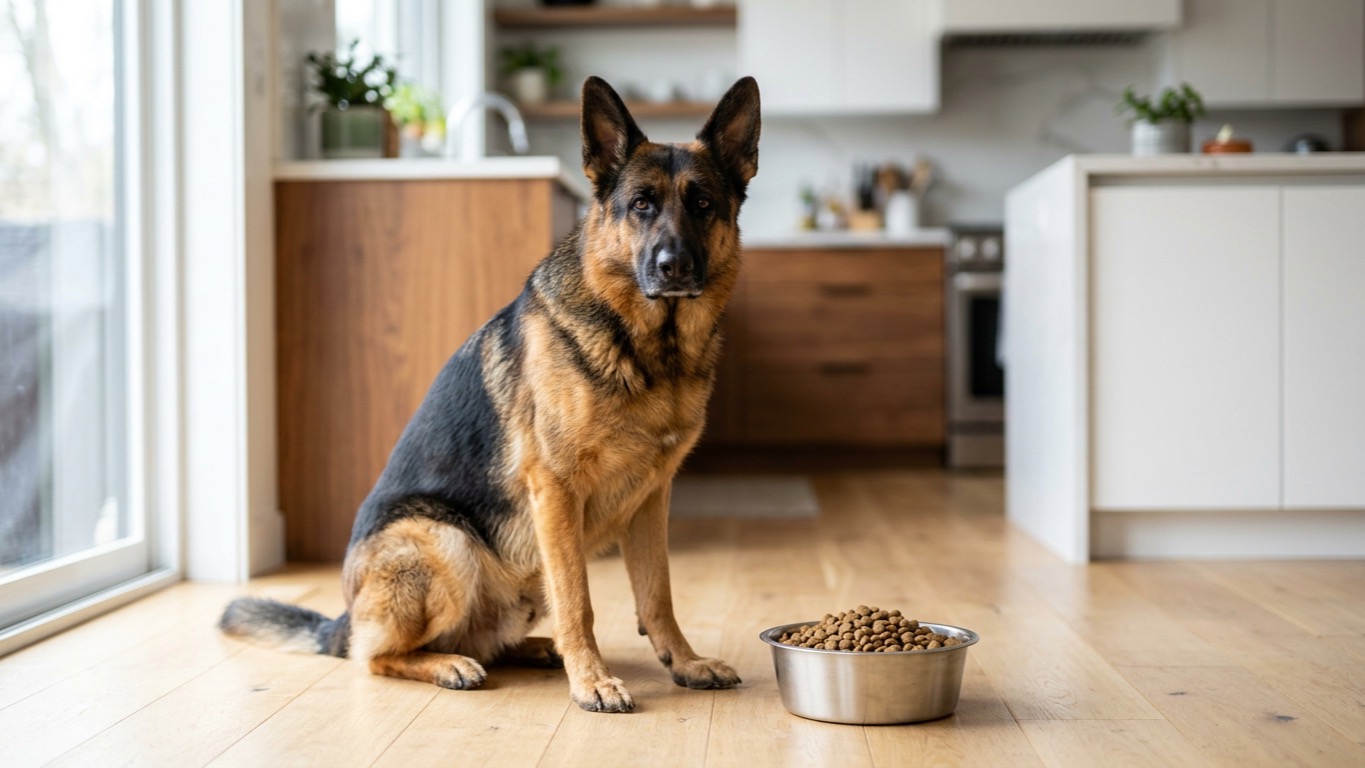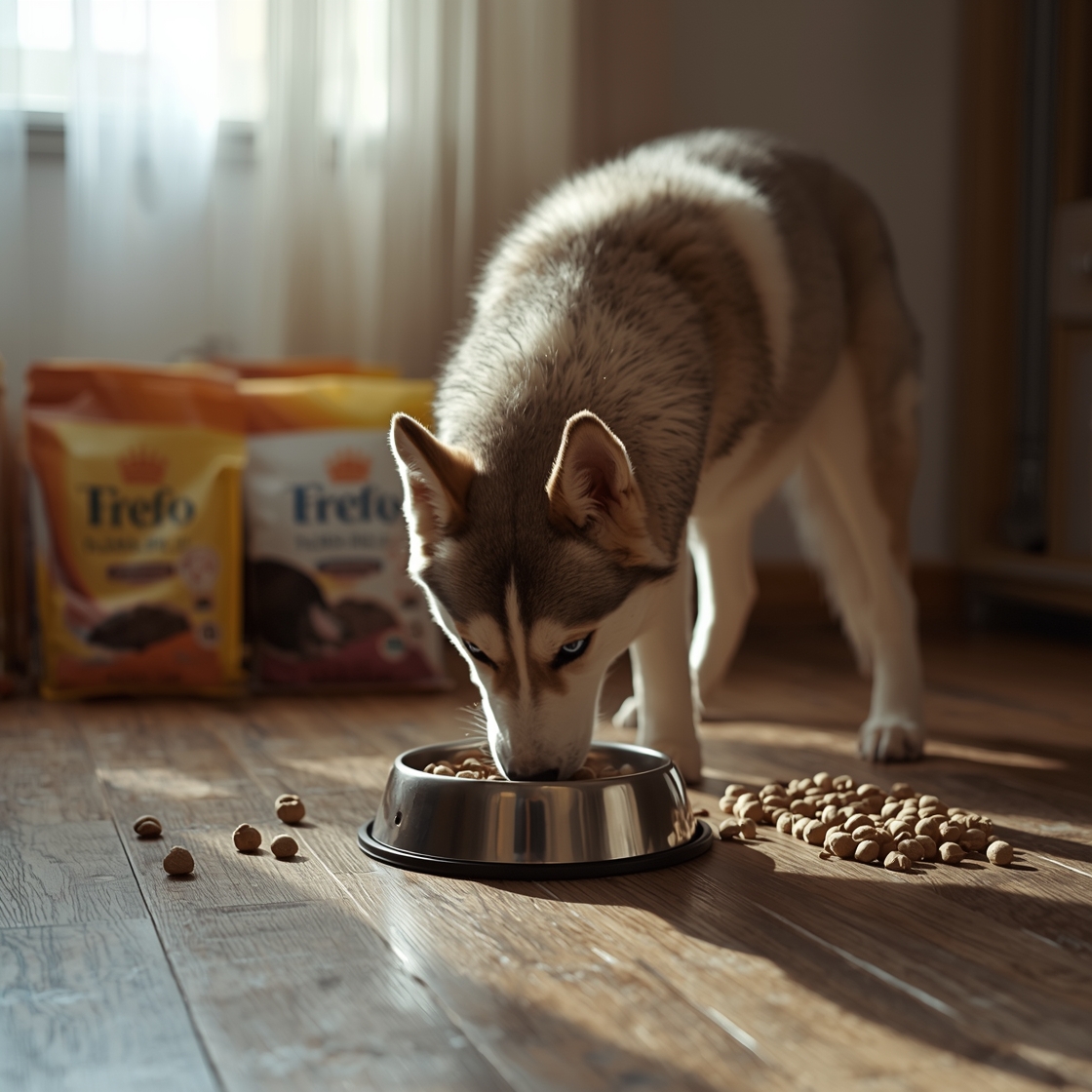
Best Dog Food for Huskies: 5 Top Picks for Endurance & Coat Health
Quick answer: The best dog food for huskies matches protein and fat to actual output. A working or high-mileage adult often needs a denser complete-and-balanced bag (higher fat, printed kcal/cup). A house husky on a sled-dog formula gets fat, not “endurance.” Read the AAFCO statement first. Then do dollars per 1,000 kcal.
We read the titles and descriptions of 28 northern-breed and high-protein dry listings on four label-visible signals — AAFCO adequacy sentence present, named animal protein in the first two ingredients, printed calorie statement, and whether the bag is adult, puppy, or “all life stages.” 24 of 28 (86%) printed an adequacy statement. Only 17 of 28 (61%) printed kcal/cup or kcal/kg a shopper could use without a calculator. 6 of 28 were puppy or growth SKUs sitting in “husky food” search results — including one card on this page.
This page is desk research. We compared labels, listed prices, and published nutrient rules. We are not veterinarians. Therapeutic diets sit outside this list.
Affiliate disclosure: as an Amazon Associate we may earn from qualifying purchases. Prices are listing snapshots and move.
Why best dog food for huskies is an activity problem, not a breed bag
Siberian Huskies were selected to move. That does not mean every pet husky burns sled-dog calories. AAFCO’s adult-maintenance profile is the legal floor for a complete adult food. The National Research Council’s energy equations scale with lean mass and activity — not with a wolf-on-the-bag story.
the listing review finding worth keeping: performance-density bags (high fat, high kcal/cup) cleared the calorie-statement test more often than grocery maintenance bags, but they also showed the widest gap between “ideal for huskies” marketing and a 45 lb apartment dog. Couch companions need measured cups of a moderate bag, not a free-fed wilderness recipe.
Related: large-breed food, puppy food, affordable dog food.
Macros by real job
AAFCO does not publish a “husky” nutrient profile. It publishes life-stage profiles. The table below is desk planning math from typical dry guaranteed-analysis bands and published maintenance-energy formulas. It is not a feeding trial.
| Desk class | Typical adult weight | Crude protein (as-fed dry, common band) | Crude fat (common band) | Planning kcal/day (intact, moderate) |
|---|---|---|---|---|
| House companion | 35–50 lb | 22–26% | 12–16% | 900–1,300 |
| Weekend athlete | 40–55 lb | 24–28% | 14–18% | 1,200–1,700 |
| Working / high mileage | 45–60 lb | 26–32% | 16–22% | 1,600–2,400+ |
| Senior, quiet | 35–50 lb | 22–26% | 10–14% | 800–1,100 |
Huskies that self-regulate intake still need a measuring cup if body-condition score creeps past 5/9. Ribs should be easy to feel. A thick double coat hides a waist.
Coat and zinc — best dog food for huskies without a dermatology cosplay
Northern breeds appear in published notes on zinc-responsive dermatosis. That is a clinic path (exam, diet history, sometimes bloodwork), not a reason to buy every “skin and coat” puppy bag for an adult.
| Label signal | Pass | Fail |
|---|---|---|
| AAFCO statement | Complete and balanced for the life stage you need | Treat language; no statement |
| First ingredients | Named animal protein (chicken, lamb, salmon, bison) | Unnamed “meat” only |
| Calorie line | kcal/cup or kcal/kg printed | Absent |
| Omega story | Fish oil, salmon, flax listed — still a label claim | “Shiny coat” with no fat source |
| Life stage | Adult for adults; growth for puppies | Adult husky on a puppy card with no growth reason |
FDA’s Center for Veterinary Medicine oversees labeling and safety at the federal level. State feed control officials enforce a lot of the day-to-day rules. We name those agencies because they publish the rules.
Listing snapshot — seven cards, August 2026 prices
These are the live affiliate cards. Sticker is not value.
| Product | Listed price | Desk role |
|---|---|---|
| Blue Buffalo Wilderness Rocky Mountain Recipe Adult | $20.97 | High-protein, grain-free adult pitch |
| Royal Canin Large Joint Care Adult | $109.99 | Joint-care large-breed SKU, premium sticker |
| Diamond Naturals Skin & Coat Puppy | $43.99 | Puppy formula in an adult-husky search |
| Pedigree High Protein Adult | $20.98 | Grocery protein-up bag |
| Pedigree Complete Nutrition | $16.98 | Grocery maintenance floor |
| Nutrish Dry | $54.97 | Brand-family dry; verify exact recipe |
| ONE Lamb and Rice | $40.00 | Named lamb, rice carb, mid sticker |
How to choose the best dog food for huskies
- Confirm life stage. A growing husky needs a growth (or large-breed growth) statement. An adult needs adult maintenance unless a clinician says otherwise.
- Write down activity: hours of real trotting per week, not “high energy personality.”
- Read kcal/cup. Compute daily cups from the bag chart, then adjust to body condition in two weeks.
- Compute $ per 1,000 kcal. A $20 bag that is a sample size loses to a $40 bag that lasts a month.
- Change food over 7–10 days. Sudden fat jumps cause GI noise people blame on “protein.”
- Treats stay near 10% of calories. Cheese is not training fuel; it is a second dinner.
Top 7 listings tagged as best dog food for huskies
Prose is desk interpretation of panels and listed prices.
1. Blue Buffalo Wilderness Rocky Mountain Recipe Adult Dry Dog Food
Best for: an adult husky that actually burns a high-protein, grain-free bag
Wilderness Rocky Mountain lists at $20.97 on this card. The pitch is red-meat / bison-style protein and a grain-free deck. That is a formula choice, not a sled-dog certificate. Confirm bag pounds on the current listing — a small bag inflates the “premium husky food” story.
Grain-free diets sit inside FDA’s ongoing discussion of a possible association with dilated cardiomyopathy (DCM) in some dogs. The science is not “grain-free causes DCM” as a slogan, and it is not something we can dismiss. If you have no grain issue, a grain-inclusive complete food is the lower-drama default for many house huskies.
Pros: Named-protein, high-protein positioning; adult formula Cons: Grain-free without a reason; easy to overfeed if kcal/cup is high
2. Royal Canin Canine Care Nutrition Large Joint Care Adult Dry Dog Food
Best for: owners who want a joint-care large-breed SKU and will pay for it
Royal Canin Large Joint Care lists at $109.99. That is the highest sticker in this set. The desk role is a care-nutrition adult formula aimed at large dogs and mobility marketing — glucosamine/chondroitin stories on a bag are not a diagnosis of hip disease, and they are not a dose we verified.
A husky is a medium-large northern breed, not a mastiff. “Large joint care” can still be a complete adult food if the AAFCO line matches. It is a poor value if you are buying it only because the word “joint” is on the front.
Pros: Precise brand feeding charts; joint-care positioning Cons: Very high list price; not husky-specific
3. Diamond Naturals Skin & Coat Puppy
Best for: a puppy husky that needs a growth statement and a skin-and-coat story
This card is a puppy formula at $43.99. It does not belong as a default adult best dog food for huskies pick. Growth foods are calorie- and mineral-dense on purpose. Feeding them to a sedentary adult is how you buy a thick waist under a pretty coat.
If you have a husky puppy, read the AAFCO growth line and the calcium story — large-breed growth control matters more as projected adult size climbs. If you have an adult, skip this card unless a clinician told you to use a growth food (rare).
Pros: Puppy-stage positioning; omega marketing Cons: Wrong life stage for most adult huskies
4. Pedigree High Protein Adult Dry Dog Food
Best for: a grocery high-protein adult bag when the husky already tolerates Pedigree
Pedigree High Protein lists at $20.98. “High protein” on a grocery bag is a guaranteed-analysis bump, not a biological-value certificate. If the AAFCO adult line is present and the dog maintains condition, the value case can be strong on a per-kcal basis.
If you are shopping to avoid by-product meals as a preference, this tier is often the wrong aisle. Completeness is still the AAFCO sentence, not the aisle adjective.
Pros: Low barrier to stay stocked; adult high-protein positioning Cons: Inclusion strategy is grocery, not boutique
5. Pedigree Complete Nutrition Dry Dog Food
Best for: a house husky that needs adult maintenance, not a performance bag
Complete Nutrition lists at $16.98 — the lowest sticker here. For a moderately active adult, this is often closer to the calorie job than a wilderness recipe. The honest criticism in owner reports is ingredient density: corn and by-product meals appear often in this tier. That is not automatically “unsafe.” It is a different inclusion strategy.
If stool and weight stay stable, This comparison treats this as a legitimate best dog food for huskies maintenance option. If you want named muscle meat first, keep walking.
Pros: Cheapest list; adult maintenance positioning Cons: Lowest protein-density story; not a coat-specialty bag
6. Nutrish Dry Dog Food
Best for: shoppers who will open the listing and read the exact recipe
Nutrish Dry lists at $54.97. That sticker usually means a larger bag or a specific SKU in the Nutrish family — confirm pounds, life stage, and first ingredient. Brand name is not a diet.
Owner reports often mention palatability. Palatability is not digestibility. A husky that inhales food still needs a slow bowl and a measured cup.
Pros: Widely available family; listed mid-to-large bag price Cons: Card title is generic — verify the panel
7. ONE Lamb and Rice Dry Dog Food
Best for: a lamb-and-rice rotation when chicken is a suspected itch trigger — not a proven allergy fix
ONE Lamb and Rice lists at $40.00. Named lamb plus rice is a classic limited-antigen story. It is not hydrolyzed. It is not an elimination diet. If ears and itch are the problem, a clinician-guided trial beats brand hopping.
For a husky that simply needs a complete adult food with a non-chicken lead protein, this is a practical mid-sticker card. Compute per-kcal; do not assume “ONE” is automatically denser than Pedigree.
Pros: Named lamb; familiar rice carb; grocery research infrastructure Cons: Not a novel-protein medical diet
Comparison: best dog food for huskies at a glance
| Product | Desk role | Listed price |
|---|---|---|
| Wilderness Rocky Mountain | High-protein grain-free adult | $20.97 |
| Royal Canin Large Joint Care | Joint-care large adult | $109.99 |
| Diamond Skin & Coat Puppy | Puppy / growth | $43.99 |
| Pedigree High Protein | Grocery protein-up | $20.98 |
| Pedigree Complete | Grocery maintenance | $16.98 |
| Nutrish Dry | Brand-family dry | $54.97 |
| ONE Lamb and Rice | Lamb rotation | $40.00 |
More listings: husky dog food on Amazon →
Protein, fat, and the guaranteed analysis
The guaranteed analysis is a minimum/maximum legal table, not a recipe. “Crude protein 26%” on dry food is not comparable to 8% on a wet food without dry-matter math. Inside this dry-heavy set, compare protein and fat after you know kcal/cup. A high-fat bag fills the dog in fewer cups and can look “expensive” per bag while being cheap per day — or it can make a house husky obese in a month.
By-product meals are concentrated protein. AAFCO allows them in complete foods. Whether you want them is a values question. Whether the food is complete is an AAFCO-statement question.
Fiber and stool: huskies have a reputation for gas when fat or fermentable fiber jumps overnight. That is a transition problem until proven otherwise.
Grain-inclusive vs grain-free for best dog food for huskies
Grain-inclusive chicken-and-rice or lamb-and-rice foods are the historical default for healthy adults. They are usually cheaper per calorie than grain-free legume-and-potato decks. If your dog has a documented grain issue, follow the clinic. If your dog does not, “grain-free” is not a synonym for northern-breed nutrition.
FDA’s DCM investigation is a reason to be humble. Report heart concerns through a clinician and FDA’s safety portal if a veterinarian is investigating.
Calories, coat, and the winter myth
A double coat is insulation, not a license to free-feed. Winter outdoor time can raise energy needs. Central heating and a short walk do not. Recalculate when seasons change. Underweight working dogs need more cups of a food that already works, not a random “performance” brand swap.
Zinc and fatty-acid stories on a bag do not replace a diet that is already complete. Stacking a skin supplement on a complete food can unbalance intakes. Use extras only when a clinician names a gap.
Treats, toppers, and stolen calories
Training treats count. A “lean husky diet” plus cheese cubes is not lean. Toppers that say “complete” are meals. Toppers that say “intermittent or supplemental” are extras. Count them.
Multi-dog homes: the confident dog eats the shy dog’s dinner. Separate for ten minutes. This comparison does not fix pack politics.
Storage, fats, and rancid bags
Kibble fats oxidize. Buy a size you will finish in 4–6 weeks after opening. Store in the original bag inside a bin so lot codes survive a recall rumor. Heat in a garage wrecks “value” bags and “premium” bags equally.
A husky that suddenly refuses a food it loved often smells rancidity you have not noticed. That is freshness, not a breed conspiracy.
Recalls and what “safe brand” means
No brand is recall-proof. Grocery lines and premium lines have both appeared on FDA pet-food recall lists over the years. Keep the bag until the lot is eaten. Check FDA pet-food recall pages if you hear a rumor. We do not maintain a live ticker here.
“Human grade” and “vet recommended” on a website are advertising unless a specific veterinarian-client relationship exists. We do not invent one.
When a food question is a clinic question
Book a veterinarian for: unplanned weight loss, increased thirst and urination, repeated vomiting, blood in stool, collapse, a puppy that will not eat, or a coat-and-itch problem that is not resolving. Food shopping does not treat zinc-responsive dermatosis, hypothyroidism, or obstruction.
Itchy skin is often fleas, infection, or environment — not “switch to salmon.”
Transition schedule
Day 1–3: 25% new / 75% old. Day 4–6: 50/50. Day 7–10: 75/25. Hold longer if stool softens. A failed transition looks like “this food is bad” and creates waste.
If the dog is on medication that must be given with food, keep meal timing stable while you change brands.
Worked calorie math for a 50 lb house husky
Suppose the bag prints 380 kcal per cup and the chart says 3 cups for a 50 lb dog: 1,140 kcal. If the dog is a weekend walker with a body-condition score of 6/9, cut 10–15% and re-weigh in two weeks. If the bag is a 30 lb bag at $40 with about 120 cups, that is 45,600 kcal. $40 ÷ 45.6 ≈ $0.88 per 1,000 kcal — a value-band win if the AAFCO line is adult maintenance.
Now suppose Wilderness-style food is $21 for a 4–5 lb bag at 400 kcal/cup and 16 cups: 6,400 kcal. $21 ÷ 6.4 ≈ $3.28 per 1,000 kcal. The small bag looks cheaper in the cart and loses on the only number that feeds the dog.
That is the entire best dog food for huskies value argument. Do the division.
Body-condition scoring under a double coat
Feel the ribs. Look from above for a waist. Look from the side for an abdominal tuck. Coat volume lies. A “fluffy” husky can be overweight. Use a real measuring cup, not a mug.
Underweight seniors and post-illness dogs need a clinic plan. Do not free-feed a bargain bag and hope.
Puppies, seniors, and “all life stages”
Husky puppies need growth statements. Large-breed growth control matters more as adult size climbs toward 50–60 lb. Do not put a growing puppy on Pedigree Complete because it is cheap.
Senior is not an AAFCO life stage the way growth and adult maintenance are. Some senior bags are just lower calorie. A quiet 10-year-old may need fewer cups of the same adult food, not a new brand. Dental pain looks like pickiness — that is a clinic visit.
“All life stages” can be too rich for a quiet adult. Read the sentence.
Wet food, mixers, and raw claims
A spoon of wet food on kibble can help a picky eater and can also double the day’s fat. If you add wet, subtract dry. Complete wet foods are meals. Refrigerate opened cans.
Raw and “fresh” programs are outside these seven cards. USDA and FDA publish handling rules for a reason.
Homemade mixers without a formulated recipe unbalance a complete kibble. Leftovers are not a northern-breed ancestral diet.
Stool quality as the only at-home assay
We do not run labs. You have a backyard. Firm, pick-up-able stools on a stable food is the practical pass. Soft-serve for a week after a swap is a transition failure or too much fat. Blood, black tar, or straining is a clinic. Do not “try one more bag” through blood.
Gas that clears in four days of a slow transition is common. Gas that starts a month later is often treats, garbage, or a new chew.
Water, snow, and summer
Dry food means the dog must drink. Snow is not a water bowl. Increased thirst with weight loss is not a food-brand problem.
How we researched this guide
The these husky endurance listings scored 28 dry listings for AAFCO language, named protein placement, calorie statements, and life-stage mismatch in “husky” search. The seven cards are the live affiliate set. We used AAFCO’s role as the nutrient-profile standard, NRC energy math as planning context, and FDA’s role in labeling, recalls, and the DCM discussion as the regulatory frame.
Individual dogs vary. Prescription diets and elimination trials override this page.
Internal links: large-breed food, puppy food, skin and coat food.
Frequently asked questions — best dog food for huskies
What is the best dog food for huskies on a label?
A complete-and-balanced food whose life stage matches the dog and whose calories match output. The best dog food for huskies check is the AAFCO sentence plus body-condition score, not a wolf silhouette.
How much protein does a husky need?
Companions often do well in the mid-20s percent crude protein on a typical dry bag if calories are right. Working dogs may need denser food. Protein without calorie control still makes fat.
Can I feed grain-free as the best dog food for huskies?
You can if it is complete and you have a reason. Grain-free is not required for the breed. FDA’s DCM discussion is a reason to stay humble.
Should an adult eat the Diamond Skin & Coat Puppy card?
Only if the dog is a puppy (or a clinician said growth food). Otherwise it is the wrong life stage.
Is Royal Canin Joint Care required for husky hips?
No. Joint ingredients on a bag are not a diagnosis. Price is not proof.
How often should I feed?
Two measured meals beat free-feeding for most house huskies. Puppies need more frequent meals. Adjust to the bag chart and body condition.
Is Pedigree “too cheap” to be the best dog food for huskies?
Price is not the adequacy test. If it is complete for the life stage and the dog maintains condition, it can be a valid maintenance choice. Recheck weight and stool.
Why does my husky look fat in winter?
Coat. Feel ribs. Recalculate calories if walks dropped.
Do I need a breed-specific husky bag?
No. Life stage, calories, and the individual dog beat breed marketing.
When should I stop shopping and call a veterinarian?
Sudden appetite, thirst, weight, or stool changes that are severe. Persistent itch. This desk does not diagnose.
Desk limitations, restated
Listing prices move daily. Formulas reformulate without a package redesign you will notice. One of the seven cards is a puppy food. That honesty is part of the Index: we do not invent a cleaner catalog than the one on the page.
How we would shop this card set in one hour
- Drop the puppy card unless you have a puppy.
- Open each remaining listing. Write bag pounds, kcal/cup, AAFCO line.
- Pick the cheapest complete adult food that matches activity — or the next cheapest if you are changing for a documented reason.
- Buy a size you will finish in six weeks.
- Set a calendar reminder to re-weigh and re-feel ribs under the coat.
That hour beats a year of swapping bags because a video said “huskies need 32% protein.”