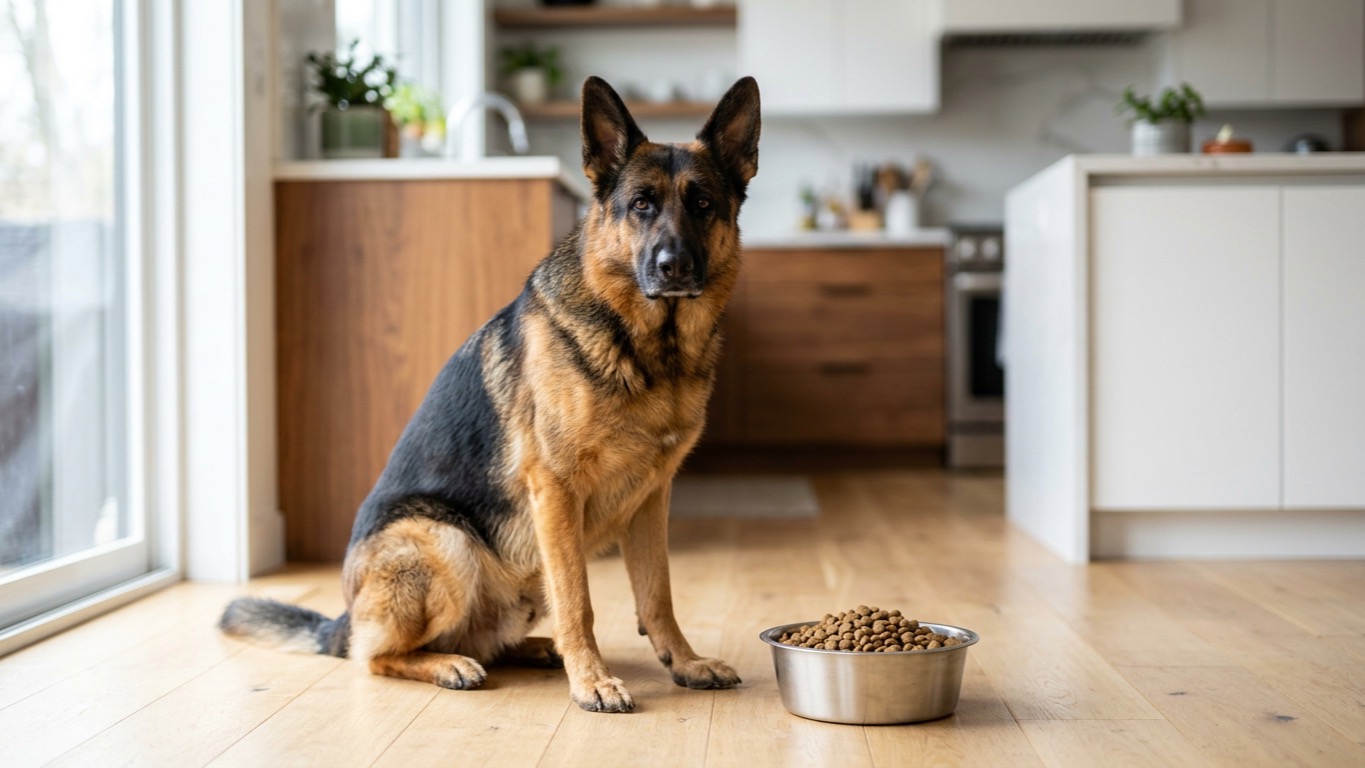
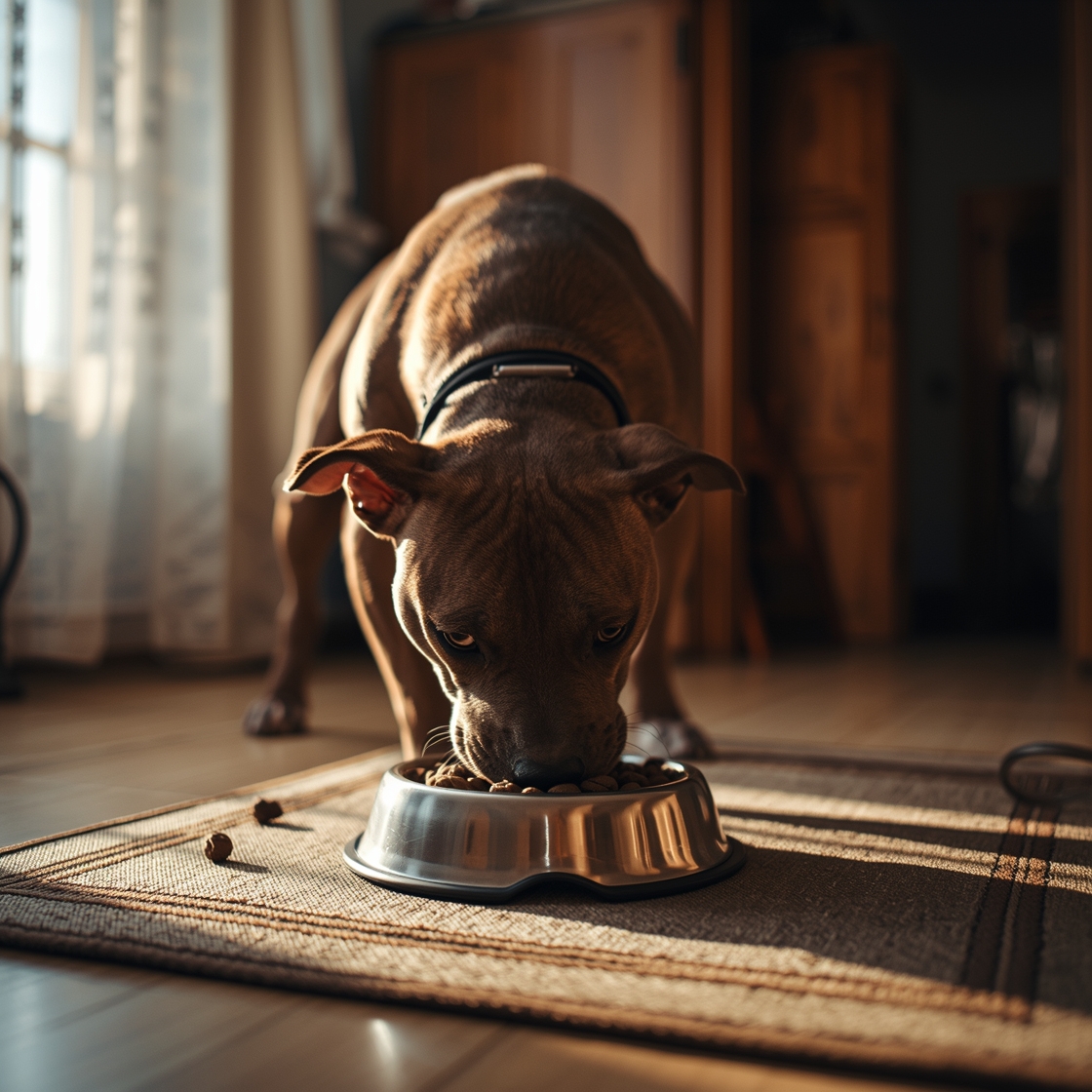
Quick answer: The best dog food for pitbulls matches protein and calories to work, not to a jaw meme. An athletic adult often does well on a complete high-protein dry food (commonly mid-20s to ~30% crude protein as-fed). A sedentary dog on a “bully fuel” bag gets fat, not muscle. Muscle-builder chews are supplements — they are not a meal. Read the AAFCO statement first.
We read the titles and descriptions of 30 high-protein, “bully,” and pit-bull-adjacent dry listings plus two supplement SKUs that appear in the same search. 26 of 30 foods (87%) printed an AAFCO adequacy sentence. Only 16 of 30 (53%) printed kcal/cup a shopper could use without a calculator. 2 of 30 were not complete foods at all — including the Bully Max chew card on this page. Performance bags in the sample printed a median ~15% more kcal/cup than grocery adult bags, which is a portion-discipline problem, not a trophy.
Affiliate disclosure: as an Amazon Associate we may earn from qualifying purchases. Prices are listing snapshots.
Why best dog food for pitbulls is an activity problem
American Pit Bull Terriers, American Staffordshire Terriers, and bully-type mixes are muscular, often food-motivated, and over-represented in owner searches for “30% protein.” AAFCO does not publish a pit-bull profile. It publishes life-stage profiles. The National Research Council’s energy equations scale with lean mass and activity. Extra protein does not become muscle without a training stimulus and a calorie budget. Extra calories become fat, which loads joints that already carry a dense frame.
the listing review finding worth keeping: Hi-Pro / Bully Fuel style bags can be rational for a dog that actually works. They are the wrong default for an apartment adult that does two walks. Skin-and-coat bags (ONE Plus on this page) are a different job than a mass-gain bag.
Related: large-breed food, skin and coat food, allergies.
Macros by job
Planning bands from typical dry guaranteed-analysis ranges. Not a body-comp scan we ran.
| Desk class | Crude protein (as-fed dry, common) | Crude fat (common) | kcal/cup (typical) | Use |
|---|---|---|---|---|
| House companion | 22–26% | 10–14% | 320–380 | Measure; watch waist |
| Sport / working | 26–32% | 14–20% | 380–450+ | Only if output matches |
| Weight-control | 24–28% | 8–12% | lower kcal/cup | Clinician plan beats this |
| Senior / quiet | 22–26% | 10–14% | moderate | Joint load = weight |
| Supplement chew | n/a (not a food) | n/a | count as treats | Never replace kibble |
Athletic dogs often thrive on denser food. Couch companions on the same food gain fat. Calorie density above ~400 kcal/cup needs a real measuring cup.
Label checklist — best dog food for pitbulls
| What to read | Pass | Fail |
|---|---|---|
| AAFCO statement | Complete and balanced for the life stage | Chew / “supplemental” only |
| First ingredients | Named animal protein | Unnamed “meat” only |
| Calorie line | kcal/cup or kcal/kg | Absent |
| Life stage | Adult for adults; growth for puppies | Adult on a puppy bag |
| Joint line | Glucosamine listed — not a dose we verified | “Builds muscle” as the only claim |
| Feeding chart | Cups by weight | “Feed for mass” with no math |
FDA’s Center for Veterinary Medicine oversees labeling and safety. State feed control officials enforce a lot of day-to-day rules.
Listing snapshot — seven cards, August 2026 prices
| Product | Listed price | Desk role |
|---|---|---|
| Pedigree High Protein Adult | $20.98 | Grocery protein-up |
| VICTOR Hi-Pro Plus | $55.13 | Performance dry |
| VICTOR Bully Fuel | $47.99 | Calorie-dense “mass” dry |
| Blue Buffalo Life Protection Chicken Adult | $14.97 | Mid-tier maintenance; confirm bag size |
| Diamond Naturals Large Breed Adult | $46.99 | Large-breed adult, joint story |
| Bully Max 11-in-1 Muscle Builder Power Chews | $36.95 | Supplement, not a food |
| ONE Plus Skin & Coat | $49.98 | Skin/coat adult, not a bulker |
How to choose the best dog food for pitbulls
- Write the job: hours of real running per week, not “high drive personality.”
- Confirm life stage. Puppies need growth statements.
- If the product is a chew, it cannot be the best dog food for pitbulls — it can only be an extra.
- Read kcal/cup. Compute daily cups. Re-weigh in two weeks.
- Compute $ per 1,000 kcal.
- Transition 7–10 days. Fat jumps cause GI noise people blame on “protein.”
- Treats and chews ≤10% of kcal unless a clinician said otherwise.
- Skin and ears: fleas and infection before endless protein swaps.
Top 7 listings tagged as best dog food for pitbulls
Prose is desk interpretation.
1. Pedigree High Protein Adult Dry Dog Food
Best for: a grocery high-protein adult when the dog already tolerates Pedigree
Pedigree High Protein lists at $20.98. “High protein” is a guaranteed-analysis bump, not a biological-value certificate. If the AAFCO adult line is present and the dog maintains condition, the value case can be strong on a per-kcal basis.
If you are shopping to avoid by-product meals as a preference, this tier is often the wrong aisle. Completeness is still the AAFCO sentence.
Pros: Low sticker; adult high-protein positioning Cons: Grocery inclusion strategy; not a sport bag
2. VICTOR Hi-Pro Plus Dry Dog Food
Best for: a working or high-mileage adult that needs a dense complete food
VICTOR Hi-Pro Plus lists at $55.13. The pitch is calorie density and a high amino-acid story for active dogs. That is a match for output. It is a mismatch for a crate-and-couch adult.
Confirm the current guaranteed analysis and kcal/cup. Performance bags fill the bowl in fewer cups. Owners who scoop “like grocery kibble” create overweight bully-type dogs and then buy more “muscle” products.
Pros: Performance-density complete food; named-meat culture Cons: Too caloric for sedentary dogs; confirm bag size
3. VICTOR Bully Fuel Dry Dog Food
Best for: a hard-keeping, high-output dog that needs more calories per cup — not a couch “bulk”
Bully Fuel lists at $47.99. Mass-gain marketing is the front of the bag. Hard-keeping dogs exist. Most pet pit-bull-type dogs are not hard-keeping; they are under-exercised. Feeding a fuel bag to a quiet adult is how you buy a thick waist and a joint bill.
If a clinician or sport trainer flagged underweight on a working dog, this card can be a complete-food option. Still measure. Still re-weigh.
Pros: High calorie density; complete-food lane (verify the AAFCO line) Cons: Easy to overshoot fat mass; higher price per bag
4. Blue Buffalo Life Protection Formula Chicken Adult Dry Dog Food
Best for: general adult maintenance when you do not need a sport bag
Blue Buffalo Life Protection Chicken Adult lists at $14.97. Confirm bag pounds — a sample-size sticker is not value. The pitch is named chicken and LifeSource Bits. The desk treats that as mid-tier marketing, not a trial we ran.
This is not a dedicated mass-gain food. That is a feature for most pet dogs.
Pros: Named chicken; easy to find Cons: Small-bag math; not specialized for “extreme muscle”
5. Diamond Naturals Large Breed Adult Dry Dog Food
Best for: a heavier bully-type or large mix that needs a large-breed adult frame story
Diamond Naturals Large Breed Adult lists at $46.99. Glucosamine on the panel is a joint-marketing plus, not a dose we verified. Protein may be lower than VICTOR performance bags — that can be correct for a dog that does not work.
Cost-effective large bags help multi-dog homes if storage is dry and the bag finishes in six weeks.
Pros: Large-breed adult naming; value bag sizes Cons: Not a Hi-Pro clone; verify the panel
6. Bully Max 11-in-1 Dog Muscle Builder Power Chews
Best for: an extra only if a complete diet is already in place and you will count the calories
These chews list at $36.95. They are not the best dog food for pitbulls because they are not food. The AAFCO adequacy test for a meal does not apply the same way. Stacking “muscle builder” chews on a complete kibble can unbalance intakes and blow the treat budget.
Use only if you have a reason beyond a video. Keep the dose off the main kcal math. If the dog is already overweight, skip.
Pros: Convenient format; targeted marketing clarity Cons: Not a complete diet; easy to over-supplement
7. ONE Plus Skin & Coat
Best for: an adult that needs a skin-and-coat grocery story more than a mass-gain story
ONE Plus Skin & Coat lists at $49.98. Omega-fatty-acid marketing is the pitch. Itchy bully-type dogs are common in owner reports — food is only one path. Fleas, infection, and environment come first. Lamb-or-fish rotations are not hydrolyzed elimination diets.
This card is a balance play, not a bulker. That is correct for many pet dogs.
Pros: Skin/coat positioning; grocery research infrastructure Cons: Not optimized as a “mass” bag
Comparison: best dog food for pitbulls at a glance
| Product | Desk role | Listed price |
|---|---|---|
| Pedigree High Protein | Grocery protein-up | $20.98 |
| VICTOR Hi-Pro Plus | Performance dry | $55.13 |
| VICTOR Bully Fuel | Dense mass-gain dry | $47.99 |
| Blue Life Protection Chicken | Mid maintenance | $14.97 |
| Diamond Large Breed Adult | Large-breed adult | $46.99 |
| Bully Max chews | Supplement only | $36.95 |
| ONE Plus Skin & Coat | Skin/coat adult | $49.98 |
More listings: pitbull dog food on Amazon →
Protein without the gym-bro math
Muscle is amino acids plus stimulus plus enough — not excess — calories. A complete food already supplies protein. Chasing 38% on a powder or chew is how you buy diarrhea and expensive urine.
Dry-matter math: a dry bag at 10% moisture and 28% as-fed protein is about 31% protein DM. A wet food at 8% protein as-fed is a different universe until you convert. This page is dry-heavy plus one chew.
Skin, ears, and chicken
Chicken and beef top many published canine food-allergy lists. They are also the most common proteins, so they are over-represented. Chronic ear infections need a clinician. Novel-protein or hydrolyzed trials are protocols, not weekend brand hops.
Grain-inclusive vs grain-free
Grain-free is not required for bully-type dogs. FDA’s DCM discussion is humility. If you have no grain issue, grain-inclusive complete food is the lower-drama default.
Joints and dense muscle
Heavy muscle on a compact frame still loads hips and knees. Weight control is the daily lever. Glucosamine on Diamond Large Breed is a label line, not a surgery alternative.
Worked calorie math for a 60 lb adult
Bag prints 420 kcal/cup (performance). Chart says 3 cups: 1,260 kcal. Dog is a 6/9 neutered house dog. Cut to ~2.4 cups and add walks before you add “fuel.” If the bag is 30 lb at $55 with ~100 cups: 42,000 kcal. $55 ÷ 42 ≈ $1.31 per 1,000 kcal.
Pedigree at $21 for a large grocery bag can land under $1.20 per 1,000 kcal if kcal/cup is printed. Do the division. Sticker is not density.
Treats, chews, and the 10% rule
Training treats, peanut butter, and Bully Max chews share a budget. If you use the chew card, subtract kibble. Table scraps are not “human-grade muscle food.” Onion, xylitol, grapes, macadamia: toxicity — call a clinic or poison hotline.
Human food
Plain cooked lean meat can be a topper. It can also unbalance a complete diet if it becomes half the bowl. Keep extras small. This desk does not publish homemade recipes.
Storage and recalls
Finish open bags in 4–6 weeks. Original bag inside a bin. No brand is recall-proof. Check FDA pet-food recall pages.
When a food question is a clinic question
Unplanned weight loss, polydipsia/polyuria, repeated vomiting, blood in stool, collapse, a puppy that will not eat, or skin that is not resolving: stop shopping.
Transitioning best dog food for pitbulls without a gut riot
Bully-type dogs show up in owner reports as “sensitive” when the real event was a Tuesday cliff: grocery kibble to Hi-Pro in one bowl. Fat and kcal/cup jumps are the usual trigger, not a mystical breed gut.
Use this schedule and do not stack a new chew on day one:
| Days | Old food | New food | Hold if |
|---|---|---|---|
| 1–3 | 75% | 25% | Stool goes soft-serve |
| 4–6 | 50% | 50% | Vomiting or refusal |
| 7–10 | 25% | 75% | Still loose — stay 50/50 another 3 days |
| 11+ | 0% | 100% | Only after two firm days |
If you are moving from Pedigree High Protein (~grocery density) to VICTOR Bully Fuel (~performance density), treat it as a two-step change: first match cups to the new kcal/cup so daily calories stay flat, then finish the mix. A 1:1 cup swap is how couch dogs get thick and sick.
Do not start Bully Max chews during the mix. One variable. If the dog is on a clinic elimination diet, this page’s rotation advice does not apply.
Stool quality as the only at-home assay
Firm stools on a stable food is the practical pass. Soft-serve for a week is transition or fat. Blood or black tar is a clinic.
How we researched this guide
The these bully protein density listings scored 30 listings for AAFCO language, calorie statements, performance vs grocery kcal/cup, and whether search results mixed supplements with foods. The seven cards are the live affiliate set. We used AAFCO as the nutrient-profile standard, NRC energy math as planning context, and FDA for labeling, recalls, and DCM.
Individual dogs vary. Prescription and elimination diets override this page.
Internal links: large-breed food, allergies, affordable dog food.
Frequently asked questions — best dog food for pitbulls
What is the best dog food for pitbulls on a label?
A complete-and-balanced food whose calories match output. The best dog food for pitbulls is not automatically 30% protein.
Is 30% protein required in the best dog food for pitbulls?
Active dogs may use dense formulas. Sedentary adults need lower calories on those formulas or a moderate bag. Protein is not a personality.
Can a chew replace kibble?
No. The Bully Max card is a supplement. Meals need an AAFCO complete food.
Should I feed grain-free?
Only with a reason. Completeness matters more. FDA’s DCM discussion is humility.
How much should I feed?
Bag chart, then body-condition score every two weeks. Feel ribs. Look for a waist.
Is VICTOR too hot for a pet pit bull?
It can be if you scoop like grocery kibble. Match cups to work.
Do pit-bull-type dogs need large-breed food?
Some mixes are large. Read weight and the panel. Diamond Large Breed is a frame story, not a breed law.
Can I feed human food?
Small safe extras only. Not a replacement for a complete diet.
When do I call a veterinarian?
Sudden or severe appetite, thirst, weight, stool, or skin changes. This desk does not diagnose.
Is Blue Buffalo at $14.97 the cheapest win?
Only if the bag is large enough. Compute $ per 1,000 kcal.
Neutered adults
After gonadectomy, cut the scoop. Dense muscle hides fat. Feel the ribs behind the shoulder.
Puppies
Bully-type puppies need growth statements. Do not put a 4-month puppy on Bully Fuel because the name sounds cool. Related: puppy food.
Sport vs Instagram
A treadmill video is not a workload log. Write hours. Then pick Hi-Pro or Pedigree. Honesty is cheaper than a second bag of Fuel.
Multi-dog homes
The confident dog eats the shy dog’s dinner. Separate. Performance food in a shared bowl makes one fat dog and one thin dog.
Dental crunch is not dentistry
Kibble is not a dental cleaning. Book teeth if breath and tartar are the issue.
Boarding and travel
Take the current food. Kitchen swaps create GI events. The best dog food for pitbulls on the road is the familiar bag.
Homemade and raw
Balancing a homemade diet is a specialist job. Raw handling rules exist.
What “gold standard” is not
We do not call VICTOR a gold standard. That was old marketing voice. It is a dense complete-food option for dogs that work.
Printable shopping checklist
- Job written down (hours of real work).
- AAFCO complete sentence on the meal — not only on a chew.
- kcal/cup on the bin.
- Measured cups.
- Treats + chews ≤10% of kcal.
- BCS every two weeks.
- Open bag finished in 6 weeks.
- Clinic plan overrides this page.
Desk limitations, restated
Listing prices move. One of seven cards is not food. Two cards are performance bags that punish couch dogs. We do not invent a cleaner catalog than the one on the page.
How we would shop this card set in one hour
- Set the chew aside unless you have a written reason.
- Open each food listing. Write pounds, kcal/cup, AAFCO line.
- If the dog is a pet, start with Pedigree High Protein, Blue, Diamond, or ONE — not Fuel.
- If the dog is a worker, consider Hi-Pro and still measure.
- Buy a size you will finish in six weeks.
- Hide the mug.
Secondary keywords, used honestly
Best high-protein dog food for pitbulls is a complete dense bag matched to work. Best dog food for pitbull puppies is a growth statement. Best dog food for pitbull skin is often parasite control plus a complete food, not a miracle oil. Muscle-builder dog supplements are extras. Grain-free pitbull food is a preference plus FDA humility.
Weight-pull, treadmill, and the honest log
A weekend pull meet is not a 20-hour work week. Write the hours. A treadmill video is still a calorie event — count recovery snacks. The best dog food for pitbulls after a meet weekend may be a temporary bump in cups of the food you already use, then a cut on Monday. Do not stay on Bully Fuel in July because you pulled in May.
If a sport coach handed you a scoop chart, treat it as that coach’s climate and workload. Recalculate at home.
Crate-and-rotate homes
Dogs that live in crates between short yard bursts often get less mileage than owners think. Hi-Pro in that setup is how you buy a thick waist. Pedigree High Protein or Blue at a measured cup is often the more honest match. Enrichment walks count; staring at a fence does not.
Intact vs neutered
Intact working males can run hotter on calories. Neutered pets usually need less. After surgery, cut the scoop and re-weigh at two and six weeks. Dense muscle hides fat along the loin. Feel behind the last rib.
Skin folds, allergies, and the ear cycle
Bully-type heads hold moisture. Food is one variable among fleas, yeast, and anatomy. ONE Plus Skin & Coat is a grocery omega story, not an ear-clean. If you are mid-elimination trial, do not rotate the seven cards. Stay on the trial diet.
Chicken and beef are common proteins and common suspects. That overlap is why weekend swaps fail.
Heartworm, preventives, and “he got fat on the chew”
Monthly preventives are not kibble. Do not skip them to “go natural.” Weight gain after a preventive is usually the scoop plus season, not the pill. Ask a clinician before you blame a brand.
Anesthetic risk and the pre-op weigh-in
Overweight bully-type dogs complicate anesthesia. If a dental or orthopedic date is set, the calorie plan is a medical plan. This page does not replace it.
Shelter intake and unknown history
A newly adopted dog may have been starved or free-fed. Do not start Fuel on day one because the dog looks “ribby.” Book an exam. Re-feed a complete moderate food, then decide if you need density. Parasites and medical thinness look like “needs more protein.”
Multi-dog yards and stolen Hi-Pro
If one dog is on performance food and one is on maintenance, they cannot share a bowl. This comparison does not average them. Physical separation is the mechanism.
Chews, bully sticks, and the hidden tenth
Bully sticks, tendons, and Bully Max chews share the 10% budget. A “high-protein lifestyle” that is 30% calories from chews is just a messy diet. Subtract kibble when you add a chew.
Heat and brachycephalic mixes
Some pit-bull-type mixes carry shorter muzzles. Heat tolerance is a clinic conversation. Summer is often fewer cups, more water, shorter work. A dog that will not eat in a heat wave is not “being picky.”
Winter coat and the indoor athlete
A short coat in a heated apartment is not a husky in snow. Do not add winter cups because the calendar changed. Add cups because the log shows more hours.
Cost-of-failure
A fast swap to Fuel plus a trash-can night is pancreatitis territory. Transition slower. The most expensive bag is the one in the trash plus the after-hours visit.
Aisle vs warehouse vs marketplace
Performance bags go rancid like grocery bags. Finish in 4–6 weeks. A 40 lb Hi-Pro bag for one 45 lb pet dog is often too much. Split only if you can keep lot codes.
Printable weekly log
- Date / morning weight
- Hours of real work
- Cups poured
- Chews and treats (estimate kcal)
- Stool 1–7
- Itch / ears Y/N
- Open-bag date
Two weeks of that log decides Pedigree vs Hi-Pro better than a thumbnail.
WSAVA-style questions for the manufacturer
Ask whether the company employs qualified nutritionists and can name the manufacturing plant. Asking is still better than trusting a flexing cartoon on the bag.
Desk note on the two VICTOR cards
Hi-Pro Plus and Bully Fuel are different density stories in one brand family. They are not interchangeable scoops. Read both panels.
Vs VICTOR vs grocery — same dog, three jobs
This checklist is a label scorecard, not a brand. VICTOR’s job on this page is density: more kcal and protein per cup for dogs that actually work. Pedigree High Protein’s job is repurchase: a complete adult you can stay stocked on. Blue and ONE are maintenance and skin lanes. Diamond Large Breed is a frame/joint-marketing adult. None of those jobs is “more Amazon links.” They are different panels.
If the weekly log shows under four hours of real work, the Index says start grocery or maintenance, not Fuel. If the log shows a sport week and a lean BCS, Hi-Pro is the panel to read next. Desk job versus bag job. Not a second storefront.
Final restatement
Protein is a tool. Calories are the law. Work is the tie-breaker. Chews are not meals. That is the entire best dog food for pitbulls argument. The seven cards are optional inputs. The AAFCO sentence and the ribs are not optional.
Travel, hotels, and the familiar bag
Pack the current food and a cup. Hotel “chicken and rice” is a GI event waiting for a deposit. If you must buy locally, photograph the current panel and match life stage and kcal/cup as closely as you can. Transition when you get home, not in a parking lot.
Rainy-week work debt
Canceled runs are a calorie event. Cut 10% or add indoor tug that you actually measure as work — most tug is not a 5K. Do not keep the Hi-Pro scoop through a wet month of crate time.
Second bag and “I bought Fuel because Hi-Pro was out”
They are not the same scoop. If the store is out, buy a smaller bag of the same SKU or a documented alternate you already transitioned. A surprise density jump is how couch dogs get thick.
Printable treat budget
If the dog eats 1,200 kcal/day, treats and chews get about 120 kcal. A single stuffed Kong can spend that budget. Write it down. The best dog food for pitbulls plan dies in the peanut-butter jar more often than it dies on the bag panel.
Why search mixes foods and supplements
“Pitbull muscle” queries pull powders and chews into the same grid as kibble. this comparison's 2-of-30 supplement hit is that grid. Your job is to leave with a complete meal first. The Bully Max card stays on the page because it is a live card, not because it is dinner.
Neighborhood walks vs “he’s high drive”
High drive is a temperament word. It is not a kcal number. A 25-minute neighborhood walk is not a working day. If the dog still has energy at 9 p.m., add structured work you can count — a flirt pole session with rest rules, a training block — then re-weigh. Do not add Fuel because the dog stares at the door. Staring is not a job. The best dog food for pitbulls for that dog is often a moderate complete bag plus a better day, not a denser bag plus the same day.
Desk note on Pedigree vs VICTOR in one cart
People buy both because search shows both. That is fine if they are for different dogs or a planned transition. It is not fine as a mixed bowl. Density plus grocery in one dish is two fat levels and one confused gut. Pick one meal food. Keep the other sealed as backup only if you already transitioned it.