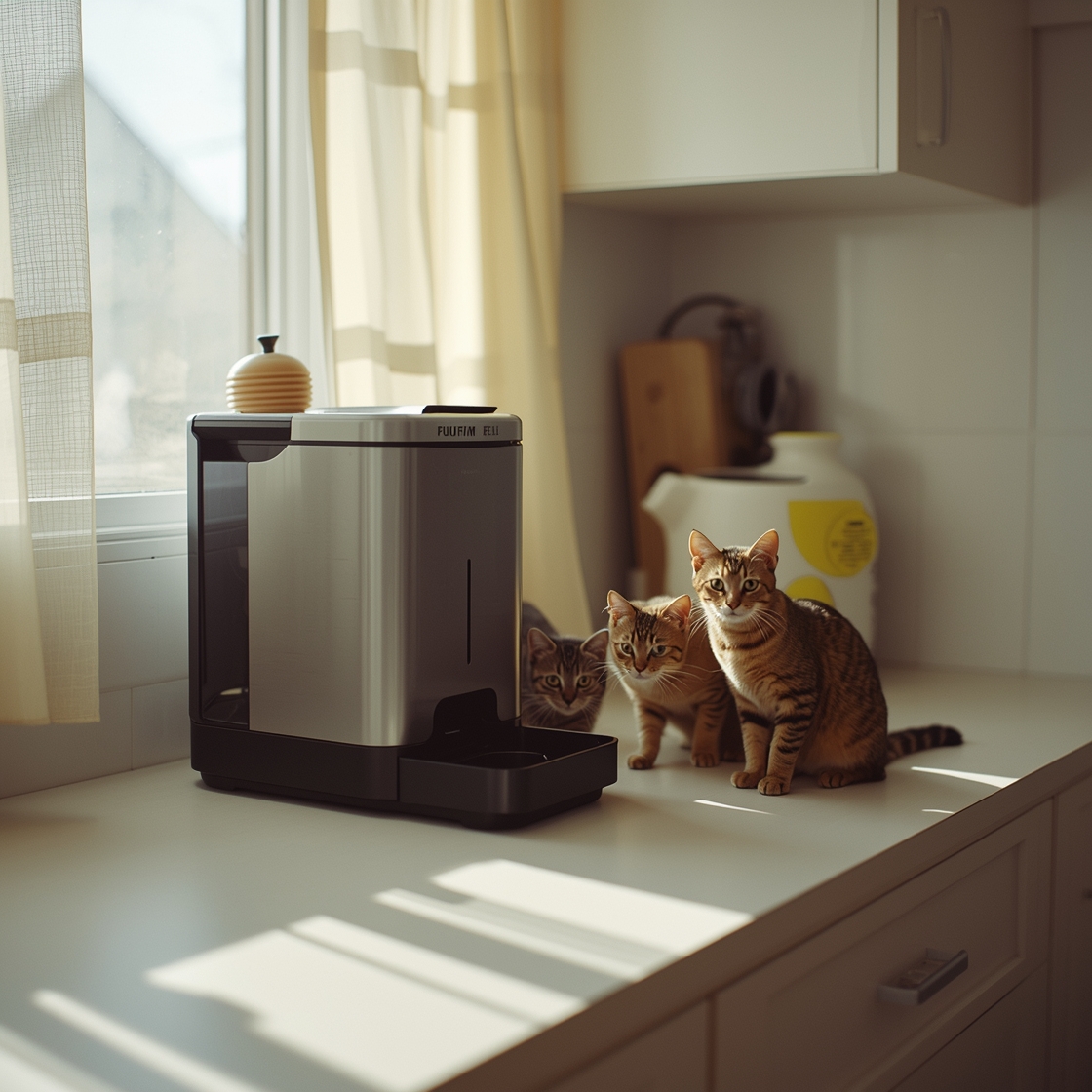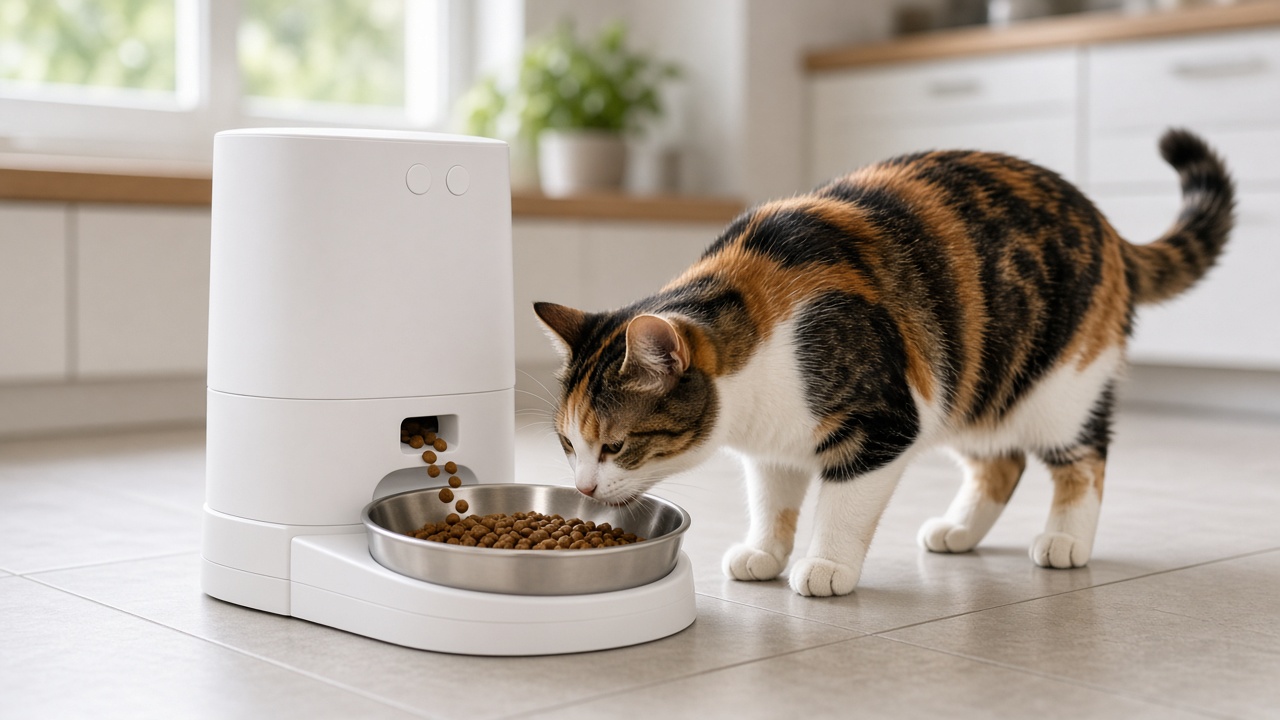
The best microchip pet feeder for multi pet homes is a lid that opens only for that pet’s ISO 134.2 kHz chip or collar tag — then you buy one feeder per diet — a $99.99 tag-only floor when nobody is implanted (RFID Dual Collar Tags), a $169.99 mid RFID/chip tile (ePawDen), a SureFeed-family pair at $199.00 / $227.90 when an implant already exists (Sure Petcare -SureFlap; SureFeed Connect), a $229.99–$249.99 RFID/chip cluster (Invengo; PawsPik), a $259.99 two-unit pack when two rooms or two diets are the job (PETLIBRO) — not a camera hopper, not a steal-block lab, and not “Expert Reviews” on seven search tiles. We read current Amazon listing titles and descriptions and scored 7 named SKUs. Listed snapshots ran $99.99–$259.99 (median $227.90, a 2.60× spread). Printed snapshots sum to $1,436.85. Mean tile is $205.26. 2 of 7 (29%) sit under $200. 2 of 7 (29%) are SureFeed-family. 1 of 7 (14%) is a two-unit pack. 1 of 7 (14%) is tag-only. 0 of 7 (0%) skip the training week. 0 of 7 keep two Rx diets in one tray.
Desk pick: Unchipped pets → Dual Collar Tags $99.99. Implant already in → SureFlap $199.00, or Connect $227.90 if you will use the app (+$28.90 / 14.5% vs SureFlap). Two diets → PETLIBRO $259.99 or SureFlap $199 + Dual Tags $99.99 = $298.99 (+$39.00 / 15.0% vs PETLIBRO) if one pet is unchipped. Mid tile → ePawDen $169.99. Do not pay Connect $227.90 and still leave both diets in one tray.
ISO 11784/11785 134.2 kHz is the implant family most U.S. and EU clinics place. Older 125 kHz chips may not wake these lids. Ask the veterinarian to scan the frequency if a “chipped” pet never opens the bowl.
Related: automatic feeders for multiple cats, affordable smart pet feeder for cats, best pet water fountain.
Our guides are reader-supported. This article may contain affiliate links. As an Amazon Associate we may earn a commission if you buy through links, at no extra cost to you.
Quick picks at a glance
- Best listed collar-tag floor price: RFID Smart Pet Feeder with Dual Collar Tags — $99.99. No implant required. Tags get lost.
- Best listed mid RFID / chip class: ePawDen Microchip Pet Feeder — $169.99. Core lock. Build is the honest limit.
- Best listed SureFeed-class workhorse: Sure Petcare -SureFlap — $199.00. Title is hyphen-odd on the stored card. Implant or tag family.
- Best listed app / Connect class: SureFeed Microchip Pet Feeder Connect — $227.90. Logs and alerts. Needs Wi-Fi.
- Best listed rugged / high-traffic language: Invengo RFID Automatic Cat Feeder — $229.99. Bulky. Sensor consistency is the pitch.
- Best listed wider-opening title: PawsPik Automatic Microchip RFID Cat Feeder — $249.99. Larger access. Larger footprint.
- Best listed two-unit pack: PETLIBRO RFID Cat Feeders for 2 Cats — $259.99. Two rooms, two diets. Highest sticker.
What current Amazon listings show (Chip-Bowl, August 2026)
| Job | What actually works | Category | Fail if you skip it |
|---|---|---|---|
| One Rx diet, one thief | Dedicated unit for the Rx bowl; second unit or timed room for the other | PETLIBRO $259.99 or SureFeed + any second bowl | One hopper, two diets, “the chip will sort it” |
| Implant already in | ISO 134.2 kHz reader (SureFeed class) | SureFlap $199; Connect $227.90 | Buying tag-only and never attaching the tag |
| No implant, will not sedate | Collar RFID tags | Dual Tags $99.99 | A tag on an elastic collar that slips off |
| Two cats, two rooms | Two units on opposite walls | PETLIBRO $259.99 | One unit in the middle of the kitchen |
Before you shop: (1) you know whether each pet has an implant and whether it is a 15-digit ISO chip vs an older non-ISO frequency, (2) you can run a training week with the lid open, then half-closed, then closed, (3) Rx food gets its own unit, (4) the bowl sits where a second pet cannot eat over the shoulder. Fail gate 3 and this checklist is how you shop for cross-feeding.
What the best microchip pet feeder for multi pet homes can and cannot do
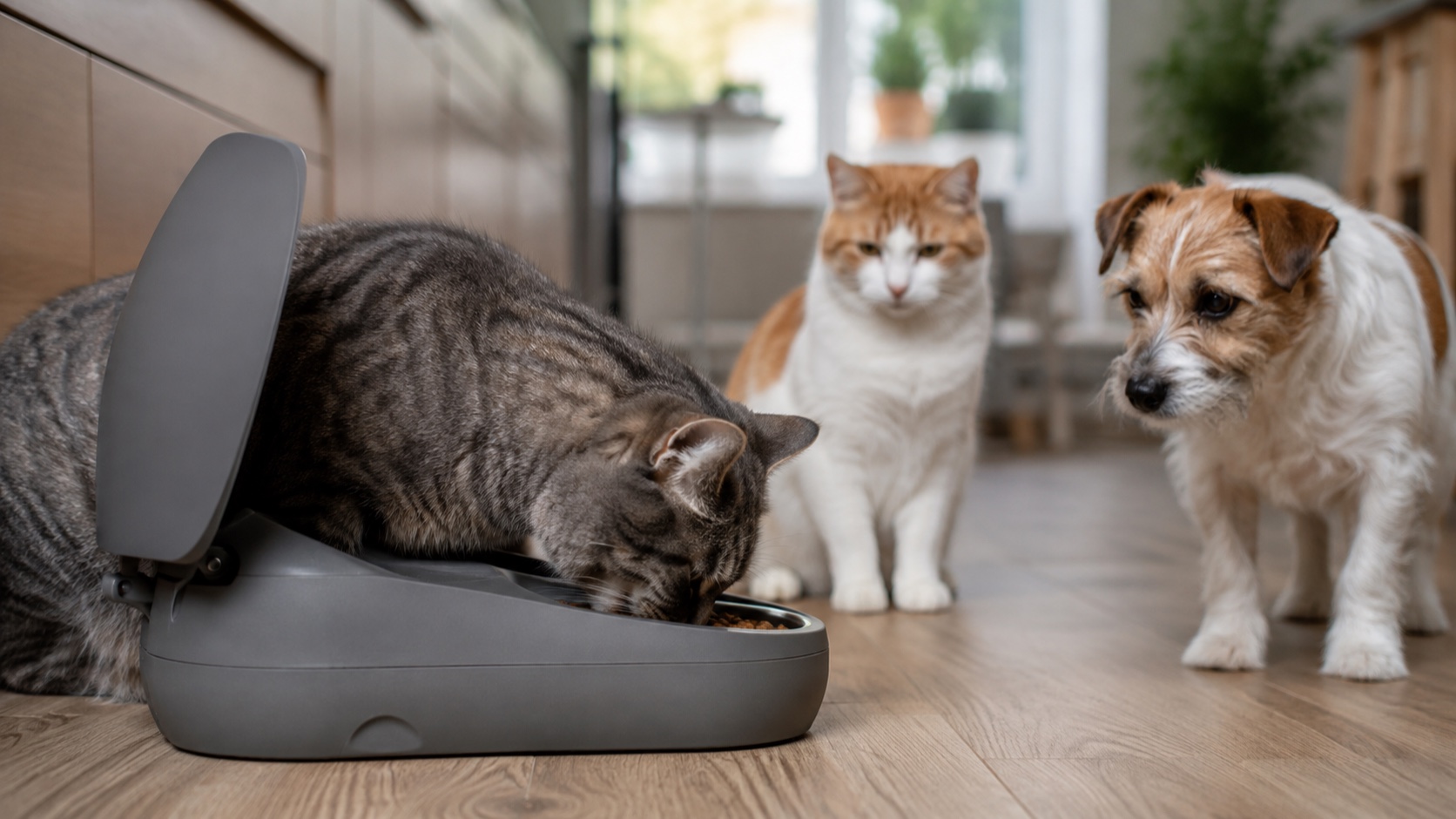
A chip lid checks an ID. It does not weigh a prescription calorie to a clinic gram unless the listing says a scale — these cards are access locks, not metabolic cages. SureFeed-class units are typically a covered bowl: you portion the meal, the lid hides it, the right pet opens it. That is different from a hopper that drops kibble on a timer. Do not buy this URL expecting a camera hopper from a different article.
What a lid can do: hide a meal; open for one ID; force a training week.
What a lid cannot do: keep two Rx diets in one tray; feed six pets from one box; replace a veterinarian’s calorie plan; survive a hallway gauntlet.
Owner threads describe failed opens when the bowl angle or a dirty reader window blocks the scan. That is a placement and cleaning story, not a house 2–5% lab rate.
How the desk scored the best microchip pet feeder for multi pet homes
Four readable axes plus sticker:
- ID class. Implant reader vs collar-tag-only vs dual-unit pack.
- Brand documentation. SureFeed/Sure Petcare has the longest public support trail on this URL.
- One vs two physical bowls. PETLIBRO’s card is a two-unit story.
Price is not a steal-block grade. A $99.99 tag unit you train in a quiet corner beats a $250 unit in a gauntlet hallway.
Want current listings? See microchip pet feeders on Amazon →
How these products compare on labels and price
| Tool (this URL) | List | ID class | Units in box | Listing note |
|---|---|---|---|---|
| RFID Dual Collar Tags | $99.99 | Collar tags | 1 feeder + tags | Lowest tile |
| ePawDen | $169.99 | Chip / RFID class | 1 | +70% vs Dual Tags |
| Sure Petcare -SureFlap | $199.00 | Chip + tag family | 1 | Hyphen-odd title |
| SureFeed Connect | $227.90 | Chip + app | 1 | Median; Wi-Fi tax |
| Invengo | $229.99 | RFID / chip class | 1 | +$2.09 vs Connect |
| PawsPik | $249.99 | RFID / chip class | 1 | Wider-opening title |
| PETLIBRO 2-pack | $259.99 | RFID class | 2 | Highest; two rooms |
Desk kit math: Snapshot sum is $1,436.85. The two sub-$200 tiles ($99.99 + $169.99 = $269.98) are 18.8% of that sum and 29% of the catalog. The Sure family ($199.00 + $227.90 = $426.90) is 29.7% of the dollar sum and 29% of the catalog. PETLIBRO $259.99 is 18.1% of the dollar sum for two units — $130.00 per bowl if you split the sticker, which is 30% above Dual Tags $99.99 and 35% below SureFlap $199. Connect $227.90 is 14.5% above SureFlap $199.00 for the app. Invengo $229.99 is $2.09 / 0.9% above Connect — a kit split, not a ranking. PawsPik $249.99 is 2.50× Dual Tags.
The 7 cards on this URL
1. Sure Petcare -SureFlap
Best for: a SureFeed-class workhorse when an implant already exists and you will confirm the live Amazon title.
Listing snapshot $199.00. The stored card title is Sure Petcare -SureFlap — hyphen and missing space. We keep that string exactly. Confirm the listing page. Implant or tag family. Battery story varies in owner notes. Support trail is the differentiator vs generic RFID tiles.
Check Sure Petcare SureFlap listings →
2. ePawDen Microchip Pet Feeder
Best for: the mid chip/RFID tile when you will still run a training week.
3. PawsPik Automatic Microchip RFID Cat Feeder
Best for: a wider-opening title when you will still tape the footprint.
4. PETLIBRO RFID Cat Feeders for 2 Cats
Best for: two physical bowls in one checkout when two diets or two rooms are the job.
Listing snapshot $259.99. Highest sticker. Two units. Split cost ~$130.00 per bowl. Tags or chips — confirm the live kit. Two diets belong on two trays. This is the card that actually prints “2 Cats.”
Check PETLIBRO 2-pack listings →
5. SureFeed Microchip Pet Feeder Connect
Best for: the app/log tile when Wi-Fi is reliable and you will still portion the bowl.
Listing snapshot $227.90. Median sticker. Logs and alerts. Needs Wi-Fi. The Connect premium is $28.90 over SureFlap $199.00. It is not a second bowl.
Check SureFeed Connect listings →
6. RFID Smart Pet Feeder with Dual Collar Tags
Best for: the floor price when pets are unchipped and you will attach the tags.
Listing snapshot $99.99. No implant required. Tags get lost. Elastic collars slip. Confirm two tags in the live box. This is 39% of SureFlap $199.00 and 38% of PETLIBRO $259.99.
Check Dual Collar Tags listings →
7. Invengo RFID Automatic Cat Feeder
Listing snapshot $229.99. Bulky. Sensor consistency is the pitch. $2.09 above Connect. Not a second bowl. Not a steal-rate we measured.
Training week (desk method, not a behavior protocol)
Day 1–2: lid open, food in the bowl, pet eats. Day 3–4: lid half-closed. Day 5–7: lid closed, you stay nearby. Do not starve a timid cat to “make them learn.” Place the unit in a corner or closet. A hallway lets a second pet eat over the shoulder.
Capacity and household size — desk worksheet
| Pets / diets | Desk kit | Skip |
|---|---|---|
| 2 pets, 1 diet | One unit + training week + corner | A hallway unit |
| 2 pets, 2 diets | PETLIBRO $259.99 or two singles | One tray, two Rx bags |
| 3–4 pets | More units or timed rooms | One PawsPik “because it is wide” |
| 1 Rx + 1 thief | Dedicated Rx unit | “The chip will sort it” |
Price bands on this URL
| Band | Tiles | Job |
|---|---|---|
| $99.99 | Dual Tags | Unchipped floor |
| $169.99–$199.00 | ePawDen; SureFlap | Single chip/RFID bowl |
| $227.90–$249.99 | Connect; Invengo; PawsPik | App or mid-high singles |
| $259.99 | PETLIBRO | Two units |
Worked example: three homes, three kits
Home A — two cats, both ISO-chipped, one on Rx renal food. Kit: PETLIBRO $259.99 or two SureFlaps ($199 × 2 = $398, 53% above PETLIBRO). Split rooms. Do not use one Connect $227.90 tray for both diets.
Home C — one chipped cat, one unchipped kitten, one diet. Kit: SureFlap $199.00 + a tag on the kitten, or Dual Tags $99.99 for both if you will not rely on the implant. Read the live ID list.
How to choose the best microchip pet feeder for multi pet homes this month
- Scan each pet. ISO 134.2 kHz or not?
- Count diets. One diet per tray.
- Count rooms. Two thieves need two corners.
- Pick ID class: implant, tag, or two-pack.
- Run a training week with the lid open first.
- Wipe the reader window.
The best microchip pet feeder for multi pet homes that belongs in the cart is the lock whose ID class and tray count match this house.
What is the best microchip pet feeder for multi pet homes on this URL?
The best microchip pet feeder for multi pet homes cards are Dual Tags $99.99, ePawDen $169.99, SureFlap $199.00, Connect $227.90, Invengo $229.99, PawsPik $249.99, and PETLIBRO $259.99. 1 of 7 is a two-pack. Two diets need two trays.
How do you train a best microchip pet feeder for multi pet homes without starving a cat?
Lid open two days. Half-closed two days. Closed with you present. Corner or closet, not a hallway. If the pet will not eat, stop. That is a clinic or a behavior professional, not a fourth lid.
ISO chips, tags, and why the best microchip pet feeder for multi pet homes still fails
Three common themes: the chip is not ISO 134.2 kHz; the approach angle misses the reader; the window is dirty. Scan at the clinic. Wipe the window. Add a backup tag. Re-train with the lid open. Do not assume the unit is “broken” on night one.
Frequently asked questions
What is the best microchip pet feeder for multi pet homes if one cat is on Rx food?
A dedicated tray for the Rx bag. PETLIBRO $259.99 or SureFlap $199 plus a second bowl. One hopper will not “sort” two diets.
How do microchip pet feeders work?
The lid reads an implant or a collar tag and opens for that ID. These cards are access locks. They are not metabolic cages.
Can one feeder serve six pets?
Memory may store several IDs. One tray still serves one mouth at a time. Six pets need more units or timed rooms.
Do I need the Connect app?
Only if you will use logs. Connect $227.90 is 14.5% above SureFlap $199.00. It is not a second bowl.
What if the cat is not microchipped?
Dual Tags $99.99. Attach the tags. Elastic collars slip.
Wet food — which class?
Covered-bowl / SureFeed-class is the usual wet story. Confirm the listing page. Clean the bowl.
How many pets can the best microchip pet feeder for multi pet homes actually serve?
Two pets, one diet: one unit if they take turns and do not guard. Two diets: two trays. Three or four pets: more units.
Why did my chipped cat not open the best microchip pet feeder for multi pet homes?
Wrong frequency, bad angle, dirty window. Scan. Wipe. Re-train. Backup tag.
Related pages
- Best automatic pet feeders for multiple cats
- Affordable smart pet feeder for cats
- Best pet water fountain
- Best limited ingredient dog food
How we researched this guide
Desk research. We read current Amazon listing titles and descriptions and scored seven current listings on listed price, ID class (implant vs tag vs two-pack), and whether the box is one unit or two. We reprinted ISO 11784/11785 134.2 kHz as the common implant family and Sure Petcare’s public support trail as documentation — not as a house endorsement lab. Nothing here is veterinary advice.
Limitations: generic RFID titles drift; some “microchip” cards are tag-only; prices move. A pet that will not eat, loses weight, or guards food to the point of injury is a clinic or a behavior professional, not a fourth lid.
Keep a simple log: who ate, lid fails, tag still on the collar. Patterns beat a second PawsPik.
Extra desk notes: lids that fail on a Tuesday
Placement. Corner or closet. Not a hallway. Not next to the water fountain if the second pet loiters there.
Noise. A lid slam can keep a timid cat from approaching. Training week still starts open.
Dogs vs cats. Three titles print Cat. The keyword on this URL is still best microchip pet feeder for multi pet homes. A dog snout vs a cat lid is a live-photo problem. Confirm opening height.
When this URL is the wrong buy. One pet. No thief. A hopper on a timer is enough — that is the automatic feeder sister. Or a pet that will not eat. That is a clinic.
Worked feeding log. Date, who approached, lid open/fail, tag on/off, grams left. Five days of fails is a frequency or placement problem, not a reason to buy Invengo $229.99 on top of SureFlap $199.00.
SureFlap vs Connect math. $199.00 vs $227.90 is $28.90. Spend it for logs you will read. Do not spend it as a steal upgrade we measured.
PETLIBRO vs two SureFlaps. $259.99 vs $398.00. PETLIBRO wins the two-bowl checkout if both pets can use that ID class. SureFlap wins the support-trail story if you will buy twice.
Dual Tags + SureFlap. $99.99 + $199.00 = $298.99. That kit covers one implant and one tag. It is $39.00 / 15% above PETLIBRO. Use it when ID classes differ.
Nail the ID class before you nail a second lid. A $99.99 tag unit trained in a closet beats a $249.99 PawsPik in a hallway both cats can flank. That is not a lab result. It is how access locks work when they leave the box.
Extra arithmetic the best microchip pet feeder for multi pet homes aisle hides
Per-bowl if you split PETLIBRO. $259.99 ÷ 2 = $130.00. That is 30.0% above Dual Tags $99.99 and 34.7% below SureFlap $199.00. Two-bowl checkout wins when both pets can use that ID class. It loses when one pet needs a SureFeed-class implant reader and the other needs a tag — then Dual Tags + SureFlap = $298.99, 15.0% above PETLIBRO.
PawsPik vs PETLIBRO. $249.99 vs $259.99 is $10.00 / 4.0%. PawsPik is one unit. PETLIBRO is two. Buying PawsPik “because it is almost the two-pack price” is how you own one wide lid and still share a tray.
Invengo vs Connect. $229.99 − $227.90 = $2.09 / 0.9%. That is a kit split. Read both live pages. Buying both is how you own two mid-high singles and still lack a second diet tray.
Sub-$200 share. Dual Tags + ePawDen = $269.98 / 18.8% of printed dollars and 29% of the catalog. The five tiles at $199+ hold 81.2% of printed dollars. The aisle’s money is in Sure family, RFID mids, and the two-pack — not in the tag floor.
Training-week calories. A timid cat that skips two dinners is a clinic conversation, not a “make them learn” plan. Put the usual grams in an open bowl beside the unit if you must. Then fade to the lid. Do not invent a 30% ration cut as a desk protocol.
Reader window. Wipe weekly. A dirty window plus a deep implant plus a hallway approach is three variables. Change one at a time. The clinic scanner tells you the frequency.
Dogs on a cat-titled lid. 3 of 7 titles print Cat. A deep-chested dog may not fit a cat cave. Confirm opening height on the live photo. The keyword is still best microchip pet feeder for multi pet homes. Geometry is still the dog’s snout.
Worked four-pet house. Four pets, two diets: two PETLIBRO packs = $519.98, or timed rooms plus two singles. One PawsPik $249.99 will not become four mouths. Memory for IDs is not four trays.
SureFlap title integrity. The stored string is Sure Petcare -SureFlap. The search k= includes the hyphen. Confirm the live Amazon title before you treat the hyphen as a different SKU.
Placement photo before the tile. These seven cards do not store bowl ounces or opening height. The live photos do. Look for: lid height vs the pet’s head, whether a second pet can stand beside the bowl, whether the unit blocks a doorway. A $249.99 PawsPik “wide” title that sits in a hallway is still a steal with extra steps.
Sources
- ISO 11784/11785 (134.2 kHz companion-animal ID family — clinic scan, not a desk assay)
- AVMA, pet-owner guidance (when not eating is a clinic). https://www.avma.org/resources-tools/pet-owners