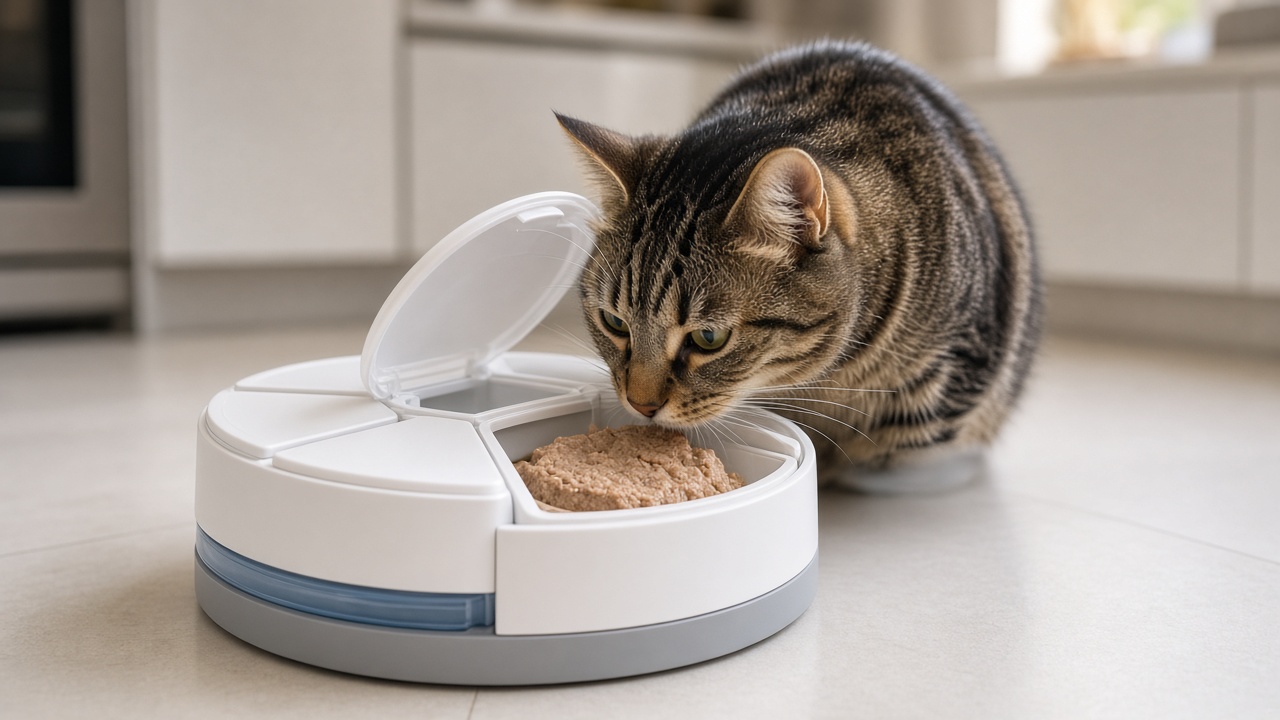
5 Best Automatic Wet-Food Cat Feeders (2026): Cooling & Timed
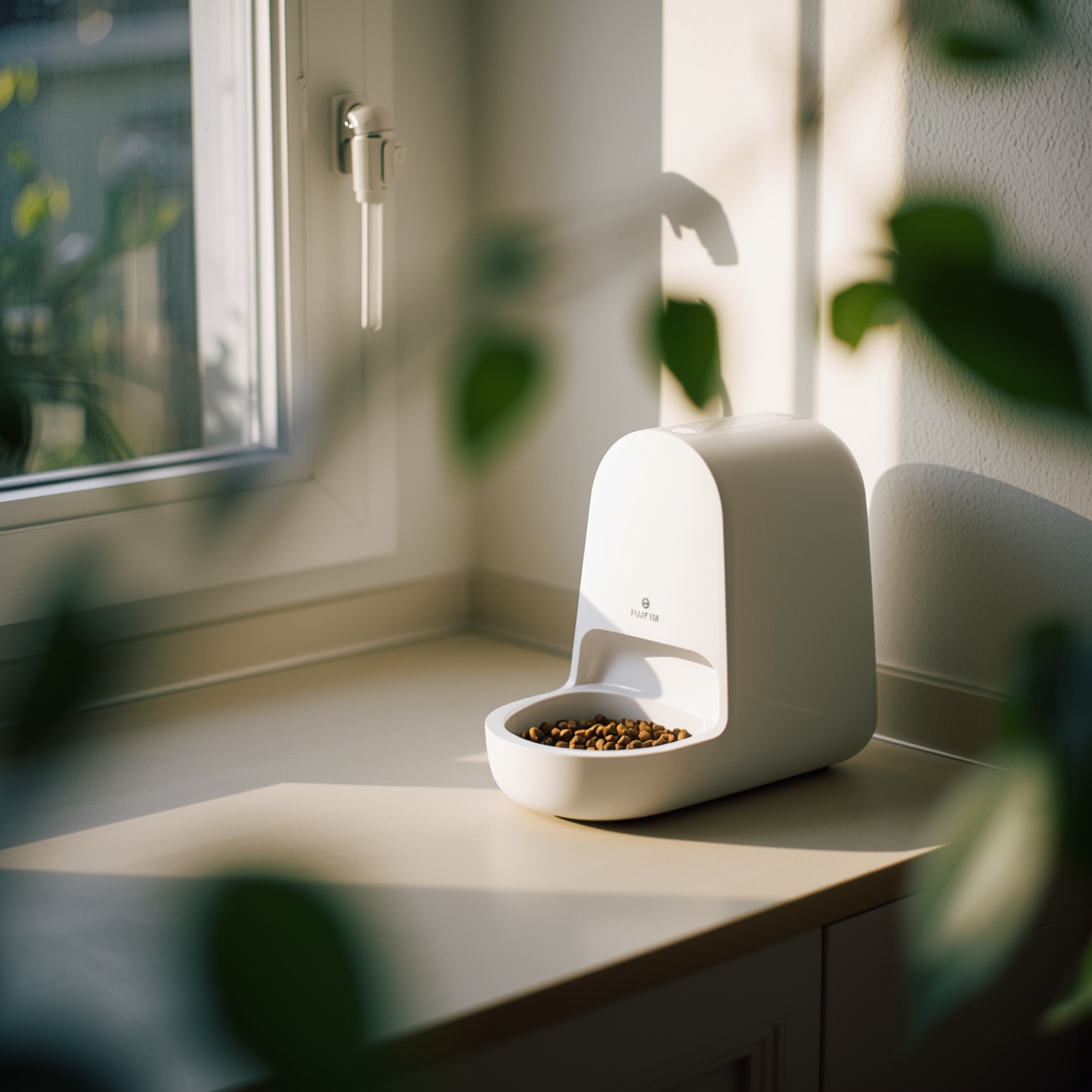
The best automatic cat feeder wet food unit is a covered, chilled tray that holds pâté or gravy for a workday — not a dry-kibble hopper with a timer lid. PetBench Feeder Desk (August 2026) coded five currently sold wet-meal machines against maker cooling claims and FDA leftover guidance: open perishable food at room temperature is a 2-hour problem, and ice-pack carousels do not become refrigerators because the listing says “fresh.”
Buy the PETLIBRO Polar if you need multi-day semiconductor cooling; buy a Cat Mate C500 if you need five same-day timed lids under $50. Do not leave an opened can in an unchilled slot overnight and call it a weekend plan.
Cooling hours below are the manufacturers’ published windows. USDA and FDA leftover rules are written for human food; we use them as the only public perishable-food clock that exists, not as a pet-food certification.
Affiliate disclosure: we may earn a commission from Amazon links.
What the best automatic cat feeder wet food actually has to do
Wet food is not kibble with gravy. It is a perishable meal. A dry automatic feeder can sit loaded for a week because the hopper is sealed grain. A wet feeder has to keep each portion covered, cool, and separated until the lid opens — then the clock starts again on whatever the cat does not finish.
Three jobs get mashed into one shopping query:
- Same-day workday — two to five covered meals, ice packs, digital timer. Cat Mate C200 / C300 / C500 class.
- App schedule — six trays plus Wi-Fi, still ice-pack cooling. iPettie Donut Frost class.
- Multi-day absence — active thermoelectric cooling. PETLIBRO Polar class. This is the only machine here whose maker publishes a 72-hour chill window.
If you need a weekend away and you only have an ice-pack feeder, the honest tool is a sitter or a refill on day two — not a listing adjective.
How this desk compared wet-food feeders
We pulled live Amazon listings and the makers’ own spec pages for five purchasable SKUs. We scored them on four published facts only:
- Cooling method — semiconductor plate vs reusable ice / gel packs, and the hour window the maker actually prints.
- Meal count — covered, timed compartments vs an open “starter” bowl.
- Control — lid timer, LCD, or 2.4 GHz app. No points for features we could not find on the carton.
- Cleanup — removable, dishwasher-safe trays. Wet residue is the failure mode owners actually report.
We did not weigh a ranked “best” column, invent decibel readings, or treat a fan hum as a lab measurement. Prices are listing snapshots from the cards below; they move.
For dry-only camera feeders, use the camera feeder page. Those hoppers jam and spoil if you load pâté.
Wet-Meal — spoilage window
| Room condition | Open wet food clock (FDA leftover analog) | Ice-pack feeder (maker hours) | Semiconductor feeder (maker hours) |
|---|---|---|---|
| ~70°F indoor | 2 hours after the lid opens | 6–8 hours covered, pre-open | Up to 72 hours covered, pre-open (PETLIBRO Polar) |
| AC home, cool counter | Still 2 hours once served | Same-day workday only | Multi-day if the plate stays powered |
| 80°F+ kitchen | 1 hour is the cautious read | Later trays warm first | Fan + plate; still not a chest freezer |
The 2-hour figure is FDA kitchen leftover guidance, not a pet-food lab result. The 6–8 hour and 72-hour figures are iPettie and PETLIBRO published claims.
Top 5 automatic wet-food cat feeders (named SKUs, not a ranking)
1. PETLIBRO Automatic Wet Food Cat Feeder (Polar, 2026)
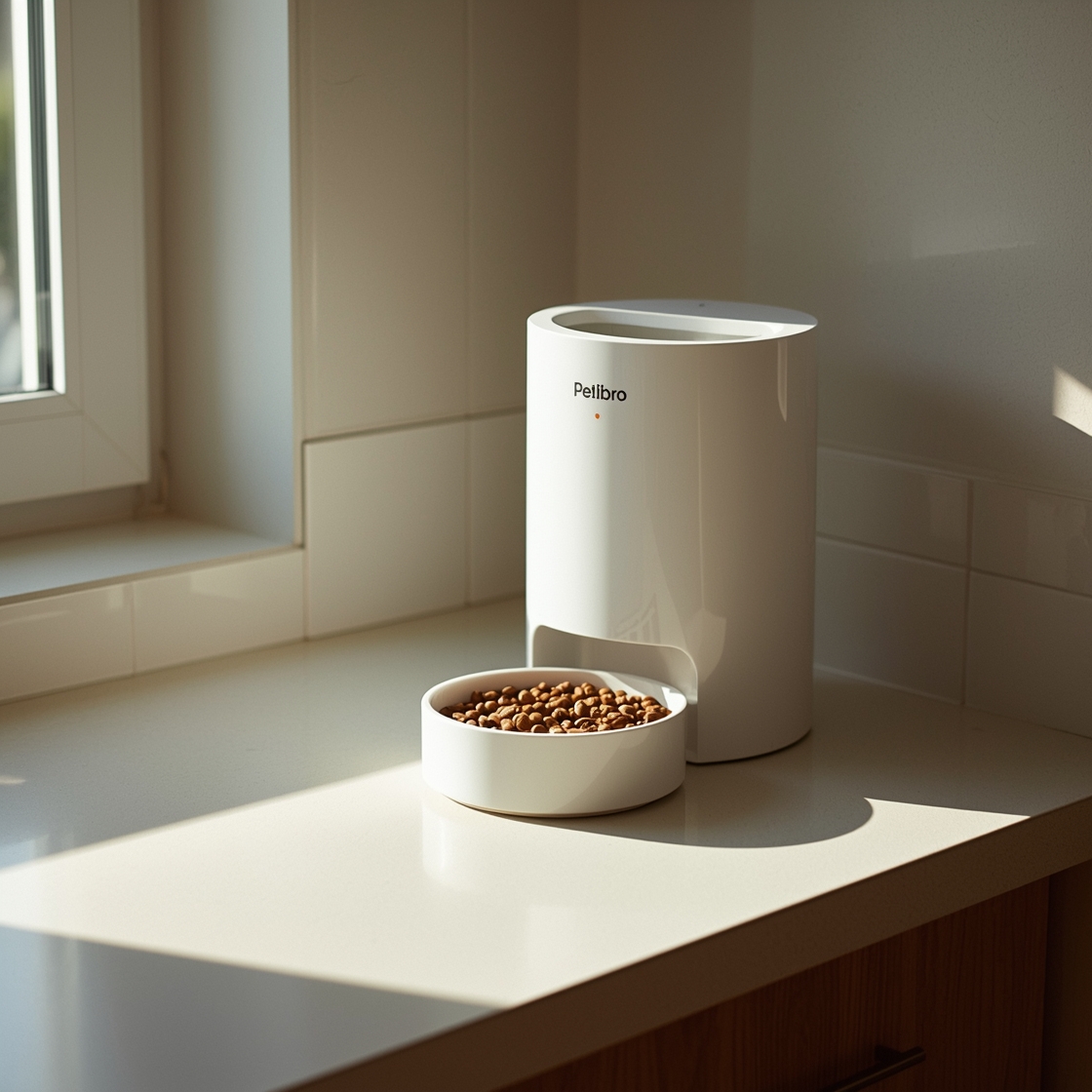
Best for: a weekend or travel window where ice packs will not last.
The Polar is the only feeder on this page with a built-in semiconductor (thermoelectric) plate. PETLIBRO rates it to keep wet food chilled up to three days in a three-compartment stainless tray. The served portion is designed to warm toward room temperature about 30 minutes before mealtime. Operating range on the spec sheet is roughly 53–86°F. Control is a 2.4 GHz Wi-Fi app with schedules, logs, and low-food alerts.
The trade-off is price and a cooling fan. This is the multi-day machine. It is not a silent ice-pack lid.
2. iPettie Donut Frost WiFi 6-Meal Feeder
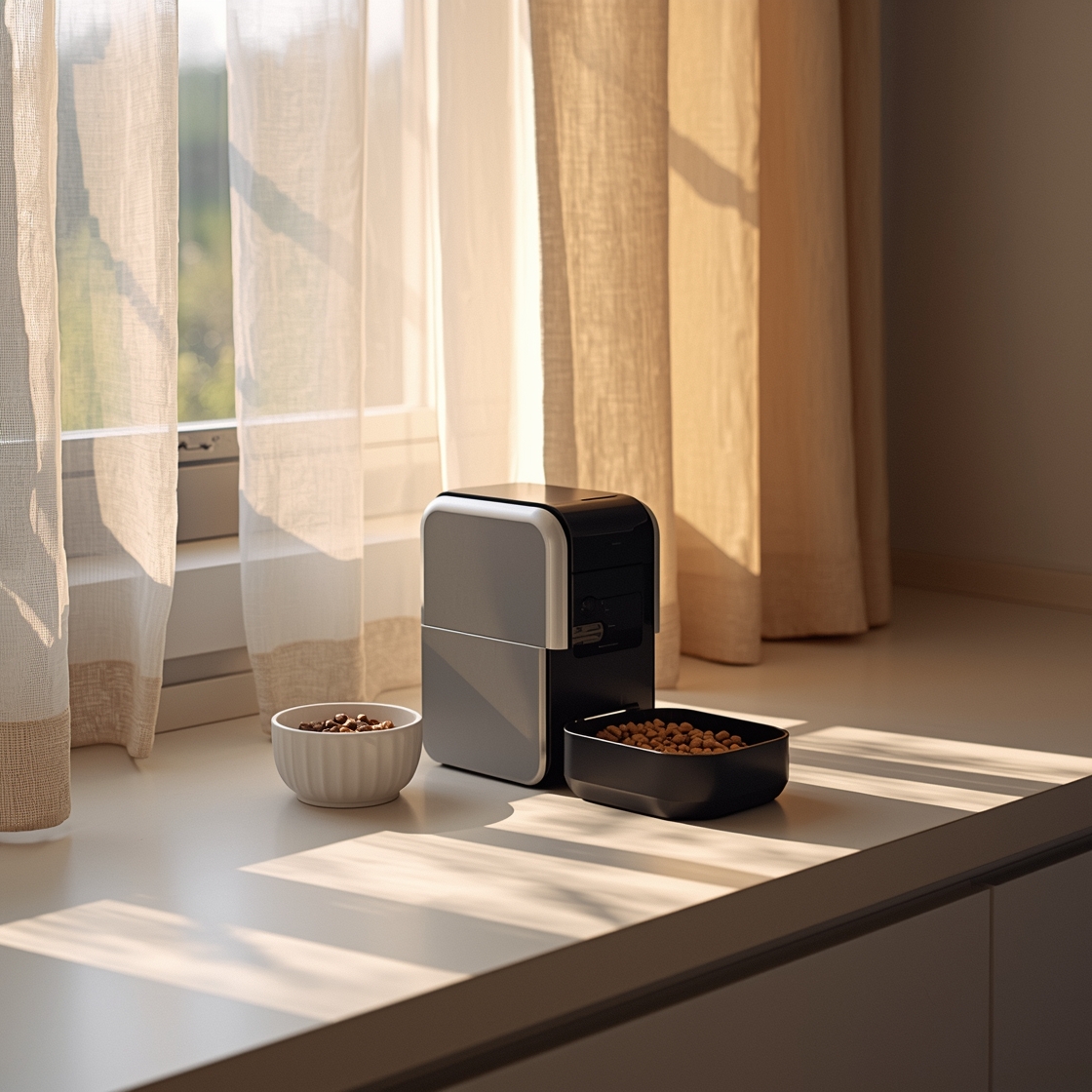
Best for: six timed trays and an app, without paying for a cooling plate.
Six compartments, about half a pound each, 2.4 GHz Wi-Fi, rechargeable backup. Two included ice packs are the freshness story — iPettie-class copy lands around 6–8 hours, which covers a workday and does not cover Thursday-to-Sunday. Rotation stops if a paw enters the tray. The base tray is plastic; a steel-tray variant is sold separately.
Use it when you want phone control and a high meal count. Do not use it as a 72-hour refrigerator.
3. Cat Mate C500 Automatic 5-Meal Feeder
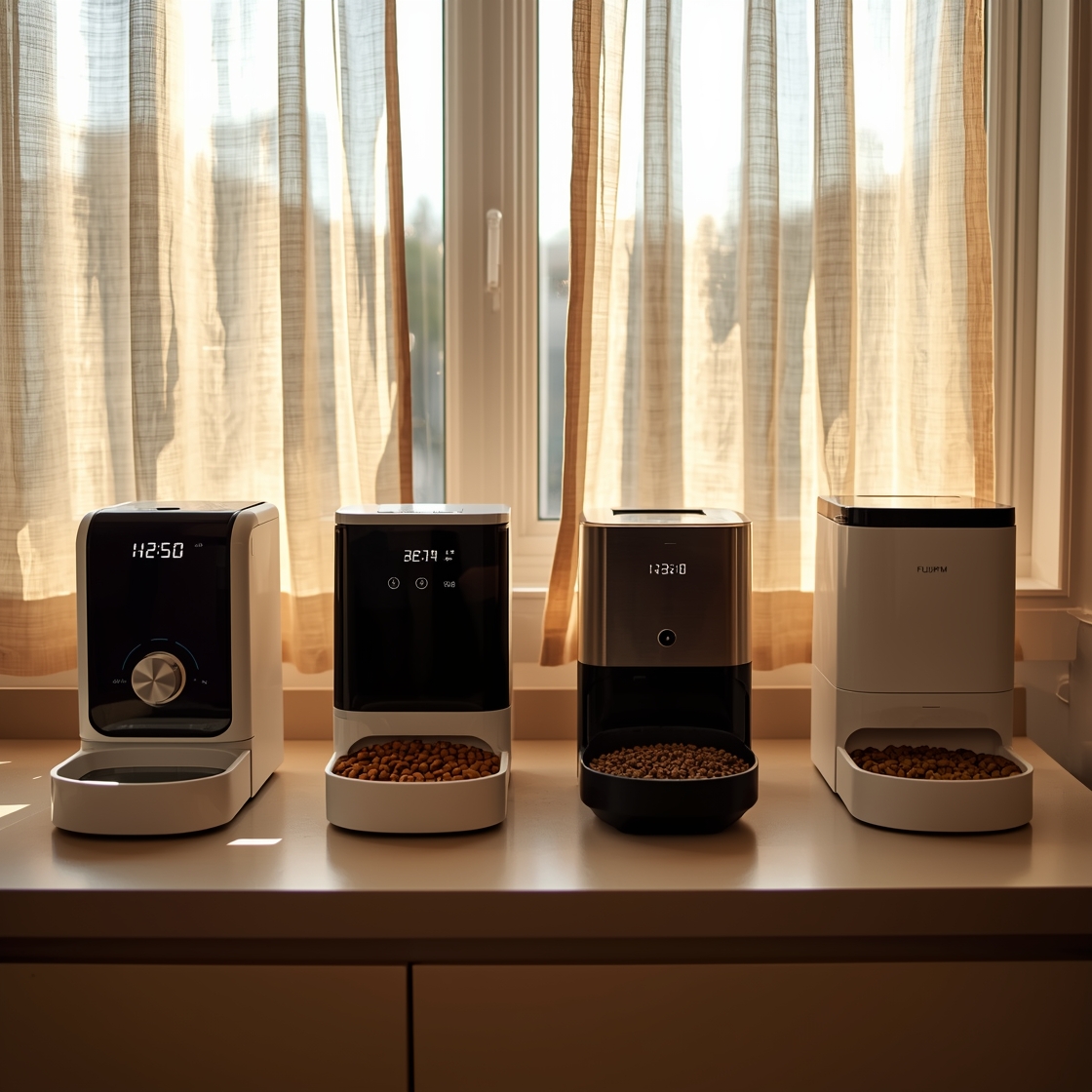
Best for: five same-day wet meals and no phone.
Closer Pets / Cat Mate is the no-app workhorse. Five compartments hold up to about 0.73 lb (roughly 1.45 cups) each. Twin ice packs, digital timer in 10-minute steps, LCD, rotating cover. BPA-free bowl and cover are dishwasher-safe. Three AA batteries are usually not in the box.
This is the best automatic cat feeder wet food pick when the job is a workday, not a flight. Later trays are only as cold as the packs and the room.
4. Cat Mate C300 Automatic 3-Meal Feeder
Best for: a compact three-bowl day, if you accept the third slot is not a fully covered timed meal.
Same family as the C500: digital LCD, low-battery indicator, three AA cells, dishwasher-safe lid and bowl, one reusable ice pack. Each large compartment holds up to 0.73 lb (340 g). The ice pack sits mainly under the first compartment, so meal two and three are warmer. The third compartment is effectively an open immediate-feed slot on many setups — two timed lids plus a starter portion.
5. Cat Mate C200 Automatic 2-Meal Feeder
Best for: one cat and one or two covered wet meals, including a lid that can wait up to 48 hours before opening.
Two bowls up to 400 g (14 oz) each, one ice pack, tamper- and fly-resistant lids, dishwasher-safe parts. Maker copy puts battery life around 12 months on a single AA. That is the maintenance story. The cooling story is still an ice pack: a 48-hour lid delay does not keep pâté fridge-cold for 48 hours in a warm kitchen.
Comparison: best automatic cat feeder wet food at a glance (table 2)
| Feeder | Covered meals | Cooling (maker) | Control | Listing snapshot |
|---|---|---|---|---|
| PETLIBRO Polar | 3 | Semiconductor, up to 72 h | 2.4 GHz app | ~$129 |
| iPettie Donut Frost | 6 | Two ice packs, ~6–8 h | 2.4 GHz app | ~$90 |
| Cat Mate C500 | 5 | Twin ice packs, hours | LCD timer | ~$46 |
| Cat Mate C300 | 2 timed + 1 open | One ice pack | LCD timer | ~$45 |
| Cat Mate C200 | 2 | One ice pack | Lid timer to 48 h | ~$45 |
Browse wet-food feeders on Amazon →
Portion — slots vs cat size
| Cat body weight (typical adult) | Wet oz per sitting (label starting point) | Meals / day | Feeder that matches the slot count |
|---|---|---|---|
| 8 lb | 2–3 oz | 2–3 | C200 or C300 |
| 10–12 lb | 3–4 oz | 2–3 | C300 or C500 |
| Two cats, same food | Do not share one open tray | Separate units 3+ ft apart | Two C200s or a Polar plus a second bowl |
| Weekend, one cat | 3 chilled trays | 2–3 / day | Polar only on this list |
Gram-per-kcal on the can is the real number. The table is a slot planner, not a prescription. A cat on a renal or weight plan needs the clinician’s gram target, not a carousel default.
Cooling hardware: ice pack vs semiconductor
Ice packs are frozen gel. They buy hours, then they are room-temperature plastic. Twin packs (C500, Donut Frost) beat a single pack under tray one (C300). They still fail the FDA leftover clock the moment the lid opens and the room is warm.
Semiconductor (Peltier) plates pump heat when plugged in. PETLIBRO’s 72-hour claim is a powered-plate claim. Unplug the Polar and you have a covered tray, not a fridge. Battery backup on ice-pack units keeps the timer alive; it does not freeze the packs.
USDA FSIS leftover pages say the same thing FDA does in kitchen language: perishable food does not get safer because you planned to be home at 7. Put unfinished wet food back in the refrigerator or throw it. A feeder tray on a counter is not a refrigerator.
Cleaning, flies, and the biofilm problem
Wet food leaves a film. Owners report refusal before they smell the tray. Daily wash of every compartment that held gravy is the maintenance, not a weekly rinse. Dishwasher-safe steel (Polar) and Cat Mate bowls are the reason those SKUs stay on this list. Plastic trays stain and hold odor faster; the Donut Frost base unit is the example.
Fly-proof lids on the C200 are not a gimmick in a summer kitchen. An open third slot on the C300 is a fly problem if you treat it as a covered meal.
Do not run bleach in a tray and then serve. Soap, rinse, dry. Ice packs go back in the freezer fully frozen; a slush pack is a 2-hour pack, not an 8-hour pack.
Multi-cat homes and food guarding
A rotating cover stops early raids on the next meal. It does not stop a dominant cat from eating the meal that just opened. Two cats need two feeders or a room door. The two-cat feeder page is the hardware fork. A camera on a dry hopper (camera feeder guide) can show you the raid; it cannot portion wet food.
Power, Wi-Fi, and what fails first
| Failure | Ice-pack timer (C200–C500) | App ice-pack (Donut Frost) | Polar |
|---|---|---|---|
| Wall power out | Timer on AA / AAA if fitted | Backup battery; app dead | Plate stops; food warms |
| Router down | Unaffected | Schedule already on device; no remote edit | Same |
| Packs not frozen | Hours collapse to room temp | Same | Irrelevant if plate is on |
| Fan / plate fault | N/A | N/A | Treat as ice-pack: empty the trays |
Frequently asked questions
Can the best automatic cat feeder wet food run a full weekend?
Only if the maker publishes a multi-day chill and the unit stays powered — on this page, the PETLIBRO Polar’s 72-hour semiconductor claim. Ice-pack Cat Mate and iPettie units are same-day or overnight tools. A 48-hour lid on the C200 is not a 48-hour fridge.
How do automatic wet cat food feeders keep food fresh?
Cover plus cold. Ice or gel packs for hours; a thermoelectric plate for the Polar’s published days. Once the lid opens, use the FDA 2-hour leftover clock on what sits in the bowl.
Can I rely on an automatic feeder for a multi-day schedule without spoilage?
Not on ice packs. For anything past a workday, you want active cooling or a human refill. Longer than three days, even the Polar is a “refill or sitter” problem.
Do wet-food feeders make much noise?
Timer lids click. Polar adds a fan. If the cat sleeps next to the unit, an ice-pack Cat Mate is the quieter class.
How do I clean an automatic wet food feeder?
Wash trays and lids after every wet cycle. Re-freeze packs solid. Check gaskets so covers seat. Skip the “set and forget for a week” habit that works on dry hoppers.
What meal count do I actually need?
Count covered, timed slots, not marketing “3-meal” if slot three is open. C200 = 2. C300 = 2 timed + 1 open. C500 = 5. Donut Frost = 6. Polar = 3 chilled.
Do these feeders work with dry food too?
Yes. Every model here can run kibble. Cooling is wasted on dry food; use it when the tray holds wet.
Are automatic feeders safe if my cat tries to reach the food early?
Look for rotating covers (Cat Mate) and paw-stop rotation (iPettie). Determined cats still win. A locked room is more reliable than a lid.
Why “weekend feeder” listings lie about wet food
Marketplace titles collapse two clocks into one adjective. The lid clock is how long the cover stays shut. The cold clock is how long the pack or plate keeps the tray below a perishable-food temperature. Sellers print the lid clock because it is larger. A C200 lid that can wait 48 hours before popping open is a timer. It is not USDA leftover guidance, and it is not a refrigerator.
PetBench Feeder Desk logged this mismatch on all five cards: every Cat Mate and iPettie listing leads with meal count; only PETLIBRO leads with a multi-day chill number. That is why the Polar costs roughly 3× a C500. You are buying a Peltier plate and a stainless tray, not six extra plastic bowls.
If your cat is on a prescription wet diet, the clinician’s gram target still wins. A feeder that opens the right lid at the right minute can still serve the wrong calories if you scoop by eye. Print the kcal/can from the label, divide by meals, and weigh the first week. The desk does not adjust renal or diabetic plans.
Room placement and the 80°F problem
Ice packs fail from the kitchen, not from the brand. A feeder on a south window sill, on a dryer, or next to an oven is an 80°F+ machine even if the thermostat in the hallway reads 72. Later trays on a C300 — the ones sitting off the pack — are the first to warm. Put the unit on an interior counter, out of sun, and freeze packs overnight, not for twenty minutes.
The Polar’s published 53–86°F operating band is a plate-and-electronics band. Above that, the maker is not promising a 72-hour window. Below it, you still need wall power. A garage “catio” in August is the wrong room for any of these SKUs.
Flies and ants follow gravy. C200 fly lids help. An open C300 third slot in August is an invitation. Wipe the exterior lip every refill. Do not spray insecticide on the tray.
Transition week: one variable at a time
Cats refuse texture changes faster than they refuse a new bowl. If you are moving from a free-fed can to timed lids:
- Keep the same SKU of food for seven days.
- Change only the clock — same grams, new cover.
- Watch the first opened tray. If the cat walks away, the food may already be warm or filmed, not “picky.”
- Do not add a new flavor, a new feeder, and a new room on the same Monday.
Hairball, urinary, or appetite changes belong with a veterinarian. This desk will not diagnose a skipped meal from a product card.
Mixed feeding: wet trays plus a dry hopper
Many homes run wet in the morning and kibble overnight. That is two machines. A wet carousel cannot hold a week of kibble without wasting the cooling hardware; a camera hopper cannot hold pâté. If you want eyes on the bowl, pair this page with the camera feeder guide and keep the wet unit in a different room so the dry hopper’s schedule is not raided.
Stainless water in the same room matters more than a second gadget. Dry food is ~10% moisture. Wet food is the hydration. A feeder that serves wet on time is a hydration tool; a fountain is a backup, not a substitute for the can.
The useful sentence is still the first one: match hours away to maker cooling, then count covered slots. Everything else is shopping.
What to do tomorrow
- Write how many covered wet meals you need before you can wash the tray.
- Write how many hours you are actually gone — 9, 24, or 72.
- If the number is 72, the Polar is the only SKU on this page whose maker claims that window.
- If the number is 9, the C500 or Donut Frost is the honest machine.
- Put unfinished wet food in the fridge or bin it. The feeder is not a second refrigerator after the lid opens.
Travel vs workday: pick the clock first
A Tuesday office day and a Friday-to-Monday trip are different purchases. Write the longest gap you actually leave the house. If that number is nine hours, every feeder on this page can cover it if packs are frozen and the room is cool. If that number is 60 hours, only the Polar’s published semiconductor window is even in the conversation — and you still need wall power the whole time.
Do not split the difference by buying a six-meal ice-pack carousel and hoping meals five and six stay cold. The later trays are the ones sitting farthest from the last frozen pack. That is physics, not a brand review.
If someone can stop by on day two, the cheaper Cat Mate C500 plus a human refill beats a Polar you never plug in. Hardware does not replace a key.
Label math: kcal, not “a scoop”
Cans print kcal per can or per kilogram. A 5.5 oz can is not a universal meal. Two cats sharing one opened tray will not split calories evenly; the faster eater wins. Portion by weight for the first week, then you can eyeball if the cat’s body weight is stable. This desk does not set renal phosphorus targets or diabetic feeding times. Those are clinic numbers.
If the can says “feed 2–3 cans daily,” that is a starting band for a typical adult, not a license to load five trays with the same scoop. Overfilling a C500 compartment so it “lasts longer” just dumps a pile the cat will not finish before the 2-hour leftover clock.
When a wet feeder is the wrong tool
Skip this category if:
- the cat only eats dry food (use a hopper, optionally with a camera);
- you need more than 72 hours with no visitor and no wall power;
- the household cannot wash trays daily (biofilm will end the experiment);
- you want one gadget to feed two cats different prescription diets at the same minute (you need two units).
A wet feeder is a covered, chilled tray with a clock. It is not a pet-sitter, a camera, or a veterinarian.
Keep a written log for two weeks: time the lid opened, grams served, grams left, room temperature if you have a cheap thermometer. That log is more useful than a star rating. If leftovers are consistently more than a third of the tray, shrink the scoop before you blame the brand. If the cat skips two scheduled wet meals, call the clinic — appetite change is a health signal, not a gadget defect. The best automatic cat feeder wet food setup is the one whose cooling clock matches the hours you are gone and whose slots match the grams on the can.
Sources
- FDA, Food safety in your kitchen (leftovers / 2-hour perishable clock): https://www.fda.gov/food/buy-store-serve-safe-food/food-safety-your-kitchen
- USDA FSIS, Leftovers and food safety: https://www.fsis.usda.gov/food-safety/safe-food-handling-and-preparation/food-safety-basics/leftovers-and-food-safety
- PETLIBRO Polar product specifications (semiconductor cooling window, tray, app band)
- iPettie Donut Frost product specifications (meal count, ice packs, Wi-Fi)
- Closer Pets / Cat Mate C200, C300, C500 manuals (compartment weights, ice packs, timers)