2026's Top 5 Best Dog Grooming Tools You Need
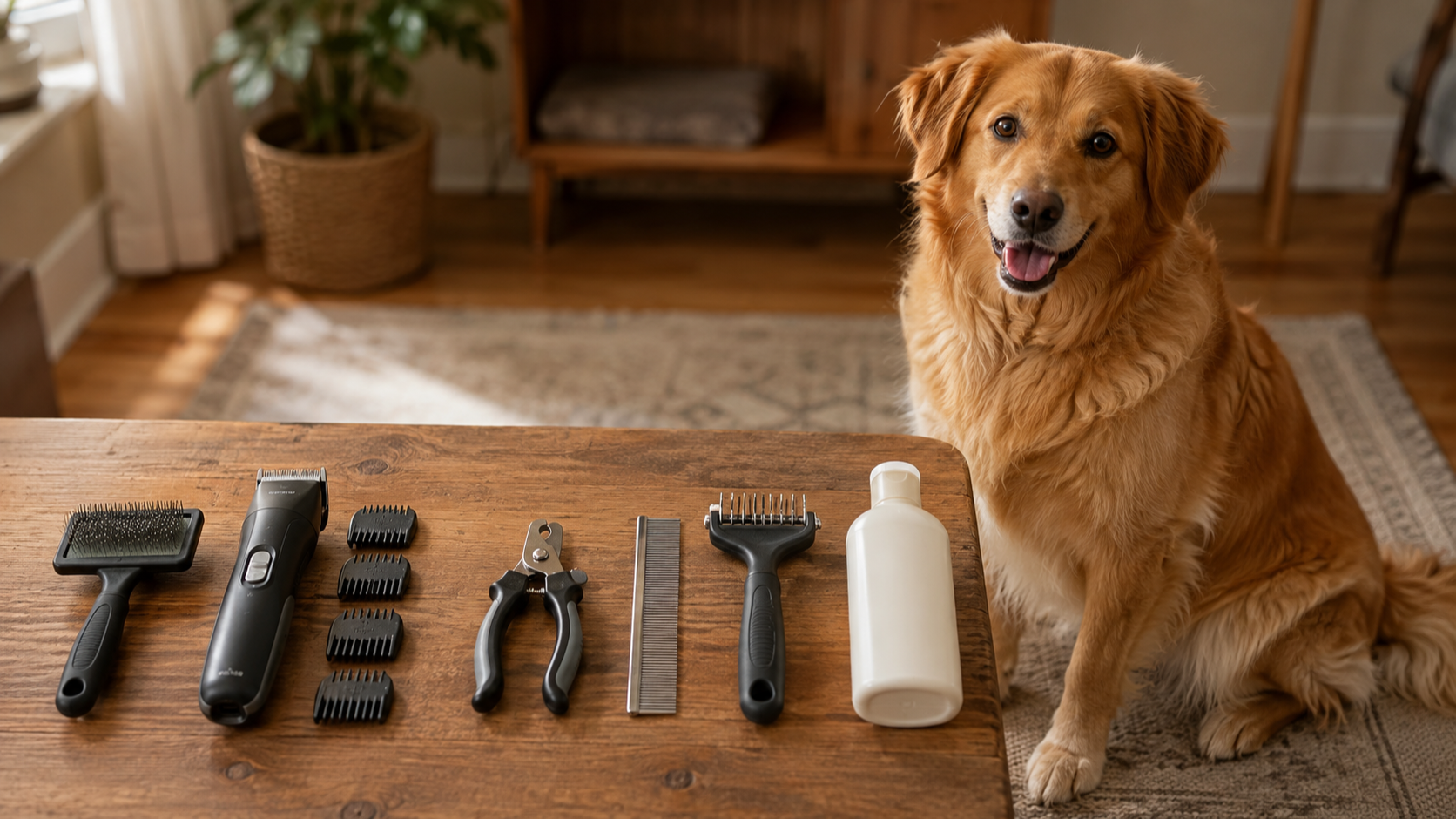
Quick answer: The best dog grooming tools are five jobs, not one SKU: slicker + comb for an open coat, Wahl 9591-2100 to change length, FURminator Large Long only on a blowing double coat, Dremel 7300-PT for nails, Chibuy for face and finish.
5 of 5 live cards on this URL are different classes. Snapshot prices $16–$80 (median $35). A one-of-each stack is $194. Hertzko $16 is 8% of that stack; Wahl $80 is 41%. Hertzko still prints no pin length. FURminator’s “up to 90%” line is maker marketing, not a desk clock.
This page is a research-desk map of coat job → tool class, using listing-stated prices and VCA public text. Thepetbench is not a groomer and not a veterinary practice. Nothing here has been reviewed by a veterinarian on our behalf.
Related: clippers, shears, brushes, Poodle slicker, shedding tools, home-clip safety.
Five classes, five jobs
| Job | What it does | Card on this URL | Fail mode |
|---|---|---|---|
| Clipper | Length, sanitary, emergency mat | Wahl 9591-2100 | Used as a deshed on a Poodle |
| Deshed / undercoat | Loose undercoat on a shedding double coat | FURminator Large Long | Used on curl-lock or pressed to skin |
| Nail grind | Shorten without a single-snip quick | Dremel 7300-PT | First session at full speed in a rush |
| Slicker | Daily open-coat work | Hertzko self-clean | Short pins on a long jacket; pressed hard |
| Shears | Face, feet, finish | Chibuy kit | Used as a mat saw |
| Comb | Truth-teller, skin to tip | Inside some kits | Skipped — that is how mats hide |
| Table / arm | Hold still | Other URL | Sofa + open blade |
From the listings: “best dog grooming tools” search tiles still mix five jobs. Buy the job you have this week. Do not buy a deshedder because a clipper kit was on sale.
Price — listing snapshot prices we fetched
Street prices from the five cards as of August 2026.
| Listing | Class | Snapshot | Stack share |
|---|---|---|---|
| Hertzko Self-Cleaning Slicker | Slicker | $16 | 8% of $194 stack |
| Chibuy scissors kit | Shears | $23 | 12% |
| Dremel 7300-PT | Grinder | $35 | 18% |
| FURminator Large Long | Deshed | $40 | 21% |
| Wahl Deluxe Pro 9591-2100 | Clipper kit | $80 | 41% |
| Five-card stack | All five | $194 | 100% |
A $16 slicker is the daily tool for most coats. An $80 clipper is the length tool. They are not substitutes.
Listing-price originality for the best dog grooming tools
| Pair | Stickers | Ratio / gap | What the extra dollars buy on this URL |
|---|---|---|---|
| Hertzko → Chibuy | $16 → $23 | 1.44× / +$7 | Shears class; lose daily slicker if you buy only one |
| Hertzko → Dremel | $16 → $35 | 2.19× / +$19 | Nail grind; not a coat tool |
| Hertzko → FURminator | $16 → $40 | 2.50× / +$24 | Seasonal edge; wrong on curl |
| Hertzko → Wahl | $16 → $80 | 5.00× / +$64 | Length kit; 41% of the $194 stack |
| Chibuy → Dremel | $23 → $35 | 1.52× / +$12 | Nails, not finish |
| Dremel → FURminator | $35 → $40 | 1.14× / +$5 | Different jobs; do not treat as peers |
| FURminator → Wahl | $40 → $80 | 2.00× / +$40 | Clipper vs deshed |
| Five-card stack | $194 | — | Maximum kit, not a mandatory receipt |
From the listings: $5 separates Dremel $35 from FURminator $40 and they are not substitutes. $7 separates Hertzko $16 from Chibuy $23 and they are not substitutes. The originality on this URL is five classes, not a $194 podium. A short-coated apartment dog can live on Hertzko $16 + Dremel $35 = $51. A blowing northern breed can live on Hertzko $16 + FURminator $40 = $56 and never open the Wahl box. A Poodle-type wants Hertzko $16 + Chibuy $23 + Wahl $80 if you clip = $119, and $0 on the FURminator card.
Maker-spec — printed numbers on these five cards
| Card | Model / SKU word | Printed spec we can cite | What the carton still hides |
|---|---|---|---|
| Wahl Deluxe Pro | 9591-2100 | Cordless Li-ion; guide combs 1/8, 1/4, 3/8, 1/2 in; kit oil + case | Blade temperature; true dB |
| FURminator | Large / Long Hair | Size band ~50 lb+; FURejector button | The “90%” clock (marketing) |
| Dremel | 7300-PT | 4.8V; two speeds; 60-grit drum; ~3 h charge; 2-year warranty | First-session startle |
| Hertzko | Self-cleaning slicker | Retractable-pin button | Pin length in mm |
| Chibuy | Straight + thinning + comb | 4CR stainless; round tips; tension screw | Tooth count on the thinner |
That table is why this URL is a stack. Five model words. Five jobs. Zero “top tool” trophy.
Worked example — Golden in spring blow. Hertzko-class slicker and a metal comb three days a week on pants and ears. FURminator Large Long once or twice that week, light hand, not a daily scrape. Dremel when nails click on the kitchen tile. Chibuy for feet. Leave the Wahl boxed unless you actually clip a pet length. That is one dog, not a $194 receipt.
Coat × tool worksheet for the best dog grooming tools
| Coat in front of you | Weekly core | Seasonal add | Skip on this stack |
|---|---|---|---|
| Short single (Beagle, Boxer) | Rubber curry / light slicker | — | FURminator as a “weekly must” |
| Double, short (Lab) | Slicker | Deshed in blow | Shaving the undercoat off |
| Double, long (Golden, Husky) | Slicker + comb | Deshed 1–2×/week in blow | Daily aggressive deshed |
| Curly / Poodle-type | Long-pin slicker + comb | Shears for finish | FURminator |
| Wire terrier jacket | Groomer / stripper | Light tidy shears | Clipper as a default “neat” |
| Senior thin skin | Soft slicker, short sessions | Grinder if nails click | Heavy pressure, long clipper passes |
Affiliate disclosure: as an Amazon Associate we may earn from qualifying purchases.
The best dog grooming tools depend on coat job — slicker for open coat, clipper for length, deshed only on a blowing double coat — not a five-way durability contest.
Our guides are reader-supported. This article may contain affiliate links. As an Amazon Associate we may earn a commission if you buy through links, at no extra cost to you.
The useful question is not “which of five is best.” It is: what job is this tool doing this week?
We read the five live product cards, listing-stated prices and titles, Wahl / FURminator / Dremel / Hertzko public product language as cited below, and VCA’s grooming-and-coat-care page plus its nail-trim and hot-spot pages. Specs below are maker- or listing-stated unless we say otherwise.
We did not run a shed trial, a “90% less hair” clock, or a nick score. FURminator’s “up to 90%” line is maker marketing. Wahl’s “about 50% more power than its standard motors” is maker copy. Hertzko’s “Veterinarian & Groomer Approved” homepage line is maker copy, not a named clinic we fetched. If a claim needs a groomer, a dermatologist, or a sedated clip-off, it is not in this article.
First decision: the coat, the nail, or a shopping problem you should stop
VCA: dogs with long, silky, or curly coats require daily brushing, especially around the ears, armpits, and the back of the legs. VCA names slicker brushes for curly, non-shedding coats. A deshed blade is the wrong geometry for that coat.
When the groomer or the veterinarian is the answer, not the cart
- A mat you cannot lift, or cannot see skin through — VCA: groomer or veterinarian; clippers for mats, never scissors.
- Skin that is red, wet, cracked, or smelly. Hot spots hide under mats.
- Nails that are split, infected, or a quick you already hit — veterinarian, not a faster grinder.
- The dog screams or freezes. Pain is information.
- You were about to shave a double coat “for summer.” That is a different conversation with a groomer; it is not this five-card stack.
Decision framework for the best dog grooming tools
1. Job first
One object rarely does two jobs well. The brush-versus-comb page is the class split. This page is the 2026 five-card stack.
2. Clipper vs shears vs both
A clipper is length at scale. Shears are face, feet, and finish. Most households that clip at home want both. The Wahl card is a kit (guide combs, oil, case). The Chibuy card is the finish tray.
3. Deshed only if the coat sheds
FURminator’s own category is undercoat on a shedding dog. Poodles, Bichons, and many doodles are the wrong customer. If hair comes off in a slicker, that is not automatically a Husky blow.
4. Nails: grind vs clip
VCA’s nail page is the clinical line: the quick is live tissue; a cut that bleeds needs pressure and, if it does not stop, a veterinarian. A grinder is slower and noisier. It is not “safer” if you jam a spinning drum into a nail. It is a different risk.
5. Price band is a class, not a trophy
| Band | On this URL | Typical job |
|---|---|---|
| Under $30 | Hertzko $16, Chibuy $23 | Daily brush; face shears |
| $30–$50 | Dremel $35, FURminator $40 | Nails; seasonal undercoat |
| $70–$90 | Wahl $80 | Full-body clip kit |
| $100+ | Not on these cards | Salon clippers / Japanese shears |
The 5 listings on this URL — desk notes, not a ranked test
1. Wahl USA Deluxe Pro Series Cordless Lithium-Ion Dog Clipper Kit (Model 9591-2100)
Desk job: Cordless length kit for small-to-large dogs with medium to thick coats.
Listing snapshot $80. Maker language on this class: lithium-ion runtime commonly cited around two hours, a short “enough to finish” charge, four guide combs (1/8", 1/4", 3/8", 1/2"), scissors, comb, blade oil, case. Wahl’s “~50% more power than standard motors” is maker copy. Honest listing limits: blades run warm on a long pass and need oil; full-load noise is not a salon whisper.
2. FURminator Undercoat deShedding Tool for Large Dogs, Long Hair
Desk job: Seasonal undercoat on a large, long-haired shedding dog.
Listing snapshot $40. This is the large / long-hair SKU (maker size band: dogs over ~50 lb). FURejector button is the cleanup claim. “Up to 90% less loose hair” is maker marketing, not a desk clock. Over-pressure or daily aggression can thin a coat or irritate skin — that is the honest category warning, not a trial we ran. Wrong job on a Poodle-type lock.
3. Dremel 7300-PT 4.8V Cordless Pet Dog Nail Grinding Tool
Desk job: File nails in small passes; avoid a single-snip quick.
Listing snapshot $35. Maker language: 4.8V cordless, removable pack, two speeds, 60-grit drum, ~3 hour charge, two-year warranty. Slower than clippers. Whir and vibration startle some dogs. Introduce the sound off the nail first.
4. Hertzko Self-Cleaning Slicker Brush for Dogs and Cats
Desk job: Daily detangle / loose-hair lift on many coats; retractable-pin cleanup.
Listing snapshot $16. Fine bent-wire pins on a cushion; one-button retract so you dump hair without picking it off the pad. Hertzko’s homepage still does not print a pin length in mm — treat it as a general slicker, not a 27 mm Poodle-jacket tool. On a short Lab it is often enough. On a Standard Poodle jacket it is a surface pass unless you already confirmed the pins reach skin. Pressing hard scratches. Severe mats are a clipper or a groomer, not a firmer slicker. VCA still names the slicker class for curly coats; published length still matters.
5. Chibuy Dog Grooming Scissors Kit (Straight Shear, Thinning Shear, Comb)
Desk job: Face, paws, finish on an already-open coat.
Listing snapshot $23. Title: straight, thinning, comb. 4CR stainless and round tips are the listing steel / safety words. Adjustable tension. Value-grade steel needs sharpening. Not a mat saw. See the shear page for job geometry.
Comparison: best dog grooming tools at a glance
| Product | Class | Desk job | Snapshot | Link |
|---|---|---|---|---|
| Wahl 9591-2100 | Clipper kit | Length | $80 | Check price |
| FURminator Large Long | Deshed | Blow season | $40 | Check price |
| Dremel 7300-PT | Grinder | Nails | $35 | Check price |
| Hertzko slicker | Slicker | Daily | $16 | Check price |
| Chibuy shears | Shears | Finish | $23 | Check price |
Buying the best dog grooming tools without a podium
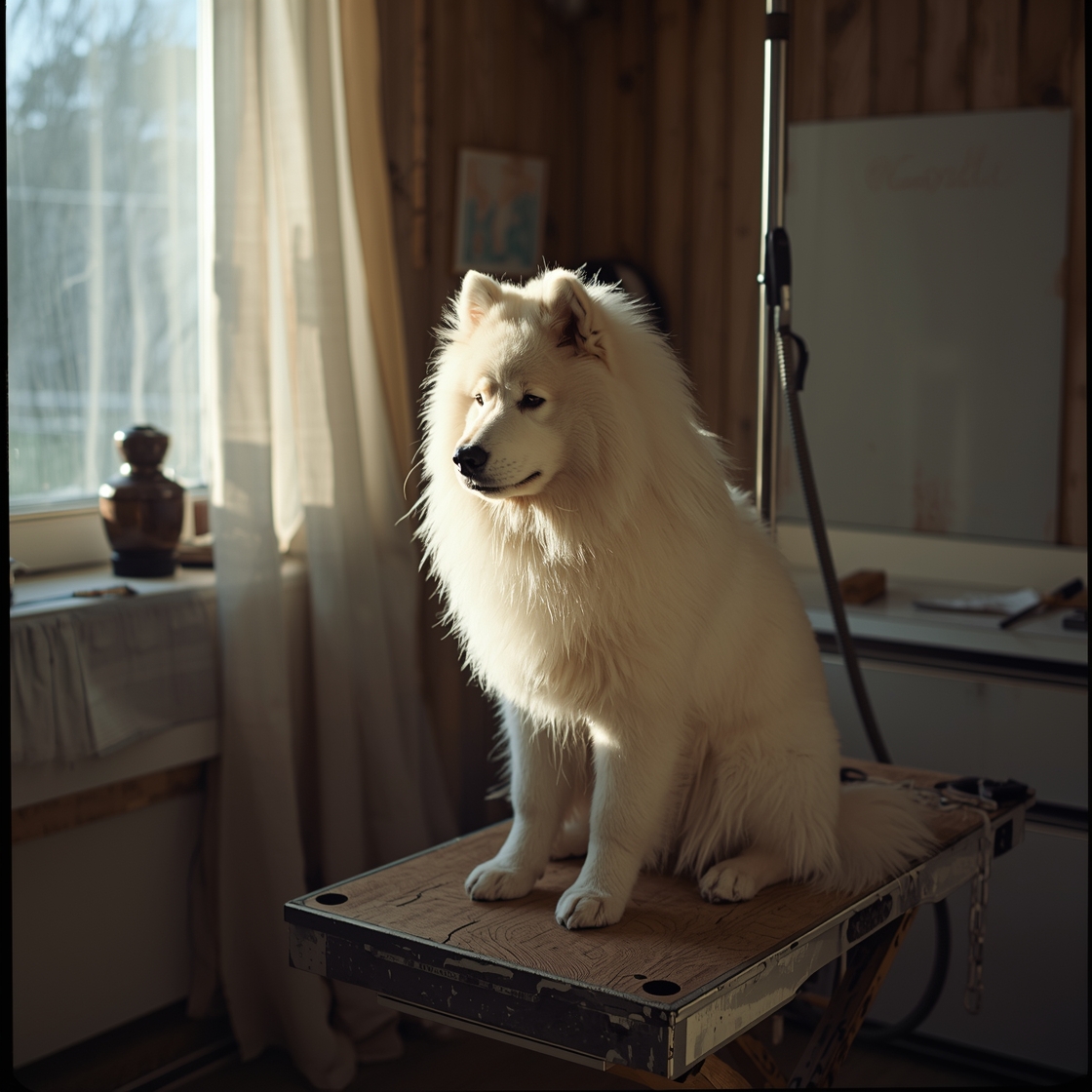
Clippers. Blade type, motor under load, noise, runtime. Cordless needs a honest charge spec so you do not stall mid-sanitary. Oil every session. The clipper page is the deeper map.
Brushes and deshedders. Coat type decides. Slicker for most open coats. Pin for finish. Deshed only on a shedding double coat. Light hand. Comb-to-skin is how you know you are done.
Nails. Clip is fast. Grind is gradual. Both can injure. VCA: if you hit the quick, pressure; veterinarian if bleeding does not stop.
Shears. Stainless, tension screw, round tips near eyes. Straight plus thinning. Not a mat saw.
Maintenance schedule (desk bands, not a wear trial)
| Tool | Clean | Replace / service |
|---|---|---|
| Slicker | Pull hair after each session | Bent pins |
| Deshed | Eject hair; wipe the edge | Rolled or nicked edge |
| Clipper | Brush hair, oil blade, vent lint | Dull blade; overheating motor |
| Grinder | Swap worn drums | Dead battery pack |
| Shears | Dry, oil pivot, sleeve | Nick; $23 kit is a consumable |
Deshedding more than a couple of short sessions a week in blow is how you irritate skin. Match aggression to the coat.
Session-planning bands (not a clock we ran)
| Coat state | Typical weekly desk | Add in blow / growth |
|---|---|---|
| Short single | 5–10 min curry / slicker | Nails on a click |
| Double, open | 15 min slicker + comb | Deshed 1–2× |
| Curly pet clip | Daily inspect (VCA) | Shears 4–8 weeks |
| Neglected mat | Stop shopping | Groomer / veterinarian |
Line brushing: lift a section, work from the skin out. Surface-only strokes miss undercoat felting.
Safety the best dog grooming tools cannot skip
- Comb first. If it stops, you are not clipping or scissoring that panel.
- See the skin. Point tips away. Rounded tips help; they do not see for you.
- Hold still — a table with an arm beats a sofa.
- Oil the clipper. A dry blade burns.
- Stop on blood or a scream.
- No kitchen shears. No human hair pair as a “just this once.”
The safety page is the longer stop list.
Frequently asked questions
What counts as the best dog grooming tools for a Golden Retriever?
Long-pin slicker, metal comb, undercoat tool in blow, nail grinder or clipper, and a finish shear kit. Budget time in shed season. The Wahl card is the length tool if you clip at home. The FURminator card is sized large / long — confirm your dog’s weight band.
How often should I groom my dog?
VCA: long, silky, or curly coats need daily brushing. Short coats are often weekly. Bath interval is a skin-and-dirt question, not a spray-bottle question. Nails when they click. ”
What are the best tools for sensitive skin?
Light slicker, short sessions, low-heat clipper passes, rounded-tip shears. Go easy with a deshed edge. Red, wet, or smelly skin is a veterinarian, not a softer slogan.
Is a clipper or scissors better at home?
Different jobs. Clipper = length. Shears = face, feet, finish. Most clip-at-home households want both.
Should I clip or grind nails?
Confidence and the dog’s noise tolerance. Clip is fast and has a quick risk. Grind is slow and has a heat / whir risk. VCA’s bleeding rule is the same either way.
How do I prevent mats?
Brush before they felt. Comb-to-skin. After woods, look for burrs. Dry fully. Do not bathe a mat. VCA: water tightens tangles.
Do deshedding tools work on every breed?
No. They are an undercoat tool for shedding doubles. Wrong on typical Poodle-type curl.
How do I get a nervous dog comfortable?
Short sessions. Tool off, then on nearby, then on the coat. Treats. Stop on freeze or snap.
Can I use these tools on cats?
Hertzko’s title includes cats. Dog clippers, deshedders, and shears can injure thinner feline skin. If the cat needs frequent work, use feline-specific tools or a groomer.
Do I need every tool in the $194 stack?
No. A short-coated apartment dog may need a slicker and a grinder. A blowing Husky may need slicker + deshed + comb. A Poodle needs slicker + comb + shears, not the FURminator card.
Worked stacks: best dog grooming tools by the dog in front of you
These are shopping maps, not timed protocols.
Golden Retriever, furnished, blows twice a year. Hertzko-class slicker most weeks. Comb-to-skin on pants and ears. FURminator Large Long only in blow, light hand, not daily. Dremel when nails click. Chibuy for feet and ears. Wahl only if you clip a pet length at home — many Goldens are a bath-and-brush household, not a clipper household.
Husky or Malamute in blow. Slicker + comb first. Deshed is the seasonal job. Do not shave the insulating coat because a clipper kit was on sale. Nails still click on hard floors. Shears are tidy-only.
Poodle or curl-dominant doodle. Hertzko may be short-pin for a long jacket — see the Poodle brush page for 27 mm class. Comb every day (VCA). Chibuy for finish. Wahl for length or a sanitary. Leave the FURminator card on the shelf.
Short-coated Beagle. Slicker or rubber curry. Grinder. Skip deshed as a “must.” Clipper only if you have a job (surgery site, sanitary) — not because a kit is complete.
Senior thin skin. Short sessions. Soft hand on the slicker. Warm clipper blades are a stop. Grinder on low if the dog will take the whir. Any lesion is a veterinarian.
Session order for the best dog grooming tools
- Eyes, ears, skin check. Smell is information.
- Slicker / comb until the comb travels.
- Deshed only if this is a shedding double coat in blow.
- Bath only if the coat is already open (VCA: water felts a mat).
- Dry.
- Clipper for length if that is the job. Oil the blade first.
- Shears for face, feet, finish.
- Nails last or on a different day if the dog is done.
A table with storage keeps the stack off the floor. A shine spray is optional slip, not a sixth mandatory card.
Nail anatomy the best dog grooming tools have to respect
The quick is live tissue with a blood supply and a nerve. On a white nail you can often see the pink. On a black nail you cannot. That is why a grinder exists as a small-pass tool and why a single heroic clip is how you get a scream.
If you hit the quick: pressure with a clean cloth. Styptic powder is a first-aid carton, not a reason to keep going. If bleeding does not stop, that is a veterinarian. ”
Dewclaws hide in furnishings. Check them. A long dewclaw catches on knit and tears.
Clipper and grinder desk notes (maker language, not a trial)
Wahl-class cordless kits need a charged pack and blade oil. Hair in the vent is how motors cook. Guide combs are length, not a breed clip. A 1/2" comb is not a Poodle Sporting.
Dremel-class grinders need a worn drum replaced. Two speeds exist so you do not start at high on a puppy. The 4.8V pack is a runtime constraint — if it dies mid-nail, you stop, you do not finish on a dead drum.
FURminator-class edges are not slicker pins. They are an undercoat tool. The large/long SKU is a size band. A 25 lb dog wants a different SKU than this card.
Hertzko-class slickers are a cleanup convenience (retractable pins) more than a published pin-length tool. If you have a long Poodle jacket, treat this card as a starter slicker, then read the Poodle brush page for 27 mm class. Chibuy-class 4CR kits are a finish tray. Oil the pivot. Do not cut a mat.
The $194 stack is a maximum kit, not a mandatory receipt. Buy the job you have this month. A short-coated city dog can live on Hertzko + Dremel. A blowing northern breed can live on Hertzko + FURminator + comb and never open the Wahl box.
FAQ add-ons for the best dog grooming tools
Do I oil Wahl blades every session?
Maker clipper language is oil-before-use. Hair is a wick. A dry blade runs hot. Hot plus thin skin is a burn.
Is the Chibuy kit enough shears for a doodle?
It is a starter finish tray: straight + thinning + comb. A doodle jacket still needs a slicker first and often a named curved pair later. See the curly shear page.
Can I skip the comb if I have a slicker?
No. The comb is how you know the slicker finished. VCA’s mat education is the same idea: skin to tip on every panel.
How loud is the Wahl kit vs the Dremel?
Maker copy calls the Wahl “low-noise” relative to salon clippers and the Dremel a whir. Introduce both off the dog. A startle plus an open blade or a spinning drum is the accident.
Should I buy the $194 stack on day one?
No. Buy the job you have this month. Add a class when a real gap shows up — nails clicking, a blow season, a first pet clip — not because a roundup has five cards.
Where do I put the stack so I actually use it?
A table with a tray beats a junk drawer. Oil, drums, and a comb that you cannot find are how a $80 clipper becomes a paperweight. Keep blade oil next to the Wahl, not in the kitchen. A drum pack next to the Dremel. A metal comb next to the Hertzko. If the comb is in another room, you will skip the truth-teller. That skip is how a weekly slicker still hides a mat at the pants. Put the comb in the same tray as the brush, every single session.
When the best dog grooming tools stop being the answer
Extensive mats, hidden hot spots, a bleeding nail that will not stop, or pain when touching a panel require a groomer or a veterinarian. Maker-stated specs and listing prices — not tool trials by our desk — inform the notes above.
Which listing price matches the best dog grooming tools?
$16 Hertzko is the daily slicker. $23 Chibuy is the finish tray. $35 Dremel is the nail class. $40 FURminator is the blow-coat edge. $80 Wahl is the length kit. The best dog grooming tools are the jobs you have this month, not the $194 sum.
Maker language we used: Wahl 9591-2100 class, FURminator large/long, Dremel 7300-PT 4.8V, Hertzko retractable-pin slicker, Chibuy 4CR kit. Listing snapshots: this URL’s five cards, August 2026 listing snapshot.
Research desk. Contact if a listing snapshot price changed. One job at a time.