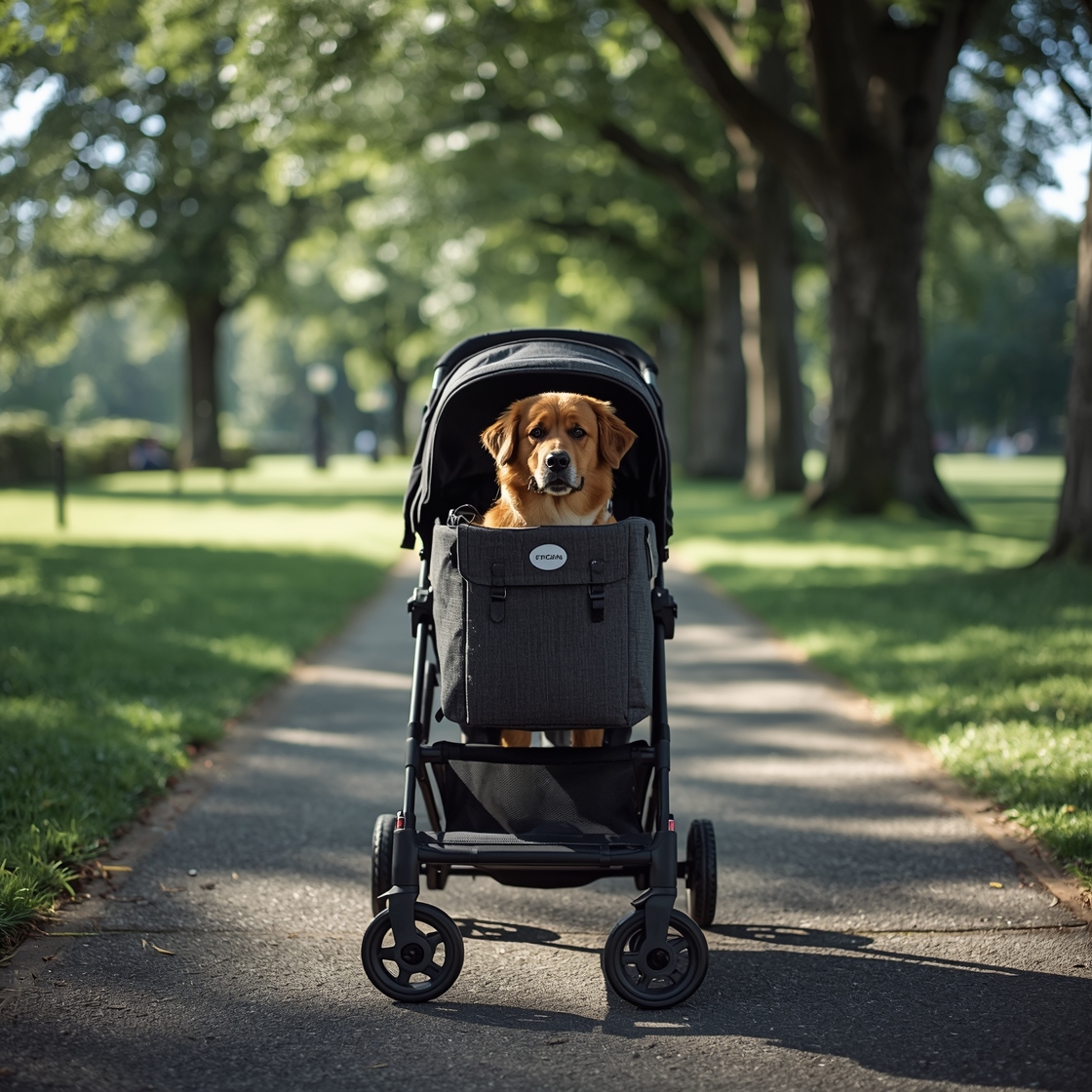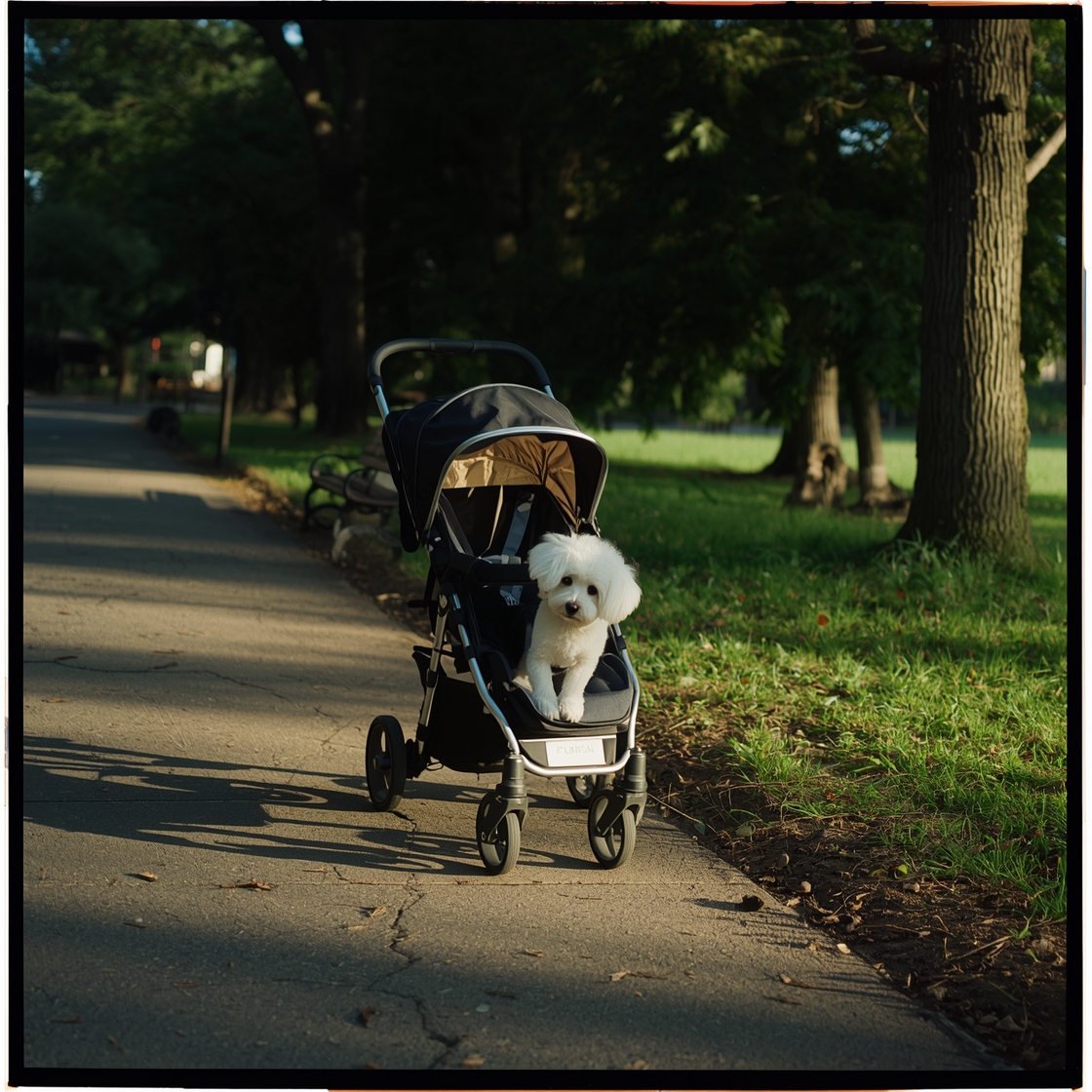
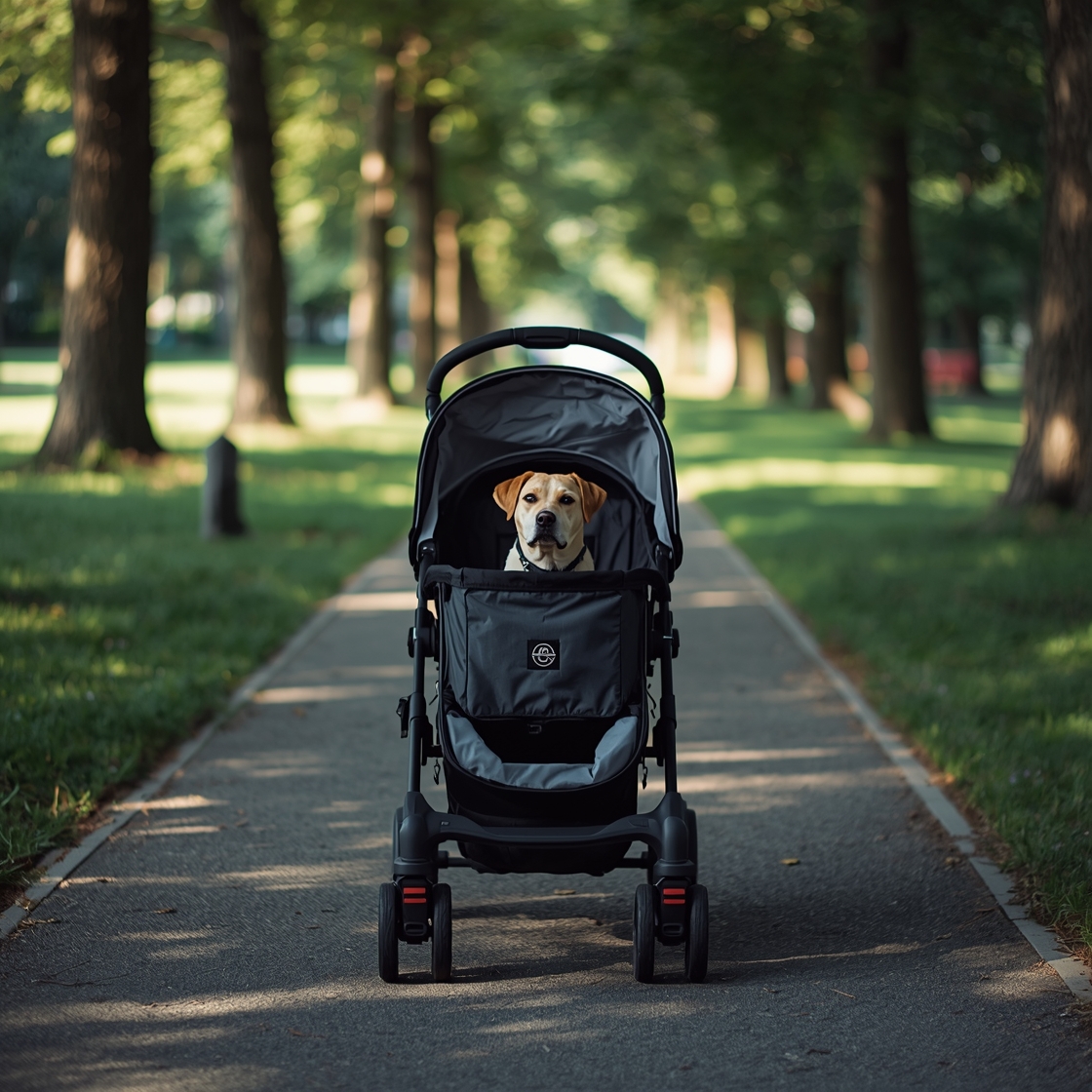
The best dog stroller for medium dogs is the cabin that fits a 25–50 lb body in inches — about 30×20 in of floor for a 35 lb beagle who stretches — not a 30 lb fashion cart with a 44 lb sticker. The We read the titles and descriptions of the seven catalog SKUs on this page on four buyer-visible signals: listed capacity, cabin length/width on file, entry type, and card price. Card snapshots on this URL sum to $1,230. Listed capacities run 30 to 80 lb. 1 of 7 (Pet Gear Happy Trails, 30 lb) fails a 35 lb beagle on pounds alone. 1 of 7 is a true double. 1 of 7 stretches to ~35 in (HPZ XL).
Collapsed sports breeds need length. Barrel chests need width. A 44 lb rating on a short cave is still a cave. Clip a harness inside. Lock the brake on a grade.
Our guides are reader-supported. This article may contain affiliate links. As an Amazon Associate we may earn a commission if you buy through links, at no extra cost to you.
Related desk pages: large-dog stroller, foldable dog stroller, dog stroller buying guide, jogging stroller, city-walk stroller.
Quick picks at a glance
- All-round 50 lb urban: HPZ Pet Premium — $190, zipperless, rubber tires.
- Light everyday 44 lb: Ibiyaya Cloud 9 — $165, one-step fold.
- Jog / trail 50 lb: HPZ Pet Run — $210, air tires, RUN/JOG/WALK modes.
- Roomy senior 80 lb: Petbobi — $150, 34×20×25 in, dual low step-in.
- Budget under ~30 lb: Pet Gear No-Zip Happy Trails — $95, 24×11×22 in.
The seven cards are the catalog.
What the best dog stroller for medium dogs actually means
The aisle sells “medium” on every 20 lb umbrella. The desk sells four different jobs. Mixing them is how a 30 lb Happy Trails becomes a 42 lb story.
- A rating with a buffer. About 10 lb above the dog. Cloud 9 at 44 lb is a 32–34 lb comfort zone, not a 44 lb ceiling lifestyle.
- A floor that fits the stretch. Measure nose-to-tail plus about 2 inches. Strollers marketed “40 lb” often fail a 26-inch-long dog.
- An entry the joints can use. Petbobi’s dual 10.5 in step-in is a senior story. A high zip lip is a lift.
- Wheels that match the path. Plastic sidewalk. Rubber mixed. Air for jog and gravel.
Four facts belong in the first screen of any best dog stroller for medium dogs decision:
- Medium is a weight band, not a breed. Beagle, Cocker, Springer, small Aussie, fat Corgi — 25–50 lb is a spread. Happy Trails at 30 lb is the small end of that band only.
- Two dogs is a double or two strollers. Ibiyaya Double is the two-cabin card. Per-side limits still apply. Two 40 lb dogs are not a “medium” double by default.
- Jogger geometry is a footprint tax. HPZ Run is less nimble in a pharmacy aisle. That is the deal.
- A stroller is not a diagnosis. Arthritic dogs need a veterinarian’s walk plan. The cart extends what is already allowed.
What
How medium dog stroller listings compare on labels
These tables are desk compilations from listed capacities, cabin inches on file, and the August 2026 card snapshots on this URL. Prices move. Heuristics, not pull tests.
Table 1 — Capacity, cabin, and card price
| Product | Listed capacity | Cabin on file | Card price |
|---|---|---|---|
| HPZ Premium | 50 lb | Convertible zipperless (listing) | $190 |
| Ibiyaya Cloud 9 | 44 lb | Everyday length — snug if long | $165 |
| HPZ Run | 50 lb | Jogger three-wheel | $210 |
| Petbobi | 80 lb | 34″ × 20″ × 25″ | $150 |
| Pet Gear Happy Trails | 30 lb | 24″L × 11″W × 22″H | $95 |
| HPZ XL | 75 lb | Stretches to ~35″L | $220 |
| Ibiyaya Double | Two compartments | Side-by-side | $200 |
Desk stat: Card total $1,230. Capacity span 50 lb (30 to 80). 14% (1 of 7) cannot carry a 35 lb beagle. 14% print an 80 lb rating (Petbobi) — that is a margin card for medium dogs, not a request to load an 80 lb giant without measuring width. Median card price is $190.
Table 2 — Dog weight vs floor heuristic
| Dog weight | Floor L×W (in) | Wheel size lean | Zip / entry |
|---|---|---|---|
| 20–30 lb | 28×16 | 8 in ok | Side + front; Happy Trails 24×11 is tight |
| 30–40 lb | 30×20 | 10 in | Low step-in preferred |
| 40–50 lb | 32×22 | 12 in / air | Wide entry; skip 11 in width |
| Long 30–45 lb | 34–35×18 | 10–12 in | HPZ XL length job |
| Two small-medium | Per-side chart | Stable wide base | Double only |
Measure the dog in a down-stretch. Labels lie about “fits most medium breeds.”
Table 3 — Terrain and brakes
| Use | Wheel type on this catalog | Brake theme | Price band |
|---|---|---|---|
| Pavement / vet hop | Happy Trails smaller wheels | Foot lock | $95 |
| Mixed urban | HPZ Premium rubber + shocks; Cloud 9 suspension | One-step / lockable swivel | $165–$190 |
| Jog, gravel, sand | HPZ Run air | Dual / mode lock | $210 |
| Senior low entry | Petbobi EVA 11 in rear | One-step | $150 |
| Two dogs | Double mesh | Wider track | $200 |
Attach a harness clip inside. Cabin mesh is not restraint on a curb hop.
Table 4 — Job vs product
| Job | Buy | Do not buy |
|---|---|---|
| 35 lb beagle, sidewalk | Cloud 9 or HPZ Premium | Happy Trails 30 lb |
| 42 lb Cocker, long back | HPZ XL | Cloud 9 if the dog will not curl |
| Jogger owner | HPZ Run | Happy Trails small wheels |
| Senior / post-op hop-in | Petbobi dual step-in | High-lip zip-only |
| Two 18 lb dogs | Ibiyaya Double | One 50 lb single as a default |
| Tight budget, 25 lb | Happy Trails $95 | An 80 lb cabin you will not lift |
| Growing 38 → 48 lb | Petbobi 80 or HPZ XL 75 | Cloud 9 44 at the ceiling |
Table 5 — Card math (August 2026 snapshots)
| Stack | Example SKUs | Snapshot $ | Who it is for |
|---|---|---|---|
| Budget small-medium | Happy Trails | $95 | ≤30 lb neighborhood |
| Everyday 44 lb | Cloud 9 | $165 | Light fold |
| Do-it-all 50 lb | HPZ Premium | $190 | Urban mixed |
| Jog | HPZ Run | $210 | Air tires |
| Senior room | Petbobi | $150 | Low entry, 80 lb print |
| Length | HPZ XL | $220 | Stretch cabin |
| Two dogs | Double | $200 | Two cabins |
| All seven | Collection | $1,230 | A hallway fleet |
Desk stat: Happy Trails is 7.7% of the seven-card pile and the only 30 lb rating. Petbobi at $150 undercuts HPZ Premium at $190 with a higher printed capacity — you are paying HPZ for zipperless / rubber-tire brand geometry, not for more pounds.
How the desk scores the best dog stroller for medium dogs
We do not dynamometer a wheel. Four checks:
1. Does the rating clear the dog plus ~10 lb? 35 lb beagle → 44+ print. Happy Trails is out.
2. Do the inches fit a down-stretch? 24×11 in is a small-medium cave.
3. Can the dog enter without a deadlift? Step-in height vs stifle pain.
4. Do the wheels match this week’s path? Jogger tires on a third-floor elevator run are optional. Jogger tires on a beach path are the product.
Why medium dogs end up in strollers
Joint stiffness, post-op windows, hot pavement, crowded sidewalks, travel days when the dog cannot walk the whole market. A stroller reduces step impact. It does not treat arthritis. Paw burns and salt are path problems; elevation helps. Multitasking (coffee, bags, dog) is a real owner job — the brake and tether still have to work when your hands are full.
Top picks — seven catalog cabins
Cards below are the catalog lines for this URL. Specs are the maker’s. They change.
1. HPZ Pet Premium Heavy-Duty Dog Stroller
Best for: a 50 lb urban do-it-all — zipperless entry, rubber tires, $190.
HPZ Premium is the Index all-rounder: aluminum-alloy listing, 50 lb, one-pull zipperless, pump-free rubber with front shocks, reversible telescoping handle, waterproof base, rain cover in the story. Heavier folded than Cloud 9. Premium vs Happy Trails is the price. Use it when the dog is a true medium and the week is mixed sidewalk plus light gravel — not a 28 lb toy-breed errand.
Pros: 50 lb print; zipperless load; rubber-tire urban ride. Cons: Fold bulk; not the $95 card.
2. Ibiyaya Cloud 9 Pet Stroller
Best for: 40–44 lb everyday fold — $165, not a jogger.
Cloud 9 prints 44 lb — the medium “sticker” everyone quotes. One-step fold, adjustable handle, all-wheel suspension, lockable front swivel, one-step brake, peek window, cup holder, basket. Not a trail jogger. Long-bodied mediums can feel the length limit. Measure before you fall in love with the fold.
Pros: 44 lb with a real buffer for ~32 lb dogs; travel fold. Cons: No jog mode; snug if the dog is long.
3. HPZ Pet Run Performance Jogging Stroller
Best for: air-tire run / gravel / sand at 50 lb — $210.
HPZ Run: three large air tires, RUN/JOG/WALK front-wheel modes, aluminum, one-hand fold, basket, pump and pockets in the listing. Larger footprint, worse indoor aisles. If you never leave pavement, Premium’s rubber may be enough. If you run, this is the medium-dog jogger on the catalog.
Pros: Air cushion; mode lock; 50 lb. Cons: Price and width in stores.
4. Petbobi Dog Stroller for Medium & Large Dogs
Best for: room and a low dual step-in — 80 lb print, 34×20×25 in, $150.
Petbobi is the margin-and-entry card. 10.5 in front and rear step-in, EVA tires, 11 in rears, one-step brake, 360 swivels, one-click fold, canopy, mesh. Bulk in narrow doors is the tax. An 80 lb rating on a 42 lb senior is a buffer, not a dare to load a mastiff. For dogs that sit at the top of medium, this cabin is why This comparison does not treat “medium” as 11 inches wide.
Pros: Inches + 80 lb print + low entry. Cons: Wide track; heavier than Cloud 9.
5. Pet Gear No-Zip Happy Trails Pet Stroller
Best for: budget neighborhood / vet hops under about 30 lb — $95.
Happy Trails: No-Zip canopy, washable liner, basket, cup holder, paw rest, view window, 24×11×22 in. Lightweight fold. 30 lb and 11 in width rule out a 35 lb beagle and most “medium” chests. Smaller wheels hate gravel. This is the small-medium card. Honest at $95. Wrong as the default best dog stroller for medium dogs if the dog already weighs 36 lb.
Pros: Price; No-Zip; washable pad. Cons: 30 lb; 11 in; small wheels.
6. HPZ Pet XL Extra-Long Dog Stroller
Best for: length — ~35 in stretch, 75 lb, $220.
XL is the down-stretch card. Same HPZ zipperless / rubber-tire / reversible-handle / weather-cover recipe, longer package. Two small pets can share a 75 lb total if they fit the floor. Bulk in the trunk is the tax. A long 40 lb dog that refuses Cloud 9 often belongs here — not on a 24 in Happy Trails.
Pros: 35 in story; 75 lb margin. Cons: Longest to store; premium vs Cloud 9.
7. Ibiyaya Double Pet Stroller
Best for: two small-to-medium dogs in separate cabins — $200.
Double: two compartments, two tethers, full mesh, aluminum fold. Wider doors and aisles. Per-side limits are not “two 44 lb dogs.” Read each cabin’s rating. One side as storage is a real use. Two large mediums belong on the large-dog page or in two singles.
Pros: Separation; airflow; compact-for-a-double fold. Cons: Width; per-side pounds.
Comparison table
| Stroller | Weight capacity | Best for | Card price | Check price |
|---|---|---|---|---|
| HPZ Premium | 50 lb | Urban all-round | $190 | Check price |
| Cloud 9 | 44 lb | Light everyday | $165 | Check price |
| HPZ Run | 50 lb | Jog / trail | $210 | Check price |
| Petbobi | 80 lb | Roomy senior | $150 | Check price |
| Happy Trails | 30 lb | Budget small-medium | $95 | Check price |
| HPZ XL | 75 lb | Long body | $220 | Check price |
| Ibiyaya Double | Two cabins | Two dogs | $200 | Check price |
Durability without a private track
Aluminum-alloy (HPZ) and metal (Petbobi) listings resist wet seasons better than thin plastic umbrellas. High-denier fabric and a washable liner (Happy Trails) are the claw-and-mud story. Capacity is a limit, not a target. Wide rear track and a low center of gravity keep a 45 lb shift from tipping. Lockable fronts stop wander on a grade. We compile those listing traits.
Comfort, tethers, and brakes
A washable pad (Happy Trails) and mesh (Double, most cabins) are heat and hygiene. An interior tether to a harness is the restraint. Zipperless (HPZ, Pet Gear No-Zip) is a one-hand clip story. One-step rear brakes (Cloud 9, Petbobi) are the stop. Pair brake + wide base when you park on a driveway slope.
Price bands
$80–$110. Happy Trails. Small-medium, sidewalk, short trips.
$130–$180. Petbobi $150, Cloud 9 $165. Room or light fold. This is the honest everyday medium band.
$180–$240. HPZ Premium $190, Double $200, Run $210, XL $220. Rubber-tire brand geometry, jogger, length, or two cabins.
If the dog is 28 lb and the week is two vet hops, $95 can be enough. If the dog is 41 lb and long, $95 is a mistake.
How we researched the best dog stroller for medium dogs
We opened the seven live cards, summed $1,230, aligned listed capacities and cabin inches, and classed wheels and entry. We mapped a 35 lb beagle against each rating. We read recurring owner themes: 11-inch width, long dogs in Cloud 9, double-stroller doors, jogger aisles.
Vehicle trunks and apartments
Cloud 9 and Petbobi sell one-click folds — still measure the folded box against a Civic trunk. XL is a long package. Double is a wide package. Happy Trails wins closets. A stroller you cannot store is a $190 coat rack.
Heat, cleaning, and the mesh myth
Mesh is airflow, not shade enough for a July parking lot. Time-limit the outing. Water in a bottle is not optional. Wash the liner. Rinse EVA and rubber. Pump air tires on the Run. A dirty pad is a hot-spot risk on an already itchy dog — different page, same skin.
Seven buying mistakes we keep seeing
- Happy Trails for a 38 lb dog. 30 lb print.
- Ignoring length. 26 in dog, 24 in cabin.
- Jogger for elevator-only life. Footprint tax.
- Double for two 40 lb dogs without reading per-side limits.
- Skipping the interior tether.
- Buying 80 lb Petbobi and then loading a giant who still does not fit the door.
- Treating a stroller as physical therapy. Clinic first.
When a stroller question is a clinic question
Non-weight-bearing lame, post-op crate-only, heat collapse: clinic. The cart can extend a walk a veterinarian already allowed.
What this seven-card catalog is not
It is not a loaded-chassis trial. It is not the large-dog Expedition page. The catalog is seven purchasable medium-class strollers, $95–$220, compiled in August 2026.
Medium vs large — stay on the right URL
A regular 55–70 lb dog is not a Cloud 9 problem. Move to the large-dog guide. A 32 lb beagle is not an Expedition problem. Stay here. Width and length still win over the word “medium” on a tile.
Cost per year, not cost per listing
Happy Trails at $95 for a 26 lb terrier is cheap and honest. HPZ Premium at $190 for a 40 lb daily rider is the urban stack. Seven cards at $1,230 is a fleet. Buy the inches.
Breed-class walkthrough (still weigh the dog)
Beagle / Cocker / Springer, 25–40 lb. This is this comparison's core customer. Cloud 9 (44 lb) or HPZ Premium (50 lb) if the dog curls. HPZ XL if the dog sleeps long. Happy Trails only if the scale still says ≤30 lb and the chest fits 11 inches.
Corgi / low rider, 25–35 lb. Height is short; length is not. A 24-inch Happy Trails cabin clips the spine. XL or Petbobi’s 34-inch floor is the length conversation. Step-in height matters more than for a springy terrier — Petbobi’s 10.5-inch dual entry is the senior-corgi card.
Mini Aussie / Sheltie / skinny 35–45 lb. Weight looks “medium.” Length looks large. Measure nose-to-tail. Cloud 9’s snug-if-long note exists for this dog. XL at $220 is not an upsell if the alternative is a dog who never lies down.
Chunky 45–50 lb “still a medium.” Premium’s 50 lb print is a ceiling. Petbobi’s 80 lb print is a buffer. Do not “just squeeze” Happy Trails. Do not assume a Double’s per-side limit is 50 lb without reading it.
Two 20 lb dogs. Double is the SKU. Two 35 lb dogs are usually two singles or a large-dog cabin — see the large-dog page.
Growing puppy timeline
A 22 lb pup in Happy Trails at 6 months is a 36 lb dog at 14 months. The $95 card becomes a donation. If the adult target is 40 lb, start on Cloud 9 or Premium and accept a slightly roomy puppy cabin. “Room to grow” in a 30 lb stroller is not a plan. Recheck weight every couple of months the same way you recheck a harness.
A puppy who chews mesh is a supervision job. No catalog on this URL is chew-proof. A destroyed screen is a loose-dog event on a sidewalk.
City, suburb, trail — pick one primary path
Third-floor walk-up, elevator, pharmacy aisles. Cloud 9 fold and a narrower track win. HPZ Run’s three-wheel jogger geometry loses. Double loses on doors.
Suburb sidewalk plus weekend park gravel. HPZ Premium rubber + shocks, or Petbobi EVA. Air tires (Run) if you actually jog the park loop.
Beach / sand / serious gravel. HPZ Run. Happy Trails small wheels will bury. Premium’s rubber is a maybe. Rinse salt and sand out of axles the same day.
Clinic parking lot only. Happy Trails is enough if the dog is still ≤30 lb. A 40 lb anxious dog in a 24×11 cave is a worse vet visit, not a cheaper one.
Basket weight is not free capacity
Parent trays and under-baskets hold water, bags, a laptop. That weight is not always excluded from the dog rating in listing English. Stay honest: a 42 lb dog plus 12 lb of groceries on a 44 lb Cloud 9 is a 56 lb event. Petbobi’s 80 lb print is why the Index likes it as a margin card for top-of-medium dogs who also carry a picnic.
Handle height and who is pushing
Reversible / telescoping handles (HPZ line) exist because a 6-foot owner and a 5-foot owner are not the same shoulder angle. A handle that is too low for a tall person is a week of back complaints and a stroller that stays in the trunk. Cloud 9’s adjustable handle is a listing plus for mixed-height households. Try the handle in a store if you can;
Double-stroller etiquette
Two dogs in one Double is two tethers and two personalities. A reactor and a sleeper in adjacent mesh can be a worse walk than two trips. One cabin as storage works if you do not overload the frame. Wide doors: grocery, clinic, cafe. If your weekly route includes a 28-inch interior door, measure the Double or buy two folds.
Winter salt, summer pavement, and paws that hop out
A stroller saves paws from hot asphalt while they are in it. The hop-out at every mailbox is still a burn. Use the tether. Winter salt on a Happy Trails small wheel is a slip; on a Run air tire it is a puncture risk. Wipe paws when they do hop out. The cart is not a substitute for paw care or boots.
Wagons vs the best dog stroller for medium dogs
A wagon is open, often better on gravel, worse at containing a food-thief beagle in a market. A stroller is a mesh cave with a brake. Medium dogs who sit up and watch the world may prefer a higher canopy (listing “view window” language on Happy Trails / Cloud 9). Medium dogs who panic in caves may prefer a wagon or no cart. We do not score temperament in a lab.
Apartments and the $190 coat rack
Fold it the first week or you will never fold it. Cloud 9 and Petbobi sell one-click for a reason. XL’s long package needs a wall. Happy Trails wins a closet. A stroller that blocks the only hallway is a trip hazard for the senior human. Storage is a feature, not an afterthought.
Maintenance, mesh tears, and when to retire
Monthly: brake on a driveway grade, swivel lock, bolts, tire pressure on the Run. Mesh that a claw opened is a loose-dog event — retire or patch with something the maker supports, not duct tape as a lifestyle. A fold latch that needs a knee to close is a finger-pinch waiting on a parking lot. Owner themes say the latch you force is the latch that fails.
Travel: hatchbacks yes, overhead bins no
These cabins are car-trunk objects. They are not airline under-seat bags. For the drive, the dog still needs a seat belt / harness or a crate. A loose stroller plus a loose dog in a hatch is two projectiles.
Hotel hallways are Double-hostile. Cloud 9 fold plus a 35 lb beagle is the travel stack in the Index — if the dog still fits.
When to leave this URL for the large-dog page
Regular weight 55 lb+. Chest that will not sit in 20 inches. A dog who needs a 150 lb print or a walk-in ramp on a 90 lb body. That is best dog stroller for large dogs. Stay here for 25–50 lb bodies where inches and a 10 lb buffer are the whole game.
Clinic parking, post-op, and the “just this once” lift
A post-op dog who is not supposed to jump still has to enter the cabin. Petbobi’s low dual step-in is the listing that matches that sentence. A high zip lip plus a “just lift them” is how staples tear. If the veterinarian said crate rest, the stroller is not a loophole. If they said short leash walks plus a cart for the parking lot, this page is the cart.
Brake, grade, and a 40 lb stand-up
A 40 lb dog that stands in a Cloud 9 on a driveway slope is enough to roll a lazy brake. Lock it. Lock the front swivel if you park on a crown. Clip the harness. Mesh is not a seat belt. The seat-belt page is the car. This page is the sidewalk. Both need a body harness, not a collar.
Second-hand medium strollers
A $40 used Happy Trails with a shot No-Zip latch is how a 28 lb dog exits at a light. Inspect the fold lock, wheel true, and tether stitch. If the liner is a biohazard, price in a replacement pad or buy new at $95. the listing review prices are new-card snapshots, not garage-sale math.
Night, rain, and the “just one more block”
Reflective bits on a listing do not replace a light on the handle. Rain covers (HPZ Premium / XL story) help a storm; they cook a July afternoon. One more block with a panting 40 lb dog in a closed cabin is a heat story. Stop. Shade. Water. The stroller does not negotiate physiology.
What “all-terrain” means on a medium tile
Cloud 9 “all-wheel suspension” is a sidewalk-plus-curb story. HPZ Run air tires are a jog/gravel/sand story. Happy Trails small wheels are a vet-hop story. Petbobi EVA is a mixed-path senior story. If the tile says all-terrain and the wheels are the size of a dinner plate’s cousin, read the diameter in inches. Eight-inch plastic is not a beach tire.
Cafes, markets, and the snout-through-mesh problem
A medium stroller is more welcome than a 150 lb Expedition — and still a maybe. Ask the venue. A beagle nose through Cloud 9 mesh is a stolen-sample story. Clip the harness short. Close the canopy enough that the head is not a shopping tool. Happy Trails’ view window is a feature for a calm 25 lb dog and a problem for a food-thief 29 lb dog. We are telling you to treat mesh as airflow, not a fence.
If the market bans strollers on a Saturday, the best dog stroller for medium dogs that day is the one that stayed in the car. Walk the dog. Or skip the market. A $190 Premium that blocks a wheelchair ramp is not a mobility win. Park it, fold it, or leave it. Courtesy is a feature. So is not proving a 50 lb label in a crowded aisle.
Frequently asked questions
What defines the best dog stroller for medium dogs for a 35 lb beagle?
A rating above ~45 lb, about 30×20 in of floor, a step-in the stifles can use, and wheels that match the sidewalk. Cloud 9 or HPZ Premium. Not Happy Trails at 30 lb.
What is the best dog stroller for medium dogs?
For most 30–45 lb urban dogs, HPZ Premium (50 lb, $190) or Cloud 9 (44 lb, $165). Joggers: HPZ Run. Long bodies: HPZ XL. Seniors: Petbobi. Two small-mediums: Double. The “best” line is the one that fits this dog.
How do I choose the right size?
Weigh. Measure nose-to-tail and height at the shoulder. Compare to cabin inches. Long dogs → XL. Heavy-for-medium → Petbobi 80 lb print. Growing puppies: leave margin.
Can I use a medium stroller for a large dog?
Only inside that rating and cabin. 50 lb prints are not 90 lb prints. See the large-dog page.
About 10 lb above today’s weight. 20–35 lb dogs: 44 lb class. Top-of-medium: 50–80 lb prints.
Are strollers good for senior or arthritic dogs?
They can extend an allowed walk. Prioritize low step-in (Petbobi) and a roomy floor. Pain meds and rehab are clinic jobs.
Can these handle jogging or rough terrain?
HPZ Run: yes, that is the SKU. Happy Trails: no. Premium: light gravel. Air tires need air.
How do I fold and store one in a car?
One-hand / one-click on Cloud 9, Petbobi, HPZ. Measure the folded footprint. XL and Double take more trunk.
Do I need a rain cover?
If the listing includes one (HPZ Premium / XL story), use it. Mesh in a storm is a wet dog. A soaked senior is a clinic risk in winter.
Will a stroller replace a car harness?
No. Different object. See dog seat belts.
Related pages
- Best dog stroller for large dogs
- Best foldable dog stroller
- Dog stroller buying guide
- Best dog jogging stroller
- Best pet stroller for city walks
Sources
- Manufacturer and marketplace listings for HPZ Pet, Ibiyaya, Petbobi, and Pet Gear (confirm capacity and inches at purchase)
Last reviewed: August 2026. If something is stale, contact us.