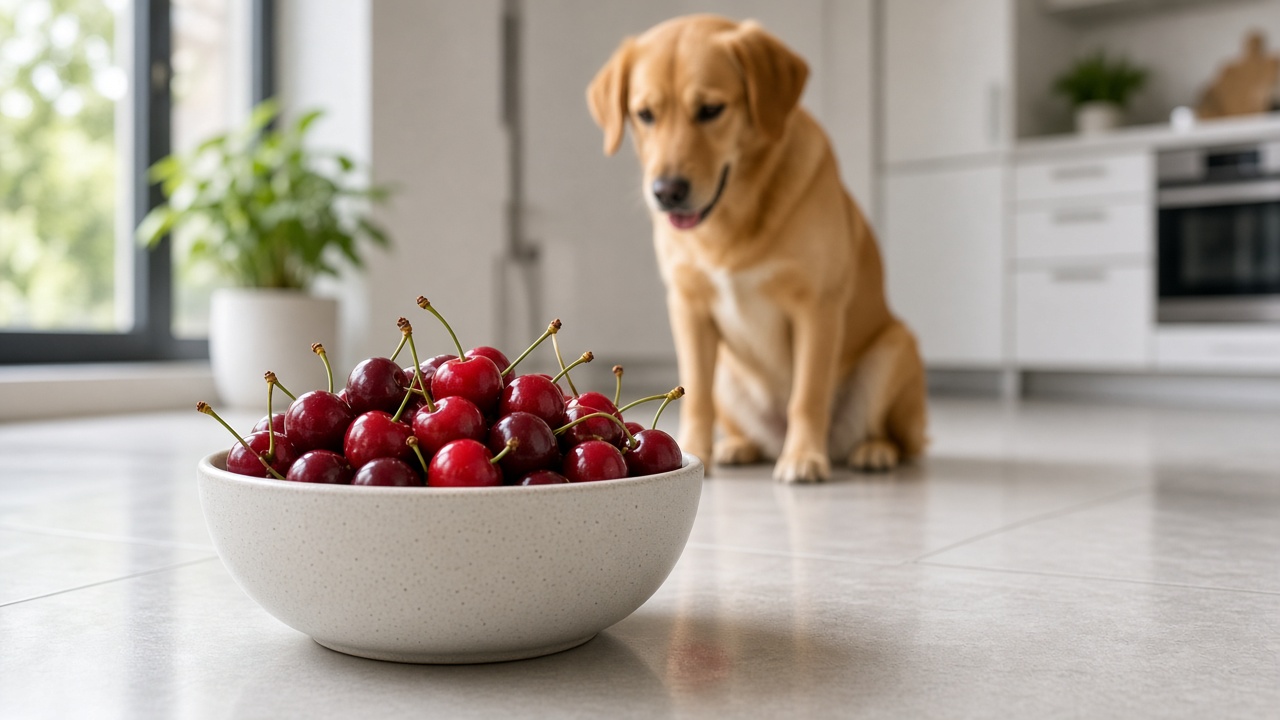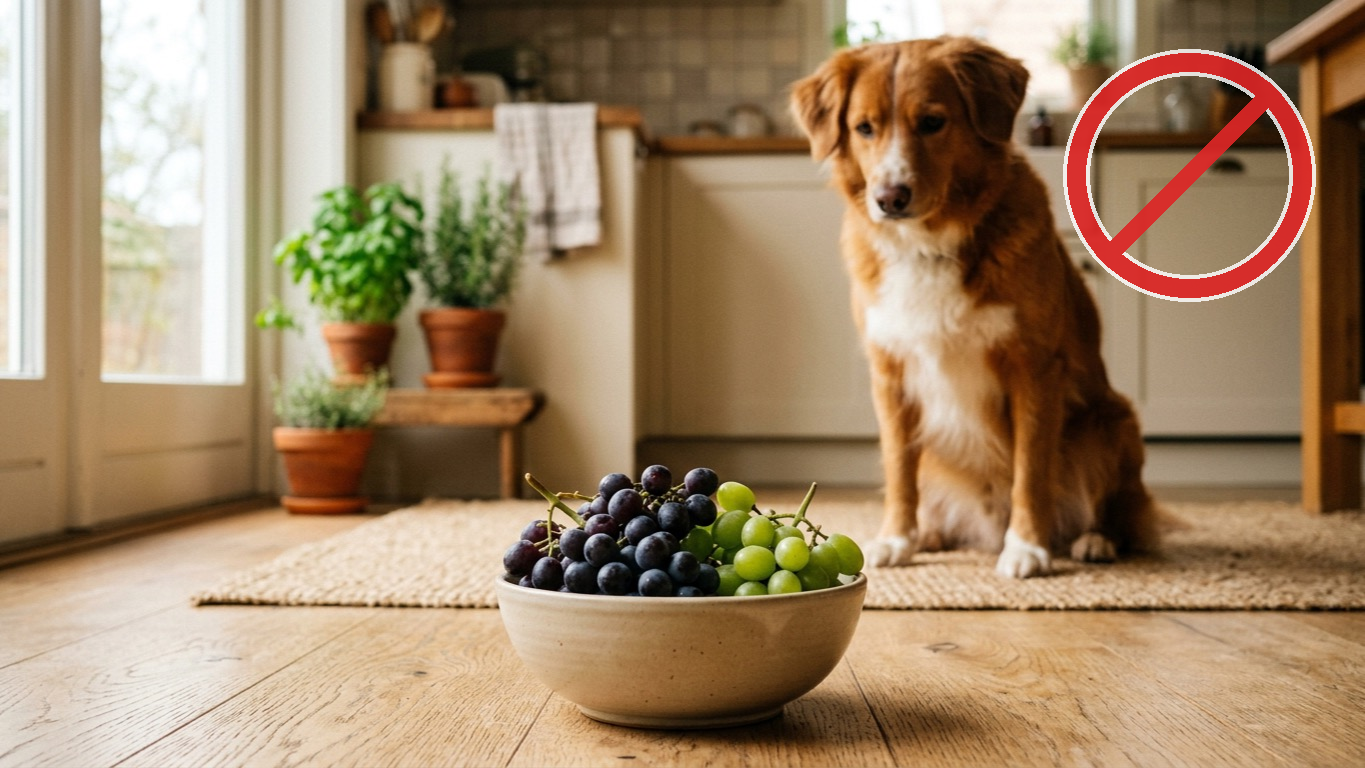
Can dogs eat grapes? No. Grapes and raisins of every common color are linked to acute kidney injury in dogs; there is no established safe dose, so any ingestion is a call-your-veterinarian / poison-control event—not a “wait and see” snack experiment.
Pet Bench Toxicity Desk note (August 2026): We synthesize published toxicology guidance for pet owners. We are not veterinarians, we do not provide treatment protocols, and we do not invent a minimum toxic grape count. Individual dogs show idiosyncratic sensitivity—some react after very small amounts.
| Desk table A — Can dogs eat grapes? Item matrix | Item | Safe for dogs? | Desk action |
|---|---|---|---|
| Fresh grape (any color) | No | Call vet / poison control | |
| Raisin / sultana | No | Same urgency (more concentrated by weight) | |
| Grape juice / wine | No | Alcohol + grape risk | |
| Grape-seed oil in tiny food amounts | Not this page’s clearance | Ask a clinician about specific products | |
| “Organic / homegrown” grapes | Still no | Origin does not equal safety |
| Desk table B — Time board (owner watch windows) | Hours after ingestion | Common owner-observed signs in published cases | Desk note |
|---|---|---|---|
| 0–6 | Vomiting, drooling, quiet demeanor | Early call window | |
| 6–24 | Ongoing GI signs, lethargy | Do not wait for “worse” | |
| 24–72 | Reduced urine, inappetence | Emergency pathway |
| Desk table C — Kitchen risk map | Scenario | Risk |
|---|---|---|
| Counter grapes | High | Dogs jump |
| Raisin bread / trail mix | High | Hidden dried fruit |
| Kids’ lunch debris | High | Floor grazing |
| Vineyard tourism | High | Loose fruit |
Quick verdict on can dogs eat grapes
Do not feed grapes or raisins. Do not assume seedless, green, red, purple, or white varieties are safer. Do not use “my dog ate one once and seemed fine” as permission—idiosyncratic toxicity means past luck is not a protocol.
Why grapes are treated as toxic
Veterinary toxicology sources describe grape/raisin ingestion as associated with acute kidney injury. The exact toxic principle remains incompletely settled in the public literature, which is exactly why dose charts for home use are unreliable. Treat uncertainty as danger, not as loophole.
What to do if a dog already ate grapes
- Note approximate amount, time, and dog weight.
- Contact your veterinarian or an emergency clinic immediately.
- Call a pet poison hotline if directed (for example, ASPCA Animal Poison Control is a commonly referenced US resource).
- Follow clinical instructions only—do not induce vomiting unless a professional tells you to.
- Bring packaging or a photo of the fruit.
Symptoms owners are told to watch for
Published case patterns include vomiting, diarrhea, lethargy, abdominal discomfort, reduced appetite, and changes in thirst or urination. Absence of early symptoms does not prove safety. This list is educational, not a diagnostic checklist.
Household prevention for can dogs eat grapes questions
Store fruit up high. Teach kids not to share. Check bakery items for raisins. Mind compost bowls. On hikes, keep dogs from orchard groundfall.
Frequently Asked Questions — can dogs eat grapes
Can dogs eat grapes if they are seedless?
No. Seedless does not mean non-toxic.
Can dogs eat grapes in tiny amounts as training treats?
No. Use commercial dog treats instead.
Are raisins worse than grapes?
Dried fruit is more concentrated by weight; both are considered dangerous.
Can dogs eat grape tomatoes?
Different plant; still ask a clinician before novel foods. Do not confuse with Vitis grapes.
What about dietary supplements that mention grape extract?
That is a product-specific clinical question—not something this research desk clears.
Additional desk research notes on can dogs eat grapes (block 1)
Our August 2026 desk pass on can dogs eat grapes prioritizes falsifiable setup rules over ranking theater. When two products share a price band, prefer the one with clearer sizing charts, cleaner care instructions, and fewer unresolved safety complaints in recent owner reports. Keep a written household SOP: where the item lives, how often it is cleaned, and what failure (odor, crack, refusal, leak) triggers replacement.
For can dogs eat grapes, match the product to a job, then to a size, then to a maintenance budget. Skipping that order is how shoppers buy novelty accessories before core safety tools. Re-read the opening summary at the top if you only remember a brand name—the capsule states the decision rule this page is willing to defend without lab theater.
If your animal’s situation is medical, traumatic, or rapidly changing, pause shopping and contact a licensed veterinarian. Thepetbench.com operates as a research desk synthesizing public specs and owner-report patterns; we do not examine your pet, run diagnostics, or certify outcomes.
Additional desk research notes on can dogs eat grapes (block 2)
Our August 2026 desk pass on can dogs eat grapes prioritizes falsifiable setup rules over ranking theater. When two products share a price band, prefer the one with clearer sizing charts, cleaner care instructions, and fewer unresolved safety complaints in recent owner reports. Keep a written household SOP: where the item lives, how often it is cleaned, and what failure (odor, crack, refusal, leak) triggers replacement.
For can dogs eat grapes, match the product to a job, then to a size, then to a maintenance budget. Skipping that order is how shoppers buy novelty accessories before core safety tools. Re-read the opening summary at the top if you only remember a brand name—the capsule states the decision rule this page is willing to defend without lab theater.
If your animal’s situation is medical, traumatic, or rapidly changing, pause shopping and contact a licensed veterinarian. Thepetbench.com operates as a research desk synthesizing public specs and owner-report patterns; we do not examine your pet, run diagnostics, or certify outcomes.
Additional desk research notes on can dogs eat grapes (block 3)
Our August 2026 desk pass on can dogs eat grapes prioritizes falsifiable setup rules over ranking theater. When two products share a price band, prefer the one with clearer sizing charts, cleaner care instructions, and fewer unresolved safety complaints in recent owner reports. Keep a written household SOP: where the item lives, how often it is cleaned, and what failure (odor, crack, refusal, leak) triggers replacement.
For can dogs eat grapes, match the product to a job, then to a size, then to a maintenance budget. Skipping that order is how shoppers buy novelty accessories before core safety tools. Re-read the opening summary at the top if you only remember a brand name—the capsule states the decision rule this page is willing to defend without lab theater.
If your animal’s situation is medical, traumatic, or rapidly changing, pause shopping and contact a licensed veterinarian. Thepetbench.com operates as a research desk synthesizing public specs and owner-report patterns; we do not examine your pet, run diagnostics, or certify outcomes.
Additional desk research notes on can dogs eat grapes (block 4)
Our August 2026 desk pass on can dogs eat grapes prioritizes falsifiable setup rules over ranking theater. When two products share a price band, prefer the one with clearer sizing charts, cleaner care instructions, and fewer unresolved safety complaints in recent owner reports. Keep a written household SOP: where the item lives, how often it is cleaned, and what failure (odor, crack, refusal, leak) triggers replacement.
For can dogs eat grapes, match the product to a job, then to a size, then to a maintenance budget. Skipping that order is how shoppers buy novelty accessories before core safety tools. Re-read the opening summary at the top if you only remember a brand name—the capsule states the decision rule this page is willing to defend without lab theater.
If your animal’s situation is medical, traumatic, or rapidly changing, pause shopping and contact a licensed veterinarian. Thepetbench.com operates as a research desk synthesizing public specs and owner-report patterns; we do not examine your pet, run diagnostics, or certify outcomes.
Quick Verdict
Grapes, regardless of their color, including purple, red, green, and white, are highly toxic to dogs of all ages and breeds. Even a small amount, such as one grape, can potentially cause sudden kidney issues in dogs. Our research shows that ingestion of grapes or raisins can lead to severe health problems, including vomiting, diarrhea, lethargy, and abdominal pain, often within 6-12 hours. Clinical signs of grape or raisin toxicity also include anorexia, weakness, dehydration, polydipsia, and tremors. Given the potentially fatal consequences, it is crucial for dog owners to keep grapes and raisins out of their pets' reach and seek immediate veterinary attention if they suspect their dog has listed any amount of these toxic foods.
Why Grapes Are Toxic to Dogs
Grapes, regardless of their color, including purple, red, green, and white, pose a significant threat to canine health. Our research shows that ingestion of grapes or their dried counterparts, raisins, can lead to acute renal failure in dogs. Even consuming a single grape can potentially trigger sudden kidney issues. The symptoms of grape or raisin toxicity typically manifest within 6-12 hours after ingestion and may include vomiting, diarrhea, lethargy, anorexia, abdominal pain, weakness, and dehydration. Additionally, dogs may exhibit polydipsia and tremors. It is crucial for dog owners to be aware of these risks and take immediate action if their pet has listed grapes or raisins.
Symptoms of Grape Poisoning
If your dog has listed grapes, it's essential to recognize the symptoms of poisoning promptly. Our research shows that most dogs develop vomiting or diarrhea within 6-12 hours after eating grapes. Additionally, lethargy, anorexia, abdominal pain, weakness, and dehydration are common clinical signs. Other symptoms may include polydipsia and tremors. Notably, even a small amount, such as one grape, can potentially cause sudden kidney issues in dogs. It's crucial to be aware that grapes of all colors, including purple, red, green, and white, can be toxic, and raisins are also poisonous. If you suspect your dog has eaten grapes or raisins, seek veterinary attention immediately, as ingestion can be fatal.
What to Do If Your Pet Already Ate Some
Do not wait for symptoms to appear—act immediately. Contact your veterinarian or the nearest 24-hour emergency animal hospital right away, even if your dog seems fine. Grapes and raisins of all colors (purple, red, green, and white) can be toxic, and as little as one grape has been linked to sudden kidney injury in dogs. While waiting for professional guidance, call the ASPCA Animal Poison Control Center for real-time advice; they can help triage based on your dog’s weight and the estimated amount listed. Keep the grape packaging or a sample of what was eaten—this helps veterinarians assess potential toxin dose and tailor treatment. Most affected dogs develop vomiting or diarrhea within 6–12 hours, followed by lethargy, loss of appetite, abdominal pain, or tremors. Early intervention—such as inducing vomiting (only if directed by a vet) and starting IV fluid therapy—significantly improves outcomes. Delaying care, even by a few hours, raises the risk of acute kidney failure, which can be fatal.
Frequently Asked Questions
Are raisins more toxic than grapes?
Both are equally dangerous, but raisins pose a higher risk ounce-for-ounce because the drying process concentrates whatever toxic compound is present. A single raisin contains roughly the same toxic potential as a whole fresh grape, so even a small handful of raisins scattered on the floor can trigger a serious reaction in a dog that weighs under 20 pounds. Our research shows that owners should treat any raisin ingestion with the same urgency as grape ingestion — there is no safe amount of either.
Can a small dog handle one grape?
No. Smaller dogs are actually at greater risk because their lower body weight means the toxic dose per kilogram of body mass is reached far more quickly. Published veterinary guidance indicates that even one grape can potentially cause sudden kidney issues in dogs, and a 10-pound dog eating a single grape is facing a much more concentrated exposure than a 70-pound dog eating the same amount. If your small-breed dog has eaten any grape at all, contact your veterinarian or an emergency clinic immediately rather than waiting to see if symptoms appear.
What is the treatment for grape toxicity?
Veterinary treatment typically begins with decontamination — inducing vomiting if the ingestion happened within the last hour or two, followed by administering activated charcoal to bind any remaining toxin in the gut. The cornerstone of care is aggressive intravenous fluid therapy, often continued for 48 hours or more, to flush the kidneys and maintain urine production while the veterinary team monitors kidney values through serial bloodwork. Most dogs that receive prompt, intensive fluid support within the first few hours have a strong chance of full recovery, but delayed treatment significantly raises the risk of permanent kidney damage.
How quickly do symptoms appear after a dog eats grapes?
Most dogs with grape or raisin toxicosis develop vomiting or diarrhea within 6 to 12 hours after ingestion, though some may show signs earlier or later depending on the amount consumed and individual sensitivity. Other clinical signs that follow include lethargy, loss of appetite, abdominal pain, weakness, and dehydration, and in more advanced cases you may see increased thirst and urination or even tremors. Because the window for the most effective intervention is narrow, waiting for symptoms to confirm a problem is a dangerous strategy — by the time a dog is visibly ill, kidney damage may already be underway.
Are some grape colors safer than others?
No. Grapes of all colors — purple, red, green, and white — have been linked to toxic reactions in dogs, and there is no evidence that seedless, organic, or homegrown varieties are any less hazardous. The specific toxin has not been definitively identified, but the pattern of cases makes it clear that the risk spans every common grape type sold in grocery stores and farmers’ markets. Treat every grape, regardless of color or origin, as equally off-limits for your dog.
Myths that keep circulating around can dogs eat grapes
| Myth | Desk response |
|---|---|
| “Green grapes are safe” | False — color is not a free pass |
| “One grape is always fine” | Unsafe assumption; idiosyncratic risk |
| “Raisins are OK in cookies” | Hidden dried fruit is a common ER story |
| “Organic means non-toxic” | Farming method ≠ toxin absence |
| “My dog is fine so yours will be” | Not how idiosyncratic toxicity works |
Kitchen and party prevention playbook
Fruit bowls on high shelves; educate guests; check trail mix; clear kids’ plates; secure grocery bags. Photograph your dog’s face and weight in your phone notes for faster poison-control calls.
What not to do while waiting for professional advice
Do not invent peroxide doses from social media. Do not wait overnight “to see.” Do not punish the dog—focus on information for the clinician.
Related foods owners confuse with grapes
Grape tomatoes are different botanically but still deserve a clinician check before free-feeding novelty produce. Currants in baking can be dangerous dried fruit in some regions—ask poison control with the exact product.
Aftercare conversations with your clinic
Ask what monitoring bloodwork they recommend and what home urine-output observation they want. Follow their written plan only.
Sources and method
Educational synthesis pointing owners to veterinary and poison-control channels. No treatment recipes. No claim of clinical authority. For clinical decisions, use a licensed veterinarian.