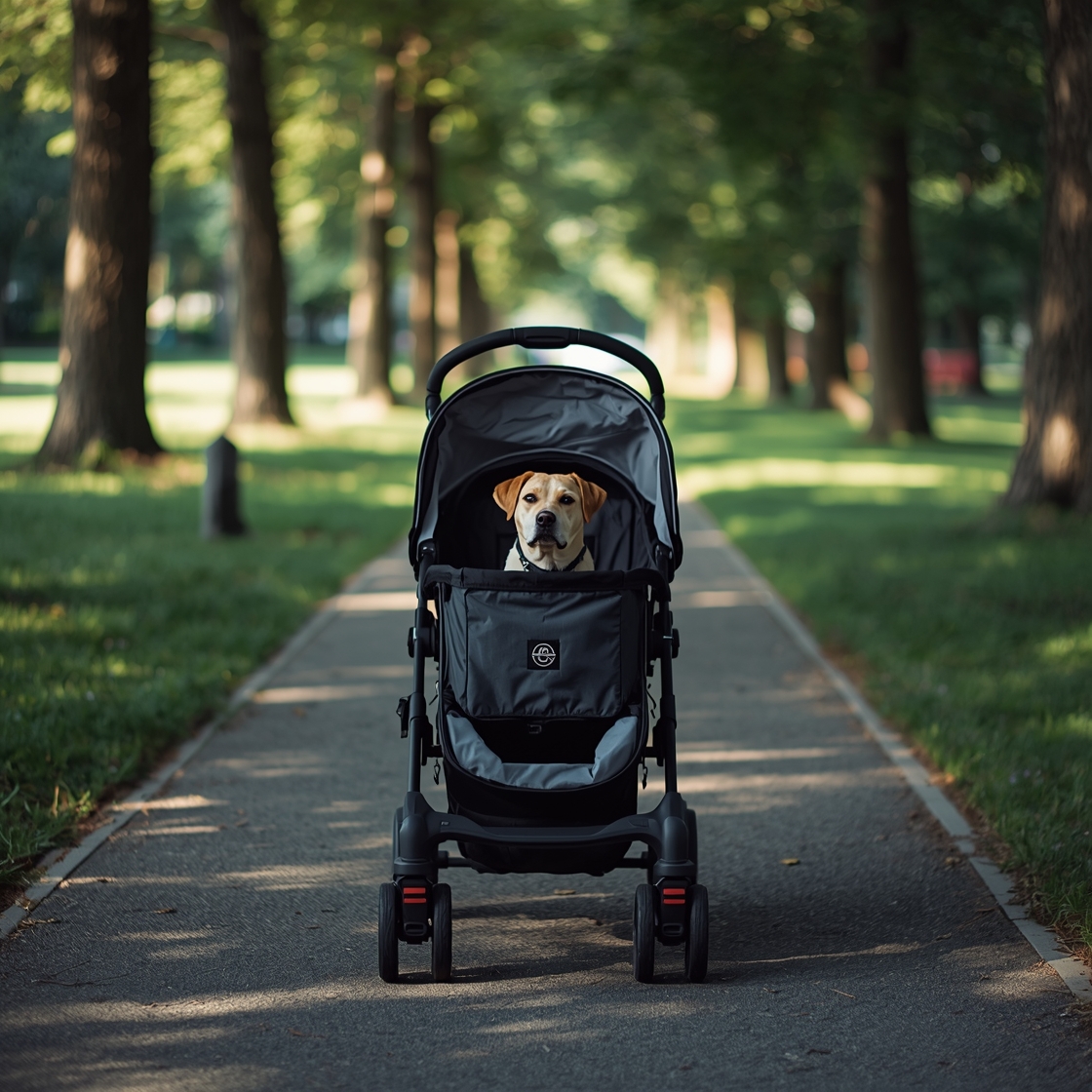
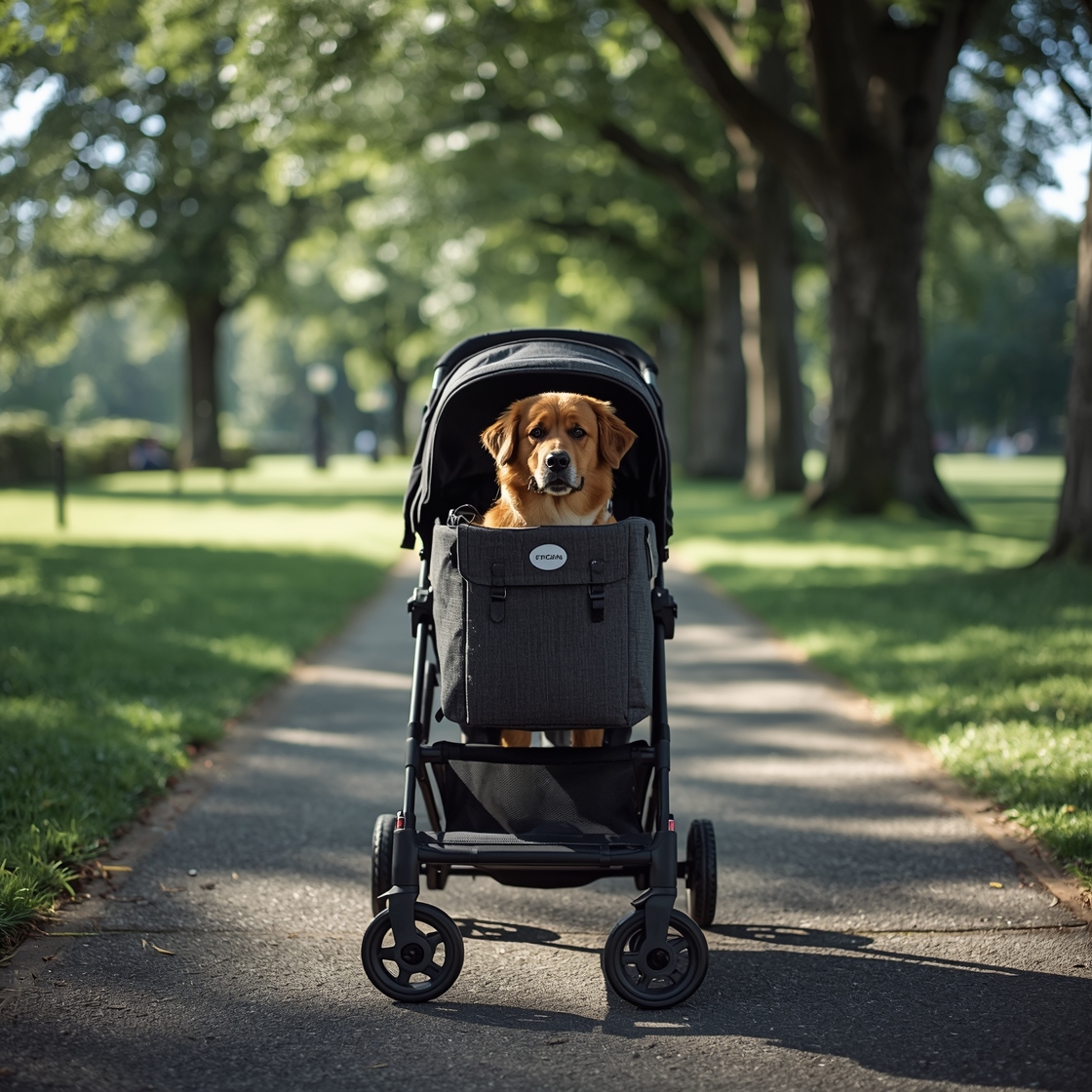
The best dog stroller for large dogs is the printed capacity and cabin that match this week’s dog — Pet Gear Expedition at $242 / 150 lb / 32×22 in when you need a buffer on a 90–120 lb body, ibiyaya Hercules at $450 / 110 lb when trail plus bike-trailer is the second sport, HPZ Titan-HD at 100 lb when the walk-in ramp is the feature, or Gen7Pets Promenade at $280 / 50 lb / 20 lb frame when storage is the job and the dog is not large — not a 50 lb fashion cart sold as “large.” The We read the titles and descriptions of 7 SKUs. Named capacities run 50 to 150 lb (3.00×). 1 of 7 prints 150 lb (Expedition). 1 of 7 lists a walk-in ramp (Titan-HD). 2 of 7 convert toward bike-trailer duty. 2 of 7 are 13 inches wide. Printed cards that show a dollar amount sum to $972 (Expedition $242 + Hercules $450 + Promenade $280). Four cards have no price on the snapshot.
Desk pick: True 100 lb+ with buffer → Expedition $242. Trail + bike → Hercules $450. Senior walk-in → Titan-HD 100 lb. Bike-first kit → PetSafe Happy Ride + conversion. Long 50–70 lb back → HPZ XL 75 lb. Air-tire jog, 70 lb, 13 in width → Pet Gear Jogger. Light fold, 50 lb only → Promenade $280. A medium-dog stroller is a different cabin.
Before you shop: (1) the rating beats the dog by 10–15 lb, (2) you measured nose-to-tail and shoulder width against the cabin, (3) the dog can enter (ramp, dual door, or you accept a lift), (4) you can lift the empty frame into the car you actually own. Fail gate 2 and a 150 lb sticker still leaves a barrel chest stuck.
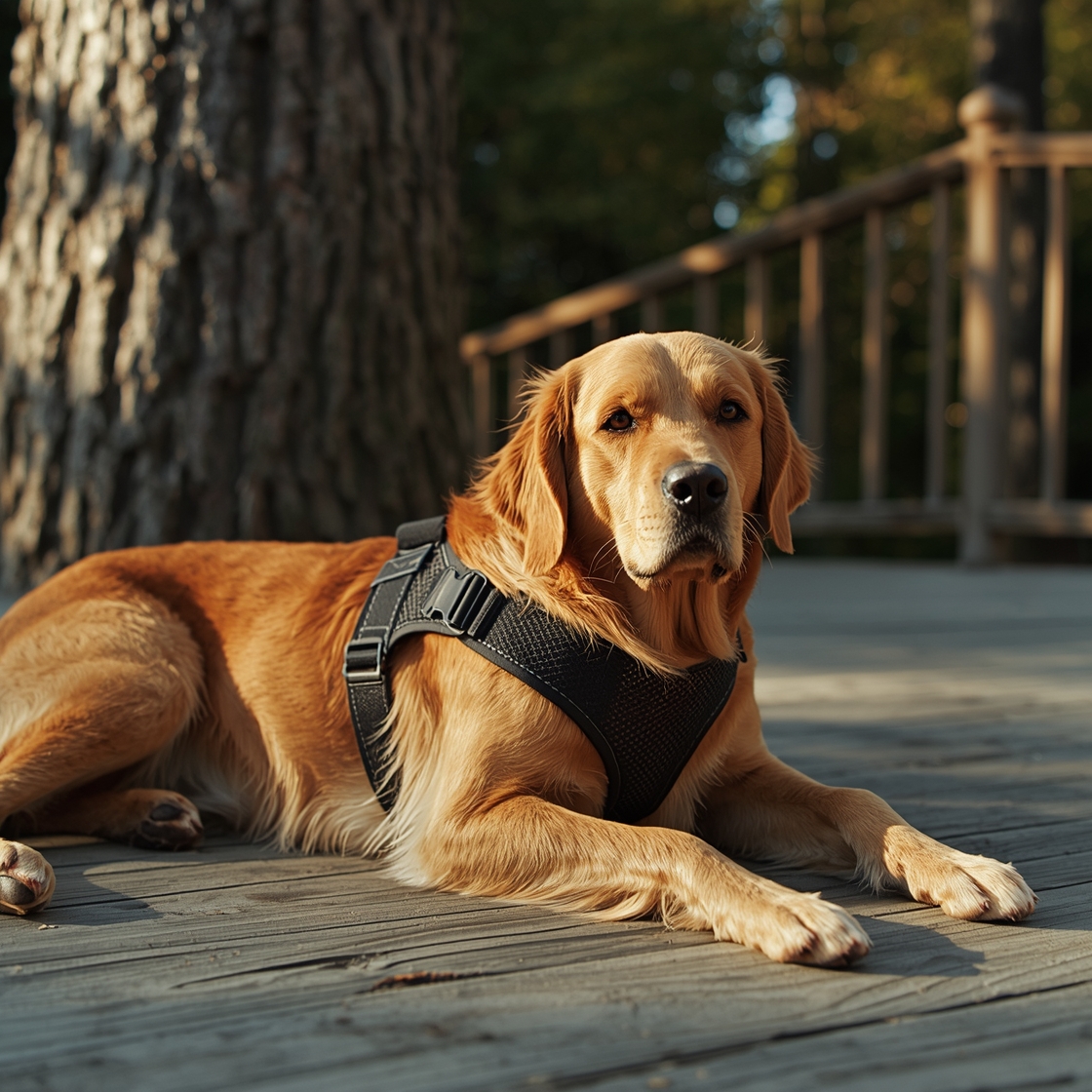
A 13-inch-wide cabin is a squeeze for a broad chest even when the pound rating looks fine. Clip a harness inside. Lock the brake on a grade. Heat in a parked stroller is still a parked-car problem.
Our guides are reader-supported. This article may contain affiliate links. As an Amazon Associate we may earn a commission if you buy through links, at no extra cost to you.
Related desk pages: medium-dog stroller, foldable dog stroller, dog stroller buying guide, jogging stroller, pet stroller for city walks.
Quick picks at a glance
- Highest listed capacity (150 lb): Pet Gear No-Zip Expedition — ~$242 street, 32×22×23 in cabin.
- Stroller + bike-trailer 2-in-1: ibiyaya Hercules — $450 card, 110 lb, pneumatic rears.
- Walk-in ramp for seniors: HPZ Pet Titan-HD — 100 lb, fold-down ramp.
- Budget air-tire jogger (70 lb): Pet Gear Jogger — 12 in air tires, snug 13 in width.
- Lightest fold on this page (50 lb): Gen7Pets Promenade — $280, 20 lb frame.
The seven cards are the catalog.
What the best dog stroller for large dogs actually means
The aisle sells “large” on every 40 lb umbrella. The desk sells four different jobs. Mixing them is how a 50 lb Promenade becomes a 90 lb story.
- A rating with a buffer. Ten to fifteen pounds above the dog. A 100 lb dog on a 100 lb Titan-HD is at the limit.
- A floor that fits the body, not the breed name. Length for a long back. Width for a barrel chest. Expedition’s 32×22 in is a different object from the Jogger’s ~30×13 in.
- An entry the dog can use. Dual no-zip (Expedition), walk-in ramp (Titan-HD), or a lift over a lip. Seniors should not rotate inside a cave.
- Wheels that match the path. Air / pneumatic for trail and jog. Solid rubber for never-flat sidewalks.
Four facts belong in the first screen of any best dog stroller for large dogs decision:
- Pounds are not inches. A 75 lb XL with a 35-inch stretch cabin can fit a long 60 lb dog that a 110 lb trailer still cramps in width.
- Two large dogs are rarely one cabin. Combined weight plus two bodies. Expedition is the only mainstream 150 lb / 22 in-wide story here. Two 70 lb dogs are a two-stroller conversation.
- Frame weight is your rating. Hercules at ~40 lb empty is a hatchback workout. Promenade at 20 lb is not.
- A stroller is not a diagnosis. Post-op crate rest beats a victory lap.
What
How large dog stroller listings compare on labels
These tables are desk compilations from manufacturer-listed capacities, cabin inches on file, and the August 2026 card snapshots on this URL. Prices move. Heuristics, not pull tests.
Table 1 — Capacity, cabin, and printed price
| Product | Listed capacity | Cabin on file | Card price |
|---|---|---|---|
| Pet Gear Expedition | 150 lb | 32″L × 22″W × 23″H | $242 |
| ibiyaya Hercules | 110 lb | 33″L × 23.5″W × 24.4″H | $450 |
| HPZ Titan-HD | 100 lb | Floor 32″L × 20″W | — |
| PetSafe Happy Ride L + kit | 110 lb | 33″L × 22″W × 26″H | — |
| HPZ XL 2nd Gen | 75 lb | Stretches to ~35″L | — |
| Pet Gear Jogger | 70 lb | ~30″L × 13″W × 22″H | — |
| Gen7Pets Promenade | 50 lb | 25″L × 13″W × 21.5″H | $280 |
Desk stat: Capacity span is 100 lb (50 to 150). 14% (1 of 7) clear a true 100+ lb dog with a 50 lb buffer (Expedition only). 29% (2 of 7) are 13 inches wide — too narrow for many “large” chests. 43% (3 of 7) print a price on the card; those three sum to $972.
Table 2 — Dog weight vs minimum chassis (desk heuristic)
| Dog weight | Stroller rating min | Floor L×W (in) | Wheel lean |
|---|---|---|---|
| 40–50 lb | 60–70 lb | 28×16 | Any; Promenade is tight |
| 50–70 lb | 75–85 lb | 30×18 | Jogger air or XL length |
| 70–90 lb | 100 lb | 32×20 | Titan-HD / Hercules / Expedition |
| 90–120 lb | 130–150 lb | 32×22 | Expedition class |
| 120+ lb | 150 lb or a wagon | 34×22 | Measure; many “large” carts fail |
Rating includes a water bottle and a pad. Add 5–10 lb of honesty.
Table 3 — Entry, fold, and empty-frame story
| Product | Entry | Fold story on file | Empty-frame theme |
|---|---|---|---|
| Expedition | Dual no-zip | One-hand | ~26 lb |
| Hercules | Front + rear | Under 7 s (listing) | ~40 lb |
| Titan-HD | Walk-in ramp | Folds to 16×28×37 in | ~30 lb |
| PetSafe + kit | Trailer + conversion | Collapses flat | Two SKUs |
| HPZ XL | Zipperless | Premium fold | Long package |
| Jogger | No-zip | ~5 s one-hand (listing) | Lighter than flagships |
| Promenade | Front + rear | Smart-Fold flat | ~20 lb |
Desk stat: 1 of 7 prints a walk-in ramp. That is the senior-mobility differentiator — not a higher pound number.
Table 4 — Job vs product
| Job | Buy | Do not buy |
|---|---|---|
| 100 lb dog with margin | Expedition 150 lb | Titan-HD at the 100 lb ceiling |
| Senior / no lift | Titan-HD ramp | Jogger 13″ lip + lift |
| Bike + push | Hercules or PetSafe kit | A walk-only 50 lb cart |
| Jog / air tires | Jogger or Hercules pneumatics | Solid-rubber-only if you need cushion |
| Long body, 50–70 lb | HPZ XL 35″ | Promenade 25″ |
| Easy hatchback | Promenade 20 lb | Hercules 40 lb |
| Two large dogs | Two strollers | One 150 lb cabin as a default |
Table 5 — Card math (August 2026 snapshots)
| Stack | Example SKUs | Snapshot $ | Who it is for |
|---|---|---|---|
| Capacity flagship | Expedition | $242 | Labs, shepherds, giants |
| Trail + bike | Hercules | $450 | Dual-mode owners |
| Light fold | Promenade | $280 | 40–50 lb, storage |
| Printed trio | Those three | $972 | A garage, not a plan |
| Unpriced four | Titan / PetSafe / XL / Jogger | — | Confirm street before you stack |
Stroller SKU arithmetic
| Desk equation | Dollars / count | What it actually buys |
|---|---|---|
| Hercules $450 ÷ Expedition $242 | 1.86× | Trail + bike mode vs 150 lb cabin |
| Hercules $450 − Expedition $242 | $208 | Second sport, 40 lb less printed capacity |
| Promenade $280 − Expedition $242 | $38 | 20 lb frame, 100 lb less capacity |
| Expedition 150 lb ÷ Promenade 50 lb | 3.00× | Same aisle word (“large”), three times the rating |
| Printed trio $242 + $450 + $280 | $972 | A garage fleet, not one job |
| Expedition $242 + Promenade $280 | $522 | 150 lb flagship + 50 lb storage cart |
| Cabin width: Expedition 22 in ÷ Jogger 13 in | 1.69× | Barrel chest vs squeeze |
Desk stroller math: Expedition at $242 is the cheap capacity on this URL. Promenade at $280 costs $38 more for a 50 lb / 13 in cabin. Hercules at $450 is $208 over Expedition for pneumatics and a bike story — not a higher pound number. Do not buy Promenade $280 as a 90 lb chassis. Do not buy Jogger’s 13 in width blind on a Bulldog chest.
How the desk scores the best dog stroller for large dogs
We do not dynamometer a wheel and we do not score “vet energy.” Four checks:
1. Does the rating clear the dog plus buffer? Expedition for true 100 lb. Titan-HD for ~85–90 lb seniors who need the ramp.
2. Do the inches fit the body today? Nose-to-tail vs cabin length. Shoulder width vs floor width.
3. Can the dog enter without a deadlift? Ramp, dual door, or you accept a lift.
4. Will you lift the empty frame? 40 lb into a Civic is a different product than 20 lb.
Top picks — seven catalog chassis
Cards below are the catalog lines for this URL. Specs are the maker’s. They change.
1. Pet Gear No-Zip Expedition Pet Stroller
Best for: the biggest listed capacity on a mainstream pet stroller — 150 lb, 32×22×23 in.
Expedition is the Index flagship because the number is the number. Dual front/rear no-zip, multi-position handle, washable liner, one-hand fold. Street about $242 vs a higher list. Trade-off: ~26 lb empty and a wide doorway story. That is a hatchback tax, not a capacity tax. One XL dog or several small ones. Not a promise that two 70 lb dogs will lie facing the same way.
2. ibiyaya Hercules Heavy-Duty Pro Pet Stroller
Best for: all-terrain plus optional bike-trailer duty at 110 lb.
Hercules is $450 on the card — the ceiling print. Aluminum over reinforced steel, EVA front, pneumatic rears, 33×23.5×24.4 in, front and rear entry. Tow bar is often a separate SKU. ~40 lb empty. Stock gaps happen. You are buying trail geometry and a second mode, not a cheaper 150 lb cabin.
3. HPZ Pet Titan-HD Premium Super-Sized Pet Stroller SUV
Best for: the only walk-in ramp on this catalog — 100 lb, 32×20 in floor.
Titan-HD is the senior-mobility card. Four interior tethers, never-flat rubber, tool-free wheels, fold about 16×28×37 in, ~30 lb frame. Pricier than Expedition in the street story with a lower rating. Use it when the ramp is the feature and the dog sits under ~90 lb. A 100 lb dog at a 100 lb rating is a limit, not a margin.
4. PetSafe Happy Ride Aluminum Dog Bicycle Trailer (Large) + Stroller Conversion Kit
Best for: bike first, push second — 110 lb, two purchases.
Happy Ride Large: 33×22×26 in, aluminum, 110 lb. The conversion kit (handle, brake, cup holder, 12 in front wheel) is a second SKU. Stock is spotty when the pair is not a store bundle. Three pouches and a tether are the trailer extras. If you will never bike, Expedition is a simpler one-box story.
5. HPZ Pet XL Extra-Long Premium Pet Stroller (2nd Gen)
Best for: length — ~35 in stretch cabin, 75 lb, not a giant-breed rating.
XL is the long-body card. Zipperless, never-flat rubber, lockable swivels, anodized aluminum. No ramp. 75 lb excludes the true giants. A 60 lb sighthound mix that will not curl may fit here when a 110 lb-but-short cabin does not.
6. Pet Gear Jogger Pet Stroller (No-Zip Jogger)
Best for: air tires and a lower street than the 100 lb+ flagships — 70 lb, 13 in width.
Jogger: 12 in quick-release air tires, pump in the story, ~30×13×22 in, no-zip, parent tray, tether, basket. The 13 in width is the honest limit for Bulldog / Rottie chests. Air tires puncture. That is the cost of cushion. Not a 100 lb chassis.
7. Gen7Pets Promenade Pet Stroller
Best for: the light end of “large” — 50 lb, 20 lb frame, $280 card.
Promenade: 25×13×21.5 in, Smart-Fold, convertible front wheel, front shocks, rear brakes, 40 in handle, mesh canopy, washable pad. 50 lb and 13 in width exclude genuinely big breeds. Easy storage is the feature. Do not stretch “large dog” to fit this cabin.
Features at a glance
| Product | Capacity / key spec | Best for | Check price |
|---|---|---|---|
| Expedition | 150 lb; 32×22×23 | Biggest dogs | Check price |
| Hercules | 110 lb; 2-in-1 | Trails + bike | Check price |
| Titan-HD | 100 lb; ramp | Seniors | Check price |
| Happy Ride L + kit | 110 lb; trailer | Cyclists | Check price |
| HPZ XL | 75 lb; ~35″ long | Long 50–75 lb | Check price |
| Jogger | 70 lb; 12″ air | Jog, medium-large | Check price |
| Promenade | 50 lb; 20 lb frame | Storage, 40–50 lb | Check price |
Air tires (Hercules, Jogger, PetSafe) cushion and puncture. Solid rubber (HPZ line, Expedition class) never flats and transmits more vibration.
Price bands — what $242 vs $450 actually buys
Street under $250. Expedition often lands here despite the 150 lb rating. Jogger is the other Pet Gear value. Capacity or true air — fewer luxury extras.
$250–$350. Promenade list ~$280. Expedition at full list. Smarter folds and canopies.
$350+. Hercules $450. HPZ Titan / XL live here in the street story. Ramp, bike conversion, never-flat premium.
Keep the 10–15 lb buffer regardless of band.
How we researched the best dog stroller for large dogs
We opened the seven live cards, captured every printed price, and aligned listed capacities and cabin inches with maker/retail language already on file for this URL. We classed entry (ramp vs no-zip vs kit) and wheel type. We read recurring owner themes: doorway width, trunk lift, 13-inch cabins, stock gaps.
Wagon vs the best dog stroller for large dogs
A wagon steers differently on gravel and often dumps more sun on the dog. A stroller gives a canopy, mesh, and a push handle. Post-surgery 4–8 weeks, heat-sensitive seniors, crowded events: stroller. Farm paths and two dogs who will not share a mesh cave: wagon or two units. Neither replaces a crate in a car — see crash-tested crates.
Durability, wheels, and brakes
Anodized / rust-free aluminum (HPZ, PetSafe) and steel-reinforced tubing (Hercules) are the listing materials that survive wet seasons better than thin budget tubes. Dual rear brakes beat a single lazy pedal on a grade with an 80 lb weight shift. Interior tethers are restraint. Mesh is not.
Cleaning and heat
Washable liners (Expedition, Promenade) earn their keep. Shake debris, rinse wheels, air-dry fabric. Air tires need pressure. A mesh cabin in July is not air conditioning. Shade, water, and a time limit. AVMA heat language still applies to a parked stroller in a lot.
Seven buying mistakes we keep seeing
- 50 lb cart, 80 lb dog. Promenade is not Expedition.
- Width-blind. 13 in vs a barrel chest.
- 100 lb dog on a 100 lb rating. No buffer.
- Ignoring empty-frame pounds. 40 lb into a sedan.
- Jogger tires, never jogging — and never pumping.
- Two large dogs in one cabin as the default.
- Skipping the harness clip. A curb hop is a tip event.
When a stroller question is a clinic question
Non-weight-bearing lame, post-op “crate only,” collapse in heat: clinic first. A stroller can extend a short walk a veterinarian already allowed. It cannot replace pain control.
What this seven-card catalog is not
It is not a loaded-chassis trial. It is not “expert ratings” from a private track. The catalog is seven purchasable heavy-duty and near-large strollers, capacities 50–150 lb, compiled in August 2026.
Cost per year, not cost per listing
Expedition at $242 for a 95 lb dog is one honest stack. Hercules at $450 plus a tow bar is a second sport. Printed trio at $972 is a fleet. Buy the job.
Breed-class walkthrough (weight is still the number)
Breed names are rumors. A “Lab” is 55 lb or 95 lb. Use the scale, then the cabin tape.
Fifty to seventy pounds, long back. Sighthound mixes, lanky shepherds, skinny Goldens. HPZ XL’s ~35-inch stretch is the length job. Jogger’s 13-inch width is a maybe. Promenade’s 25-inch cabin is a no.
Seventy to ninety, barrel chest. Bulldogs, many Rotties, thick Labs. Width first. Expedition 22 in or Hercules 23.5 in. Not Jogger. Not Promenade. Titan-HD’s 20-inch floor is the next width down — measure the dog at the ribs.
Ninety to one-ten. Expedition 150 lb is the buffer card. Titan-HD at 100 lb is a limit. Hercules / PetSafe at 110 lb need the dog and a pad to stay under the print.
Giants above 110. Expedition is the only 150 lb print on this URL. Confirm the dog can lie in 32×22 in. If not, you are in wagon / two-person carry / “this dog does not stroller” territory. We will not invent a 200 lb SKU.
Senior 70 lb with hips. Ramp (Titan-HD) beats a 150 lb cabin you have to lift the dog into. Capacity without entry is a deadlift.
Bike-trailer mode is a second sport
Hercules and PetSafe Happy Ride are the two cards that even talk bike. A tow bar or conversion kit is often a second SKU and a second stock-out. Flags, hitch class, and a dog that will stay in a moving trailer are owner problems. If you will never clip into a bike, Expedition is a simpler one-box 150 lb story than a $450 Hercules plus a missing bar.
Road bikes, e-bikes, and gravel bikes are not the same hitch conversation. Read the trailer maker, not this shopping page.
Doorways, elevators, and the 22-inch cabin tax
A wide cabin is a wide stroller. Expedition’s doorway awkwardness is in every owner theme pile for a reason. Measure the narrowest door on the route: apartment, clinic, elevator, cafe. A 40 lb Hercules that does not fit the elevator is a stair-carry — and you will not stair-carry it twice.
Folded footprint is the car number. Titan-HD’s 16×28×37 in fold is still a small-trunk problem. Promenade’s 20 lb Smart-Fold is the opposite job: easy hatch, 50 lb dog limit.
Handle height, one-hand fold, and who lifts the frame
Tall owners need a handle that does not stoop a shoulder for a 40-minute park loop. Expedition’s multi-position handle and Promenade’s 40-inch Smart-Reach are listing answers. Short owners need the same adjustability so the frame does not clip knees.
One-hand fold is a listing promise. Two-hand lift into a Civic is physics. Hercules ~40 lb empty plus a soggy liner is a second-person job. If you live alone and park in a garage with a high lip, Promenade or Jogger is the honesty pick if the dog fits.
Weather covers, mesh, and July parking lots
A rain cover is a storm tool. A closed cover in July is a greenhouse. Mesh is airflow, not air conditioning. Time-limit the outing. Water in a bottle belongs in the parent tray, not “later.” A parked stroller in a lot is a parked-cabin heat story. AVMA heat language does not stop applying because the wheels are cute.
Winter: salt and ice on air tires (Jogger, Hercules, PetSafe) are puncture and slip stories. Solid rubber never flats and still slides on ice. Boots on the dog are a different aisle. The stroller does not salt-proof paws that hop out at the curb.
One large dog plus one small dog
Expedition’s 150 lb / 32×22 in is the only cabin here that can mathematically hold a 70 lb dog and a 15 lb dog. Two bodies still need two tethers and a plan for the small one getting stepped on. Titan-HD’s four tethers are a listing plus for restless passengers — still one floor. A small dog that rides in a medium stroller while the large one walks (or vice versa) is often the saner fleet.
Apartments, storage, and the coat-rack failure
A stroller that lives assembled in a studio is a coffee table. A stroller that lives folded behind a door still needs a dry liner. Umbrella / flat-fold language on the Index fold table is the storage sort. “No fold XL” is a truck-bed object. If you do not have a truck, do not buy a no-fold fantasy — none of these seven are true no-fold, but XL and Hercules act like it in a closet.
Maintenance without a shop
Once a month: bolts, latch click, brake bite on a driveway grade, tire pressure if air. Fabric tears at the zipper (or no-zip latch) are the first wear line on heavy dogs. A latch that pops is retired. Owner themes say the hardware you ignore is the hardware that opens on a curb.
Travel and the airline fantasy
These are sidewalk and trail objects. They are not cabin-under-seat carriers and they are not IATA crates. A fold that fits a hatchback is a car win. A fold that fits a 737 overhead is a different product class — not this catalog. For the car ride to the trail, the dog still needs a crate or a tether. A stroller in the cargo area unsecured is a projectile.
When a wagon is the honest large-dog tool
Farm paths, two dogs who will not share mesh, a dog who sits up like a meerkat and hits every canopy: wagon. Crowded farmers’ markets, shade mesh, a dog who must be contained from sidewalk food: stroller. Post-op 4–8 weeks is a veterinarian’s call; many will prefer a stroller’s lower jostle if walking is allowed at all. We do not clear surgery.
Brake, grade, and the 80 lb shift
A parked stroller on a driveway is a physics problem. An 80–100 lb dog that stands up moves the center of gravity. A single lazy rear pedal that holds a 30 lb terrier will not hold a Lab on a 7-degree slope. Lock both rears if the listing has two. Turn the front swivels to locked before you walk away for a coffee. We are telling you not to trust a casual foot tap.
If the dog is a leaner, four interior tethers (Titan-HD listing) are a theme, not a guarantee. Clip a harness, not a collar. A collar clip in a tip is a neck event — same rule as the seat-belt page.
Second-hand frames and unknown crash (tip) history
A used heavy-duty stroller with a bent axle is a 90 lb surprise on a curb. If you cannot inspect welds, wheel true, and latch bite, buy new. There is no CPS list for pet strollers the way there is for some harnesses. “Heavy duty” on a Facebook listing is a hope. This checklist is live retail cards.
Night walks, lights, and the jogger reflex
Reflective trim on a listing is not a bike light. If you jog the Jogger or Hercules at dusk, you need lights. A dark mesh cabin hides a dog from a driver until the last second. We are not a nighttime-running coach. We are noting that a 26–40 lb empty frame plus a large dog is a wide object in a bike lane.
What “all-terrain” means in listing English
All-terrain on a tile often means “front wheel swivels and the photo has dirt.” True air / pneumatic (Jogger, Hercules, PetSafe) is the cushion class. Never-flat rubber (HPZ, Expedition class) is the maintenance class. EVA (not the hero on this large-dog catalog; it is on Petbobi on the medium page) is a third compound. Match the path. A pneumatic on glass-strewn city alleys is a puncture calendar. A solid rubber on a rooty trail is a vibration calendar.
Clinics, cafes, and the “is that a baby stroller” conversation
A large-dog stroller in a cafe line is a courtesy problem. Ask. A clinic hallway is usually easier: they have seen carts. A farmers’ market may ban wheels wider than a specified inch. Measure Expedition and Hercules before you assume “stroller” means welcome. If the venue is a no, the dog walks or stays home. This comparison does not negotiate a manager.
Food-on-the-ground dogs need the tether and a closed-enough canopy. Mesh that a long snout can push through is a stolen-sausage story. We are telling you to clip the harness short enough that the head is not a shopping tool.
A 150 lb rating does not buy you a reserved elevator. Let people off first. Fold if the car is full. The best dog stroller for large dogs is also the one you can park without blocking a ramp. If you cannot, walk the dog or pick a different door. Courtesy is part of the chassis. So is not taking two elevators to prove a 150 lb label. Measure the door first. Then go in.
Frequently asked questions
When is the best dog stroller for large dogs worth it over a wagon?
Post-op mobility windows, heat-sensitive seniors who need shade mesh, crowded events. Wagons often steer better on gravel. Match the path.
What is the best stroller for a 100 lb dog?
Pet Gear Expedition (150 lb) leaves a buffer. Titan-HD is rated 100 lb — better for ~85–90 lb dogs that need the ramp.
Can two large dogs share one stroller?
Only if combined weight and two bodies fit. Expedition is the only 150 lb / 22 in-wide mainstream story here. Two genuinely large dogs usually need two units.
How can I be sure a stroller is safe for a large-breed dog?
Capacity buffer, lockable wheels, a brake that holds a grade, interior tether to a harness, non-slip floor. Verify the rating on the maker page.
What should I look for in durability?
Frame metal, wheel type, owner themes of flex and fabric tear.
How do I keep it clean?
Washable pad out, wheels wiped, air-dry, bolt check. Pump air tires.
How do I choose size for the best dog stroller for large dogs?
Weigh the dog. Measure nose-to-tail and shoulder width. Compare to cabin inches. Long 60 lb → XL. Broad 90 lb → Expedition or Hercules, not Jogger.
Do I need a jogger?
Only if you run or want air-tire cushion. Walk-only sidewalks can use solid rubber.
Will a stroller replace a car crate?
No.
Can I use a medium-dog stroller for a large dog?
Only inside that rating and cabin. See the medium-dog page. Do not “make it work.”
Related pages
- Best dog stroller for medium dogs
- Best foldable dog stroller
- Dog stroller buying guide
- Best dog jogging stroller
- Best pet stroller for city walks
Sources
- Manufacturer and marketplace listings for Pet Gear, ibiyaya, HPZ Pet, PetSafe, and Gen7Pets / Petmate (confirm capacity and inches at purchase)
Last reviewed: August 2026. If something is stale, contact us.