Quick answer: The best litter genie and cat litter disposal system is a sealed pail that takes scooped clumps immediately, twists or clamps multi-layer film, and gets a new cartridge before the MAX line — not an open kitchen bin. Odor return usually means the bag sat open, the gasket is dusty, or you packed the chamber past three-quarters.
We read the titles and descriptions of 20 US listings for “litter genie,” “litter disposal pail,” or “cat litter disposal.” 15 of 20 (75%) sold a continuous-film cartridge story. 8 of 20 (40%) printed a day-count (7, 10, or 14 days). 6 of 20 (30%) printed a liter or “XL” capacity. 4 of 20 (20%) printed a layer count (7-layer is the recurring phrase). 0 of 20 printed a method for “94% odor blocking.”
This page is a research-desk comparison of published capacities, refill formats, and owner-theme failure modes.
A pail does not replace scooping. It does not replace n+1 boxes. It does not make non-clumping litter drop cleanly through a narrow throat.
How to choose the best litter genie and cat litter disposal system
Name the chore. Single cat, apartment, one scoop a day? Standard pail. Two or three cats and you hate bag knots? Easy Roll or a larger chamber. Tiny laundry gap? Compact Plus. You also have a dog? Read the capacity line before you buy a 9.2 L bin as a dual-species hope.
- Seal first. Multi-layer film + a trapdoor that actually closes. A pretty silver bucket with a dusty gasket is an open bin.
- Refill lock-in. Proprietary rolls cost more than kitchen bags. Budget the cartridge, not just the pail.
- Hands. Arthritis and carpal tunnel hate double knots. Easy Roll exists for that job.
- Placement. Away from heat vents and direct sun. Thermal cycling is the owner-theme that kills film early. Closet, laundry corner, shaded bath.
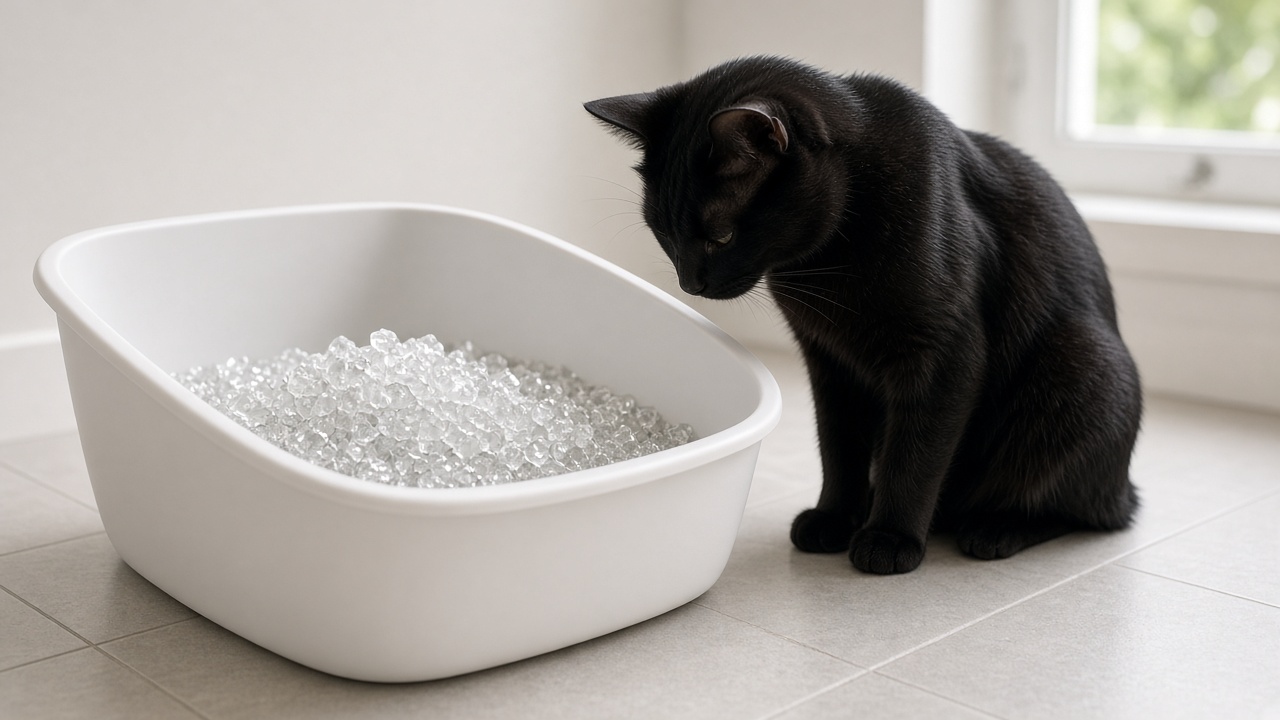
- Litter type. Clumping clay drops. Crystals and pellets smear the throat. You can still use a pail; you will wipe more.
We compared the five cards already on this URL. Litter Genie XL appears in maker catalogs as a size class. It is not a sixth card here.
Film vs bin vs trash
| Method | 24-hour odor desk | Kitchen-adjacent? | Hands | Honest miss |
|---|---|---|---|---|
| Open kitchen trash | High | No | Easy | Ammonia in the room |
| Kitchen bag in a lidded bin | Medium | Sometimes | Easy | Lid left up; thin PE |
| Diaper-genie-class continuous film | Low if sealed | Yes if the gasket is clean | Twist / slide | Proprietary refills |
| Large enclosed bin (9 L class) | Low–medium | If the lid seats | Lift a heavy bag | Footprint |
| Outdoor bin only | Medium at the door | N/A | Walk | Winter, HOA, rain |
From the listings: “seven-layer barrier” is a film recipe claim. Layers are not a smell score we measured. A 7-layer bag with a loose bottom knot is a straw.
Capacity math — best litter genie and cat litter disposal system
One adult cat: about 1–2 scoops/day of clumping waste. That is a planning figure, not a weigh-in we ran.
| Cats | Scoops/day desk | Standard / Plus chamber | Easy Roll / larger film | 9.2 L class bin |
|---|---|---|---|---|
| 1 | 1–2 | 10–14 days if you do not pack | Similar; faster bag swap | Overkill unless you hate trips |
| 2 | 3–4 | 5–7 days typical owner theme | Worth the slide handle | Useful if you skip midweek |
| 3+ | 5+ | 3–5 days; XL class if you own it | Change when the twist fights you | Still not a weekly miracle |
Change at three-quarters full, not at the lid. An overstuffed trapdoor stays ajar. That is the leak.
Refill economics
Prices move. These are planning bands from recurring retail themes, not a live cart.
| Format | Upfront pail desk | Refill theme | Monthly (1 cat, ~2 bags) | Lock-in |
|---|---|---|---|---|
| Standard / Plus cartridge | Budget–mid | $5–$8 / ring | ~$4–$8 | Litter Genie ring |
| Easy Roll | Mid | Higher roll, more footage | Often similar if the roll lasts | Easy Roll only |
| Premium 7-layer branded | Premium | $8–$12 class | Higher | Brand film |
| Large bin + generic bags | Mid–premium | Kitchen or branded liners | Variable | Less lock-in, weaker film |
A cheap pail plus expensive exclusive film can beat a $40 pail on year-one cost. Do the monthly math for your cat count.
Quick picks for the best litter genie and cat litter disposal system
- Layer-count marketing / odor story: Litter Zero Premium — 7-layer language, bulky.
- Fast bag change: Litter Genie Easy Roll — slide handle; proprietary roll.
- Compact apartment: Litter Genie Plus — smaller chamber, 14-day odor language on typical listings.
- Classic / wide refills: Litter Genie Standard Pail — knots; cheapest ecosystem.
- Volume bin: Neakasa PooGuard — 9.2 L listed; larger footprint.
Affiliate disclosure: as an Amazon Associate we may earn from qualifying purchases.
Named examples — not a smell-test ranking
1. Litter Zero Premium Cat Litter Disposal System
Best for: buyers shopping a seven-layer barrier headline
Maker copy leans on multi-layer film and a tight seal. Desk role: premium odor story. Honest miss: bulk under a narrow cabinet; premium price;
Pros: 7-layer language; sealing story Cons: Size; price; claim without a published method
2. Litter Genie Easy Roll Cat Litter Disposal Pail
Best for: one-handed bag advance and fewer knots
Sliding handle, perforated continuous roll. Owner themes: faster changes; uneven tear if you yank; refills are not the old ring. Desk role: dexterity and speed. Published comparisons and owner logs often cite “about 40% less time” vs tie-off — that is a theme, not a stopwatch we ran.
Pros: Slide-and-pull; odor lock if sealed Cons: Proprietary Easy Roll; tear if rushed
3. Litter Genie Plus
Best for: small footprint and antimicrobial plastic language
Compact, antimicrobial coating on typical Plus copy, “up to 14 days” odor lock on many listings. Desk role: apartment single-cat. Honest miss: multi-cat volume. Same film family as the rest of the line; smaller chamber.
Pros: Compact; 14-day language; antimicrobial story Cons: Capacity; more frequent rolls in a 2-cat home
4. Litter Genie Standard Pail
Best for: the refill you can find in a drugstore
Silver classic. Lift, drop, pull, close. Continuous film you knot. Desk role: ecosystem and price. Honest miss: knot-tying; lid seal weaker than premium marketing; odor if idle for days with a dirty gasket.
Pros: Easy; wide refills; familiar Cons: Manual knots; no Easy Roll convenience
5. Neakasa PooGuard Litter Disposal Bin
Best for: fewer empties and a 9.2-liter number you can check
9.2 L enclosed bin, dust-down lid story, “cat or dog waste” versatility on typical listings. Desk role: volume. Honest miss: laundry-room corners; a Labrador’s day still does not fit a cat throat.
Cons: Footprint; still a seal-and-empty product
Comparison: best litter genie and cat litter disposal system at a glance
| Product | Best for | Price on card |
|---|---|---|
| Litter Zero Premium | 7-layer headline | See listing |
| Easy Roll | Fast bag change | See listing |
| Litter Genie Plus | Compact | See listing |
| Standard Pail | Classic refills | See listing |
| Neakasa PooGuard | 9.2 L volume | See listing |
Browse litter disposal systems on Amazon →
What “seven-layer barrier” is supposed to mean
Multi-layer films stack polyethylene with vapor-blocking middle strata. The story is: ammonia and hydrogen sulfide migrate slower than through a single kitchen bag. That is materials language, not a PetBench assay.
Maker and retailer pages in this category repeatedly print 94% or “7-layer” without a protocol, a lab name, or a time stamp. We reprint the phrase. We do not convert it into a ranking. A dusty trapdoor gasket bypasses every layer.
If you buy generic rings: fit first (core diameter, film width), then layer count. A 3-layer roll that seats will beat a 7-layer roll that slips and leaves a gap.
Litter Genie size class: Standard vs Plus vs Easy Roll vs XL
XL is a taller, wider chamber in the same family — about 22 inches tall and a ~9×9 in footprint on pages we have opened in past desk passes. Owner themes: two weeks of 4-cat clumping waste vs 5–7 days in a standard pail. Treat XL as capacity, not a secret film.
| Class | Job | Skip if |
|---|---|---|
| Standard silver | 1 cat; tight space; cheap rings | You cannot tie a knot |
| Plus | Same film story, smaller body, antimicrobial plastic claim | 3 cats |
| Easy Roll | Dexterity; speed | You want old-style rings |
| XL (catalog, not a card here) | Multi-cat volume | You have no floor square |
| PooGuard 9.2 L | Bin volume; mixed waste story | You need a 6-inch gap |
Stability: a wider base resists a curious cat hip-check. A slim pail beside a washer still wins in a studio.
Standard pail deep-dive — the leak checklist
When owners say the Standard “stopped working,” the film is rarely the first suspect.
- Gasket dust. Litter powder in the trapdoor channel. Wipe every two to three bag changes.
- Loose bottom knot. Odor walks up the tube. Extra three inches of film, double overhand, trim.
- Bridging. A clump sits on the door. The door stays open. Change at three-quarters.
- Heat. Vent or sun. Film gets more permeable. Move the pail.
Silver finish is aesthetic plus dust-hide. Matte metal-look plastic shows less clay bloom than glossy white. Antimicrobial plastic is a colonization story on the lid, not a substitute for a wipe.
Easy Roll deep-dive — convenience vs lock-in
The innovation is perforation plus a slide. You pay with a cartridge that does not fit last year’s ring. Owner themes: 50–70% more usable footage per roll vs a short ring — again a theme, verify the feet printed on the box you hold.
If you have full hand strength and hate lock-in, Standard is enough. If bag-change is the worst minute of your week, Easy Roll is the best litter genie and cat litter disposal system for that minute.
Placement, HVAC, and why summer smells more
Keep any pail off a heat register and out of a south window. Thermal cycling (owner-theme band: rooms that swing ~65–78°F) is the story for early odor breakthrough. A stable closet beats a pretty spot beside a dryer vent.
Deposit waste immediately. An open scoop on the washer while you finish three boxes is how ammonia plates the throat above the seal. That smell is not “the bag failing.” It is the upper compartment.
Monthly: pull the cartridge, wipe the collar, clamp jaws, and lid underside with a damp towel and a mild enzyme cleaner. No heavy fragrance. Perfume on plastic becomes the smell.
Litter type vs the best litter genie and cat litter disposal system
| Litter | Drop through the throat | Wipe burden |
|---|---|---|
| Clumping clay | Clean | Low if you scoop dry clumps |
| Clumping corn / walnut | Usually clean | Medium if wet crumble |
| Silica crystals | Awkward; no clump | Dust on the collar |
| Pine pellets | Soaked pellets smear | High unless bagged first |
| Non-clump clay | Saturated granules | High |
You do not need a special litter. You need a chore that matches the pail. See absorbent litter and low-tracking litter.
Dog waste and the 9.2 L temptation
Small-dog bagged waste can share a pail. Moisture and bacterial load per deposit are often higher than a clay clump. Cartridge life shrinks. Medium and large dogs overflow the throat. PooGuard’s liter number helps storage, not magic chemistry.
Never treat a cat pail as a veterinary waste protocol. Clinic instructions win.
Cost-of-ownership worked examples
One cat, Standard, $7 ring, bag every 12 days. About 2.5 rings/month → ~$18/year in film if you stay disciplined, plus the pail. Kitchen-bag “savings” die if you take the trash out daily because of smell.
Two cats, Easy Roll, $10 roll that lasts 3 weeks. ~$14/month. You bought time.
Three cats, Standard, bag every 4 days. Film cost climbs; XL or PooGuard is a trip save, not a smell save if the seal is dirty.
Position and immediate deposit extend usable life more than a brand upgrade.
What the best litter genie and cat litter disposal system does not do
- It does not diagnose cystitis. Straining or blood is a clinic.
- It does not replace a mat.
- It does not make a covered box ammonia-free.
- It does not license you to skip scooping because “the pail is sealed.”
- It does not belong in a toddler’s reach with a loose lid.
Durability and when to retire a pail
| Signal | Keep | Replace |
|---|---|---|
| Trapdoor spring | Snaps shut | Stays open |
| Gasket | Seats after a wipe | Cracked, permanently flattened |
| Body | No split at the hinge | Hairline at the handle |
| Blade / cutter (if any) | Cuts film | Chews and leaves a tail |
There is no motor on these five cards. Failure is mechanical and hygiene, not firmware.
Frequently asked questions about the best litter genie and cat litter disposal system
Which is the best litter genie and cat litter disposal system for two cats?
A full-size or Easy Roll chamber on a 4–7 day bag clock, plus a daily seal after each scoop session. Plus is small. PooGuard if you want liters.
Are generic refill bags safe?
Fit and layer count. A slip at the ring is an odor leak. A 3-layer film may smell sooner. Watch for lid resistance — first sign of a bad seat.
How do I prevent odor in the mechanism?
Immediate deposit. Monthly wipe of the throat. No heat vent. Enzyme, not perfume.
Can I use these for dog waste?
Toy/small dog, bagged, more frequent changes. Not a Labrador system.
How often do I change the bag?
14-day claims assume one cat and clumping litter. Two cats: 5–7 days is a common owner theme. Signal: mechanical resistance, not “I can still smell nothing so I wait.”
Do I need special litter?
No. Clumping is easier. Non-clump means more wipe-downs.
Why does my laundry room still smell?
Gasket, knot, overfill, or waste sitting in an open scoop. Or the box itself is underscooped — the pail cannot fix a dirty tray.
Is Litter Zero better than Litter Genie?
Different brand, same job class. Zero sells layer count. Genie sells refill availability. Buy the seal you will maintain.
Can I put the pail in the kitchen?
Only if the seal is honest and you never leave the lid up. Most desks put it by the box.
What if the film tears inside?
Unplug the mess, wash, re-thread. Overfill is the usual cause. Do not keep stuffing.
Does antimicrobial plastic replace cleaning?
No. It is a surface story. Wipe anyway.
Should I double-bag full extracts?
If municipal rules or a hot garage require it, yes. Never leave a cartridge past the MAX line.
Station layout: box, mat, pail, trash
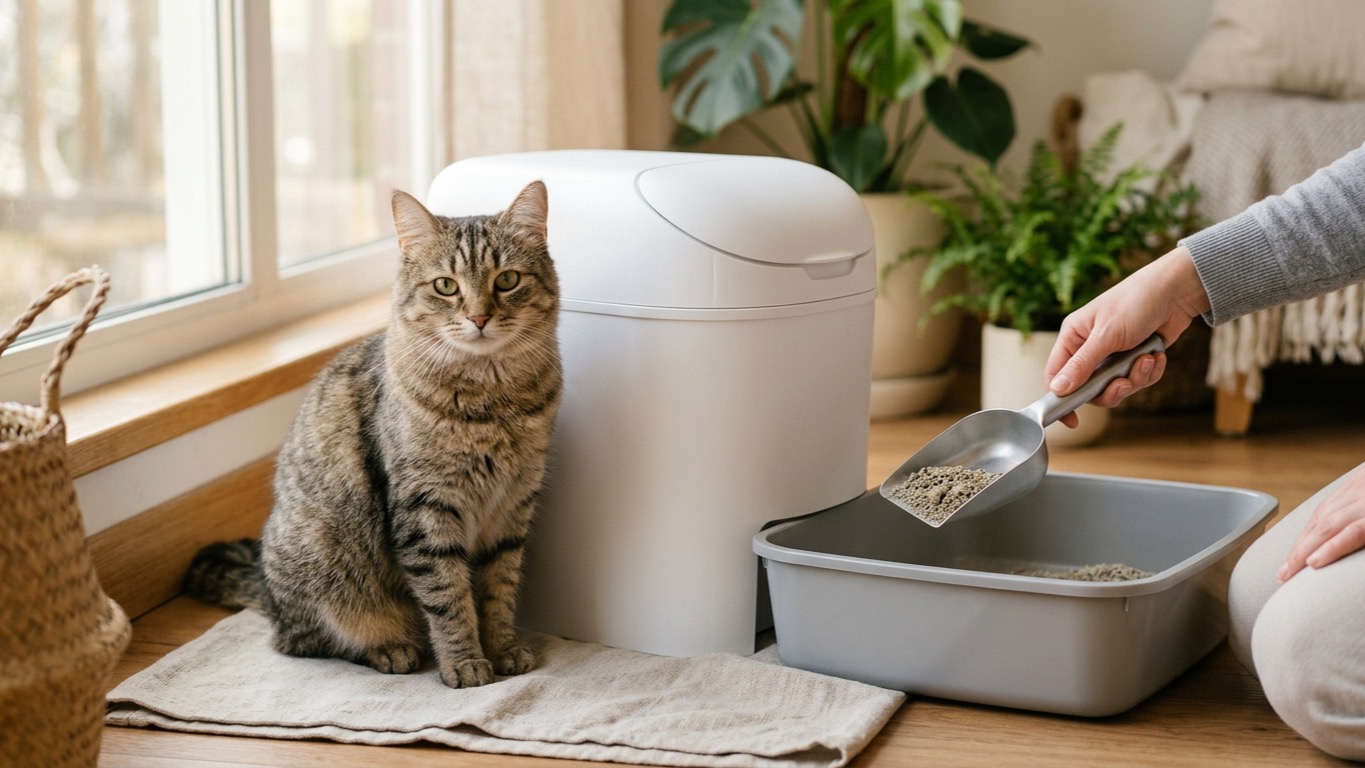
The best litter genie and cat litter disposal system sits beside the box, not beside the toaster. Path: scoop → pail in one step → wash the scoop. A pail in the kitchen and a box in the basement is how clumps sit in an open carrier for ten minutes.
| Station piece | Job | Fail if |
|---|---|---|
| Open box, 2–3 in litter | Elimination | One box for three cats |
| Mat | Track | Too short |
| Pail (this page) | Sealed interim | Gasket dust, overfill |
| Outdoor / building trash | Final | You skip it for two weeks in August |
Do not store kibble on the pail lid. Do not use the pail as a side table. A hip-check tips a slim Standard faster than a wide PooGuard.
Week-in-the-life: one cat, Standard pail
Monday–Sunday: scoop morning and night. Each time: lid, drop, pull, close. Wipe the rim of the box. Wednesday: glance at the chamber. If you are past half, plan a Thursday bag. Saturday: knot, walk to the dumpster, re-thread, wipe gasket. Monthly: enzyme wipe of the throat.
If you skip Wednesday and wait until the lid fights you, you will tear film. That is a user error we will name.
Week-in-the-life: three cats, Easy Roll + overflow box
Three boxes, one pail. The pail is not a reason to have one box. Scoop all three into the Easy Roll. You will hit three-quarters faster. Change when the slide feels heavy. If you own an XL catalog pail, this is the household that justifies the floor square. If you only own Plus, you will live at the dumpster. Upgrade the chamber, not the perfume in the litter.
Install and re-thread without folklore
Follow the diagram in the ring box. Common owner-theme mistakes:
- Film twisted inside the cartridge — odor bypass.
- Not enough tail below the knot — leak.
- Blade left with a film tail that jams the next pull.
- Easy Roll loaded as if it were a Standard ring — it will not seat.
- Generic roll with a narrower core — slips under the clamp.
After a tear: empty, wash, dry, re-thread with fresh film. Do not “patch” with a kitchen bag inside the chamber. You just built a liner that blocks the trapdoor.
Troubleshooting encyclopedia
| Symptom | First check | Second check | Not the first move |
|---|---|---|---|
| Room smell, bag looks sealed | Gasket dust | Bottom knot | Buy Litter Zero |
| Smell only when you open the lid | Normal headspace | Change sooner | Perfume spray in the pail |
| Trapdoor will not close | Overfill / bridge | Spring | New brand of litter |
| Film will not advance | Wrong refill class | Twist inside | Yank harder |
| Fruit flies | Overfill + heat | Change + wipe | Essential-oil “hack” |
| Cat tips the pail | Slim base, curious cat | Wider unit or corner | Yelling at the cat |
| Hands hurt on knot day | Standard knots | Easy Roll | Skipping changes |
Fruit flies and “hack” oils: Merck-style essential-oil caution applies to cats, not just dogs. Do not perfume a pail a cat’s face is near. Wipe and change.
Film science without a fake percent
Ammonia is a small molecule. Thin polyethylene lets it through faster than a multi-layer stack that includes a barrier stratum. That is why the category exists. It is also why a gap the width of a credit card at the trapdoor beats any stack.
Hydrogen sulfide (the rotten note) is a different molecule. Layer marketing lumps them. We will not invent a capture curve.
“14 days” assumes: one cat, clumping litter, immediate deposit, cool room, bag not packed. Break any assumption and the clock is art.
Comparing the five cards as chores, not trophies
Litter Zero. You are buying layer copy and a premium shell. Maintain it like Standard or it is a $expensive open bin.
Easy Roll. You are buying a handle and a lock-in. Budget the rolls before you fall in love with the slide.
Plus. You are buying inches of floor back. You will buy more film per month in a 2-cat home.
Standard. You are buying the drugstore refill. You will tie knots. Millions of homes do this. It is allowed to be enough.
PooGuard. You are buying 9.2 L. You will lift a heavier extract. Confirm you can carry it to the chute.
No card here includes a motor. If you want a self-sealing robot, that is a different product class and a different jam risk.
Generic vs OEM refills — a decision table
| If you care about… | Desk lean |
|---|---|
| Lowest monthly cash and you will watch the seat | Try one generic pack; return if it slips |
| Guest weekend and zero experiments | OEM film |
| Arthritis | Easy Roll OEM — do not fight a cheap roll that binds |
| “7-layer” as a feeling | Zero or OEM Genie — still wipe the gasket |
| Travel / second home | Standard + a spare ring in the closet |
One experiment at a time. New litter or new film. Not both.
Travel, boarding, and a second pail
Boarding facilities use house clay and house trash. When the cat comes home, keep your litter stable (see multi-cat). A second cheap Standard in a vacation rental beats stuffing clumps in a hotel ice bucket. Do not fly a used cartridge.
Kids, dogs, and safety around the best litter genie and cat litter disposal system
Lids that a toddler can open are a hygiene problem. Place high or latch. Dogs that counter-surf will open a Plus. PooGuard’s “dog waste” story does not mean the dog should self-serve.
Used clay is not garden compost for vegetables. Parasite rules sit on municipal pages. We are not issuing a compost protocol.
Environmental notes without greenwashing
You are trading kitchen bags for a continuous film. Some months you use more plastic because you change on a clock instead of when the kitchen bin is full. The honest save is fewer smelly bags left in a hot apartment, and fewer “emergency” double-bags. XL / 9.2 L reduces trips, not polymer.
Clay still goes to landfill. The pail does not change that. Flushable plant litter is a sewer question, not a pail feature.
Guest-proofing and apartments
Before guests: change the bag even if it is half. Wipe the lid. Run the bath fan. A sealed pail in a closed bath still leaks if the gasket is grey.
Apartments with a long walk to the chute favor Easy Roll speed or PooGuard volume. Studios with a 6-inch gap favor Plus or Standard. Measure the gap. Listings lie with lifestyle photos.
High-volume operations emphasize: immediate deposit, change before the mechanism binds, pails off heat, and box count that makes scooping possible. They do not rely on a 94% sticker. We will not invent a cattery trial
Extra FAQ
Can I put baking soda in the pail?
You can dust a chamber and cake the gasket. Fix the seal instead.
Can I use compostable bags in a Litter Genie?
If they do not match the core and layer, they leak. Compostable films often pass odor faster. Experiment on a week you are home.
Why is the silver Standard still sold?
Because the refill is everywhere and the mechanism has no app. That is a feature.
Does the best litter genie and cat litter disposal system work with automatic boxes?
The rake outputs a clump or a drawer. If the clump fits the throat, yes. If the drawer is a wet sheet, bag it first.
How do I unstick a jammed Easy Roll?
Do not force. Remove the roll, clear the tear, re-seat. Forcing stretches perforations.
Can I store spare rings in a hot car?
Heat ages film. Closet.
Is a $10 pail from a no-name brand the same job?
Same job class. Unknown gasket and unknown film. Budget a return.
Should I buy XL if I have one cat?
Only if you hate walking to the trash. Otherwise you are storing waste longer — more risk if the seal is sloppy.
What if my building forbids cat waste in the chute?
Follow the building. Double-bag. The pail is still the interim seal.
Can I recycle the plastic pail?
Check local rigid-plastic rules. Film refills are usually trash.
Worked cost: two years, two cats
Assume a $20 Standard pail once and $7 rings. Two cats, bag every 6 days: about 122 rings in two years → about $850 in film plus the pail. If an Easy Roll at $10 lasts three weeks in the same home (35 rolls / two years), film lands near $350 plus a $30 pail. If that roll only lasts ten days, film jumps toward $730. The feet of film printed on the box you hold decide which story is true. We will not pick a winner without that number.
PooGuard + $8 liners every 10 days is a different spreadsheet. Count liters you actually fill.
30-day pail log for the best litter genie and cat litter disposal system
| Day | Action | Success look |
|---|---|---|
| 0 | Wipe gasket; install OEM film; photo the station | Trapdoor snaps |
| 1–3 | Immediate deposit only | No open scoop on the washer |
| 7 | First bag if two cats; wipe gasket | No tear |
| 14 | Plus/Standard single-cat typical change | Lid still seats |
| 21 | Check heat placement | Not on a vent |
| 30 | Decide Easy Roll vs Standard vs volume bin | Based on knot pain and fill line, not a headline |
If day 7 already smells, you have gasket, knot, or overfill — not a reason to jump to Litter Zero yet. Fix the seal. Then change brands.
Apartment chute etiquette
Some buildings want bagged waste, not loose film sausages. Double-bag. Tie so nothing drips in the elevator. The pail’s job ended at the apartment door. If the chute is closed nights, PooGuard volume or XL class earns its floor overnight. Do not store a torn cartridge in a hallway.
Second-home and rental kit
A Standard pail plus two rings in a closet beats inventing a system every visit. Do not leave a used chamber in a hot car between visits. Empty, wipe, dry, lid cracked in a garage.
Why this page will not crown a #1
The keyword is best litter genie and cat litter disposal system because that is what people type. The honest answer is a sealed interim plus a change-before-MAX habit. Zero, Easy Roll, Plus, Standard, and PooGuard are five ways to do that habit. The Disposal seal listing review counts what listings print. It does not smell your laundry room.
What a sealed pail is allowed to claim
A sealed pail is allowed to claim: clumps are not sitting in an open kitchen bag. It is not allowed to claim: the room will smell like a showroom if you under-scoop the box. Upstream odor is the box. Downstream odor is the gasket.
The best litter genie and cat litter disposal system is downstream hardware. If you skip the box, you bought a sculpture.
Maker clocks (14 days, 7-layer, 94%) are packaging. The Disposal seal listing review counted how often those words appear. Frequency is not proof. A clean Standard that you empty on time will beat a premium shell you pack to the lid.
If you take one sentence from this page: deposit immediately, change at three-quarters, wipe the gasket, keep the pail off heat. That sentence is worth more than a SKU swap.
Seasonal odor and the best litter genie and cat litter disposal system
August: film and rooms are warmer; change sooner. A “14-day” Plus in a closed bath in a heat wave is a 7-day product. January: you skip the outdoor bin because it is icy; the chamber sits past MAX. That is the leak. PooGuard volume helps only if the lid still seats.
Holidays: guests, extra scoops, extra “I’ll do the bag tomorrow.” Do the bag before people arrive. Wipe the lid. Do not spray perfume in the pail.
Fostering and colony-scale honesty
Five cats is not a Standard pail job. You need chamber volume, a change clock, and box count that makes scooping possible. A pretty silver pail in a garage colony is still an open bin if the gasket is a clay ring. We will not publish a cattery ranking
Price bands for the best litter genie and cat litter disposal system
Cards on this URL do not print a dollar. Street bands move. Desk planning: Standard/Plus pails often sit under mid-$20s; Easy Roll a step above; Zero and PooGuard in the premium shell band. Film is the real bill. A $15 pail with $9 exclusive rings can cost more per year than a $35 bin with kitchen liners — if those liners actually seal. Most kitchen liners do not.
Buy the pail you will re-thread. A premium shell in the closet is not odor control. Confirm the refill SKU before checkout. Easy Roll is not a Standard ring. Plus film may share a family with Standard — read the pack in your hand, not a memory of 2019.
If you only remember one buy rule: measure the floor gap, name the cat count, then pick chamber class. Layer-count advertising is last.
The best litter genie and cat litter disposal system is the sealed interim you will actually re-thread. Immediate deposit. Three-quarters full. Gasket wipe. Off the vent. That habit beats a layer-count headline.
Browse litter disposal listings →. Confirm the refill class on the pack in the cart. Easy Roll is not a Standard ring. PooGuard’s 9.2 L is a number you can check. “94%” is not.
If the laundry room still smells after a new pail, clean the throat and the box before you buy a fourth brand. Downstream hardware cannot fix an underscooped tray. A dusty gasket is an open bin. A packed MAX line is an open bin. A scoop left on the washer is an open bin. Buy the chamber class that matches cat count, then practice the seal. That is the product. Single-cat apartments can live on Plus or Standard for years. Two-cat homes usually want Easy Roll or a larger chamber. Three-plus is XL-class or 9.2 L, plus a change clock you will keep in August. Layer count is a film recipe. Habit is the odor control. We will not pretend a 20-listing scrape smelled your laundry room. We will tell you what the listings printed and what the gasket actually does when it is grey. Re-thread on the diagram. Change before the twist fights you. Walk the bag out. That cadence is the best litter genie and cat litter disposal system — the SKU is just the shell you hang it on. Confirm refill class. Wipe grey gaskets. Leave heat vents alone. Then the film you paid for can do the only job it has. If you remember nothing else, remember three-quarters full — not the lid, not the calendar on the box. Overfill is how “good film” earns a one-star review it did not deserve. Leave headspace. Let the trapdoor shut. Walk the bag while it is still a bag, not a brick. That is the whole seal, every time you scoop. No exceptions for “just this once.”
How we researched this guide
The PetBench desk compared the five live cards, printed 9.2 L on PooGuard, recurring 7-layer and 14-day language, and a 20-listing Disposal Seal listing read of cartridge vs bin, day-counts, liter claims, and layer counts. We read Cornell / AAFP box-cleanliness language as the upstream odor control. Two-year film math is a planning example; your footage and cat count will move it.
“94% blocking” stays a published claim without a method we could open. Nothing here is a clinical endorsement.
Sources
- Cornell Feline Health Center. House-soiling and box-hygiene guidance (clean boxes reduce waste sitting in the open).
- AAFP/ISFM environmental-needs and house-soiling guidelines: cleanliness and box number.
- Maker/retailer copy for Litter Zero, Litter Genie Easy Roll / Plus / Standard, and Neakasa PooGuard as opened for the cards on this URL.
Last reviewed: August 2026. Contact if a refill format changed.
- July 2026: Lineup re-evaluation of current disposal pails.