The best dog training clicker is the printed stay-on-body tool that matches this week’s room — PetSafe Clik-R at $2.99 when you need a finger-band starter, HoAoOo at $4.49 when you want two strapped spares, Starmark at $5.49 when a louder outdoor plate plus a guide is the job, Karen Pryor i-Click (3-pack) when the dog hates a sharp box, or EcoCity at $12.19 when four colors and four straps are the household calendar — not a trophy SKU and not an “expert tested” ranking. The We read the titles and descriptions of 7 SKUs. Priced cards on this URL span $2.99–$12.19 (a 4.08× spread). Two cards list no price. Across the 36-listing scan, 28 of 36 (78%) showed a strap or band. 22 of 36 (61%) were multipacks. Only 7 of 36 (19%) mentioned a guide. 11 of 36 (31%) mentioned metal or stainless. Search results sell color packs. Timing sells the sit.
Desk pick: Finger-band first unit → PetSafe $2.99. Budget pair → HoAoOo $4.49. Soft teardrop, three rooms → Karen Pryor i-Click. Loud yard + booklet → Starmark $5.49. Big button / gloves → Downtown Pet Supply $5.99. Four colors, four straps → EcoCity $12.19. Stock-gap backup → OYEFLY (confirm street). See training collars and how to stop pulling.
Before you shop: (1) you will charge the marker before you mark a sit, (2) the tool will stay on your body (finger band or wrist strap), (3) you will match tone to the room (soft indoor, louder yard), (4) one click, one treat while learning, (5) a dog that screams, shuts down, or snaps at the sound is a trainer / clinic problem, not a louder box. Fail gate 5 and this checklist is how you shop past a fear session.
Related: training collars, how to stop pulling, puzzle toys. A clicker is a marker. It is not a collar.
Our guides are reader-supported. This article may contain affiliate links. As an Amazon Associate we may earn a commission if you buy through links, at no extra cost to you.
Why the best dog training clicker is a timing tool
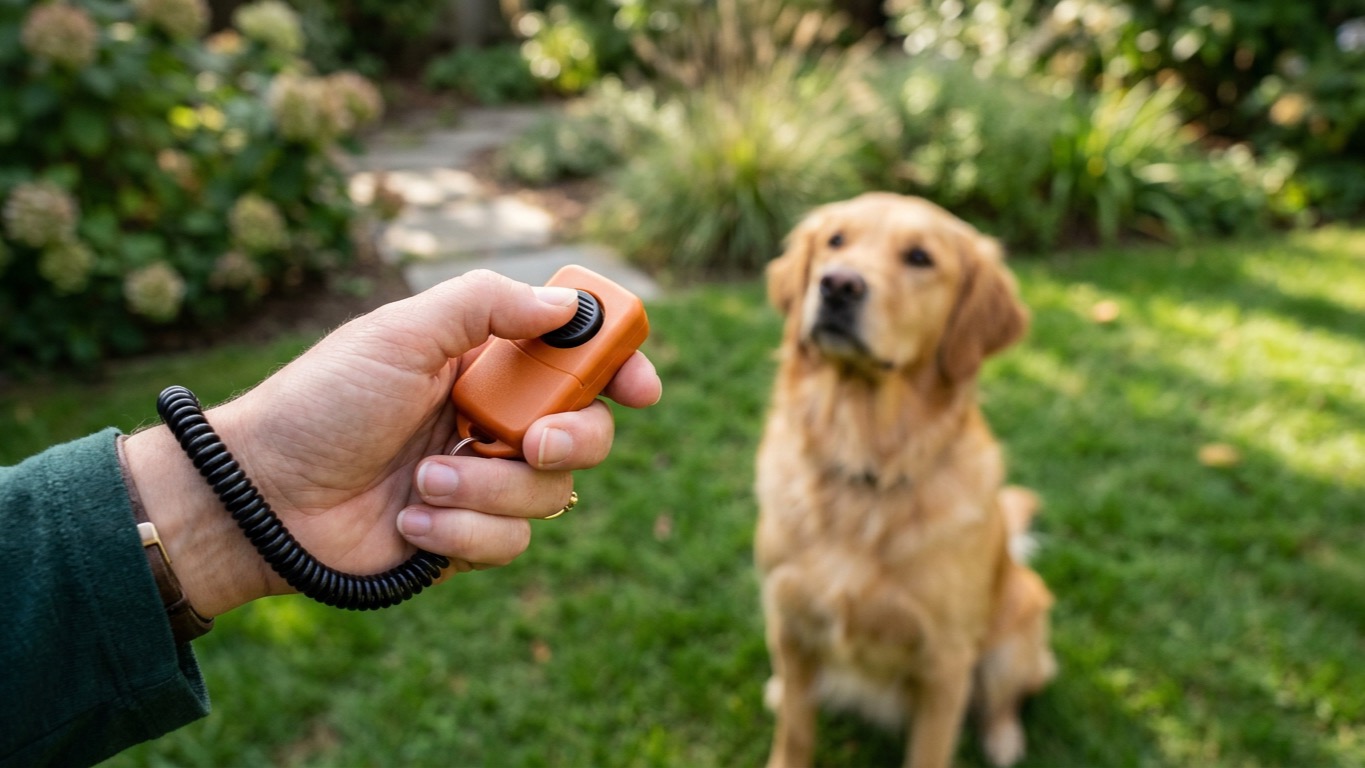
A clicker is a short, repeatable sound that means “that exact behavior just earned a treat.” Karen Pryor’s organization still publishes the charging and fading rules. The click is not praise. Praise varies. The click should not.
The useful question is not “which of seven is loudest.” It is: can you fire it at the same instant every time, and will it still be in your hand when the dog finally sits?
Four jobs
| Job class | What the listing says | Useful when | Fail mode |
|---|---|---|---|
| Finger-band single | Elastic band, brand name | Beginners, one-hand leash | Band snaps; still one unit |
| Soft teardrop | i-Click, light button | Sound-sensitive, indoor | Easy to lose without a strap |
| Loud box / metal plate | Stainless, pro, outdoor | Yard, distance, wind | Too sharp for a timid dog |
| Color multipack | 2-pack / 4-pack, wrist strap | Household, car, pouch | Unit-to-unit feel varies |
From the listings: strap language beat guide language 4-to-1. A spare in the car is a logistics win. A mushy spring is a timing loss.
Listing snapshot — seven cards, August 2026 prices
| Product | Listed price | Desk role | Honest miss |
|---|---|---|---|
| PetSafe Clik-R Training Tool | $2.99 | Finger-band starter | One unit; moderate tone story |
| Karen Pryor i-Click (3-pack) | (none on card) | Soft marker, trainer brand | No strap on the classic shape |
| Starmark Pro-Training Clicker | $5.49 | Loud outdoor / guide | Can startle a shy dog |
| EcoCity 4-Pack with Wrist Strap | $12.19 | Lowest $ per unit, colors | Import variance |
| Downtown Pet Supply (2-pack) | $5.99 | Big button, gloves | Loud; not a stealth click |
| HoAoOo 2-Pack with Wrist Strap | $4.49 | Budget spare pair | Brand is the pack, not a school |
| OYEFLY 2-Pack with Wrist Strap | (none on card) | Backup set | Volume may vary by unit |
Budget first clicker is PetSafe at $2.99 or HoAoOo at $4.49 for two. Trainer-soft is i-Click. Outdoor loud is Starmark. Household logistics is EcoCity.
Clicker SKU arithmetic
| Desk equation | Dollars / count | What it actually buys |
|---|---|---|
| EcoCity $12.19 ÷ PetSafe $2.99 | 4.08× | Four strapped colors vs one finger-band |
| EcoCity $12.19 ÷ 4 | $3.05 | Cost per unit on the 4-pack |
| HoAoOo $4.49 ÷ 2 | $2.25 | Cheapest printed pair on this URL |
| Downtown $5.99 ÷ 2 | $3.00 | Big-button pair, $0.05 under EcoCity/unit |
| Starmark $5.49 − PetSafe $2.99 | $2.50 | Loud plate + guide vs starter band |
| PetSafe $2.99 + HoAoOo $4.49 | $7.48 | Finger-band plus door-hook pair, $4.71 under EcoCity |
| Priced five cards | $31.15 | A drawer of markers, not a curriculum |
Desk clicker math: HoAoOo $4.49 + Downtown $5.99 = $10.48 — four units if you count both pairs, $1.71 under EcoCity’s four. Starmark $5.49 is $2.50 over PetSafe for volume and a booklet, not a dB we measured. Do not buy EcoCity $12.19 as a named training school. Do not buy i-Click as a strap product — it is a pocket teardrop.
How to choose the best dog training clicker without a lab ranking
- Charge first. Click, treat, repeat in a quiet room until the head snaps. Then mark sits.
- Match tone to the dog. Soft indoor. Louder yard. Muffle a loud box in a pocket for day one if the dog flinches.
- Keep it on the body. Finger band or wrist strap. An unattached teardrop lives in the couch.
- Buy a spare. The behavior will happen when the clicker is in the other jacket.
- One click, one treat while learning. Triple-clicking a sit teaches noise, not sit.
- Fade later. Once the cue is solid, the clicker is a teaching tool, not a permanent necklace.
We compared the seven cards on this URL.
Named examples of the best dog training clicker — not a ranking
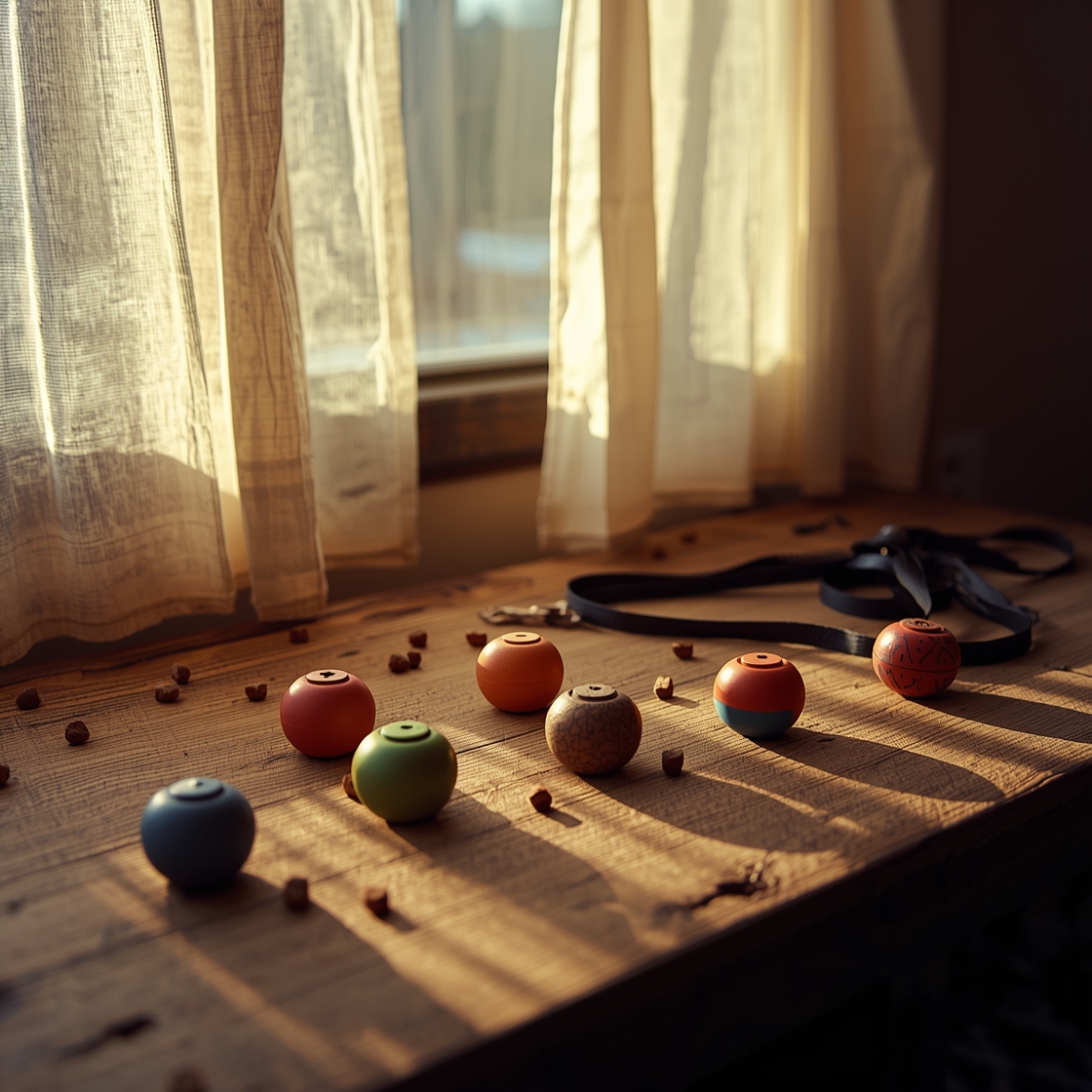
Cards below are unchanged.
1. PetSafe Clik-R Training Tool
Best for: a first clicker that stays on one finger while the other hand holds a leash
PetSafe is the big brand in the training-gear aisle. The Clik-R is a small mechanical box with an elastic finger band and, on many units, a printed starter pamphlet. $2.99 is an impulse price. Mechanical means no battery. The band is the product.
Desk role: starter, stay-on-hand. Honest miss: one clicker. Lose it and the session is a marker word.
Pros: $2.99; finger band; brand support pages Cons: Single unit; not the softest tone in the set
2. Karen Pryor i-Click Dog Training Clicker (3-pack)
Best for: a softer, light-pressure marker when the dog hates a sharp box
This is the teardrop from the organization that founded the modern clicker conversation. Light button. Softer tone in owner themes. Three units so the house, the pouch, and the car can each have one. No finger band on the classic shape — that is the drop risk.
Desk role: sound-sensitive / trainer-soft. Honest miss: concealable also means loseable.
Pros: Soft tone story; 3-pack; primary-source brand Cons: No strap; card has no printed price
3. Starmark Pro-Training Clicker
Best for: outdoor and distance work when you want a louder, rust-resistant plate
Starmark sells a raised button, stainless click plate, and a real training booklet on many listings. Owner themes call it loud. That is a yard feature and a timid-dog bug.
Desk role: outdoor / guide. Honest miss: indoor apartments with a noise-sensitive dog.
Pros: $5.49; metal plate language; guide Cons: Volume; one unit unless you buy two
4. EcoCity 4-Pack Dog Training Clicker with Wrist Strap
Best for: color-coding dogs or rooms at the lowest cost per clicker on this URL
Four colors, wrist straps, ABS plus stainless-plate language on many listings. $12.19 ÷ 4 is the math. Import packs vary. Charge each unit — do not assume they sound identical.
Desk role: household logistics. Honest miss: unit variance.
Pros: Four straps; colors; $3-ish each Cons: Not a named training school
5. Downtown Pet Supply Training Dog Clickers (2-pack)
Best for: a huge palm button when gloves or arthritis make a tiny tab easy to miss
Oversized button, elastic wrist band, loud owner-theme. $5.99 for two. This is a dexterity product, not a stealth product.
Desk role: big button. Honest miss: volume in a quiet building.
Pros: Hard to miss; 2-pack; $5.99 Cons: Loud; not a Karen Pryor shape
6. HoAoOo Pet Training Clicker with Wrist Strap (2-pack)
Best for: the cheapest reliable two-pack on this card set
$4.49 for two strapped clickers. Contoured grip language. This is the spare-tire SKU. Charge both. Keep one on the hook by the door.
Desk role: budget pair. Honest miss: no printed curriculum.
Pros: Under $5; straps; two locations Cons: Generic brand; moderate tone story
7. OYEFLY Dog Training Clicker with Wrist Strap (2-pack)
Best for: another backup pair when EcoCity is out of stock
Lightweight, metal-plate language, two-tone colors on many listings. Card price is empty — compare at checkout. Owner themes mention unit-to-unit volume drift. Charge and pick the pair that sounds the same.
Desk role: backup. Honest miss: no listed price; consistency.
Pros: Straps; two units; widely stocked Cons: Price missing on card; possible volume drift
Comparison: best dog training clicker at a glance
| Product | Stay-on-body | Tone story (desk) | Pack | Price on card |
|---|---|---|---|---|
| PetSafe Clik-R | Finger band | Moderate | 1 | $2.99 |
| Karen Pryor i-Click | Soft | 3 | — | |
| Starmark | Hand | Loud | 1 | $5.49 |
| EcoCity | Wrist strap | Loud | 4 | $12.19 |
| Downtown Pet Supply | Wrist band | Loud | 2 | $5.99 |
| HoAoOo | Wrist strap | Moderate | 2 | $4.49 |
| OYEFLY | Wrist strap | Moderate / varies | 2 | — |
Environment worksheet for the best dog training clicker
| Scenario | Clicker class | Note |
|---|---|---|
| Quiet kitchen sit | i-Click or Clik-R | Charge here first |
| Windy yard recall setup | Starmark or EcoCity | Still pair with a long line — see pulling |
| Class with three handlers | Color pack | Do not share one clicker mid-rep |
| Shy rescue | i-Click; muffle others | Watch the flinch, not the brand |
| Gloves / winter | Downtown big button | Tiny tabs get missed |
| Deaf dog | Not this aisle | Light flash or hand flash; same timing rules |
How clicker training works (without a lab coat)
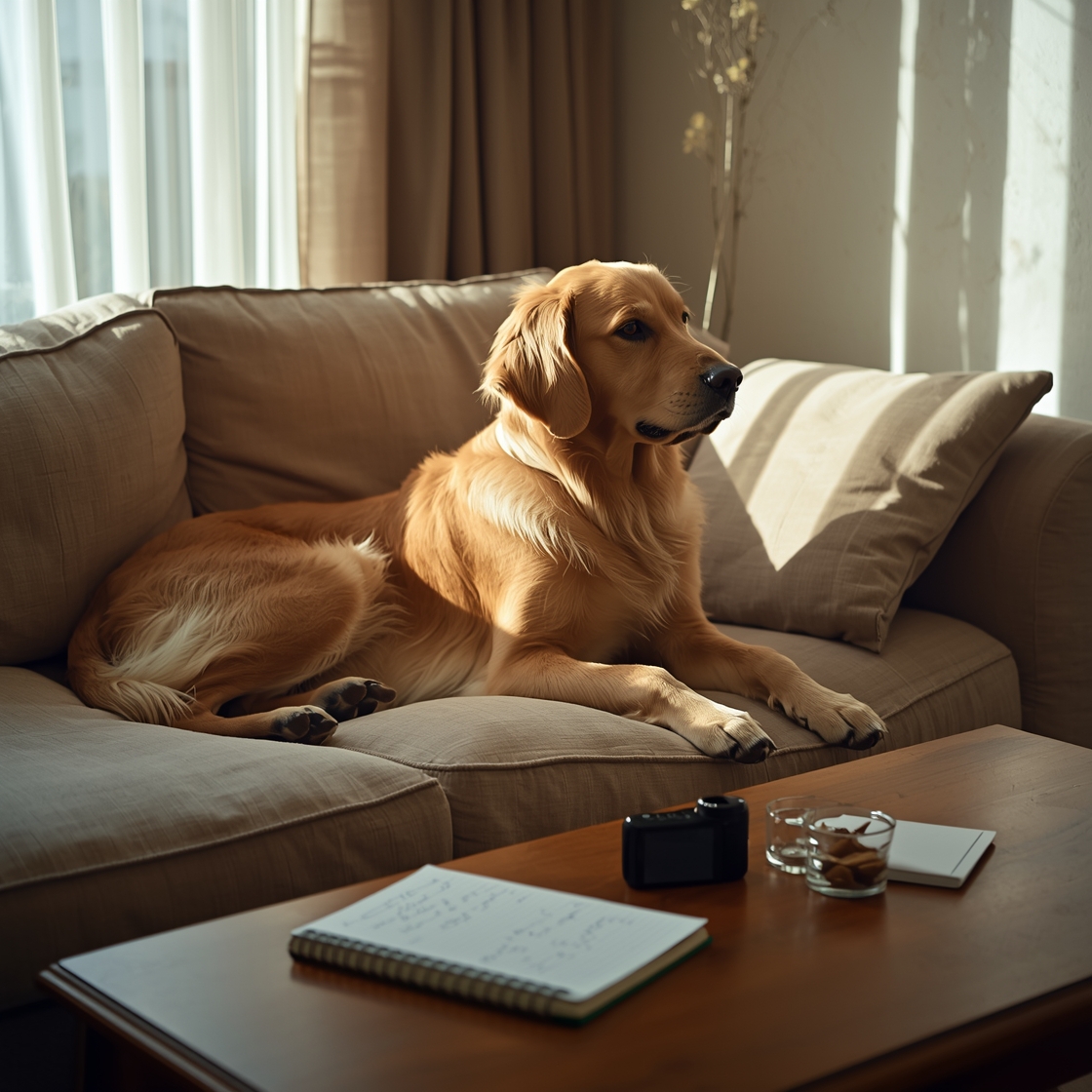
A neutral sound becomes a predictor of food when you pair them. That is classical conditioning with a mechanical marker. The click is shorter than “good boy,” so the dog can pin the moment. Clickertraining.com still hosts the free fundamentals.
Marker words work. They drift with your mood. Use a word when both hands are full. Use a clicker when you are teaching a new shape.
Charging the best dog training clicker in one evening
Ten to twenty reps. Quiet room. Click once. Food in the mouth within a second. Stop before the dog is stuffed. Next session, click when the rear hits the floor — even a partial sit. Treat. That is capturing. Luring is a cookie on the nose. Both need the same click timing.
If the dog ignores the sound, you have not charged it. If the dog flinches, you bought too loud a box.
Fading the clicker
When the sit happens on cue in two rooms with a mild distraction, start clicking every other correct sit, then fewer. Keep treating on a thinner schedule. Bring the clicker back for the next new behavior. Most households cycle it, not retire it forever.
Clicker vs collar vs harness
A clicker marks. A training collar is a different — and often more aversive — conversation. AVSAB prefers reward-based methods as a first line. We will not sell you a shock collar because your clicker was in the other coat.
Price tiers for the best dog training clicker
| Tier | Typical $ | What you buy | Cards |
|---|---|---|---|
| Under $5 | $2.99–$4.49 | One branded single or a cheap pair | PetSafe, HoAoOo |
| $5–$9 | $5.49–$5.99 | Guide or big-button pair | Starmark, Downtown |
| Multipack | $12.19 | Four strapped units | EcoCity |
| Unpriced on card | Compare live | i-Click 3-pack, OYEFLY 2-pack | Those two cards |
Paying more does not buy a better meaning. It buys straps, plates, and a pamphlet.
Pros and cons of marker training
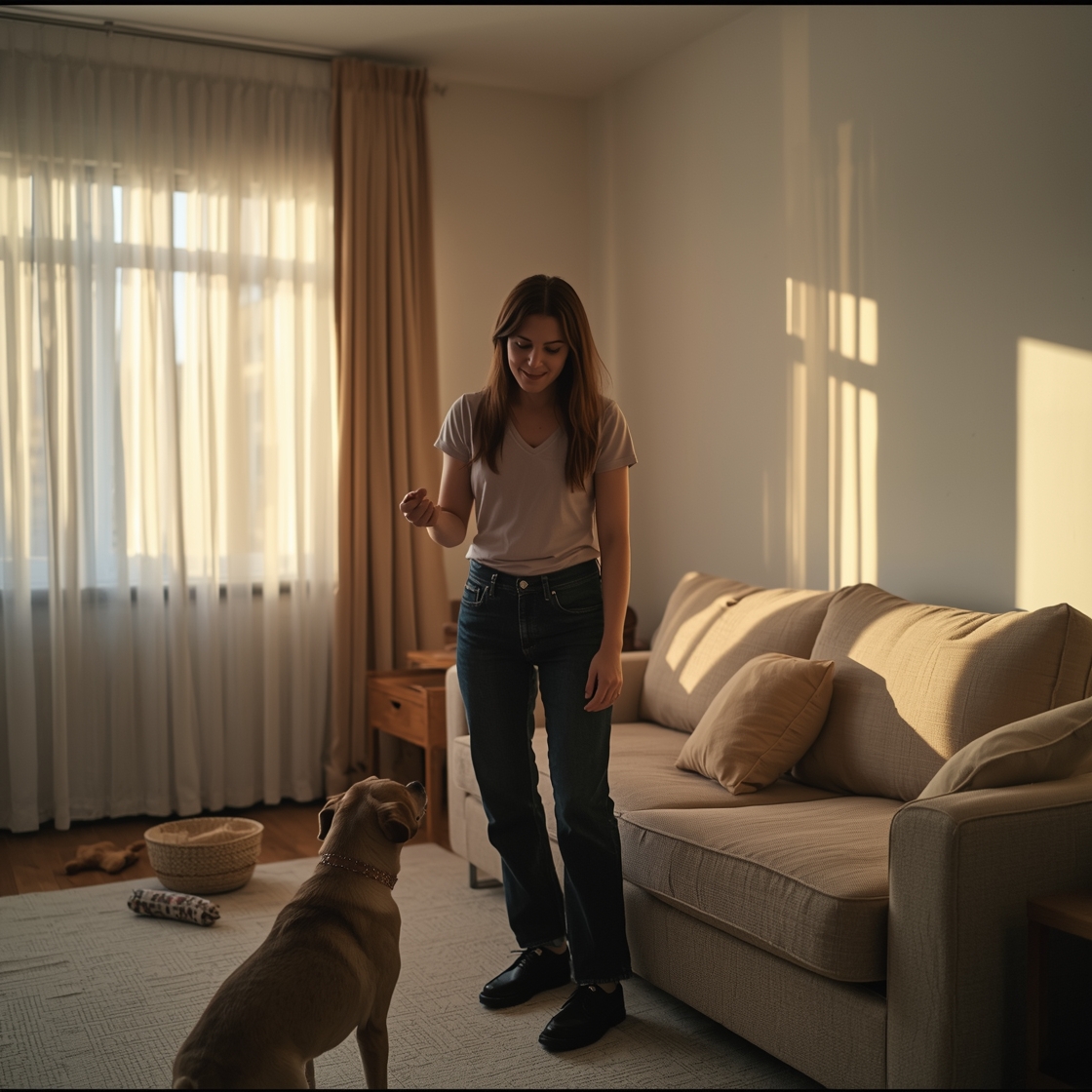
| Aspect | Upside | Downside |
|---|---|---|
| Clarity | Same sound every time | Mis-timed click teaches the wrong picture |
| Cost | All cards under ~$13 | Cheap packs vary |
| Hands | Band/strap keeps it | Two tools (leash + clicker) is a skill |
| Dogs | Works across ages | Deaf dogs need a visual marker |
How we researched this guide
The these clicker marker listings scored 36 listings for strap, pack size, guide, and metal-plate language. The seven cards are the live affiliate set. We used Karen Pryor’s public guides and maker pages.
Frequently asked questions — best dog training clicker
What is the best dog training clicker in one sentence?
The one you can fire on time and still hold — usually a strapped or finger-band clicker, soft if the dog is noise-sensitive. That is the best dog training clicker test.
Is a metal clicker louder than plastic?
Often slightly, on owner themes. Choose soft for a flinchy dog. Timing beats volume.
How do I charge a clicker?
Click, treat, repeat until the head snaps. Then mark real behaviors.
Is a clicker better than “yes”?
More consistent. A word is always with you. Many people use both.
When do I stop using it?
When that cue is solid. Keep it for the next skill.
Can I clicker-train a puppy?
Yes. Tiny treats. Short sessions. Soft tone if they startle.
What if my dog is deaf?
Flash a light or a hand. Same charge rule. This aisle is optional.
Can I use a pen instead?
Yes, if it is short and consistent. Dedicated clickers cost a few dollars because they are built to repeat.
Do I need the PetSafe pamphlet?
No. Clickertraining.com is free. The pamphlet is a plus on that card, not a license.
Will a clicker fix pulling?
It can mark a loose-leash moment. The rest is mechanics and practice. See the pulling page.
Should every person in the house have one?
Yes, or they will use a different word and a different timing. EcoCity exists for that.
Is clicker training mean?
It is a reward marker. Mean is a late, hot correction. AVSAB is the welfare rail we point to.
Multi-dog and kids
Color-code. Kids click late. Practice on a bouncing ball (click the bounce) before they mark the dog. One treat bowl. No free-for-all.
Classes and clubs
Ask if they want a specific tone. Some instructors hate a stadium-loud box in a small room. Bring i-Click. Leave Starmark in the car until the outdoor hour.
Rain, pockets, and rust
Stainless-plate language is why Starmark and EcoCity show up in wet-climate lists. A clicker that lives in a wet treat pouch still wants a dry-out.
Treats and the 10% rule
The click is empty without calories you already budgeted. Use meal kibble when you can. Soft treats for hard environments. Fat dogs do not need a second dinner because you bought a $3 tool.
We will not print 70–80 dB as a measured fact. We will not say we pressed these hundreds of times. We will not call PetSafe “the best” as a lab trophy. $2.99 is a starter price. i-Click is a soft-tone class. That is enough.
Printable first-week plan
Day 1: charge 2×10 reps. Day 2: capture sit. Day 3: add the word “sit” before the sit. Day 4: new room. Day 5: mild distraction. Day 6: walk to the door, mark four-on-the-floor. Day 7: rest or play. Log late clicks. Late clicks are the bug.
Desk limitations, restated
Research desk. No trainer certification. No veterinary review. Individual dogs vary. A behavior crisis is a certified professional, not a 4-pack.
How we would shop this card set in one hour
Shy dog: i-Click. First-time owner who drops things: PetSafe or HoAoOo. Yard sport: Starmark plus a spare EcoCity. Arthritis: Downtown. Price-blind backup: OYEFLY after you see today’s tag.
Secondary keywords, used honestly
Dog clicker training is the method. Best dog clickers is this card set. Dog training tools include leashes and collars — do not skip to shock. Clicker training for dogs works in cats and horses too; this URL is the dog shop.
Apartment neighbors
A loud box at 6 a.m. is a neighbor problem. Soft clicker. Soft treats. Soft voice after the click.
Rescue dogs and a history of noise
Start in another room. Click behind your back. If they shut down, switch to a quiet tongue-cluck or a word and come back later. Forcing a Starmark on a shut-down dog is not “training.”
Travel
One clicker in the carry-on. TSA does not care. The dog cares if the sound changed because you bought a new brand at the destination. Bring the charged one.
Final restatement
The best dog training clicker is the marker you can time and keep on your body. We mapped seven live cards. Prices are snapshots.
Treat mechanics for the best dog training clicker
The click is empty without a deliverable. Soft 1-calorie bits beat a biscuit you have to break. If the dog is already fat, use dinner kibble in a pouch. If the environment is a squirrel storm, use something wetter and smellier — still counted in the daily calorie budget. A $3 PetSafe does not earn a second dinner.
Deliver within about a second while charging. Late food still works as a reward. Late clicks teach the wrong photograph. Practice on a bouncing tennis ball: click the bounce, then eat the treat yourself. Your thumb learns before the dog pays.
Leash, pouch, and the third hand
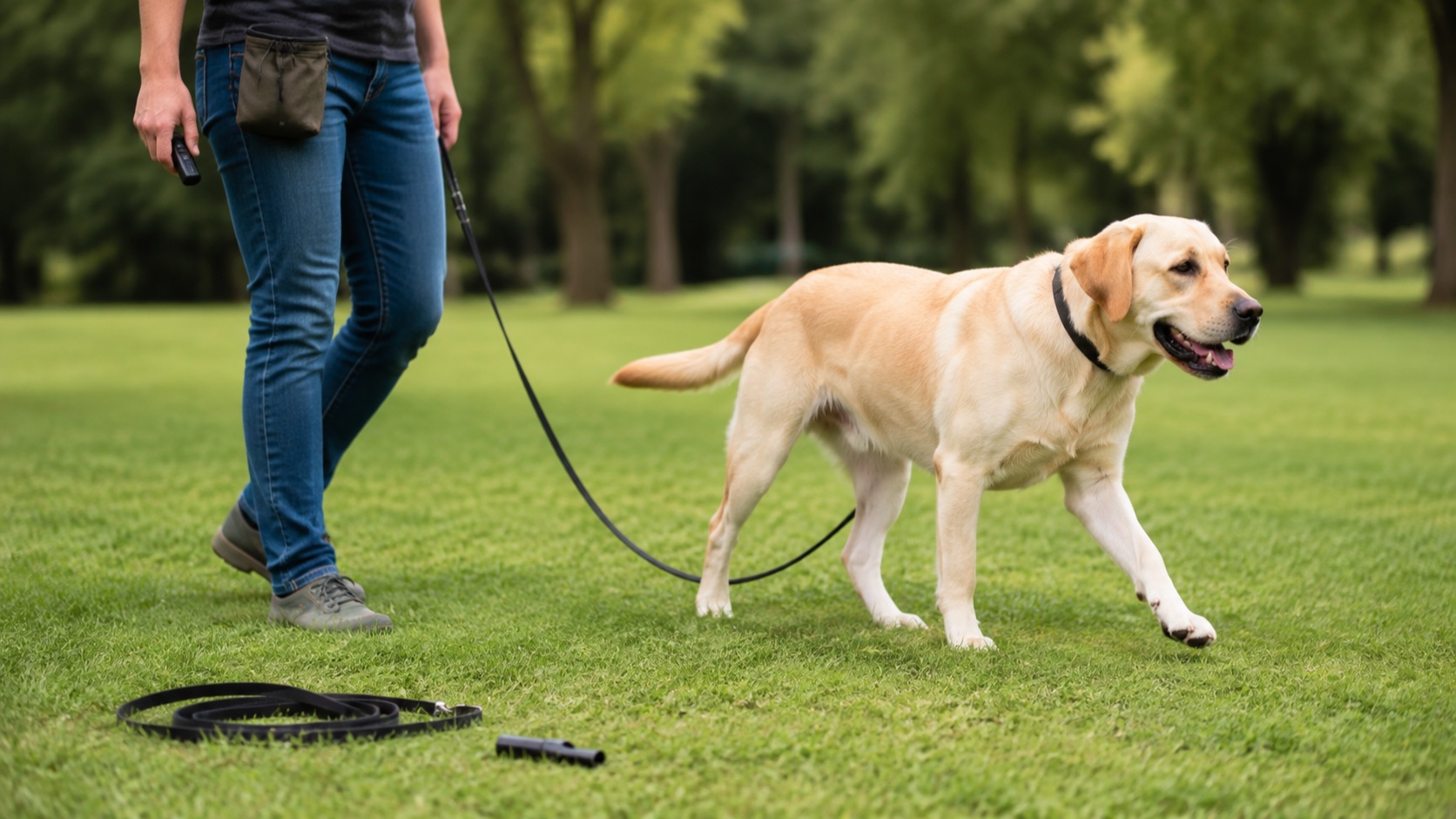
Most misses are logistics. Leash in left, pouch on right hip, clicker on the finger band or wrist. If you have to fish a clicker out of a pocket, the sit already ended. That is why the Index scored straps. EcoCity and HoAoOo exist so the spare is on the hook, not in the junk drawer.
A front-clip harness plus a clicker is a legal walk kit. An e-collar plus a dropped clicker is how people skip to voltage. See collars only after the marker is fluent.
Shaping vs capturing vs luring
Capturing: the dog sits, you click. Shaping: you click a weight shift, then a fold, then a sit. Luring: cookie on the nose, sit happens, you click the sit not the sniff. All three need the same tool. A loud Starmark does not make shaping faster. A soft i-Click does not make luring kinder. Timing does.
If you lure forever, you own a cookie magnet. Fade the lure: empty hand, then click the sit. The clicker is the bridge.
Group class etiquette
Do not click other people’s dogs. Color-code if three handlers share a household pack. Ask the instructor about tone. A Downtown big-button in a tiled lobby sounds like a staple gun. Bring the i-Click. Leave the stadium box in the car until the outdoor hour.
If the club wants a verbal marker only, comply. The method is the marker, not the plastic.
Shelter and foster notes
Short sessions. Soft tone. Many fosters flinch at box clickers because kennels are already loud. Charge in a bathroom. If they shut down, switch to a quiet tongue cluck for a week. You can return to plastic later. A 4-pack is not a rehabilitation plan.
Competition and precision sports
Agility and obedience people live on timing. Starmark’s guide and the i-Click’s light button show up in those conversations for opposite reasons: carry vs stealth. Buy the one you will still hold on a contact obstacle.
Cats, birds, and the “it works on everything” line
Marker training is species-general. This URL is a dog shop. A bird may need a quieter click. A cat may need a different treat. Do not assume the EcoCity four-pack is a multi-species kit.
Batteries and the mechanical win
Every card here is mechanical. That is the point. No firmware. No app. No charge cable. If a listing sells an “app clicker,” it is not on this URL.
Lost-clicker protocol
Stop the session. Do not yell “yes” at a new pitch if you already charged a click. Find the tool or switch to the spare you staged. That is why $4.49 HoAoOo sits by the door.
Marker timing drills without a dog
Thumb speed is a skill. Bounce a ball. Click the bounce. Ten reps. Click a TV pause button you do not control — you will be late. That late feeling is what the dog already knows about your “yes.” Do this before you charge a shy rescue.
A second drill: hold a treat in the other hand. Click, then open the hand. If you open first, you marked the grab. Reverse it until it is boring.
Two-person households and cue drift
One person clicks sits. The other person clicks the dog walking over. The dog learns “approach.” Write the behavior on a note on the fridge: sit = rear on floor. Not “being cute.” EcoCity colors help only if people also agree on the picture.
Recall and the clicker
You can mark the turn toward you, then feed at your knees. You cannot click a dog who is already at the squirrel. Get closer. Use a long line. See the pulling page for the walk mechanics. A louder Starmark does not beat distance you have not trained.
Fear of the sound, step-down plan
Day 1: click in another room, then walk in with food. Day 2: click in a pocket. Day 3: i-Click at your hip. If they still flee, stop the plastic. Use a word. Come back in a month. Forcing volume is how you poison the marker.
Why $2.99 is not “cheap junk” by default
PetSafe’s Clik-R is a known shape with a band. Cheap is the price. Junk is a mushy unstrapped no-name you cannot find. the listing review still warns that import packs vary. Charge each unit in a 4-pack.
Service-dog and public-access notes
Some teams use a silent marker in stores. This aisle is audible on purpose. If you need silent, that is a different tool (thumb tap, light).
Outdoor wind and the “he didn’t hear it” miss
Wind eats soft clicks. Step closer before you buy a louder box as a personality. If you are 40 feet away on a first recall, the tool is not the bug. The distance is. Close the gap. Then decide if Starmark is even useful.
Pocket lint and drowned clickers
Treat pouches collect slime. A clicker that lives in slime gets a mushy button. Rinse. Dry. The stainless-plate story is why some packs mention metal. We still would not run a dishwasher unless the maker said so.
Why we kept OYEFLY with no price
We will not invent $11.89 from a Walmart memory. Compare at checkout. That is the honest desk move.
One-sentence shopper map
Shy: i-Click. Drops things: PetSafe or HoAoOo. Gloves: Downtown. Yard: Starmark. Household: EcoCity. Unknown price: OYEFLY at checkout. That is the best dog training clicker map on this card set.
Last line
Charge it. Time it. Strap it. Fade it. That is the whole tool. A spare in the car ends the lost-marker problem for less than a bag of treats.
Practice without treating it like a sport
Most pet households need a sit, a down, a recall start, and four-on-the-floor at the door. That is a week of short sessions, not a sport title. The clicker is there so your voice can stay boring. When the sit is solid in two rooms, fade the click for that sit and keep the tool for the next picture. You will look like you “stopped clicker training.” You did not. You finished a cue.
If a family member refuses the plastic, they can use a word — the same word, the same timing — while you keep the clicker for new shapes. Write the word on the fridge. Drift is how sits die.
Treat pouch hygiene and the slimy button
Wash the pouch. A clicker that lives in liver dust gets a button that sticks. A sticky button is late. Late is the wrong photograph. That is a more common failure than “the cheap clicker is junk.” PetSafe at three dollars with a clean band still beats a twelve-dollar pack you never rinse.
Kids, guests, and the “let me try” problem
A guest who has never charged a clicker will click late and laugh. The dog learns a party. Hand guests a treat and a written sit picture, or hand them nothing. Kids can practice on a bouncing ball in another room until their thumb is on time. Then they get one five-minute sit session. That is how a household keeps the best dog training clicker from turning into a toy.
If two adults disagree on the marker — one clicker, one sloppy “good boy” at random — pick one protocol for new behaviors. Maintain old cues with whichever marker already owns them. Do not run both on the same new shape in the same hour.
Travel kit
One charged clicker in the carry-on. A bag of the same treats you use at home. A new airport sound is already hard. A new marker sound is optional pain. Do not buy a louder box at the destination gift shop unless the old one died. A hotel hallway is a terrible place to introduce a new tone. Charge the old marker in the room first, then take it into the hall for one boring sit. If the hallway is too hot, stop. The hotel is not a seminar. Sleep, then try a quieter sit at breakfast. Pack the spare HoAoOo in the checked bag so a lost Clik-R is an inconvenience, not the end of the trip.
If a listing title changes, this comparison changes. Contact if a card is stale.