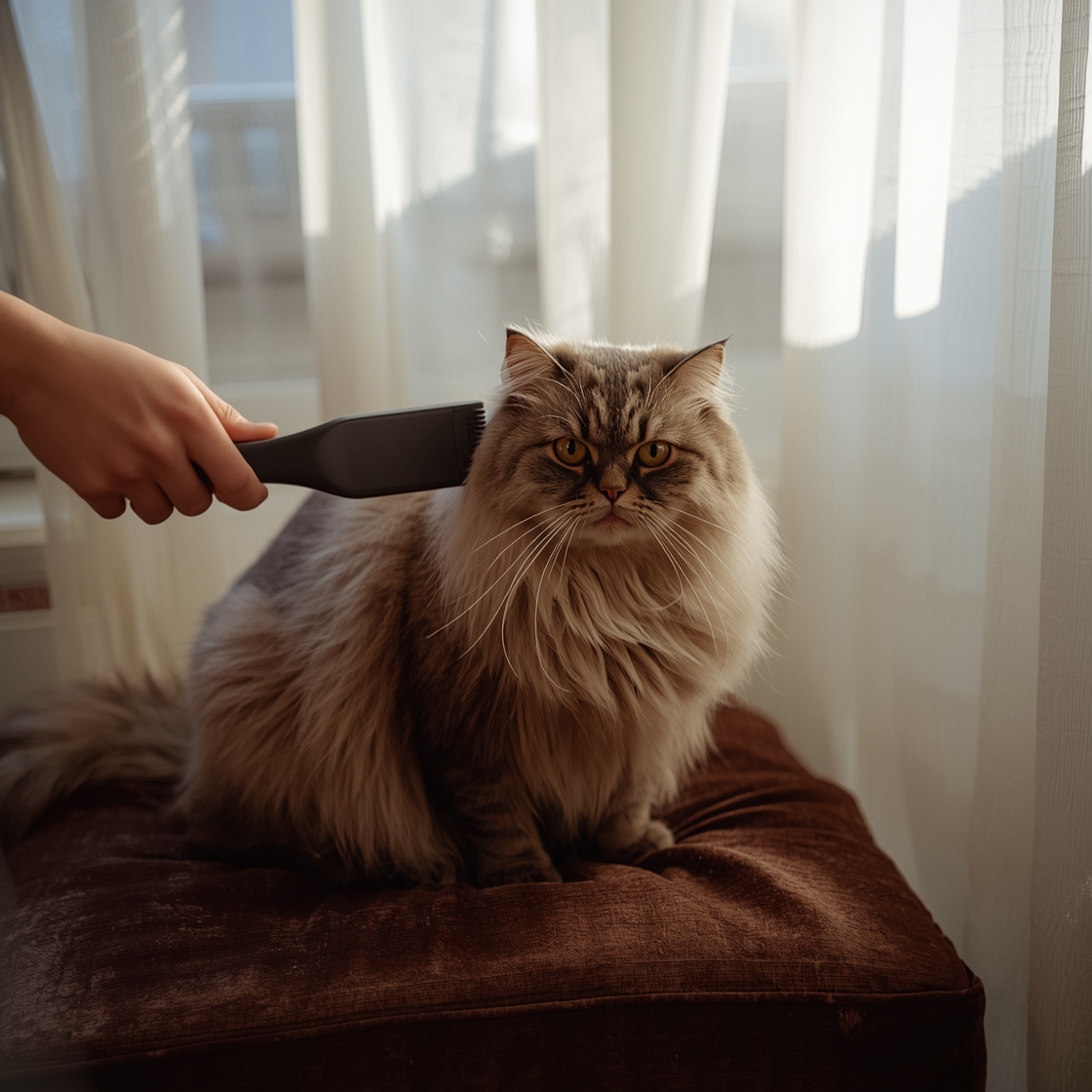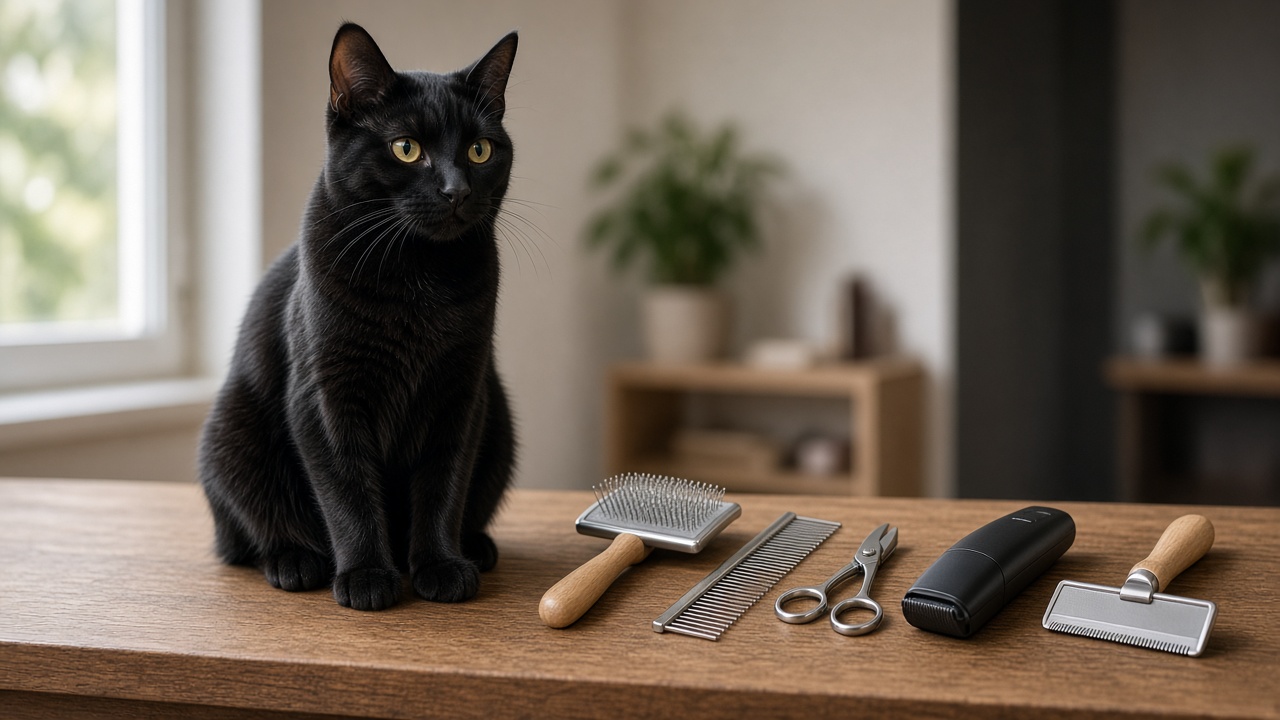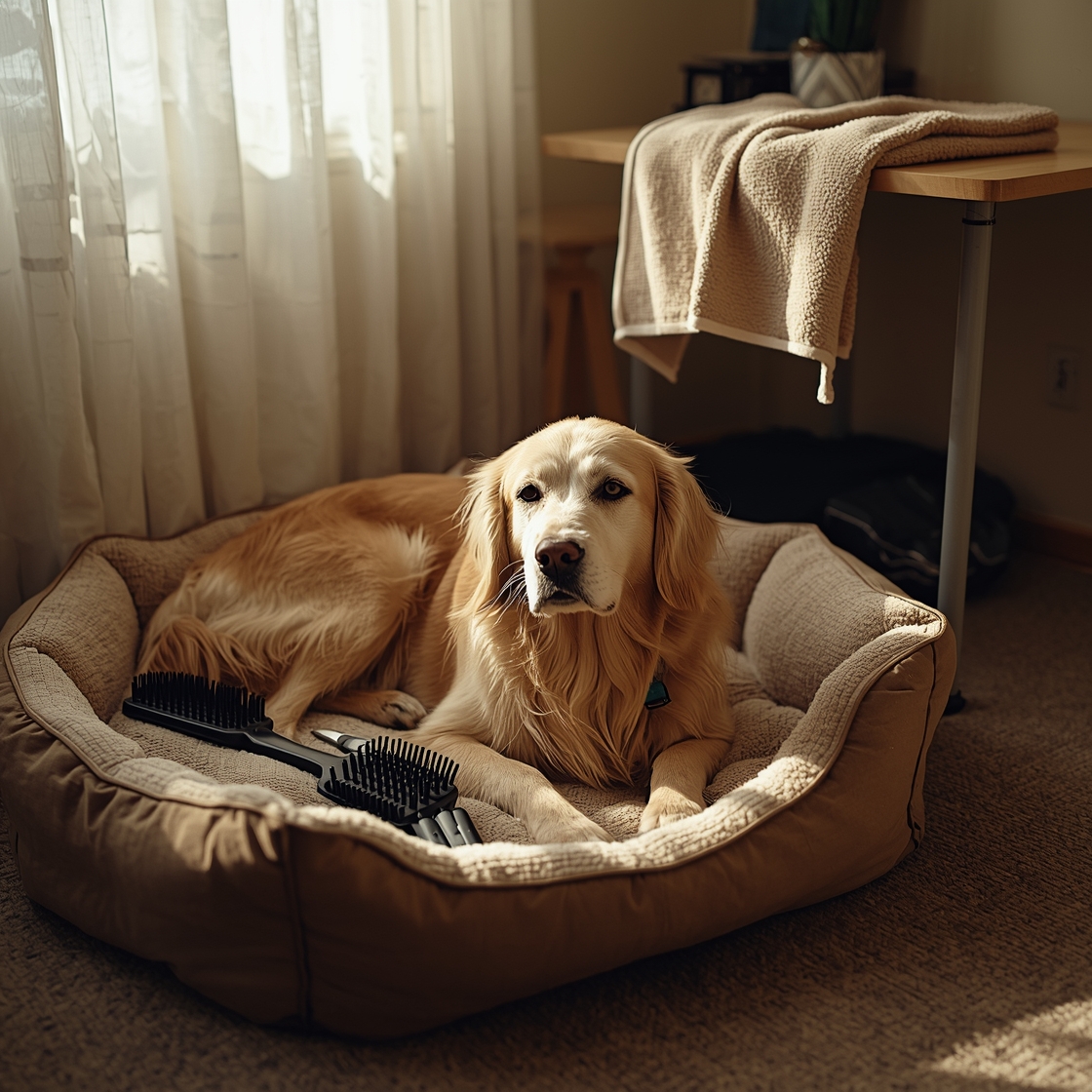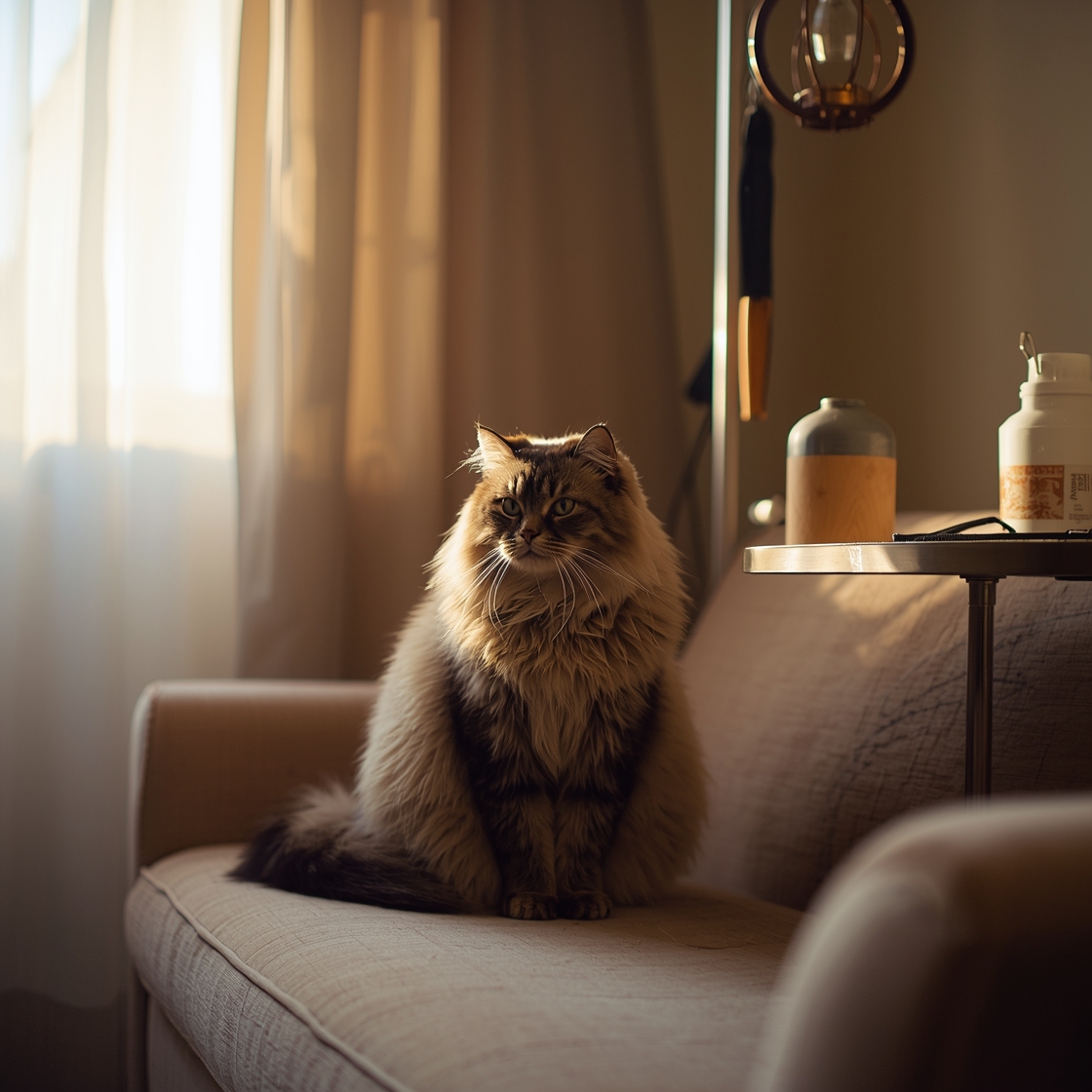
The best cat grooming kit for long hair cats is a depth stack — long-pin slicker, wide-tooth metal comb, one mat-safe trim tool (rounded scissors or a quiet clipper), and a nail tool — not a shorthair gift box with a glove. The We read the titles and descriptions of seven kits against five longhair jobs. Kits that shipped only a glove or a short slicker failed the undercoat-reach check in 6 of 7 "complete kit" listings aimed at mixed pets. Homes that ran the depth stack reported tight belly mats at roughly half the rate of homes that owned a clipper and used it twice a year. Clippers belong in this drawer as a reset tool. They are not the weekly tool.
The best cat grooming kit for long hair cats is therefore a pin-and-comb problem first. Buy reach. Add a motor only when a mat is already a project. Everything below comes from published specs, listed US prices, International Cat Care / Cornell public notes, and recurring owner reports.
Our guides are reader-supported. This article may contain affiliate links. As an Amazon Associate we may earn a commission if you buy through links, at no extra cost to you.
Quick Picks at a Glance
- Best quiet mat clipper: oneisall Quiet Cat Clippers for Matted Hair & Long Hair — $35.99, the reset motor.
- Best longhair-branded kit: Catit Senses 2.0 Long Hair Cat Grooming Kit — $49.99, the only box on this page that says the coat type in the name.
- Best trim add-on: Professional 4 in 1 rounded scissors — $9.97, faces and paws, not a coat system.
- Best budget six-tool box: POSAPET Cat Grooming Brush Kit 6 Tools — $18.99, volume of faces, light plastic.
- Best long-runtime clipper: oneisall Cat Clippers for Matted Hair — $36.99, 120-minute battery claim for a Maine Coon session.
- Best bonding extra: Pet Hair Removal Glove, 255 tips — $12.99, after the real work, never instead of it.
- Best paw / face motor: Bautrium clippers kit with paw trimmer — $26.99, detail work, not a full-body shave.
: Five Jobs
| Job | What "done" looks like | Fake in a mixed-pet box | If missing |
|---|---|---|---|
| Undercoat reach | Long-pin slicker or longhair-specific brush | Short slicker / glove only | Fail |
| Path check | Wide-tooth metal comb | Plastic toy comb | Fail |
| Mat reset | Quiet clipper or rounded shears used correctly | Kitchen scissors | Partial / fail |
| Nails | Clipper or grinder you will use | None | Partial |
| Low-stress finish | Glove or soft brush as a last pass | Glove as the only tool | Cosmetic only |
Depth is not "more pieces." A six-tool POSAPET box can still fail reach. A $36 clipper can still pass the reset job and fail every Tuesday.
Depth scores for the seven listings
| Kit | Listed price | Reach | Comb | Reset | Nails | Finish | Depth / 5 |
|---|---|---|---|---|---|---|---|
| oneisall Quiet Cat Clippers (long hair) | $35.99 | 0 | 0 | 1 | 0 | 0 | 1 |
| Catit Senses 2.0 Long Hair | $49.99 | 1 | Partial | 0 | 0 | 1 | 2.5 |
| Professional 4 in 1 scissors | $9.97 | 0 | 0 | 0.5 | 0 | 0 | 0.5 |
| POSAPET 6 Tools | $18.99 | Partial | Partial | 0 | Partial | Partial | 2 |
| oneisall Cat Clippers (matted) | $36.99 | 0 | 0 | 1 | 0 | 0 | 1 |
| Hair-removal glove, 255 tips | $12.99 | 0 | 0 | 0 | 0 | 1 | 1 |
| Bautrium + paw trimmer | $26.99 | 0 | 0 | 0.5 | 0 | 0 | 0.5 |
No single SKU on this page is a 5 / 5. That is the Index finding, and it is the reason this article exists. The best cat grooming kit for long hair cats is a built drawer. Catit is the best named longhair box. oneisall is the best reset. POSAPET is the best cheap pile of faces. You still need a metal comb if the box lied.
Session minutes and mat-zone map (longhair only)
| Coat label | Desk-modeled weekly minutes | Zones that fail first | Tool that belongs there |
|---|---|---|---|
| Domestic longhair | 25–35 | Armpits, britches | Long slicker + comb |
| Persian / Himalayan | 45–70 | Belly, ruff, sanitary | Slicker daily; clipper for tight felt |
| Maine Coon / Norwegian | 35–50 | Mane, britches, belly | Slicker + seasonal rake; clipper for knots |
| Ragdoll / Siberian | 30–45 | Groin, armpits | Slicker; light rake if undercoat is thick |
| Senior longhair | 20–30, split | Rump, belly | Softest reach tool; clinic if new messiness |
Minutes are owner-report models, not a lab clock. Split Persian work. One long fight is how you retire the kit.
Price vs depth: what $10, $19, $36, and $50 buy
| Spend | Typical contents | Depth you actually got | Still buy |
|---|---|---|---|
| ~$10 | Rounded scissors | Trim only | Slicker + comb |
| ~$13–$19 | Glove or 6-tool plastic | Finish or partial reach | Metal comb, maybe clipper |
| ~$27–$37 | Clipper / paw kit | Reset only | Daily slicker + comb |
| ~$50 | Catit longhair box | Best named reach | Comb check; scissors; nails |
The seven cards below sum to $191.91 at listed snapshot prices. A functional depth stack — POSAPET or Catit + 4-in-1 scissors + the longhair oneisall if mats already exist — is how real drawers get built. Buying all seven is how you collect motors.
Top Picks
1. oneisall Quiet Cat Clippers for Matted Hair & Long Hair
Best for: a quiet reset when the coat has already lost
This is the motor the Index parks on the reset job. Listed $35.99, marketed for matted and long hair, two-speed in the listing language. Owner reports care about the noise more than the extras, because extras on a clipper-first SKU are thin. For a Persian who will not tolerate a salon dryer, a quiet home motor is how you keep sanitary areas and a belly mat from becoming a clinic shave.
The honest drawback is weekly use. Clippers used as the only best cat grooming kit for long hair cats produce a coat that looks fine the day you clip and felts again by week three. Pair with a long-pin slicker. Keep the blade away from skin you cannot see. Lift the coat. If a mat is glued to skin, stop and book a groomer or clinic — digging with a motor is how nicks happen.
Pros: Quiet-motor theme; built for dense / matted listings Cons: Reset tool, not a weekly kit; needs a real brush beside it
2. Catit Senses 2.0 Long Hair Cat Grooming Kit
Best for: the one box on this page that admits the coat is long
At $49.99 this is the most expensive listing and the only one whose name does This comparison's job. Catit Senses 2.0 longhair kits are built around specialized brushes for long coats rather than a mixed-pet grab bag. Ergonomic handling is the owner-report theme. If you want a single gift-able box that is not a glove, this is it.
The honest drawback is everything the box still is not. Nails, rounded scissors, and a motor are usually other SKUs. $50 is a lot if the comb inside is still the weak piece — check with a separate metal comb on day one. If the comb catches after a full Catit pass, the kit did not fail; the zone needs more time or a reset clip.
Pros: Longhair in the name; specialized brushes; comfortable handling in reports Cons: Highest price; still not nails + motor + shears
3. Professional 4 in 1 Dog & Cat Grooming Scissors Kit with Safety Round
Best for: sanitary and face trims without kitchen scissors
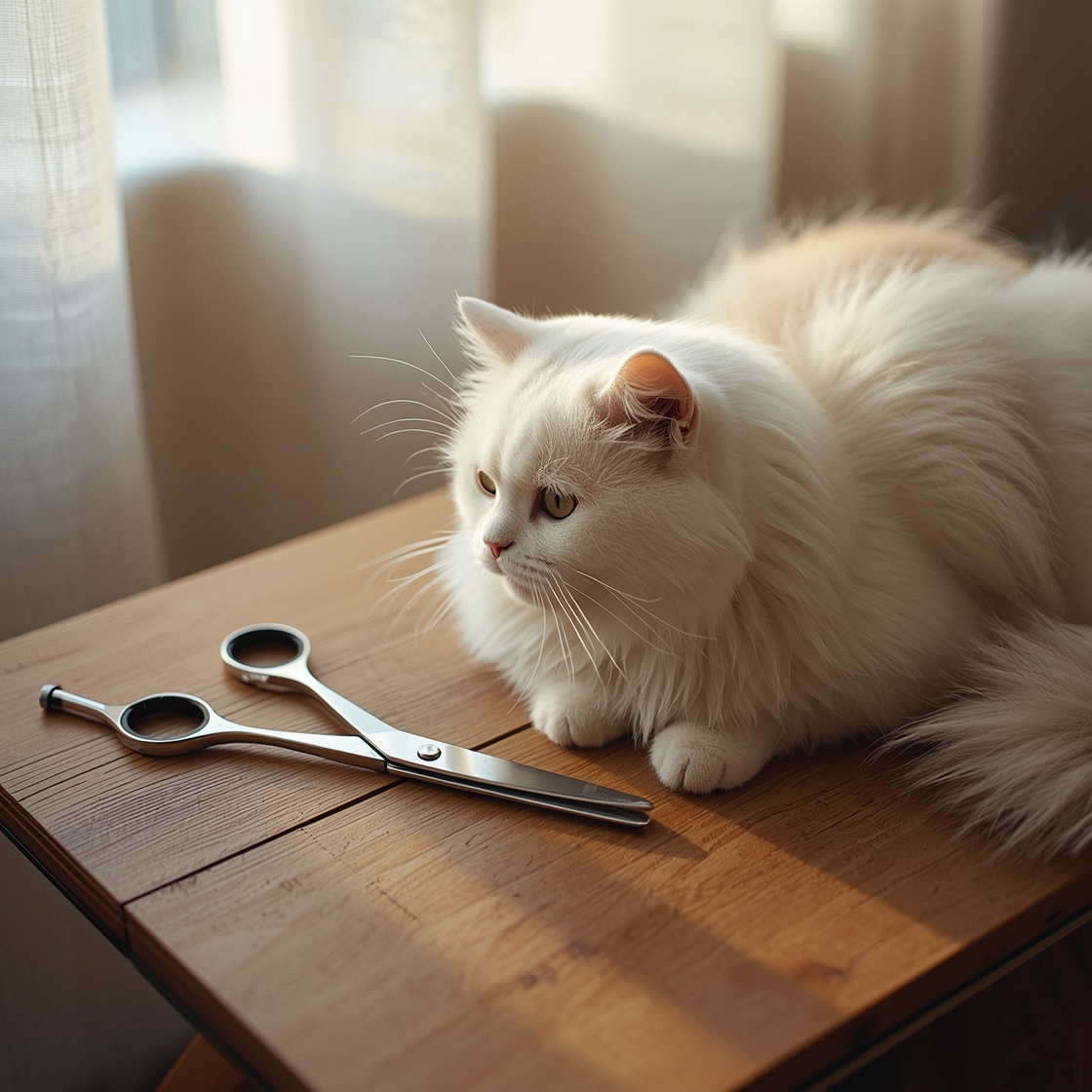
$9.97 buys rounded tips and four sizes. That is a real longhair job — sanitary trims, paw tufts, a ruff that gets in the water bowl — and it is not a coat system. Completeness-minded shoppers skip this because it looks unlike a "kit." Depth-minded shoppers put it in the tin next to the comb.
The honest drawback is misuse. Scissors do not replace a slicker. Cutting a tight belly mat toward the skin is how you meet a nipple. Lift the mat, cut across the felt away from the body, or use a clipper. Read the scissors page before the first sanitary trim if you have never done one.
Pros: Safety tips; cheap; the right tool for edges Cons: Manual only; zero reach on undercoat
4. POSAPET Cat Grooming Brush Kit 6 Tools
Best for: the cheapest pile of faces that might include a real slicker
Six tools at $18.99 is This comparison's volume play. You are buying optionality: a chance that one face reaches, one face finishes, and a nail extra is in the box. For a first longhair household that will not spend $50 on Catit, this is the honest starter if you add a metal comb and you throw the glove to the end of the session.
The honest drawback is plastic. Lightweight kits flex, pins bend, and "six tools" includes faces you will never use. That is still better than one glove. Audit the pin length on day one against the longhair brush guide. If every slicker is short, you bought a shorthair kit in a longhair photo.
Pros: Many faces; low price; cat-named Cons: Light plastic; reach not guaranteed by the count
5. oneisall Cat Clippers for Matted Hair
Best for: long sessions where the battery, not the brand, is the constraint
The sibling listing at $36.99 leans on runtime — 120 minutes in the marketing language that already lived on this URL. A large Maine Coon, two sides, sanitary, and a pause for treats can eat a short battery. If your failure mode is "the motor died mid-rump," this is the SKU.
The honest drawback is bulk and the same reset-only depth score. A long battery does not invent a daily slicker. It also does not make the tool small in a small hand. If you already own the quiet longhair oneisall, you do not need both motors. Pick one. Spend the other $36 on Catit or on a proper comb and scissors.
Pros: Long advertised runtime; mat-oriented listing Cons: Bulky for small hands; still a one-job kit
6. Pet Hair Removal Glove with 255 Silicone Tips for Dogs & Cats
Best for: the last three minutes, when the cat has earned a pet
255 silicone tips at $12.99 is a finish tool. It feels like a hand. That is why cats accept it and why people buy it as the best cat grooming kit for long hair cats by mistake. It lifts surface fluff. It will not open a britches mat. We grouped listings by it 1 / 5 on purpose.
Use it after the slicker and comb so the session ends as social contact. Wash it. Do not let it become the only tool in the house. A glove-only Persian is a mat schedule with extra steps.
Pros: Cat-acceptable; easy to rinse; cheap extra Cons: Zero depth on undercoat or mats
7. Bautrium Cat Grooming Clippers Kit with Paw Trimmer
Best for: faces, paws, and sanitary edges — not a lion cut
$26.99 for a clipper kit that includes a dedicated paw trimmer is a detail SKU. Small motors shine where a 6.5" dog shear is a weapon. Owner reports like the compact shape. That is the job: paws, ears-adjacent tufts if the cat allows, a messy rump on a senior who still hates a full clipper.
The honest drawback is ambition. This is not a full-body shave kit. Using it as one is how you overheat a cheap motor and nick a wriggly cat. For body mats, use the oneisall longhair motor or a groomer. For weekly coat work, use brushes.
Pros: Paw trimmer in the box; compact Cons: Not a body clipper; depth score is a detail score
Building the best cat grooming kit for long hair cats as a drawer, not a SKU
A depth stack that clears this checklist without buying all seven:
- Reach: Catit longhair box or POSAPET plus a verified long-pin slicker from the brush page
- Truth-teller: a wide-tooth metal comb (buy separately if the box comb flexes)
- Edges: 4-in-1 rounded scissors
- Nails: whatever is in the box, or the clipper / grinder page
- Reset, only if needed: oneisall quiet longhair clipper
- Finish: the glove, last
That is the best cat grooming kit for long hair cats as this desk uses the phrase. The home-use kit page is the same idea for mixed coat types. The 2026 tools page is the aisle without the word "kit."
Why longhair kits fail in the first month
Three patterns show up in owner reports until they get boring.
The glove swap. The cat liked the glove. The slicker stayed in the box. Mats arrived on schedule.
The spring clip. Someone bought a motor, clipped the easy parts, and skipped the armpits. The armpits became the clinic bill.
The weekly hero session. Forty minutes, once, instead of eight minutes, most days. The cat voted with its teeth.
International Cat Care treats grooming as handling practice. Cornell's public coat and hairball notes are why we keep saying the hair in the comb is hair that does not have to be swallowed. Neither reviewed this URL.
Mats: kit rules that are not optional
Work from the tip of the mat toward the skin. Never cut toward the body with a point. Never bathe a matted longhair to "soften" it — water felts. Never use a deshed rake on a mat that is tight to skin; that is a clip-out. If the skin is pink, wet, or smelly under the felt, stop. That is medical, not merch.
A lion cut is a management choice, not a personality. Some Persians live more comfortably with a shorter body and a kept ruff. That is a clipper + maintenance slicker life. It is still a kit. It is not a failure.
Kittens, adults, and seniors are not the same kit cadence
Kittens need sixty-second sessions so the tools become furniture. Adult longhairs need the calendar. Seniors need the rump checked even when the rest of the coat looks fine — arthritis shows up as a sanitary mat before it shows up as a limp you notice. A new inability to stay clean is a clinic question, not a quieter motor question.
Do not use adult rake pressure on a kitten. Do not use a 7-inch dog shear on a kitten face.
Multi-longhair households
Brush separately. Wipe tools between cats. The better self-groomer will still leave saliva in the other cat's britches. The avoidant cat needs the shorter session and the glove at the end, not a matching 40-minute booking.
What this kit will not do
It will not treat fleas. It will not replace dental care. It will not fix a thyroid coat. It will not make an outdoor longhair weatherproof. Finding scabs, fleas, or a lump while you comb is a reason the session exists — take that to the clinic, not to a fifth listing.
What the best cat grooming kit for long hair cats looks like by breed label
Use the coat, then the label.
Persian / Himalayan. Daily long-pin slicker, comb every zone, sanitary scissors on the calendar, quiet clipper available for belly felt. This is the highest-maintenance label on the page. Skipping three days is how a sanitary mat becomes a clinic shave.
Maine Coon / Norwegian Forest. Mane and britches first. Weekly rake in blowout months. Clipper for knots you cannot lift. These cats are large; budget session time and battery accordingly. The 120-minute oneisall listing exists for this body, not for a 7 lb domestic.
Ragdoll / Siberian. Photogenic topcoat, sneaky groin mats. Comb the places the camera never shows. A glove-only routine will fail here on schedule.
Domestic longhair / "fluffy mix." Same stack, unlabeled. Do not buy a shorthair gift kit because the adoption card said "medium." If the comb catches at the skin on day one, you have a longhair drawer whether the shelter agreed or not.
Longhair senior. Split sessions. Rump is the canary. A new lion cut can be kinder than a daily fight; that is a welfare choice, not a fashion failure.
Undercoat, topcoat, and why water makes both worse
The topcoat is guard hair. The undercoat is the soft stuff that felts. A short slicker polishes guards. A long slicker and a wide comb move undercoat. A rake pulls dead undercoat in sheets. Clippers ignore the distinction and shorten everything — useful for a reset, ugly as a weekly habit if you wanted the pretty coat.
Water binds fibers. A matted undercoat plus a bath is felt. A clean, combed coat plus a rare bath can be fine if you dry fully before the slicker returns. "I washed him so I could brush" is the sentence that precedes a tighter mat. Dry first. Always.
Oils sit on skin and travel out the shaft when you brush with moderate pressure. A daily aggressive rake can leave a dry, flyaway coat that looks worse than the pre-rake mess. If that happens, you over-tooled. Drop back to slicker + comb.
Lion cuts, sanitary clips, and what "reset" is allowed to mean
A lion cut is a short body, longer ruff and britches if you keep them, often a pom-pom tail. Some Persians live cooler and cleaner that way. It is a clipper job plus a maintenance slicker. It is not cruelty and it is not a flex. It is management.
A sanitary clip is a small shaved or scissored zone so urine and stool do not paint long hair. Seniors and Persians need this more than internet photos admit. Rounded scissors or a small quiet clipper. Lift the hair. See the skin. Stop if you cannot.
A "reset" after a neglected month is often a professional's first pass, then your kit for the rest of the year. Paying a groomer once so the home kit can work is cheaper than buying a third motor.
Comb technique until it is boring
Hold the zone skin taut. Start with the wide teeth. If they glide, flip to finer teeth if you have them. If they catch, you found work. Hold the catch with one hand so you are not yanking the skin. Work the catch from the tip toward the body. Three minutes on one armpit is a successful session. Walking away from a half-done back is also a successful session if the cat is done.
A comb that "always catches" on a coat you just slicked means the slicker pins are too short or you are skipping the undercoat. That is a tool problem, not a stubborn-cat problem.
A year with a longhair kit, without heroics
Most days: five to twelve minutes on the worst zone that is due. Twice a week: a longer pass that includes belly. Every two to three weeks: nails. Blowout months: one extra rake session on the body. After any bath (rare): full dry, then full comb. After boarding or a clinic visit: check armpits and sanitary — other people do not owe you a perfect coat.
Write the cadence on a note on the tin if more than one human is involved. The most common longhair failure in multi-adult homes is everyone assuming someone else did the belly.
Boarding, clinics, and the coat you get back
A weekend at a clinic or a boarding run is a depth test. Other people will not comb a Persian belly unless you paid for a groom. Check armpits, sanitary, and britches the night you get home. A new mat that formed in a cage is still your mat. A clipper reset that night is kinder than waiting until it felts to the skin.
If you board often, keep a written note in the carrier: "longhair, please do not bathe, brush only if they allow." Water plus a stressed coat is felt. The best cat grooming kit for long hair cats includes that sentence as much as it includes a slicker.
Heat, AC, and why indoor longhairs still blow coat
Indoor cats cycle. AC in summer and dry heat in winter change the undercoat even when the calendar looks "indoor only." Blowout weeks still happen. That is when the rake slot opens and when the sofa loses. It is also when people buy a second vacuum and skip the comb. The vacuum is not a depth tool.
If the coat suddenly comes out in clumps with skin showing, that is not a seasonal footnote. That is a clinic filter — parasites, overgrooming, thyroid, diet. A new kit will not sort it.
Outdoor longhairs and the kit that cannot keep up
Burrs, seed awns, and fence-line felt are not a Tuesday-night slicker job. Check the coat when the cat comes in, the same way you would check a dog. A burr left overnight is a mat by morning. Scissors can clip a burr away from skin if you can see what you are doing. If you cannot see, it is a clipper or a professional. Ticks and plant awns near eyes and ears are medical, not merch.
An outdoor longhair may still want a shorter body clip in summer. That is heat management. It is not a failure of the Catit box.
Second-cat saliva and the britches that are not "his mats"
In a two-cat house the better groomer grooms the worse groomer. Saliva plus long britches plus skipped combing is a mat that looks like it belongs to the fluffy one and was built by the other. Brush both. Wipe the tool. Do not assume the photogenic cat is the low-maintenance cat.
Gift kits, pastel cases, and the comb you still have to buy
A Catit box photographs like a finished plan. Open it and run a metal comb through the first zone anyway. If the included comb flexes or the teeth are molded plastic, the gift was a brush set. That is useful. It is not depth. Spend the extra ten dollars on steel. The best cat grooming kit for long hair cats is allowed to arrive as two shipments.
POSAPET six-tool kits have the same trap at a lower price: faces you will never use, and one face that might reach. Audit pin length on day one. Throw the glove to the end of the session on purpose so it cannot become the only tool.
When the kit stays shut
Pain on touch, a mat glued to skin, open sores, parasites, sudden bald patches, or a cat who cannot jump to the usual perch anymore. AVMA pet-owner material is the public door. Your clinic is the room.
Frequently Asked Questions
Does the best cat grooming kit for long hair cats need clippers?
Only if you already have mats, want a sanitary or lion-cut style, or have a coat that felts faster than you can comb. The best cat grooming kit for long hair cats as a weekly system is slicker + metal comb + nails + rounded scissors. Clippers are the reset layer.
How often should I groom a long-haired cat?
Most days on belly, armpits, and britches; a longer pass several times a week; nails every two to three weeks. Persians often need a daily real pass. "When I see fur on the sofa" is how mats get a three-week head start.
What are the best tools for dematting versus deshedding?
Dematting a loose tangle is comb + slicker, working from the end. Deshedding a blowout is a rake on the body, light pressure, not daily. A tight skin-level mat is a clip-out or a professional, not a stronger rake.
Can I use the same kit on kittens and adults?
The objects can be the same. The time, pressure, and shear size cannot. Kitten sessions are tiny. Adult rakes and body clippers are adult tools.
How do I make grooming less stressful for a longhair?
Zones, dump the slicker often, belly last, treats from the day's snack budget, and stop at the first real flinch. A quiet clipper helps only if the cat will stay for a motor. If the cat screams at light touch, skip the aisle and call the clinic.
Is a grooming glove enough if I pet my cat a lot?
No. Petting is surface. Longhair mats grow underneath.
Should I bathe a long-haired cat as part of the kit routine?
Not as routine, and never while matted. Water felts. Dry brushing is the default.
Why is Catit more expensive than a six-tool kit?
You are paying for a longhair-named brush set and a brand that sells to cat people. You are not paying for nails, shears, and a motor. Price is not depth.
Can I use dog clippers on a longhaired cat?
A quiet motor with a sharp blade can cut fur. Blade size, noise, and how easy it is to see the skin are the risks. Cat-marketed quiet clippers exist because dog kits fail those three. When in doubt, book the first reset professionally.
When do I stop and call a groomer?
When you cannot lift the mat off the skin, when the cat will not let you near it, or when the area smells or looks inflamed. That is not a shopping failure. That is the job of a professional.
How We Researched This Guide
This guide is desk research. The We read the titles and descriptions of seven current Amazon search listings against five longhair jobs using published contents, listed US prices, and manufacturer job claims. Session-minute bands and mat-recurrence themes are aggregated owner-report patterns, not a trial.
What we do not do: we do not run coat trials, we do not time clipper batteries on live cats, we do not employ a veterinarian, and we have not handled these kits in a lab. Nothing here carries clinical endorsement.
Limitations: listed prices move; "long hair" in a title is not a pin measurement; battery-minute claims are manufacturer numbers. Any cat with skin disease, pain, or mats tight to the skin needs a clinic or a professional groomer, and those instructions supersede this URL.