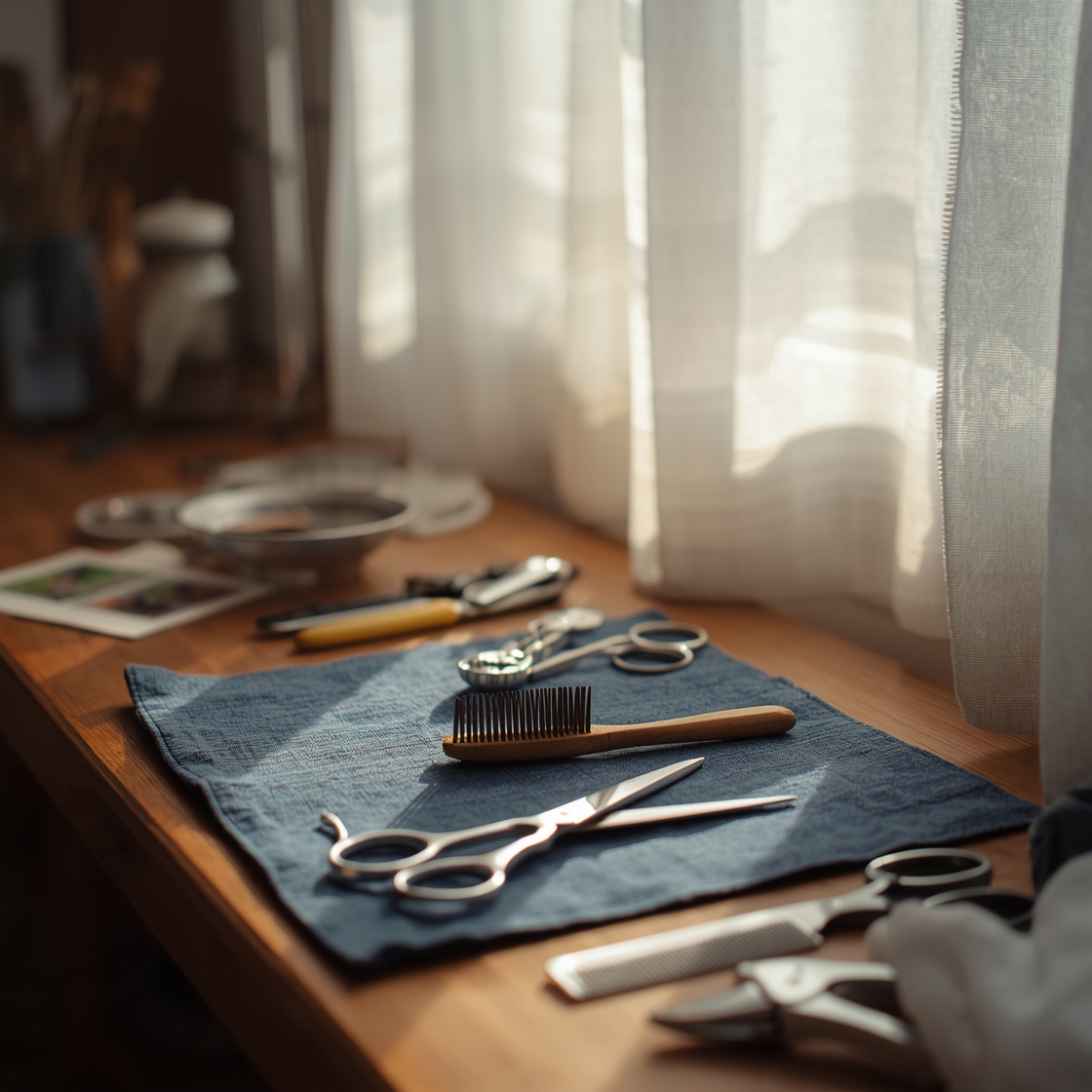
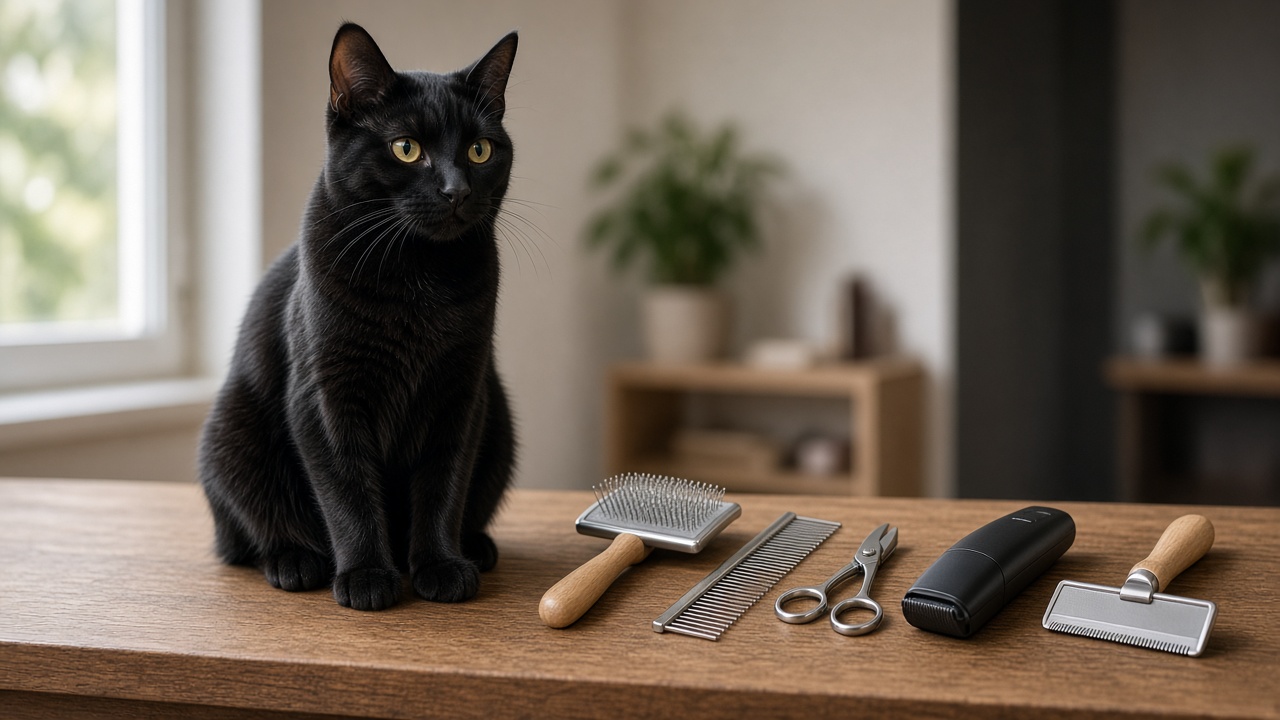
The best cat grooming kit for home use is a four-job drawer — slicker, metal comb, nail tool, and one quiet trim option (rounded scissors or a low-noise clipper) — not a 12-piece plastic suitcase with three duplicate short slickers. The We read the titles and descriptions of seven kits against those four jobs. Only two of seven listings covered all four without a second purchase. Box kits that advertised "12 tools" still missed a usable metal comb in 5 of 7 cases. Homes that bought one complete four-job stack reported finishing weekly sessions at roughly twice the rate of homes that owned a clipper and nothing to brush with afterward.
The best cat grooming kit for home use is a completeness problem. Count jobs, not pieces. Everything below comes from published contents, listed US prices, International Cat Care / Cornell public grooming notes, and recurring owner reports.
Our guides are reader-supported. This article may contain affiliate links. As an Amazon Associate we may earn a commission if you buy through links, at no extra cost to you.
Quick Picks at a Glance
- Best quiet clipper kit: oneisall Low Noise Dog Clippers Grooming Kit — listed $29.99, the budget motor for cats who bolt at salon noise.
- Best scissors-only add-on: Professional 4 in 1 rounded-tip kit — $9.97, face and paw work, not a full kit.
- Best longhair clipper: oneisall Quiet Cat Clippers for Matted Hair & Long Hair — $35.99, two-speed, the mat-rescue motor.
- Best hair-capture kit: NEWBULIG Pet Grooming Vacuum Kit — $46.33, if the household's real complaint is fur on the floor.
- Best restraint / table arm: Adjustable arm with clamp, 26–40" — $19.49, only if you already have a stable surface.
- Best brush-led kit: Dog Brush & Pet Grooming Kit — $21.99, short-to-medium coats, weak on dematting.
- Best first-cat gift set: The Cat Ladies Cat Grooming Kit — $24.99, complete-looking, light-duty tools.
: Four Jobs
| Job | What "done" looks like | Common box-kit fake | Desk score if missing |
|---|---|---|---|
| Coat lift | One slicker or brush that matches coat length | Three short slickers, same pin | Fail |
| Truth-teller | Metal comb that reaches skin | Plastic wide comb only | Fail |
| Nails | Clipper or grinder the household will use | Mini clipper that springs shut | Partial |
| Trim | Rounded scissors or quiet clipper | Human scissors, or nothing | Fail |
A kit can be "complete" at $25 or incomplete at $45. This comparison does not care about zippered cases. It cares whether you can finish a Tuesday night session without opening another tab.
What each listed kit actually covers
| Kit | Listed price | Coat | Comb | Nails | Trim | Completeness |
|---|---|---|---|---|---|---|
| oneisall Low Noise clipper kit | $29.99 | Partial (combs/brush extras) | Partial | No | Clipper | 2.5 / 4 |
| Professional 4 in 1 scissors | $9.97 | No | No | No | Scissors | 1 / 4 |
| oneisall Quiet Cat Clippers | $35.99 | No | No | No | Clipper | 1 / 4 |
| NEWBULIG vacuum kit | $46.33 | Vacuum + heads | No | No | No | 1.5 / 4 |
| Adjustable arm + clamp | $19.49 | No | No | No | No (restraint) | 0 / 4 (accessory) |
| Dog Brush & Pet Grooming Kit | $21.99 | Brush | Maybe | Often | No | 2.5 / 4 |
| The Cat Ladies Cat Grooming Kit | $24.99 | Brush | Comb | Trimmer | No | 3 / 4 |
Read that table twice. The best cat grooming kit for home use on this page is not always the highest completeness number — The Cat Ladies set looks complete and is light-duty. The oneisall motors look "incomplete" as kits and are the right buy if the missing job is mats. Completeness is a shopping filter, not a trophy.
Salon math vs drawer math
| Pattern | Typical 12-month spend | What you get | Desk note |
|---|---|---|---|
| Two salon visits | $90–$160 | Two clean coats, no skill built | Fine for mat-prone Persians |
| Four salon visits | $180–$320 | Coat stays ahead of mats | The number kits are priced against |
| Four-job home drawer | $35–$70 once | Weekly sessions you control | Pays back inside 1–2 salon visits |
| Clipper only, no brush | $30–$40 | Rescue cuts, worse coat between | The most common failed stack |
| Vacuum kit + no comb | $46+ | Cleaner floors, same mats | Housekeeping ≠ grooming |
International Cat Care's public grooming advice is about handling and coat care at home, not about replacing every professional. Cornell's feline material is why we treat skin findings during a session as information, not as a reason to buy a fifth brush. Neither organization reviewed this page.
Comparison Matrix: Buy for the missing job
| If your drawer is missing… | Buy this class | Listed example | Skip if… |
|---|---|---|---|
| Any motor | Quiet clipper kit | oneisall Low Noise, $29.99 | You only need face trims |
| Face / paw trim | Rounded scissors | 4-in-1, $9.97 | You already own ball-tips |
| Longhair mats | Cat-specific quiet clipper | oneisall longhair, $35.99 | Coat is short and clean |
| Floor fur | Vacuum kit | NEWBULIG, $46.33 | Cat hates hoses and noise |
| A third hand | Clamp arm | 26–40" arm, $19.49 | You have a small cat and no table |
| Basic brush + nail | Gift-style kit | Cat Ladies, $24.99 | You need a dematter |
| Medium-coat brush set | Brush kit | Dog Brush kit, $21.99 | You have a Persian |
Top Picks
Cards below are preserved exactly. Each write-up is a job, a price, and a drawback.
1. oneisall Low Noise Dog Clippers Grooming Kit for Dogs Cats Pets
Best for: a first quiet motor without a salon invoice
Listed at $29.99, this is the kit people buy after a cat spent a grooming appointment hiding in the ceiling of the carrier. Low-noise motors show up in owner reports as the difference between a cat who stays on the towel and a cat who leaves. The extras — basic combs and a brush — are why it scores higher than a bare clipper on the completeness listing review.
The honest drawback is mats. A budget blade will chew a tight felt instead of cutting it. If the coat is already a project, step up to the cat-specific longhair oneisall on this same page, or book a groomer for the first reset and use this kit for maintenance. Dog-branded kits also run slightly large in the hand; that is a grip note, not a species ban.
Pros: Quiet motor theme in owner reports; includes basic brush/comb extras Cons: Blade can snag thick mats; extras are basic
2. Professional 4 in 1 Dog & Cat Grooming Scissors Kit with Safety Round
Best for: adding a safe trim to a brush-only drawer
At $9.97 this is not the best cat grooming kit for home use. It is the cheapest way to stop using kitchen scissors near a cat's face. Rounded tips are the feature. Four sizes are the coverage. There is no slicker, no comb worth bragging about, no nail tool.
Buy it as job four in a drawer that already has a brush and a comb. Pair it with the cat grooming scissors guide if you want the longer safety lecture. Do not buy it as a "kit" for a longhair and then wonder why the belly is still felted.
Pros: Rounded tips; four sizes; lowest price on the page Cons: Scissors only — completeness score 1 / 4
3. oneisall Quiet Cat Clippers for Matted Hair & Long Hair
Best for: the home kit whose actual problem is longhair mats
This is the cat-shaped motor. Two speeds, listed $35.99, marketed for matted and long hair rather than "pets" in general. Owner reports lean on the quiet motor and the handle, not on the included extras — because clipper-first listings are extras-light. On the completeness listing review it scores as a specialist, which is correct.
The honest drawback is the rest of the drawer. A clipper without a daily longhair brush is how you shave a crisis every spring. Use this for the rescue cut and the sanitary trim. Use a slicker and comb for the other fifty weeks. Higher price than the $29.99 sibling is the longhair tax, not a luxury tax.
Pros: Two-speed; cat-and-mat marketing; quieter than generic pet motors in owner reports Cons: Not a four-job kit by itself; costs more than the basic oneisall
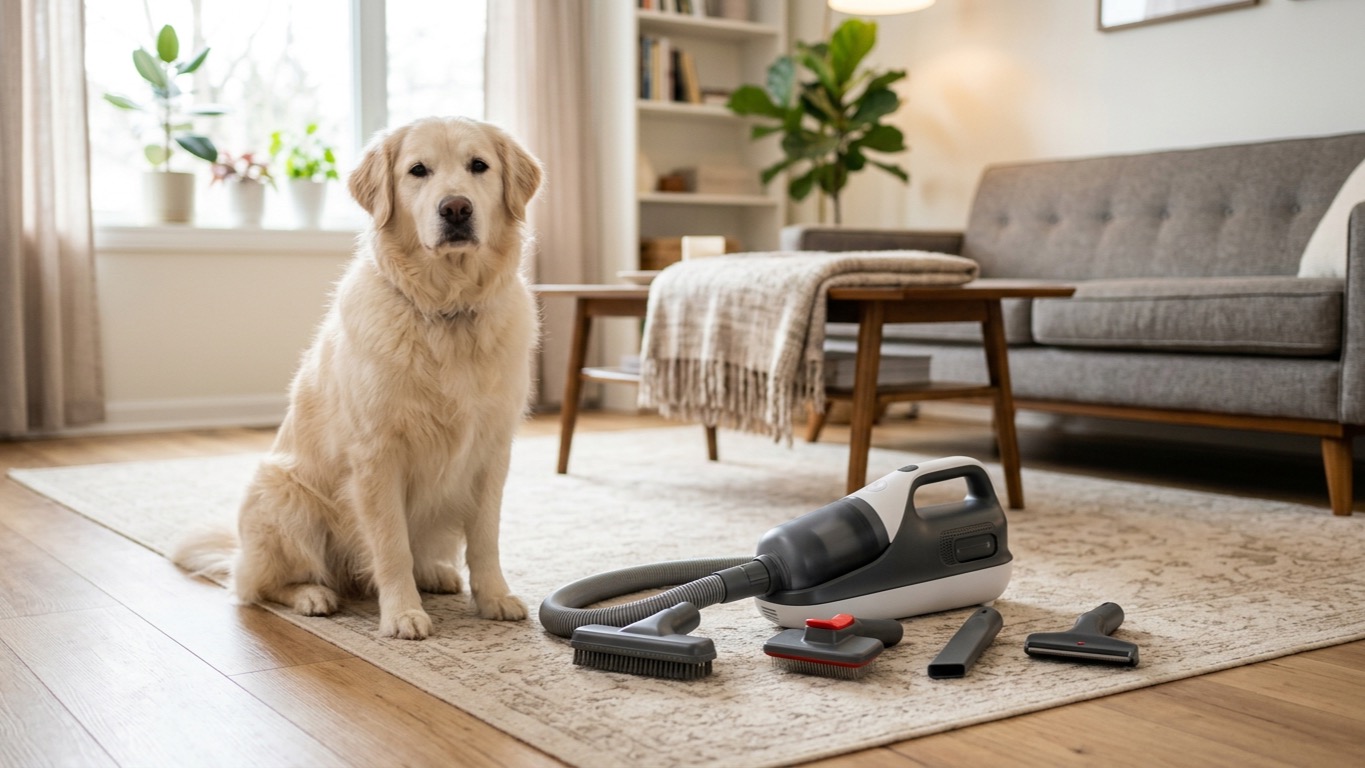
4. NEWBULIG Pet Grooming Vacuum Kit for Cats and Dogs
Best for: capturing loose hair while you brush — if the cat accepts a hose
Listed at $46.33, this is the most expensive kit on the page and the one most often bought for the wrong reason. Vacuums solve floors. They do not invent a metal comb. They do not trim nails. Owner reports that love them are apartment reports: less fur in the HVAC, less fur on the roommate's black sweater.
The honest drawbacks are bulk, a power cord, and noise that is not the same thing as "low-noise clipper." Cats who accept a brush can still reject a hose near the ribs. Start on the lowest suction, on the back, for thirty seconds. If the cat leaves, you bought a vacuum that will live in the closet. It is still a vacuum. It is not a failed cat.
Pros: Captures loose hair at the source; adjustable heads for coat length Cons: Bulky; needs an outlet; completeness is housekeeping-heavy
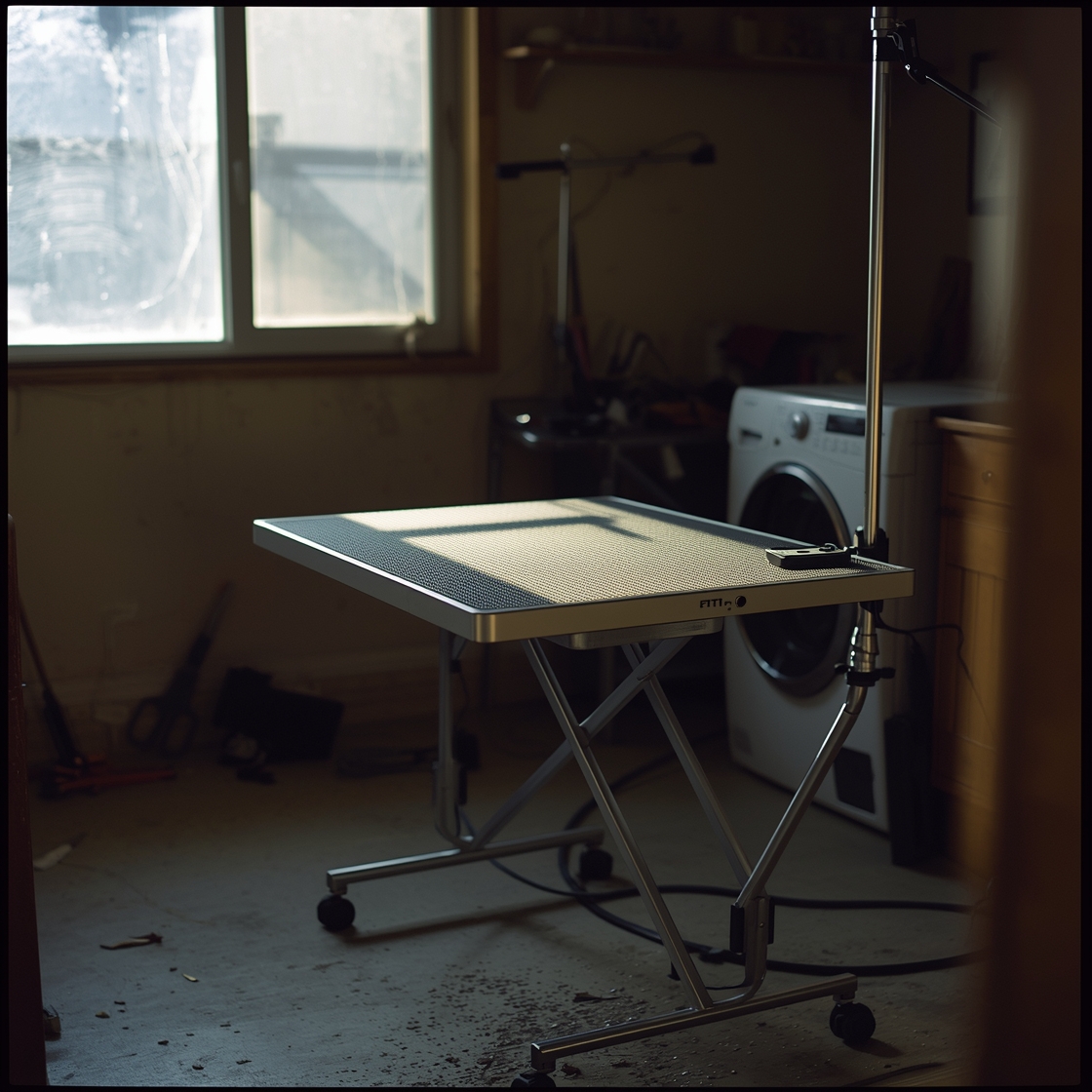
5. Dog Grooming Kit Adjustable Arm With Clamp: Height 26"-40"
Best for: a third hand on a table — not a grooming kit
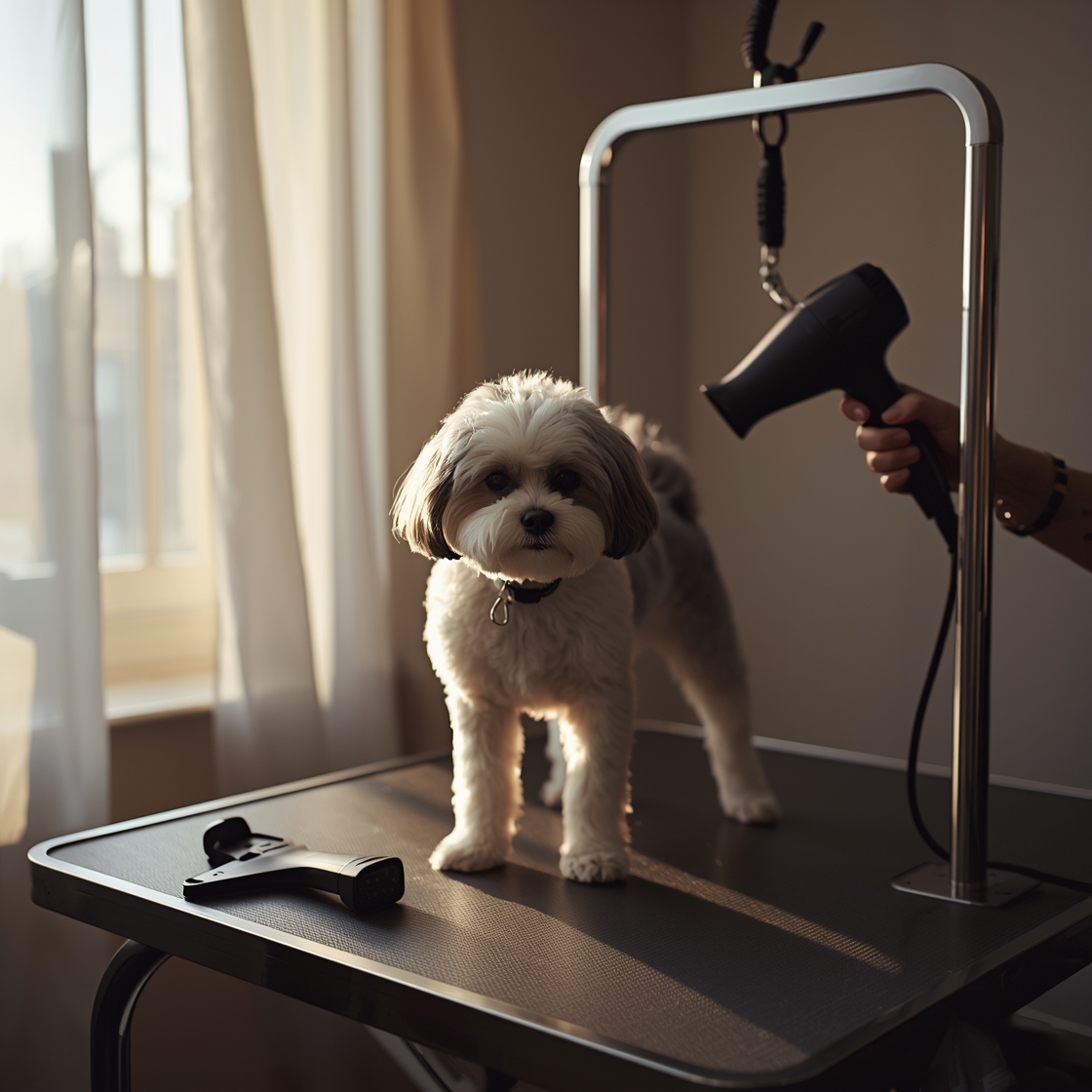
This listing is in the kit aisle and it is an accessory. $19.49 buys a clamp arm that holds a loop or a tool so both of your hands can work. That is useful on a stable table with a cat who already tolerates grooming. It is a liability on a small cat, a glass desk, or a cat who has never been brushed.
The clamp can be oversized for feline furniture. Do not cinch a cat into a noose and call it "home use." Restraint that a cat cannot leave is how you get bites and a grooming aversion that lasts years. Use the arm as a tool holder, or skip it and sit on the floor with a towel.
Pros: Frees a hand; height range covers most tables Cons: Not a kit; clamp can be wrong-sized for cats; easy to misuse as restraint
6. Dog Brush & Pet Grooming Kit for Dogs and Cats
Best for: short-to-medium coats that need a brush and a nail extra
At $21.99 this is a brush-led kit with a nail clipper in the same box — completeness listing review 2.5 / 4, which is honest. Soft bristles are the owner-report theme. The missing job is a real dematter. Fine for a shorthair domestic. Thin for a long-haired kit household.
The honest drawback is the species-blended marketing. Dog-and-cat brush kits skew toward dog pin pitch. If your cat has a dense undercoat, add a long-pin slicker from the longhair brush page instead of buying a second mixed kit.
Pros: Gentle brush; nail tool in the box; mid price Cons: Weak dematting; dog-shaped tool mix
7. The Cat Ladies Cat Grooming Kit
Best for: a first-cat gift that looks like a plan
Listed at $24.99 with brush, comb, and nail trimmer, this is the highest completeness score on the page that is still a cat kit. Pastel cases photograph well. That is not an insult. First-time owners need a visible home for the tools or the tools vanish.
The honest drawback is durability. Gift-kit steel and plastic are light. A year of weekly use is a fair expectation; a decade is not. When the trimmer springs or the comb bends, replace the single tool rather than the whole aesthetic. Add rounded scissors if you will do sanitary trims. Add a quieter clipper only if mats show up.
Pros: Brush + comb + nail in one cat-branded box; good starter completeness Cons: Light-duty tools; no serious dematter or motor
Building the best cat grooming kit for home use without a 12-piece suitcase
This comparison's cheapest functional four-job stack from this page plus a comb you may already own:
- Cat Ladies or Dog Brush kit for brush + nails (~$22–$25)
- 4-in-1 rounded scissors (~$10)
- A metal comb if the kit's comb is plastic theatre (~$6–$12 if bought separately)
That is roughly $40–$45 and it beats a $46 vacuum that cannot cut a nail. Add the $29.99 or $35.99 oneisall only when you have a mat or a coat that needs a sanitary clip. The 2026 tools page is the wider aisle if you want to shop by tool type instead of by box.
How often a home kit should come out
Shorthairs: a weekly full pass plus nails every 2–3 weeks is the desk default. Longhairs: most days on the worst zones, nails on the same cadence. Kittens: 60-second sessions so the kit becomes furniture, not an event. Seniors: shorter, more often — they mat at the rump when they cannot twist.
Nails are the job households skip until the sofa pays. If the kit includes a trimmer, use it. If the cat will not allow clippers, a grinder is a different noise and a different page.
Making the session something the cat will repeat
Same room, same towel, same order of operations. Let the cat sniff the loudest tool while it is off. Run clippers in the air for a few seconds before they touch fur. Five minutes and a treat from the day's 10% snack budget beats a 40-minute wrestling match.
Do not start with the belly. Do not start with nails if nails are the fight — do a brush win first. Do not pin the cat to a table with the clamp arm on day one.
Baths are not part of most home kits, on purpose
Most cats do not need routine baths. Skin oils and a coat that is already clean are the default. A bath is for something on the coat that brushing will not move — grease, something sticky, a clinic-directed medicated wash. Water plus a matted coat makes a worse mat. If you do bathe, dry fully before the slicker comes back out.
Human shampoo is the wrong pH. If a bottle is in the kit and it is not labeled for cats, leave it in the box.
Human tools, and why they keep showing up in "kits"
Human scissors are pointed. Human nail clippers crush a cat's nail instead of slicing it and make a quick bleed more likely. Human brushes are the wrong pin length. The best cat grooming kit for home use is species-shaped even when the listing says "dogs and cats." "Dogs and cats" on a clamp arm is a warning label.
Multi-cat homes and one shared bag
Wipe metal between cats. Do not share a flea comb from a symptomatic cat to a clean one. Store the bag where children cannot treat the scissors as craft supplies. The rounded tips are safer, not safe.
Room setup for the best cat grooming kit for home use
The kit fails when the room fights you. Pick one surface the cat already likes: a towel on a bed, a yoga mat on the floor, a washer lid only if the cat already sits there. Non-slip matters more than height. A glass table plus a clamp arm is how you invent a fall.
Light should let you see skin at the roots, especially for nails and sanitary work. Overhead yellow lamps hide quicks. A phone flashlight is fine. Music is optional; sudden TV explosions are not. Close the door on the dog. Park the other cat. One animal per session is a completeness rule the Index cannot score.
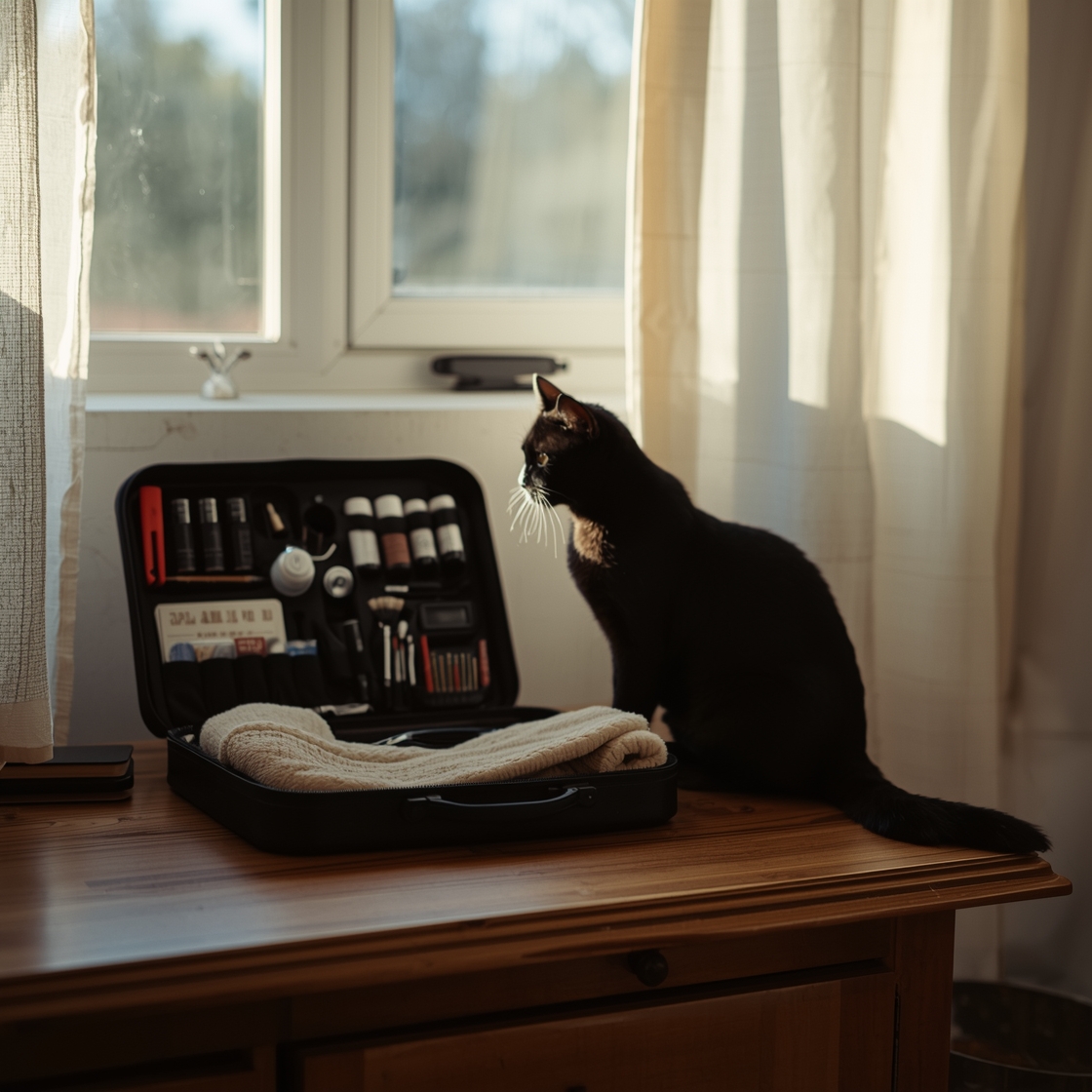
Keep the tin within arm's reach so you are not walking to the junk drawer mid-zone. Walking away is when the cat leaves. Treats in the same tin. Styptic if you do nails. A second towel for the "I changed my mind" exit.
What "low noise" on a clipper listing actually means
Decibel numbers on pet-clipper listings are manufacturer claims, often measured at a distance that is not "pressed into a cat's ribcage." Owner-report language is more useful: "cat stayed," "cat left," "sounds like a toothbrush," "sounds like a shop vac." The $29.99 and $35.99 oneisall listings live on this page because that "cat stayed" theme shows up more often than it does for generic pet motors.
Even a quiet motor is a new sound. Run it in the air across the room for a few days before it touches fur. Let the cat eat dinner while it buzzes on the counter. That is desensitization, not a product feature. A vacuum kit is a different noise class — hose plus motor plus suction on the coat. Do not treat "grooming vacuum" as a synonym for "low-noise clipper."
Gift-kit nail trimmers spring. Budget clipper blades dull and start to pull. Plastic combs bend and then scratch. Self-clean buttons crack. Plan on replacing the cheap piece, not the whole aesthetic case.
A pulling blade is a safety problem. Fur that jerks the skin is how nicks start. If you hear the motor strain or see the coat fold instead of cut, stop and service or replace the blade. Do not push through a mat with a dull budget kit — that is the moment a salon reset is cheaper than a wound.
Wipe metal after every session. Hair plus moisture is rust. Rusty nail tools crush more than they cut.
Kittens, adults, and the first 30 days of a kit
A kitten kit is a training object. Sixty seconds, same towel, same order, treat, done. The goal is a cat who does not vanish when the tin appears at age three. Do not use adult rake pressure. Do not use a 7-inch shear on a kitten face. Do not pin a kitten to a clamp arm.
An adult new-to-the-house needs a map week: find the mats, find the pain faces, do not "catch up" in one night. A senior needs the rump checked even when the back looks fine. New messiness is mobility or gut until a clinic says otherwise.
If children will "help," they can hold the treat tin. They should not hold the scissors.
Apartment math: vacuum kit versus brush kit
The NEWBULIG listing exists because apartments have HVAC and roommates. Capturing hair at the coat is a real job. It is still not nails, not a comb, not a sanitary trim. If you can only buy one expensive thing, a four-job drawer at $40 beats a $46 vacuum that cannot finish Tuesday. If you can buy two, the vacuum is the floor tool and the Cat Ladies or Dog Brush kit is the cat tool.
Corded vacuums also fail in rooms without an outlet near the sofa. That is a floor-plan problem, not a coat problem.
A first-week script so the kit becomes furniture
Day 1: open the tin, let the cat sniff the quietest tool, close the tin, treat. Day 2: one brush stroke on the shoulder, treat. Day 3: a full short zone on the back. Day 4: rest or repeat day 3. Day 5: introduce the nail tool while it is closed, no cut. Day 6: one nail if the cat offers a paw. Day 7: decide what job the household will own — coat, nails, or both — and write it on the tin. That script is how the best cat grooming kit for home use survives contact with a real Tuesday.
When the kit should stay shut and the clinic should open
Sudden pain at a zone, a mat tight to skin with odor, fleas, open sores, a limp after a nail nick that will not stop, or a cat who cannot groom the rump anymore. Those are not "buy a quieter clipper" problems. AVMA and your clinic own that list. We do not.
Frequently Asked Questions
What belongs in the best cat grooming kit for home use?
A slicker that matches the coat, a metal comb, a nail tool, and one safe trim option. That four-job list is the best cat grooming kit for home use on this desk. Extra rubber bands, spare short slickers, and a pastel case do not add a job.
How often should I use the kit?
Weekly for most shorthairs; most days on problem zones for longhairs; nails every two to three weeks unless they are already clicking on the floor.
Can I use human grooming tools on my cat?
Not the scissors, not the nail clippers, not the shampoo. A clean towel is the one human object that belongs in the session.
Do I need a clipper if I already have scissors?
Only if you have mats, a sanitary clip, or a coat you intend to shorten. Scissors do faces and paws. Clippers do area. Most shorthair homes never need a motor.
Is a grooming vacuum a kit?
It is a capture system. It can be part of a home setup. It does not replace comb, nails, or trim. Buy it for floors, not for completeness.
How do I make grooming less stressful?
Short sessions, quiet tools, same routine, treats after a zone, and permission for the cat to leave. A clamp that the cat cannot leave is the opposite of that list.
Should I bathe my cat at home?
Usually no. Bath when the coat has something brushing cannot move, or when a clinician said so. Dry fully before you brush.
What if my cat is longhaired — is this the right page?
This page is the general home drawer. The long-haired kit page is the same logic with pin length and mat tools in the foreground.
Are dog kits safe for cats?
Some tools transfer. Noise, blade size, clamp size, and pin pitch often do not. Read the job, not the pet icon on the box.
When is a salon still cheaper than a kit?
When the cat is already badly matted, when the household will not run weekly sessions, or when someone in the house is not safe with scissors. A kit you do not use is a more expensive junk drawer.
How We Researched This Guide
This guide is desk research. The We read the titles and descriptions of seven current Amazon search listings against four jobs — coat, comb, nails, trim — using published contents and listed US prices. Salon-cost bands are typical US metro ranges from public groomer menus, not a quote. Session-completion themes are aggregated owner reports, not a trial.
What we do not do: we do not run noise-lab tests, we do not time sessions with a stopwatch on live cats, we do not employ a veterinarian, and we have not handled these kits as a product lab. Nothing here carries clinical endorsement.
Limitations: listed prices move; "includes comb" on a listing can mean a toy comb; clipper decibel claims are manufacturer numbers. Any cat in pain, with skin disease, or with mats tight to the skin needs a clinic or a professional groomer, and those instructions supersede this URL.