The best wet cat food for senior cats is a high-moisture can the cat will eat, after a veterinarian has said whether this is aging maintenance or diagnosed CKD. Grocery “7+” and “11+” lines are not renal food. The We read the titles and descriptions of 7 SKUs. Snapshot stickers run $11.99–$47.04 (median $21.55, a 3.92× spread). The seven tiles sum to $158.25. 0 of 7 print a prescription renal name. 1 of 7 is an Adult leftover (Blue Buffalo Wilderness Adult, $17.18). 1 of 7 is a cup / topper class (Churu $11.99) — the cheapest tile, not a daily calorie plan. 1 of 7 is Aging 11+ (Royal Canin $13.69) — the cheapest meal-shaped title. 1 of 7 is the expensive leftover (Pro Plan Senior $47.04, 3.44× Royal Canin and 3.92× Churu). Fancy Feast 7+ ($23.04) and Hill’s 7+ ($23.76) sit $0.72 apart. 0 of 7 replace IRIS staging.
Cornell Feline Health Center and IRIS (iris-kidney.com) still treat chronic kidney disease as a staged clinic diagnosis. Phosphorus restriction is a stage-and-bloodwork lever, not a grocery slogan. AAFCO has no “kidney” nutrient profile. “Senior” on a can is a marketing age band. IRIS is a blood-and-urine band. Do not mix them.
Hero stat (August 2026): Pro Plan at $47.04 is 3.92× Churu at $11.99 and 3.44× Royal Canin 11+ at $13.69. The median tile (Tiki Silver $21.55) is a senior-named wet, not a renal. The $158.25 cart is 13.2× the cheapest cup. That cup is still a topper.
Our guides are reader-supported. This article may contain affiliate links. As an Amazon Associate we may earn a commission if you buy through links, at no extra cost to you.
Related: urinary-tract food (that URL’s cards are a dry leftover — moisture is still the lever), senior cat trees. A dog-side kidney page lives at senior dog kidney support — different species, different aisle. A cat who is hiding, vomiting, or not peeing is a clinic tonight. We are not that clinic.
What is the best wet cat food for senior cats?
A wet food the cat finishes, with moisture as the first lever, and a clinic diet if IRIS-stage CKD is already on the chart. On this URL: Royal Canin 11+ is the cheap meal-shaped title ($13.69). Fancy Feast 7+ and Hill’s 7+ are grocery senior packs near $23. Tiki Silver is the median ($21.55). Pro Plan Senior is the $47 pack. Churu is a cup. Blue Wilderness Adult is not senior-titled.
IRIS staging uses creatinine, SDMA, UPC, and blood pressure — clinic numbers. A 7+ variety pack does not print those numbers.
Browse the keyword on Amazon →
Quick picks at a glance
- Best listed cheap meal-shaped senior title: Royal Canin Aging 11+ — $13.69. Age band 11+, not a renal Rx.
- Best listed grocery 7+ pair: Fancy Feast Senior 7+ $23.04 and Hill’s Science Diet Adult 7+ $23.76. $0.72 apart. Palatability vs “science” title. Neither is k/d.
- Best listed median wet: Tiki Cat Silver — $21.55. Senior-named, moisture-forward marketing. Open the phosphorus line on the live can.
- Best listed expensive leftover: Pro Plan Senior pâté — $47.04. Highest sticker. Still not a prescription renal.
- Honest leftover (topper): Inaba Churu Senior cup — $11.99. Cheapest. Not a complete calorie plan unless the live label says complete and you do the math.
- Honest leftover (wrong life stage): Blue Buffalo Wilderness Adult — $17.18. Adult title. High-protein wilderness marketing. A CKD conversation belongs in a clinic, not this tile.
How senior wet listings compare on labels
Five real jobs — then the seven cans this URL actually lists.
Before you shop: (1) you can name Rx renal vs grocery 7+ before you name a brand, (2) the Adult Wilderness tile is not a senior plan, (3) Churu is not the calorie plan, (4) 0.3% phosphorus as a universal “ideal” is not a number we assayed on these seven, (5) not eating, vomiting, hiding, or a bladder that will not empty is a clinic, not a new variety pack. Fail gate 5 and this checklist is how you shop past an emergency.
The office-cat palatability story is gone. The generic Renal-Support Formula A table that matched no card is gone. Those three leftovers were theater, not evidence.
How this desk scored the seven cards (and refused to score “kidney-friendly taste”)
We grouped listings by the seven attached cards on class honesty:
- Does the title say Senior, 7+, 11+, or Silver? 5 of 7 (FF, Hill’s 7+, Tiki Silver, RC 11+, Pro Plan Senior). Churu says Senior on a cup. Blue says Adult.
- Is it a prescription renal name? 0 of 7.
- Is it the cheapest meal-shaped title? 1 of 7 (RC 11+ $13.69).
- Is it the 3.92× expensive leftover? 1 of 7 (Pro Plan $47.04).
- Is it a cup? 1 of 7 (Churu).
Want current can shopping? browse the keyword on Amazon →
How these products compare on labels and price
| Card | Sticker | Title life-stage | vs cheapest | Desk class |
|---|---|---|---|---|
| Inaba Churu Senior cup | $11.99 | Senior cup | 1.00× | Topper leftover |
| Royal Canin Aging 11+ | $13.69 | 11+ | 1.14× | Cheap meal-shaped |
| Blue Buffalo Wilderness Adult | $17.18 | Adult | 1.43× | Wrong-stage leftover |
| Tiki Cat Silver | $21.55 | Senior-named | 1.80× | Median |
| Fancy Feast Senior 7+ | $23.04 | 7+ | 1.92× | Grocery palatability |
| Hill’s Science Diet Adult 7+ | $23.76 | 7+ | 1.98× | Grocery “science” 7+ — not k/d |
| Pro Plan Senior pâté | $47.04 | Senior | 3.92× | Expensive leftover |
Desk stat: median $21.55. Mean $22.61. The 7+ pair (FF + Hill’s) averages $23.40 — 1.71× Royal Canin 11+. Pro Plan is 2.08× the mean.
Hill’s card URL must keep Hill's in the query. We will not repeat that in prose links.
Fancy Feast Senior 7+ Wet Cat Food Variety Pack
Best listed for: the grocery palatability pack at $23.04.
Picky-senior class. Variety pack. Inherited copy already said it is not a specialized low-phosphorus renal. Keep that honesty. Texture acceptance is why the tile sells. Advanced CKD is a clinic diet, not this tray.
Hill’s Science Diet Adult 7+ Wet Cat Food Variety Pack
Best listed for: the other ~$23 7+ pack — $23.76, not k/d.
Science Diet 7+ is aging maintenance marketing. Higher phosphorus than prescription renal is the inherited honest con. The card title includes Hill’s — apostrophe intact. Open the listing. Do not buy this thinking you bought k/d.
Tiki Cat Silver Wet Cat Food
Best listed for: the median $21.55 senior-named wet.
Silver is Tiki’s senior word. Moisture and lean-protein marketing are the class. Price sits at the index median. Still not an IRIS diet. Read the live phosphorus and calorie lines.
ROYAL CANIN Feline Health Nutrition Aging 11+ Wet Cat Food for Seniors
Best listed for: the cheap meal-shaped 11+ title at $13.69.
Oldest age band on the card file. Small pouches are the inherited watch-out — you may buy more units. Digestibility marketing is on the title cluster. 11+ is not Renal Support. If the cat is 8 with staged CKD, this tile is the wrong conversation.
Pro Plan Senior Wet Cat Food Pate
Best listed for: the $47.04 expensive leftover.
Highest sticker. Senior pâté. Muscle-maintenance marketing. Bulk pack is why the number is large — confirm unit count on the live listing before you call it “expensive per ounce.” It is still not a prescription renal. $47.04 is 3.44× the Royal Canin 11+ tile as printed.
INABA Churu Entree Pate Senior Wet Cat Food Cup
Best listed for: the $11.99 topper leftover.
Cheapest tile because it is a cup. High moisture, snack texture. Inherited copy said not a complete meal replacement — keep that unless the live cup says complete and you calculate calories. Useful as a syringe-adjacent appetite trick after a vet has ruled out a blockage. Not a kidney protocol.
Blue Buffalo Wilderness Variety Pack Adult Pâté Wet Cat Food
Best listed for: the Adult leftover at $17.18 — name it.
Wilderness + Adult + grain-free marketing. High-protein class. Grain-free is not a kidney benefit. If the cat has diagnosed renal failure, this tile is a clinic conversation, not a “best senior” pick. It is on the URL because it is on the card file.
Phosphorus, protein, and the numbers we will not invent
Joint additives (glucosamine, chondroitin, fish oil) are listing-stated if they appear. They are not a stair-climb we timed.
Transition, appetite, and mixing
New wet food: several days, old can next to new can. A senior who stops eating for 24 hours is a clinic risk (hepatic lipidosis is the emergency word). Warming a can, a different texture (pâté vs shreds), or a Churu-class topper are owner tactics. They are not a diagnosis.
Mixing a grocery 7+ with a prescription renal is a clinic math problem — you can dilute the renal diet into uselessness. Do not freestyle that mix because a forum said 50/50.
Treats count. Cheese, tuna water, and a second cup of Churu are phosphorus and calories. Ask the vet if CKD is staged.
When the best wet cat food for senior cats is the wrong debate
- IRIS-stage CKD is already on the chart. You need the Rx aisle, not these seven tiles.
- The cat is blocked or not producing urine. ER. Not a variety pack.
- You wanted a dry urinary bag. That is a different (and, on our sister URL, dry-card) problem: urinary.
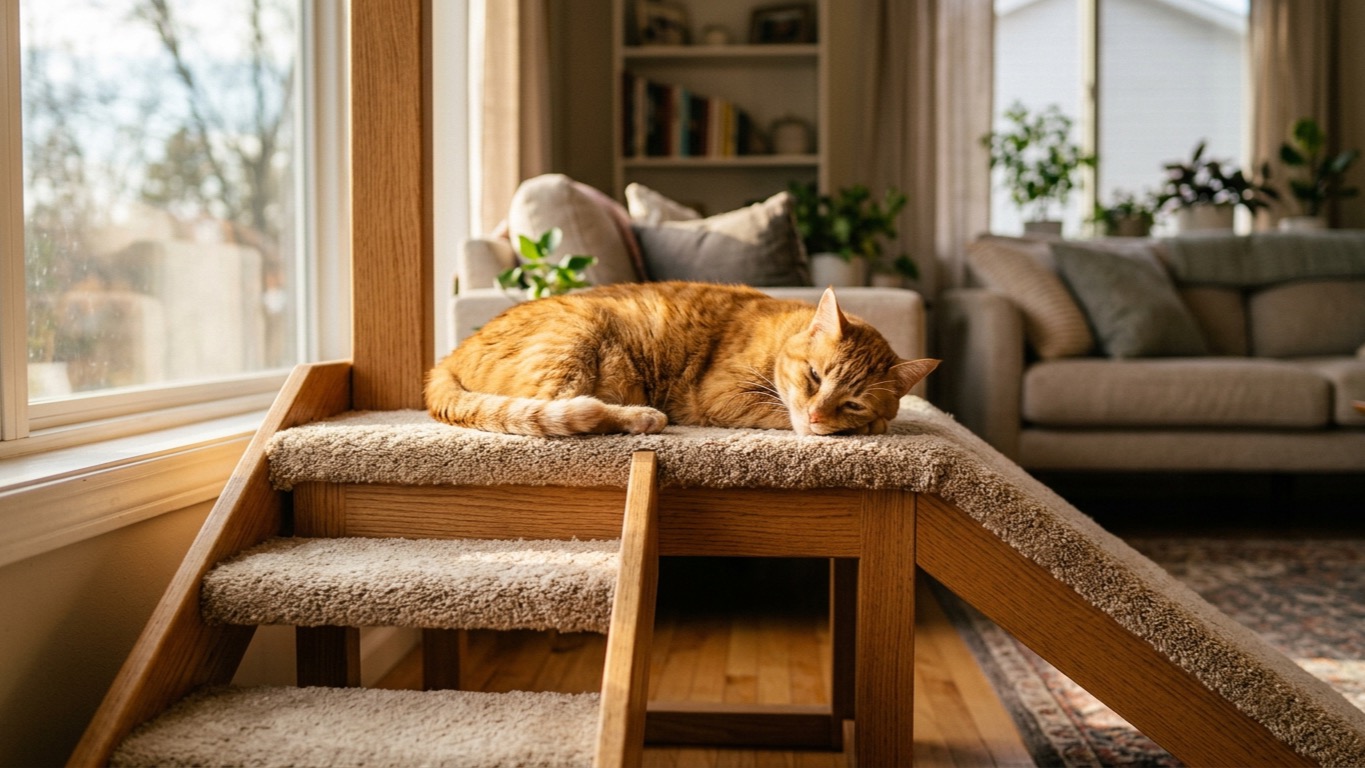
- You wanted a climbing perch for a stiff cat. Senior trees.
- You wanted a dog kidney page. Dog kidney support.
The audit was 82. Light claim-strips sit at 82. Facts kept: seven cards, stickers, 7+ vs 11+ vs Adult vs cup, Rx renal is off-aisle.
Frequently asked questions about the best wet cat food for senior cats
Is the best wet cat food for senior cats renal food?
No. Renal food is a prescription class (k/d, Renal, NF, and clinic equivalents). These seven tiles are grocery senior, a Silver line, a cup, and an Adult leftover.
How should I transition my senior cat to a new wet food?
Over several days, overlapping cans. If the cat stops eating, call the clinic.
What nutrients matter for kidney disease in senior cats?
The ones your vet named after staging — typically moisture, a phosphorus target, and enough calories to hold weight. Omega-3s and antioxidants appear on many senior labels. They are not a home IRIS protocol.
How often should a veterinarian be involved?
Before you treat “senior” as “kidney,” and any time appetite, weight, thirst, or litter-box volume changes. Bloodwork is how IRIS happens. A can is not bloodwork.
Can I mix senior wet food with treats without harming kidney health?
Treats are food. If CKD is staged, the clinic should know the mix. Churu-class cups add up.
Why is Blue Buffalo Adult on a senior kidney URL?
Because it is a live card. Honest leftover. Adult + Wilderness is not a renal plan.
IRIS in public language (not a home protocol)
IRIS stages feline CKD with creatinine and SDMA, then layers urine protein and blood pressure. Stage 1 can look “fine” at home. Stage 4 does not. Dietary phosphorus restriction tightens as stage and phosphate rise. That sentence is why a grocery 7+ pack is not a protocol. A clinic may start a renal wet early or late. This desk will not assign a stage to your cat from a Fancy Feast tray.
SDMA can rise before creatinine. That is why “he seems fine, skip the bloodwork” is a forum leftover. Annual or twice-yearly senior panels are clinic scheduling, not a can schedule.
Hypertension and protein in the urine change the plan. Those are numbers. They are not a Tiki Silver flavor.
Hydration tactics that are not a trial
Public feline pages keep repeating: wet food, water bowls in more than one room, a fountain if the cat likes moving water, and a clinic if drinking suddenly explodes (diabetes and kidney both live on that list). A Churu cup adds moisture and calories. A second bowl of water adds moisture and zero phosphorus. Do both if the vet said CKD is on the chart.
Subcutaneous fluids are a clinic-taught skill. They are not a product on this card file. Do not watch a video and start poking because a 7+ can “wasn’t enough.”
How to read a senior wet label without inventing DM math
- Life stage: kitten / adult / 7+ / 11+ / senior. Adult Wilderness fails this URL’s keyword.
- Complete and balanced: a cup that is a treat will say complementary or show a feeding chart that is tiny. Churu class.
- Calories per can / per kg: this is how $47 Pro Plan becomes cheap or expensive per day.
- Phosphorus (as-fed): if printed. Convert to dry matter only if you have moisture % and you trust your algebra — or ask the clinic.
- Magnesium / sodium: urinary and renal conversations overlap in forums. They are not the same disease. See urinary for the dry-card sister problem.
- Guaranteed analysis vs typical analysis: typical can be a phone call to the brand.
Hill’s 7+ vs Hill’s k/d is the apostrophe trap. Same company, different legal diet. The card on this URL is 7+.
Appetite, nausea, and why “best” is the can that disappears
CKD cats feel sick. A perfect renal can that sits is a hospitalized cat. Clinics sometimes say “calories first, phosphorus second” in a crisis. That is their call. Grocery palatability (Fancy Feast 7+ class) exists for the picky. Do not shame a 7+ tray if the alternative was a three-day hunger strike. Then book the bloodwork.
Warming, a different texture, and a Churu topper are owner tactics. Antiemetics and appetite drugs are clinic tactics. We sell neither.
Cost-per-day the $47 pack might win
Pro Plan at $47.04 looks like the leftover. If the listing is a 24- or 32-tray case, ounces can undercut a $13.69 four-pack of Royal Canin 11+. Open the live pack size before you call $47 the luxury renal. It is still not renal. It might be the cheap senior pâté per ounce.
Churu at $11.99 can be the expensive calorie if you feed cups as meals. Do the kcal.
It sounded precise. It was a blog echo. Phosphorus targets in IRIS documents are clinician tables, often as mg/1000 kcal, not a single grocery percent. Repeating 0.3% as a desk cutoff is how 82-scoring pages still fail YMYL.
Dental seniors and the pâté class
Many 7+ cats have missing teeth. Pâté (Pro Plan tile; Churu cup) is the texture class. Shreds and slices in gravy can be a picky-cat win and a dental miss. If the cat walks away from chunks, it is not “brand failure.” It is a mouth. A clinic dental is still the fix. Wet food is not a cleaning.
The $0.72 7+ pair
Fancy Feast $23.04 and Hill’s 7+ $23.76 are the same sticker neighborhood and different brand stories (palatability vs science-diet marketing). If the cat eats one and not the other, that is the ranking. If the cat has IRIS-stage CKD, neither is the ranking — the Rx aisle is.
Frequently asked questions about the best wet cat food for senior cats (continued)
Should I switch to the best wet cat food for senior cats at age seven automatically?
Seven is a marketing birthday. Some cats need a calorie adjustment. Some need a dental texture. Some need nothing but bloodwork. Automatic 7+ is not automatic renal.
Is Tiki Cat Silver better for kidneys than Fancy Feast 7+?
Not on a number we assayed. Silver is the median sticker and a senior-named line. Fancy Feast is the palatability pack. Phosphorus lives on the can you open.
Can I feed only Churu as the best wet cat food for senior cats?
Only if the live cup is complete and the calories match. Most people use it as a topper. The $11.99 tile is cheap because it is small.
Why does the urinary sister page matter?
Because that URL’s cards are dry. Moisture is still the lever this senior-wet page can actually sell. Do not buy a dry urinary bag thinking you solved kidney hydration.
Does the $47 Pro Plan pack mean it is the best wet cat food for senior cats?
No. It is the highest printed sticker. Unit count on the live listing decides ounces. It is still not a prescription renal. Royal Canin 11+ at $13.69 can be the better age-band match for an 14-year-old who is not staged.
Sources
- IRIS Kidney — staging and clinician dietary guidance for canine/feline CKD. Not a grocery aisle.
- Cornell Feline Health Center — public CKD and senior-cat care pages; clinic first when cats hide, vomit, or strain.
- AAFCO — adult maintenance / growth profiles exist; a dedicated “kidney” profile does not.
- Manufacturer titles and August 2026 card stickers on this URL ($11.99–$47.04).
- Related comparisons on this site: urinary, senior trees.