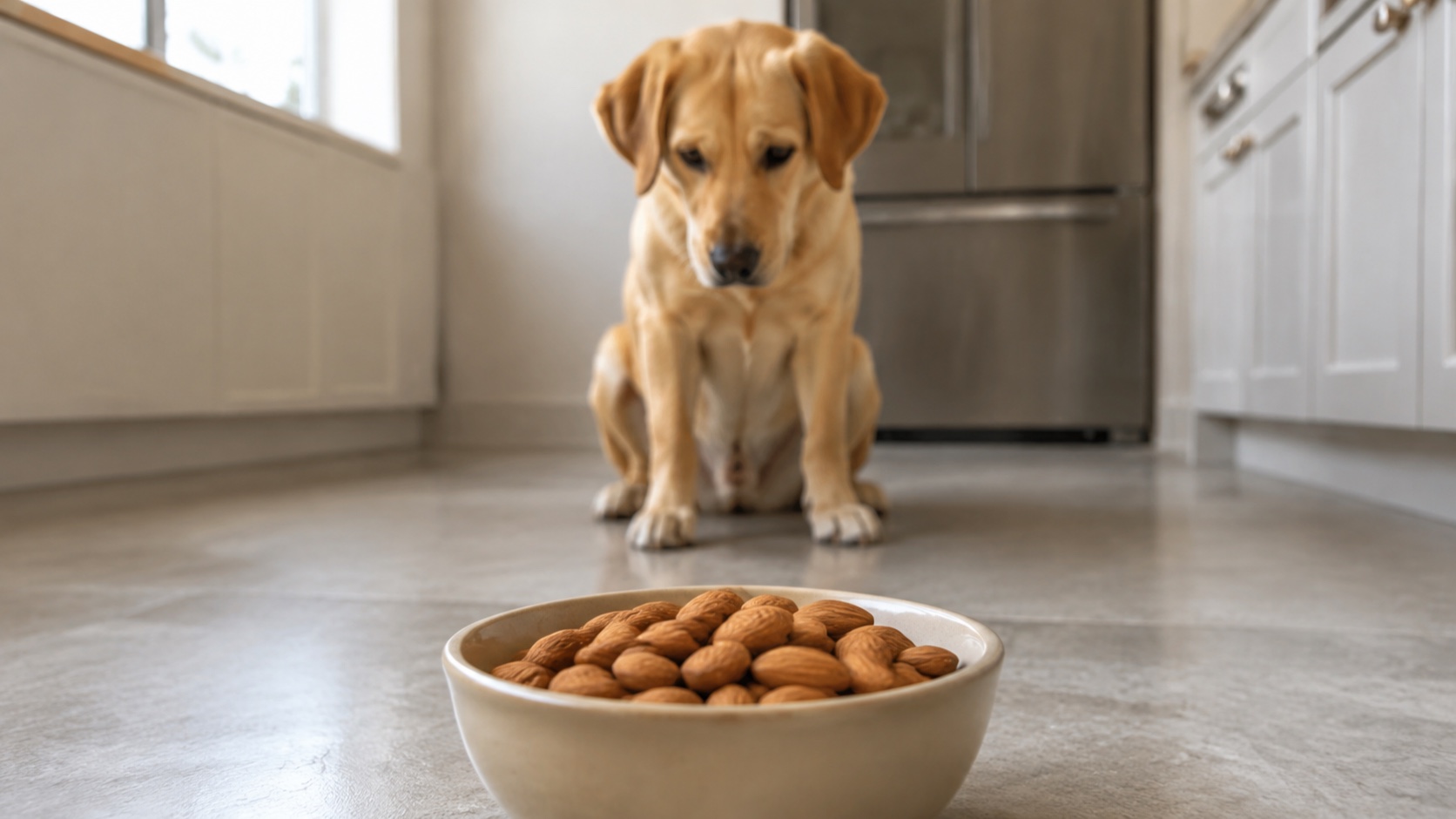
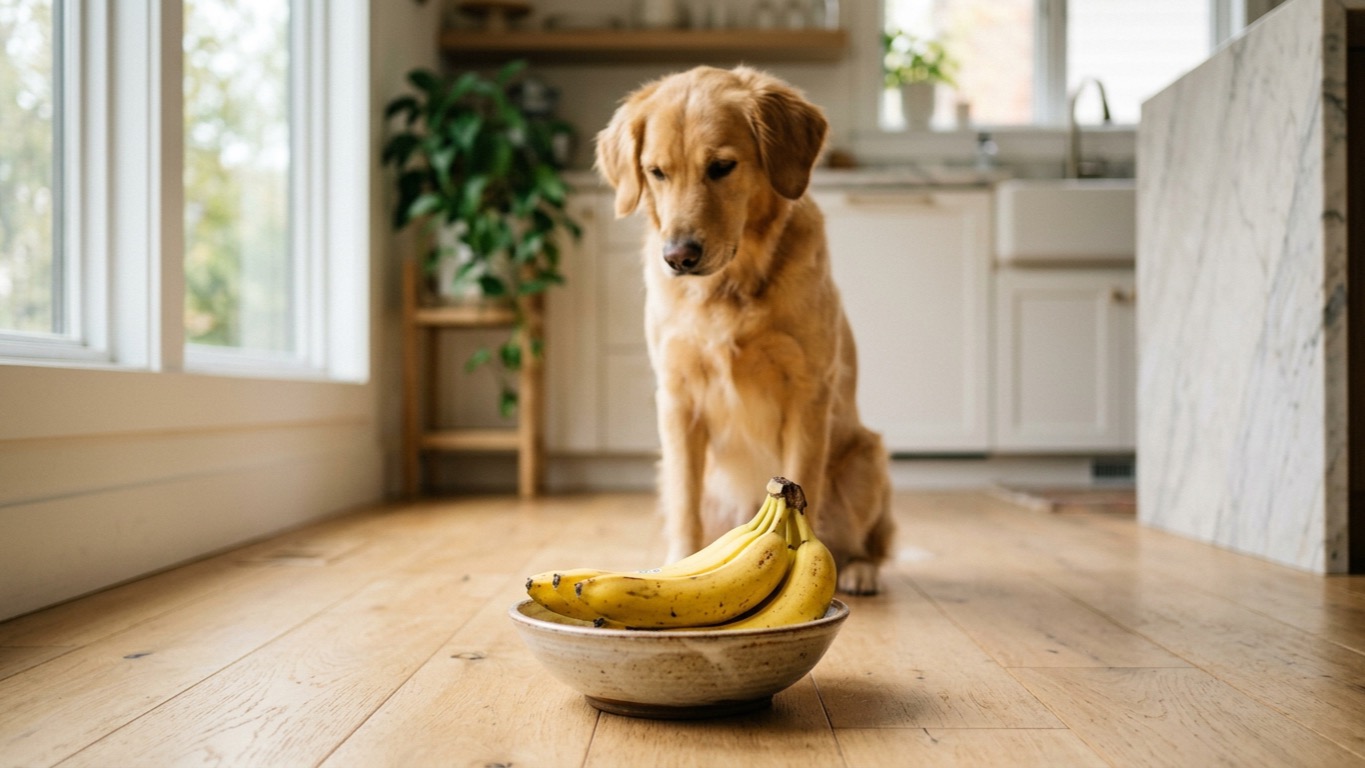
Can dogs eat bananas? Yes — peeled flesh only, in slice counts that fit the treat budget, not a whole fruit dropped in the bowl. A medium banana is about 105 kcal and 14.4 g sugar on USDA tables. For a typical 50 lb adult on a ~900 kcal maintenance band, the 10% treat cap is ~90 kcal. One intact banana is 116% of that cap before a single biscuit, dental chew, or training cube is counted. That is the decision rule this page will defend: coins, not the fruit.
The is arithmetic, not a taste test. USDA-class raw banana is ~89 kcal per 100 g. A 1 cm coin from the mid-fruit is roughly 8–10 g, or 7–9 kcal. Two coins sit near 16 kcal — less than a typical medium biscuit (~40 kcal). A half banana (~59 g, ~52 kcal) is already a large treat for a 25 lb dog whose 10% band is often ~40–60 kcal. Peel is not a serving. Chocolate, caramel, or xylitol peanut butter on top is a different page and a different emergency.
Our guides are reader-supported. This article may contain affiliate links. As an Amazon Associate we may earn a commission if you buy through links, at no extra cost to you.
Related fruit pages on this site: watermelon, cantaloupe, pineapple, grapes (not a treat — a poison-control call).
What does can dogs eat bananas actually allow?
Flesh that is ripe enough to mash, fully peeled, cut to mouth size, and logged against the day’s extras. It does not allow:
- The peel as “fiber”
- A whole banana as a meal replacement
- Banana bread, chips fried in oil, or yogurt-coated bites with mystery sweeteners
- Daily half-bananas for a dog already overweight
- Any fruit for a dog whose clinician has already said “no extra sugar / no extra potassium”
ASPCA’s people-foods list is the toxicity screen, not a serving chart. Banana is not in the grape / raisin / xylitol / allium class. Toxicity-negative is not the same as “free feed.”
Browse banana-safe prep tools →
How banana slice listings compare on labels
Five jobs. One fruit. We grouped listings by the job, not a brand of banana.
| Job | What this desk allows | Fail if you skip it |
|---|---|---|
| Toxicity screen | Peeled Musa flesh is not a known canine toxin class | Treating peel as edible “fiber” |
| Calorie job | Slice math vs the 10% extras band | A whole fruit as “one treat” |
| Sugar job | ~12.2 g sugar / 100 g (USDA raw) | Daily fruit for a diabetic plan |
| Potassium job | ~358 mg K / 100 g; ~422 mg per medium fruit | Free-feeding on a renal diet |
| Texture job | Soft coins or a thin mash in a toy | Frozen logs a small dog can gulp |
Before you shop: (1) peel is in the bin, not the bowl, (2) you can name today’s treat calories before you cut, (3) first serving is one coin, then you watch stool for 24 hours, (4) xylitol and chocolate stay off the banana, (5) hunched belly, repeated vomiting, or a dog who will not drink is a clinic, not a smaller slice. Fail gate 5 and this checklist is how you shop past an emergency.
USDA-class banana numbers this desk actually used
Rounded FoodData Central references for raw banana, edible portion. Use the 100 g column to compare classes; use the medium-fruit column to see why a “just one banana” habit fails.
| Measure | Per 100 g | Medium fruit (~118 g) | Desk note |
|---|---|---|---|
| Energy | ~89 kcal | ~105 kcal | Treat, not breakfast |
| Total sugar | ~12.2 g | ~14.4 g | The diabetes lever |
| Fiber | ~2.6 g | ~3.1 g | Peel is much higher fiber and not a serving |
| Potassium | ~358 mg | ~422 mg | Renal-diet flag |
| Carbohydrate | ~22.8 g | ~27.0 g | Displaces complete food if you go large |
| Protein | ~1.1 g | ~1.3 g | Not a protein plan |
| Fat | ~0.3 g | ~0.4 g | Low fat; still calorie-dense as fruit |
Hero ratio: a medium banana’s 105 kcal is ~2.6× a 40 kcal biscuit. Two mid-fruit coins (~16 kcal) are ~0.4× that biscuit. If the job is a training reward, the coins win. If the job is “empty the fruit bowl,” the dog loses the calorie band.
NRC-style maintenance estimates used only as bands on this page (intact adult, modest activity — not a prescription):
| Dog weight band | Rough daily kcal | 10% extras cap | Banana equivalent this desk will write |
|---|---|---|---|
| Toy, under 10 lb | ~200–350 | ~20–35 kcal | 2–3 thin coins, not a third of a fruit |
| Small, 10–25 lb | ~350–600 | ~35–60 kcal | 3–5 coins; skip the half banana |
| Medium, 25–50 lb | ~600–900 | ~60–90 kcal | Up to ~½ fruit occasionally, if nothing else is a treat that day |
| Large, 50–80 lb | ~900–1,300 | ~90–130 kcal | ½ fruit is the usual ceiling; a whole fruit is a rare, logged exception |
Frequency this desk will defend for a healthy adult: two or three banana days a week, not a daily half fruit on top of chews.
Why can dogs eat bananas is a portion question, not a yes/no trivia card
- Banana is energy-dense for a fruit. Cantaloupe sits near 34 kcal / 100 g. Banana sits near 89. Same cup of enthusiasm, different math. See cantaloupe.
- Sugar is the quiet lever. Fourteen grams in one fruit is a lot next to a complete kibble that already contains carbohydrate.
- Potassium is a diet-class mineral. Many renal and some cardiac food plans restrict it. We do not adjust those plans from a blog.
- Peel is a mechanical problem. Tough, slippery, high-fiber, easy to gulp. Constipation and foreign-body stories in clinic literature are about objects, not “banana toxin.”
- Chocolate is still chocolate. Caramel is sugar plus stickiness.
- Ripe vs green changes starch-to-sugar, not the peel rule. Greener fruit is starchier and less sweet; it is not a free pass to feed more grams.
Stool notes you keep at home are useful for your clinician. They are not a PetBench dataset.
How to serve banana without blowing the day
Wash the peel before you cut so the knife does not drag surface dirt onto the flesh. Peel fully. Slice coins, then halve or quarter them for toy and small mouths. A thin smear inside a classic stuffable toy still counts as the same calories — smearing is not a loophole.
Frozen coins are a summer job, not a different food. Supervise. A large frozen chunk is a gulping hazard the same way a frozen cube of pineapple is. Thaw to a slush if your dog inhales treats.
A kitchen scale is the honest tool. “A couple slices” is how a 10 lb dog gets 40 kcal by accident.
Do not replace a meal. Banana is not a complete-and-balanced food. AAFCO-style completeness lives in the bag or the bowl your clinician already approved.
Who should skip bananas
- Diabetes or a home glucose curve in progress. Natural sugar is still sugar. Ask the clinic that owns the plan.
- Kidney disease or a potassium-restricted therapeutic diet. 422 mg in one fruit is not “a little potassium.”
- History of pancreatitis does not make banana high-fat, but calorie stacking with cheese or fatty scraps still matters. See cheese.
- Obesity with a written calorie cap. Fruit is often the extra people forget to log.
- Known fruit intolerance. Soft stool after one coin is a stop, not a reason to try the peel.
Overfeed picture (not a diagnosis): gas, loose stool, or a single vomit within about 12 hours after a large portion usually tracks volume, not allergy. Persistent vomiting, black stool, a painful belly, or a dog who will not eat the next meal is a call, not a wait-and-see blog tip.
Kitchen and walk risk map
| Scenario | Risk this desk flags | Action |
|---|---|---|
| Whole fruit in a bowl on a coffee table | Swallowing peel + fruit | Fruit in a closed bin |
| Kids sharing “just a bite” | Uncounted calories + toppings | House rule: adult cuts the coin |
| Compost peel | Attractive, indigestible | Lidded compost |
| Banana bread / muffins | Fat, raisins, xylitol, chocolate chips | Treat as bakery, not fruit — grapes/raisins if raisins are in it |
| Dried banana chips | Oil + sugar + calorie density | Skip commercial chips; if you dehydrate plain flesh, shrink the gram weight by about a third vs fresh |
| Hiking with a whole banana “for both of you” | You eat the fruit; the dog gets the peel | Pack coins in a treat pouch |
Banana vs other fruit this site already covers
| Fruit (edible flesh) | Approx kcal / 100 g | Desk one-liner |
|---|---|---|
| Banana | ~89 | Energy-dense; slice math |
| Cantaloupe | ~34 | Water-heavy; rind and seeds off |
| Pineapple | ~50 | Acid + sugar; core and skin off |
| Watermelon | ~30 | Hydrator; rind and seeds off |
| Grapes | n/a as a treat | Not a snack. Poison-control event |
This checklist is not “banana is healthier.” It is “banana costs more calories per gram.”
Frequently asked questions — can dogs eat bananas
Can dogs eat bananas every day?
A healthy large dog can have a logged small portion on consecutive days and stay inside the 10% band. Most households will not stay inside that band if banana is daily and biscuits, chews, and table scraps continue. This desk’s default is 2–3 banana days a week.
Can dogs eat banana peels?
No. Peel is a choking and obstruction object. If a peel was swallowed, watch appetite, stool, and vomiting for 24–48 hours and call the clinic if the dog strains, vomits repeatedly, or goes quiet. Do not invent a peroxide dose from social media.
Can puppies eat bananas?
After the puppy is on solid food and the clinician has not restricted fruit, one thin coin is a first trial — then 24 hours of stool-watching. Puppies have smaller calorie budgets. Do not use banana as a weaning food.
Are banana chips safe when can dogs eat bananas is the question?
Commercial chips are often fried or sugared. They are a different calorie object than fresh flesh. Plain dehydrated banana without added sugar is still dense; cut the gram weight. If the bag lists sugar, honey, or oil first, skip it.
Can dogs eat bananas if they have kidney disease?
Not from this page. Potassium load is the reason. Ask the clinician who wrote the renal diet.
What if my dog ate a whole banana, peel and all?
Note the time, the dog’s weight, and whether the peel went down. Call your veterinarian or a pet poison hotline if the dog is small, already unwell, or starting to vomit. One peeled banana in a large healthy dog is more often a calorie and fiber event than a toxin event — the peel is the mechanical worry.
Sources and method
- USDA FoodData Central, raw banana nutrient class (per 100 g and a 118 g medium reference).
- The 10% extras / treat guideline as commonly stated in veterinary nutrition client handouts (AAHA-class communications). Used here as a cap, not a feeding prescription.
- ASPCA people-foods toxicity framing for what banana is not.
- NRC metabolic-energy bands as rough adult estimates only.
For a dog who is sick today, use a licensed veterinarian — and if raisins or grapes were in the same snack, stop reading fruit pages and open can dogs eat grapes.