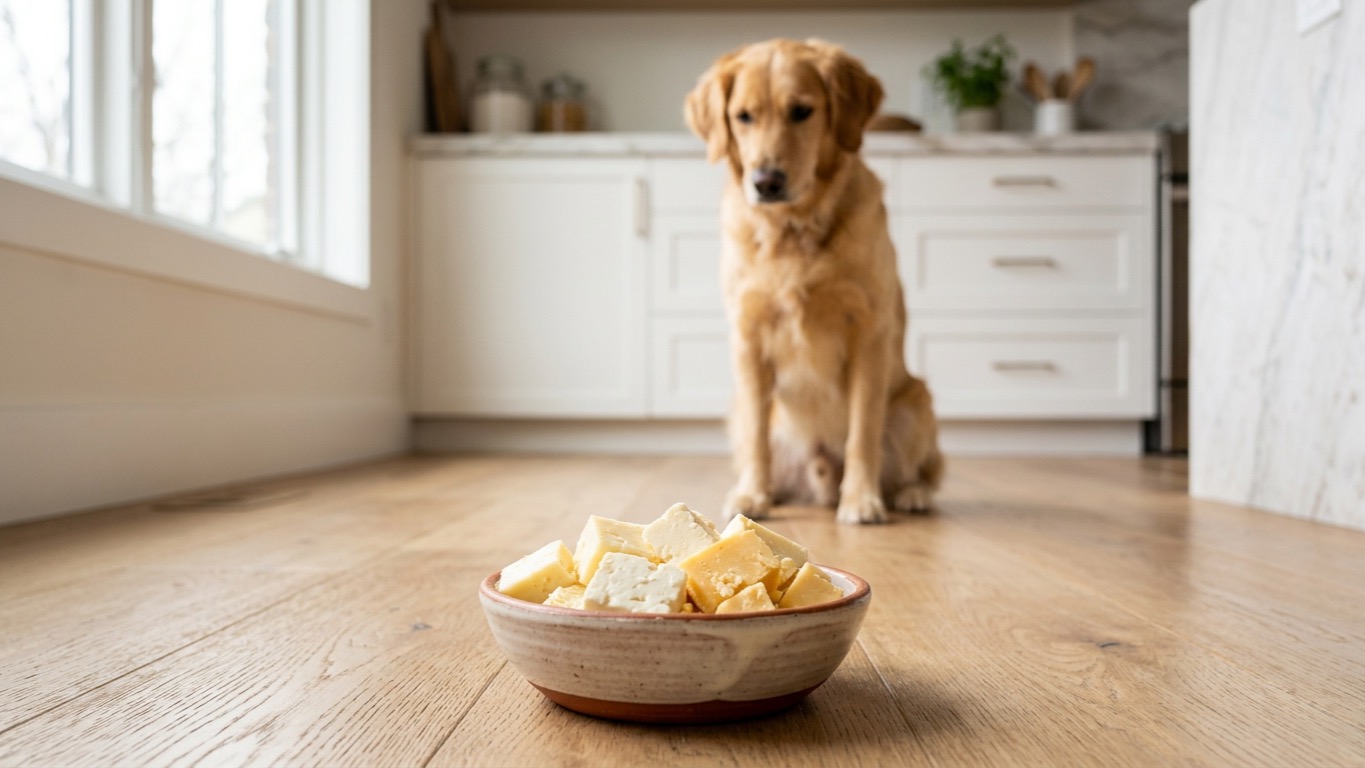
Can dogs eat cheese? Often yes, in pea-sized bits of plain, low-additive cheese — and no when the cheese is a garlic blend, a blue you cannot identify, a xylitol “lite” product, or a one-ounce slab treated as a single treat. USDA-class cheddar is about 113–115 kcal, 9 g fat, and ~180–190 mg sodium per ounce (28 g). A typical 20 lb adult on a ~400 kcal band has a ~40 kcal extras cap. That ounce of cheddar is ~285% of the cap. The honest serving is closer to 3–4 g — a pea-to-dice cube — not the snack-pack stick.
The PetBench Cheese Fat-Lactose Grid (August 2026 desk compilation) ranks jobs, not brands. Fat is the pancreatitis lever. Lactose is the stool lever. Sodium is the processed-slice lever. Allium powder is a toxin lever. Roquefortine C in some Penicillium-ripened blues is why this desk’s default for blue cheese is skip, not “a crumb is probably fine.”
Our guides are reader-supported. This article may contain affiliate links. As an Amazon Associate we may earn a commission if you buy through links, at no extra cost to you.
Related: bananas (low fat, high sugar), pineapple, grapes if the “cheese board” included raisins.
What can dogs eat cheese actually means on this page
Plain cheese as a high-value training bit or a thin pill smear, logged inside the extras band. It does not mean:
- Daily cheddar as a meal topper
- Deli American slices as “protein”
- Flavored spreads with onion, garlic, or chive
- Sugar-free products until you have read the label for xylitol
- Blue, Gorgonzola, or Roquefort as a sophistication project
- Cheese for a dog with a pancreatitis history unless the clinician already cleared a named product and gram weight
ASPCA people-foods and poison-control framing covers Allium (onion, garlic, chive) and xylitol. Cheese is not grape-class toxic. Fat and lactose are why households still end up at the ER after a holiday board.
Browse a treat pouch for pea cubes →
Cheese Fat-Lactose Grid
USDA-class rounded values. Per-ounce rows are 28 g unless noted.
| Cheese (plain) | kcal | Fat | Sodium (approx.) | Lactose class this desk uses | Training job |
|---|---|---|---|---|---|
| Cheddar | ~113–115 / oz | ~9 g | ~180–190 mg | Low (aged) | High-value cube — tiny |
| Part-skim mozzarella | ~70–85 / oz | ~4.5–6 g | ~150–180 mg | Medium | Pill wrap, still tiny |
| Low-fat cottage (½ cup, ~113 g) | ~80–90 | ~1–2 g | watch the label | Higher than aged hard | Volume training if sodium is not wild |
| Cream cheese | ~99 / oz; ~50 / tbsp | ~10 g / oz | moderate | Medium | Thin smear only |
| Processed “singles” | label-dependent | often high | often >300–400 mg / oz | Variable | Skip as a default |
| Blue / Roquefort class | ~100 / oz | ~8 g | high | Not the point | Desk skip |
Hero math: 40 kcal of cheddar is ~10 g, not 28 g. 40 kcal of low-fat cottage is closer to 3–4 tablespoons, which looks generous and still must be plain — no allium mix-ins.
Before you shop: (1) you read the ingredient line for onion, garlic, chive, and xylitol, (2) first serving is one pea, 12–24 hour stool and belly watch, (3) extras that day include the cheese, (4) blue and flavored party cheeses are a no, (5) vomiting plus a hunched, prayer-position belly after a fatty binge is a clinic tonight. Fail gate 5 and the Grid is how you shop past an emergency.
Why fat, not “dairy,” is the first can dogs eat cheese question
Adult dogs often produce less lactase than they did as puppies. That is ordinary mammal weaning physiology, not a PetBench discovery. Undigested lactose → gas, soft stool, sometimes vomiting, often within 2–12 hours. Aged hard cheeses carry less lactose than a pile of fresh mozzarella or a cottage binge. That is why the Grid puts cheddar in “low lactose, high fat” and cottage in “lower fat, more lactose.” You are picking a failure mode, not a perfect food.
Pancreatitis risk tracks fat grams in a short window, especially in dogs who have had it before. Nine grams of fat in one ounce of cheddar is a binge for a 15 lb dog. This desk will not write “cheese caused pancreatitis in our kennel.” We will write: high-fat extras are a documented risk class in veterinary emergency texts; do not use this URL to clear a fatty snack after a prior flare.
Sodium is the processed-slice problem. A dog on a cardiac or renal diet does not need a “single.” Even a healthy dog does not need 400 mg of sodium as a treat.
Calcium and phosphorus in cheese are real. They are also why cheese is a poor daily meal replacement. Complete-and-balanced food already set those minerals. Stacking cheese daily is how you unbalance a bowl without noticing.
How much cheese is safe — bands, not prescriptions
NRC-style maintenance bands (intact adult, modest activity) used only to size the 10% cap:
| Dog weight | Rough daily kcal | 10% cap | Cheddar this desk will write | Cottage this desk will write |
|---|---|---|---|---|
| Under 10 lb | ~200–350 | ~20–35 kcal | One pea cube (~2–3 g) | 1–2 tsp |
| 10–25 lb | ~350–600 | ~35–60 kcal | 1–2 peas | 1 tbsp |
| 25–50 lb | ~600–900 | ~60–90 kcal | 2 small cubes (~8–12 g max) | 1–2 tbsp |
| 50+ lb | ~900–1,300 | ~90–130 kcal | 2–3 cubes, still not an ounce | Up to ~3 tbsp |
Frequency: training days and pill days, not a nightly cheese course. If you already used the extras band on banana or a chew, cheese waits.
A kitchen scale ends the “it was just a little” argument.
How to serve cheese without turning dinner into a dairy plate
Choose a plain block you control. Cut pea cubes and bag a day’s worth in the fridge so guests cannot improvise. For pills, a rice-grain smear of mozzarella or a dab of cottage beats a wad of cream cheese.
Do not microwave “cheese sauce” with garlic salt. Do not share nachos. Do not use string cheese as a chew toy — it is still an ounce-class object if the dog wins the whole stick.
Refrigerate. Discard moldy household cheddar rather than scraping it; you are not a cave-aging operation, and you cannot see what the dog will gulp.
Commercial “cheese” training treats exist. Read them the same way: fat, sodium, allium, xylitol. A treat pouch keeps cubes off warm pockets where they smear and get forgotten.
Who should skip cheese
- Prior pancreatitis unless a clinician named a product and a gram cap.
- Obesity with a written calorie budget. Cheese is easy to under-count.
- Known dairy diarrhea. Believe the stool, not the internet.
- Renal or cardiac therapeutic diets until the clinician clears sodium and phosphorus extras.
- Puppies under a solid-food routine — half a pea once, then watch. Cheese is not puppy milk replacer.
Warning picture (not a diagnosis): greasy diarrhea, repeated vomiting, a hunched back, or a dog who will not be touched on the belly after rich cheese is an urgent pattern. Lactose gas alone is usually quieter — soft stool, farting, a night of regret. When you cannot tell the difference, call the clinic.
Cheese-board risk map
| Item | Desk class | Why |
|---|---|---|
| Plain cheddar cube | Conditional yes | Fat + calories |
| Low-fat cottage, plain | Conditional yes | Lactose + sodium label |
| Mozzarella bit | Conditional yes | Pill job |
| Cream cheese tub | Smear only | Fat density |
| Blue / veined | Skip | Roquefortine C class concern in published toxicology notes; not worth the board |
| Garlic-and-herb log | Never | Allium |
| Cheese with grapes or raisins | Never | Grape toxicity |
| Sugar-free “cheese” dessert | Read or skip | Xylitol |
| Mac and cheese leftovers | Skip | Fat, onion powder, volume |
| Pizza crust with cheese | Usually skip | Fat + toppings you cannot see |
Cheese vs fruit extras on this site
Cheese is a fat-and-salt extra. Banana is a sugar-and-potassium extra. Cantaloupe is a water extra. Do not run all three on the same afternoon and call it “healthy variety.” The 10% band is a single bucket.
Frequently asked questions — can dogs eat cheese
Can dogs eat cheese every day?
Daily cheese as the main treat unbalances fat and often sodium. Use it as a high-value tool, not a food group. If you need a daily training reinforcer, a complete training kibble or a named low-fat treat is easier to count.
What cheese is safest when can dogs eat cheese is the search?
There is no safest cheese, only better failure modes. Low-fat cottage if lactose is tolerated and the sodium label is calm. Aged cheddar if you can keep the grams tiny. Part-skim mozzarella for pills. This desk will not crown a brand.
Can lactose-intolerant dogs eat cheese?
Some tolerate a pea of aged hard cheese and fail a tablespoon of cottage. Trial one pea, watch 24 hours. Persistent diarrhea is a stop.
Can puppies eat cheese?
After solid food is established and no clinician has banned dairy: half a pea, once. Expand only if stool stays formed. Puppies are not a reason to share the cheese board.
Is blue cheese safe for dogs?
This desk’s default is no. Some Penicillium-ripened cheeses can contain roquefortine C; published veterinary toxicology discussions treat that as a neurologic risk class. A holiday crumb is not a protocol. If a dog ate a slab of blue, call the clinic or a pet poison hotline with the product name.
Can dogs eat cheddar cheese?
Yes, in pea grams, not ounces. Sharp vs mild is a human flavor argument. Fat and sodium stay on the label either way.
Can dogs eat cheese if they have pancreatitis history?
Not from this page. Ask the clinician who treated the last flare. ”
Sources and method
- USDA FoodData Central cheese classes (cheddar, mozzarella, cottage, cream cheese, blue).
- 10% extras guideline as used in veterinary nutrition handouts.
- ASPCA / poison-control class warnings for Allium and xylitol.
- Published veterinary toxicology discussions of roquefortine C in some blue cheeses — used here as a skip default, not a dose chart.
” For a dog in pain after a fatty binge, use a licensed veterinarian.