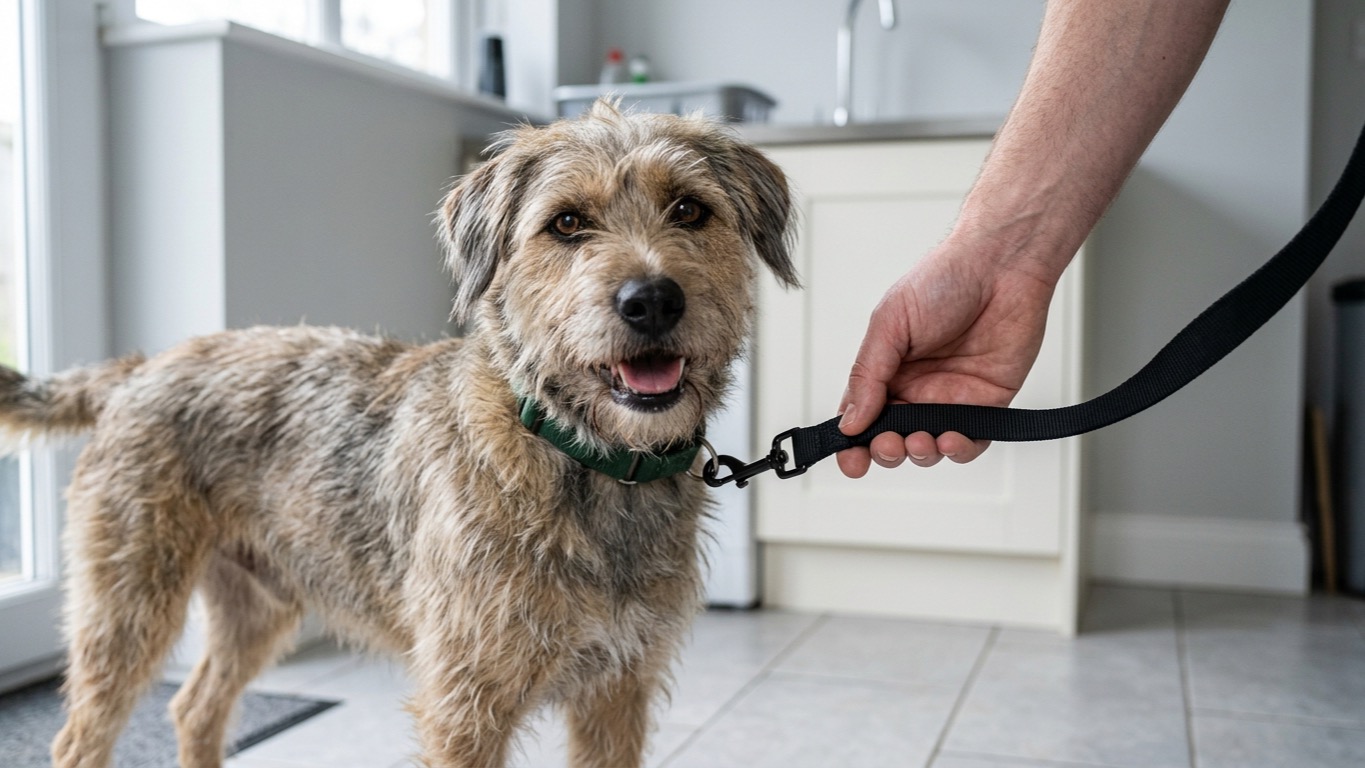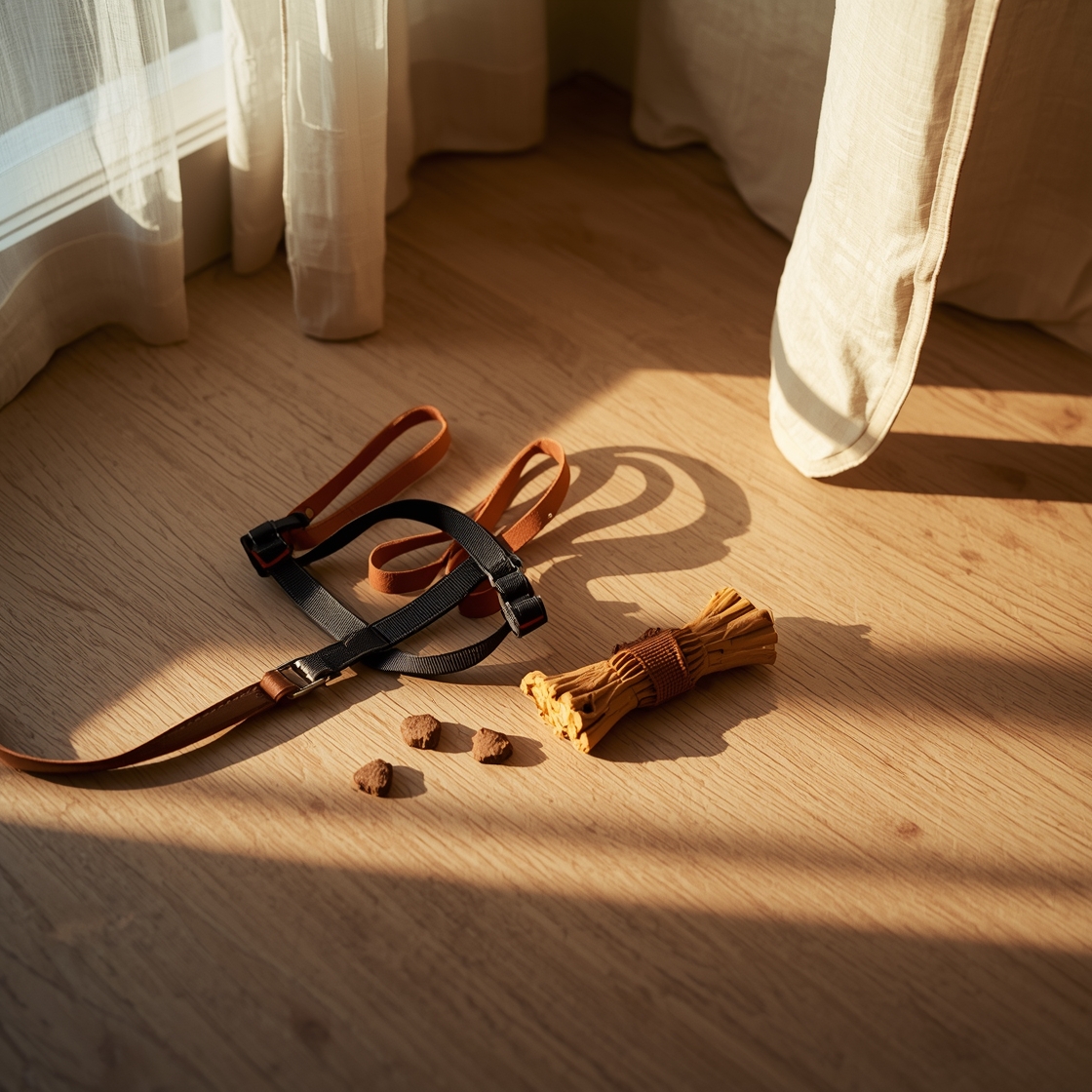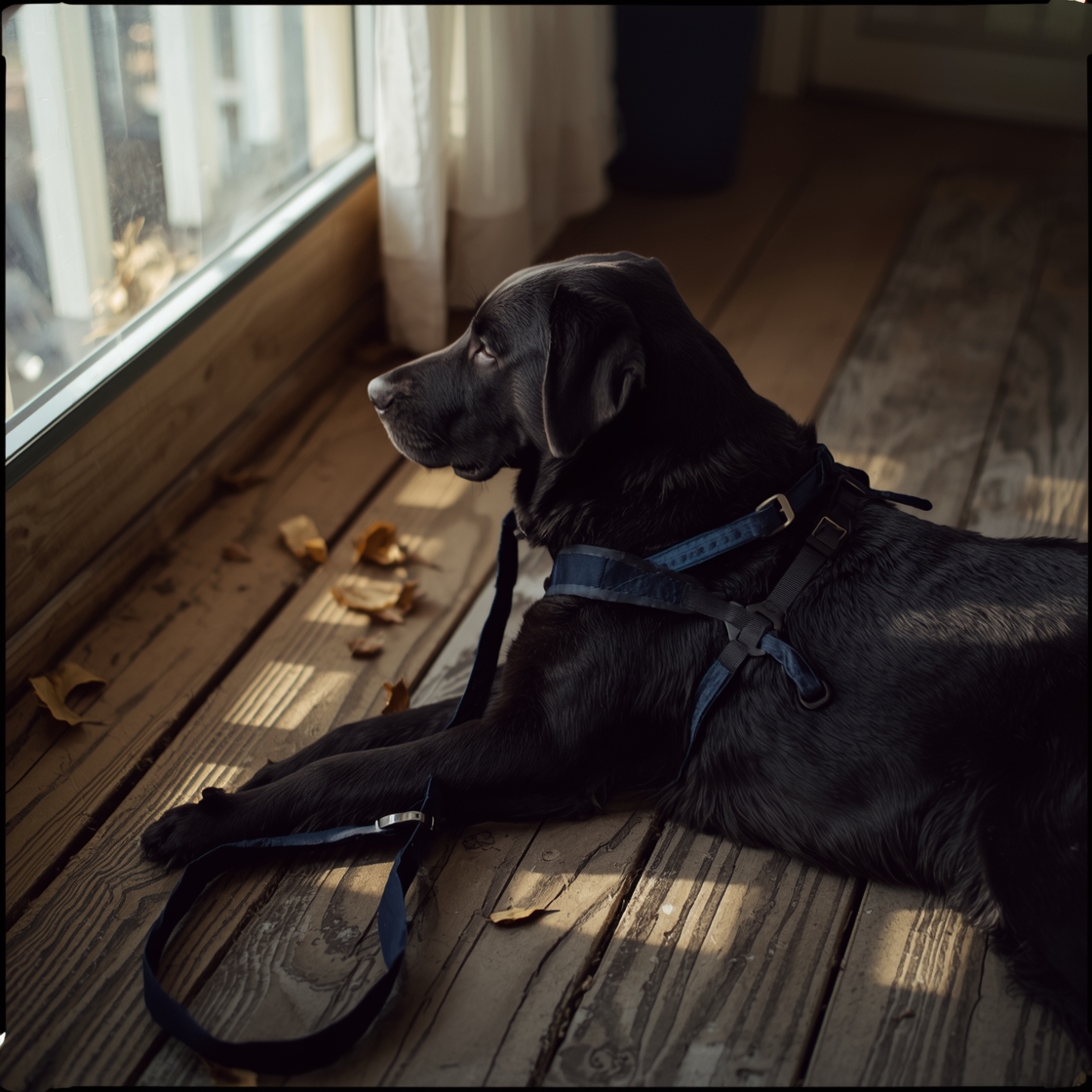
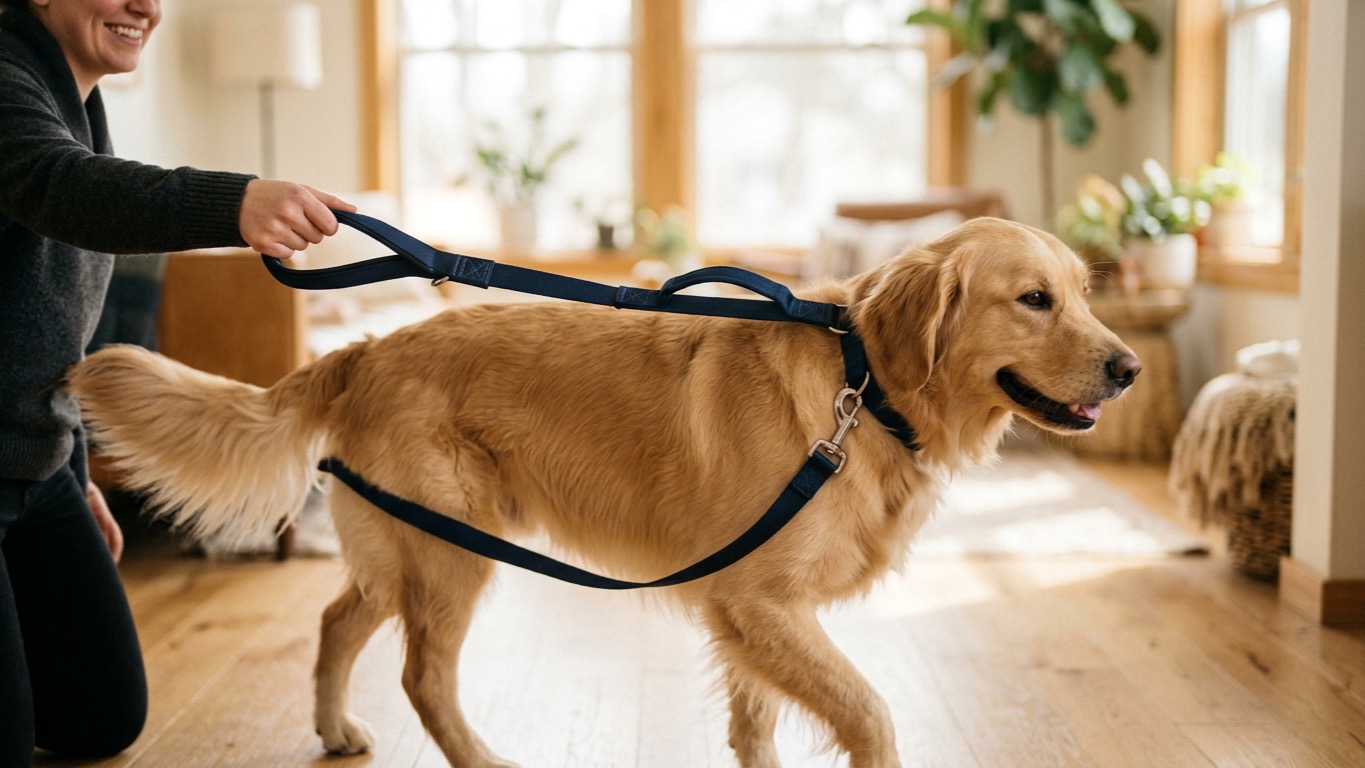

The best dog lead for pulling is usually a 4–6 ft non-elastic leash with a second traffic handle, clipped to a front-clip harness — Joytale $15.99 + PetSafe Easy Walk $18.49 = $34.48, or the $34.99 combo set if the chest clip is real — not a longer retractable and not a harder yank on a neck collar. We read current Amazon listing titles and descriptions and scored 7 named SKUs. Listed snapshots ran $7.99–$34.99 (median $15.99, a 4.38× spread). 3 of 7 (43%) are slip leads (MayPaw $7.99; TagME $8.99; Fida $12.59). 2 of 7 (29%) are PetSafe control hardware (Easy Walk $18.49; Gentle Leader $19.99). 1 of 7 (14%) is a tactical dual-handle leash. 1 of 7 (14%) is a harness + leash set. 3 of 7 (43%) print “no pull” on the card title. 0 of 7 replace a training plan. 0 of 7 are a diagnosis for pain-driven pulling.
Desk pick: City curb / bike pass → Joytale $15.99 on a fitted Easy Walk $18.49. One-box starter → Harness Lead set $34.99 after you confirm a real front clip. Nose-steer add-on, after a slow living-room acclimation → Gentle Leader $19.99. Glove-box backup only → MayPaw $7.99 or TagME $8.99. Bare-handle daily on a 70 lb hit → skip Fida $12.59. Do not stack slip + headcollar + front-clip on day one.
Buy fixed length and a clip that is not a skinny flat collar. AVSAB’s public position statements still favor reward-based methods and caution against escalating aversives — this desk is not restating a clinic protocol. Pulling is a job: stop at curbs, pass bikes, keep a 90 lb dog off a toddler. Hardware is one lever.
Our guides are reader-supported. This article may contain affiliate links. As an Amazon Associate we may earn a commission if you buy through links, at no extra cost to you.
Training sequence lives on how to stop a dog from pulling on leash when that URL is the honest object. Harness sizing is best big dog harness. Puppy collar vs harness is dog harness vs collar for puppies. A walking-specific sister page: best dog walking leash for pullers. .
Quick picks at a glance
- Best listed budget slip (backup / handler-trained only): MayPaw Slip Lead Control Leash — $7.99. Adjustable. Not a daily neck tool on a lunging giant.
- Best listed head-control hardware: PetSafe Gentle Leader — $19.99. Steers the nose. Needs a slow acclimation. Not a muzzle.
- Best listed light slip: Fida Durable Slip Lead — $12.59. Thin handle; hard on hands if the dog hits the end.
- Best listed kit (harness + leash): Harness Lead No Pull set — $34.99. Highest sticker on this URL. Confirm front-clip geometry on the listing.
- Best listed front-clip harness: PetSafe Easy Walk — $18.49. Martingale front loop in brand copy. Fit is the product.
- Best listed cheap slip #2: TagME Slip Lead — $8.99. Same class as MayPaw. Confirm diameter vs dog weight.
- Best listed dual-handle leash: Joytale Tactical Dog Leash Heavy Duty — $15.99. Traffic handle + length. Pair with a harness, not a flat collar on a puller.
What current Amazon listings show (Pull-Lead Kit, August 2026)
| Job | What actually works | Category | Fail if you skip it |
|---|---|---|---|
| City curb / bike pass | Short second handle + front-clip or well-fitted harness | Joytale + Easy Walk | Retractable at 16 ft in traffic |
| Redirect a determined puller | Headcollar after acclimation, or front-clip | Gentle Leader / Easy Walk | Slipping a thin lead on the neck and yanking |
| Backup / car / vet lobby | Slip lead in a pocket | MayPaw / TagME / Fida | Using the slip as the only daily walk tool |
| One-box starter | Harness + leash sold together | Harness Lead set $34.99 | Buying the set and clipping it like a back-clip “sport” harness |
Before you shop: (1) you ruled out pain (limping, neck yelp, sudden new pulling — that is a clinic, not a thicker leash), (2) the leash is fixed length, not a retractable, (3) the clip is on a harness or a fitted headcollar, not a skinny flat collar on a 80 lb lunger, (4) you will practice loose-leash in a boring parking lot before the farmer’s market. Fail gate 1 and this checklist is how you shop past a sore shoulder.
What the best dog lead for pulling can and cannot do
A good lead shortens the consequence window. It does not teach “heel.” AVSAB’s public position on behavior tools favors reward-based methods and cautions against escalating aversives; this desk is not restating a clinic protocol. We are saying: a stiffer leash without a plan is a sore shoulder with better stitching.
Bungee / elastic “shock” leads store energy. When the dog hits the end, the snap-back can load the handler’s wrist and the dog’s neck or chest. This comparison treats elastic as the type to avoid for a puller you are trying to stop — not as a medal for “comfort.”
Retractables give 10–26 ft of roaming in a bike lane. That is the opposite of control. Keep them off this job.
We only recommend matching hardware class to the walk. We are not saying we walked these seven SKUs this afternoon.
Disclosure: this article contains affiliate links. If you buy through them we may earn a commission at no extra cost to you.
How the desk scored the best dog lead for pulling
this comparison uses four visible signals plus the listed sticker:
- Class. Slip vs headcollar vs front-clip harness vs dual-handle leash vs combo set.
- Length honesty. 4–6 ft is city control. 6 ft is a common listed length. “Up to 50 ft” is a different object.
- Handle story. Padded + traffic handle vs bare webbing that cuts a palm.
- Neck vs chest vs muzzle-band. Where the force goes when the dog hits the end.
Price is not a quality grade. A $7.99 slip used as a pocket backup is honest. The same slip used as a daily choke on a panicked rescue is not.
How these products compare on labels and price
| Tool (this URL) | Listed price | Class | Force lands on | Thick-puller note |
|---|---|---|---|---|
| MayPaw slip | $7.99 | Slip lead | Neck | Cheapest backup. Not a training plan |
| TagME slip | $8.99 | Slip lead | Neck | Same class. Check diameter |
| Fida slip | $12.59 | Slip lead | Neck | Light webbing; bare handle |
| Joytale tactical | $15.99 | Dual-handle leash | Clip point you choose | Best leash-only control add-on |
| PetSafe Easy Walk | $18.49 | Front-clip harness | Chest / shoulder | Fit or it rides into armpits |
| PetSafe Gentle Leader | $19.99 | Headcollar | Muzzle loop + neck | Acclimate. Not a muzzle |
| Harness Lead set | $34.99 | Harness + leash | Depends on clip | Highest sticker; verify front clip |
Desk kit math: Joytale $15.99 + Easy Walk $18.49 = $34.48 — about the same as the combo set, with a named front-clip brand. Gentle Leader $19.99 is a second tool, not a substitute for a leash. MayPaw $7.99 stays in the glove box.
The 7 cards on this URL
1. MayPaw Slip Lead Control Leash for Dogs No Pull
Best for: a cheap, adjustable slip as a backup when you already know how to dress a slip and release it.
Listed $7.99. Nylon slip; length adjusts with the stopper. Brand “no pull” language is marketing. A slip tightens when the dog leans — that is the mechanism, not a trained loose leash.
Honest drawback: limited durability language on aggressive lunges; fray reports cluster on cheap nylon. Daily use on a neck-sensitive or collapsing-trachea dog is the wrong class. Not a substitute for a front-clip harness.
2. PetSafe Gentle Leader No Pull Dog Headcollar
Best for: steering the nose on a dog that already accepts face hardware — after days of cookie pairing, not day-one at the park.
Listed $19.99. Nose loop + neck strap. PetSafe’s public copy: pressure redirects the head; it is not a muzzle; the dog can pant, drink, and take treats. That is brand education, not our trial.
Honest drawback: many dogs fight the nose loop for the first sessions. A poor fit rides into the eyes or rubs the muzzle. Do not leave it on unattended. Do not use it as a tie-out. If the dog paw-frantics or shuts down, stop and book a trainer — do not “get through it” on a busy street.
Check Gentle Leader listings →
3. Fida Durable Slip Lead Dog Leash
Best for: a slightly heavier slip than MayPaw when you still want one piece of nylon.
Listed $12.59. Lightweight nylon; one-hand slip knot in brand copy.
Honest drawback: no padding on the handle. Bare webbing plus a 70 lb hit is a blister. Same neck-class limits as every slip on this URL.
4. Harness Lead No Pull Dog Harness and Leash Set
Best for: one checkout if you want a harness and a leash in the same box — after you confirm the chest clip is a true front ring, not a decorative D-ring on the back.
Listed $34.99. Highest sticker. Combo sets vary by color/size lot. Marketplace photos lie about clip placement.
Honest drawback: “no pull” in the title is not a geometry guarantee. If the leash only clips on the spine, you bought a back-clip sports harness. Return it.
Check Harness Lead set listings →
5. PetSafe Easy Walk Harness for Dogs
Best for: a named front-clip harness when you will actually spend ten minutes on the fitting video.
Listed $18.49. PetSafe’s Easy Walk copy: martingale loop at the chest so a forward lean turns the dog to the side. That is the listed mechanism. Fit notes from public owner threads cluster on the belly strap riding back into the armpits if you skip the neck measurement.
Honest drawback: not a car crash harness. Not a no-escape hiking harness for a wriggly sighthound. Size to girth, not to “Lab.”
6. TagME Slip Lead for Dogs
Best for: a second cheap slip so the first one can live in the car.
Listed $8.99. Same class as MayPaw. Confirm width (often 1/2 in class on look-alikes) against dog weight.
Honest drawback: two $8 slips do not equal a training plan. Counterfeit-adjacent listings cluster on generic slip photos. Buy a seller you can return to.
7. Joytale Tactical Dog Leash Heavy Duty
Best for: the leash half of a pull kit — traffic handle at the clip, length in the other hand.
Listed $15.99. Heavy-duty webbing, second handle, often a padded grip in this product class. Clip it to a harness D-ring, not to a skinny collar on a lunger.
Honest drawback: “tactical” is a colorway. It does not make the dog a trained heel. If you only buy this and keep a back-clip, you still get a sled dog with a nicer handle.
Check Joytale tactical listings →
Length, elasticity, and the one type to avoid
| Length / type | City pull job | When it is honest |
|---|---|---|
| 4 ft fixed | Best curb control | Crowded sidewalks, doorways |
| 5–6 ft fixed | default listing review length | Neighborhood walks |
| Dual handle (traffic + long) | Best of both | Joytale class |
| Bungee / elastic | Avoid for a puller you are trying to stop | Sprint sports with a trained dog, not this URL |
| Retractable 10–26 ft | Fail | Open field, not a street |
Public walking guidance clusters on keeping the dog close enough that you can step on the leash in an emergency. That is a 4–6 ft story. It is not a 16 ft tape measure.
Why dogs pull (desk causes, not a diagnosis)
Dogs pull because forward motion paid off. They also pull because the harness is a sled point (back clip), the walk is the only enrichment, or something hurts. Sudden new pulling, a head-shy flinch, or a front-leg limp is a veterinary question. Hardware after that.
Breed “pulls like a sled” jokes are not a size chart. A 25 lb terrier on a thin slip can still crush a trachea conversation. A 90 lb mastiff on a back-clip “no pull” set is still physics.
A reliable sequence (desk method, not a class)
- Pain screen. If in doubt, clinic first.
- Fit the harness or headcollar in the house with food. Two fingers under straps. No armpit sawing. No eye-level nose loop.
- Clip a 4–6 ft non-elastic leash. Traffic handle for curbs.
- Reward slack. Stop when the leash tightens. Walk when it softens. Boring parking lot first.
- Keep the slip in the car for “the collar just came off,” not as the daily plan.
Children should not run a headcollar or a slip on a lunging dog. Write that on the hook the same way you write treat rules on a food bag.
Matching household jobs to the best dog lead for pulling
| Household | Lead tool | Follow tool | Skip |
|---|---|---|---|
| 70 lb mix, city, no pain | Joytale $15.99 | Easy Walk $18.49 | Retractable |
| Reactive / nose-oriented | Gentle Leader after acclimation | Short leash | Day-one park debut |
| Apartment, budget | Easy Walk + any 6 ft fixed | MayPaw in the bag | $35 set you will not fit |
| Handler with sore wrists | Padded dual handle | Front-clip | Bare Fida slip as daily |
| Puppy | Lightweight harness + 6 ft | Treats, 30-second “slack” games | Adult tactical leash as a toy |
Counterfeit look-alikes cluster around generic slip photos. Buy from sellers you can return to. Measure girth; “Lab size” is not a breed name.
Worked example: two dogs, two kits
Dog A — 55 lb puller, no limp, apartment elevators. Kit: Easy Walk $18.49 + Joytale $15.99. Practice in the hallway. MayPaw $7.99 in the backpack. Do not buy Gentle Leader as the first tool if the dog has never worn face hardware.
Dog B — 85 lb, lunges at bikes, handler has wrist pain. Kit: fitted front-clip or a properly acclimated Gentle Leader + padded dual-handle. Skip Fida’s bare handle as the daily leash. If lunges are new, clinic first — hardware is not a workup.
Care, hardware, and the best dog lead for pulling
Rinse salt and mud. Dry webbing so hardware does not rust closed. Inspect the stitch at the clip weekly; that is where cheap slips fail. Replace a frayed MayPaw instead of tying a knot in it.
Do not clip two leashes to one collar ring and call it “safety.” Use a harness plus a backup if you need two points.
Store the Gentle Leader so the nose loop is not crushed. A twisted loop rides into the eyes. That is fit, not a brand defect you invent in a review.
Travel weeks are when slips get used as the only tool because the harness was left at home. Pack the Easy Walk. The $8 slip is the spare tire, not the daily driver.
How to choose the best dog lead for pulling this month
- Name the job: curb, bike pass, backup, or starter kit.
- Pick the class (dual-handle leash / front-clip / headcollar / slip backup).
- Measure girth and neck. Fit in the house.
- Keep length at 4–6 ft. Skip elastic and retractables.
- Put practice on a calendar.
- Stop if the dog yelps or the gait changes.
The best dog lead for pulling is the kit that shortens the leash and moves the clip off a skinny neck — then gets used.
What is the best dog lead for pulling on this URL?
The best dog lead for pulling on these seven cards is usually Joytale $15.99 on a fitted Easy Walk $18.49 ($34.48), or the $34.99 combo set if the chest clip is real. A $7.99–$12.59 slip is a backup. Gentle Leader $19.99 is a trained nose-steer add-on, not a leash substitute. A retractable is the opposite of this job.
Is a slip lead the best dog lead for pulling?
Only as a handler-trained backup (MayPaw $7.99; TagME $8.99; Fida $12.59). Daily neck slips on a hard puller are the wrong class. Prefer a harness clip. If the dog is a Houdini, that is best big dog harness territory — a different clip map.
Frequently asked questions
What is the best dog lead for pulling?
The best dog lead for pulling is usually a 4–6 ft non-elastic leash with a traffic handle (Joytale $15.99 class) on a front-clip harness (Easy Walk $18.49) — about $34.48 in this Index, or the $34.99 combo set if the chest clip is real. A $7.99 slip is a backup. A headcollar is a trained add-on.
Are bungee leashes better for dogs that pull?
No — not for a dog you are trying to stop pulling. Elastic stores energy and returns it to the neck or chest. Use fixed webbing.
What is the ideal leash length for city walking?
4–6 feet, fixed. Long enough to toilet, short enough to block a curb. Retractables fail this job.
Is a slip lead the best dog lead for pulling?
Only as a handler-trained backup. Daily neck slips on a hard puller are the wrong class. Prefer a harness clip.
Do I need a headcollar and a harness?
Not on day one. Pick one control point, fit it, practice. Stacking Gentle Leader + Easy Walk + a slip is how you invent a fight.
When should I involve a veterinarian or trainer?
New pulling, pain signs, collapse, or a dog that shuts down in gear. Hardware is not a workup. A certified trainer is not this webpage.
Related pages
- How to stop a dog from pulling on leash
- Best big dog harness
- Dog harness vs collar for puppies
- Best dog walking leash for pullers
How we researched this guide
Desk research. We read current Amazon listing titles and descriptions and scored seven current listings on listed price, hardware class, handle story, and where force lands. We read manufacturer fitting language and public behavior-tool cautions. Nothing here is a veterinary or trainer certification.
Limitations: listings clone; webbing width varies by lot; prices move. Pain and panic are a clinic or a qualified trainer, not a fourth Amazon slip.
Keep a simple log: minutes of slack, gear used, limp check. Patterns beat a once-a-month “tactical” upgrade.
A 90 lb mastiff and a 22 lb terrier mix are not the same category row. The giant needs a real clip point and a handle you can hold. The small dog needs a slip that cannot saw a trachea — which usually means do not use the slip.
If the household’s real complaint is “walks are the only exercise,” a $35 kit will not fix a 23-hour crate day. Enrichment is a different object. Hardware is still worth fitting.
Show the dog the Gentle Leader with the leash off. Food on the floor. Thirty seconds. That is acclimation. The park is the exam, not the first lesson.
Wet webbing after rain shrinks some cheap nylon. Recheck the stopper on MayPaw and TagME. A slipped stopper is how a “control lead” becomes a hoop.
If you also bought a harness for hiking escape artists, that is a different clip geometry. See best big dog harness after this page’s job is honest.
Nail the calendar before you nail a second SKU. A $15.99 Joytale used every day with a fitted Easy Walk stops more pulling than a $34.99 set that lives in the Amazon box. That is not a lab result. It is how tools work when they leave the drawer.
Extra desk notes: hardware that fails on a Tuesday
Two-point clips. Some owners clip a leash to the Easy Walk front ring and a collar “for backup.” If those two points are different lengths, the collar still takes the lunge. Use one control point, or a harness with a designed backup ring — not a skinny flat collar as the second thought.
Martingale collars. A martingale is a limited-slip neck tool. It is not on this URL’s card list. It is also not a front-clip harness. Do not buy a martingale because a forum said “no pull” and skip the Easy Walk.
Prong and shock. Not on this card list. This desk will not write a shopping guide for them. If a trainer put one on, that is their protocol, not a Thepetbench SKU.
Shoulder math. A 90 lb hit on a 4 ft leash is a short lever. A 16 ft retractable is a long lever. That is why this checklist bans retractables for this job. You do not need a physics paper. You need a shorter rope.
Handholds. Joytale’s second handle is for the curb, not for lifting the dog like a suitcase. If you need to lift, that is a harness handle or a vest — a different object. Yanking the traffic handle upward is how you stack the dog on the front legs.
Night. Reflective webbing helps cars see the leash. It does not teach slack. Add a clip light on the harness if you walk unlit roads. The $7.99 MayPaw is often dark nylon. That is a visibility fail, not a control fail.
Rain. Wet webbing slips in the hand. A padded Joytale handle is this comparison's cheap insurance. Bare Fida webbing plus rain plus a 70 lb hit is a rope burn. Gloves are allowed. Ego is optional.
Doorways. Teach a sit before the door opens. Hardware cannot do that. The lead only keeps the sit from becoming a sprint if it is already short. Step on the leash in the vestibule if you have to. That is a handler move, not a product feature.
Cafés and hardware stores. A 6 ft leash still knocks a display if you give the whole 6 ft. Gather to the traffic handle. That is the whole point of a second handle.
Two-dog walks. Two Easy Walks and one human is a geometry problem. If you cannot keep both leashes short, you do not have a kit problem — you have a one-dog walk problem. Split the walk.
Escape artists. A front-clip Easy Walk is not an escape-proof hiking harness. Sighthounds and oily-coated dogs back out. If the dog is a Houdini, that is best big dog harness territory — a different clip map.
Puppies. Growth blows a size every few weeks. Buy the Easy Walk to the current girth, not to “adult Lab.” A Gentle Leader on a teething puppy who paws the nose loop all walk is a fight you do not need. Start with a lightweight harness and food. The tactical leash can wait until the dog is not a chew toy with feet.
Seniors. New pulling in an old dog is a pain flag before it is a “he forgot his manners” flag. Clinic first. Then a harness that does not saw armpits.
Handlers with arthritis. The $12.59 Fida is the wrong daily leash. Pay for the padded handle. A waist leash is a different object and a different fall risk — not on this card list.
Keep the glove-box slip. Use it when the collar failed in a parking lot. Do not let it become the only walk because the Easy Walk is in the wash. Wash the Easy Walk. Walk tomorrow. That is the checklist.